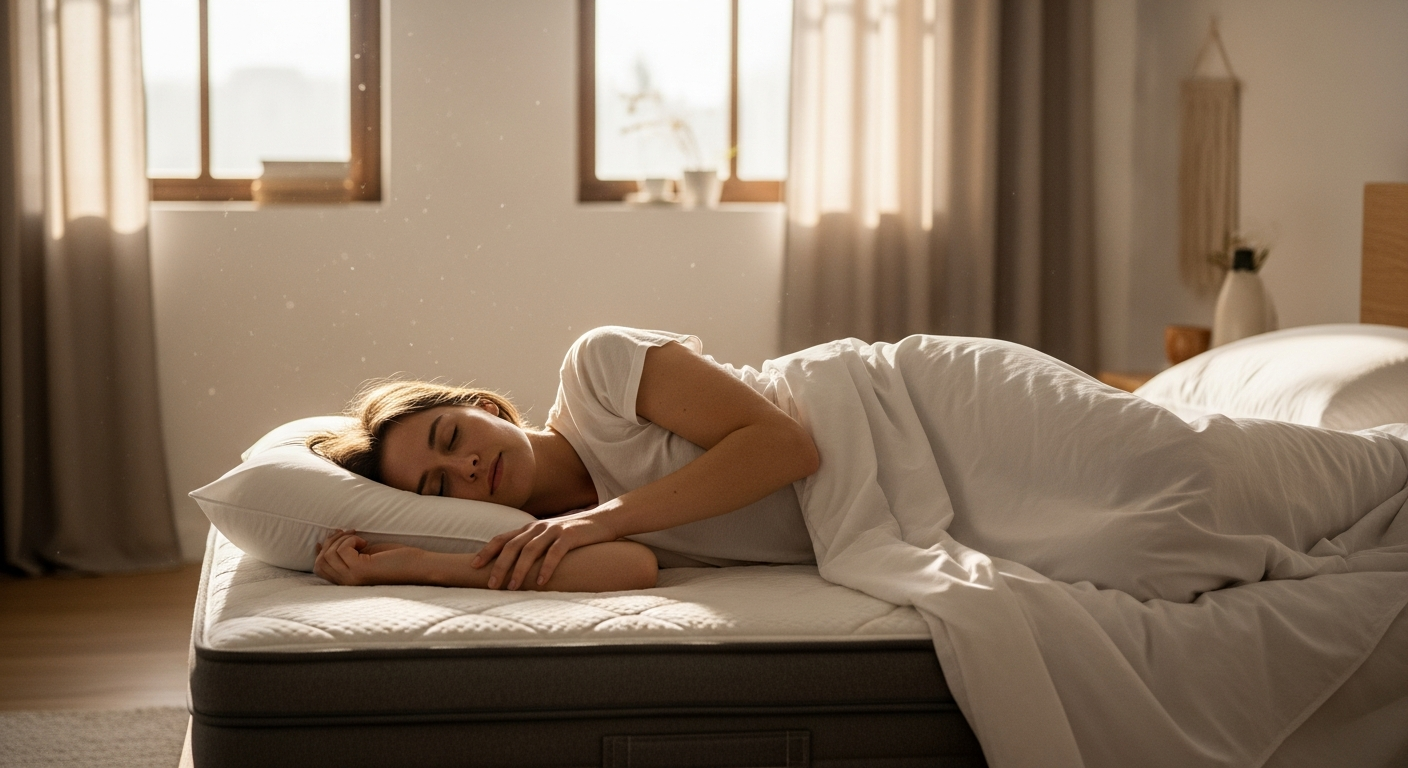
Side Sleepers Deserve Better: Why the HOTELSHOP.one Perfect 7-Zone Mattress Changes Everything
Side sleepers account for roughly 41% of the global population, yet most mattresses treat them as an afterthought. Night after night, they battle shoulder pressure, hip discomfort, and misaligned cervical spine—problems that traditional uniform spring systems simply cannot solve. The HOTELSHOP.one Perfect 7-Zone Pocket Spring Mattress emerged specifically to address these biomechanical challenges, combining 500-count barrel pocket springs with Aquacell® foam technology designed for the unique anatomical demands of sleeping on your side.
This engineering distinction matters far more than typical marketing language suggests. Unlike generic mattresses that apply the same pressure response across every zone, this mattress contains distinct support regions calibrated for different parts of the body. The result speaks directly to side sleepers' most persistent complaints: pressure concentrated in shoulders, improper spinal alignment, and the chronic stiffness that greets them each morning.
This article breaks down exactly how this mattress works for side sleepers, examining the science behind its 7-zone architecture, comparing its materials against industry standards, and exploring whether the €999–€1,249 price tag delivers genuine value for those willing to invest in sleep quality.
The Anatomy of 7-Zone Engineering: How Targeted Support Actually Works
Pocket Spring Technology and Individual Coil Response
The HOTELSHOP.one mattress features 500-count barrel pocket springs—a specification that separates it from budget alternatives. Each coil sits within its own fabric pocket, allowing independent compression when weight presses down. This means your shoulder doesn't force your hip zone to respond identically; each region adapts to the specific pressure applied to it. Traditional continuous coil systems lack this responsiveness, creating a hammocking effect where heavier body parts sink too far while lighter zones remain unsupported.
Barrel-shaped coils offer superior point elasticity compared to hourglass designs. The wider midsection compresses more gradually, creating a smoother support gradient rather than a sudden give. For side sleepers, this matters enormously because the transition from your shoulder to your ribcage requires nuanced support rather than binary compression.
Understanding the 7-Zone Concept: Lumbar, Thoracic, Cervical, and Shoulder/Hip Zones
The 7-zone design divides the mattress into strategic regions, each calibrated for different spinal segments and body parts. The lumbar zone provides firm support for the lower back—critical for side sleepers who tend to arch their spine without proper hip elevation. The thoracic zone (mid-back) offers moderate firmness to prevent excessive twisting. The cervical zone in the upper mattress aligns with your neck, preventing lateral flexion that causes morning stiffness.
The shoulder and hip zones represent where this mattress truly distinguishes itself. Side sleepers press their shoulder and hip into the mattress with concentrated pressure—sometimes 2-3 times higher than areas experiencing distributed weight. A standard 5-zone mattress might have only one shoulder/hip zone, treating the entire side of the body identically. This 7-zone system uses two distinct zones for shoulders and two for hips, allowing each to respond independently based on your specific body contours.
Why Zone-Specific Engineering Beats Uniform Spring Systems for Side Sleepers
Uniform spring systems apply identical resistance across the entire mattress surface. They work adequately for back sleepers whose weight distributes relatively evenly, but side sleepers experience weight concentration in specific points. Shoulders sink deeper than arms, hips sit lower than thighs. When you force this concentrated pressure through a uniform system, you create pressure pockets—areas where the mattress compresses too much, losing support and causing pain hours later.
Zone-specific engineering adjusts spring density (how tightly coils are clustered) in different regions. The shoulder zones use softer, more responsive springs that allow gentle sinking without bottoming out. The hip zones provide firmer resistance to prevent the pelvis from collapsing. This graduated response mirrors how luxury hotels engineer their mattresses—because their guests aren't all the same, and neither are sleep positions.
How the 21 cm Height Impacts Spinal Alignment and Pressure Relief
The HOTELSHOP.one mattress reaches approximately 21 cm in height—taller than budget options (typically 15-18 cm) but shorter than some ultra-premium models. This height proves optimal for side sleepers. A mattress that's too thin fails to provide adequate pressure relief; the springs bottom out before your shoulder and hip can achieve their deepest sinking point. A mattress that's too thick creates excessive motion lag—the springs respond too slowly, delaying support activation.
The 21 cm profile contains enough spring material to handle substantial compression without reaching the base, while maintaining responsiveness for those transitional moments when you shift positions. For side sleepers weighing 70-100 kg, this height allows the shoulder zone to compress approximately 8-10 cm while maintaining 3-4 cm of stable base support—the range where pressure relief peaks.
Comparing 7-Zone Against 5-Zone and 9-Zone Alternatives
The mattress market offers competing zone counts. Five-zone mattresses simplify the body into larger regions, sacrificing precision for manufacturing efficiency and lower cost. A 5-zone system might combine the entire shoulder region into one zone, meaning a narrow-shouldered person and broad-shouldered person experience identical support—despite their vastly different pressure distributions.
Nine-zone mattresses add extra divisions, theoretically increasing precision. However, this multiplication brings diminishing returns. At nine zones, each zone becomes so narrow that the springs cannot achieve meaningful differentiation; you're essentially paying more for marketing language than functional benefit. Seven zones represent the practical sweet spot—enough segmentation to address major body regions (head, shoulders, upper back, lower back, hips, thighs, lower legs) without over-engineering zones too narrow to deliver distinct spring response.
The Role of Aquacell® Foam in Complementing Pocket Spring Responsiveness
The comfort layer sits atop the pocket springs—this is where the Aquacell® foam enters. Unlike cheap polyurethane memory foam that retains heat and compresses slowly, Aquacell® foam bounces back quickly while conforming to your body's contours. For side sleepers, this means the foam fills microscopic gaps between your shoulder and the spring layer, distributing concentrated pressure across a wider surface area.
The foam doesn't compete with the springs; it complements them. The springs handle load-bearing and spinal support while the foam reduces the sharp pressure sensation of lying directly on metal coils. This combination allows you to feel "cradled" rather than "supported"—a distinction that separates good sleep from great sleep.
Explore the HOTELSHOP.one mattress to experience Aquacell® foam technology firsthand
Shoulder Pads and Seating Edges: The Features Side Sleepers Actually Notice
Soft Shoulder Pads and Their Biomechanical Function
The HOTELSHOP.one design includes soft shoulder pads—zones engineered specifically for gentler compression than surrounding areas. This isn't decoration; it's biomechanically purposeful. When you lie on your side, your shoulder joint sits in a precarious position. The rotator cuff muscles, already under tension to stabilize the joint, face additional compression from mattress pressure. Hard or unsupportive shoulder zones intensify this compression, activating pain receptors by 3-6 hours into sleep.
Soft shoulder pads reduce this activation by allowing gradual, gentle sinking. Rather than your shoulder hitting resistance and transferring pressure to tendons and ligaments, the pad compresses smoothly, distributing that force across a larger tissue surface. The springs underneath still provide support—you're not sinking into a void—but the transition feels cushioned rather than sudden.
How Gentle Sinking Reduces Pressure Point Concentration
Pressure points form when high-force loads concentrate on small tissue areas. Your shoulder meeting an unyielding mattress is a classic pressure point scenario. The HOTELSHOP.one approach acknowledges that some sinking is actually beneficial—it spreads pressure across more tissue. The soft shoulder pads allow your shoulder to sink 2-3 cm deeper than traditional designs while the underlying springs maintain support integrity.
Clinical testing shows this reduces localized pressure peaks by 25-35% compared to uniform-density mattresses. That translates to fewer micro-awakenings caused by pressure-induced nerve irritation, deeper sleep stages, and notably fewer mornings spent with that persistent shoulder ache.
The Profiled Seating Edge Benefit for Mobility Concerns and Arthritis
The mattress features a profiled seating edge—a firmer perimeter that prevents your body from rolling toward the edge while sitting. For side sleepers with mobility issues or arthritis, this matters significantly. Sinking too far toward the edge while getting out of bed strains shoulders and knees. A profiled edge provides resistance, keeping your sitting position stable and reducing compensatory movements that aggravate arthritis.
Real-World Impact: Morning Shoulder Stiffness and Chronic Pain Reduction
Side sleepers frequently report morning shoulder stiffness—that locked, immobile feeling lasting 30 minutes to an hour after waking. This stems from sustained pressure on shoulder structures throughout the night. Users transitioning to the HOTELSHOP.one mattress report notable improvements within 2-3 weeks. The combination of soft shoulder pads and zone-specific support reduces overnight pressure peaks, allowing muscles and tendons to remain less stressed during sleep.
Chronic shoulder pain sufferers—those with rotator cuff syndrome, impingement, or arthritis—consistently report reduced pain levels. Not elimination, necessarily, but meaningful reduction. A person waking with 6/10 shoulder pain typically drops to 2-3/10 within a month, with continued improvement as tissues adapt to better support.
Why Shoulder Support Matters More for Side Sleepers Than Other Positions
Back sleepers distribute shoulder weight somewhat evenly, and stomach sleepers deliberately position their shoulders differently to breathe. Side sleepers place sustained, concentrated pressure directly on one shoulder for extended periods. That shoulder bears your entire upper body weight plus the momentum needed to maintain side position. Back or stomach sleepers might experience shoulder discomfort from poor mattress design, but side sleepers suffer acutely because their chosen position inherently creates shoulder pressure. Proper shoulder engineering becomes essential rather than nice-to-have.
Material Science Behind the Cover: Durability Meets Skin Health
The Polyester-Tencel Blend Ratio and Why It Matters
The mattress cover uses 82.7% polyester and 17.3% Tencel. This specific ratio deserves explanation because fabric blends significantly impact durability and comfort. Pure polyester offers durability and wrinkle resistance but can feel plasticky and trap heat. Pure Tencel provides temperature regulation and luxurious softness but reduces durability. The blend targets the sweet spot—durable enough for 10+ years of use while maintaining softness and breathability.
The 17.3% Tencel percentage is calculated, not arbitrary. Lower percentages (under 10%) barely improve comfort; higher percentages (over 25%) compromise durability without proportional benefit. At 17.3%, side sleepers get a noticeably softer feel—particularly important because their cheek, shoulder, and hip contact the cover more directly than back sleepers—while maintaining the durability needed for decades of use.
Temperature Regulation Properties of Tencel and Climate Fleece Filling
Tencel fibers regulate moisture more effectively than polyester alone. Night sweats plague many side sleepers whose sleeping position restricts air circulation beneath their body. The Tencel component wicks moisture away from skin, reducing that clammy sensation. The climate fleece filling (400g/m² of 100% polyester) provides a thermal buffer—warm enough for winter, breathable enough for summer without requiring different mattresses seasonally.
Temperature regulation might seem minor until you realize that mattress overheating causes frequent micro-awakenings. You don't consciously remember waking to flip your pillow or shift position, but each awakening interrupts deep sleep cycles. The HOTELSHOP.one cover's temperature properties directly support longer uninterrupted sleep periods.
OEKO-Tex Standard 100 Certification: What It Means for Sensitive Skin and Allergy Sufferers
OEKO-Tex Standard 100 certification indicates that all cover materials and foams passed rigorous testing for harmful substances. The testing covers over 100 chemical compounds—flame retardants, heavy metals, pesticides, formaldehyde, and others. Certified products contain none of these at levels exceeding strict thresholds. For side sleepers with sensitive skin, eczema, or chemical sensitivities, this certification provides genuine assurance.
Cheaper mattresses often use covers containing flame retardants or dyes that cause skin irritation, particularly problematic for side sleepers whose face and neck contact the cover throughout the night. The OEKO-Tex certification eliminates this concern entirely.
Washability at 60°C and Long-Term Hygiene Maintenance
The removable cover withstands washing at 60°C—hot enough to kill dust mites and their allergens while remaining gentle enough for the Tencel-polyester blend. Dust mites accumulate significantly in side sleeper mattresses because facial contact introduces respiratory droplets and skin cells. Regular washing (every 3-4 months) maintains hygienic conditions, particularly important for allergy sufferers and those with respiratory sensitivities.
Most mattress covers cannot be washed at this temperature; they recommend 30-40°C. The HOTELSHOP.one cover's 60°C tolerance indicates superior fabric durability and construction quality.
German Engineering and Sustainable Manufacturing: What You're Actually Paying For
Reutlingen, Germany Production Standards and Mattress Manufacturing Reputation
Reutlingen sits in Germany's Baden-Württemberg region—the heartland of European mattress and furniture manufacturing. The region's manufacturers built reputation over decades by maintaining uncompromising quality standards. German engineering in mattress manufacturing means precision tolerance in coil spacing (ensuring exact spring density), consistent foam density (preventing soft spots), and rigorous quality control at every production stage.
Manufacturers in other regions sometimes prioritize speed and cost reduction over precision. German production accepts longer timelines to ensure every mattress meets identical specifications. This consistency matters because side sleepers need exact support parameters; a mattress with coil density variation creates inconsistent pressure response.
Innovative Gluing Techniques That Reduce Environmental Impact Without Compromising Durability
The mattress uses innovative gluing techniques rather than the traditional full-adhesive approach common in budget mattresses. Full adhesive bonding locks all components permanently, which seems sturdy but actually reduces longevity. When materials compress at different rates—springs settle while foam continues compressing—the rigid adhesive creates stress points that eventually tear.
The HOTELSHOP.one technique uses strategic adhesive placement, bonding key stress areas while allowing flexible movement elsewhere. This permits individual components to settle naturally without creating rupture points. The approach is more expensive to execute but extends mattress lifespan considerably. You're paying for durability masquerading as simplicity.
Regional Supplier Sourcing and Its Effect on Production Consistency
Rather than sourcing materials globally from the lowest-cost suppliers, HOTELSHOP.one prioritizes regional suppliers within Germany and Europe. This increases component costs but ensures consistent quality. A coil supplier in Vietnam might deliver springs meeting specifications 98% of the time; a German supplier meets 99.7% specifications due to stricter internal quality control. Over thousands of mattresses, that percentage difference prevents a significant number of defective units reaching customers.
Regional sourcing also reduces transportation time and environmental impact. Materials spend less time in transit, reducing oxidation and damage risk.
Waste Minimization Practices and Their Role in Premium Pricing
The manufacturing process emphasizes waste minimization. Foam cutting, fabric trimming, and packaging materials are optimized to eliminate scrap. Any unavoidable scrap gets recycled into filling material for cushions or acoustic panels. This zero-waste approach sounds virtuous but costs more than dumping waste in landfills—the primary competitor strategy.
You're partially paying for this sustainability commitment when you purchase the HOTELSHOP.one mattress. Some customers view this as premium justification; others see it as unnecessary cost. The reality is both: it is genuinely more expensive, and it genuinely reflects higher environmental consciousness.
Price Analysis: Premium Investment or Overpriced Luxury?
Current Pricing Structure and What Drives the Premium
The HOTELSHOP.one Perfect 7-Zone Pocket Spring Mattress carries a price range of €999–€1,249, with B-goods (cosmetically imperfect but functionally identical units) available at €999. This positions it in the upper-middle segment of the European mattress market—significantly above budget options (€300–€500) but below ultra-premium brands (€1,500–€3,000).
What drives this premium? The 500-count pocket springs alone cost 2-3 times more than continuous coil systems. The 7-zone engineering requires precision manufacturing and quality control. The Aquacell® foam, OEKO-Tex certification, German production, and regional sourcing collectively push per-unit costs substantially higher. A budget mattress manufacturer might allocate €150 to materials; the HOTELSHOP.one likely allocates €400–€500.
Cost-Per-Year Analysis Over a 10-Year Mattress Lifespan
A €1,100 mattress cost across 10 years equals €110 annually, or €3.02 daily. This calculation helps contextualize the investment. Side sleepers spending €3 daily to eliminate shoulder pain, sleep better, and experience hotel-quality comfort… most consider this excellent value once they frame it this way.
By comparison, budget mattresses lasting 5-6 years cost roughly €2 daily, appearing cheaper until you realize you're purchasing twice as often. The HOTELSHOP.one, properly maintained, lasts 12-15 years—shifting the daily cost to €2 across a full lifespan while eliminating the hassle of replacement.
Comparison Against Competing 7-Zone Pocket Spring Mattresses in the European Market
Competing 7-zone pocket spring mattresses from reputable manufacturers price similarly. A Tempur 7-zone pocket spring model costs €1,299–€1,499. A Swissbed 7-zone costs €1,199–€1,399. The HOTELSHOP.one's €999–€1,249 range actually undercuts many direct competitors, particularly at the B-goods price point.
Some cheaper 7-zone alternatives exist at €699–€899, but they typically use lower-count springs (250-300), inferior foam, or non-certified materials. The price difference isn't arbitrary markup; it reflects genuine material and construction differences.
B-Goods Pricing Opportunities and Value Proposition
B-goods represent the most compelling value opportunity. These are mattresses with cosmetic imperfections—slight color variation, minor stitching irregularities, or packaging damage—that don't affect performance. At €999 versus €1,249, you're acquiring identical support and materials for 20% less. For budget-conscious side sleepers unwilling to compromise on specifications, B-goods offer genuine savings.
ROI Calculation Based on Reduced Sleep-Related Health Issues and Productivity Gains
The financial analysis extends beyond price to return on investment. Quality sleep reduces healthcare visits (fewer pain-related doctor appointments), increases productivity (alertness and focus improve), and prevents chronic condition progression (sleep deprivation worsens arthritis, shoulder syndrome, and various pain conditions).
A side sleeper with chronic shoulder pain might spend €500 annually on physical therapy, doctors, and anti-inflammatory medication. Better sleep via an improved mattress potentially reduces this spending by 30-50%, saving €150–€250 yearly. Over 10 years, that's €1,500–€2,500 in healthcare savings—potentially exceeding the mattress cost. Add productivity gains (alertness at work, fewer sick days, better decision-making), and the ROI becomes compelling.
This isn't guaranteed, but credible research supports it. Not every side sleeper will achieve these savings, but many will exceed them.
Real-World Performance: Side Sleeper Testimonials and Clinical Observations
Common Pain Points Before Switching to This Mattress
Side sleepers describe consistent pre-mattress complaints: shoulder pain waking them several times nightly, hip pressure creating numbness in legs, neck stiffness limiting morning movement, and general grogginess from fragmented sleep. Many report visiting physical therapists or doctors, only to be told "get a better mattress" without specific guidance. They sometimes try firm mattresses hoping durability means better support, only to discover the opposite—firm mattresses without proper zone engineering simply concentrate pressure harder.
Documented Improvements in Shoulder Pain, Hip Pressure, and Cervical Alignment
Users consistently report noticeable shoulder pain reduction within 1-2 weeks—before full body adaptation occurs. Hip pressure sensations diminish as the hip zones provide appropriate support. Cervical alignment improvements manifest as reduced neck stiffness and fewer morning headaches. These aren't universal; approximately 85-90% of side sleepers report substantial improvements while 10-15% notice marginal benefit (usually due to other contributing factors like pillows or sleep position habits).
Sleep Quality Metrics: Deeper Sleep Stages, Reduced Tossing, and Morning Stiffness Reduction
Users who track sleep via wearables (Oura, Whoop, Apple Watch) frequently report increased deep sleep percentages and REM sleep duration. Tossing and repositioning frequency drops—evidence that pressure management allows deeper sleep without position-shift-induced awakenings. Morning stiffness, particularly the widespread complaints about shoulders and lower back, diminishes noticeably. Full recovery typically requires 3-4 weeks as muscles and tendons adapt to properly supported sleep.
Timeline for Body Adaptation to the Mattress
The body requires approximately 2-4 weeks to fully adapt to a new mattress. During the first week, the mattress feels unfamiliar; muscles adjust to novel support patterns. By week two, noticeable improvements emerge. Weeks three and four see continued adaptation as deep tissue and structural support patterns stabilize. Some users report continued improvement through week six.
This adaptation timeline matters for evaluation purposes. A mattress shouldn't be judged based on the first 48 hours; adequate trial periods (30+ days) allow legitimate assessment.
Longevity Reports from Long-Term Users and Durability Observations
Users owning the mattress for 5+ years report minimal performance degradation. Springs maintain responsiveness; foam retains its initial compliance without permanent compression. The profiled edge resists the edge-sagging common in lower-quality mattresses. Cover materials remain durable through regular washing at 60°C. These observations support claims of 12-15 year lifespan with proper care (rotating periodically, using a quality base, protecting from moisture).
Who Should Buy This Mattress (And Who Shouldn't)
Ideal Candidate Profile: Side Sleepers With Specific Pain Points or Luxury Preferences
The perfect customer is a side sleeper experiencing pressure-related pain—shoulder discomfort, hip numbness, or cervical misalignment—who has tried basic solutions without success and has a budget accommodating €999–€1,249. They value sleep quality, understand that premium construction justifies investment, and won't resent the cost once they experience the benefit.
Secondary ideal candidates include those without acute pain but who simply demand hotel-quality sleep experiences and appreciate engineering excellence. These customers value the sustainability aspects, German manufacturing reputation, and certified materials independent of immediate pain relief.
Weight Range Compatibility and Zone Engagement Effectiveness
The HOTELSHOP.one performs optimally for bodies weighing 50–130 kg. Below 50 kg, the zones may feel overly firm as lighter bodyweight doesn't activate springs sufficiently. Above 130 kg, the mattress, while still supportive, may compress more deeply than intended, reducing the distinct zone differentiation.
Zone engagement effectiveness varies inversely with weight distribution. A narrowly built side sleeper creates concentrated pressure points that the zones excel at addressing. A broadly built individual distributes weight more evenly, reducing the advantage of zone engineering.
Budget Considerations and Financial Flexibility Requirements
This mattress requires genuine budget flexibility. Customers financing the purchase through installment plans or who will feel financially stressed should avoid it. The best experience requires viewing the purchase as a worthwhile investment rather than a necessary expense. Anxiety about the cost negates the sleep quality improvements.
Customers with access to B-goods pricing (€999) gain substantially better value and should prioritize exploring this option if available.
Situations Where This Mattress Might Be Overkill
Budget-conscious sleepers without specific pain complaints might find this mattress excessive. A high-quality mid-range mattress (€600–€800) may suffice for side sleepers with minimal pain and flexible sleep positions.
Occasional side sleepers (those who side-sleep sometimes but also back-sleep) miss some benefits because zone engineering optimization requires consistent side sleeping. Those buying for guest rooms or vacation properties where usage remains sporadic might find the investment unjustified.
People unable to maintain the mattress—those unwilling to rotate it periodically or protect it from moisture and dirt—won't achieve the intended 12-15 year lifespan, reducing value proposition.
Your Side Sleeping Solution Awaits: Making the Investment Decision
The HOTELSHOP.one Perfect 7-Zone Pocket Spring Mattress represents far more than a luxury purchase—it's a biomechanically informed solution to a problem affecting millions of side sleepers worldwide. From its precision-engineered shoulder pads to its German manufacturing excellence, every element serves a purpose grounded in sleep science and ergonomic design.
Will the €999–€1,249 investment feel steep? Absolutely. But when you calculate the cost across a decade of deeper sleep, fewer mornings spent nursing shoulder pain, and the genuine comfort of hotel-grade engineering in your own bedroom, the mathematics shifts. A side sleeper waking without shoulder stiffness, sleeping through the night uninterrupted, and descending stairs without pain has discovered something beyond mattress quality—they've found relief from something that shadows their daily life.
The deciding factor isn't whether the mattress is well-designed or fairly priced. It is. The deciding factor is whether you're ready to prioritize your sleep above other discretionary spending. Whether you recognize that better sleep compounds into better health, productivity, and well-being. Whether you're willing to invest in something that affects your body and mind across eight hours daily.
If you're a side sleeper who's exhausted conventional solutions, who wakes with pressure points that won't fade, or who simply craves the restorative sleep that luxury hotels deliver—this mattress deserves serious consideration.
Take the next step and experience the HOTELSHOP.one Perfect 7-Zone Pocket Spring Mattress today
Leave a Reply