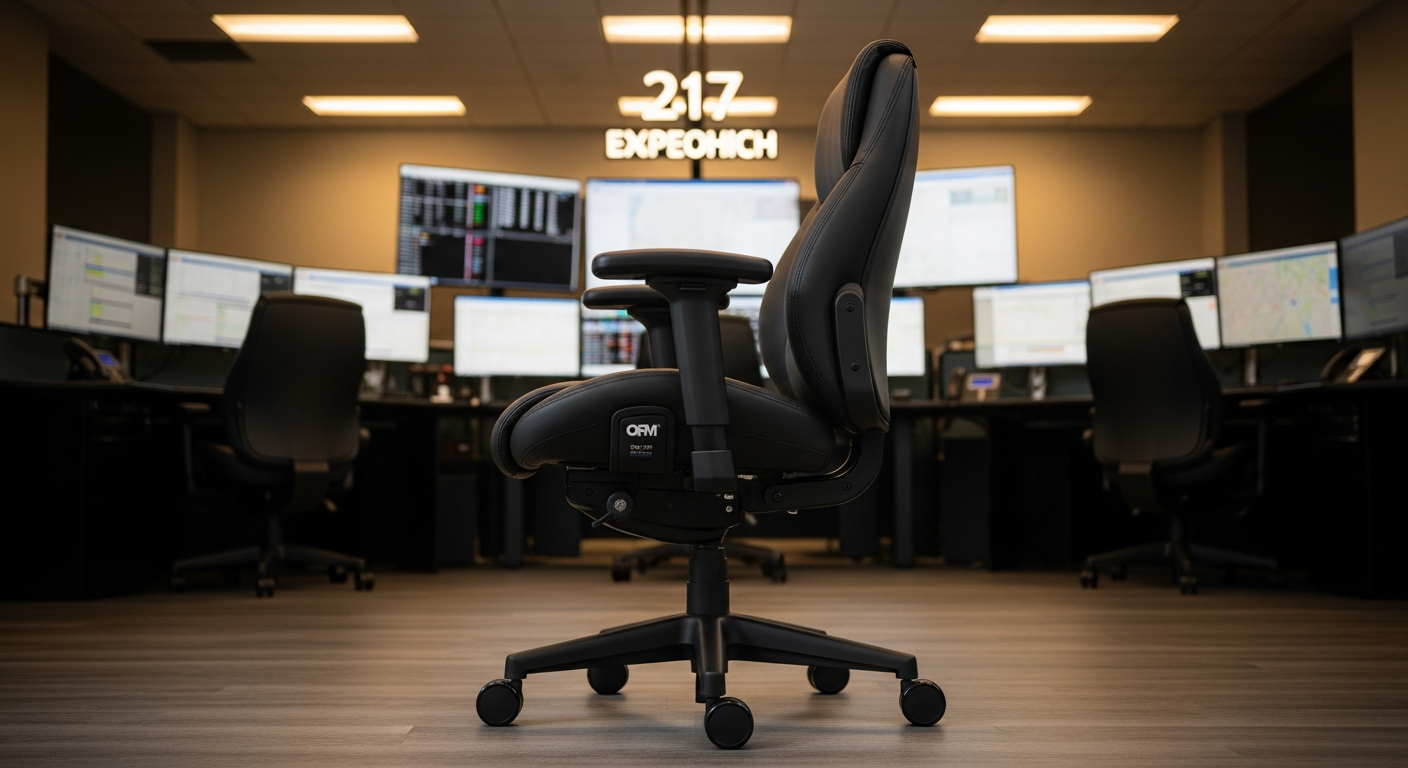
Emergency dispatch centers, police stations, and hospital command centers operate around the clock—and the people staffing these critical operations often spend 8, 12, or even 16-hour shifts planted in the same seat. That’s where standard office chairs fail spectacularly. The OFM 24/7 Heavy Duty Dispatch Chair was engineered for exactly this reality: continuous, demanding use in environments where comfort and durability aren’t luxuries—they’re operational necessities.
OFM’s Model #247 has earned its reputation as one of the company’s best-selling products by solving a problem that many workplace seating solutions ignore. This chair isn’t designed for typical 9-to-5 office work. Instead, it’s built from the ground up to handle the physical and mental demands of 24/7 operations, whether you’re managing emergency calls, monitoring surveillance systems, or coordinating complex logistics.
Discover the OFM 24/7 Heavy Duty Dispatch Chair and transform your operation’s seating setup today.
The robust construction, thoughtful ergonomic design, and extensive adjustability make it a trusted choice across hospitals, dispatch centers, and other high-stakes environments. Throughout this guide, you’ll walk through what makes this chair stand out in a crowded market. You’ll learn about its standout features, how the adjustability works in real-world scenarios, what the specifications mean for your specific needs, and whether the investment aligns with your budget. By the end, you’ll have a clear picture of whether the OFM 24/7 is the right choice for your operation.
Built for Non-Stop Operations: The Design Philosophy Behind the OFM 24/7
24/7 Engineering Focus
The OFM 24/7 was designed specifically for continuous use without performance degradation. Unlike conventional office chairs that show wear after a few years of standard use, this model anticipates the reality of round-the-clock operation. Every component—from the base to the upholstery—was selected with the understanding that this chair would be in use during night shifts, emergency surges, and extended operational periods.
Heavy-Duty Construction Standards
The reinforced frame and base are built to withstand constant movement and extended sitting sessions. This isn’t furniture that will loosen up or develop squeaks after months of intensive use. The structural integrity matters in environments where equipment reliability directly impacts mission success.
Commercial-Grade Durability
Materials were selected specifically for institutional settings where chairs face intensive daily demands. The polypropylene outer back shell won’t degrade under the pressure of continuous use, and the upholstery options—whether fabric or vinyl—are engineered for high-traffic environments.
Chrome-Finished Base and Mobility Features
The corrosion-resistant chrome foundation maintains structural integrity over years of use. Smooth wheel casters enable quick repositioning without sacrificing stability, allowing operators to adjust their position quickly without the chair sliding unintentionally.
Why Dispatch Centers Choose It
Proven reliability in mission-critical environments means chair failure simply isn’t an option. When a 911 call center is running at peak capacity, the last thing staff need is equipment problems. The OFM 24/7’s track record speaks to its dependability across thousands of installations.
Ergonomic Adjustability That Matches Real-World Shift Demands
360-Degree Swivel Capability
Unrestricted movement allows operators to monitor multiple screens or workstations without standing. This is particularly valuable in dispatch centers where a single operator may need to observe several monitors simultaneously.
Pneumatic Seat Height Adjustment
Quick, smooth height changes accommodate different body types and desk configurations. A controller can adjust height to reach keyboards comfortably, while a different operator in the same seat can fine-tune it for their proportions in seconds.
Seat Tilt with Tension Control
Customize recline resistance based on personal preference and shift activities. During high-stress periods, some operators prefer a more upright position. During monitoring-heavy tasks, a slight recline with adjustable tension prevents muscle fatigue.
Sliding Seat Depth Adjustment
Finding the perfect thigh support for extended sitting periods reduces pressure on the back of the legs during 12+ hour shifts. This feature is often overlooked in standard office chairs but makes a measurable difference in all-day comfort.
Independent Seat and Back Pitch Adjustments
Fine-tune support angles for lower back alignment during long shifts. Rather than moving as one unit, the seat and backrest adjust independently, allowing operators to find their optimal position for maximum support.
T-Shaped Adjustable Armrests
Height and width customization prevents shoulder strain and supports proper arm positioning. This is critical for operators working at keyboards or control panels for extended periods, as armrest alignment directly impacts shoulder and neck strain.
Built-In Lumbar Support
Dedicated lower back support reduces fatigue during extended shifts. The lumbar system works in conjunction with the adjustable back pitch to maintain the natural curve of the spine.
Why This Matters for Dispatch Work
Proper ergonomic positioning directly impacts alertness and reduces injury risk during critical operations. A fatigued operator makes mistakes. An operator experiencing back pain loses focus. The comprehensive adjustability of the OFM 24/7 prevents these performance drains.
Weight Capacity and Size Considerations: Who This Chair Serves Best
400-Pound Weight Capacity
Heavy-duty construction accommodates larger users without compromising comfort or safety. This capacity goes beyond what most office chairs offer, reflecting the chair’s purpose-built approach to diverse user needs.
Big-and-Tall Design Philosophy
Seat dimensions and back height were engineered for users who often struggle with standard office chairs. Too many “one-size-fits-all” solutions actually fit nobody perfectly. The OFM 24/7 prioritizes users who are typically underserved by the office furniture market.
Inclusive Sizing
This addresses the gap in quality seating options for plus-size professionals. In dispatch centers and emergency operations, staffing comes in all sizes—and everyone deserves equipment that supports their comfort and safety.
Footprint and Space Requirements
The larger base and overall dimensions require adequate workspace. Before purchasing, measure your dispatch station or control room carefully. The chair’s footprint is necessary for its stability and adjustability, but it does require appropriate space.
Ideal User Profiles
Emergency responders, logistics coordinators, security personnel, and healthcare administrators all benefit from this chair’s design. Any role that involves extended sitting in a high-stakes environment is a good fit.
Considerations for Compact Spaces
It may not suit cramped dispatch centers or control rooms with limited square footage. If you’re working with tight spatial constraints, honest assessment is critical before ordering.
Stability with Heavier Users
The chrome base and reinforced structure maintain stability across the full weight range. The engineering isn’t just about supporting weight—it’s about maintaining the chair’s performance characteristics for all users equally.
Upholstery Options and Hygiene Standards for Healthcare and Emergency Settings
Commercial-Grade Stain-Resistant Fabric
The durable textile option resists spills and cleans easily. For dispatch centers where operators might eat meals during shifts or work through weather-related incidents, this practical option stands up to real-world conditions.
Anti-Microbial and Anti-Bacterial Vinyl
Hospital-approved upholstery prevents pathogen growth and meets infection control standards. This becomes essential in healthcare facilities where cross-contamination protocols matter. The vinyl actively inhibits microbial growth rather than simply being cleanable.
Molded Polypropylene Outer Back Shell
Non-porous backing prevents moisture absorption and supports sanitation protocols. In hospital settings, this design choice ensures the chair itself won’t harbor pathogens between cleanings.
Easy-Clean Surfaces
Critical for healthcare facilities managing biohazard protocols and frequent sanitization. The chair’s surfaces can be wiped down quickly without degradation, supporting rapid turnover of workstations during shift changes.
Fabric vs. Vinyl Trade-Offs
Comfort feel, maintenance requirements, and cost differences vary between options. Fabric typically feels softer but requires more careful cleaning. Vinyl prioritizes sanitation and durability over that initial tactile feel.
Why Healthcare Facilities Prefer Vinyl
It meets HIPAA and infection control requirements while maintaining durability. Healthcare administrators making purchase decisions often prioritize vinyl for institutional settings because the hygiene benefits outweigh fabric comfort considerations.
Longevity of Upholstery Materials
Expected lifespan and replacement options for high-traffic environments extend the chair’s life. Even if upholstery wears, OFM offers recovery options rather than replacement, adding to long-term value.
Real-World Performance in Dispatch Centers, Police Stations, and Hospitals
Dispatch Center Case Studies
911 call centers benefit from extended comfort during high-volume periods. When call volume spikes—whether from severe weather, mass casualty incidents, or large-scale events—operators stay at their stations longer than normal. The OFM 24/7’s comfort features prevent the physical breakdown that can occur during these critical periods.
Police Station Applications
Suited for booking areas, evidence rooms, and administrative offices requiring 24/7 staffing. Police facilities need durable, adjustable seating that can handle the unique demands of law enforcement work, where officers might work irregular hours across different stations.
Hospital Settings
Emergency departments, security offices, and command centers where staff endure long, unpredictable shifts benefit from the chair’s reliability. Hospital workers often don’t know their shift length in advance, making adaptable, comfortable seating essential.
Durability Testing in Intensive Environments
Proven performance through months and years of continuous use demonstrates the engineering approach’s validity. These aren’t theoretical benefits—they’re observed across thousands of operational installations.
User Feedback from Institutional Buyers
Common praise centers on comfort, sturdiness, and reliability. Organizations that have purchased multiple units consistently mention the chair’s ability to perform under demanding conditions without disappointing.
Assembly and Setup in High-Volume Purchases
Organizations can deploy multiple units efficiently. OFM understands that large institutional buyers need straightforward assembly and setup processes, not complex furniture requiring specialized installation.
Maintenance Requirements
Minimal upkeep is needed to maintain performance over extended periods. Regular cleaning (especially for vinyl upholstery in healthcare settings) and occasional bolt tightening keep the chair functioning optimally for years.
Check current pricing and configure your ideal OFM 24/7 setup with available upholstery options.
Pricing, Value, and Budget Considerations for Institutional Buyers
Retail Pricing Structure
Listed price around $722 reflects commercial-grade construction and materials. This isn’t an impulse purchase—it’s an investment in equipment designed for intensive institutional use.
Sale Pricing and Bulk Discounts
Approximately $365 sale price offers significant value for cost-conscious organizations. Timing purchases during sales periods or coordinating bulk orders can substantially reduce per-unit costs.
Cost-Per-Year Analysis
Breaking down the investment across a typical chair lifespan of 5-7 years shows the actual annual cost becomes quite reasonable. Divide the total investment by expected years of service, and the daily cost becomes minimal compared to the benefits.
Comparison to Standard Office Chairs
The premium is justified for 24/7 operations. Standard office chairs typically cost $200-$400 but degrade significantly after a few years of intensive use. The OFM 24/7 maintains performance across its entire designed lifespan.
ROI for Institutional Purchases
Reduced worker injuries and improved productivity offset the higher initial cost. When operators avoid back injuries or fatigue-related mistakes, the savings in workers’ compensation claims and incident management often exceed the chair’s purchase price within 1-2 years.
Financing and Bulk Order Options
Strategies for equipping entire dispatch centers or departments include exploring corporate pricing, lease options, or financing through OFM’s institutional channels. Large organizations should contact sales directly about custom pricing.
Long-Term Value Proposition
Durability and adjustability mean fewer replacements over time. An organization that invests in quality seating early spends less on replacements and equipment upgrades across a 10-year period.
Potential Limitations and Who Might Want to Look Elsewhere
Space Constraints in Small Dispatch Centers
The larger footprint may not fit compact control rooms. Measure before committing. If space is genuinely limited, lighter-duty alternatives might be necessary despite compromising on features.
Upholstery Feel Preferences
Individual comfort varies with fabric vs. vinyl choice. Some operators might find vinyl cold or uncomfortable, while others prefer its easy-clean properties. Upholstery selection matters for operator satisfaction.
Aesthetic Considerations
The heavy-duty design prioritizes function over modern office aesthetics. If your operation values appearance alongside performance, the industrial look of the OFM 24/7 might not align with your space’s design direction.
Budget Limitations for Small Organizations
The higher price point may challenge limited seating budgets for smaller facilities. Very small dispatch centers or police departments operating with minimal resources might need to pursue less expensive alternatives.
Alternative Options for Specific Needs
When lighter-duty chairs might suffice for less intensive use, organizations should honestly assess whether 24/7-grade equipment is necessary. Some environments truly don’t require this level of performance.
Customization Limitations
Fixed features may not suit every unique operational setup. While the chair offers extensive adjustability, some organizations with highly specialized workstations might need custom solutions.
Learning Curve for Adjustments
New users benefit from guidance on optimizing all adjustment features. The comprehensive adjustability requires operators to understand what each control does. Initial training and documentation matter for maximizing the chair’s potential.
Making the Right Choice for Your Operation
Assessment Questions for Dispatch Centers
Evaluate whether your environment matches the chair’s design purpose. Ask: Do your operators work 8+ hour shifts regularly? Is the chair always in use across multiple shifts? Do you need to accommodate diverse body types and sizes? If you answer yes to these questions, the OFM 24/7 is likely the right investment.
Staffing Considerations
Match chair capacity to your team’s physical profile and shift patterns. If your facility employs taller staff or a broader range of body sizes, the adjustability and weight capacity of the OFM 24/7 become essential.
Space Planning
Measure and confirm adequate room for the chair’s footprint. Don’t estimate—use a tape measure. Account for the swivel radius and ensure operators can adjust positions without hitting walls or other equipment.
Upholstery Selection Criteria
Choose between fabric and vinyl based on your sanitation and comfort priorities. Healthcare facilities nearly always choose vinyl. Dispatch centers and police stations can make this choice based on their specific cleaning protocols and operator preferences.
Bulk Purchasing Strategy
Coordinate orders across departments or locations for better pricing. If multiple units are needed, volume discounts make a significant difference in total acquisition cost.
Trial Periods and Return Policies
Understand OFM’s guarantees before committing to large orders. Confirm what options exist if the chair doesn’t meet expectations or if your space doesn’t accommodate it properly.
Integration with Existing Workstations
Ensure the chair height and adjustability complement your desk setup. The OFM 24/7’s adjustability means it adapts to your workstation—not the other way around—but confirming compatibility prevents surprises after purchase.
The Bottom Line: Why Dispatch Centers and Emergency Operations Choose the OFM 24/7
The OFM 24/7 Heavy Duty Dispatch Chair isn’t just another office seat—it’s a purpose-built solution for environments where standard furniture fails. With its 400-pound weight capacity, comprehensive ergonomic adjustments, and commercial-grade construction, it directly addresses the unique demands of 24/7 operations in hospitals, police stations, and dispatch centers. The pneumatic height adjustment, independent pitch controls, and built-in lumbar support work together to keep operators comfortable during marathon shifts, while the stain-resistant or anti-microbial upholstery meets strict hygiene standards.
Yes, the initial investment is steeper than typical office chairs—but when you calculate the cost across years of continuous use, factor in reduced worker injuries, and consider the operational reliability it provides, the value becomes clear. Whether you’re outfitting a single dispatch station or equipping an entire emergency operations center, this chair delivers the durability and adjustability that mission-critical environments demand. The real question isn’t whether you can afford the OFM 24/7—it’s whether you can afford to compromise on seating quality when lives and emergencies depend on your team’s performance.
Leave a Reply