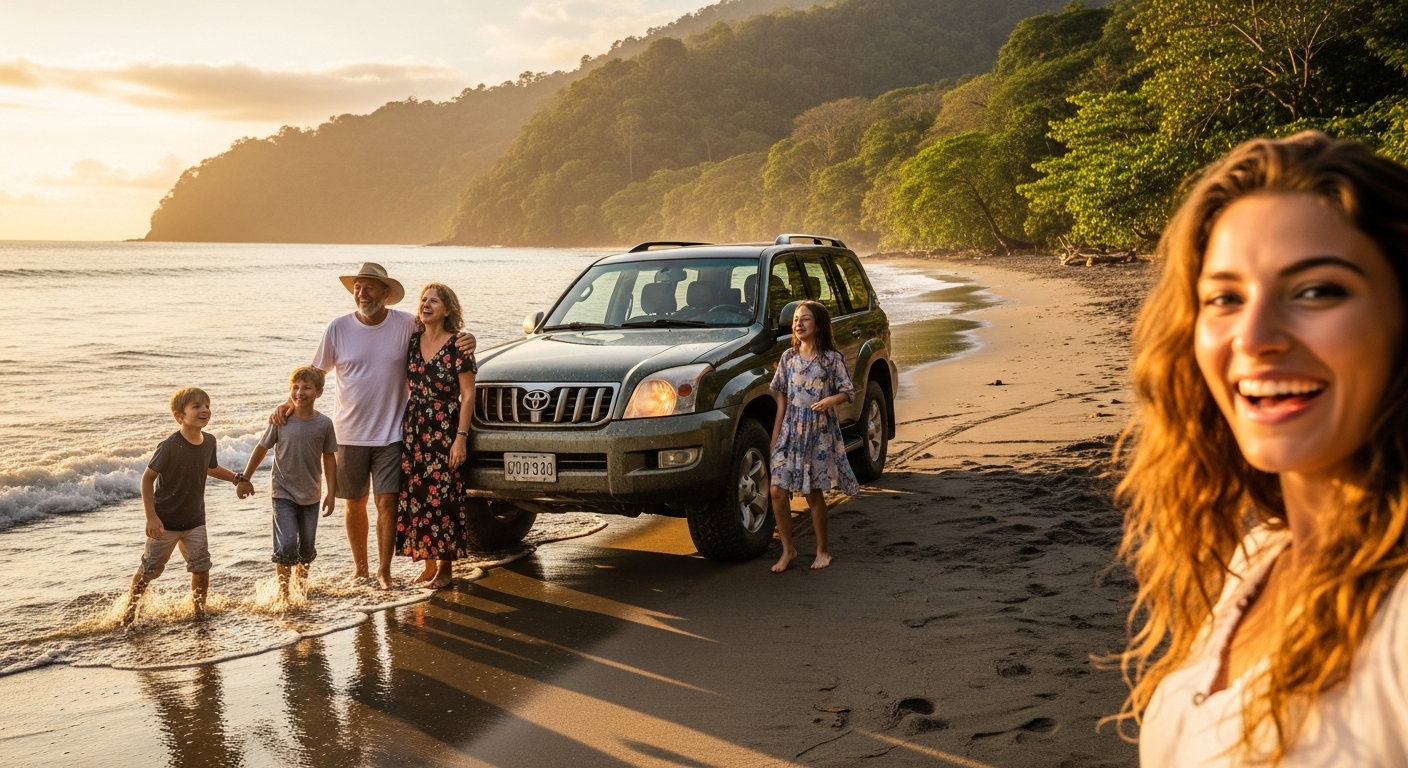
Nearly 80% of Costa Rica's most breathtaking destinations lie beyond paved highways—and that statistic changes everything when you're planning a family getaway. I've watched countless travelers arrive with standard sedans, only to realize they're locked out of volcanic hikes, hidden beach coves, and jungle lodge experiences that require serious traction. The terrain here doesn't forgive unprepared vehicles.
Jumbo Car has spent over 40 years mastering the art of getting travelers where they need to go, and since 2020, they've refined their 4×4 SUV rental fleet specifically for Costa Rica's demanding conditions. This isn't about luxury—it's about capability. Their Suzuki Vitara, Kia Sportage, and Suzuki Jimny models are engineered for those rocky mountain passes, river crossings, and rainy-season washouts that make standard cars genuinely risky.
Explore Jumbo Car's 4×4 SUV rental options and start planning your Costa Rican adventure today.
In this guide, I'm breaking down everything families and adventure groups need to know: which vehicles actually perform on Costa Rica's toughest roads, what you'll realistically pay, what hidden features make the difference, and how to avoid the common pitfalls that trip up first-time renters. By the end, you'll understand exactly why renting the right 4×4 SUV transforms your Costa Rican adventure from stressful to unforgettable.
The Geography Problem—Why Standard Cars Fall Short in Costa Rica
Costa Rica's road infrastructure presents a genuine challenge for unprepared travelers. Roughly 60% of the country's roads are unpaved or poorly maintained, with conditions deteriorating significantly during the rainy season from May through November. What looks manageable on a map becomes treacherous in reality—potholes that could swallow a sedan's wheel, washouts that appear overnight, and river crossings that expand beyond their dry-season dimensions.
Regional terrain varies dramatically across the country. The Pacific coast highways differ entirely from Caribbean jungle routes, while mountain passes demand completely different driving approaches than coastal plains. During wet months, these differences become safety issues rather than mere inconveniences. A standard sedan might handle the main highway to San José without incident, but venture toward Arenal Volcano, the Osa Peninsula, or the Caribbean rainforest, and you're facing genuine risks.
The safety implications run deeper than just discomfort. Standard vehicles lack the ground clearance to navigate rocky terrain without damaging undercarriage components. They struggle for traction on muddy mountain roads and can become genuinely stuck in situations where a 4×4 would proceed without drama. Insurance policies often exclude damage from off-road conditions on unpaved routes, leaving renters personally liable for expensive repairs—sometimes thousands of dollars for suspension damage or undercarriage harm.
I've heard countless traveler stories of sedans stranded on mountain roads, missed attractions because drivers didn't trust their vehicles to reach certain destinations, and families spending vacation days dealing with repairs instead of exploring. One family I know abandoned plans to visit a remote waterfall lodge entirely because their rental sedan couldn't handle the 8-kilometer uphill mountain road. They paid for the accommodation and never used it.
A 4×4 SUV changes this equation fundamentally. Suddenly, those national parks with rough internal roads become accessible. Remote lodges tucked into the mountains transition from impossible to merely challenging. The added traction and ground clearance provide genuine peace of mind—and more importantly, they open itineraries that standard cars simply cannot handle.
Jumbo Car's 4×4 Fleet: Vehicle Options That Actually Handle Costa Rican Terrain
Suzuki Vitara Specifications
The Suzuki Vitara represents a solid mid-range option in Jumbo Car's fleet. Powered by a 1.6L engine with all-wheel-drive capability, it accommodates 5 to 7 passengers comfortably—ideal for families or small adventure groups. The Vitara provides meaningful ground clearance advantages over sedans while maintaining reasonable fuel efficiency compared to larger SUVs. Modern safety features including airbags, ABS braking systems, and stability control come standard.
Kia Sportage Breakdown
The Kia Sportage steps up performance and passenger comfort. A 2.0L turbocharged engine delivers noticeably better acceleration on steep mountain grades, while the automatic transmission (standard across the fleet) makes driving significantly easier during long days navigating varied terrain. The Sportage incorporates more advanced safety systems and modern infotainment technology. Fuel consumption remains competitive despite the larger engine, and the interior appointments feel notably more premium than the Vitara.
Suzuki Jimny Profile
The Suzuki Jimny serves a specific purpose: exceptional maneuverability on narrow mountain roads. Its compact frame navigates tight switchbacks and rough single-track roads where larger vehicles struggle. The Jimny works best for smaller groups or couples but remains fully capable in the toughest terrain. Its proportions prove advantageous in remote areas where space constraints matter.
Fleet Age and Maintenance Standards
Jumbo Car emphasizes newer or very recent models—typically 2023 and later—ensuring reliability and modern amenities. This commitment to vehicle age matters significantly. Newer vehicles have suspension systems engineered more effectively for rough terrain, updated engine management for better performance at altitude, and climate control systems that actually handle Costa Rica's humidity effectively. Maintenance records are meticulous, reducing the likelihood of unexpected mechanical issues that plague older rental fleets.
Transmission, Safety, and Comfort Features
All vehicles feature automatic transmissions as standard, eliminating the challenge of managing manual clutches on steep mountain roads or in river crossings. Safety extends beyond basic airbags and ABS. Stability control systems help prevent rollovers on uneven terrain, and rollover protection frameworks provide structural integrity if vehicles need recovery from difficult situations.
Air conditioning comes standard—a necessity in a tropical climate where temperatures regularly exceed 90°F and humidity hovers around 80%. Interior spaces accommodate luggage and adventure gear through spacious cargo areas and optional roof racks, while modern infotainment systems keep passengers entertained and provide navigation capability.
Optional Accessories That Enhance Your Experience
Jumbo Car offers child seats for families with young children, GPS navigation systems that function even in areas with limited cellular coverage, Wi-Fi hotspots for staying connected, and roof racks for additional cargo capacity. These add-ons, modest in cost, significantly enhance comfort and capability on extended trips.
Pricing Breakdown: What You'll Actually Pay for a Family 4×4 Rental
Understanding Daily Rates and Weekly Discounts
Jumbo Car structures pricing to reward longer rental periods. A single day costs considerably more per-day than spreading that cost across a full week. The math works in favor of families planning extended trips—renting for two weeks costs less per day than a one-week rental.
Seasonal Pricing Variations
Costa Rica's high season (December through April) commands premium rates due to demand. The green season (May through November) offers substantially lower pricing, with the added benefit of fewer tourists and vibrant landscape colors. Families flexible on timing can achieve significant savings by traveling during green season, despite occasional afternoon rain showers.
Real Pricing Examples from Recent Rentals
A 7-day rental with full insurance coverage runs approximately $650. A 9-day Kia Sportage rental was reported at $550. A 14-day Suzuki Vitara rental came in around $500. These figures exclude security deposits but include insurance and basic vehicle provision. Comparing these costs against the experience gained—and the attractions made accessible—the investment becomes reasonable quickly.
Security Deposit Requirements
Expect security deposits ranging from $1,200 to $1,500, held on your credit card during the rental period. These refunds process within days of returning the vehicle safely. The deposit protects Jumbo Car against significant damage claims but shouldn't concern travelers planning normal, careful driving. Properly executed insurance coverage typically eliminates personal liability entirely.
Insurance Options and Coverage Clarity
Full coverage policies protect against damage claims, theft, and accidents. Credit card waivers, when properly documented and filed, provide alternative protection without additional rental company charges. Understanding what each option covers prevents surprises at rental return. Many credit cards include rental car insurance automatically—verifying this before arrival eliminates the need for Jumbo Car's premium coverage.
Optional Add-ons: Budgeting for Enhancements
Child seats typically cost $5-10 per day. GPS navigation systems run $8-12 daily. Wi-Fi hotspots operate at similar rates. Roof racks add $10-15 for the entire rental period. These costs stack quickly but remain optional. Families with smartphones and offline maps can navigate without GPS. Those comfortable without constant connectivity can skip Wi-Fi. Prioritize based on actual needs rather than purchasing everything available.
Hidden Fees and Budget-Friendly Strategies
Young driver fees apply for renters under 25, typically adding 15-20% to base rental costs. Late return penalties charge per hour of lateness. Fuel charges depend on your consumption, though most renters return vehicles on the fuel level at which they received them. Planning strategically—booking during green season, committing to longer rental periods, and optimizing insurance coverage—produces the lowest overall cost per experience gained. Avoid premium add-ons that duplicate smartphone functionality, and prioritize items that genuinely enhance safety or comfort for your family's specific needs.
Essential Features That Make a Difference on Costa Rican Roads
Four-Wheel-Drive Engagement Fundamentals
Modern 4×4 systems allow switching between standard two-wheel-drive for normal highway driving and four-wheel-drive engagement for challenging terrain. Understanding when to use each mode matters. Standard mode on highways preserves fuel. Engaging 4WD before attempting muddy sections, river crossings, or severe mountain grades ensures maximum traction when necessary. Knowing your vehicle's system—practiced during the rental pickup briefing—prevents hesitation when you need it.
Ground Clearance: Why Measurements Matter
Ground clearance separates capable vehicles from stranded ones. Standard sedans offer 5-6 inches. The 4×4 SUVs in Jumbo Car's fleet provide 8-9 inches or more—enabling river crossings that would scrape undersides of standard vehicles, rock traversals without undercarriage contact, and navigation through rut-filled roads without suspension bottoming. This seemingly small difference transforms what routes you can safely attempt.
Suspension Systems for Rough Terrain
Modern independent suspension systems absorb impacts from rocks and ruts individually per wheel rather than transmitting the shock through the entire chassis. This engineering detail produces tangible comfort on rough roads and protects vehicle longevity. Better suspension also maintains ground clearance even when encountering severe obstacles—wheels flex into ruts while the vehicle body stays elevated.
Engine Power and Performance
The 1.6L Vitara provides adequate power for most of Costa Rica's roads. The 2.0L turbocharged Sportage delivers noticeably better performance on sustained mountain climbing where thin air at altitude reduces oxygen available for combustion. This becomes relevant when traveling to Arenal Volcano region (3,000+ feet elevation) or attempting steep consecutive passes. Adequate power ensures you maintain momentum and temperature control rather than downshifting repeatedly and generating heat buildup.
All-Terrain Tire Specifications
Tread patterns designed for mud and gravel matter substantially on unpaved roads. Deep grooves channel mud away, reducing slipping. Wider spacing between treads prevents clogging with mud that would eliminate traction. These design choices don't matter much on highways but become critical when road conditions deteriorate. Jumbo Car's newer fleet includes tires engineered for tropical conditions—designed to shed water effectively and maintain grip on wet surfaces.
Fuel Tank Capacity and Range Planning
Fuel tank sizes affect how far you can travel between refueling. Remote regions have limited gas stations, sometimes 50+ kilometers apart. Knowing your vehicle's range prevents uncomfortable situations where finding fuel becomes urgent rather than routine. Newer models in Jumbo Car's fleet typically offer 40-50 liter tanks, providing 350-450 kilometer range depending on driving conditions. Plan accordingly when venturing into less-developed areas.
Brake Systems for Mountain Descent
Enhanced braking systems with heat management become genuinely important on long mountain descents. Standard brake systems overheat when used continuously, losing effectiveness dangerously. Modern 4×4 SUVs employ multi-stage braking that uses engine braking to reduce brake temperature while maintaining control. Understanding how to use these systems—downshifting for engine braking rather than continuous pedal braking—preserves brake function across multiple hours of mountain descent.
Climate Control in Tropical Humidity
Air conditioning effectiveness matters when temperatures exceed 90°F and humidity approaches saturation. Standard automotive systems struggle with this combination. Jumbo Car's newer vehicles incorporate climate control engineered for tropical climates, maintaining comfortable cabin temperatures even when parked in full sun with children. This prevents heat exhaustion risk and keeps passengers functional for active exploration after hours of driving.
Navigating Costa Rica's Roads: Practical Driving Tips for Families
Understanding Road Classifications
Costa Rica's roads divide into distinct categories demanding different approaches. Major highways between cities feature asphalt surfaces and reasonable maintenance. Mountain passes transition to unpaved surfaces with significant elevation changes. Jungle roads narrow dramatically with vegetation encroaching from both sides. Understanding which classification you're facing helps set realistic expectations and appropriate driving behavior.
Rainy Season Driving Challenges
May through November brings daily afternoon showers. Visibility drops suddenly when heavy rain begins. Unpaved roads transform into muddy surfaces within minutes. Road shoulders erode, reducing safe passing zones. Flash flooding occasionally closes roads temporarily. Families should delay morning departures during rainy season to avoid afternoon thunderstorms and allow roads to dry somewhat. Checking weather forecasts and recent road condition reports prevents becoming unexpectedly stranded.
River Crossing Protocols
Some routes require fording shallow rivers—typically manageable in properly equipped 4×4 vehicles but dangerous in standard cars. Before attempting crossings, assess water depth visually and check with locals about current conditions. Understand your vehicle's water fording capability. Proceed slowly, maintaining momentum without accelerating aggressively. If water reaches above the wheel hubs, abort the crossing and find an alternative route. Jumbo Car staff can brief you on specific crossings you'll encounter.
Mountain Descent Strategies
Steep mountain roads demand specific techniques. Use low gears to engage engine braking, reducing brake pedal usage. Avoid riding brakes continuously—this generates excessive heat and reduces stopping power when truly needed. Tap brakes gently and frequently rather than applying constant pressure. Watch for hairpin turns where slower speeds prevent losing control. These techniques, discussed during vehicle pickup, become natural after the first mountain descent.
Wildlife and Pedestrian Awareness
Costa Rica's roads host unpredictable hazards. Sloths cross roads at glacial pace. Monkeys dart unexpectedly. Cows graze near roadways. Pedestrians sometimes walk road centerlines without looking. Defensive driving—expecting the unexpected and traveling at speeds allowing sudden stops—prevents tragic encounters. Night driving in rural areas proves particularly hazardous. Plan routes to complete mountain driving before dark.
Fuel Station Planning
Gas stations cluster near population centers and disappear in remote regions. Avoid driving with fuel tanks below half full when entering areas with uncertain station locations. Use maps to identify refueling opportunities along your planned route. Apps indicating fuel station locations prove invaluable. Remote lodges sometimes offer fuel, but at premium pricing. Plan strategically to avoid desperate searching for fuel in unfamiliar terrain.
Checkpoint Procedures and Legal Compliance
Police checkpoints occur on major routes, particularly near borders. Checkpoints serve legitimate purposes—verifying driver licensing, vehicle registration, and insurance. Rental vehicles carry documentation clearly. Remain calm and professional at checkpoints. Most encounters conclude within minutes. Familiarity with your specific vehicle's registration paperwork, provided by Jumbo Car, prevents confusion.
Emergency Contacts and Preparation
Jumbo Car provides roadside assistance coverage for mechanical emergencies. Know these contact numbers before driving. Identify nearest hospitals along your planned routes. Understand insurance claim procedures before needing them. Cell service varies in rural areas—recognize that you might lack connectivity when traveling remotely. Inform hotel concierges of your daily routes so someone knows your anticipated destination if you don't arrive as expected.
Your Costa Rican Adventure Starts With the Right Vehicle
The difference between a memorable Costa Rican family adventure and a frustrating one often comes down to one decision: choosing the right rental vehicle. I've seen families transform their entire trip by upgrading to a 4×4 SUV—suddenly, those remote waterfalls become accessible, mountain roads feel manageable, and the kids aren't stressed about whether the car will make it through the next river crossing.
Jumbo Car's 4×4 fleet, with over 40 years of expertise backing it, removes the guesswork. You're not gambling with an unfamiliar vehicle on unfamiliar terrain. You're driving a purpose-built machine that handles what Costa Rica throws at it, equipped with modern safety features, comfortable interiors, and the ground clearance that actually matters. The investment—whether it's $500 for two weeks or $650 for a week with full insurance—pays for itself in experiences you simply can't have in a standard sedan.
Access to hidden national parks, confidence on mountain passes, and the peace of mind knowing your family is in a reliable, capable vehicle. That's not just transportation. That's the foundation of an adventure you'll talk about for years.
Leave a Reply