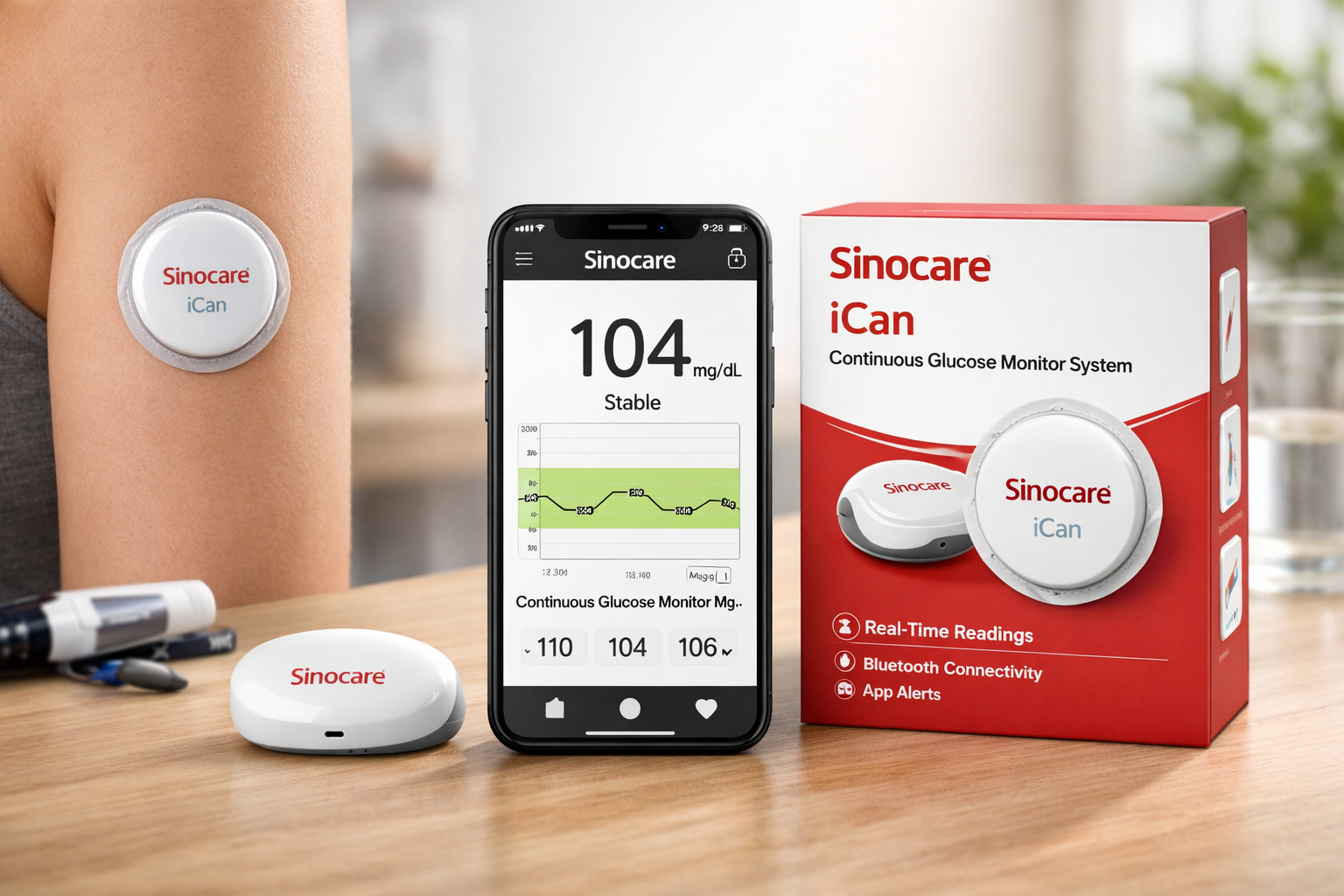
Managing diabetes while maintaining an active lifestyle feels impossible for many—until they discover continuous glucose monitoring. Traditional finger-prick testing interrupts workouts, social events, and daily routines, forcing constant pauses in life. The Sinocare iCan CGM changes that narrative entirely, delivering real-time glucose readings every three minutes seamlessly integrated into your smartphone for instant access to your blood sugar data.
Unlike conventional meters that capture snapshots, the iCan provides a complete picture of your glucose trends, patterns, and behaviors—all without the repetitive finger pricks that derail your day. You’ll gain insights into how your body responds to meals, exercise, and stress, enabling smarter decisions about your health every single day.
Discover how the Sinocare iCan CGM can transform your diabetes management today.
Beyond Traditional Testing: Why Active People Choose Continuous Glucose Monitoring
The limitations of finger-prick testing for athletes, travelers, and busy professionals
Finger-prick testing has served its purpose for decades, but it carries inherent limitations that become painfully obvious for anyone living an active life. Athletes interrupt training sessions to check blood sugar. Travelers worry about maintaining supplies across time zones. Busy professionals step away from meetings to conduct tests in bathroom stalls. Each finger prick is a moment of friction—a reminder that diabetes management requires constant, visible effort.
Beyond inconvenience, traditional testing captures only isolated moments. A finger-prick test reflects your glucose level at that single second, nothing more. You might test at 9 AM and find normal readings, then experience a dangerous spike at noon with no warning. The gaps between tests hide crucial information about how your body actually functions throughout the day.
How real-time data every three minutes captures glucose patterns traditional meters miss
The Sinocare iCan CGM eliminates those blind spots entirely. Every three minutes, automatic readings stream to your smartphone without any action required on your part. This continuous stream reveals patterns that finger-prick testing simply cannot capture—how your glucose responds to specific foods, when afternoon energy crashes typically occur, whether stress triggers blood sugar swings, and how different exercise intensities affect your levels.
Over time, this granular data transforms your understanding of your own physiology. You’ll recognize that your usual breakfast spiked your glucose yesterday but not today, prompting investigation into what changed. You’ll notice that evening walks consistently lower your levels. You’ll discover which stress management techniques actually work for your body. This pattern recognition becomes your personal glucose coach, operating 24/7.
The psychological freedom of eliminating constant testing interruptions
Beyond the physical convenience, continuous monitoring offers profound psychological benefits. The mental burden of diabetes management—remembering to test, finding appropriate testing locations, managing supplies—gradually lifts. Instead of testing becoming a constant source of anxiety, the automatic readings fade into background operation. You check your app when curious or alerted, rather than constantly wondering what your glucose might be.
This shift from reactive testing to proactive monitoring changes how you relate to your condition. Rather than being interrupted by your diabetes, you’re informed by it. The difference shapes everything from workout intensity to social confidence to overall quality of life.
Why CGM adoption is reshaping diabetes management for younger, active demographics
Younger people managing diabetes increasingly refuse to accept the lifestyle constraints of traditional testing. This demographic shift is driving widespread CGM adoption, particularly among those prioritizing fitness, travel, and active careers. These individuals recognize that blood glucose management technology should enable their lives, not limit them.
The Sinocare iCan meets this demographic where they live—on their smartphones, integrated with their daily activities, providing intelligence rather than friction. As adoption accelerates, the stigma around diabetes management diminishes, and the focus shifts entirely to performance and health optimization.
The difference between reactive testing and proactive glucose trend management
Traditional finger-prick testing is fundamentally reactive. You test, discover a problem, and then respond. Continuous glucose monitoring flips this dynamic to proactive trend management. Predictive alerts warn you before dangerous highs or lows occur, giving you time to prevent problems rather than treat them after they develop.
This shift from reaction to prevention represents a fundamental advance in diabetes care. You’re no longer responding to crises; you’re navigating your day with foreknowledge of your glucose trajectory.
Third-Generation Biosensor Technology: The Science Behind Accuracy
How Sinocare’s proprietary biosensor technology ensures stable, reliable readings
The Sinocare iCan utilizes third-generation biosensor technology specifically engineered for accuracy and stability. This proprietary technology represents years of research and refinement, ensuring that readings remain consistent throughout the full 15-day wear-life of each sensor.
The biosensor works by measuring glucose in interstitial fluid—the fluid surrounding your cells—rather than measuring blood directly like finger-prick tests do. Enzymatic reactions within the sensor generate electrical signals proportional to glucose concentration, which the device translates into your readings. This enzyme-based approach provides superior stability compared to earlier generation sensors, minimizing drift and maintaining accuracy from day one through day fifteen.
The advancement from earlier CGM generations to current sensor capabilities
Earlier CGM systems struggled with sensor drift, meaning readings would gradually become less accurate as wear-life progressed. Users often faced the frustrating reality that sensors were least reliable precisely when they’d invested the most time in them. Third-generation biosensors dramatically reduced this drift, ensuring that readings on day fifteen are nearly as trustworthy as readings on day one.
This advancement translates to real-world reliability. You can confidently make treatment decisions based on your iCan data without worrying that sensor age has compromised accuracy.
Accuracy standards and clinical validation of the iCan system
The Sinocare iCan has undergone rigorous clinical validation to meet stringent accuracy standards. The system demonstrates performance that aligns with established CGM accuracy benchmarks, meaning you can trust the readings guiding your daily decisions. This clinical validation isn’t marketing language—it’s verification that the technology performs as claimed in real-world conditions.
When you’re making treatment decisions, accuracy matters profoundly. An inaccurate reading that causes you to over-treat or under-treat a glucose abnormality has serious health consequences. Sinocare’s commitment to accuracy standards ensures that won’t happen.
How enzyme-based sensing provides consistent glucose detection
The enzyme-based sensing approach offers inherent advantages over some alternative glucose-sensing technologies. Enzymes create biological specificity—they respond selectively to glucose rather than reacting to interfering substances. This specificity means fewer false readings and more reliable trend data.
Additionally, enzyme-based sensors handle the challenging chemistry of continuous glucose monitoring gracefully. The enzyme maintains consistent activity throughout the sensor’s wear-life, which directly translates to the accuracy consistency that makes the iCan reliable from day one through day fifteen.
The role of sensor calibration in maintaining data precision throughout wear-life
Most CGM systems require occasional calibrations using traditional finger-prick tests to maintain accuracy. The iCan’s approach to calibration balances the need for occasional verification with the convenience users expect from a CGM system. Calibration protocols are straightforward and typically infrequent, minimizing the finger-prick testing that continuous monitoring aims to reduce.
Proper calibration ensures that the mathematical relationship between sensor readings and actual glucose values remains accurate. This relationship can drift slightly over time due to biological factors, and calibration corrects for this drift without requiring constant manual input from the user.
15-Day Sensor Wear-Life: Extended Monitoring Without Constant Replacements
The practical advantage of two-week sensor durability for users
A 15-day wear-life sounds like a technical specification, but it translates into substantial practical advantages. Every two weeks rather than weekly, you replace your sensor. Over a year, that’s roughly 26 sensor changes instead of 52—cutting your replacement frequency in half compared to some competitor systems.
This reduced replacement frequency matters in ways that finger-prick testing users might not immediately appreciate. Sensor application takes time and attention. The adhesive can cause skin irritation if you’re applying new sensors constantly. Your routine is less disrupted when you’re changing sensors every two weeks rather than every seven days. The cumulative convenience adds up significantly over months and years of diabetes management.
Cost savings from reduced sensor replacement frequency
Reduced replacement frequency directly lowers your long-term costs. If sensors cost $50 per unit and you need 26 annually instead of 52, you’re saving approximately $1,300 per year compared to weekly-replacement systems. Over a decade of diabetes management, that’s $13,000 in sensor costs alone.
When calculating whether continuous glucose monitoring makes financial sense, this extended wear-life becomes a significant factor. The Sinocare iCan’s affordability is partially attributable to this practical advantage that reduces consumable costs for users.
Wear-life comparison with competitor CGM systems
The competitive CGM market features several options, and wear-life varies significantly. Some systems require weekly replacements. Others offer 14-day wear-life. A few premium options stretch to longer durations, though at substantially higher cost. The iCan’s 15-day wear-life positions it competitively while maintaining lower overall system costs than premium alternatives.
When you’re evaluating continuous glucose monitoring systems, sensor wear-life deserves consideration alongside accuracy, integration features, and cost. The iCan balances these factors effectively.
Durability features including IP28 water and dust resistance ratings
Sensors experience real-world conditions that lab testing doesn’t fully capture. Workouts produce sweat. Beach days bring salt water. Dust accumulates in outdoor environments. The iCan’s IP28 rating indicates protection against both dust and water ingress, meaning your sensor survives these conditions without degradation.
This durability rating ensures you’re not restricted to indoor activities or required to carefully shield your sensor during workouts. The device is built for the active lifestyle that CGM users typically live.
How extended wear-life reduces waste and improves user convenience
From an environmental perspective, 50% fewer sensors annually means 50% less plastic waste from your diabetes management. Over thousands of CGM users, this collective reduction in waste contributes meaningfully to environmental sustainability.
From a personal convenience perspective, fewer sensor changes means fewer opportunities for disruption. Your routine is interrupted less frequently. Your skin experiences less adhesive irritation. Your overall diabetes management feels increasingly seamless and integrated into your normal life rather than requiring constant visible effort.
Experience the convenience of extended sensor wear-life with the Sinocare iCan CGM system.
Smart App Integration and AI-Driven Analytics: Your Personal Glucose Coach
Real-time data visualization and trend graphs accessible from your smartphone
The Sinocare iCan app transforms raw glucose data into visual intelligence. Instead of seeing numbers alone, you visualize your glucose trajectory over hours and days. Trend graphs show you whether your glucose is rising, falling, or stable—information that a single number cannot convey. These visualizations make patterns obvious, helping you understand your body’s behavior at a glance.
The app interface is designed for quick reference during busy days and detailed analysis when you want deeper insights. You can open the app in seconds to check your current status or spend time examining trend patterns to understand your glucose response to specific meals or activities.
Predictive alerts that warn you before dangerous glucose highs or lows occur
Rather than reacting to dangerous glucose levels after they’ve already developed, predictive algorithms anticipate problems before they occur. If your glucose is trending downward and the rate of decline suggests you’ll reach hypoglycemic levels within a specified timeframe, an alert notifies you to take preventive action.
These predictive capabilities transform your ability to prevent glucose emergencies. Instead of suffering a hypoglycemic episode and then treating it, you eat a small snack when alerted and prevent the problem entirely. This capability is particularly valuable during sleep, when you cannot monitor yourself continuously.
AI-powered pattern recognition that identifies your unique glucose behaviors
Every person’s glucose metabolism is unique. Your specific response to carbohydrates differs from someone else’s. Your stress response profile is individually your own. The iCan’s AI-driven analytics learn your patterns and highlight insights specific to your physiology.
Over time, the system identifies correlations that you might miss. Perhaps your glucose consistently spikes after eating pasta specifically, while rice has minimal impact. Maybe afternoon stress triggers consistent glucose rises. The AI surfaces these patterns, enabling you to make lifestyle modifications aligned with your personal physiology rather than generic dietary advice.
Integration with diet, exercise, and medication logging for holistic insights
Glucose management rarely occurs in isolation. Diet, exercise, medication, sleep, and stress all influence your blood sugar. The iCan app integrates logging capabilities for these lifestyle factors, allowing you to correlate glucose patterns with their underlying causes.
When you notice a glucose spike, you can review what you ate, whether you exercised, and your stress level that day. Over time, this correlative analysis reveals your personal glucose drivers. You discover which stress management techniques actually work for you, which meal timing optimizes your levels, and which exercise duration produces the most beneficial glucose response.
How app notifications help you make immediate, informed lifestyle decisions
Notifications from the iCan app provide actionable intelligence when you need it most. A predictive low alert during a workout tells you to consume carbohydrates before hypoglycemia develops. A trending-high notification before a meal reminds you to consider portion sizes or meal composition. A pattern alert suggesting nighttime glucose instability prompts adjustment to your evening routine.
These notifications guide your decisions in real-time, transforming abstract health goals into concrete, moment-to-moment actions. Rather than wondering whether you should eat something or exercise, you have data-driven guidance informing your choice.
Affordability Without Compromise: The Cost-Effectiveness Factor
Pricing structure and how the iCan compares to premium CGM competitors
The continuous glucose monitoring market includes options at vastly different price points. Premium systems from established brands command high prices, while newer entrants compete on affordability. The Sinocare iCan positions itself strategically as an affordable option without sacrificing the advanced features that premium systems offer.
Specific pricing varies by region and package configuration, but the iCan typically costs substantially less than premium alternatives while delivering comparable core functionality. This positioning makes CGM technology accessible to individuals who might otherwise consider it financially unfeasible.
Long-term cost analysis: sensor expenses versus traditional testing supplies
A meaningful way to evaluate CGM affordability is comparing long-term costs to traditional testing. Finger-prick testing requires continuous supplies: lancets, test strips, and disposal equipment. Over a year, these supplies accumulate significant costs—often $1,000 to $2,000 annually depending on testing frequency.
CGM systems shift these costs from consumable test strips to sensor replacements, but the total often comes out lower or comparable when you factor in the dramatically reduced number of finger-prick tests required. Many CGM users eliminate finger-prick testing almost entirely, replacing ongoing supply costs with less-frequent sensor replacements.
Insurance coverage considerations and patient assistance programs
Insurance coverage for CGM systems has expanded substantially as their clinical value has become established. Many insurance plans now cover continuous glucose monitoring, particularly for patients with type 1 diabetes or insulin-dependent type 2 diabetes. Coverage typically includes sensor costs while patients pay for the reader device.
Sinocare offers patient assistance programs in various regions to support access for uninsured or underinsured individuals. These programs recognize that financial barriers shouldn’t prevent people from accessing life-improving diabetes technology.
Value proposition for budget-conscious individuals managing chronic conditions
Beyond immediate cost, consider the broader value proposition. Continuous glucose monitoring reduces your risk of serious glucose-related complications—diabetic ketoacidosis, severe hypoglycemia, and long-term complications from chronic high blood sugar. Each of these conditions carries substantial medical costs if they occur.
From a pure economics perspective, spending on prevention through better glucose management often pays for itself through avoided emergency department visits and hospitalization. You’re not spending money on something optional; you’re investing in prevention that reduces your long-term healthcare costs.
ROI potential through reduced diabetes complications and healthcare costs
The return on investment for continuous glucose monitoring extends beyond direct sensor costs. Better glucose control reduces your risk of microvascular complications like retinopathy and nephropathy, and macrovascular complications like heart disease. Each prevented complication represents avoided medical costs ranging from thousands to hundreds of thousands of dollars.
While this reasoning should never be your sole motivation for adopting CGM—your quality of life and freedom matter equally—it does mean that the financial case for continuous glucose monitoring is more compelling than initial sensor costs might suggest.
Practical Considerations: What You Should Know Before Starting
App dependency and smartphone requirements for full system functionality
The Sinocare iCan requires a compatible smartphone to access full functionality. The dedicated app provides data visualization, trend analysis, predictive alerts, and logging capabilities. Without the app, you lose access to most features that make continuous glucose monitoring valuable.
This dependency means you need a compatible iOS or Android smartphone to use the system effectively. If you’re not comfortable with smartphone technology or prefer not to carry a phone consistently, you should carefully consider whether the iCan aligns with your preferences. However, most active individuals using CGM already maintain constant smartphone access, making this requirement minimal.
Initial setup process and learning curve for CGM newcomers
Transitioning from finger-prick testing to continuous glucose monitoring involves a learning curve. The initial sensor application process feels unfamiliar. Reading continuous data differs from interpreting isolated test results. Understanding trend graphs requires adjustment from numerical glucose values alone.
Most users adjust within a few days to a week. The process is straightforward enough that manufacturer instructions and online tutorials provide sufficient guidance. Your diabetes educator or healthcare provider can offer additional support during the transition. The learning curve is brief relative to the long-term benefit.
Sensor placement options and adhesive comfort for different body types
The iCan sensor adheres to your skin, typically on the abdomen, though some users prefer alternative placements like the arm. The adhesive can cause irritation for people with sensitive skin, though this is generally manageable. Sensor placement affects both comfort and accuracy—certain placements may read differently due to variations in interstitial fluid access.
Experimentation during your first few sensors helps identify your optimal placement location. Most users find a comfortable placement that works reliably for them after minimal trial and adjustment.
Troubleshooting common issues and customer support resources
Like any electronic device, the iCan occasionally experiences issues. Sensors occasionally fail early, requiring replacement. Connection problems between sensor and receiver sometimes occur. The app may behave unexpectedly. Sinocare provides customer support resources including phone support, online knowledge bases, and user communities.
Before starting, familiarize yourself with these support resources so you know how to get assistance if needed. Most users rarely encounter problems, but having accessible support builds confidence during your initial transition to continuous glucose monitoring.
Transition timeline from traditional testing to full CGM reliance
Your transition from finger-prick testing to full CGM reliance typically unfolds over a few weeks. Initially, you might run dual testing—checking your finger-prick meter while establishing trust in your CGM readings. Once you’re confident in the iCan’s accuracy and reliability, you gradually reduce finger-prick testing until it becomes minimal or unnecessary.
This gradual transition provides psychological comfort as you gain confidence in your new system. You’re not forced to immediately abandon your familiar testing method; instead, you transition at your own pace as trust builds.
Real-World Application: Scenarios Where the iCan CGM Excels
Managing blood sugar during intense workouts and athletic training
For athletes, continuous glucose monitoring solves a profound challenge: maintaining stable glucose during training when traditional finger-prick testing is impractical. The iCan provides real-time readings and predictive alerts throughout your workout without requiring you to stop, test, and treat.
You’ll discover how different training intensities affect your glucose, enabling you to fuel appropriately before workouts. You’ll identify whether post-workout glucose drops occur consistently, allowing you to time recovery snacks optimally. You’ll optimize your athletic performance by maintaining stable glucose throughout training.
Traveling internationally with continuous monitoring capabilities
Travel complicates diabetes management. Time zone changes affect medication timing. Unfamiliar foods make glucose prediction difficult. Access to testing supplies and healthcare becomes uncertain. The iCan simplifies travel-related complications by providing continuous monitoring without relying on supply access.
You don’t worry about carrying large quantities of test strips through customs. You don’t stress about finding appropriate testing locations in unfamiliar cities. Your iCan continues monitoring reliably, providing the glucose data you need to adjust your medication and nutrition as travel circumstances change.
Nighttime glucose management and sleep quality improvements
Many people experience unwanted glucose patterns during sleep—highs that make mornings feel sluggish or lows that interrupt sleep with symptoms. The iCan’s predictive alerts protect you during sleep, notifying you if dangerous lows are predicted so you can treat them before waking. Some users report that improved nighttime glucose management substantially improves sleep quality.
Understanding your nighttime glucose patterns through continuous monitoring often leads to medication or evening routine adjustments that normalize overnight glucose. This improvement ripples throughout your day in improved energy, focus, and general well-being.
Workplace productivity when glucose levels remain stable
Stable glucose directly supports cognitive function and sustained energy throughout your workday. When your glucose is stable, your concentration improves and your energy remains consistent. The iCan helps maintain this stability by alerting you before glucose excursions that would impair your performance.
This productivity benefit extends across professional and academic environments. Students report improved test performance as glucose stability improves. Professionals experience sustained focus throughout complex work. The cognitive benefits of stable glucose shouldn’t be overlooked in your broader cost-benefit analysis of continuous glucose monitoring.
Social situations where discreet monitoring matters most
Traditional finger-prick testing is conspicuous—testing requires finding an appropriate location, using lancets visibly, and managing blood samples. In social settings, this visibility can feel awkward or trigger unwanted questions about your diabetes.
The Sinocare iCan operates discreetly. You check your glucose by glancing at your smartphone, an action indistinguishable from normal phone use. No one around you recognizes you’re managing your diabetes. This discretion reduces the social friction many people feel about their diabetes management, allowing you to participate fully in social situations without visible diabetes management interrupting the experience.
Making Your Move Toward Smarter Glucose Management
The Sinocare iCan Continuous Glucose Monitor System represents more than just another diabetes device—it’s a gateway to reclaiming your lifestyle. With its advanced biosensor technology, extended 15-day sensor wear-life, and intelligent app ecosystem, you gain the precision and freedom that active people deserve. The affordability factor sweetens the deal, making sophisticated CGM technology accessible rather than exclusive.
If you’re tired of finger-prick testing dictating your schedule, frustrated by glucose blindspots between traditional tests, or simply ready for a smarter approach to diabetes management, the iCan warrants serious consideration. The initial learning curve is brief, the long-term benefits are substantial, and the peace of mind is invaluable.
Your diabetes management doesn’t have to slow you down—it can actually propel you forward with actionable insights and real-time confidence. The decision to transition to continuous glucose monitoring is fundamentally a decision to reclaim control of your health and your life.
Leave a Reply