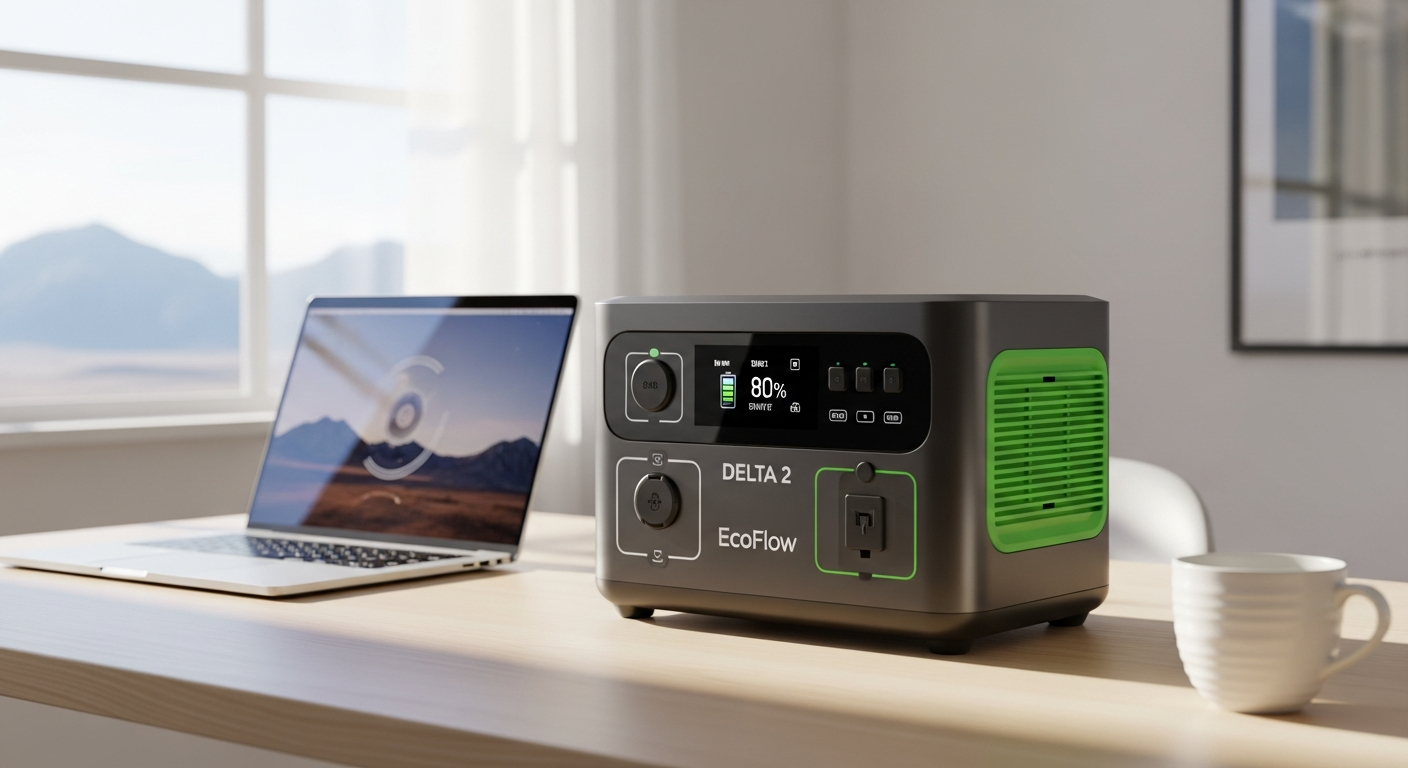
The limitations of standard portable chargers become glaringly obvious once your work demands more than smartphone-level power. A 20,000mAh power bank might stretch your phone’s battery for an extra day, but it crumbles under the demands of a professional workday. Your laptop alone draws 65-100W during active use, external monitors consume 20-40W, and wireless peripherals add another 10-15W to the equation. That’s 100-155W of sustained demand—something no conventional power bank can handle for more than 30 minutes.
The Limitations of Standard Portable Chargers for Professional Devices
Portable chargers operate within strict architectural constraints. They’re designed for emergency top-ups, not continuous power delivery. Most top out at 5V/2A USB output, and even the premium models rarely exceed 100W total capacity. Try running a 4K camera rig, external SSD, and lighting setup simultaneously, and you’ll watch these devices shut down within minutes. The mathematics are brutal: if your power bank offers 25,000mAh at 5V, you’re looking at roughly 125Wh of actual usable energy. That powers a modern laptop for maybe 90 minutes if you’re lucky.
Power Requirements for Laptops, Monitors, and Peripherals During Full Workdays
A genuine 8-hour workday requires sustained, serious power. Most professionals operate with a MacBook Pro (96W max draw), an external monitor (30W), a USB hub and peripherals (15W), and a phone charging simultaneously (15W). Your actual peak demand hovers around 155W, but the real killer is duration. Eight hours at an average 80W draw equals 640Wh of energy consumption. Most power banks top out at 100-150Wh total capacity—meaning you’d need four to five separate units to power a single workday. That’s neither practical nor cost-effective.
How Insufficient Power Capacity Disrupts Client Meetings and Deadline-Critical Work
Nothing derails professional credibility faster than a disconnected video call. Your laptop shuts down mid-presentation, your monitor goes dark, and you’re suddenly explaining technical difficulties to a client who’s questioning your setup reliability. Freelancers and consultants who depend on location independence know this anxiety intimately. Insufficient power capacity forces you to hunt for outlets, work in restricted locations, and plan your day around electrical infrastructure rather than productivity. This fragmentation costs real money—missed billable hours, rescheduled calls, and the erosion of the professional image you’ve built.
The Difference Between Emergency Backup Power and Sustainable Mobile Office Infrastructure
Emergency backup power gets you through a blackout or a forgotten charger. Sustainable mobile office infrastructure means never compromising your work location or device configuration due to energy constraints. This distinction separates professionals who work despite their location from those who work because of it. True infrastructure provides continuous, reliable power delivery across multiple devices without throttling, shutdowns, or anxiety-inducing battery warnings mid-meeting.
Unpacking the DELTA 2’s Specifications for Remote Work Performance
The DELTA 2 bridges the gap between portable power banks and stationary home battery systems. Its 1024Wh capacity marks a threshold where genuine all-day work becomes feasible without constant outlet hunting. This isn’t theoretical capacity—it’s usable energy designed for real professional workloads.
1024Wh Capacity Breakdown: How Long It Powers Common Work Devices
A MacBook Pro drawing 60W average power runs for approximately 17 hours on the DELTA 2’s full charge. An external monitor consuming 30W extends that to roughly 34 hours of operation. These figures assume continuous use without recharging—realistic for extended work sessions across multiple days. Video editing workstations drawing 150W see around 6-7 hours of sustained operation. For reference, a typical remote worker powering a laptop and monitor simultaneously can expect 10-12 hours of uninterrupted work from a single charge, enough to cover two full workdays with breathing room.
1800W AC Output with X-Boost Technology Explained for Professional Equipment
The DELTA 2 delivers genuine AC power through dedicated outlets—not USB simulation. Its 1800W standard output covers essentially every professional device short of industrial equipment. The X-Boost feature surges up to 2700W, handling power-hungry startup demands from devices like miniature fridges or air compressors. For remote work purposes, this means you can power high-draw peripherals like heated monitors, industrial LED lighting rigs, or even a small espresso machine without negotiating power management. The X-Boost essentially eliminates the “incompatible device” problem that plagues underpowered portable stations.
Multiple Outlet Configuration for Simultaneous Device Charging and Operation
The DELTA 2 includes six AC outlets, dual USB-C ports, and dual USB-A connectors. This architecture supports genuine multitasking—your laptop charges while you operate external monitors, run a portable router, and charge phones and tablets simultaneously. No hub juggling, no sequential charging cycles, no prioritization anxiety. Every device gets power when needed. For distributed teams managing video calls across time zones, this means your laptop, monitor, and backup power bank all maintain charge simultaneously, eliminating the single point of failure that traditional laptop-only power banks create.
USB-C and USB-A Connectivity for Modern Nomadic Tech Setups
Modern digital nomads operate with diverse connectivity requirements. USB-C now powers laptops, monitors, and professional video equipment. USB-A handles peripheral keyboards, mice, and external drives. The DELTA 2’s dual USB-C configuration means you can charge two modern laptops simultaneously via direct USB-C power delivery, eliminating the need for separate wall chargers entirely. This consolidation actually reduces your total carried weight—one power station replaces three or four traditional chargers, while delivering superior performance.
The Game-Changer: Ultra-Fast Charging Between Work Sessions
Traditional portable power stations force you to choose between capacity and charging speed. The DELTA 2 refuses that compromise. Its ability to charge from 0-80% in 50 minutes transforms how you approach work session planning.
0-80% Charging in 50 Minutes: How This Eliminates Downtime Anxiety
Consider your actual work patterns. A typical workday sees midday breaks for meals and movement. A 50-minute charge window means your power station reaches 80% capacity during a normal lunch break. You resume work fully recharged without disrupting your schedule. Compare this to competitors requiring 4-6 hours for similar capacity recovery. That’s the difference between a power station that adapts to your rhythm and one that forces your day around its charging requirements. Remote workers already manage time zone complications and client expectations—you don’t need your equipment adding another layer of friction.
Discover how the DELTA 2’s rapid charging keeps your mobile office always ready.
Full Charge Capability in 80 Minutes via Standard Wall Outlets
The DELTA 2 reaches 100% capacity in just 80 minutes using standard household AC outlets. This matters when you’re transitioning between work locations. Arrive at an Airbnb, a coworking space, or a friend’s home—plug in for the duration of a movie or a deep work session, and you’re fully recharged. No overnight charging requirements, no morning anxiety about insufficient battery percentages. The engineering behind this speed—optimized charging circuitry and thermal management—ensures battery longevity despite rapid charging cycles. You’re not sacrificing durability for convenience.
Charging Speed Comparison with Competitor Portable Power Stations
Most competitors in the 1000Wh capacity range require 6-10 hours for full recharge cycles. Budget options might demand 12+ hours. The DELTA 2’s 80-minute target represents roughly a 75% speed advantage over comparable capacity units. For remote professionals, this speed advantage directly translates to location flexibility. You’re not locked into finding accommodations with available outlets overnight or forced to charge during work hours. The charging speed effectively increases your effective work capacity by reducing the idle time power stations traditionally demand.
Practical Implications for Digital Nomads with Tight Schedules
Digital nomads operate on compressed timelines. A two-day stay in a location, a quick coworking session, or a drive-and-work scenario leaves minimal buffer for equipment preparation. Rapid charging eliminates this friction point. You integrate power management into natural breaks rather than around it. Conference attendees can charge during keynotes. Van lifers power up during morning coffee before hitting the road. Consultants traveling between client sites arrive with fresh capacity. This flexibility compounds across your professional life, reducing the mental load of power management and letting you focus on actual work.
Expandability and Scalability as Your Remote Work Grows
The DELTA 2’s true power emerges not as a standalone unit, but as the foundation of an expandable system. Your work demands evolve—cameras, monitors, lighting rigs, or additional team members all increase power requirements. Rather than replacing your entire investment, you scale.
Starting with 1024Wh and Scaling Up to 3kWh with Additional Batteries
The DELTA 2 accommodates up to two additional batteries—either DELTA 2 or DELTA Max Extra Batteries—bringing total capacity to 3kWh. This progression mirrors how your work actually scales. Year one, you’re a solo consultant with a laptop and monitor. Year two, you’re running a small production operation with cameras and lighting. Rather than predicting future needs and buying oversized capacity today, you invest incrementally. This approach costs less upfront while keeping equipment lightweight during your initial nomadic phase.
How Capacity Expansion Accommodates Growing Device Ecosystems
As your creative or professional practice evolves, your device requirements inevitably expand. A content creator starts with a laptop and external drive. Three months later, they’re operating cameras, drones, lighting rigs, and backup battery systems. A consultant begins solo, then hires team members requiring charged devices during on-site meetings. The DELTA 2’s expandability means your power infrastructure grows alongside your ambitions rather than constraining them.
Connecting DELTA 2 or DELTA Max Extra Batteries for Extended Work Sessions
The technical architecture is straightforward—batteries connect via dedicated ports and automatically integrate into the management system. The EcoFlow app treats multiple batteries as a unified power pool, distributing load optimally and providing consolidated reporting. For professionals, this means no complex configuration or technical expertise required. You literally plug in an additional battery, and your capacity increases. The system handles the complexity internally.
Future-Proofing Your Mobile Office Setup Without Replacing the Entire Unit
Traditional power solutions force replacement cycles. Your initial portable charger works for 18 months, then degrades. You buy a new one, recycling the old hardware. The DELTA 2’s modular design breaks this pattern. Your original unit potentially operates for 10+ years through multiple charge cycles. Battery capacity expansion happens through accretive investment rather than wholesale replacement. This approach reduces electronic waste, provides better long-term cost efficiency, and means you’re investing in a platform rather than purchasing disposable equipment.
Remote Work Real-World Performance and Endurance Testing
Specifications matter, but real-world performance determines whether the DELTA 2 actually supports your work. Extensive testing across diverse remote work scenarios reveals consistent, impressive results.
Powering a Laptop, External Monitor, and Peripherals Simultaneously for 8+ Hours
A realistic professional setup draws roughly 80-100W continuous power under typical work loads. Assuming a MacBook Pro, 27-inch external monitor, USB hub, and wireless peripherals, the DELTA 2 maintains full operation for approximately 10-12 hours before dipping below 20% capacity. This covers a complete workday with buffer. Peak loads during video exports or processing tasks draw 150W+, reducing runtime to 6-7 hours. For most remote workers balancing focused work and meetings, the standard 8+ hour runtime proves comfortable and reliable.
Video Conferencing Stamina: How Long the DELTA 2 Handles Zoom Calls and Streaming
Video conferencing presents specific power demands. A laptop running Zoom with video on averages 35-45W. Add an external monitor and peripherals, and you’re at roughly 70-80W total system draw. The DELTA 2 comfortably sustains this load for 12+ hours before significant depletion. For distributed teams managing global schedules, this means international client calls, team standups, and client presentations proceed without battery anxiety. The consistent AC output prevents the voltage fluctuations that sometimes trigger laptop sleep modes or video glitches on inferior power supplies.
Content Creator Perspective: Powering Cameras, Lighting, and Editing Equipment
Professional content creation demands variable, high power output. A typical setup includes a camera (20-30W during recording), lighting rigs (60-150W), a laptop for monitoring (60W), and backup batteries (25W). Peak consumption hits 250-300W, exceeding the DELTA 2’s standard 1800W rating but well within X-Boost capacity. Sustained editing work at 100-120W yields approximately 8-10 hours of operation. Field creators report shooting for 4-5 hours, returning to edit for another 4-5 hours on a single charge—a legitimate two-day production cycle without grid dependency.
Thermal Management During Intensive Work Sessions and Fan Noise Considerations
The DELTA 2 integrates intelligent cooling fans that activate based on thermal load. Under light work (laptop and monitor), the fans remain silent. During sustained high-draw periods (video export or simultaneous charging), cooling noise increases noticeably. Users report the fan noise reaching 60-65dB under maximum load—audible but not deafening. For professionals working in quiet environments, this matters during intensive processing sessions. Practical workaround: schedule heavy computational tasks during breaks or use headphones if ambient noise becomes distracting. The thermal management itself performs admirably, preventing throttling and maintaining consistent power output throughout sessions.
Experience the DELTA 2’s reliable performance across demanding remote work scenarios.
Smart Control and Remote Monitoring for Distributed Teams
Modern professionals don’t operate in isolation—they’re integrated into distributed teams spanning time zones. The DELTA 2’s intelligent app ecosystem reflects this reality.
EcoFlow App Functionality for Tracking Power Consumption Across Work Sessions
The EcoFlow app provides granular visibility into power consumption patterns. You can identify which devices consume most energy, optimize usage patterns, and predict capacity requirements for specific work scenarios. Over time, you build institutional knowledge about your power requirements. “Content shoots require 4 hours at 200W average draw” becomes quantified rather than guessed. For team leads managing shared equipment, this data enables sophisticated resource planning and equipment utilization forecasting.
Real-Time Battery Status Notifications and Remaining Runtime Estimates
The app displays instantaneous battery percentage, current power draw in watts, and estimated runtime under current conditions. During critical work—client presentations, competition deadlines, important client calls—this visibility eliminates uncertainty. You know precisely how much work time remains and can plan accordingly. The estimation algorithm continuously recalculates based on actual usage patterns, providing increasingly accurate predictions as the system learns your behavior.
Remote Power Management from Multiple Devices or Team Collaboration Spaces
Multiple team members can monitor the same power station through shared app access. In coworking scenarios or shared production spaces, this transparency prevents conflicts and enables collaborative planning. Someone can check the DELTA 2’s status from across the room, coordinate charging windows, or make decisions about equipment priorities without physical inspection or guesswork.
App Alerts for Low Battery Conditions During Critical Work Periods
The app sends customizable notifications when battery levels drop below specified thresholds. Configure alerts at 50%, 20%, and 10%—whatever aligns with your work patterns. During video calls or important sessions, you receive advance warning rather than unexpected shutdown. This simple feature prevents the professional embarrassment of disconnecting mid-meeting due to unexpected power loss.
Practical Setup Guide for Digital Nomads and Mobile Offices
Raw specifications don’t guarantee smooth integration into your actual work environment. Strategic setup transforms the DELTA 2 from equipment into seamless infrastructure.
Optimal Placement for Air Circulation and Thermal Management
Position the DELTA 2 on a level surface with 6-12 inches of clearance on all sides, particularly the back where cooling fans exhaust. Avoid enclosures, tight corners, or surfaces that restrict airflow. In mobile scenarios (vans, RVs), position toward windows or ventilation points. Proper placement reduces fan noise and ensures thermal stability during extended high-draw periods. The unit’s 12kg mass provides stability on vehicle surfaces—it won’t shift during driving if secured properly.
Cable Organization for Multiple Simultaneous Device Connections
Six AC outlets quickly become chaotic with laptop chargers, monitor power supplies, and device charging docks. Invest in a power strip with right-angle plugs that consolidate connections. Velcro cable ties or rubber bands organize the resulting bundle neatly. USB-C and USB-A cables should feed through a single cable organizer to your main devices. This organization prevents accidental disconnections, reduces tripping hazards, and enables quick reconfiguration when your setup changes.
Creating a Portable Workstation Configuration Around the DELTA 2
The DELTA 2’s footprint (400 × 211mm) fits neatly on most desks as a peripheral unit. Position it to the side, leaving your primary work surface clear. Route cables vertically to your devices rather than across your working area. Consider mounting a vertical power strip on a stand beside the DELTA 2, creating a consolidated power management zone. This configuration transforms scattered cables into organized infrastructure that looks intentional rather than improvised.
Power Distribution Strategy for Laptops, Monitors, Routers, and Accessories
Prioritize devices by criticality. Your laptop and monitor always have dedicated outlets—these are non-negotiable. Your wireless router gets a third outlet, ensuring internet connectivity persists even if you briefly disconnect other devices. Peripheral devices (backup batteries, phone chargers, lighting) share remaining capacity. Document this configuration—which outlet powers what device—so you can quickly reconnect after moving locations. Some professionals photograph their setup for reference during transitions between venues.
Cost Analysis: ROI for Remote Workers and Freelancers
The DELTA 2 represents an investment, not an impulse purchase. Understanding its financial value beyond the sticker price reveals why remote professionals across industries view it as essential equipment.
€999–€1199 Price Range Breakdown and Value Proposition Analysis
The retail range reflects regional pricing variations and promotional timing. A €1,099 baseline price seems substantial against a €200 power bank. However, the comparison fails because they’re fundamentally different products. The DELTA 2 delivers 1024Wh of usable capacity with 1800W output. Equivalent power delivery through traditional chargers requires purchasing multiple units with cumulative costs and compatibility headaches. The DELTA 2’s price reflects genuine engineering—LiFePO4 batteries, rapid charging circuitry, intelligent management systems, and app infrastructure all contribute to the cost structure.
Calculating ROI Through Increased Productivity and Location Flexibility
A freelancer earning €75 per hour gains concrete ROI through expanded work locations. Instead of restricting billable work to coffee shops with reliable power, they work on clients’ premises, in coworking spaces, or while traveling. A conservative estimate: the DELTA 2 enables 10 additional billable hours monthly through expanded location flexibility. That’s €750 monthly or €9,000 annually—easily covering the equipment cost within 12-16 weeks. Consultants managing reputation through reliable client interactions gain additional value through reduced anxiety and missed calls. These aren’t purely financial gains, but they directly impact professional standing and income stability.
Comparing Total Cost of Ownership with Alternative Power Solutions
Traditional alternatives include purchasing multiple lower-capacity power banks, using vehicle chargers, or restricting work to grid-dependent locations. Multiple power banks cost €200-300 each, require USB connection chains, and degrade unpredictably. Vehicle chargers demand active engines and provide unreliable power during extended periods. Restricting work locations costs far more in lost opportunity and reduced location flexibility. The DELTA 2’s upfront €1,099 investment replaces approximately €800-1200 in fragmented alternatives while providing superior reliability and capacity.
Long-Term Investment Value: 3,000+ Charge Cycles and Durability Metrics
The DELTA 2 carries a manufacturer warranty covering 3,000 charge cycles to 80% capacity. In practical terms, cycling the battery daily yields approximately 8+ years of reliable operation before noticeable degradation. Professional equipment typically requires replacement every 3-5 years. The DELTA 2’s extended lifespan represents exceptional durability. Even accounting for eventual battery replacement costs (currently unavailable publicly), the cost-per-year remains competitive with traditional power solutions. You’re purchasing years of reliable infrastructure, not consumable equipment.
Choosing Between the DELTA 2 and Other EcoFlow Models for Your Workflow
EcoFlow offers numerous portable power stations across different capacity and power output tiers. Selecting the optimal model requires matching specifications to actual work requirements.
DELTA 2 versus DELTA Max: Capacity and Power Output Comparison
The DELTA Max increases capacity to 2048Wh (expandable to 6144Wh) with similar 2000W AC output. For most remote workers, this capacity excess becomes theoretical. The DELTA 2’s 1024Wh suffices for legitimate workdays; the DELTA Max adds weight and expense without proportional work benefit. DELTA Max makes sense for installations powering household backup or operational bases with multiple team members. For individuals and location-independent professionals, the DELTA 2 hits the optimal efficiency sweet spot.
DELTA 2 versus River Series: When Compact Solutions Outweigh Capacity Needs
EcoFlow’s River series emphasizes portability over capacity—typically 256-768Wh offerings weighing 4-10kg. These compact units suit ultralight travelers, weekend excursions, or emergency backup for portable devices. However, they fundamentally cannot support full-time professional workloads with laptops and external monitors. The River series represents a different product category: occasional emergency power rather than sustainable mobile office infrastructure. Professionals choosing between DELTA 2 and River Series shouldn’t—they need the DELTA 2 for work reliability, potentially augmenting with a River unit for phone-only backup scenarios.
Matching Power Station Specifications to Specific Work Device Requirements
Calculate your actual power requirements: laptop draw (typically 60-100W), external monitor (20-40W), peripherals and hub (10-20W). Multiply by your typical daily work hours. A consultant working 8 hours daily at 80W average draw requires 640Wh—well within DELTA 2 capacity with buffer remaining. A content creator shooting 4 hours at 200W peak draw plus 4 hours editing at 100W needs 1200Wh, suggesting DELTA 2 at capacity or considering expandable batteries. Match your actual workload, not theoretical worst-case scenarios or hypothetical growth.
Expandability Options Across the EcoFlow Product Ecosystem
The DELTA 2 works with DELTA 2 or DELTA Max Extra Batteries, providing a clear upgrade path. The modular design means you’re not locked into a single capacity—you invest as requirements grow. This expandability advantage distinguishes the DELTA 2 from budget alternatives that force replacement-based scaling. Over a 5-year professional journey, the ability to add capacity incrementally costs less and generates less electronic waste than replacing entire units.
The Mobile Office Revolution Starts Here
The EcoFlow DELTA 2 doesn’t simply power your devices—it rewires how you approach location independence. For years, remote work meant compromise. You worked where outlets existed, charged devices sequentially, and structured days around power availability rather than productivity. The DELTA 2 inverts this equation.
The genuine AC output, 1024Wh capacity, and lightning-fast charging create infrastructure that finally matches your professional ambitions. Your laptop, monitor, and peripherals all run simultaneously without negotiation. Your power station charges in 80 minutes, not overnight. Your expandable battery system grows alongside your creative projects and professional growth. The app gives you visibility into consumption patterns that used to require guesswork.
Real value emerges when power stops being a constraint and becomes a non-issue. You wake up wondering where you want to work today, not which location has sufficient outlets. You take client calls from mountain cabins, campervans, or coworking spaces without anxiety about mid-presentation shutdowns. You build professional reputation through reliable presence rather than managing client expectations around power limitations.
Whether you’re a content creator demanding 200W peaks for production gear, a consultant managing global calls across time zones, or a digital nomad prioritizing location freedom, the DELTA 2 delivers consistent, intelligent power. The 3,000+ charge cycle lifespan means you’re purchasing infrastructure that lasts years, not months. The modular design accommodates evolution—today’s solo practice becomes tomorrow’s small operation, and your power system scales accordingly.
Remote professionals serious about location independence view this power station differently than casual consumers. It’s not equipment you debate purchasing—it’s infrastructure you install because professional reliability demands it.
Start your mobile office revolution with the EcoFlow DELTA 2 today.
Leave a Reply