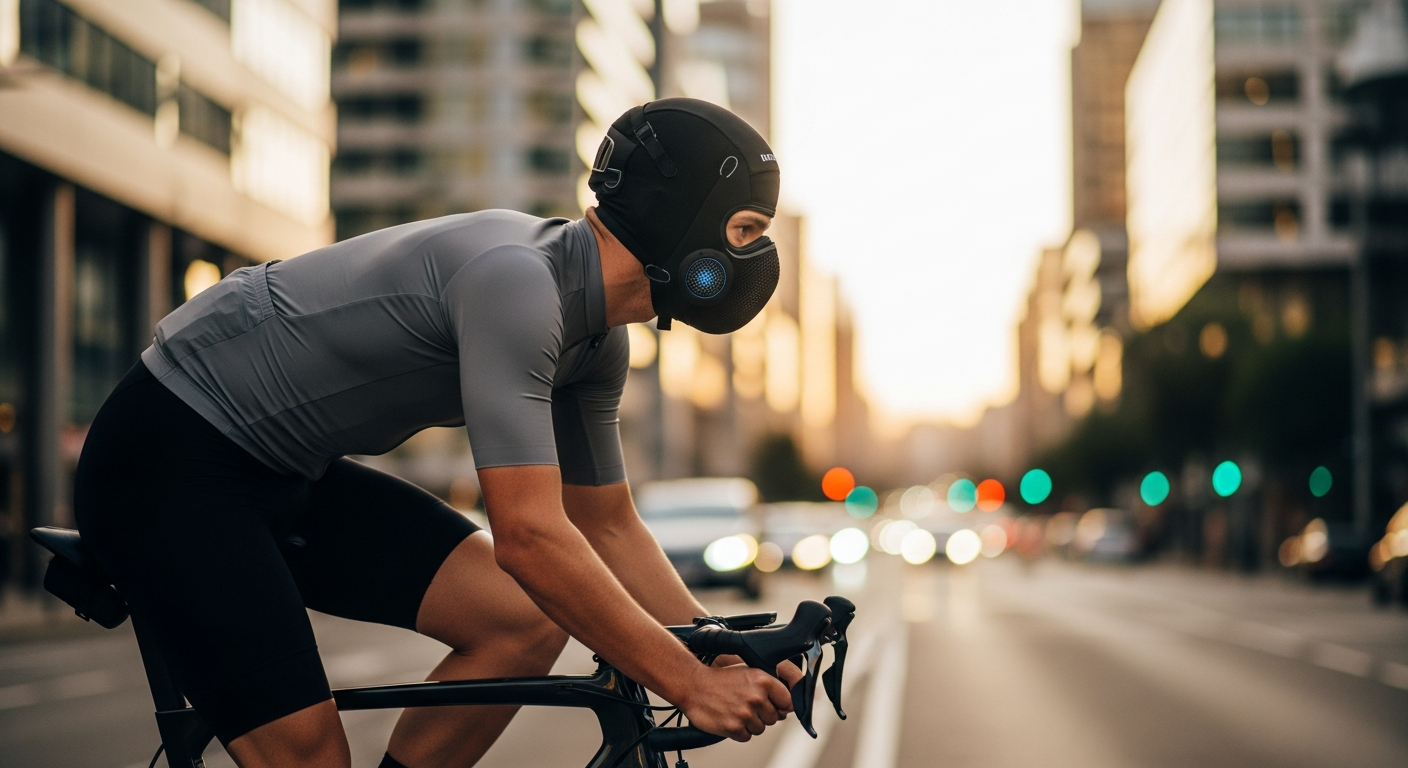
Urban cyclists inhale up to 10 times more pollution particles than car drivers during their commute. The irony cuts deep—the very activity that keeps you fit exposes your lungs to diesel fumes, particulate matter, and airborne pathogens that settle deep in your respiratory system. The Cambridge Mask Pro has emerged as the go-to solution for active commuters who refuse to compromise between protection and performance.
Unlike disposable masks that fog up glasses or feel suffocating during exertion, this reusable respirator combines military-grade activated carbon filtration with breathable valve technology. The mask's engineering reflects years of refinement for people who actually move through their cities rather than sit stationary in offices. Cyclists, urban dwellers, and allergy sufferers have made it their preferred choice because it delivers on both fronts: genuine protection and genuine comfort.
Why Active Commuters Are Switching to Reusable Respirators
The hidden health costs of daily pollution exposure for cyclists and urban dwellers
Your lungs don't distinguish between "safe" and "unsafe" air—they simply process what reaches them. Cycling through urban environments exposes you to concentrated diesel emissions, brake dust, and fine particulate matter (PM2.5) that penetrates deep into the alveoli. Research consistently shows that cyclists experience significantly higher exposure to these pollutants than motorists, who at least benefit from filtered cabin air. Over months and years, this accumulation contributes to reduced lung function, increased asthma symptoms, and accelerated respiratory decline.
How disposable masks fail during physical activity
Single-use masks create a false sense of security. When you're cycling or moving quickly, breathing becomes labored, causing you to adjust the mask constantly. The foam or fabric absorbs perspiration, creating a warm, moist environment where bacteria thrive. Eyeglass wearers face constant fogging—the exhaled breath has nowhere to escape except upward into the lenses, making the commute more dangerous than protective.
The sustainability argument: reducing single-use mask waste in your community
If you've used disposable masks daily for a year, you've contributed roughly 365 pieces of plastic-laden waste to landfills. Over a five-year commuting career, that's 1,825 masks. Reusable respirators eliminate this accumulation almost entirely, replacing hundreds of disposables with a single durable piece of equipment.
Long-term cost comparison between reusable and disposable mask options
Disposable masks typically cost £0.50 to £2 each. Over a year of daily use, that's £182.50 to £730. The Cambridge Mask Pro costs around £24.95, and maintains effectiveness for 3-6 months of daily use. Over 12 months, you'd purchase 2-4 masks maximum, totaling roughly £50-£100 annually. The financial advantage compounds over multiple years and becomes obvious immediately.
Real-world scenarios where a reliable mask prevents respiratory irritation
A cyclist on a 30-minute commute through congested traffic experiences immediate relief when switching from disposables to the Cambridge Mask Pro. Within days, many users report reduced throat irritation, fewer post-ride coughing fits, and clearer breathing pathways. Allergy sufferers find that high-pollution days no longer trigger the afternoon exhaustion they previously accepted as inevitable. These aren't placebo effects—they're direct results of superior filtration and breathability working together.
Breaking Down the Three-Layer Filtration Technology
Primary filter layer: How it captures larger particles
The outermost layer acts as a mechanical barrier, trapping dust, pollen, and larger debris before they progress deeper. Think of it as the bouncer at the entrance, removing visible contaminants before they reach more vulnerable tissues.
Three-ply micro particulate layer: The science behind 99.7% bacteria and 99.6% virus filtration
This middle layer performs the heavy lifting. Its dense fiber matrix creates a tortuous path for particles, forcing air to zigzag through microscopic channels. This design captures 99.7% of bacteria and 99.6% of viruses, meeting N99 filtration standards. The geometry matters—the fibers are spaced precisely to maximize interception while minimizing airflow resistance.
Military-grade activated carbon filter: What military-grade actually means for gas and odor removal
"Military-grade" isn't marketing hyperbole here—it refers to activated carbon that meets rigorous standards for absorbing gases, odors, and volatile organic compounds. This layer neutralizes diesel fumes, exhaust gases, and environmental odors that mechanical filtration alone cannot address. The activated carbon has been processed to create an enormous surface area relative to its volume, enabling superior absorption capacity.
Nelson Labs USA testing standards and N99 equivalency ratings
Nelson Labs USA conducted independent testing on the Cambridge Mask Pro, confirming its ability to filter nearly 100% of pollution particles and meet N99 equivalent performance. These aren't in-house claims—third-party laboratory validation provides the credibility that matters for health-critical equipment.
How filtration performance compares to NIOSH-rated alternatives
The Cambridge Mask Pro achieves N99-equivalent filtration but isn't NIOSH-certified. This distinction matters primarily for healthcare workers and professionals who need explicit government certification for compliance purposes. For personal protection during commuting, the N99 equivalency proves entirely sufficient. The practical performance difference between N99 and N95 masks (the certification threshold for many disposables) is substantial enough to justify the upgrade.
Lifespan expectations: 3-6 months of daily use
The filters maintain effectiveness for 200-300 hours of protection, translating to 3-6 months for someone using the mask 60-90 minutes daily. This longevity far exceeds disposable options and provides a clear maintenance schedule. When the time arrives for replacement, you're replacing only the filter cartridge, not the entire mask structure.
The Valve Advantage: Breathability vs. Source Control Trade-offs
Why the exhaust valve improves comfort during cycling and intense activity
The valve in the Pro model changes everything for active users. Without it, your exhaled breath accumulates inside the mask, creating back-pressure and heat. The valve opens during exhalation, releasing this warm, moist air directly outward, reducing the work your respiratory system must perform. For cyclists pushing hard on climbs or runners maintaining steady pace, this design difference separates tolerable from unbearable.
How the valve expels heat and humidity to prevent internal condensation
During intense exertion, your body generates considerable metabolic heat. Without a valve, this heat and the humidity from your breath condense inside the mask, creating a sauna effect. The one-way exhaust valve prevents this by allowing unrestricted outflow while maintaining incoming filtration. You'll notice the difference within the first few minutes of wearing.
The science of glasses fogging and why nose foam accessories eliminate it
Glasses fog when warm, humid breath rises and meets cool lens surfaces. The nose foam accessory redirects exhaled air away from the upper face, channeling it through the valve instead. This simple addition—often included with the Pro model—solves one of the primary complaints about respiratory protection for eyeglass wearers.
When a one-way valve is ideal
Personal protection scenarios where you're primarily concerned with what you're breathing, not what you're breathing out, represent the valve's sweet spot. Cycling, hiking, travel, and commuting through polluted environments all benefit from the enhanced breathability and comfort the valve provides.
When you should skip the valve model
If you're caring for vulnerable people—immunocompromised family members, newborns, or elderly relatives—the valve defeats one-way filtration and offers no source control. In these situations, you'd want a maskless design or a model without the exhaust valve. Additionally, during active viral outbreaks where community protection matters equally to personal protection, the standard Cambridge Mask Pro design without a valve becomes the responsible choice.
Adjustable strap design and chin seal effectiveness for active wearers
The adjustable straps allow customization around different face geometries, and the chin seal design specifically addresses the gap where most air leakage occurs. For cyclists with helmet straps or active users whose head position changes frequently, this adjustability prevents the mask from shifting mid-commute. The head strap accessory provides additional security during high-intensity movement.
Finding Your Perfect Fit: Size Selection for Different Face Shapes
The five available sizes and how Cambridge determines sizing standards
Cambridge offers sizing across a broad spectrum: Small, Small/Medium, Medium, Large, and Large/Extra Large. This range accommodates faces from narrow and petite to broad and angular. The company's sizing standards factor in both facial width and the distance from bridge to chin, accounting for the full three-dimensional structure rather than just width alone.
Common sizing mistakes that compromise filtration effectiveness
Selecting a size based on general clothing size rather than actual facial measurements is the primary error. A mask that's too large creates gaps around the edges, allowing unfiltered air to bypass the filters entirely. Conversely, an oversized mask feels uncomfortable and shifts easily. The seal matters more than comfort alone—an effective mask requires the filter medium to contact your face across all edges.
Measurement guidelines for cyclists
Cyclists should measure their face width at the widest point (typically across the cheekbones) and the distance from the nose bridge to the bottom of the chin. Account for any permanent marks from helmet straps when selecting, erring slightly larger rather than smaller. A mask should create light contact around the entire perimeter without compressing your face uncomfortably.
How adjustable straps and head strap accessories ensure a secure seal
Once you've selected the correct base size, the adjustable straps fine-tune the fit. For cyclists, the optional head strap accessory distributes pressure across a larger area, preventing the mask from digging into specific points. This combination of proper sizing plus adjustable components delivers the seal that filtration depends on.
Why inconsistent sizing requires careful selection and return policies
Cambridge's manufacturing maintains solid standards, but human variation means sizes sometimes run slightly inconsistent. When ordering, verify the return policy allows for exchanges if your first selection doesn't seat properly. Many retailers offer hassle-free returns specifically because sizing precision directly impacts product satisfaction.
Stylish pattern options that appeal to commuter aesthetics
Beyond functional excellence, the Cambridge Mask Pro comes in various colors and patterns. Urban commuters appreciate that their respiratory protection doesn't look clinical or medical—it fits into everyday streetwear aesthetic. This might seem superficial, but wearing your mask daily becomes infinitely easier when you don't feel self-conscious about its appearance.
Durability, Maintenance, and Long-Term Value
Washable construction: how many times can you reuse the Cambridge Mask Pro?
The mask body itself withstands dozens of wash cycles without degradation. The straps, head strap accessory, and nose foam can be hand-washed independently. The only component with a fixed lifespan is the filter cartridge, which typically lasts 3-6 months before requiring replacement. This modular design maximizes longevity while keeping maintenance straightforward.
Step-by-step cleaning instructions to preserve filter integrity
Hand-wash the mask body in lukewarm water with mild soap, paying attention to the areas where your face contacted it. Rinse thoroughly and air-dry completely before reuse—damp masks create conditions for bacterial growth. Never machine-wash the filter cartridge itself; instead, replace it when saturation is evident (increased breathing resistance or reduced odor absorption). The body and accessories can withstand gentle machine washing if needed, though hand-washing preserves elasticity better.
When to replace filters versus replacing the entire mask
The filter cartridge is the consumable; replace it every 200-300 hours of use. The mask body (straps, structure, accessories) lasts for years if properly maintained. You're replacing filters, not the whole unit, which keeps long-term costs minimal. When the body eventually wears out—typically after 2-3 years of regular use—you've already invested far less than you would have in disposable masks.
Storage best practices for commuters who use masks seasonally
If you cycle year-round but rarely need mask protection during winter months with low pollution, store it in a cool, dry location away from direct sunlight. The rubber straps maintain elasticity better in consistent conditions. Keep the filter cartridge in its sealed packaging until needed. Store in a dedicated pocket or case that prevents crushing—the filters are relatively durable but shouldn't be compressed.
Cost-per-use calculation over 3-6 months of daily wear
A Cambridge Mask Pro at £24.95 used daily for 6 months (180 days) costs £0.14 per use. Adding a replacement filter at £5-10 extends your calculation to roughly £0.20 per use annually. Compare this to disposable masks at £1-2 each—the reusable option delivers 5-10 times better value while offering superior filtration.
Environmental impact: waste reduction compared to 365 disposable masks annually
One mask used for 6 months replaces approximately 180 disposable masks. Over a 3-year commuting period, that's 540 fewer plastic-laden masks in landfills. Multiply this across thousands of commuters, and the environmental impact becomes significant. The Cambridge Mask Pro doesn't just protect your health—it reduces your pollution footprint.
Real-World Performance: Cyclists, Allergy Sufferers, and Travelers
Commuter testimonials: how the mask performs on 30-minute urban bike rides
Experienced cyclists report immediate improvements: reduced throat irritation, clearer breathing even on climbs, and no fogging issues despite sweat. The first week involves minor adjustment as your body adapts to the seal, but by week two, wearing the mask feels natural. Most importantly, the post-ride coughing that previously plagued morning commutes disappears.
Allergy season effectiveness against pollen and mold spores
The three-layer filtration system captures airborne pollen and mold spores before they reach nasal passages. Allergy sufferers using the Cambridge Mask Pro report dramatically reduced symptoms during high-pollen days. Where antihistamines previously became necessary by midday, users now remain symptom-free throughout their commute and workday.
Travel scenarios: airport security, public transit, and crowded environments
The Cambridge Mask Pro passes through airport security without issue and provides genuine protection in enclosed, high-density environments. On public transit where air recirculation is poor and passenger density is high, the mask's comprehensive filtration meaningfully reduces exposure to pathogens and pollutants. International travelers particularly appreciate the reusable design—you're not dependent on finding disposable masks in unfamiliar locations.
Performance in varying climates
The valve design handles heat and humidity better than traditional respirators, but users in tropical climates should expect some condensation during periods of intense exertion. In cold, dry climates, the mask performs flawlessly with no fogging issues. Most temperate climates present no challenges whatsoever. The mask's performance scales with climate, but rarely reaches the point of being unsuitable.
Wildfire smoke protection and air quality index thresholds
During wildfire season, when AQI readings exceed 200, the Cambridge Mask Pro provides legitimate protection. Its military-grade activated carbon filter addresses the specific compounds in wildfire smoke that cause respiratory irritation. Users in fire-prone regions often keep multiple masks on hand during smoke season.
Respiratory sensitivity accommodations and comfort during extended wear
Individuals with asthma or other respiratory conditions often find the Cambridge Mask Pro surprisingly comfortable for extended wear, thanks to the valve reducing breathing effort. The key is proper sizing and seal—an ill-fitting mask of any type becomes uncomfortable quickly. Most users can wear it 60-90 minutes continuously without discomfort, and many exceed this with minimal issues.
Weighing the Pros and Cons for Your Lifestyle
Advantages: Comprehensive filtration, comfort, anti-fogging design, reusability
The Cambridge Mask Pro genuinely delivers on its core promise: superior filtration with superior comfort. The military-grade activated carbon handles gases and odors that mechanical filtration alone cannot address. The valve design prevents the suffocation and heat buildup that plague other respirators. Reusability slashes waste and cost compared to disposables. For active commuters, these advantages compound daily.
Disadvantages: Weight during prolonged use, heat buildup in warm climates, lack of adjustable ear loops
Some users report the mask feels slightly heavy after 90+ minutes of continuous wear, though most adapt quickly. In very warm climates, humidity accumulation can occur despite the valve, particularly during high-intensity exercise. The mask uses a head strap rather than ear loops, which some find less intuitive initially, though most come to prefer this approach once adjusted.
Situations where the Cambridge Mask Pro excels versus where alternatives might be better
The Cambridge Mask Pro excels for daily urban commuting, seasonal allergy management, travel, and pollution-conscious cycling. It's superior to disposables in virtually every measurable way for personal protection. However, if you require NIOSH certification for professional healthcare work, you'd need a certified alternative. If protecting others from your own exhalations is the primary goal (caring for vulnerable family members during illness), the non-valve design or a different mask type becomes more appropriate.
Professional requirements: NIOSH rating limitations for healthcare workers
Healthcare professionals operating within institutional requirements should verify whether their facility accepts N99-equivalent filtration or mandates NIOSH certification. For most other professionals and personal users, the N99 equivalency proves entirely sufficient and represents genuine respiratory protection.
Budget-friendly pricing
At £24.95 standard price with occasional sales dipping to £6.50-£17.50, the Cambridge Mask Pro remains accessible. Replacement filters typically range from £5-10, keeping annual costs minimal. This pricing is competitive even with high-quality disposable alternatives when calculated over time.
Decision framework: Is this the right mask for your commute style?
Ask yourself: Do you commute regularly (3+ days weekly)? Does your commute expose you to visible pollution, traffic, or high pollen levels? Would superior comfort and anti-fogging design meaningfully improve your experience? Do you want to reduce plastic waste? If you answered yes to two or more questions, the Cambridge Mask Pro likely deserves a spot in your commute kit.
Maintenance Hacks for Cyclists and Frequent Users
Quick-clean methods for masks used multiple times weekly
For cyclists using the mask 5+ days weekly, a weekly hand-wash in lukewarm water with gentle soap keeps bacterial growth minimal. The quick-clean approach involves rinsing thoroughly and air-drying immediately. This prevents the odor accumulation and material degradation that extended contact with dried sweat and saliva can cause. Many experienced users perform a quick rinse in a water fountain or bathroom sink immediately after their commute, then fuller washing later.
How to extend filter lifespan through proper storage
Seal your filter cartridge in its original packaging or an airtight bag when not in use for extended periods. This prevents the activated carbon from absorbing ambient odors and moisture that reduce its effectiveness. If you use your mask seasonally (heavy use during high-pollution months, light use otherwise), this storage practice can extend effective filter lifespan by weeks.
Preventing bacterial growth in reusable masks
The warm, moist environment inside any respirator can encourage bacterial growth if moisture lingers. Complete air-drying is essential—never store a damp mask. Some users keep multiple masks rotated through a 3-4 day drying cycle, ensuring each is completely dry before reuse. In humid climates, placing masks in a well-ventilated space (near a fan) accelerates drying and prevents any musty odors.
Travel-friendly carrying cases and portable cleaning solutions
A small breathable pouch that fits in a backpack or panniers keeps your mask accessible without trapping moisture. Portable hand sanitizer can supplement quick cleaning when full washing isn't immediately possible, though it doesn't replace actual washing. Some travelers carry microfiber cloths to dry the interior if moisture accumulates during flights or extended wear.
Seasonal storage to maintain elasticity and seal integrity
If storing a mask for months between seasons, keep it in a consistent temperature environment away from extreme heat or cold. Direct sunlight deteriorates rubber and plastic, so avoid sunny windowsills. Many users dedicate a small drawer or sealed box to off-season storage. When you retrieve the mask months later, the straps should maintain their elasticity and the seal remains effective.
When to upgrade versus repair worn components
If straps lose elasticity, the head strap accessory develops holes, or the nose foam deteriorates, these components can be replaced individually without replacing the entire mask. Reserve full mask replacement for when the seal is compromised beyond adjustment, typically after 2-3 years of heavy use. This modularity—replacing only what fails—maximizes the investment.
Make Your Commute Breathe Easier
The Cambridge Mask Pro transforms how urban cyclists and commuters approach daily air protection. It's not about obsessing over every particle—it's about reclaiming the freedom to cycle, walk, and explore your city without sacrificing your respiratory health. The three-layer filtration system genuinely delivers on its promises, the reusable design slashes waste and cost, and the thoughtful features show this mask was built by people who understand active commuting.
Yes, there are trade-offs with the valve and sizing requirements, but for most urban cyclists, allergy sufferers, and pollution-conscious commuters, these limitations fade against the daily comfort and protection you'll experience. Your lungs have been filtering your city's air for years. Give them the backup they deserve.
Leave a Reply