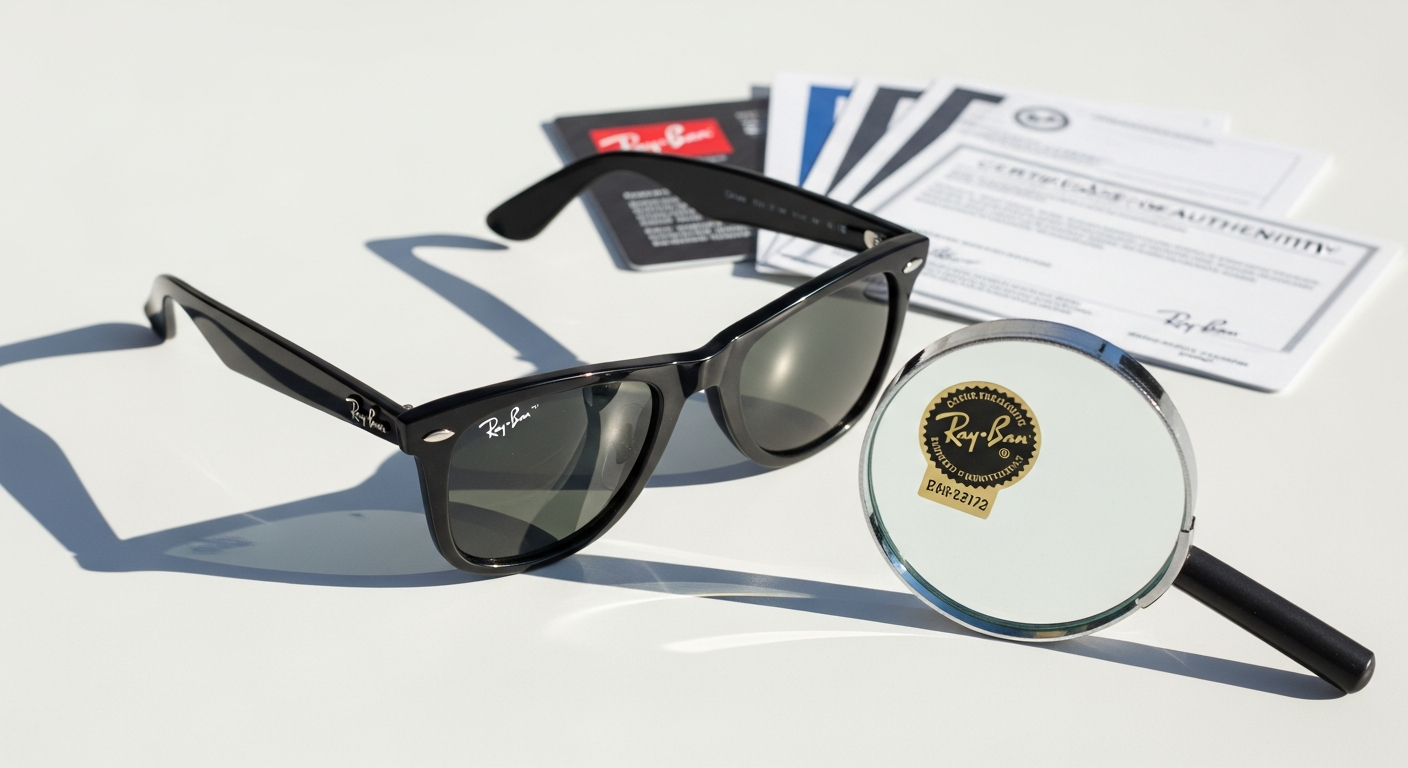
When it comes to iconic eyewear, few pieces command the cultural weight of the Ray-Ban Original Wayfarer. Since Raymond Stegeman designed these legendary frames in 1952, they've transcended the realm of simple accessories to become a symbol of cool, rebellion, and timeless style. Yet their very fame has made them a target—counterfeit Ray-Ban Wayfarers flood the market every single day, with an estimated 90% of sunglasses sold online being fake knockoffs.
This counterfeiting epidemic thrives because of a perfect storm: the frames' iconic status, their $150–$200 price tag, and the difficulty most people face in spotting fakes. Unsuspecting shoppers drop money on convincing-looking imitations only to discover weeks later that their frames are falling apart or their lenses are causing eye strain. The problem isn't just about wasted money—it's about compromising your eye health and missing out on the genuine craftsmanship that makes authentic Wayfarers worth their investment.
Throughout this guide, you'll learn exactly what to inspect before purchasing, which retailers guarantee authenticity, and how to verify your frames if you already own them. Get your authentic Ray-Ban Wayfarers from a trusted source today.
The Anatomy of Authentic Ray-Ban Original Wayfarer Frames
Acetate Material Characteristics
The foundation of every genuine Wayfarer lies in its acetate construction. Authentic frames use high-quality, thick acetate that feels substantial in your hands and has a smooth, refined finish. When you hold a real pair, the material doesn't flex excessively, and the frame maintains its shape under light pressure. Counterfeit frames, by contrast, often employ thin, brittle plastic that immediately reveals its cheapness. The plastic feels flimsy, sometimes even creaks when you adjust the temples, and degrades rapidly with regular handling.
Metal Rivets and Hardware
One of the most telling signs of authenticity involves the metal rivets on the front corners of the frame. Genuine Ray-Bans feature precisely placed rivets with a clean, uniform appearance that catches light consistently. These rivets are securely fastened and show no signs of looseness or misalignment. Counterfeit frames typically have rivets that are loose, misaligned, or poorly finished. You might notice rivets that sit at slightly different angles, appear dull or tarnished, or move slightly when you touch them. Some fakes even skip the rivets entirely or use inferior metal that oxidizes quickly.
The Signature Shark Fin Temples
The temples of authentic Wayfarers feature a distinctive curved design often called the "shark fin" shape. These aren't just aesthetic—they're engineered for proper weight distribution and comfort. Authentic temples have a smooth, natural curve with consistent thickness throughout. Counterfeits frequently botch this detail, producing flat or asymmetrical temples that don't match left to right. The shape might feel awkward when you wear them, or the temple arms might have uneven pressure points that cause discomfort.
Pantoscopic Tilt Engineering
A subtle but crucial feature of authentic Wayfarers is the pantoscopic tilt—the lenses angle forward naturally at approximately 8–10 degrees. This precise engineering ensures optimal lens positioning and visual clarity. When you wear genuine frames, you notice this tilt immediately; the lenses sit at an angle that feels natural and correct. Fake frames lack this precision entirely. The lenses often sit flat or at an awkward angle, creating a subtly strange sensation when you wear them. Over time, this improper positioning can contribute to eye strain.
Lens Quality and Clarity
The standard G-15 lenses on authentic Wayfarers provide crystal-clear vision with a subtle green tint that reduces glare while maintaining natural color perception. Hold them up to light, and you'll see the green color is uniform throughout, with no murky patches or inconsistencies. Counterfeit lenses frequently appear murky, distorted, or have uneven coloring that shifts depending on the angle. Some fake lenses even have visible scratches or imperfections right out of the box. Looking through counterfeit lenses often produces a sensation of optical distortion that genuine frames never have.
Weight and Balance
Authentic Wayfarers have a premium, balanced feel on the face—not too heavy, not too light, but precisely calibrated for comfort during extended wear. When you put on genuine frames, they sit evenly on your nose with no tendency to slip or shift. Counterfeits frequently fail this test spectacularly. They might feel either too light (using cheap plastic) or unevenly weighted, causing them to slip down your nose or sit lopsided on your face. This weight distribution issue is one reason counterfeit Wayfarers become unbearable to wear after just a few minutes.
Decoding Ray-Ban Markings, Labels, and Packaging
Temple Arm Engravings
Genuine Ray-Ban frames display crisp, laser-etched text and model numbers on the temples. Run your finger across these engravings, and you'll feel a slight indentation with perfectly clean edges. The Ray-Ban logo and model information (typically "RB2140") appear sharp and professionally rendered. Counterfeit frames have blurry, uneven, or completely missing engravings. Sometimes the text is barely readable, looks like it was printed on rather than etched, or has spelling errors. Some fakes even get the model number wrong entirely.
Bridge Markings and Size Indicators
Authentic frames clearly display lens width, bridge size, and temple length on the bridge itself. These measurements follow the standard eyewear format (for example, "50-22-145"). The numbers are precisely engraved and easy to read. Fakes often have faint or completely incorrect measurements. You might see numbers that don't follow standard sizing conventions, or the markings might be so faint they're nearly invisible.
Nose Pad Construction
Genuine Ray-Bans feature firm, well-defined nose pads made from quality rubber that maintains its properties over years of use. The pads sit securely in their mounts and don't deteriorate with sweat or sunscreen. Counterfeit frames use cheap plastic or low-grade foam that crumbles, flattens, or disintegrates within weeks. If your nose pads start falling apart or feel mushy, you're holding a fake.
Serial Number Verification
Each authentic pair includes a unique serial number that can be cross-referenced with Ray-Ban's database. This serial appears on the inner temple or sometimes on documentation. You can verify it directly through Ray-Ban's official channels. Counterfeits either lack serial numbers entirely or use duplicated numbers copied from other pairs. Some fakes even have serial numbers that don't follow Ray-Ban's actual numbering system.
Packaging and Documentation
Authentic Ray-Bans arrive in branded boxes with proper labeling, detailed care instructions, and authentic warranty cards. The packaging feels substantial and uses quality materials. The printing is crisp and professional, with no spelling errors or alignment issues. Counterfeit packaging uses cheap cardboard, features obvious misprinting, spelling errors, and inconsistent logos. The box often looks worn or damaged even when new. The included documentation, if any, is frequently poorly translated or incomplete.
Hologram Stickers and Authenticity Labels
Genuine packaging includes a hologram sticker that visibly shifts when you tilt it at different angles—a 3D security feature that's expensive to replicate. Counterfeit holograms are either completely static or so poorly printed that the shift effect is barely noticeable. Some fakes use no hologram at all, or substitute it with a flat printed label.
Verify your purchase authenticity by buying from authorized Ray-Ban retailers.
Red Flags That Signal a Counterfeit Purchase
Suspiciously Low Prices
If the price is significantly below the $150–$200 standard range, it's almost certainly fake. You might see listings advertising authentic Wayfarers for $50, $75, or even $100—these are red alerts. Legitimate discounts from authorized retailers rarely exceed 15–20%, and seasonal sales still keep prices well above $120. If a deal seems too good to be true, your instincts are correct.
Seller Credibility Concerns
Purchasing from unknown marketplaces, street vendors, or unauthorized retailers dramatically increases counterfeit risk. Stick with major retailers like Ottica SM, official Ray-Ban stores, authorized optical shops, and verified online sellers with established reputations. If you've never heard of the retailer and can't find reviews from trusted sources, the risk isn't worth it.
Poor Packaging and Presentation
Legitimate Ray-Bans arrive in pristine, branded packaging that looks professionally assembled. Everything is clean, organized, and carefully protected. Counterfeit packaging shows obvious wear even when supposedly new, features misprinting, uses cheap materials, or arrives damaged. The overall presentation quality is noticeably inferior to what you'd expect from a premium brand.
Mismatched or Inconsistent Branding
The Ray-Ban logo, fonts, and colors should be perfectly uniform across all components—the frames, temples, box, documentation, and any included accessories. Authentic frames maintain strict brand consistency. Fakes often have slight variations that reveal poor quality control. The logo might look slightly different in size or color across different parts of the packaging, or the font used on the temples might not match the font on the box.
Uncomfortable Fit or Loose Components
Genuine frames fit securely with no rattling or excessive movement. The hinges are tight, the frame sits stably on your nose, and all components feel solidly assembled. Counterfeits have loose hinges that creak or rattle, wobbly frames that don't sit properly, or temples that feel like they might snap off. If your frames feel unstable immediately after opening the box, they're definitely counterfeit.
Lens Defects or Optical Distortion
Looking through authentic lenses should feel clear and natural, with no visual distortion or eye strain. The green tint should be uniform and subtle. Counterfeit lenses may cause eye strain even during brief wear, produce visible distortion when you look through them, or have obvious imperfections like scratches or bubbles. Some fake lenses even have tinting that's so dark or uneven it affects your vision.
Rapid Deterioration
If your frames start falling apart within days or weeks of purchase, they're definitely counterfeit. Authentic Wayfarers withstand years of daily wear without degradation. The frames maintain their structural integrity, the hinges don't wear out, the nose pads don't crumble, and the lenses don't become cloudy. If components are breaking down prematurely, you've invested in a fake.
The Bottom Line: Making Your Wayfarer Investment Count
Investing in authentic Ray-Ban Original Wayfarer Classic Sunglasses means committing to quality, style, and eye health that genuinely lasts. The counterfeiting problem is real and pervasive, but armed with the knowledge from this guide, you're now equipped to navigate the market confidently. Every detail matters—from the sharpness of temple engravings to the firmness of nose pads—and these distinctions separate a timeless investment from a throwaway fake.
Stick with authorized retailers, verify serial numbers, and trust your instincts when something feels off. The $150–$200 you spend on authentic frames will deliver years of reliable wear, superior optical quality, and the genuine cultural cachet that comes with owning an actual piece of eyewear history. These aren't just sunglasses; they're a tangible connection to decades of style and substance that have made the Wayfarer a perennial favorite among those who refuse to compromise.
Make your Wayfarer purchase authentic and secure your pair today.
Leave a Reply