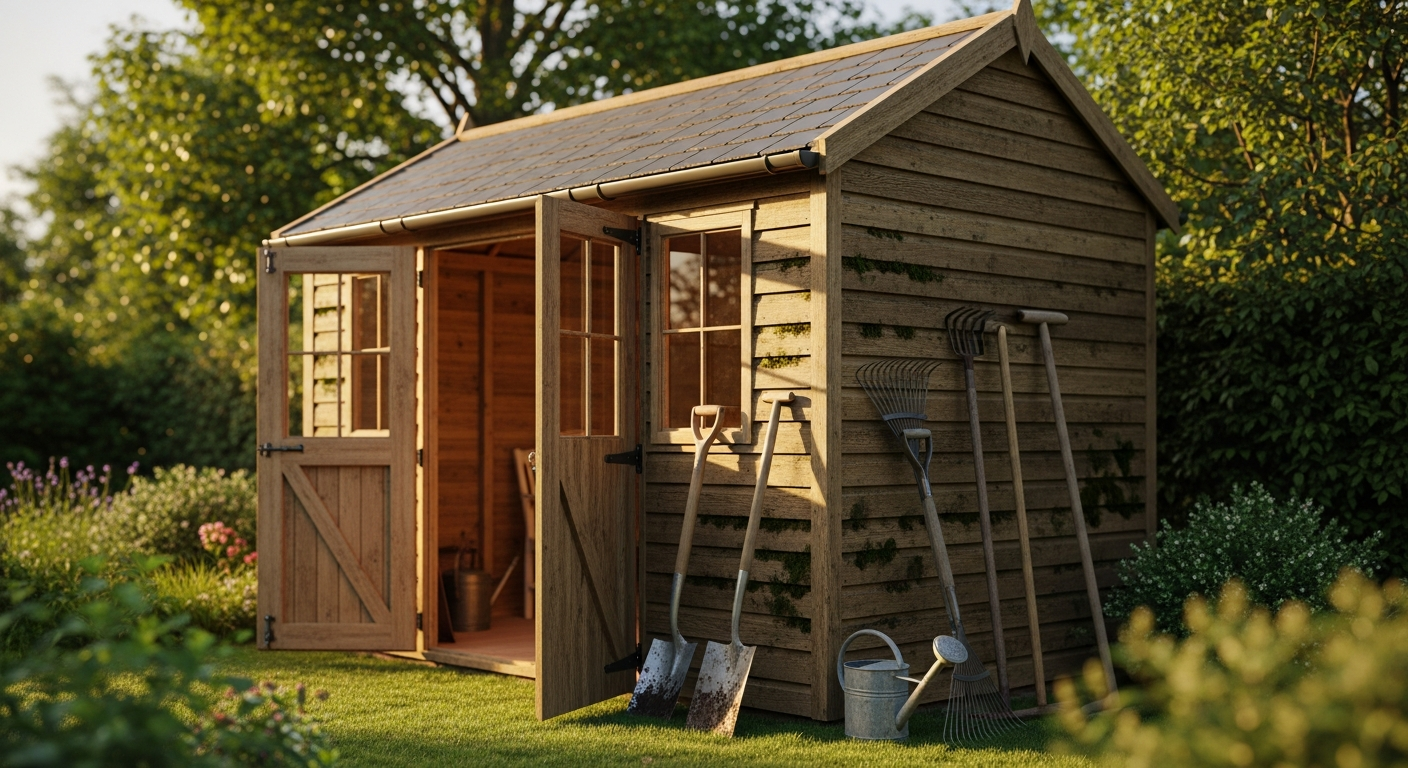
Nearly 70% of UK homeowners struggle to find adequate outdoor storage space, leaving garden tools, equipment, and seasonal items scattered across patios and garages. A classic wooden garden shed transforms this chaos into organized, accessible storage while adding genuine character to your outdoor space. Shedstore has built its reputation as a leading UK retailer by offering an impressive selection of traditional wooden garden sheds that combine practical functionality with timeless aesthetic appeal.
These aren't just storage boxes—they're garden features that enhance property value and create dedicated spaces for everything from lawnmowers to potting supplies. The decision to invest in a wooden shed shouldn't feel complicated, yet many homeowners find themselves overwhelmed by choices in timber treatments, dimensions, and construction methods. This guide walks you through the essential factors that make a wooden garden shed the right choice for your needs, helping you evaluate different options with confidence.
Explore Shedstore's wooden garden shed collection today
Matching Shed Dimensions to Your Garden Space and Storage Requirements
Selecting the right dimensions begins with honest assessment of your available space and storage demands. Measure your garden carefully, accounting for existing features like fences, trees, and pathways. This foundation prevents costly mistakes where a shed arrives only to find it won't fit your intended location.
Understanding how to measure your available garden area accurately
Begin with a tape measure and sketch your garden to scale. Note the distance from your house, existing structures, and boundary lines. Consider sight lines—where will the shed be visible from your kitchen window or patio? Mark the optimal placement area and verify you have at least two feet of clearance on all sides for maintenance access and weathering exposure.
Evaluating common sizes: 6'x4', 7'x5', and 8'x6' options and what each accommodates
The 6'x4' shed suits compact gardens and lighter storage needs—ideal for hand tools, small equipment, and seasonal decorations. A 7'x5' offers comfortable space for most homeowners, accommodating lawnmowers, garden furniture, and medium-sized tools without feeling cramped. The 8'x6' provides generous capacity for serious gardeners, those with multiple hobbies, or families needing substantial storage.
Calculating storage capacity based on the items you need to store
Create an inventory of everything requiring storage: lawnmower dimensions, rake and spade count, potting bench space, fertilizer bags, and seasonal items. Multiply each by its depth and height, then add 20% buffer space for rearrangement and future purchases. This practical calculation reveals whether you need basic or expansive capacity.
Considering future needs and potential expansion possibilities
Gardens evolve. The gardening hobby you're starting now might flourish into something requiring more space in five years. Choose a shed size that allows for growth without becoming wasteful. Consider whether Shedstore offers complementary storage solutions if future expansion becomes necessary.
Assessing how shed placement affects garden flow and accessibility
Position your shed near the areas where you'll use stored items most frequently. A shed tucked near the vegetable patch serves gardeners better than one at the opposite end of the property. Ensure the door opens toward pathways, not into dense planting areas, and consider prevailing wind patterns—position it to minimize wind tunnel effects through your garden.
Balancing size with visual proportion to your property's overall landscape
An oversized shed overwhelms a cottage garden, while a tiny shed looks lost in sprawling countryside acreage. Your shed should feel intentional within its setting. Stand at your back door and visualize different sizes in your chosen location. A well-proportioned shed becomes a garden feature, not an eyesore.
Identifying clearance requirements for doors, ventilation, and maintenance access
Doors require swing space—ensure you have clear area in front for opening without obstruction. Ventilation grilles need unobstructed airflow, so position the shed where air can circulate freely. Plan for maintenance access along all sides; you'll eventually need to re-treat the wood, and access matters more than you'd think when standing there with a brush in hand.
Timber Treatments and Construction Methods: Building for Longevity
The timber treatment you choose determines how well your shed resists the British climate's relentless assault. Understanding these options separates wise investments from expensive mistakes that deteriorate faster than expected.
Comparing pressure-treated versus dip-treated timber and their protective benefits
Pressure-treated timber forces preservatives deep into the wood fibers under industrial pressure, creating superior penetration and longer-lasting protection. Dip-treating applies preservative coatings through immersion, offering decent protection with easier environmental handling. Pressure-treated timber typically outlasts dip-treated alternatives by several years, justifying the modest price difference.
Understanding overlap, shiplap, and tongue and groove construction differences
Overlap construction features boards laid horizontally with each board overlapping the one below, creating simple weatherproofing. Shiplap uses boards with rebated edges that overlap more effectively, shedding water more efficiently than overlap. Tongue and groove interlocks precisely, creating superior weather protection and structural rigidity. Each method has merit; tongue and groove offers the best performance, overlap represents solid value, and shiplap sits between both.
Evaluating how each timber treatment resists rot, insect damage, and weather exposure
Pressure-treated timber resists rot and insect invasion far more effectively than untreated wood, with some treatments lasting 15+ years in harsh conditions. Dip treatment provides respectable protection for 7-10 years with proper maintenance. Even treated timber eventually succumbs to moisture penetration if ignored, making ongoing care essential regardless of initial treatment quality.
Recognizing quality indicators from trusted UK manufacturers like Forest Garden and Shire
Forest Garden and Shire have earned their reputation through consistent quality and customer satisfaction. Examine product specifications carefully—note timber thickness, treatment type, and construction method. These established manufacturers stand behind their products with warranties that reflect manufacturing confidence.
Assessing the durability advantages of different wood types and treatments
Softwood treated properly performs excellently in UK gardens when maintained. Some premium options use naturally durable hardwoods like Western Red Cedar, which resist rot inherently without chemical treatment. Hardwood options cost more but require less ongoing treatment, creating different value equations depending on your maintenance tolerance.
Learning how construction methods impact structural integrity and weather resistance
Quality joinery at corners and roof junctions determines whether water penetrates structural joints. Examine how manufacturers connect walls and roofing—proper lap joinery with sealed joints outperforms basic butt joints. The construction method ultimately determines whether your shed remains sound through decades or develops structural issues within years.
Identifying warranties and guarantees that reflect manufacturing confidence
Reputable manufacturers offer 5-10 year guarantees on their products, reflecting confidence in construction quality. These warranties typically cover manufacturing defects, not maintenance failures. Review warranty terms carefully—they reveal whether manufacturers stand behind their claims or offer mere token protection.
The Aesthetic Advantage: Why Wooden Sheds Outshine Modern Alternatives
Wooden sheds possess an intangible quality that plastic or metal structures can't replicate: they belong in gardens. This aesthetic dimension influences daily satisfaction with your purchase more than specifications alone.
Exploring the timeless appeal of traditional wooden garden shed design
Wooden sheds connect to centuries of garden tradition. They evoke images of Victorian potting sheds and country estates, triggering positive emotional responses. This timeless quality means your shed remains visually appropriate regardless of design trends—it won't look dated in five years the way trendy modern alternatives might.
Comparing the visual integration of wood versus metal or plastic storage solutions
Metal sheds reflect sunlight harshly and feel industrial in residential gardens. Plastic structures develop a cheap appearance that no amount of square footage overcomes. Wooden sheds integrate naturally into landscape schemes, their warm tones harmonizing with plants and garden architecture in ways synthetic materials simply cannot achieve.
Understanding how wooden sheds enhance property curb appeal and perceived value
Potential buyers notice well-maintained wooden sheds favorably, viewing them as authentic garden features rather than eyesores. Estate agents recognize that quality garden storage adds perceived value to properties. A thoughtfully placed wooden shed contributes to overall garden composition in ways buyers immediately notice and appreciate.
Discovering style variations that complement different garden themes and architectures
Rustic cottages pair beautifully with traditional overlap sheds finished in soft greys. Contemporary gardens work with modern shed designs using clean lines and neutral treatments. Victorian properties suit period-appropriate designs with pitched roofs and traditional proportions. Shedstore's variety ensures finding a style that complements rather than clashes with your property's character.
Evaluating the natural weathering process and how it adds character over time
Unlike plastic that fades uniformly or metal that rusts, wooden sheds develop silvery-grey patina that deepens character with age. This weathering process, when timber is properly maintained, creates an authentic aged appearance that expensive finishes struggle to replicate. Your shed becomes more beautiful over time rather than steadily deteriorating.
Recognizing the psychological benefits of natural materials in outdoor spaces
Studies confirm that natural materials reduce stress and enhance well-being in outdoor environments. Working in a garden beside a wooden structure feels fundamentally different—more grounding and connected—than working beside synthetic alternatives. This psychological dimension influences how much you'll enjoy your garden and the shed within it.
Assessing how wooden sheds create focal points that define garden zones
A wooden shed positioned thoughtfully becomes a garden destination, not just storage. It defines the productive zone of your garden, separates work areas from relaxation spaces, and creates visual structure. The shed anchors your garden composition the way a fireplace anchors a living room.
Self-Assembly Versus Professional Installation: Making the Right Choice
Your shed will arrive in components, requiring either your assembly efforts or professional installation. This choice balances cost savings against convenience and peace of mind.
Weighing the cost savings of DIY assembly against time investment and complexity
Self-assembly saves £100-300 depending on shed size, appealing to budget-conscious homeowners. However, assembly typically requires 8-16 hours for larger models, spread across multiple days. If your time has significant value, or if you'd rather spend weekends on other pursuits, professional installation's cost becomes reasonable.
Understanding what's included in self-assembly packages: instructions, fixings, and components
Shedstore supplies complete packages with detailed instruction manuals, all necessary fixings, and pre-cut components. Nothing arrives as raw lumber requiring finishing work. You're assembling rather than constructing, a significantly simpler proposition for those with basic DIY confidence.
Identifying basic DIY skills required to successfully assemble a wooden shed
Comfort with a drill-driver, spirit level, and measuring tape covers most requirements. You'll need to apply wood treatment if not factory-applied, and basic hand tools handle everything else. No carpentry skills are necessary—this is assembly, not woodworking.
Exploring low-cost professional installation services available through Shedstore
Shedstore offers installation services at modest cost, typically £150-300 depending on shed size. Professionals complete assembly in a single day, handle site preparation, and often apply initial treatment. This convenience appeals to those lacking DIY confidence or having limited free time.
Calculating realistic assembly timelines based on shed size and experience level
A 6'x4' takes experienced DIYers 4-6 hours. A 7'x5' requires 8-12 hours, while an 8'x6' might need 14-18 hours. First-time assemblers add 25-50% to these estimates. Professional installers work faster, completing even large sheds in 6-8 hours.
Recognizing when professional installation adds value and peace of mind
Professional installation guarantees structural integrity and proper treatment application. If you're uncomfortable with DIY, or if your time is valuable, the modest cost provides genuine peace of mind that your investment is properly installed.
Learning about delivery logistics and site preparation before assembly begins
Your shed arrives on a large delivery vehicle requiring driveway access. Clear a 20-foot area for maneuvering. Prepare the ground—level, compacted soil prevents future movement and rot issues. Mark your intended placement clearly so drivers position components where you need them.
Long-Term Maintenance: Protecting Your Wooden Shed Investment
A wooden shed isn't a set-it-and-forget-it purchase. Regular maintenance transforms a potential liability into an asset that improves with age.
Establishing a seasonal maintenance schedule for wooden garden sheds
Spring cleaning includes checking for winter damage, clearing gutters, and inspecting for pest damage. Summer allows observation of any movement or settling issues. Autumn requires checking seals and preparing for winter moisture. Winter monitoring catches problems before they worsen. This quarterly attention prevents small issues from becoming expensive repairs.
Get your wooden garden shed from Shedstore and start protecting your investment
Understanding re-treating requirements and recommended product applications
Most pressure-treated timber requires re-treatment every 3-5 years, depending on exposure and initial treatment quality. Dip-treated timber might need treatment every 2-3 years. Application involves coating all exposed surfaces with proprietary wood preservative or paint. These products are available at any garden center and cost £20-50 per shed.
Identifying early warning signs of rot, insect damage, or weathering issues
Soft spots when pressing timber indicate rot beginning. Small holes suggest woodworm infestation. Separation between boards or visible cracks allow water penetration. Discoloration or mold growth signal moisture issues. Catching these early means simple treatment; ignoring them leads to structural failure.
Learning preventative care techniques that extend shed lifespan significantly
Good drainage around the shed base prevents water accumulation. Ensuring clear airflow prevents moisture buildup. Keeping gutters clean prevents water damage to walls. Sealing gaps prevents pest entry. These simple practices add years to your shed's life, costing nothing but attention.
Comparing maintenance demands of wooden sheds versus alternative materials
Plastic requires minimal maintenance but offers poor durability. Metal demands rust prevention but handles neglect better than wood. Wooden sheds require regular attention but reward that care with beauty and longevity. The choice reflects your willingness to engage with your garden structures.
Discovering the cost-benefit analysis of regular maintenance versus replacement
Annual treatment costs £30-50 and takes a weekend. Neglecting this leads to replacement costs of thousands within 10 years. The math strongly favors modest maintenance investment—your shed lasts 20+ years with care versus 8-10 without it.
Recognizing how proper care transforms maintenance from burden into simple routine
Treating your shed as part of regular garden care, rather than separate from it, makes maintenance seamless. Scheduling treatment alongside spring garden prep or autumn preparation integrates it naturally. What sounds onerous as a standalone task becomes simple routine within your established patterns.
Value for Money: Why Shedstore's Pricing Makes Wooden Sheds Accessible
Quality wooden storage doesn't require premium pricing. Shedstore's competitive positioning makes excellent sheds accessible to homeowners with modest budgets.
Analyzing the competitive pricing structure starting from £184.99
Starting under £200 delivers functional storage from quality manufacturers. Mid-range options (£300-600) offer better timber treatment and larger dimensions. Premium models exceed £1,000 but cover 100+ square feet of storage space. This range ensures options for virtually any budget.
Understanding how free UK delivery adds genuine savings to your purchase
Garden shed delivery typically costs £50-150, depending on location and size. Shedstore's free delivery saves this amount on every purchase, making listed prices genuinely competitive. Calculate total cost including delivery when comparing against competitors—Shedstore's advantage becomes clear.
Exploring regular discounts and promotional opportunities throughout the year
Shedstore runs seasonal promotions, offering 10-20% savings during slower periods. Newsletter subscriptions reveal exclusive discount codes. Smart timing of your purchase can reduce costs meaningfully without compromising on quality.
Comparing Shedstore's pricing against other garden retailers and suppliers
Direct comparison shopping reveals Shedstore's consistent pricing advantage. Factor in free delivery, regular discounts, and excellent customer service—the total value proposition significantly outweighs competitors offering lower base prices but charging delivery.
Evaluating the relationship between cost and quality from established manufacturers
Shedstore sources from Forest Garden, Shire, and other respected manufacturers. These companies maintain pricing discipline, avoiding unnecessary markups while protecting quality. You're paying for legitimate value, not premium branding.
Calculating long-term value considering durability and lifespan expectations
A £400 shed lasting 20 years with maintenance costs £20 annually. Total 20-year cost approaches £800. A cheaper £250 shed lasting 10 years before replacement equals £500 for that period. Superior initial quality delivers better long-term economics, even accounting for maintenance costs.
Recognizing how affordability makes quality wooden storage achievable for most budgets
Shedstore's pricing democratizes quality wooden storage. You don't need premium budget to avoid plastic alternatives or flimsy construction. Excellent timber sheds remain financially accessible, meaning more homeowners can invest in storage that genuinely enhances their properties.
Making Your Final Selection: A Practical Decision Framework
You've absorbed considerable information. Now translate knowledge into decision through systematic evaluation.
Creating a personal checklist of non-negotiable features and requirements
Write down your must-haves: minimum dimensions, preferred timber treatment, essential construction method, budget ceiling. Distinguish these from nice-to-haves: color preference, roof style, specific features. This clarity prevents getting distracted by options that don't serve your actual needs.
Prioritizing between size, style, budget, and maintenance capacity
Can you afford slightly larger dimensions if slightly smaller budget? Do you genuinely have time for regular maintenance? Does style matter, or is pure function your priority? Honest answers to these questions guide selection toward options you'll genuinely be happy with.
Reviewing customer experiences and feedback from existing Shedstore buyers
Customer reviews reveal real-world performance and service quality. Read multiple perspectives, noting patterns in feedback. Complaints about specific models matter more than isolated negative reviews. Consistently praised products have earned trust through actual performance.
Assessing your garden's specific conditions: exposure, soil type, and climate factors
Gardens in exposed coastal areas need superior timber treatment. Heavy clay soil demands careful site preparation and drainage. Frost-prone regions require sheds that accommodate seasonal movement. Understanding your specific conditions shapes which options will perform best in your environment.
Considering future flexibility and whether your chosen shed meets evolving needs
Could your storage needs grow significantly? Is expansion possible in your garden space? Select a shed that accommodates probable growth—it's easier to stay slightly under-capacity than to require replacement when needs expand.
Planning the purchase timeline around delivery schedules and installation windows
Avoid winter delivery when ground is frozen or waterlogged. Spring and autumn allow optimal site preparation and maintenance work. Check delivery schedules before purchasing—popular models may have waiting periods during peak season.
Preparing your garden site for optimal shed placement and longevity
Clear the designated area completely. Level the ground as much as possible—hire a contractor if necessary, as poor site preparation undermines everything else. Consider a gravel or concrete base for optimal drainage and pest prevention. Proper preparation costs little but prevents future regrets.
Your Shed, Your Space, Your Choice
Selecting a classic wooden garden shed represents a meaningful investment in your outdoor living experience. The journey from identifying your storage needs through choosing the right dimensions, timber treatment, and installation method transforms what could be an overwhelming decision into a straightforward process. Shedstore's combination of quality construction, competitive pricing, and exceptional customer service removes the guesswork from this purchase.
Whether you're organizing garden tools, creating a potting station, or simply reclaiming garden space, a well-chosen wooden shed becomes an enduring asset that works harder with each passing season. The key is matching the right shed to your specific circumstances—considering your garden's dimensions, your maintenance capacity, your budget, and your aesthetic preferences. Armed with this knowledge, you're equipped to make that choice with genuine confidence.
Your shed will likely outlast the garden plans you have today. It will shelter your tools through seasons of growth, provide a quiet refuge, and develop character as it ages. The most important step is beginning—evaluating your needs honestly and selecting a solution that serves them well.
Browse Shedstore's classic wooden garden sheds and find your perfect outdoor storage solution
Leave a Reply