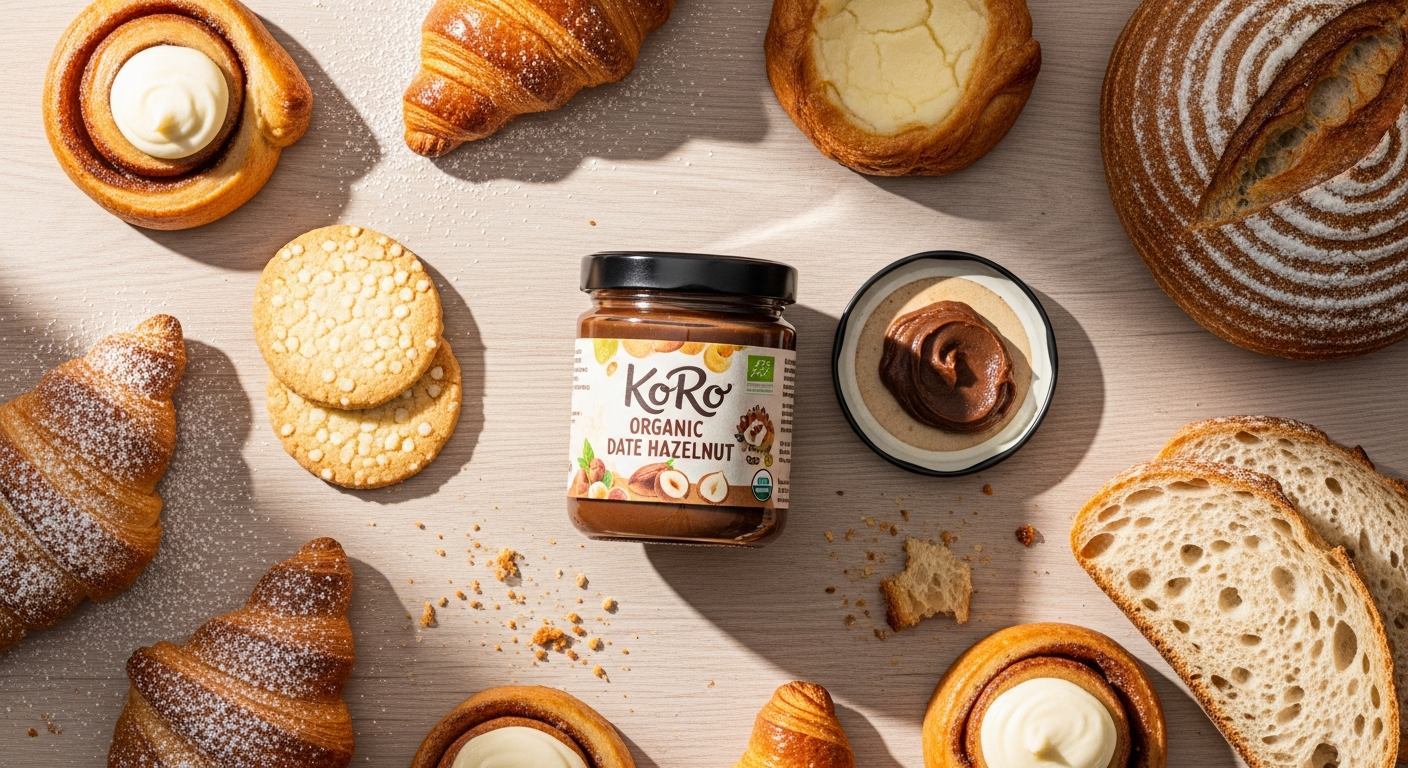
Most people slather their date hazelnut spread on toast and call it a day—but what if you're missing out on some of the most decadent baking transformations possible? The KoRo Organic Date Hazelnut Spread has quietly become a secret weapon in the kitchens of pastry chefs and home bakers alike, delivering restaurant-quality results with zero refined sugar. This organic, four-ingredient powerhouse—made from date syrup, hazelnut butter, bourbon vanilla, and sea salt—transforms traditional dessert recipes into cleaner, more flavorful creations.
The real magic happens when you move beyond the breakfast table. Professional bakers have discovered that this spread's creamy texture, natural sweetness, and balanced flavor profile make it an ideal ingredient for layering cakes, creating silky ganaches, and producing visually stunning swirled desserts. Whether you're working with chocolate, pastry, or plant-based baking, the spread adapts seamlessly to your needs while maintaining the integrity of your recipe.
Discover how KoRo's organic spread can elevate your baking today.
Layering & Filling Strategies for Cakes and Pastries
Achieving the Perfect Consistency
The spread's naturally creamy texture works beautifully as a cake filling without requiring additional binding agents. Its density allows you to apply it smoothly between cake layers without the mixture sliding or shifting during assembly. When you're working with delicate sponge cakes or airy chiffon cakes, this non-slip quality becomes invaluable, letting you focus on precision rather than wrestling with unstable fillings.
Preventing Moisture Problems
One of the trickiest aspects of layering is managing the moisture that migrates from filling into cake. The spread's natural composition actually helps prevent this issue. Because it contains no water-based elements beyond what naturally exists in the dates and hazelnuts, it doesn't create the soggy layers that dairy-based frostings sometimes cause. Spreading a thin barrier of the spread directly on the cake layer before adding thicker filling layers creates an additional moisture shield.
Optimal Thickness for Flavor Balance
The key to balanced flavor lies in spreading consistency. A quarter-inch thickness is generally ideal—thick enough to register on the palate but thin enough that it doesn't overpower the cake's texture. When you're working with multiple layers, consider that each application adds sweetness, so adjusting slightly thinner with each successive layer prevents the top of your cake from becoming cloying.
Chocolate Pairings and Ganache Integration
Creating Date-Hazelnut Ganache
The spread transforms into a luxurious ganache when melted with dark chocolate. Start by chopping 200 grams of quality dark chocolate and placing it in a heat-safe bowl. Warm 100 milliliters of cream gently, then pour it over the chocolate and let it sit for two minutes. Add two tablespoons of the spread to the mixture before stirring. The spread's hazelnut butter content creates an emulsion that makes the ganache silkier than traditional recipes, and the date syrup contributes subtle caramel notes that complement cocoa beautifully.
Understanding the Flavor Chemistry
The bourbon vanilla in the spread plays a crucial role in ganache composition. Rather than competing with chocolate, the vanilla deepens chocolate's inherent flavors, making them seem more complex and rounded. The hazelnut element adds textural interest at the microscopic level—tiny hazelnut particles create a subtle grittiness that breaks up smoothness in an appealing way. This combination explains why the spread is considered one of the world's finest sweet spreads: its component flavors enhance each other rather than dominating.
Achieving Professional Appearance
A glossy, professional chocolate coating requires proper temperature management. After creating your ganache, allow it to cool to 32°C (90°F) before pouring. At this temperature, the ganache flows smoothly enough to create an even coating without running off entirely. If your ganache becomes too thick, briefly warm it over a double boiler. The spread's natural emulsifiers help maintain consistency better than sugar-only ganaches, making temperature corrections less critical.
Swirl, Ripple, and Marbling Techniques
Creating Instagram-Worthy Brownie Swirls
Before baking, pour your brownie batter into a prepared pan. Using a piping bag fitted with a large round tip, create parallel lines of the spread across the batter's surface. Take a skewer or thin knife and drag it perpendicular to these lines in one direction, then reverse direction on the next pass. This creates the classic feathered pattern that looks far more complicated than it actually is. The spread's thickness means it won't sink into the batter during this process, maintaining your pattern through the oven.
Strategic Rippling in Cheesecakes
Cheesecake presents unique challenges because its filling is softer than brownies. Apply the spread by drizzling thin lines onto the cheesecake surface just before baking, using a piping bottle or squeeze bottle. Keep the lines thinner than you would for brownies—about a quarter-inch wide. The oven's heat will soften the spread just enough to create gentle undulations rather than sharp contrast. This subtler approach suits cheesecake's delicate nature while still adding visual interest.
Marbling Patterns That Maintain Structure
For marbled effects that survive baking intact, apply the spread at the thickest consistency point of your batter. If working with a mousse or no-bake filling, ripple the spread in after the base layer has begun to set. This timing prevents both sinking and separation. The spread's composition means it sets quickly once cool, anchoring your pattern in place without requiring gelatin or other stabilizers.
Vegan and Plant-Based Dessert Applications
Fully Plant-Based Baking Projects
The spread's vegan certification makes it an obvious choice for entirely plant-based dessert lines. Since it contains no animal products, you can incorporate it into vegan cakes, cookies, and pastries without worrying about accidental non-vegan ingredients. Its hazelnut butter base provides richness that normally comes from butter or cream, making it a straightforward substitution that doesn't require recipe restructuring.
Using the Spread as an Egg Replacer
In certain cake recipes, the spread can replace eggs for both moisture and binding. For every two eggs your recipe calls for, use four tablespoons of the spread mixed with two tablespoons of plant-based milk. This mixture works particularly well in dense cakes like brownies or spice cakes where the binding isn't critical for rise. The spread's natural gums and emulsifiers provide enough structure to hold your cake together while adding richness that eggs would normally contribute.
Creating Dairy-Free Chocolate Mousse
Blend the spread with silken tofu and cocoa powder to create a mousse that rivals traditional chocolate preparations. The ratio should be roughly equal parts tofu and spread, with two tablespoons of cocoa powder per cup of tofu. Whip the mixture until light and airy, then fold in dairy-free whipped cream. The spread provides sweetness and fat while the tofu creates the characteristic mousse texture, eliminating the need for eggs or cream.
Tartlets, Tarts, and Pastry Shell Fillings
Pre-Baked Filling Without Additional Cooking
One of the spread's greatest advantages is that it requires no cooking before using as a tart filling. Simply spread a thin layer into your pre-baked pastry shell and chill. The spread sets as it cools, creating a firm filling that slices cleanly. This approach works beautifully for almond tarts, chocolate tarts, or when paired with fresh fruit arrangements.
Creating Spread-Based Custard Alternative
For a custard-like filling without eggs or cream, blend the spread with silken tofu and a splash of plant-based milk until you achieve custard consistency. Pour this mixture into your tart shell and chill for at least four hours until fully set. The result has the body of traditional custard with the hazelnut-date flavor profile that makes the spread so distinctive.
Layering with Puff Pastry
When working with puff pastry, apply the spread thinly between layers to prevent the pastry from becoming soggy while still adding flavor throughout. For croissant fillings, use the spread at room temperature so it's soft enough to pipe into shape before baking. The spread will caramelize slightly during baking, creating a subtle textural contrast with the croissant's laminated layers.
Explore the KoRo spread's versatility in your next pastry project.
Cookie Doughs, Batters, and Batter Mix-Ins
Creating Fudgy Cookie Centers
Adding the spread directly into cookie dough produces chewy, fudgy centers even when the cookies are fully baked. Use roughly three tablespoons of spread per standard batch of twelve cookies. Fold it gently into your dough just before shaping to maintain visible swirls and pockets throughout. The spread's thickness means it won't distribute evenly, which is exactly what you want—irregular pockets of hazelnut-date richness create texture contrast that elevated cookies beyond typical versions.
Adjusting Liquid Ratios in Cake Batters
When incorporating the spread into cake batters, reduce other liquid components by one tablespoon for every three tablespoons of spread added. The spread contains natural moisture from dates, and adding it without adjustment can create overly dense cakes. Compensate by slightly increasing your leavening agent—an extra quarter-teaspoon of baking powder helps achieve proper rise despite the added moisture and fat.
Creating Swirled Patterns Using Piping Techniques
Transfer your cookie dough into a piping bag fitted with a large round tip. Pipe dollops onto your baking sheet, then use a smaller piping bag or bottle filled with the spread to create thin lines across the top. Run a toothpick through these lines perpendicular to their direction, creating feathered patterns. The dough will spread slightly during baking but will hold its pattern remarkably well.
Nutritional Advantages in Homemade Desserts
Eliminating Refined Sugar Through Natural Sweetness
The spread's date syrup provides natural sweetness without refined sugar's inflammatory effects or blood sugar spikes. When using the spread as your primary sweetener in desserts, you're eliminating the need for granulated sugar entirely in many recipes. This shift means your baked goods contain approximately 40 grams of naturally occurring sugars per 100 grams of spread—a meaningful reduction compared to traditional desserts loaded with added sugars.
Fiber Contribution from Dates and Hazelnuts
Each serving of the spread provides approximately 5 grams of fiber from its date and hazelnut components. In a dessert context, this matters because fiber supports digestive health and provides satiety that helps prevent overconsumption. A dessert made with this spread as its sweetening agent contains measurably more fiber than conventional versions, making it genuinely more nutritious despite its indulgent nature.
Protein Boost from Hazelnut Butter
The spread contributes approximately 7 to 7.6 grams of protein per 100 grams, primarily from hazelnut butter. This protein content distinguishes it from conventional fillings like buttercream or ganache made with only chocolate. For desserts marketed toward fitness-conscious consumers or those seeking more nutritionally complete treats, this protein contribution adds genuine value.
Storage, Shelf Life, and Make-Ahead Strategies
Optimal Storage for Opened Jars
Once opened, store the spread in a cool, dark place or refrigerate. The organic certification means it contains no preservatives, so proper storage directly affects freshness. In the pantry, an opened jar remains fresh for approximately two weeks. Refrigeration extends this to three to four weeks. The spread won't harden when cold, remaining spreadable even when refrigerated—a practical advantage for bakers who keep it on hand for frequent projects.
Freezing Prepared Batters and Doughs
Batters and doughs containing the spread freeze beautifully for up to three months. Cookie dough can be frozen in portions on sheet pans, then transferred to containers for baking whenever needed. Cake batters freeze well in sealed containers, though you should allow them to reach room temperature before baking. The spread's fat content actually protects the dough from ice crystal formation that sometimes damages baked goods, making it an ideal ingredient for make-ahead projects.
Preparing Filled Pastries in Advance
Filled pastries containing the spread can be prepared a day ahead without flavor or texture degradation. Store them in an airtight container at room temperature. The spread maintains its quality better than dairy-based fillings, which can separate or become watery overnight. For pastries with chocolate components, this advance preparation is actually beneficial—allowing flavors to meld and creating more cohesive taste experiences.
Troubleshooting Common Baking Challenges
Managing Overly Thick Consistency
If the spread is too thick to pipe or spread smoothly, warm it gently over a double boiler or in the microwave for 10-second intervals. Stir after each interval to avoid overheating, which can damage flavor compounds. Once warmed slightly, the spread flows more freely while maintaining its emulsifying properties. This technique works better than adding water, which dilutes flavor and can destabilize emulsions in ganaches.
Preventing Sweetness From Dominating
If the spread's sweetness overwhelms other flavors in your recipe, increase the proportion of other ingredients or reduce the spread's amount slightly. Adding a pinch of salt can paradoxically reduce perceived sweetness by stimulating other taste receptors. Pairing the spread with slightly bitter components like dark chocolate or espresso powder also creates balance without requiring recipe changes.
Preventing Separation in Layered Desserts
Separation occurs when the spread's fat separates from its carbohydrate components over time. To prevent this, ensure your layers are sufficiently chilled before adding the next layer. A partially frozen layer provides structural support that prevents seepage. For particularly delicate constructions, adding a thin layer of ganache or frosting between the spread and other components creates a moisture barrier that prevents weeping.
Professional Presentation and Plating Ideas
Garnishing to Highlight Flavor Components
Emphasize the spread's hazelnut notes with toasted hazelnut pieces scattered across finished desserts. The vanilla contribution benefits from vanilla bean specks or a light vanilla dusting. Fresh berries add visual contrast while their tartness balances the spread's richness. These garnishes aren't merely decorative—they signal to diners what flavors they'll experience, enhancing their enjoyment before they take the first bite.
Creating Elegant Dessert Boards
Arrange spread-based creations on wooden boards alongside complementary elements: candied hazelnuts, dates, dark chocolate pieces, and fresh fruit. This presentation elevates homemade desserts into the realm of professional pastry presentations. The spread acts as the board's unifying element, with other components arranged to showcase its diverse applications—perhaps a filled tartlet, a slice of cake, and cookies all on the same board.
Photography Tips for Layered Desserts
Shoot layered desserts in cross-section to reveal the spread's visible layers. Backlighting highlights the spread's rich color and glossy appearance. The contrast between the spread's deep hazelnut-brown color and lighter cake or cream layers photographs beautifully. A shallow depth of field focused on the spread layer creates professional-looking images that showcase your technical skill.
Transform Your Dessert Repertoire with This Organic Powerhouse
The KoRo Organic Date Hazelnut Spread deserves far more recognition than a quick breakfast spread—it's genuinely a professional-grade baking ingredient waiting to revolutionize your dessert creations. From silky chocolate ganaches to perfectly swirled brownies, from vegan tart fillings to nutrient-dense cookie batters, the applications are limitless. The beauty of this spread lies in its simplicity: just four organic ingredients that work harmoniously together, allowing your other flavors to shine while providing a sophisticated backbone.
Starting small makes sense. Begin with one of the simpler applications—perhaps a chocolate ganache or a basic cake filling—then gradually experiment with more complex techniques as your confidence grows. Each success builds toward a complete toolkit for elevated dessert making. Stock your pantry with a jar and prepare to transform the way you approach dessert baking.
Start your dessert transformation with KoRo's organic date hazelnut spread today.
Leave a Reply