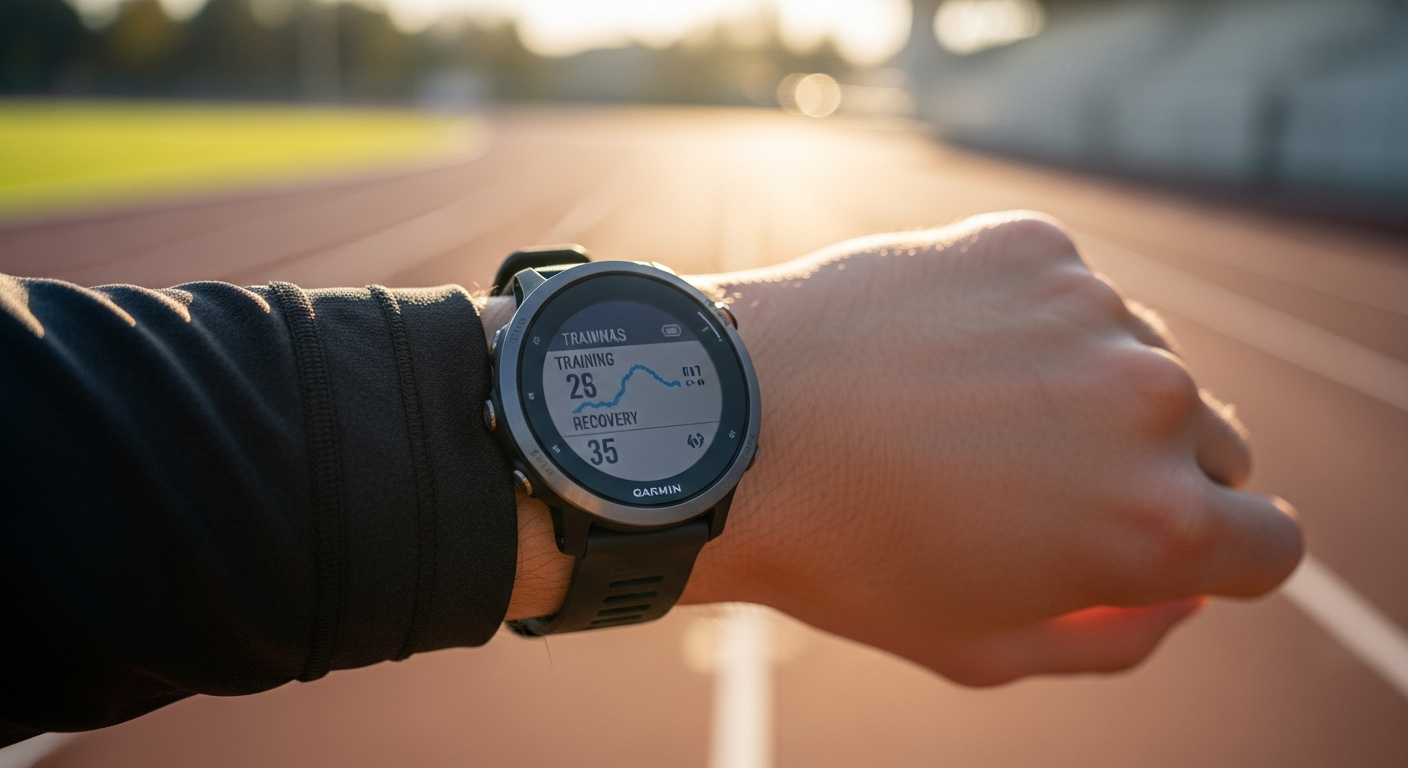
Most runners share a common misconception: more training always equals better results. The reality is far different. Research consistently shows that overtraining causes more injuries than undertraining, yet many athletes lack the objective data needed to make intelligent decisions about workout intensity. The problem isn't effort—it's awareness. Runners push hard when they should rest, skip recovery work when they should prioritize it, and repeat the same mistakes week after week because they're flying blind.
The equation changes when you have the right information at the right time. Recovery is where the actual training happens, not during the run itself. Your body adapts during sleep and rest days, not during the miles you log. The Garmin Forerunner 265 transforms how you approach this reality by providing daily feedback that guides your training decisions with precision.
Understanding Training Readiness—Your Daily Performance Blueprint
What Training Readiness Scores Measure and How They're Calculated
Training Readiness is the Forerunner 265's flagship feature for serious runners. Rather than simply tracking what you did yesterday, this metric predicts how ready your body is for today's training. The system generates a daily score ranging from 0 to 100, delivered each morning as part of your personalized briefing. This number answers the question every runner faces: should I push hard today or dial it back?
The calculation incorporates three critical variables that define your training state. Sleep quality determines how well your body recovered overnight—not just duration, but actual restorative sleep stages. Recovery time measures how much stress your recent training created and whether you've allowed sufficient adaptation. Training load captures your current cumulative fatigue from recent workouts and intensity. These three inputs combine into one actionable number that removes the guesswork from intensity decisions.
How Sleep Quality, Recovery Time, and Training Load Combine Into One Actionable Number
Think of Training Readiness as a three-factor system that evaluates your complete physiological state. A night of poor sleep drops your readiness significantly, even if you've had adequate days off. Similarly, back-to-back hard efforts tank your readiness score despite sleeping well. The algorithm understands that training isn't just about what you did—it's about how recovered you actually are.
In practical terms, a score above 75 signals that your body is prepared for intense work. Your nervous system has recovered, your muscles have adapted, and your energy reserves are full. A score between 50 and 74 suggests moderate training intensity—you can run, but this isn't the day for all-out efforts. Below 50, the watch essentially tells you to rest or run easy. This guidance prevents the overtraining trap that injures most dedicated runners.
Real-World Examples of What a High vs. Low Training Readiness Score Means for Your Next Run
Picture Monday morning after a weekend that included quality sleep and two easy recovery runs. You wake to a Training Readiness score of 82. This is your signal to attack—run that tempo workout or long interval session you've planned. Your body is genuinely prepared to handle stress and adapt from it.
Now consider Wednesday. You slept poorly Monday night, ran a hard track session Tuesday, and woke to a Training Readiness score of 41. The watch isn't being pessimistic—it's being honest about your state. Running hard today would deepen your fatigue and increase injury risk without producing training benefit. Instead, you run 30 minutes easy. This single decision, multiplied across weeks and months, is the difference between linear progress and the injury-recovery-frustration cycle.
Sleep Analysis and Recovery Metrics That Actually Inform Your Training
How the Forerunner 265 Tracks Sleep Stages and Sleep Quality
The Forerunner 265 monitors your sleep with sophistication that rivals dedicated sleep trackers. It doesn't just count hours—it distinguishes between light sleep, deep sleep, and REM sleep. This distinction matters because different sleep stages serve different purposes. Deep sleep drives physical recovery, while REM sleep supports mental processing and emotional regulation. The watch captures the complete picture.
The sleep tracking uses wrist-based heart rate variability and movement detection to classify your sleep stages throughout the night. When you're in light sleep, your heart rate remains relatively stable but elevated compared to deeper stages. During deep sleep, your heart rate drops and stays low. REM sleep shows an elevated, variable heart rate pattern. The Forerunner 265 pieces this together to understand not just how much you slept, but how restorative that sleep actually was.
Understanding Body Battery Energy Levels and What They Reveal About Fatigue
Body Battery is the Forerunner 265's answer to a question runners often ignore: how much actual energy do I have available for training today? The metric runs on a 0 to 100 scale and reflects your current energy reserves based on sleep, stress levels, and recent activity. It's distinct from Training Readiness but complementary—one predicts your readiness, the other shows your current energy state.
High Body Battery (above 80) means your sympathetic nervous system has recovered and you're operating from a surplus of energy. Low Body Battery (below 20) indicates your nervous system is stressed and your tank is nearly empty. This distinction helps runners recognize when they feel tired for good reason. You're not lazy or weak—you're genuinely depleted and need recovery, not a harder workout.
The Morning Report Feature and What Insights It Provides Upon Waking
The Morning Report delivers a personalized briefing each time you wake. Rather than forcing you to open an app and hunt for information, the watch presents your most relevant metrics on the screen: your sleep score from last night, your Training Readiness for today, your heart rate variability trend, and body composition change if tracked. For runners, this becomes a ritual that informs every training decision.
This morning briefing creates accountability and awareness. You see immediately whether last night's sleep was restorative or fragmented. You see whether your Training Readiness score supports the hard workout you planned. You understand whether your body is adapting positively to recent training or accumulating fatigue. This feedback loop drives smarter decisions across the entire week.
Multi-Sport Versatility Without Sacrificing Recovery Focus
Running, Cycling, Triathlon, and Open Water Swimming App Support
The Forerunner 265 isn't a running-only watch despite its name and heritage. It includes dedicated apps for cycling, triathlon, and open water swimming, making it genuinely useful for multi-sport athletes. Each app captures sport-specific metrics—cadence for running and cycling, stroke rate for swimming—while maintaining consistent heart rate and power data collection.
Triathletes benefit tremendously from this versatility. You can execute the same training session on different disciplines while the watch understands the context. A 60-minute cycling session counts differently in training load calculations than a 60-minute run, because the physiological stress differs. The watch accounts for this nuance.
How the Watch Tracks Different Sports and Maintains Unified Recovery Metrics
Rather than treating each sport as an isolated activity, the Forerunner 265 integrates all training into unified recovery and readiness calculations. When you complete a hard run, then swim easy the next day, then cycle the day after, the watch understands this as a three-sport training block. It calculates total training load across all disciplines and feeds that into your daily Training Readiness score.
This unified approach prevents the mistake of running hard after a hard cycling session because you forgot about yesterday's bike work. The watch remembers your complete training picture and reflects that in its readiness assessment.
Training Load Calculations Across Multiple Activity Types
Training load represents the cumulative physical stress you're placing on your body across all activities. A 10-mile run generates training load. A hard cycling session adds to it. A swimming workout contributes as well. The Forerunner 265 weights these contributions appropriately—the same heart rate elevation means different things in running versus cycling due to muscular engagement differences.
Get the Garmin Forerunner 265 and start tracking your multi-sport training load with precision.
Display Technology and Real-Time Training Data Visibility
AMOLED Touchscreen Advantages During Outdoor Runs and Bright Conditions
The Forerunner 265 represents a major generational leap in display technology for Garmin running watches. Previous models used memory-in-pixel (MIP) screens—excellent for battery life but dim in bright sunlight. The Forerunner 265 switches to AMOLED, a vibrant technology that remains crystal clear even in direct sunlight. When you're running at noon on a bright day, you can actually see your pace and heart rate without squinting or stopping to check your wrist.
This upgrade delivers more than aesthetic appeal. Clear visibility during runs means you can monitor your pace in real time without disrupting your rhythm. You see when you're drifting faster than intended, when your heart rate is climbing too steeply, or when you're nailing your target effort. This real-time feedback improves training quality immediately.
Customizable Data Screens for Monitoring Metrics That Matter to Your Training
The AMOLED screen's clarity enables dense, information-rich data displays. You can customize exactly which metrics appear during different activities. Some runners prioritize pace, distance, and time. Others want heart rate, cadence, and estimated VO2 max. The Forerunner 265 accommodates both approaches through fully configurable data fields.
You can create different screen layouts for different workouts. Your long run screen might show pace, distance, and heart rate. Your interval workout screen might show current lap pace, lap time, and heart rate. This customization means you're always looking at the specific information most relevant to what you're doing right now.
5-Button Backup Operation for Quick Adjustments Without Touching the Screen
While the touchscreen is excellent, running creates situations where a touchscreen isn't practical—wet hands, cold weather, or simply not wanting to interrupt your stride. The Forerunner 265 includes traditional five-button operation that works equally well. You can navigate menus, start and stop activities, and adjust data displays using physical buttons.
This dual-input approach gives you flexibility. On a rain-soaked run, use buttons. On a calm treadmill session, the touchscreen works great. You get to choose based on conditions.
GPS Accuracy and Multi-Band Positioning for Reliable Training Data
Multi-Band GPS Technology and Why It Matters for Training Analysis
The Forerunner 265 employs multi-band GPS, meaning it receives signals from multiple GPS frequency bands simultaneously. Standard single-band GPS receives only one frequency from the satellites overhead. Multi-band technology receives multiple frequencies, allowing the watch to resolve position ambiguities and improve accuracy, especially in challenging environments.
This matters for runners because GPS accuracy directly affects every data-driven decision you make. If your distance is wrong, your pace is wrong. If your pace is wrong, your Training Readiness calculations are based on faulty data. Multi-band GPS ensures that the distance you see on your watch at the end of a run matches reality.
Accuracy in Urban Canyons, Forests, and Challenging Environments
Urban running presents particular GPS challenges. Tall buildings create what researchers call "urban canyon" effects, where satellite signals bounce off buildings rather than reaching your watch directly. Traditional GPS struggles in these conditions. Multi-band GPS handles them better because it can distinguish true satellite signals from bounced signals and weight the accurate ones appropriately.
Forest running presents a different challenge—dense canopy blocks some signals entirely. Again, multi-band GPS helps by using multiple frequency bands to maintain enough good signals even when some are completely blocked.
How Precise Distance and Pace Data Feeds Into Training Readiness Calculations
Your Training Readiness score depends partly on accurate training load calculation, which depends on knowing the actual distance and intensity of your recent runs. If GPS accuracy is poor, the training load calculation is poor, and your Training Readiness recommendation becomes unreliable. The multi-band GPS ensures this critical data is accurate, making the entire feedback system trustworthy.
Music Storage and Offline Training Freedom
On-Board Music Storage Capacity and Supported Audio Formats
The Forerunner 265 includes several gigabytes of onboard storage for music files. You can load your favorite playlists directly onto the watch and listen through paired Bluetooth headphones without carrying your phone. This capacity is sufficient for hours of music—enough for nearly any run, no matter the duration.
The watch supports standard audio formats including MP3, AAC, and OGG files. If your music library is in these formats, you can transfer tracks directly to the watch. Streaming music services require your phone for authentication, but downloaded or purchased music transfers easily.
Pairing With Bluetooth Headphones for Phone-Free Listening
The watch connects to any standard Bluetooth headphones or earbuds. Once paired, the connection remains stable even when your phone is left at home. You control playback from your wrist—adjust volume, skip songs, or pause without reaching for a device that isn't there.
For runners, this creates genuine freedom. You run without the phone's weight and distraction. You're not worried about battery or durability. Your watch handles music and all training monitoring simultaneously.
Practical Benefits for Runners Who Prefer Music During Solo Training Sessions
Music profoundly affects running experience. It masks repetitive leg turnover, provides rhythm for pacing, and makes difficult efforts more psychologically manageable. For runners who depend on music during workouts, having it available without phone dependency is genuinely valuable. A 90-minute long run with your favorite playlist becomes accessible anywhere, without technological complications.
Battery Performance and Practical Daily Usability
13-Day Battery Life in Smartwatch Mode for Continuous Health Monitoring
Battery life is a critical smartwatch metric, and the Forerunner 265 impresses despite its AMOLED display. In smartwatch mode (meaning the watch is tracking your activity passively but not actively running GPS-based workouts), you can expect approximately 13 days between charges. This means you might charge it once per week during normal use, similar to mainstream smartwatches.
This battery longevity is remarkable for an AMOLED watch. Traditional LCD displays draw far less power, but AMOLED's brightness advantage comes with a cost. The Forerunner 265 balances this tradeoff effectively.
20-Hour GPS Battery for Ultra-Marathon Training and Long Runs
When you activate GPS for a run, battery consumption increases significantly. The Forerunner 265 provides approximately 20 hours of continuous GPS tracking. For most runners, this covers every realistic training scenario. Even ultra-marathoners finishing in 12-15 hours have comfortable margin. You won't need to manage battery anxiety during training.
This GPS battery performance exceeds the battery life of older Garmin models with LCD screens. The AMOLED display doesn't compromise GPS runtime.
AMOLED Battery Drain Compared to Traditional LCD Displays
AMOLED technology draws more power than traditional LCD, but the gap is smaller than it was a decade ago. The Forerunner 265's developers optimized the display refresh rate and brightness settings to minimize energy consumption. In practice, you'll charge the watch roughly weekly, compared to roughly biweekly with older LCD models. The visibility improvement is worth the minor battery tradeoff.
Design, Comfort, and Size Considerations for Different Runners
46mm Standard Version vs. 42mm 265S Sizing Options
Garmin offers the Forerunner 265 in two sizes. The standard version features a 46mm case with a 1.3-inch AMOLED display. The 265S variant uses a 42mm case with a 1.1-inch display. Both are functional and well-designed—the difference is personal preference based on wrist size and aesthetic preference.
Runners with larger wrists typically prefer the 46mm version. The larger display shows more information per screen, reducing required scrolling. Runners with smaller wrists or those preferring a subtler watch presence typically choose the 265S. The 265S isn't less capable—it's simply more proportionate on petite frames.
Wrist Comfort During Long Training Sessions and Everyday Wear
The Forerunner 265 uses a fiber-reinforced polymer case with Gorilla Glass 3 protection. The case is lightweight and won't create wrist fatigue during training. The standard sport band is breathable and comfortable for runs and everyday wear. Many runners wear the watch 24/7 without discomfort—the band is permeable enough to avoid skin irritation even after sweaty workouts.
The watch is water-resistant to 5 ATM, meaning it withstands splashing and brief submersion but isn't suitable for swimming laps. For open water swimming (where you need the watch), it's adequate. For pool swimming, you'd want higher water resistance.
Weight and Profile Comparison With Competing Running Watches
The Forerunner 265 weighs approximately 38 grams (46mm version), comparable to other modern running watches. It's not the absolute lightest GPS watch available, but the weight difference between this watch and the lightest alternatives is negligible during actual training. You'll notice the comfort difference from a well-fitting band far more than you'll notice marginal weight variations.
The watch profile is slim enough to fit comfortably under long sleeves without creating a bulge. It doesn't feel substantial or cumbersome even during tempo runs or intervals where minimizing equipment distraction matters.
Price-to-Performance Value for Serious Runners
Current Pricing Between €325.90 and €449.99 Depending on Retailer and Variant
The Forerunner 265 prices between approximately €325 and €450 depending on the retailer and specific model variant. The 46mm standard version typically costs more than the 265S, and some retailers offer better pricing than others. Specialty running retailers like lauf-bar.de sometimes offer competitive prices with knowledgeable staff support.
This price range places the Forerunner 265 in the mid-tier running watch market. It's expensive compared to basic fitness trackers, but affordable compared to premium Garmin models like the Epix or Fenix series.
Comparison With Entry-Level Running Watches Missing Key Recovery Features
Entry-level running watches (€100-€200) typically include basic GPS and heart rate monitoring. They lack the sophisticated recovery metrics that drive smarter training decisions. Training Readiness, Body Battery, comprehensive sleep analysis, and morning reports either don't exist in entry-level watches or function as afterthoughts with limited accuracy.
For a runner serious about using data to optimize training, entry-level watches create blind spots that lead to overtraining or missed opportunities for hard efforts. The Forerunner 265's recovery features justify the price premium by fundamentally improving training decision quality.
Comparison With Premium Garmin Models and What You're Trading Off
Premium Garmin running watches like the Epix or Fenix series cost €600-€900. What do you get for that additional €250-€450? Primarily, integrated mapping and navigation features that most runners don't need. The Forerunner 265 lacks onboard maps—you get GPS positioning and track recording, but not turn-by-turn navigation.
For ultrarunners navigating remote terrain, this omission matters. For typical runners running familiar routes or trails with marker guidance, the lack of maps is irrelevant. The Forerunner 265 provides all the training and recovery features of premium models at a lower price by omitting features many runners never use.
Integration With Garmin Connect and Training Ecosystem
Syncing Data to Garmin Connect App for Deeper Analysis
Every run syncs wirelessly to the Garmin Connect app on your smartphone. The app provides detailed breakdowns of your workout—lap-by-lap pace variations, elevation gain, heart rate zones, cadence trends, and more. This analysis supplements what the watch displays, providing context that's difficult to interpret on the small screen during actual activity.
Garmin Connect also tracks your long-term trends—monthly mileage, average pace by run type, elevation gain progression, and consistency metrics. These trends inform whether your training is building the way you intended or drifting off course.
Third-Party App Compatibility and Data Export Options
Garmin Connect isn't isolated—data exports to compatible platforms like Strava, Training Peaks, and others. If you use multiple training applications, the Forerunner 265 works with your existing ecosystem rather than forcing a choice.
Training Plan Creation and Customization Within the Ecosystem
Garmin Connect includes training plan functionality. The app can generate adaptive running plans based on your goals and current fitness level. The watch receives these plans and displays your daily workouts. Some runners find the plans basic compared to coaching-focused platforms, but they provide structure for those without external coaching.
Who Should Choose the Forerunner 265 and Why
Ideal for Runners Focused on Recovery and Injury Prevention
The Forerunner 265 is fundamentally designed for runners who understand that smart training beats hard training. If you're focused on consistent, injury-free progress built on actual recovery rather than perpetual grinding, this watch delivers exactly what you need. The Training Readiness algorithm, Body Battery, and sleep analysis give you the feedback required to build training sustainable across years, not just weeks.
Best Fit for Multi-Sport Athletes Managing Training Load Across Disciplines
Multi-sport athletes gain particular value from unified recovery metrics. Rather than managing running workouts separately from cycling sessions, the Forerunner 265 integrates everything into coherent training load and readiness assessments. This prevents the common mistake of overtraining across sports while underestimating cumulative fatigue.
Perfect for Runners Upgrading From Older Garmin Models Seeking AMOLED Screens
If you've used previous Garmin running watches and struggled to read the display in bright conditions, the AMOLED upgrade alone justifies switching. You gain the same training features you're familiar with plus dramatically improved visibility and modern interface experience.
Making Your Training Smarter, Not Harder
The Garmin Forerunner 265 succeeds because it respects what training science actually teaches: recovery determines results. Your body doesn't improve during runs—it improves during the rest days and sleep nights that follow. The Training Readiness algorithm, Morning Report, and comprehensive health monitoring create a feedback system that fundamentally changes how you approach your training week.
Most runners operate on intuition and feel, which leads predictably to overtraining cycles and preventable injuries. The Forerunner 265 replaces guesswork with data. It tells you when your body is genuinely ready to handle intensity. It shows you whether that poor workout was a bad day or a sign you need recovery. It quantifies sleep quality and explains why you felt sluggish on the run.
If you're serious about running performance and willing to invest in data-driven training decisions, the Forerunner 265 delivers exceptional value that compounds across months and years. The recovery insights justify the investment by helping you make smarter intensity decisions that multiply into faster progress and fewer injuries. The vibrant AMOLED display, multi-sport versatility, and reliable GPS complete the picture.
Start making smarter training decisions today with the Garmin Forerunner 265 running smartwatch.
Leave a Reply