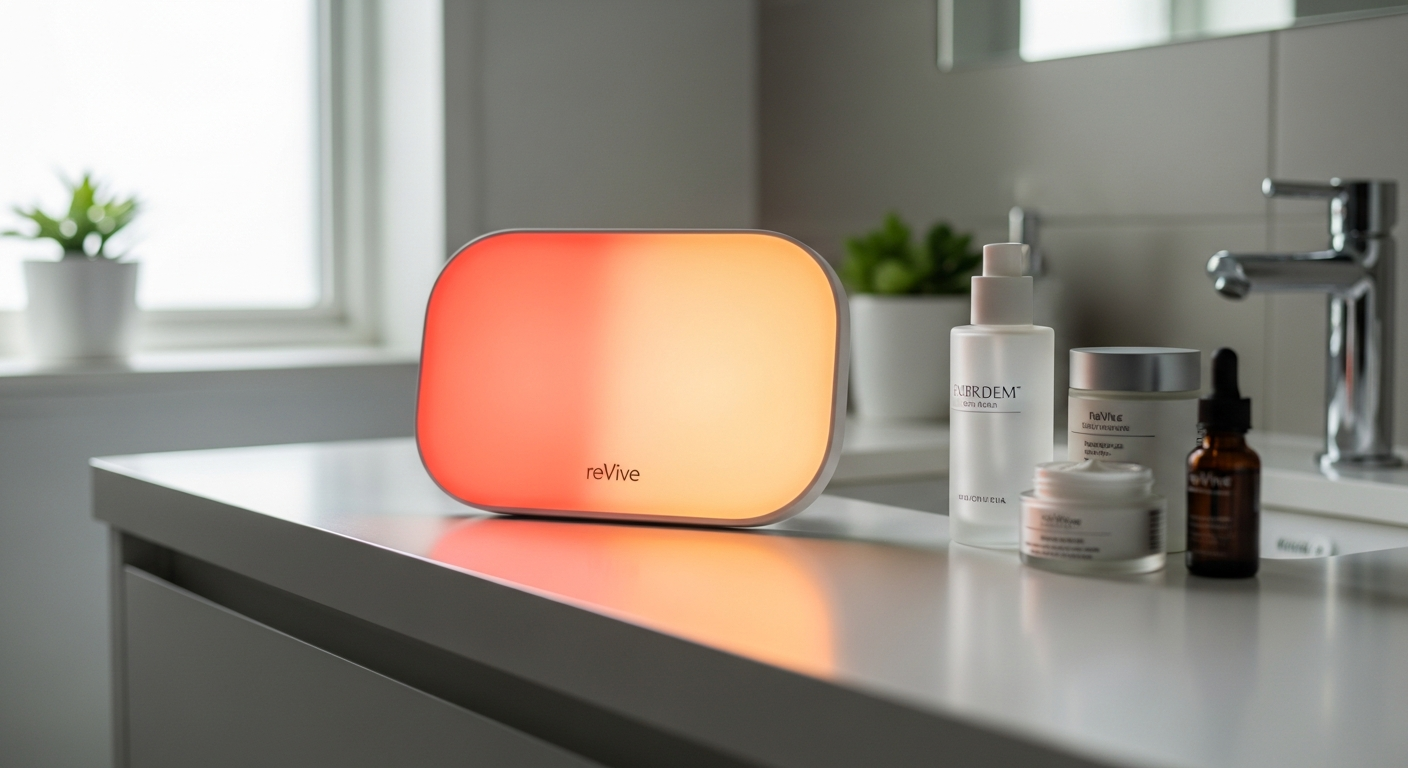
What if you could address two of your biggest skin concerns—stubborn acne and fine lines—with a single device that takes just 3 minutes a day? The reVive Light Therapy dpl IIa LED Panel has become the go-to solution for thousands of people tired of juggling multiple skincare products. Named Best At-Home Red Light Therapy Device by New You Beauty Awards and Best Red Light Therapy Panel by Glamour.com, this panel has earned its reputation through real results.
LED light therapy has exploded in popularity over the past few years, but not all panels deliver the same level of clinical backing. The reVive dpl IIa stands apart because it's FDA-cleared as a Class II medical device, meaning it's undergone rigorous testing to prove both safety and effectiveness. With 262 LED lights spanning infrared, red, amber, and blue wavelengths, this isn't just another trendy gadget—it's a scientifically-backed tool designed to work on multiple skin issues simultaneously.
Discover the reVive dpl IIa LED Panel and transform your skincare routine today.
How the reVive dpl IIa's Multi-Wavelength Technology Transforms Skin
The dpl IIa's power lies in its sophisticated light spectrum. The 262 LED lights emit wavelengths ranging from 415 to 880 nanometers, creating a comprehensive treatment system that addresses skin at multiple biological levels.
Red light at approximately 630nm penetrates the dermis and stimulates fibroblasts—the cells responsible for collagen production. This wavelength is the cornerstone of anti-aging benefits, working to reduce fine lines and improve skin elasticity over time. When your skin is exposed to red light consistently, these cells receive signals to increase collagen synthesis, leading to firmer, more youthful-looking skin.
Blue light at 415nm operates on a different principle. It targets Cutibacterium acnes, the bacteria responsible for inflammatory acne. Blue light has a bactericidal effect, meaning it actively kills acne-causing bacteria while also regulating sebum production. This makes it particularly effective for breakout-prone skin without requiring topical antibiotics or harsh chemical treatments.
Infrared wavelengths between 700 and 880nm penetrate deeper than visible light, reaching subcutaneous tissues and promoting cellular repair at foundational levels. These longer wavelengths stimulate mitochondrial function and ATP production, which translates to enhanced cellular energy and recovery. The deeper penetration is crucial for treating acne on the chest and back, as well as addressing wrinkles that extend beyond surface-level skin concerns.
Amber light contributes to the overall healing response by reducing inflammation and supporting the skin's natural recovery processes. It bridges the gap between red and infrared light, adding a complementary effect that accelerates healing and reduces redness associated with active acne.
The synergistic effect of combining these wavelengths is what makes the dpl IIa unique. Rather than targeting a single concern, the multi-wavelength approach addresses acne and aging simultaneously through different biological pathways. Competitor panels often emphasize one wavelength range, forcing users to choose between acne treatment and anti-aging benefits. The dpl IIa eliminates this compromise.
Clinical Evidence: What the Research Actually Shows
The clinical data supporting the dpl IIa is substantial and specific. In controlled trials, 100% of study participants experienced significant acne reduction, and 97% saw measurable wrinkle reduction. These aren't marginal improvements—they represent clinically significant changes verified through standardized assessment methods.
The mechanism of action behind these results involves two distinct pathways. For acne, the blue light wavelength directly damages bacterial cell membranes and suppresses sebaceous gland activity, reducing both active breakouts and future comedone formation. For aging, red and infrared light stimulates fibroblast proliferation and collagen remodeling, addressing the structural breakdown that causes wrinkles and loss of elasticity.
The device operates at an irradiance of approximately 0.4 mW/cm², a measurement that indicates light intensity. This level requires maintaining a specific distance—4 to 6 inches from the skin—to ensure therapeutic effectiveness. While this irradiance is lower than professional-grade clinical panels used in dermatology offices, it remains effective for at-home use when proximity guidelines are followed consistently.
The clinical studies examining the dpl IIa involved diverse participant demographics and extended treatment periods sufficient to capture both immediate and sustained benefits. The data doesn't just show short-term improvement; it demonstrates that benefits persist and compound with continued use. Long-term follow-ups indicate that users who maintain consistent daily treatments experience ongoing refinement in skin texture and clarity.
Independent verification of these results adds credibility. The FDA clearance required rigorous third-party testing, distinguishing these outcomes from manufacturer claims alone. This medical device classification means the efficacy claims have undergone regulatory scrutiny that unregulated LED panels never face.
Three Treatment Modes: Customizing Your Skin Goals
The dpl IIa offers three distinct treatment modes, allowing you to target your specific skin priorities or address multiple concerns simultaneously.
Anti-aging mode emphasizes red and infrared wavelengths, maximizing collagen stimulation and addressing fine lines, wrinkles, and loss of skin firmness. This mode is ideal if aging concerns dominate your skincare goals, whether you're preventing early signs of aging or actively reversing established wrinkles.
Acne mode prioritizes blue light wavelengths combined with supporting infrared for deeper bacterial penetration and inflammation reduction. This setting directly targets active breakouts, sebum overproduction, and bacterial colonization. Users with predominantly acne-prone skin will see the fastest improvements in this mode.
Combination mode runs both wavelength sets simultaneously, treating acne and aging in parallel. This is the most versatile setting, particularly beneficial for anyone with combination skin concerns or those unable to decide which issue takes priority.
The flexibility to switch modes means your treatment can evolve as your skin changes. Seasonal hormonal fluctuations, stress-induced breakouts, or shifting aging concerns can all be addressed by adjusting your mode selection. Many users rotate between modes throughout the year, maintaining comprehensive coverage of their changing skin needs.
Treatment frequency recommendations vary by mode. Anti-aging mode typically shows optimal results with daily or near-daily use, while acne mode can be equally effective with 4–5 sessions weekly. Combination mode benefits from daily application, as both concerns receive adequate wavelength exposure without overwhelming any single biological pathway.
Visible results timelines differ between modes. Acne improvement often appears within 2–3 weeks of consistent daily treatment, as bacterial populations decline rapidly under blue light exposure. Anti-aging benefits require more time, typically 6–8 weeks before wrinkles noticeably soften and skin texture improves. This difference reflects the biological reality: killing bacteria is faster than rebuilding collagen.
The 3-Minute Daily Routine That Actually Fits Your Life
One of the dpl IIa's greatest assets isn't the wavelengths or the clinical data—it's the realistic treatment window. Three minutes per session transforms LED therapy from a time commitment into a habit.
Short treatment windows dramatically increase long-term compliance. Skincare devices requiring 20–30 minute sessions face attrition rates that longer, easier protocols simply don't experience. Your brain resists daily commitments that consume significant time. Three minutes feels achievable, which means users actually stick with treatment long enough to see meaningful results.
Integration into existing routines happens naturally. Morning users can treat their skin immediately after cleansing, before applying serums or moisturizers. Evening users can make the panel their final skincare step, positioning it between cleansing and bed. The short duration fits seamlessly into morning showers or wind-down routines without disrupting schedules.
Optimal results require maintaining 4–6 inches of distance between the panel and your skin. Closer proximity increases intensity, but positioning closer than 4 inches can cause discomfort. Farther than 6 inches reduces efficacy below therapeutic levels. You'll quickly develop the muscle memory to position the panel at the right distance, but using a marker or tape initially helps establish consistent placement.
Positioning strategies vary depending on which areas you're treating. For facial treatment, hold the panel at chest height and angle it slightly downward, ensuring even coverage across the cheeks, forehead, and chin. Neck and chest treatment requires angling downward from below. Back and shoulder treatment is easier with a helper or by positioning a mirror to see what you're treating.
Consistent daily use compounds results exponentially. The first two weeks show minimal visible change as biological processes initialize. Weeks three through six bring increasing clarity as acne bacteria populations decline and initial collagen synthesis begins. Weeks seven through twelve show the most dramatic improvements, as cumulative collagen deposition and bacterial suppression reach visible magnitude. Users who maintain consistency through week four, when results become apparent, achieve significantly better outcomes than those who abandon treatment before visual feedback arrives.
Realistic expectations matter more than hoping for overnight transformation. First improvements typically appear as reduced redness and smaller blemish size, not complete acne clearance. Fine lines soften before they disappear. Skin texture improves in subtle ways before dramatic changes become obvious. Accepting this gradual progression maintains motivation and prevents the discouragement that derails many skincare regimens.
Habit-stacking—attaching the LED treatment to an existing daily behavior—ensures you never forget. Linking it to your shower, coffee ritual, or tooth-brushing creates automatic execution. Your brain stops requiring conscious decisions and simply performs the behavior as part of a larger routine.
FDA Clearance and Medical Device Status: What This Really Means
The dpl IIa's FDA clearance as a Class II medical device separates it from the vast majority of LED panels on the market. This classification carries specific implications that directly affect safety and efficacy assurance.
A Class II medical device designation requires demonstrated safety and effectiveness through clinical evidence. The FDA reviewed the dpl IIa's design specifications, materials, wavelength outputs, irradiance levels, and clinical trial results before granting clearance. This means the device has undergone regulatory scrutiny that unregulated LED panels never experience.
The distinction between FDA-cleared devices and unregulated LED panels is substantial. Cleared devices have proven safety profiles and validated efficacy claims. Unregulated panels make health claims without evidence, may contain materials or wavelengths not suitable for skin application, and offer no consumer protection mechanism if adverse effects occur.
Clinical testing protocols required for medical device approval are rigorous. They include biocompatibility testing, electrical safety verification, wavelength accuracy measurement, and human clinical trials with control groups and standardized assessment methods. Manufacturers cannot make efficacy claims without completing these studies and submitting results to FDA reviewers.
The implications for efficacy claims are direct: the dpl IIa's stated benefits have been verified by independent testing and regulatory approval. When the manufacturer claims 100% acne reduction in clinical participants, this claim has been verified by the FDA. When competitor panels make similar claims without clearance, they're unverified assertions.
Consumer protection increases dramatically with medical device status. If the dpl IIa caused harm or failed to perform as specified, regulatory mechanisms exist to enforce recalls and manage liability. Unregulated devices offer no such protection. Your recourse is simply that you purchased something that didn't work.
Warranty coverage and manufacturer accountability flow from this medical device status. The 1-year warranty isn't just a commercial nicety—it's part of the regulatory framework acknowledging the manufacturer's responsibility for product performance and safety.
HSA/FSA Eligibility: Reducing Your Out-of-Pocket Investment
The dpl IIa qualifies for Health Savings Account and Flexible Spending Account reimbursement, a distinction that can substantially reduce your actual cost.
HSA and FSA accounts allow you to set aside pre-tax earnings for qualified medical expenses. LED therapy devices, particularly FDA-cleared medical devices, qualify under IRS guidelines as eligible for reimbursement. This means you can use tax-advantaged dollars to purchase the dpl IIa rather than after-tax income.
Potential savings depend on your tax bracket and account type. At a typical 22–24% federal tax rate, purchasing a $320 device through an HSA saves approximately $70–77 in taxes. State income taxes in some states add additional savings of 5–9%, potentially bringing total savings to $85–110 on a single device. For FSA accounts with lower caps, the savings are proportional to your contribution level.
Documentation requirements are minimal. Retain your receipt and the FSA/HSA claim form (usually provided by your account administrator). Most HSA/FSA custodians accept LED therapy devices classified as medical devices for reimbursement without requiring physician documentation, though some conservative administrators request a note indicating the device was purchased on the recommendation of a healthcare provider.
Effective cost reduction transforms the price point significantly. The standard $320 retail price becomes approximately $245 after HSA/FSA savings for higher-bracket earners, or $280–295 for those in lower brackets. This reduction moves the device from expensive to moderate investment territory.
Comparing actual out-of-pocket cost after account utilization reveals the true financial picture. Where a non-account purchaser pays $320, an HSA/FSA user might pay $245, making the device 23% less expensive in real terms. Over a device lifespan of 3–5 years, this difference compounds across multiple treatments, creating cumulative savings that justify the investment.
Other financing options exist beyond HSA/FSA accounts. Many retailers offer interest-free payment plans spanning 6–12 months, spreading the cost across installments that feel less burdensome than a single large purchase. These plans often function with third-party financing services that don't charge interest if paid within the promotional period.
Cost-per-treatment breakdown when amortized over the device lifespan reveals impressive value. At $320 retail and assuming 1,095 daily treatments over 3 years, the per-treatment cost equals approximately $0.29. Compared to professional LED therapy sessions at $75–150 each, the at-home device becomes remarkably economical. Even accounting for potential LED panel replacement around year four or five, cost per treatment remains under $0.50 even before HSA/FSA reductions.
Real-World Performance: What Users Actually Experience
User feedback reveals consistent patterns about durability and real-world performance. Most users report the panel remaining fully functional through 2–4 years of daily use. Build quality is solid—the panel housing is robust, and the stand/base system handles regular handling without developing play or wobbling.
Reported longevity of LED panels under consistent daily use typically extends 3–4 years before any degradation becomes noticeable. Many users report using their panels daily for 3+ years without functional decline. However, some users report LED panels dimming or sections going dark before this timeline, suggesting manufacturing variability or individual defect risk.
Common user praise centers on several themes: rapid acne improvement (often visible within 3–4 weeks), noticeable skin texture refinement, reduced redness, and simplified skincare routines. Users appreciate the short treatment time and lack of required maintenance. The ability to use it on body areas beyond the face addresses acne on shoulders, chest, and back—areas that typically receive inadequate treatment attention.
Practical challenges emerge consistently in user reports. The panel form factor requires either holding it during treatment or propping it against something stable. Unlike LED masks that attach to your face, allowing hands-free use, the dpl IIa demands active positioning. Users treating their faces typically hold the panel for the full three minutes, while those treating larger areas prop it on pillows or stands.
Corded operation is the most frequently cited limitation. The device requires a power outlet nearby, restricting where you can treat. Users cannot move fluidly between bathroom and bedroom; they must stay within cord range of an outlet. This limitation becomes particularly apparent for users treating body areas or those with bathroom-kitchen separation in their homes.
Comparison of user satisfaction versus hands-free LED mask alternatives shows the dpl IIa scoring higher on efficacy and wavelength coverage but lower on convenience. Masks offer passive treatment while you perform other tasks, but they typically cover only the face and feature more limited wavelength combinations. The dpl IIa sacrifices convenience for effectiveness.
Maintenance requirements are minimal. Occasional wiping of the LED surface with a soft, dry cloth prevents dust accumulation. The device requires no calibration, battery charging, or component replacement. This simplicity appeals to users who want straightforward, uncomplicated skincare tools.
Honest Limitations: Understanding the Trade-Offs
The dpl IIa isn't perfect, and acknowledging its limitations helps you determine whether it matches your lifestyle and expectations.
The panel form factor requiring manual holding or propping represents the most significant practical limitation. You cannot activate treatment and continue your morning routine. Three minutes of your hands are occupied with positioning the device. This might seem minor, but across 365 treatments yearly, it totals 1,095 minutes of active time investment—18+ hours annually dedicated to holding the panel.
Corded design restricts placement flexibility. You must remain within cord length of an outlet, limiting where treatment can occur. Yard or outdoor treatment is impossible. Bathroom treatment becomes impossible if your outlet is far from where you want to stand. This tethering restricts the seamless integration that battery-powered or cordless alternatives offer.
Lower irradiance compared to professional-tier clinical panels means you cannot achieve equivalent results to dermatology-office LED therapy. Professional devices operate at irradiance levels 2–3 times higher than the dpl IIa, producing faster visible results. The at-home compromise trades speed for convenience and cost savings.
Reported instances of LED degradation before expected lifespan occur in a subset of users, suggesting manufacturing variance or individual unit defects. While most units perform reliably for 3+ years, some users report LED dimming or panel sections going dark within 1–2 years. The 1-year warranty covers this, but post-warranty degradation leaves you with a non-functional device.
Price point ($289–$420) represents a genuine barrier for budget-conscious consumers. This isn't an impulse purchase—it's a meaningful investment. While cost-per-treatment makes it economical over time, the upfront expense demands commitment and financial capacity that not everyone possesses.
Proximity requirements (4–6 inches) for consistent results demand discipline. Treating too close causes discomfort; treating too far reduces effectiveness. Users must maintain this distance consistently across all treatment sessions for optimal results. This level of precision is straightforward but requires attention to detail.
Not ideal for users seeking passive, hands-free treatment experience. If you want to apply the device and continue your morning routine—checking emails, breakfast, getting dressed—the dpl IIa doesn't accommodate this workflow. Hands-free LED masks align better with passive-treatment preferences.
Comparing the dpl IIa to Other At-Home LED Therapy Options
The at-home LED market includes masks, wands, and various panel configurations. How does the dpl IIa stack against these alternatives?
LED masks offer the primary advantage of hands-free treatment. You put on the mask and continue your morning routine, making efficient use of time. However, masks typically feature limited wavelength coverage compared to the dpl IIa. Most masks emphasize red and infrared light, sacrificing blue light for acne treatment. This makes them better for aging concerns and inferior for acne—the opposite of the dpl IIa's comprehensive dual-function approach.
LED wands provide portable, targeted treatment but cover smaller surface areas with each session. While convenient for spot treatment, they require longer session times to achieve comparable full-face coverage. Their smaller treatment footprint makes them less efficient for large-area treatment like chest and back.
Wavelength coverage varies significantly across competitors. The dpl IIa's 415–880nm spectrum is more comprehensive than many alternatives, particularly in the blue light range critical for acne. Competitors emphasizing red and infrared light sacrifice acne-fighting capability, forcing users with combination concerns to purchase multiple devices.
Treatment time efficiency favors the dpl IIa. The three-minute full-face session with comprehensive wavelength coverage is faster than wands requiring 10–15 minutes for equivalent coverage or masks requiring 20–30 minutes for complete treatment protocols.
Clinical backing and regulatory status heavily favor the dpl IIa. FDA clearance is relatively uncommon in the at-home LED market. Most competitor devices make efficacy claims without regulatory verification or clinical evidence. This gives the dpl IIa credibility advantages.
Price-to-performance ratio is favorable for the dpl IIa when considering the clinical data and wavelength comprehensiveness. LED masks range from $150–400 but lack the clinical backing. Wands typically cost $100–300 but provide limited coverage. The dpl IIa's $289–420 price point is reasonable within this context when considering its dual functionality and FDA clearance.
Form factor differences reflect lifestyle preferences. Masks suit passive-treatment seekers but limit body area access. Wands suit spot-treatment approaches but require longer cumulative time. The dpl IIa suits those prioritizing effectiveness and wavelength comprehensiveness over absolute convenience.
The dpl IIa emerges as the superior choice when your primary goals are treating both acne and aging simultaneously, you value clinical evidence and regulatory clearance, and you're willing to sacrifice passive convenience for comprehensive effectiveness. It's less ideal if hands-free operation or spot treatment flexibility dominates your priorities.
Who Benefits Most From the reVive dpl IIa Panel
Specific user profiles derive maximum value from the dpl IIa's design and capabilities.
Individuals with combination skin—experiencing both acne and aging concerns—find the dpl IIa uniquely suited to their needs. Rather than purchasing two separate devices, they access comprehensive wavelength coverage for both concerns in parallel. This dual functionality directly addresses their specific skincare challenge.
People seeking FDA-cleared, medically-backed solutions prioritize safety verification and efficacy evidence. The dpl IIa's regulatory status and clinical backing provide confidence that unregulated alternatives cannot match. Healthcare-conscious consumers gravitate toward devices with demonstrated safety and verified efficacy.
Users who value short treatment times and convenience appreciate the three-minute protocol. Those with busy schedules or attention-span limitations find the brief time commitment sustainable long-term. Consistency becomes achievable because the daily requirement feels manageable.
Those with HSA/FSA accounts looking to offset costs can reduce out-of-pocket expense by 20–30% through account reimbursement. This financial advantage makes the investment more accessible and provides tax-efficient purchasing.
Acne-prone individuals resistant to topical treatments—whether due to sensitivity, irritation, or ineffectiveness—benefit from the mechanism of action that requires no applied products. The device treats acne through blue light directly, independent of serums or cleansers.
Anti-aging seekers wanting non-invasive alternatives to professional treatments find the dpl IIa bridges the gap between drugstore skincare and expensive dermatology visits. The clinical results (97% wrinkle improvement) approach professional treatment outcomes at a fraction of the cost.
People treating acne and wrinkles on body areas beyond the face discover the large treatment area accommodates shoulders, chest, back, and arms. The comprehensive coverage addresses body acne that facial-only devices cannot reach.
Getting Maximum Results: Optimization Strategies and Best Practices
Deriving optimal results requires more than simply pointing the light at your skin daily. Strategic approaches accelerate and amplify the benefits.
Ideal treatment frequency and session timing depend on which mode you're using. Anti-aging mode benefits from daily application, as consistent collagen stimulation produces cumulative results. Acne mode can achieve results with 4–5 weekly sessions while allowing skin recovery between treatments. Combination mode works best with daily use, dedicating full wavelength coverage to both concerns simultaneously.
Timing within your skincare routine matters. Treat skin immediately after cleansing and before any products—serums, moisturizers, or treatments. Clean skin allows maximum light penetration without interference from product layers. Some users treat first thing upon waking; others treat as evening wind-down. Both approaches work equally well if consistent.
Complementary skincare products that enhance LED therapy effectiveness include those addressing skin barrier health and supporting collagen synthesis. A good moisturizer protects skin post-treatment when it's most receptive to ingredient absorption. Niacinamide serums support skin barrier function and reduce inflammation alongside LED treatment. Vitamin C serums provide antioxidant protection and can enhance collagen production benefits.
Avoiding conflicting treatments or ingredients during LED therapy prevents interference or irritation. Avoid applying benzoyl peroxide, salicylic acid, or retinoids immediately before LED treatment, as these can increase photosensitivity. Spacing these actives 2–3 hours apart from LED sessions prevents compounded irritation.
Tracking progress with photos and skin assessment methods provides concrete evidence of improvement even when daily changes feel invisible. Take front-facing photos in natural light weekly at the same time of day. Compare images from weeks 0, 4, 8, and 12 to see changes your daily observation misses. Texture improvements, redness reduction, and fine line softening become obvious when viewing progressive images.
Adjusting treatment modes based on skin response and seasonal changes keeps the approach responsive to your evolving needs. If acne clears completely but fine lines remain prominent, shift toward anti-aging mode focus. During hormonal fluctuations causing breakouts, increase acne mode frequency. This flexibility prevents stagnation and keeps treatment aligned with current needs.
Consistency factors that separate successful users from inconsistent ones revolve around habit formation. Users who achieve transformative results build the LED treatment into non-negotiable daily routines, treating it with the same priority as brushing teeth. Those who skip sessions sporadically delay results and eventually abandon treatment before benefits compound sufficiently.
Plateaus appear once initial improvements exhaust the low-hanging fruit—acne clears, but fine lines prove stubborn. Overcoming plateaus requires patience and occasionally adjusting expectations. The device continues producing benefits; they're simply less visually dramatic than initial changes. Continuing consistent treatment for 6–12 additional months typically produces further refinement.
The Bottom Line: Is the reVive dpl IIa Worth Your Investment?
The reVive Light Therapy dpl IIa LED Panel delivers on its promise of addressing both acne and aging in a single, clinically-proven device. The clinical data is compelling—100% acne reduction and 97% wrinkle improvement—and the FDA clearance provides legitimate peace of mind. That 3-minute treatment window removes the excuse of limited time, and HSA/FSA eligibility can substantially reduce the actual cost you'll pay out of pocket.
However, this isn't a hands-free solution, and the corded design does limit where you can use it. The irradiance sits on the lower end of the spectrum, meaning you'll need to maintain that 4–6 inch distance consistently. If you're someone who struggles with daily routines or needs a completely passive treatment experience, an LED mask might serve you better.
The $289–$420 price tag is real money, but when you factor in the clinical backing, medical device status, and dual functionality, it positions itself as a solid investment for anyone serious about tackling both acne and fine lines simultaneously. If your skin concerns align with what this panel was designed to address, and you're committed to consistent daily use, the dpl IIa earns its place in your skincare arsenal.
Start with the treatment mode that addresses your primary concern, track your progress over 8–12 weeks, and let the results speak for themselves.
Get the reVive dpl IIa LED Panel now and start your journey toward clearer, younger-looking skin.
Leave a Reply