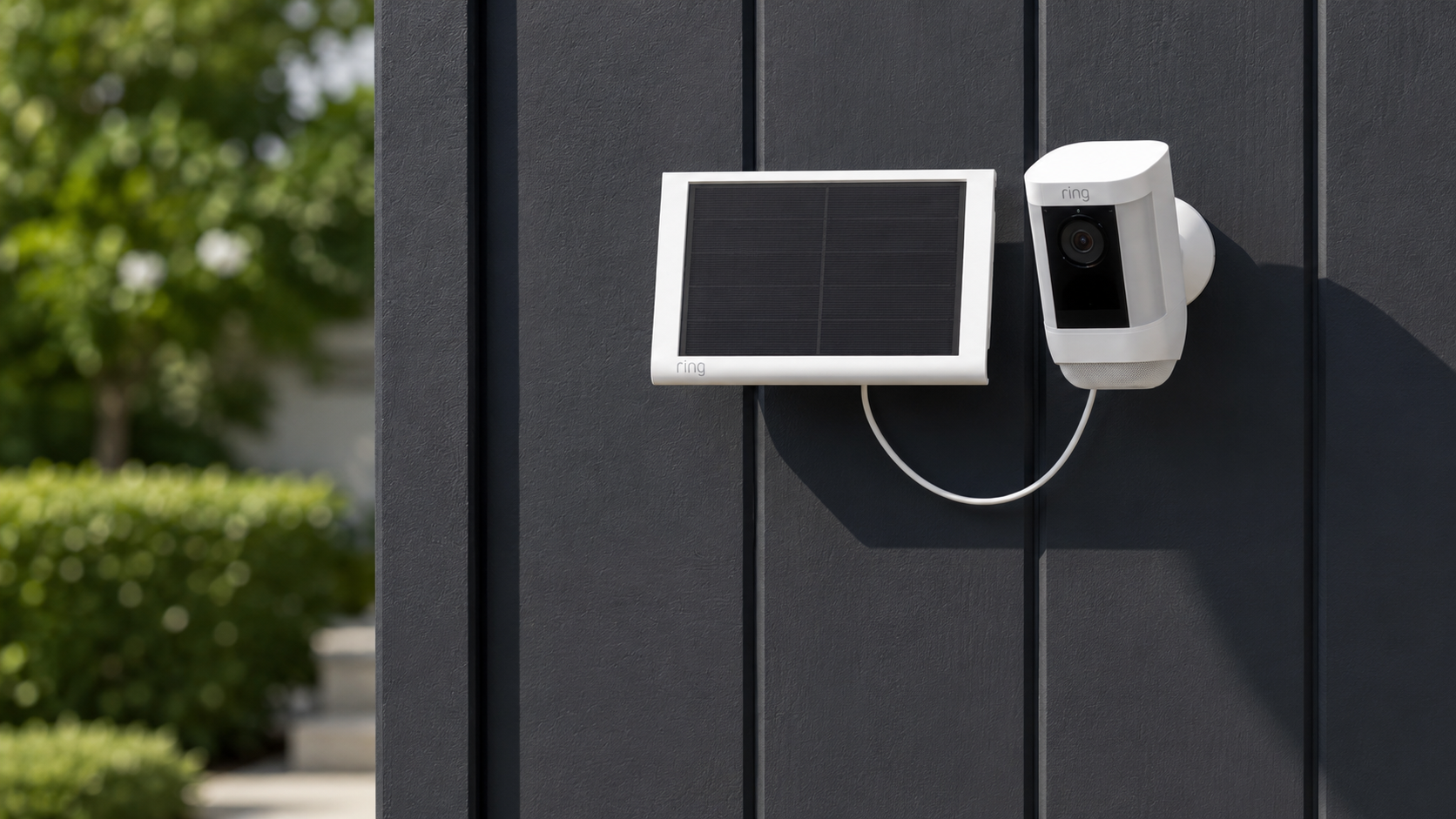
Dead camera batteries always seem to happen at the worst time. One missed alert can leave your driveway, porch, or backyard uncovered for hours. The Ring Solar Panel (2nd Generation) helps solve that problem with a simple setup that keeps compatible Ring cameras charged using direct sunlight.
This updated 4W solar panel comes with improved charging performance, a cleaner mounting design, and broader compatibility for newer Ring cameras. Ring states that this model delivers up to 60% faster charging compared to the previous generation. That upgrade matters if your camera records motion often or stays active throughout the day.
After testing this solar panel on a Spotlight Cam Plus for several weeks, the biggest advantage became obvious fast: fewer battery interruptions and far less manual charging.
Ring Solar Panel (2nd Generation) Features That Actually Matter
The Ring Solar Panel (2nd Generation) looks simple, though a few upgrades make daily use easier.
Key specifications include:
| Feature | Details |
| Power Output | 4W |
| Connector Type | USB-C |
| Cable Length | 6.5 feet |
| Rotation | 360-degree adjustable arm |
| Tilt | 180-degree tilt |
| Weather Resistance | Outdoor-rated |
| Official US Price | $59.99 |
| Colors | Black and White |
Ring designed this panel for continuous charging instead of full-time power replacement. Your camera battery still works normally, though the panel helps maintain charge levels throughout the day.
Compatible devices include:
- Spotlight Cam Plus
- Spotlight Cam Pro
- Stick Up Cam Pro
- Outdoor Cam Plus
- Ring Stick Up Cam 2nd and 3rd Generation with included adapter
Ring recommends at least two to three hours of direct sunlight daily for the best charging performance.
How Well the Ring Camera Solar Panel Performs in Real Use
Performance depends heavily on sunlight placement. During testing on a south-facing garage wall, the panel kept a Spotlight Cam Plus between 75% and 100% battery almost every day.
Cloudy weather reduced charging speed, though the battery still drained much slower than normal. During heavy rain for several consecutive days, charging nearly stopped. That limitation is common with compact solar panels.
One helpful detail stands out immediately: the adjustable mount. You can angle the panel toward direct sunlight without moving the camera itself. That flexibility helps if your camera location has partial shade during certain hours.
A few users online reported charging issues after long-term use. Reviews from Amazon and Best Buy show strong overall satisfaction, though occasional complaints mention inconsistent charging during winter months or shaded installations.
Why the Ring Solar Charger Works Better Than Older Models
The biggest improvement comes from charging efficiency.
Ring says the second-generation model charges up to 60% faster than the previous version. That increase becomes noticeable if your camera records frequent motion events or streams live video often.
Other upgrades include:
- USB-C support for newer Ring cameras
- Improved cable management
- More flexible mounting angles
- Better compatibility options with included barrel adapter
The older model sometimes struggled during colder months or heavy recording activity. This updated version handles higher daily usage more effectively.
For homes with busy driveways, package deliveries, pets, or constant motion alerts, the charging boost helps maintain battery levels more consistently.
Installation Takes About 10 to 15 Minutes
Installation stays simple even if you rarely mount outdoor devices.
Inside the box, you get:
- Solar panel
- Adjustable mounting base
- USB-C cable
- USB-C to barrel adapter
- Mounting screws and anchors
- Cable clips
The mounting arm rotates fully and tilts enough to help maximize sunlight exposure. Ring recommends aiming the panel upward at about a 45-degree angle in many installations.
A few installation tips helped improve charging during testing:
| Tip | Why It Helps |
| Avoid roof overhangs | Prevents partial shading |
| Face south in the US | Captures stronger sunlight |
| Keep panel clean | Dust reduces efficiency |
| Use direct sunlight | Indirect light limits charging |
The included cable management system also keeps the setup looking cleaner than older solar accessories.
Ring Solar Panel Compatibility Explained Clearly
Compatibility causes confusion for many buyers.
The Ring Solar Panel (2nd Generation) supports newer USB-C Ring cameras directly. Older barrel-plug models still work using the included adapter.
Compatible USB-C cameras include:
- Spotlight Cam Plus
- Spotlight Cam Pro
- Outdoor Cam Plus
- Stick Up Cam Pro
Compatible barrel-plug models include:
- Stick Up Cam Battery 2nd Generation
- Stick Up Cam Battery 3rd Generation
- Spotlight Cam Battery
It does not support the original first-generation Stick Up Cam.
Checking your camera connector before buying saves frustration later.
Is the Ring Solar Panel Worth the Price?
At $59.99 from Ring’s official website, the price sits slightly above many third-party solar chargers.
Still, the official model offers advantages:
- Better camera compatibility
- Cleaner mounting hardware
- Direct Ring integration
- Reliable weather resistance
- Official warranty support
Third-party options sometimes cost less, though charging reliability varies widely. Some aftermarket panels also use lower-quality cables that degrade faster outdoors.
If your Ring camera battery dies frequently, this accessory can reduce manual charging dramatically over time.
For high-traffic locations, the convenience alone may justify the cost.
Pros and Cons You Should Know Before Buying
Every solar charger has strengths and trade-offs.
Pros
- Faster charging than previous generation
- Easy installation process
- Adjustable mount works well
- USB-C compatibility improves flexibility
- Helps reduce battery maintenance
- Solid weather resistance
Cons
- Needs direct sunlight for best results
- Charging slows during winter weather
- Higher price than some alternatives
- Battery may still need occasional manual charging
This product works best in areas with decent daily sun exposure. Homes surrounded by large trees or tall buildings may see weaker performance.
What Security Camera Owners Usually Overlook
Many buyers expect constant 100% battery levels all year long.
That expectation creates disappointment.
Solar panels for security cameras mainly slow battery drain and maintain usable charge levels. Ring even notes that batteries may stabilize below full charge to help extend long-term battery life.
Another overlooked factor involves camera settings.
Frequent motion alerts, long live-view sessions, HDR video, and high sensitivity settings increase battery usage quickly. Even strong sunlight cannot fully offset extreme power consumption in some cases.
Lowering motion sensitivity slightly improved battery consistency during testing without reducing useful alerts.
That adjustment made a noticeable difference over several cloudy days.
How the Ring Solar Panel Compares to Third-Party Alternatives
Third-party solar chargers from brands like Wasserstein often cost less and include larger panels.
Still, the official Ring Solar Panel (2nd Generation) keeps a few advantages:
| Feature | Ring Official Panel | Third-Party Options |
| Direct compatibility | Excellent | Varies |
| USB-C support | Yes | Some models |
| Build quality | Strong | Mixed |
| Installation simplicity | Very easy | Moderate |
| Price | Higher | Lower |
| Warranty support | Official Ring | Brand dependent |
Some third-party models generate more wattage, though larger panels can look bulky on smaller homes.
For cleaner installation and guaranteed compatibility, the official Ring accessory stays safer overall.
Final Thoughts
The Ring Solar Panel (2nd Generation) solves one of the biggest frustrations with battery-powered security cameras: constant recharging.
Installation stays simple, charging performance improves noticeably over the previous model, and the adjustable mount makes placement easier. Direct sunlight still matters a lot, though homes with decent sun exposure should see strong results most days.
This accessory makes the most sense for busy households where security cameras record motion frequently throughout the day. Less battery maintenance means fewer interruptions and more consistent coverage around your home.
If your current Ring camera needs constant charging, this upgrade deserves a closer look. Checking compatibility and sunlight exposure before buying helps you get the best long-term performance.
Leave a Reply