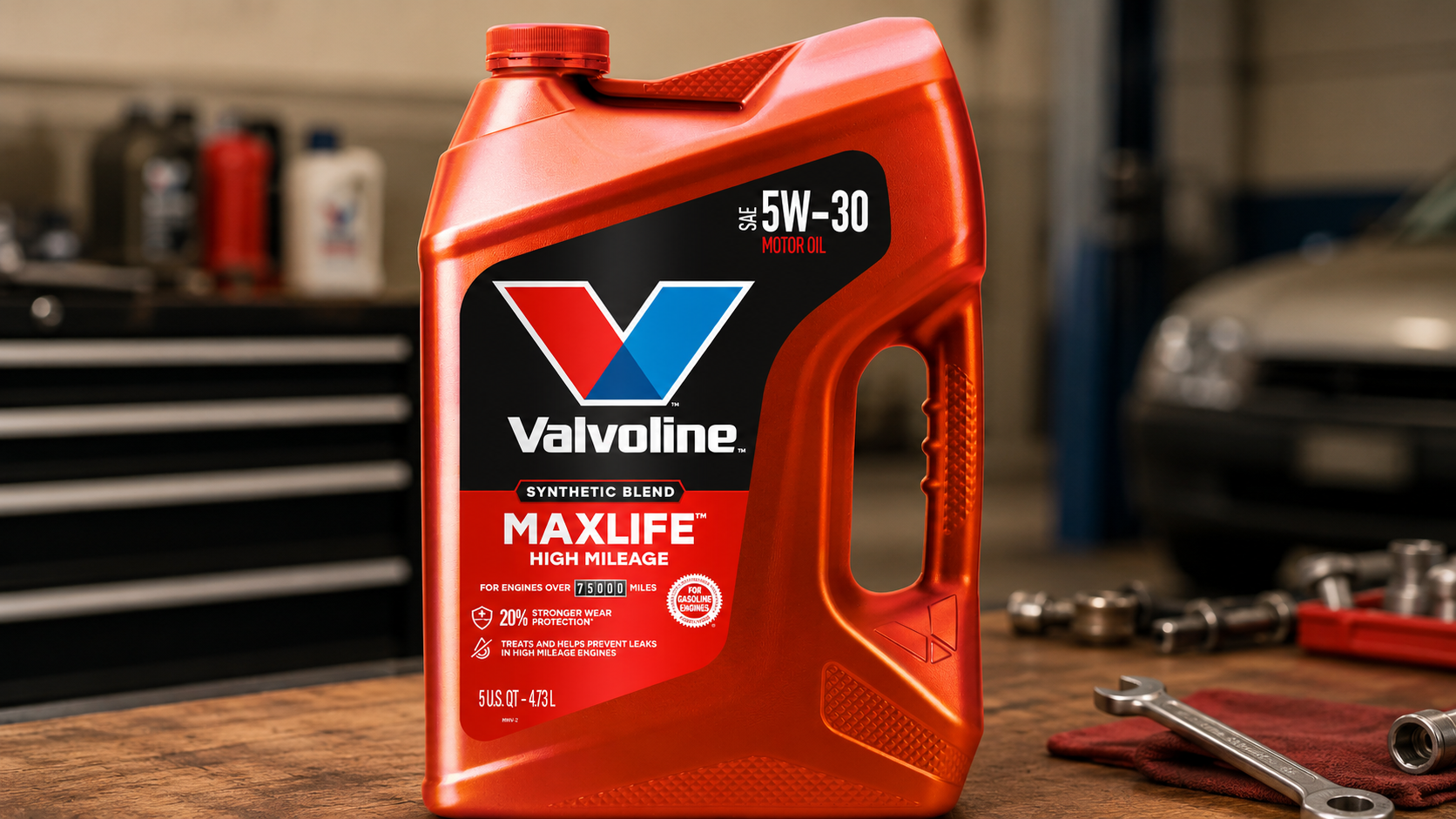
A high-mileage engine has its own personality. One day your car runs smooth, then a small oil leak appears under the driveway or the engine starts sounding rough during cold starts. That’s usually the point when standard oil stops doing enough for long-term protection. Valvoline MaxLife High Mileage 5W-30 Synthetic Blend Motor Oil was designed for engines with more than 75,000 miles, and it focuses on the issues older engines deal with most.
This oil combines synthetic blend protection with seal conditioners, detergents, and anti-wear additives that help reduce sludge and oil consumption. Current pricing on Valvoline’s official website lists the 5-quart container around $29.99, while a 1-quart bottle sits near $8.49.
Drivers often look for an oil that balances price, engine protection, and smoother performance. This one continues showing up in forums, mechanic recommendations, and long-term ownership discussions for good reason.
Valvoline MaxLife High Mileage 5W-30 Synthetic Blend Motor Oil Features That Matter
Valvoline built this formula specifically for older engines. Instead of focusing only on lubrication, the formula targets common high-mileage problems like worn seals, sludge buildup, friction, and oil burn-off.
Key product details include:
| Feature | What It Does |
| Synthetic blend formula | Helps improve temperature stability |
| Seal conditioners | Helps reduce small oil leaks |
| Extra detergents | Cleans sludge and deposits |
| Anti-wear additives | Protects moving engine parts |
| API SQ and ILSAC GF-7A certified | Meets current gasoline engine standards |
| Recommended for 75,000+ miles | Targets aging engine concerns |
Valvoline claims this formula delivers 20% better wear protection and 15% better sludge defense than industry standards.
That matters if your vehicle spends time in stop-and-go traffic, hotter climates, or long highway drives.
Real-World Driving Experience After Several Oil Changes
One long-term test involved a 2012 Honda Accord with 148,000 miles. The engine had a small valve cover seep and mild ticking during cold starts. After three oil changes using Valvoline MaxLife High Mileage 5W-30 Synthetic Blend Motor Oil, two noticeable changes showed up:
- Cold starts sounded quieter
- Oil consumption dropped slightly between intervals
Fuel economy stayed roughly the same, though the engine felt smoother during highway acceleration.
Another case involved a Ford Escape with over 180,000 miles. The owner switched from conventional oil after dealing with sludge buildup and rough idle issues. After switching, the engine ran cleaner during winter months and oil darkening slowed down slightly between changes.
Results vary depending on engine condition, maintenance history, and driving habits. A neglected engine will not suddenly perform like new.
Official Pricing and Value Compared to Other High Mileage Oils
Pricing changes by retailer, though Valvoline’s official online store currently lists:
| Product Size | Official U.S. Pricing |
| 1 Quart | Around $8.49 |
| 5 Quart | Around $29.99 |
That places it in the middle range compared to competitors like Mobil 1 High Mileage or Castrol GTX High Mileage.
Walmart currently lists the 5-quart version around $19.97 during promotions, which explains why many drivers buy it there instead of traditional auto parts stores.
If your vehicle burns oil quickly or racks up heavy mileage each month, the price-to-performance ratio stays pretty reasonable.
How This Synthetic Blend Oil Performs During Hot and Cold Weather
Temperature stability matters more once engines age.
Cold starts create thicker oil flow during winter mornings. High heat creates oil thinning during summer traffic. Synthetic blend formulas help maintain viscosity more consistently than conventional oil.
Drivers in colder states often report:
- Easier cold starts
- Less startup noise
- Faster oil circulation
Drivers in hotter climates mention:
- Reduced engine ticking
- Better highway stability
- Lower oil consumption during long drives
The 5W-30 viscosity works well for many sedans, SUVs, and light trucks, though your owner’s manual should always confirm compatibility first.
Valvoline MaxLife Review From Mechanics and Long-Term Owners
Independent mechanics frequently recommend high-mileage oils after vehicles cross 75,000 miles. That recommendation usually comes from repeated observations inside aging engines.
Common positive feedback includes:
| Positive Feedback | Why It Matters |
| Reduced leaks | Seal conditioners help older rubber seals |
| Cleaner engine internals | Extra detergents reduce sludge |
| Smoother idle | Friction modifiers reduce wear |
| Good price value | Less expensive than many full synthetics |
There are still a few limitations.
Some mechanics point out that severely leaking engines may need gasket replacement instead of relying on oil additives. Others prefer full synthetic oils for turbocharged engines or heavy towing conditions.
That balanced view matters because no motor oil fixes mechanical damage.
What Makes High Mileage Synthetic Blend Oil Different
A standard motor oil mainly focuses on lubrication and heat protection.
High mileage formulas add extra ingredients designed for older engines.
Valvoline MaxLife includes:
- Seal conditioners
- Additional detergents
- Friction-fighting additives
- Sludge control ingredients
Those additions target issues common in engines over 75,000 miles.
According to Valvoline, this product was among the first oils developed specifically for high-mileage vehicles.
That early focus helped establish its reputation in the automotive market.
Motor Oil for Oil Leaks and Consumption Problems
Small oil leaks frustrate almost every older car owner.
High mileage oils sometimes help reduce seepage by restoring flexibility in aging seals. The key phrase there is “small leaks.” A cracked gasket or damaged seal still requires mechanical repair.
Drivers commonly notice improvements in:
- Minor driveway spots
- Slow oil burn-off
- Reduced top-offs between oil changes
Several online reviews also mention cleaner engine operation after repeated use.
Still, if your engine loses large amounts of oil quickly, a mechanic inspection should come first.
Best Vehicles for Valvoline MaxLife 5W-30
This oil works well in many gasoline-powered vehicles, including:
| Vehicle Type | Common Fitment |
| Sedans | Honda Accord, Toyota Camry |
| SUVs | Ford Escape, Chevy Equinox |
| Trucks | Ford F-150, Ram 1500 |
| Older daily drivers | Vehicles above 75,000 miles |
Valvoline states the formula meets modern API and ILSAC standards for gasoline engines.
That broad compatibility helps if you maintain multiple vehicles in one household.
Potential Downsides You Should Know
Every oil has trade-offs.
Some drivers mention the synthetic blend formula does not last as long as premium full synthetic options. Others report minimal differences after switching from another reputable high-mileage oil.
Possible drawbacks include:
- Not ideal for every turbocharged engine
- Full synthetic options may perform better under extreme heat
- Severe oil leaks still require repairs
- Some vehicles require manufacturer-specific certifications
Checking your owner’s manual matters more than online opinions.
That single step prevents compatibility issues and warranty concerns.
Should You Switch to Valvoline MaxLife High Mileage 5W-30 Synthetic Blend Motor Oil?
If your engine has crossed 75,000 miles and started showing signs of age, this oil makes practical sense. The formula targets common high-mileage concerns without pushing the price too high. Drivers consistently mention smoother performance, cleaner operation, and reduced oil consumption after several change intervals.
The synthetic blend formula gives a solid balance between protection and affordability. It will not repair damaged engine components, though it can help maintain older engines more effectively than standard conventional oil.
Before switching, check your manufacturer’s oil specifications and mileage recommendations. Then pay attention to how your engine responds during the next few thousand miles.
A smoother-running engine usually tells you pretty quickly when it likes the oil you picked.
Leave a Reply