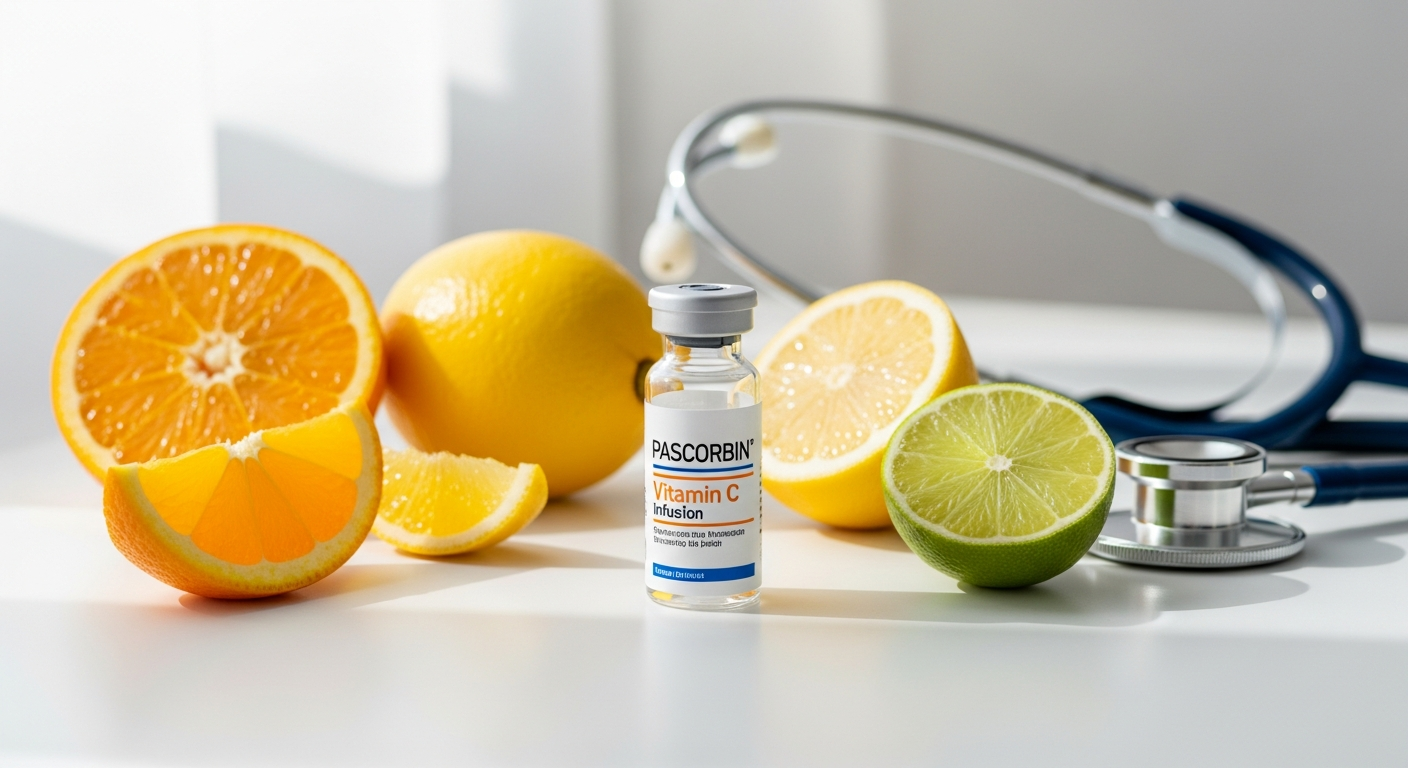
Oral vitamin C supplements face a fundamental limitation: your digestive system absorbs only about 20% of the dose you consume. The remaining 80% passes through your body unused. This bioavailability ceiling means that even megadose oral tablets cannot achieve the therapeutic concentrations clinicians need for serious deficiency states, compromised immune function, or intensive medical support. Intravenous infusion bypasses this entire problem—delivering 100% bioavailability directly into the bloodstream.
PASCORBIN represents the clinical breakthrough that transforms this theoretical advantage into measurable patient outcomes. As Germany's only approved high-dose vitamin C infusion, manufactured by the internationally trusted Pascoe pharmazeutische Präparate GmbH, it stands alone in the European market for delivering concentrated ascorbic acid therapy that oral supplements simply cannot match. The formulation's pharmaceutical purity and preservative-free composition address both efficacy and tolerability concerns that healthcare providers encounter daily.
Explore PASCORBIN's clinical applications and patient outcomes through its complete product profile.
Beyond Oral Supplements—Why Intravenous Vitamin C Therapy Transforms Clinical Outcomes
Gastrointestinal absorption represents the bottleneck in conventional vitamin C therapy. Your intestinal epithelium can only transport a finite amount of ascorbic acid across the mucosal barrier, regardless of dose size. Once saturation occurs—typically around 200-400 mg per single dose—any additional oral vitamin C either remains unabsorbed or causes osmotic diarrhea. This physiological ceiling becomes particularly problematic for patients with malabsorption disorders, inflammatory bowel disease, celiac syndrome, or those recovering from gastrointestinal surgery.
Intravenous delivery eliminates this constraint entirely. Direct bloodstream administration achieves therapeutic concentrations measured in grams—concentrations that would be impossible through oral routes. Healthcare providers working with critically ill patients, those undergoing cancer treatment, or individuals with documented scurvy recognize that only parenteral vitamin C therapy can restore depleted tissue stores quickly enough to prevent organ dysfunction.
The speed of therapeutic response matters clinically. Oral supplements may take weeks to normalize vitamin C status in deficiency states. Intravenous infusion provides measurable metabolic benefit within hours. This rapid availability proves especially valuable in acute infection management, post-surgical wound healing support, and during intensive medical interventions where immune function directly affects recovery trajectories.
PASCORBIN's Clinical Composition—What Makes This Formulation Unique
Each 50ml vial contains 7.5g of pharmaceutical-grade ascorbic acid—a concentration of 150 mg per milliliter. This potency allows clinicians to deliver therapeutic doses in clinically practical infusion volumes without requiring excessive fluid administration to already-stressed patients. The formulation adheres strictly to Ph. Eur. 10th edition standards, ensuring purity and stability that generic vitamin C preparations often cannot guarantee.
The absence of preservatives and stabilizers distinguishes PASCORBIN from competing products. Many commercial injectable formulations rely on chemical additives that can trigger histamine release, cause vascular irritation, or complicate long-term tolerability profiles. PASCORBIN's minimalist approach prioritizes the active pharmaceutical ingredient without compromise—a decision that reflects Pascoe's commitment to clinical excellence rather than manufacturing convenience.
Therapeutic Indications—When Healthcare Providers Prescribe PASCORBIN
Prevention and treatment of vitamin C deficiency represents the primary indication. While scurvy rarely develops in modern clinical settings, documented deficiency states occur regularly—particularly in patients with severe malabsorption, those dependent on parenteral nutrition, or individuals experiencing acute infection with elevated metabolic demands. PASCORBIN provides rapid restoration of depleted ascorbic acid pools.
Supportive therapy during acute and chronic infections utilizes vitamin C's dual roles in immune cell function and antioxidant defense. High-dose infusions enhance neutrophil and macrophage activity while reducing oxidative stress associated with systemic inflammation. Patients recovering from severe bacterial infections, viral syndromes, or fungal pathogens benefit from PASCORBIN as an adjunct to primary antimicrobial therapy.
Cancer patients undergoing chemotherapy protocols constitute another significant clinical population. While high-dose vitamin C's role in oncology remains subject to ongoing research, evidence supports its use as supportive therapy during intensive chemotherapy—improving tolerability, supporting wound healing, and potentially modulating treatment-related fatigue. PASCORBIN administration occurs only under direct oncology supervision with appropriate monitoring protocols.
Wound healing acceleration represents a particularly practical application. Vitamin C serves as a cofactor for collagen hydroxylation and cross-linking—processes fundamental to tissue repair. Post-surgical patients, those with chronic wounds, or individuals recovering from traumatic injury benefit from PASCORBIN's concentrated delivery of ascorbic acid to tissues actively engaged in reparative processes.
Patient Eligibility and Safety Screening—Critical Contraindications
PASCORBIN carries approval for adults and children aged 12 and above. Younger children may receive PASCORBIN under specific clinical circumstances and strict dosing protocols adjusted for body surface area, though pediatric use requires particularly careful medical supervision. The intravenous route demands age-appropriate vascular access and monitoring capabilities that not all clinical settings can provide.
Severe renal dysfunction represents an absolute contraindication. Vitamin C metabolizes to oxalate, which the kidneys must eliminate. Patients with chronic kidney disease or reduced glomerular filtration cannot safely receive high-dose ascorbic acid without risk of oxalate accumulation and secondary kidney damage. Baseline renal function assessment precedes any PASCORBIN infusion program.
History of oxalate kidney stones requires careful evaluation. While PASCORBIN administration doesn't automatically trigger recurrent stone formation in all previously affected patients, the increased urinary oxalate burden following high-dose vitamin C infusion poses genuine risk. These patients typically require aggressive hydration protocols and may not be suitable candidates for regular PASCORBIN therapy.
G6PD deficiency screening proves essential before initiating treatment. Glucose-6-phosphate dehydrogenase deficiency impairs red blood cell protection against oxidative stress. High-dose vitamin C infusions can trigger hemolysis in affected individuals—a potentially serious adverse event. Any patient with a family history of hemolytic anemia or known G6PD deficiency requires laboratory confirmation before PASCORBIN administration.
Administration Protocols and Dosing Considerations
Licensed healthcare professionals must administer PASCORBIN exclusively via intravenous route. No alternative administration methods—oral, intramuscular, or subcutaneous—provide therapeutic benefit. Self-administration remains impossible; patients cannot utilize PASCORBIN for home therapy. Clinic-based administration within medical facilities or supervised infusion centers represents the only appropriate setting.
Clinical dosing typically ranges from 7.5g to 15g per infusion session, depending on therapeutic indication and patient-specific factors. Initial deficiency states may require more aggressive dosing, while maintenance or supportive protocols employ lower concentrations. Oncology applications often utilize the full 15g dose, whereas immune support or general deficiency correction may employ 7.5g to 10g protocols.
Infusion duration typically spans 15 to 30 minutes. This timeframe allows sufficient dilution to minimize vascular irritation while delivering vitamin C at therapeutically appropriate rates. Faster infusion speeds increase risk of local vein inflammation and systemic effects like mild nausea or flushing. Slower infusions compromise clinical efficiency without providing meaningful safety advantages.
Regulatory Status and Clinical Evidence Base
PASCORBIN occupies a unique regulatory position—it remains the only approved high-dose vitamin C infusion in Germany and throughout European pharmaceutical markets. This distinction reflects stringent European Medicines Agency evaluation requirements and the formulation's demonstration of safety, efficacy, and manufacturing quality that generic competitors have not achieved.
Pascoe pharmazeutische Präparate GmbH brings decades of pharmaceutical credibility and regulatory compliance to PASCORBIN's production. The company exports pharmaceutical products to over 30 countries and maintains certifications meeting the most demanding international standards. Manufacturing facilities comply with GMP (Good Manufacturing Practice) requirements that ensure batch-to-batch consistency and purity.
Clinical evidence supporting PASCORBIN spans multiple therapeutic domains. Documentation includes efficacy studies in deficiency states, immune support applications, oncology adjunct use, and wound healing protocols. While ongoing research continues to refine optimal dosing parameters and patient selection criteria, published evidence demonstrates consistent therapeutic benefit in defined clinical indications.
The Clinical Case for PASCORBIN in Modern Medical Practice
PASCORBIN high-dose vitamin C infusion offers healthcare providers a clinically validated therapeutic option for patients unable to achieve adequate vitamin C status through conventional oral supplementation. The combination of 100% bioavailability, rapid therapeutic onset, and pharmaceutical-grade purity addresses fundamental limitations that clinicians encounter across diverse patient populations.
Regulatory approval as Germany's only approved high-dose vitamin C infusion, manufacturing excellence from a company with international pharmaceutical credentials, and proven cost-effectiveness relative to alternative approaches establish PASCORBIN as a serious consideration for any healthcare facility evaluating comprehensive vitamin C therapy programs. Clinical applications span from immune system strengthening to cancer treatment support, making PASCORBIN a versatile addition to integrated treatment protocols.
Medical professionals new to high-dose vitamin C infusion therapy can begin with the economical 5x50ml trial pack (approximately €65.50) to assess integration into existing protocols and establish institutional familiarity with administration procedures. Once clinical utility is established and protocols are refined, scaling to the 20x50ml pack (approximately €238.40) provides superior cost-per-unit economics for established programs.
Leave a Reply