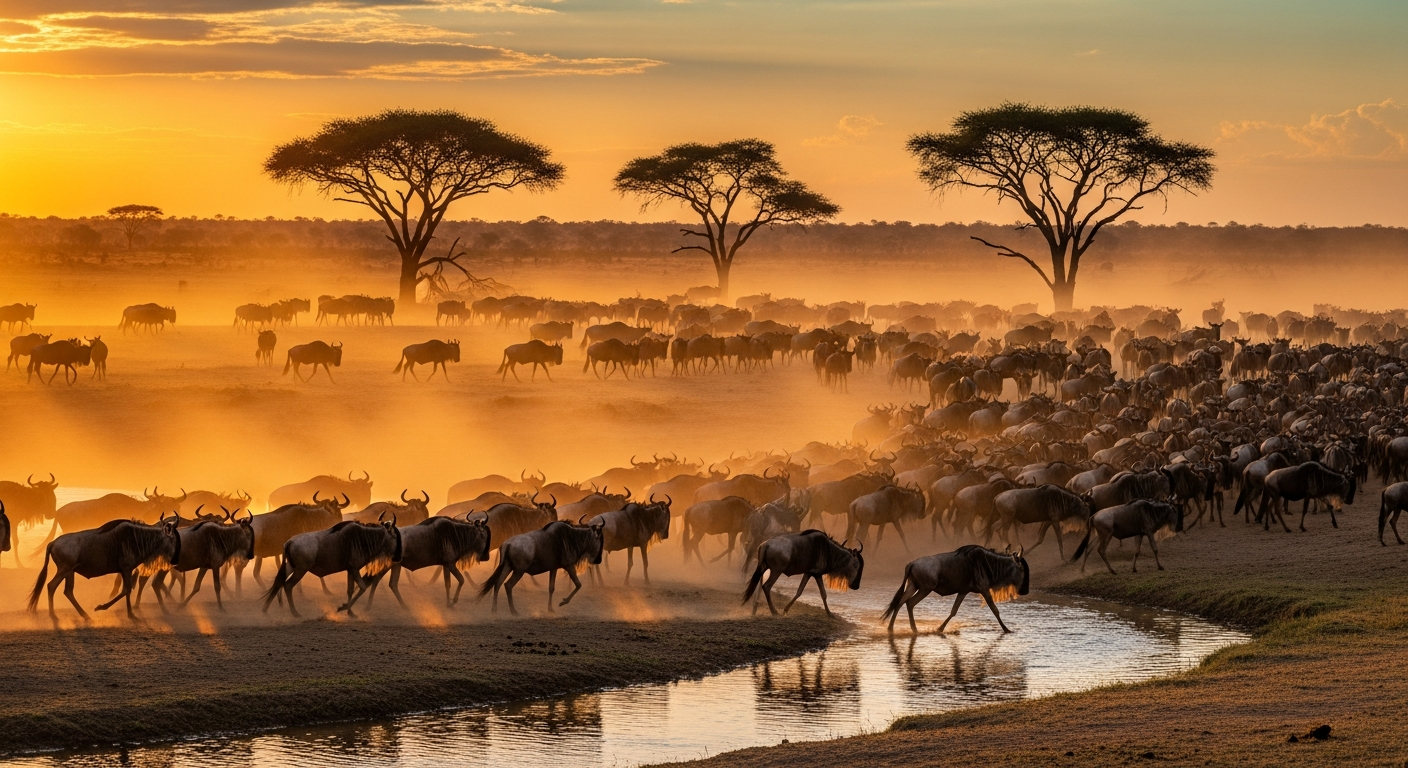
Every year, 1.5 million wildebeest thunder across East African borders in a spectacle that ranks among nature's most awe-inspiring events. Yet most travelers who venture to witness this phenomenon arrive on the wrong dates—watching empty plains stretch endlessly where herds should be congregating. The difference between a transformative safari and a disappointing one often comes down to a few crucial weeks.
Timing shapes everything. Book too early and you'll find scattered animals; arrive too late and the main action has shifted elsewhere. Go2Africa has spent 25 years mastering the science of migration timing, positioning their clients precisely where the drama unfolds. Their East Africa's Mara, Crater & Serengeti Migration Safari ranges from $12,550 to $20,490 per person—a significant investment that yields exponential returns when executed with perfect seasonal awareness.
This journey encompasses three legendary destinations: Kenya's Maasai Mara National Reserve, Tanzania's sprawling Serengeti, and the dramatic Ngorongoro Crater. Across nine days, you'll witness predator-prey encounters, Big Five sightings, and cultural exchanges with the Maasai people. Yet understanding when migration peaks, which seasons favor Big Five visibility, and how weather patterns influence wildlife behavior transforms your experience from memorable to life-altering.
Discover Go2Africa's seasonal expertise and book your perfectly timed migration safari today.
The Great Migration Calendar: When Herds Move Across East Africa
The Great Migration operates on a remarkably predictable cycle driven by rainfall, grass availability, and water sources rather than any fixed calendar. Understanding this rhythm reveals why some months deliver thundering river crossings while others showcase different wildlife drama entirely.
January finds the herds concentrated in the southern Serengeti's breeding grounds, where nutrient-rich grass supports mating season. Animals are scattered but abundant—an excellent window for focused viewing without overwhelming crowds. February through March transitions into the calving season, with pregnant females moving to lush areas where fresh grass emerges. Watching newborn calves take their first wobbly steps represents an intimacy many travelers never experience.
April and May mark the northward movement. The herds begin their exodus from the south, spreading across the central Serengeti and gradually funneling toward Kenya. Rivers swell with seasonal rains, creating barriers and natural gathering points. These transitional months see dramatic predator-prey interactions as concentration increases.
June through October represents the peak migration period. The herds reach the Maasai Mara, where the Mara River becomes the ultimate natural theater. Hundreds of thousands of wildebeest and zebras attempt crossing simultaneously, with crocodiles and lions positioned as nature's executioners. The sheer spectacle—the sounds, the earth-shaking hoofbeats, the visceral struggle—defines peak season's magnetic appeal.
November and December see the herds returning southward as dry season conditions emerge in the north. The return migration offers different energy: dispersal rather than concentration, yet still excellent viewing opportunities as animals spread across multiple ecosystems seeking water and fresh grazing.
Weather patterns orchestrate this entire dance. Rainfall triggers northward movement as animals chase emerging vegetation. Conversely, the onset of dry conditions sends them south. Grass availability dictates herd concentration—dense clustering occurs where forage is richest. Go2Africa monitors these conditions in real time, adjusting itineraries based on current intelligence rather than rigid schedules. Your guide communicates with other operators, scouts report daily sightings, and the company's long-established network ensures you're positioned where action unfolds.
Peak Season vs. Shoulder Season: Weighing Your Options
June through October commands premium pricing and attracts the largest visitor numbers, yet delivers undeniable advantages. River crossings reach maximum drama with the highest concentration of predators positioned along crossing points. Lion hunts, crocodile strikes, and desperate escape attempts unfold with brutal regularity. Big Five sightings concentrate in the Mara, where permanent water sources and abundant prey create predator hotspots. The weather predictably favors game viewing: dry conditions mean animals congregate near water, clear skies enable photography, and temperatures remain comfortable.
The trade-off? Peak season brings crowded game viewing areas. Multiple vehicles converge on major sightings, reducing the intimacy many seek. Pricing reflects demand—you'll pay premium rates for peak window departures. Some visitors find the carnival atmosphere antithetical to authentic safari experiences.
Shoulder seasons offer compelling alternatives. April-May captures the northward movement's drama with fewer tourists crowding viewpoints. Weather remains relatively predictable, prices drop substantially, and you'll experience genuine encounters minus the convoy effect. November-December similarly delivers excellent wildlife viewing as the herds return south, with modest visitor numbers and significantly reduced costs.
Off-season months (January-March, July-August) present unexpected advantages. February's calving season showcases vulnerable newborns, predator behavior targeting young animals, and the raw cycles of predation most travelers never witness. Lush landscapes from recent rains create stunning photography conditions and attract diverse bird species. January breeding season concentrates herds in localized areas, enabling intimate observation without peak-season crowds.
Go2Africa's 9-day itinerary adapts fluidly across seasons. Peak-season departures maximize river crossing opportunities and Big Five encounters. Shoulder-season trips rebalance toward cultural immersion, landscape appreciation, and quieter wildlife viewing. Off-season safaris highlight specific phenomena—calving drama or breeding behavior—rather than pure migration spectacle.
Booking flexibility varies seasonally. Peak season demands 6-12 month advance planning with substantial deposits securing dates. Shoulder and off-season trips offer greater flexibility, allowing 3-6 month bookings with more favorable cancellation terms.
Explore Go2Africa's seasonal pricing options and lock in your ideal departure date.
Wildlife Viewing Windows: Beyond Just the Migration
While the migration dominates headlines, the region's wildlife drama extends far beyond herds crossing rivers. Different seasons unlock different encounters.
Big Five sighting probabilities vary significantly by location and season. The Maasai Mara's open grasslands provide exceptional lion visibility year-round, with peak predator activity during migration season (June-October) when prey concentration maximizes hunting opportunities. The Serengeti's vastness demands more patience; sightings occur but require patience and excellent guiding. The Ngorongoro Crater transcends seasonal limitations—as a self-contained ecosystem within a natural caldera, the crater maintains remarkably consistent Big Five populations year-round. Leopards, notoriously elusive, appear more readily during dry seasons when vegetation thins and animals crowd near concentrated water sources.
Predator activity patterns shift seasonally. Lion hunts peak during migration season when prey abundance enables frequent kills. Cheetah sightings concentrate in open plains during dry months when sparse vegetation exposes them to view. Leopard encounters improve January-February and June-October as reduced vegetation and concentrated prey increase visibility.
Bird watching enthusiasts discover exceptional conditions during different windows. The region hosts over 500 bird species, with migratory populations arriving during specific seasons. November through April attracts palearctic migrants fleeing northern winters, creating opportunities to observe species rarely seen elsewhere. The rarer crowned crane appears primarily during rainy seasons.
Ngorongoro Crater's permanent water sources and enclosed ecosystem support year-round wildlife concentration that few locations match globally. Wildebeest, zebras, buffalo, and various antelope species remain resident regardless of season, though migration creates temporary population fluctuations.
Cultural immersion with Maasai communities offers seasonal variation. Dry seasons (June-October, January-February) facilitate easier village access and more predictable community availability. Rainy periods sometimes limit road access, though they showcase traditional pastoral practices around water and grazing management.
Hot-air balloon safaris operate year-round but experience optimal conditions during dry seasons. Clear skies from June-October and January-February provide unobstructed views of landscapes and wildlife concentrations below. Early morning departures before wind intensifies yield the most memorable experiences.
Weather, Comfort, and Logistics Across the Safari Calendar
Seasonal weather profoundly influences your safari experience beyond wildlife viewing alone. Dry seasons (June-October, January-February) deliver optimal conditions for most travelers. Roads remain accessible, enabling vehicle movement across the ecosystem without getting stuck in mud. Clear skies enhance photography, wildlife spotting, and hot-air balloon operations. Temperatures range pleasantly from cool mornings to warm afternoons, requiring layered clothing rather than heavy weather gear.
Wet seasons present realities many first-timers underestimate. Tanzania's rainy months (March-May, November-December) bring spectacular skies, lush vegetation, and dramatically reduced visitor numbers. Simultaneously, they introduce challenges: muddy roads can become impassable, some airstrips close temporarily, and malaria-carrying mosquitoes increase. The rainfall typically arrives in afternoon downpours, not all-day precipitation, but unpredictability demands flexibility.
Elevation creates dramatic temperature variations. The Ngorongoro Crater sits at 7,500 feet, maintaining noticeably cooler conditions than surrounding plains. Even during warm months, crater rim temperatures drop significantly, requiring warmer layers. The Serengeti plains experience intense heat during dry seasons—temperatures can exceed 90°F—while cooler months dip to the 50s at night.
Humidity levels fluctuate seasonally, affecting comfort during extended game drives. Peak season's dry conditions reduce moisture, creating more comfortable daytime experiences. Transition seasons bring moderate humidity. Rainy season humidity can feel oppressive during afternoon heat.
Internal logistics depend heavily on weather. Flights between Mara, Serengeti, and Crater operate year-round from dedicated airstrips, but occasional storms cause brief delays. Go2Africa's long history ensures backup plans; they've managed logistics across decades and understand contingency planning intimately. Dry season flights operate with maximum reliability.
Packing requirements shift seasonally. Peak dry season demands lightweight, breathable clothing, high-SPF sunscreen, and sunglasses. Shoulder seasons require layered options accommodating unpredictable weather. Rainy season brings waterproof jackets, quick-dry fabrics, and extra footwear options. Go2Africa provides detailed seasonal packing guides ensuring you're prepared regardless of departure timing.
Booking Strategy: Securing Your Ideal Dates and Experiences
Advance booking timelines vary dramatically by season. Peak migration months (June-October) fill 6-12 months ahead. Popular July departures often book solid by January of the same year. Shoulder seasons (April-May, November-December) typically require 3-6 months advance booking. Off-season dates offer more flexibility, sometimes accommodating bookings 4-8 weeks ahead.
Go2Africa's pricing structure reflects seasonal demand with remarkable transparency. Peak season departures command the highest rates within the $12,550-$20,490 range. June-August river crossing expeditions typically reach the upper spectrum. Shoulder seasons offer 15-25% reductions. Off-season departures provide maximum savings, sometimes reaching the lower quoted prices.
Deposit and payment schedules align with industry standards. Typical deposits run 25-30% of total cost at booking, with final payment due 60-90 days before departure. Go2Africa offers flexible payment plans for longer advance bookings, spreading deposits across multiple installments—a practical approach for 2026 departures allowing 12+ months planning.
Customization options abound regardless of season. Extending your itinerary from 9 days to 12+ days enables deeper exploration or additional destinations. Adding hot-air balloon safaris (seasonal availability maximized June-October) creates sunrise memories that reshape perspectives. Focusing specifically on the Serengeti migration or devoting extra time to Ngorongoro Crater's concentrated wildlife viewing caters to individual priorities.
Travel insurance becomes particularly relevant for specific seasons. Peak season travel carries higher costs requiring substantial coverage. Rainy season trips benefit from policies addressing weather-related cancellations or medical contingencies. Go2Africa partners with insurers offering safari-specific coverage addressing the unique risks of African travel.
Group versus private safari options present different seasonal advantages. Group departures fill more readily during peak season, creating cost-sharing economies. Private safaris offer unmatched flexibility and customization, particularly valuable for off-season travel when your specific interests drive the itinerary entirely.
First-Time Safari Travelers: Choosing Your Perfect Timing Window
First-time safari travelers benefit enormously from June-July departures. The migration reaches peak drama with river crossings delivering the spectacle most envision when dreaming of African safaris. Weather predictability removes logistical complications, allowing you to focus entirely on experiences rather than managing unexpected challenges. Dry season roads remain accessible, minimizing frustration with vehicle breakdowns or impassable routes. Abundant predator activity and concentrated prey create multiple daily wildlife encounters—educational and thrilling simultaneously.
Peak season crowds represent a legitimate concern for first-timers seeking intimate encounters. Strategies effectively minimize this impact. Early morning game drives depart before most vehicles mobilize, providing hours of solitude before midday crowds gather. Private vehicle arrangements, offered by Go2Africa, eliminate the multi-vehicle gauntlet surrounding major sightings. Positioning yourself north of popular viewpoints strategically shifts you away from typical tourist concentrations.
Alternative seasons serve first-timers with different priorities. April-May offers authenticity without overwhelming crowds, capturing migration drama minus the carnival atmosphere. February's calving season provides emotional depth and raw nature encounters many find more meaningful than peak season spectacle. These options require slightly higher flexibility tolerance but reward adventurous spirits with unmatched experiences.
Physical preparation across seasons varies. Peak season's warm days and comfortable nights suit travelers with limited fitness conditioning. Rainy season journeys demand better stamina for muddy terrain navigation. High altitude at Ngorongoro Crater affects some visitors; pre-trip conditioning and consultation with your physician ensures readiness regardless of season.
First-timer expectations require calibration to reality. Peak season consistently delivers the experiences most envision: dramatic river crossings, abundant wildlife, and clear documentation via photography. You'll likely see lions, elephants, zebras, and giraffes—the iconic big animals occupying safari fantasies. Simultaneously, migration comprises perhaps 30% of your actual safari time; the remaining days feature diverse wildlife viewing, cultural experiences, and landscape appreciation. Understanding this balance prevents disappointment when you're observing acacia-dotted plains rather than active predation.
Post-safari planning often reveals unexpected dimensions. Many travelers extend stays in Nairobi or explore other East African regions. Go2Africa can seamlessly connect your safari with coastal Tanzania, Kenyan mountain experiences, or entirely different African regions. First safaris frequently trigger subsequent journeys.
Planning Your 2026 Safari: Actionable Next Steps
Begin by creating a decision matrix incorporating three variables: your budget range within the $12,550-$20,490 spectrum, schedule flexibility regarding specific months, and wildlife priorities (migration peaks, Big Five concentration, calving season, or landscape photography).
Contact Go2Africa's travel specialists with this information. Their experience enables uncanny matching of client circumstances with ideal seasonal windows. They've counseled thousands through exactly this decision; their recommendations reflect genuine expertise rather than pushing premium dates.
Verify visa requirements and vaccinations for your chosen season. Many African countries maintain visa requirements, though East African nations increasingly offer electronic visas. Yellow fever vaccination requirements vary; malaria prophylaxis recommendations differ between seasons (more critical during rainy periods).
Build your preparation timeline spanning 12 months before departure. At 12 months out, secure deposits and confirm logistics. Six months before, finalize flights, arrange travel insurance, and complete medical preparations. Three months prior, confirm accommodations, obtain visas, and arrange ground transportation. Final weeks involve equipment checks, last-minute confirmations, and psychological preparation.
Connect with past safari guests through Go2Africa's network or online communities. Real experiences from people who've traveled specific seasons provide invaluable perspectives beyond marketing materials. Ask about weather surprises, wildlife frequency, guide quality, and practical concerns that informed sources address authentically.
Set realistic expectations acknowledging both wonders and potential frustrations. You'll witness extraordinary natural phenomena, but some days involve extensive searching between sightings. Weather occasionally surprises. Cultural exchanges sometimes feel choreographed. Embracing the full spectrum—majesty and monotony combined—enables genuine presence rather than constant comparison against idealized expectations.
Your East Africa's Great Migration Safari Adventure Awaits—Here's How to Seize the Right Moment
Your timing decision fundamentally reshapes your entire safari narrative. The Great Migration follows ancient rhythms honed over millennia—rainfall patterns, grass growth, and instincts encoded across generations. These movements ignore human calendars, responding instead to ecological signals imperceptible to outsiders. By understanding seasonal dynamics, you're not simply booking a vacation; you're orchestrating an encounter with one of Earth's most powerful natural phenomena.
Go2Africa's 25-year legacy reflects deep seasonal knowledge. They've witnessed every imaginable scenario: unexpected weather shifts, early migrations, late arrivals, population surges, and mysterious absences. This accumulated experience translates into positioning decisions that maximize your probability of transformative encounters.
Whether you're drawn to June's thundering river crossings, November's intimate wildlife encounters, or February's raw natural drama, Go2Africa's specialists can match your schedule, budget, and safari aspirations with the perfect seasonal window. Your bucket-list moment awaits—the right timing simply transforms that moment from extraordinary into life-altering.
Leave a Reply