When the power goes out, most households have roughly 4–6 hours before frozen food begins thawing and essential medical devices lose their charge. What was once a rare inconvenience has become a genuine concern for families across North America. Power outages are increasing in both frequency and duration, driven by aging electrical infrastructure, extreme weather events, and grid strain from growing demand.
The traditional solution—a portable generator—comes with serious drawbacks. These machines are loud enough to disturb neighbors and your own peace of mind. They require fuel storage in your home, demand regular maintenance, and emit carbon monoxide that poses health risks if operated indoors. For many households, these limitations make generators impractical for real emergency situations.
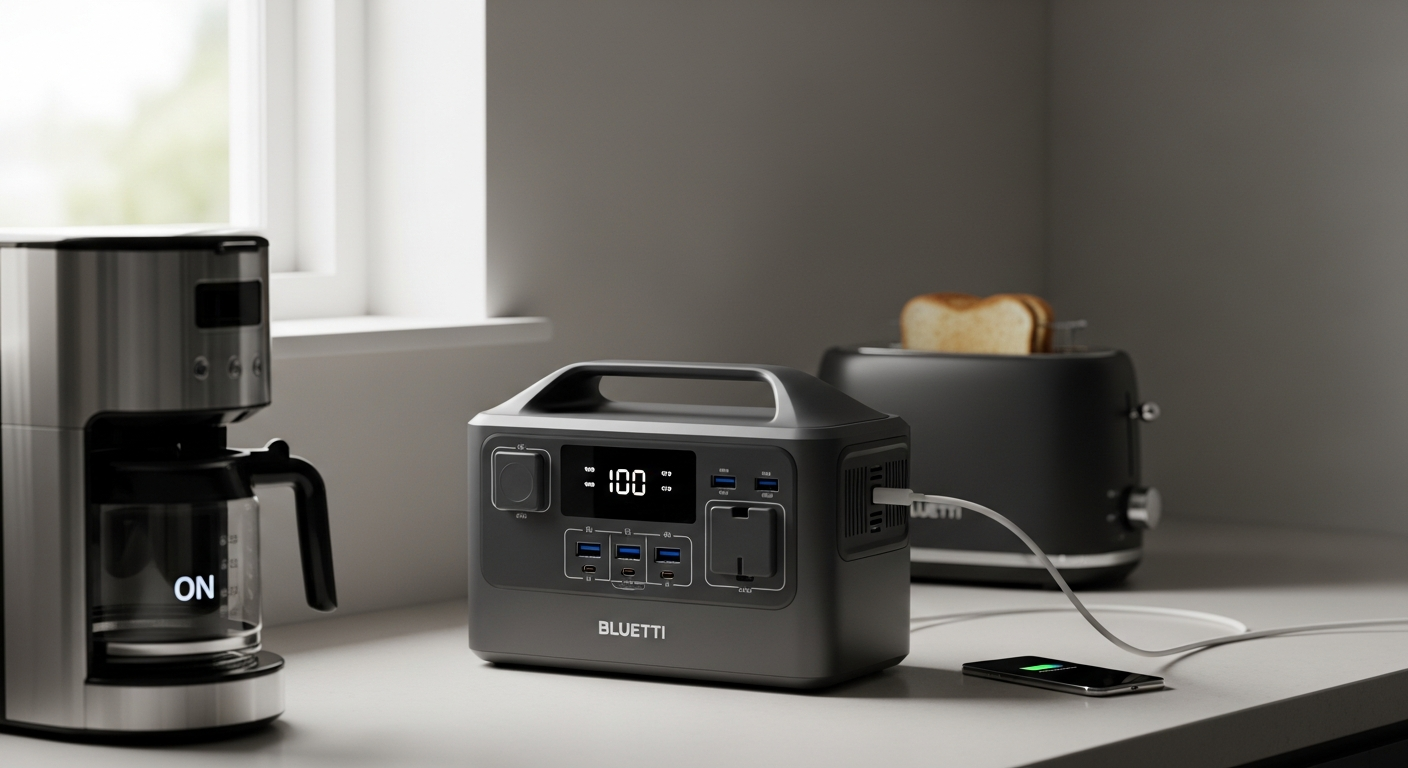
The BLUETTI Elite 200 V2 represents a different approach entirely. This portable power station operates silently, produces zero emissions, and delivers the capacity to keep essential appliances running through extended outages. Discover how the BLUETTI Elite 200 V2 can protect your household when grid power fails.
Why Home Backup Power Is No Longer Optional
Power outages no longer mean a few hours without entertainment. Modern homes depend on electricity for survival-critical functions. Your refrigerator preserves food and medications. Your CPAP machine enables safe sleep for those with respiratory conditions. Your furnace or air conditioning maintains livable temperatures during extreme weather. Your sump pump prevents basement flooding. Losing power to these systems creates immediate, tangible consequences.
The financial impact compounds quickly. Spoiled groceries represent hundreds of dollars in losses. Damaged medications for chronic conditions can cost thousands. A business operated from home loses income during outages. These aren't hypothetical concerns—they're real expenses that strike during already stressful situations.
Beyond financial loss, there's the question of safety. Without heating during winter, pipes freeze and burst, leading to water damage costing tens of thousands. Without cooling during heat waves, vulnerable family members face heat-related illness. Without power for lighting, navigating your home becomes hazardous.
Traditional generators address power loss but create their own problems. They require fuel storage—gasoline degrades over time, and keeping large fuel quantities on residential property poses fire and health risks. They demand regular maintenance and test runs to ensure they function when needed. They're loud enough to strain relationships with neighbors and create stress rather than relief during emergencies. Most critically, safe operation requires venting exhaust outdoors, which isn't always practical for emergency use inside a home.
Modern lithium power stations eliminate these pain points. They operate silently, require no fuel storage or ongoing maintenance, produce zero emissions, and can be deployed instantly when the grid fails. Insurance companies increasingly recommend them, and homeowners in outage-prone regions are discovering that backup power isn't a luxury—it's essential preparedness.
Real-World Runtime: What You Actually Get During an Extended Outage
The 2,073.6Wh capacity of the Elite 200 V2 translates to real hours of usable power, but understanding how requires looking at actual appliances and their power demands.
A typical refrigerator draws 600–800W when the compressor cycles on. Running continuously, the Elite 200 V2 would provide roughly 2.5–3 hours of pure runtime. In reality, refrigerators cycle on and off—the compressor runs for 10–15 minutes, then stops for 20–30 minutes. This cycling pattern means a refrigerator can run for 12–18 hours on a single charge, depending on ambient temperature and how often the door opens.
A CPAP machine typical draws 40–60W. The Elite 200 V2 could power this device continuously for 35–50 hours—effectively providing a week of uninterrupted therapy on one charge.
LED lighting consumes 10–15W per bulb. You could power multiple rooms of lighting for 100+ hours on a single charge.
Phone and laptop charging, averaging 20–100W depending on the device, can be repeated dozens of times before the battery depletes.
The continuous 2,600W output matters for appliances with high startup demands. A microwave draws 1,000–1,500W. A space heater draws 1,500W. A sump pump starter motor demands a brief surge of 2,000W+ before settling into lower continuous operation. The Elite 200 V2's surge capacity handles these starting loads without faltering—a critical feature that cheaper power stations can't match.
Real-world scenarios reveal the practical advantage. During a winter outage, you might power your furnace (which cycles, drawing 500–1,000W), keep basement sump pumps running (intermittent 500W draws), maintain refrigerator operation (cycling 600W draws), run multiple LED lights (50W combined), and charge phones and medical device batteries (50W combined). This layered approach to power management—stacking devices that don't all run simultaneously—stretches runtime to cover 24–48 hours of critical function on a single charge.
The battery depletion curve also matters. Modern lithium batteries don't simply drop from full to empty. They maintain relatively stable voltage until the final 10–20%, where output capacity begins declining. This means the Elite 200 V2 delivers consistent power throughout most of its discharge cycle, ensuring your appliances function reliably until the very end.
Learn how the Elite 200 V2's real-world runtime keeps your essential systems running.
LiFePO₄ Battery Technology: Why It Matters for Emergency Preparedness
The chemistry inside your power station determines everything about its reliability, lifespan, and safety during emergencies.
Traditional lithium-ion batteries—the type in most smartphones and laptops—suffer from inherent limitations. They degrade with each charge cycle, losing capacity over time. They're sensitive to heat, which accelerates aging. They carry thermal runaway risk—a dangerous chain reaction where the battery ignites internally if damaged or overheated. After 500–1,000 charge cycles, most lithium-ion batteries retain only 80% of original capacity.
LiFePO₄ (Lithium Iron Phosphate) chemistry is fundamentally different. These batteries are designed for thousands of charge cycles—the Elite 200 V2 is rated for thousands of complete cycles while maintaining usable capacity. Over a 5–10 year ownership period, this means the battery retains reliability that traditional lithium-ion cannot match.
Temperature stability is another critical advantage. LiFePO₄ batteries function reliably across wider temperature ranges without capacity loss or safety concerns. During a winter outage in below-freezing conditions, the Elite 200 V2 continues delivering full output. During a summer outage with ambient heat approaching 100°F, the battery management system maintains safe operation without throttling power or overheating.
Safety during high-demand situations is paramount. The thermal runaway risk that exists with standard lithium-ion batteries is essentially eliminated with LiFePO₄ chemistry. This means you can trust the power station during emergency situations without worrying about catastrophic failure. The battery won't ignite if exposed to physical stress or extreme conditions—a real concern when power is most needed.
The environmental case is equally strong. Lead-acid batteries, once the standard for backup power, require careful disposal and recycling due to toxic materials. LiFePO₄ batteries are far more environmentally benign, with lower toxicity profiles and better recyclability. Choosing the Elite 200 V2 over lead-acid backup solutions represents both personal security and environmental responsibility.
This advanced battery chemistry justifies the investment. While the initial cost exceeds cheaper power stations with standard lithium-ion batteries, you're actually saving money over the long term. A power station that maintains reliability for thousands of cycles lasts twice as long as alternatives, effectively halving the per-year cost of ownership.
Charging Flexibility When the Grid Is Down
The Elite 200 V2's charging flexibility addresses a fundamental challenge: how do you recharge when the power is out?
AC wall charging is the first line of defense. Before an outage hits, you can charge the battery to full capacity from any standard outlet in roughly 10 hours. This pre-outage preparation means facing a crisis with a fully charged backup system. During outages that last only a few hours, this single charge may be all you need.
For extended outages, solar charging becomes essential. The Elite 200 V2 accepts up to 200W of solar input. On a clear day, a single 200W solar panel can partially recharge the battery while you're simultaneously drawing power from it. This hybrid operation—charging while powering appliances—extends total runtime far beyond the battery's native capacity. A 48-hour outage becomes manageable instead of catastrophic.
Vehicle alternator charging provides another lifeline. Your car's alternator generates 13.5–14.5 volts of DC power. The Elite 200 V2 can accept this input through appropriate cabling, allowing you to charge the battery while running your vehicle. This proves invaluable during extended outages when grid restoration is days away rather than hours.
Hybrid charging scenarios combine these methods for maximum flexibility. You might wake during an extended outage and immediately connect a solar panel. Simultaneously, you drive to a family member's house to charge your vehicle (replenishing vehicle power while the Elite 200 V2 charges from the alternator). You return home with both systems ready to provide power through the next night. This multi-method approach means you're never trapped without charging options.
Charging times vary based on method and input power. AC charging at 600W input requires roughly 3.5 hours for a full charge from empty. Solar charging at 200W input requires 10+ hours depending on cloud cover and sun angle. Vehicle alternator charging provides roughly 200–300W depending on engine RPM and alternator capacity. Understanding these times allows you to prioritize charging during your outage strategy.
The battery management system optimizes charging efficiency across all methods. It prevents overcharging, manages heat during fast charging, and balances cells to ensure longevity. This intelligence means you can charge confidently without worrying about damaging the battery or reducing lifespan.
Investment Analysis: Cost-Benefit for Home Backup Security
The Elite 200 V2 carries a price tag of CAD $1,149–$1,299, often bundled with a 200W solar panel. This represents genuine money out of your budget, and the investment deserves careful analysis.
Compare this to the cost of generator ownership. A quality portable generator costs $500–$1,500. But that's only the beginning. You'll spend $50–$150 annually on fuel, oil changes, and maintenance. Generators typically require tune-ups every 1–2 years, adding $100–$300 per service. Over a 10-year ownership period, total generator costs easily exceed $2,000–$3,000 when fuel and maintenance are factored in.
The Elite 200 V2, by contrast, requires virtually no maintenance. No fuel purchases, no oil changes, no annual tune-ups. The battery lasts for thousands of cycles, meaning you're unlikely to need replacement during normal ownership. Over 10 years, your total cost remains the initial purchase price.
Now consider the value prevented through backup power. A single instance of spoiled groceries costs $300–$500. Spoiled medications for chronic conditions can cost $1,000+. A sump pump failure during an outage leads to flooding costing $10,000–$50,000. A business interruption during a work-from-home outage might cost thousands in lost income. A single prevented disaster often justifies the entire investment.
Bundle options amplify value. Purchasing the Elite 200 V2 with a 200W solar panel costs slightly more upfront but provides sustained power during extended outages. This combination transforms your backup system from "emergency response" to "extended resilience." For homeowners in regions experiencing frequent multi-day outages, this bundle represents exceptional value.
Financing options exist through retailers. Many offer payment plans that spread costs over 12–24 months, eliminating the need for a large upfront payment. This approach allows families to build backup power without budget strain.
The ROI calculation is straightforward: the Elite 200 V2 costs roughly $120–$130 annually when ownership is spread across 10 years. A single prevented disaster (spoiled food, water damage, medical device failure) typically costs more than a decade of ownership. Add the peace of mind—knowing your household is protected during grid failures that occur with increasing frequency—and the investment becomes obviously justified.
Setting Up Your Home Backup System
Having the Elite 200 V2 sitting in your garage is only half the battle. Effective backup power requires thoughtful setup and preparation.
Outlet placement matters. During an outage, you need quick access to power outlets without running extension cords through high-traffic areas where people might trip. Identify the most practical location for the power station—ideally in a central area like a kitchen, living room, or hallway—where you can safely route extension cords to critical appliances.
Prioritization strategy determines which appliances receive power first when capacity is limited. Your refrigerator must stay operational. Medical devices take priority over comfort devices. Lighting for safety precedes entertainment devices. Create a mental hierarchy before an outage strikes so you're not making these decisions during stress.
For extended outages lasting more than 24 hours, daisy-chaining or rotating power to multiple rooms extends the benefit of your single power station. You might power your bedroom and living room during the day, then shift to bedroom and bathroom overnight. This rotation ensures that all critical areas receive at least partial power rather than concentrating all power on a single room.
Integration with home automation improves efficiency. Smart plugs allow you to monitor which devices are drawing power and how much. Some systems allow load management—prioritizing power to essential devices and automatically cutting power to non-essential devices if total draw exceeds available capacity. This automation prevents overload situations and maximizes runtime.
Safety during setup and operation is non-negotiable. The Elite 200 V2 generates clean AC power suitable for indoor use, but that doesn't mean carelessness. Keep the unit away from water sources. Ensure adequate ventilation around the unit (it generates minimal heat, but ventilation is still wise). Don't overload outlets—respect the power station's maximum output limits. Use quality extension cords rated for outdoor or heavy-duty use if running power significant distances. Before an outage strikes, test your setup by running essential appliances for an hour to ensure everything functions as expected.
Maintenance before outages is critical. Charge the battery to full capacity during normal times so you're ready for emergencies. Check that solar panels (if you own them) are clean and unobstructed. Test the charging system quarterly by running the battery down and charging it back up. Keep cords and connectors clean and free from corrosion. This simple preparation ensures the power station functions reliably when you need it most.
Real Customer Experiences: Home Backup in Action
The true measure of backup power isn't specifications—it's real performance when families depend on it.
A family in Texas experienced a winter storm that knocked out power for 36 hours. With their Elite 200 V2, they maintained refrigerator operation, kept their CPAP machine running through two nights, powered LED lighting throughout the house, and kept their phones charged for communication with neighbors and emergency services. They reported that their stress level remained manageable because they knew critical systems were protected. Neighbors without backup power were panicked and unprepared.
A homeowner in California with a medical device dependency—a continuous oxygen concentrator drawing 400W—reports that the Elite 200 V2 gives her genuine peace of mind. During a recent wildfire evacuation, she could run her oxygen system for 24+ hours if needed, providing a safety margin that was life-saving given the evacuation timing. She no longer worries about power loss threatening her health.
A small home-based business owner in the Northeast used the Elite 200 V2 to maintain operations during a surprise 18-hour outage. By carefully managing power to his office equipment—desktop computer, monitor, modem, and lighting—he remained online and productive while competitors lost business. The power station paid for itself in a single outage by preventing income loss.
A family with young children appreciated the psychological benefit most. The mother reported that knowing they had reliable backup power dramatically reduced anxiety during severe weather forecasts. Rather than feeling helpless and stressed as storms approached, they felt prepared and in control. That peace of mind, she said, was worth more than the device's cost.
Community resilience appears in unexpected ways. During an extended outage affecting multiple neighborhoods, one homeowner with an Elite 200 V2 became an informal community resource—charging neighbors' phones, powering a small portable light source for an elderly neighbor's home, and providing moral support through the crisis. The power station became a tool for community connection rather than just individual preparedness.
Performance feedback consistently highlights reliability. Customers report the system functions exactly as specified in real conditions—no surprises, no failures, no capacity drops. This reliability is precisely what backup power should deliver: boring, consistent, trustworthy performance when it matters most.
Comparing the Elite 200 V2 to Other Home Backup Solutions
The Elite 200 V2's "best overall" designation from Popular Mechanics reflects genuine technical superiority, but understanding how it compares to alternatives helps justify the investment.
Competitors in the 2,000+ Wh range include the Jackery Explorer 2000 Pro, EcoFlow Delta Pro, and Goal Zero Yeti 6000. Each offers respectable capacity and output, but the Elite 200 V2 distinguishes itself through several factors.
The LiFePO₄ battery chemistry is the primary difference. Competitors using standard lithium-ion batteries will degrade faster and require replacement sooner, increasing long-term cost. The Elite 200 V2's LiFePO₄ battery simply lasts longer, making it the smarter long-term investment.
Charging flexibility also favors the Elite 200 V2. The ability to accept up to 200W solar input, combined with AC and vehicle alternator charging, provides more options for extended outage situations. Competitors often prioritize one or two charging methods, limiting flexibility when grid power is unavailable.
Feature differentiation in output capacity shows the Elite 200 V2 delivering 2,600W continuous output—among the highest in its class. This powerful output means fewer appliance limitations and faster recharging of devices like laptops that draw heavy current.
Price-to-performance analysis strongly favors the Elite 200 V2. Comparable units from competitors often cost $200–$400 more for equivalent or slightly inferior specifications. The Elite 200 V2 delivers premium performance at a reasonable price point.
Trade-offs exist between portability and stationary backup. The Elite 200 V2 is portable enough to move between rooms or take on trips, but its true strength emerges as a home backup solution. If you prioritize maximum portability over all else, ultralight options exist. If home backup is your primary goal, the Elite 200 V2's slight weight premium is irrelevant—stationary systems don't need to be featherlight.
Hybrid approaches combine the Elite 200 V2 with other backup systems. Some homeowners purchase the power station for essential appliance backup, then add a smaller portable unit for recreational use or mobile preparedness. This tiered approach provides both security and flexibility.
The Peace of Mind Factor: Why Preparedness Matters
The practical benefits of backup power are obvious: you keep your refrigerator running and your medications safe. The psychological benefits are equally real and often underappreciated.
Genuine security transforms how you experience severe weather. Rather than watching weather forecasts with dread, dreading the power loss that seems inevitable, you face storms knowing you're protected. That mental shift—from vulnerability to preparedness—reduces stress and anxiety significantly.
Families with vulnerable members experience the most dramatic peace of mind. A parent with a child dependent on medical devices doesn't sleep well without backup power. A homeowner caring for elderly parents with chronic conditions knows that extended outages pose serious health risks. The Elite 200 V2 eliminates this specific worry. You're no longer hoping nothing goes wrong; you're confident you can handle whatever grid failure brings.
Business continuity matters more than most realize. Remote workers, freelancers, and small business owners cannot afford grid failures. A single workday lost costs hundreds or thousands in lost income and damaged client relationships. Backup power protects not just comfort but livelihoods. This economic security is peace of mind in practical form.
Medical and health security extends beyond specific devices. During extreme heat waves, air conditioning isn't luxury—it's health protection. During winter storms, heating prevents dangerous hypothermia. Backup power transforms these necessities from "hopefully the grid stays up" to "we're protected regardless." For households with health vulnerabilities, this security is transformative.
Community resilience begins with individual preparedness. When one household has backup power, it becomes a resource for neighbors during crises. This community role—being the person who can help rather than the person who needs help—provides its own form of peace of mind.
The most valuable aspect of preparedness is the confidence it creates. You stop imagining disaster scenarios because you've already planned for them. Your mind settles into trust rather than fear. That psychological shift is worth more than the device's price.
The Bottom Line: Investing in Reliable Home Backup Power
The BLUETTI Elite 200 V2 isn't a gadget gathering dust between emergencies—it's genuine security for your household. With 2,600W of continuous power and a LiFePO₄ battery engineered to deliver thousands of charge cycles, you're getting a solution that actually performs when the grid fails. The flexibility to charge via AC, solar, or your vehicle means you're never truly stranded, even during extended outages lasting days.
Yes, the initial investment of $1,149–$1,299 is significant. But consider the alternative: replacing spoiled groceries costs $300–$500 per incident. Water damage from a failed sump pump costs $10,000–$50,000. Lost income from a business outage can exceed thousands in a single day. Medical emergencies resulting from power loss are immeasurable. When you frame the investment this way, the cost becomes obviously justified.
Rising frequency of grid failures across North America means preparedness is no longer optional. It's not paranoia or excessive caution—it's responsible homeownership. Families are increasingly recognizing that power outages aren't "if" they happen, but "when." The only real question is whether you'll be prepared when your turn comes.
The choice is straightforward: either prepare now with a proven solution like the Elite 200 V2, or gamble on luck during the next outage. Given the evidence and the rising stakes, that choice resolves itself. Start building your backup power strategy today and transform from vulnerable to genuinely protected. Begin your household backup power journey with the BLUETTI Elite 200 V2 today.
Leave a Reply