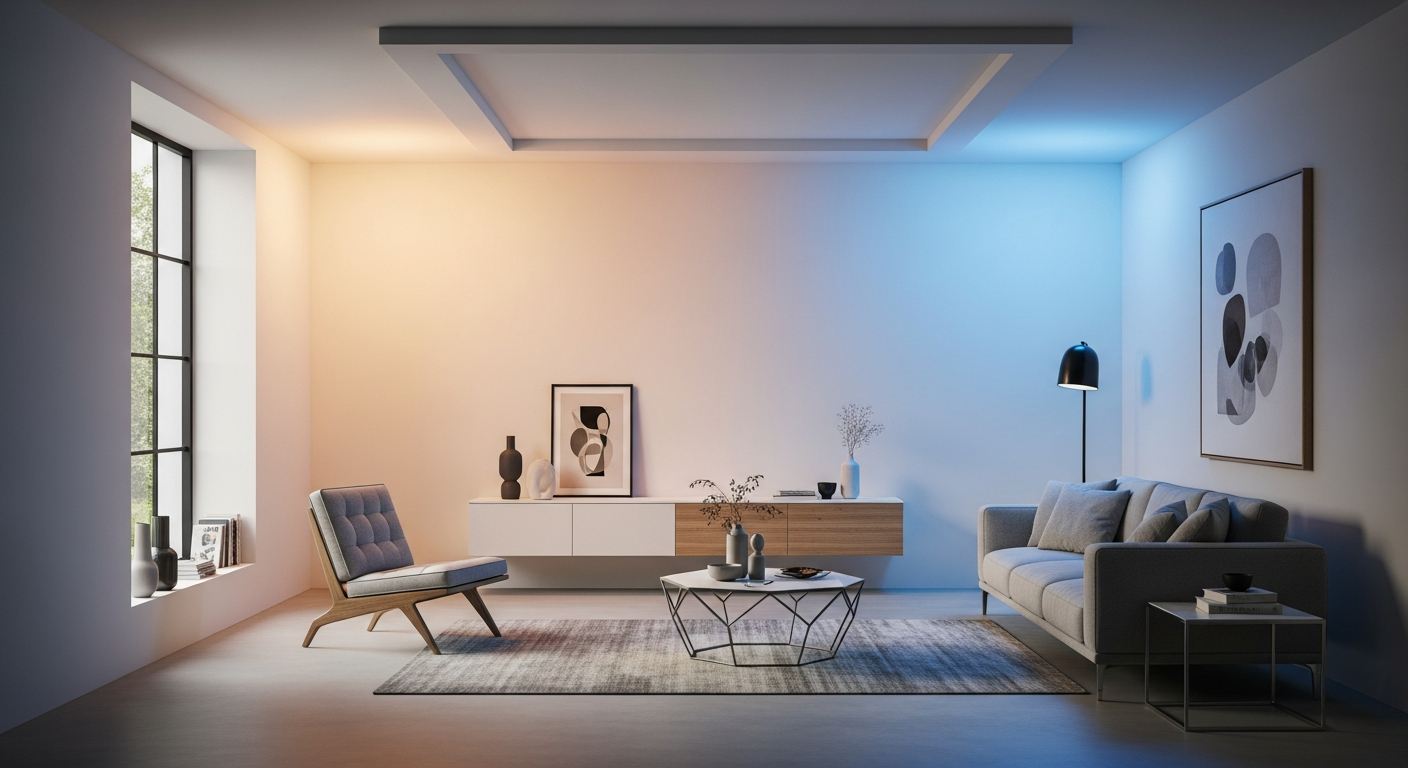
Smart lighting controls 40% of home automation purchases today, yet most people still flip switches the old-fashioned way. The disconnect between awareness and adoption reveals something important: people want smarter homes, but they're waiting for the right entry point. The Philips Hue White and Color Ambiance Starter Kit has earned its reputation as the gold standard in residential smart lighting, combining the Hue Bridge, multiple color-changing bulbs, and access to millions of customization possibilities.
This starter kit doesn't just change how your lights turn on and off—it fundamentally transforms your relationship with light itself. From creating energizing morning scenes to dimming warm tones for evening relaxation, the system adapts to your life rather than forcing you into its constraints. The 16 million color palette, intelligent integrations with platforms like Alexa and HomeKit, and expandable ecosystem make this more than a novelty purchase.
Discover how the Philips Hue system can elevate your home lighting experience today.
Beyond Basic Color: Understanding the 16 Million Color Spectrum
The RGB color model powering Hue bulbs generates 16 million distinct color combinations through precise control of red, green, and blue light channels. This isn't marketing hyperbole—it's actual technical capability that translates to scene flexibility most people never explore with traditional lighting.
White Light Temperature and Practical Applications
The white light temperature range spans from 2000K (warm, amber tones resembling candlelight) to 6500K (cool, daylight-like brightness). This spectrum matters more than casual observers realize. Your bedroom doesn't need the same light as your kitchen—and it shouldn't. Warm tones in evening hours support natural melatonin production, while cooler temperatures in task areas enhance focus and visibility.
Creating Mood-Specific Scenes
The Philips Hue app includes pre-built scenes, but the real power emerges when you create custom ones. An "Energizing" scene might combine cool white (5000K) at 100% brightness for morning routines. A "Relaxation" scene could shift to warm amber (2000K) at 30% brightness for wind-down hours. Entertainment scenarios let you push colors to their limits—deep reds, vibrant purples, and saturated blues for parties or dynamic movie-watching experiences.
Color Accuracy and Brightness Levels
Newer A19 models deliver up to 810 lumens, matching the output of traditional 60W incandescent bulbs while using a fraction of the energy. This brightness level handles most residential rooms effectively. For larger spaces or task-intensive areas like kitchens, multiple bulbs or supplementary fixtures become necessary. The color reproduction quality approaches professional lighting standards, making Hue suitable for both ambiance and functional illumination.
Dynamic Color Transitions and Animation
The Hue app supports smooth color transitions and animation sequences that sync with music or respond to external triggers. This capability separates Hue from static color-changing systems—your lights become part of your entertainment ecosystem rather than static backdrop elements.
The Hue Bridge: The Brain Behind Your Smart Lighting System
The Hue Bridge serves as the central nervous system for your entire lighting network. While newer bulbs support Bluetooth for basic control, the Bridge unlocks the system's true potential: remote access, advanced automation, and seamless integration with your broader smart home setup.
Why the Bridge Matters Beyond Bluetooth
Bluetooth connectivity on individual bulbs offers convenience for basic operations—turning lights on and off, adjusting brightness. The Bridge elevates this functionality exponentially. It enables scheduling, remote access from anywhere on Earth, voice assistant integration, and complex automation routines that respond to multiple conditions and triggers simultaneously.
Network Architecture and Capacity
The Bridge can manage up to 50 lights and 10 accessories simultaneously, creating a scalable infrastructure for homes of virtually any size. The mesh network topology means bulbs communicate with the Bridge and with each other, ensuring reliable coverage even in larger homes with challenging layouts.
Remote Access and Smart Home Integration
Control your lighting from your smartphone while traveling, set automated schedules that adjust to seasonal changes, and integrate Hue with Amazon Alexa, Google Assistant, and Apple HomeKit. This interoperability transforms lighting from an isolated system into a coordinated element of your broader smart home ecosystem.
Security and Data Privacy Considerations
Cloud connectivity introduces security variables that deserve careful consideration. Philips maintains robust encryption protocols and regular security updates, but cloud-dependent systems inherently carry connectivity risks. Evaluate your comfort level with cloud-connected devices and your home network's security posture before committing.
Bridge Placement for Optimal Connectivity
Position your Bridge centrally within your home, away from metal objects and heavy interference sources. Proximity to your Wi-Fi router matters, though wired Ethernet connection (via an adapter) ensures the most stable performance for critical automation routines.
Real-World Use Cases That Go Beyond Ambiance
Smart lighting's true value emerges in daily applications that improve your health, security, and quality of life.
Circadian Rhythm Lighting for Sleep and Energy
Your body's circadian rhythm responds to light exposure. Hue systems can simulate this natural cycle by gradually increasing cool-temperature light in the morning to boost alertness, then shifting to warm amber tones in evening to promote melatonin production. Users report improved sleep quality and daytime energy when implementing circadian-aligned lighting schedules.
Entertainment Syncing and Movie Integration
The Hue Entertainment feature synchronizes your lights with streaming content. During movie scenes, your room's lighting mirrors on-screen action—explosions flash with orange and red, serene scenes shift to cool blues. This immersive effect transcends novelty; it genuinely enhances cinematic experiences. Music visualization creates similar effects, pulsing and shifting colors in response to audio frequency and tempo.
Security Through Simulated Occupancy
Schedule lights to turn on and off at randomized intervals when you're away, creating the appearance of an occupied home. This deters potential intruders far more effectively than dark windows that clearly signal absence.
Task-Specific Lighting for Workspaces
A home office demands different lighting than evening relaxation. Configure bright, cool-temperature scenes (5000K+) for focused work sessions, reducing eye strain and maintaining cognitive sharpness. Switch to warmer tones during breaks to signal your brain that task-intensive focus time has ended.
Party and Event Hosting
Group multiple bulbs together and deploy vibrant, dynamic color scenes synchronized across your entire space. Pre-built party scenes offer entertainment without complex configuration, while custom setups allow complete creative control.
Health and Wellness Applications
Light therapy simulation addresses seasonal affective disorder (SAD) and general mood enhancement. Gradual morning brightness increases can replace alarm clocks with gentler wake-up transitions, while controlled exposure to bright cool light during afternoon hours combats seasonal depression.
Installation and Setup: From Unboxing to First Scene
The starter kit typically includes the Hue Bridge and two to three A19 color-changing bulbs. Setup takes approximately 15 minutes for someone with moderate technical comfort.
Compatibility Requirements and Contents
Verify that your home's light fixtures accept standard E26 bulbs before purchasing. The Bridge requires a 2.4GHz or 5GHz Wi-Fi network with reliable connectivity. You'll need the Philips Hue mobile app, available on iOS and Android.
Bridge Setup and Wi-Fi Connection
Connect the Bridge to your router using an Ethernet cable (or Wi-Fi if preferred, though wired connection ensures stability). Power on the device and use the Hue app to guide the initial connection. The Bridge searches your network and establishes communication with Philips' servers, enabling remote access capabilities.
Bulb Installation and Fixture Compatibility
Replace traditional bulbs with Hue bulbs in standard light fixtures. The bulbs are compatible with dimmer switches (though smart dimming through the app provides more sophisticated control). For fixtures with integrated dimmers or specialized sockets, verify compatibility before installation.
App Configuration and Account Setup
Create a Philips account and log into the Hue app. The application walks through bridge discovery, bulb addition, and initial configuration. This straightforward process requires no deep technical knowledge.
Adding Bulbs and Naming Zones
The app automatically detects bulbs when they're powered on near the Bridge. Name each bulb or bulb group according to room or function—"Living Room," "Kitchen Counter," "Bedroom"—for intuitive voice control and scene management.
Creating Custom Scenes and Schedules
After initial setup, explore the scene library or build custom lighting configurations. Set schedules that activate specific scenes at designated times: bright energizing light at wake-up, neutral office lighting during work hours, warm relaxation scenes in evening.
The True Cost of Smart Lighting Ownership
The Philips Hue White and Color Ambiance Starter Kit typically costs $150–$200, while individual A19 bulbs run approximately $50 each. Understanding the complete financial picture prevents budget surprises during expansion.
Starter Kit Pricing Versus Individual Bulbs
The starter kit represents modest savings compared to purchasing components separately—you're paying for convenience and comprehensive setup guidance. As you expand your system with additional bulbs, motion sensors, or light strips, individual component pricing becomes your cost baseline.
Energy Savings and LED Efficiency
Hue bulbs consume roughly 9 watts compared to 60 watts for traditional incandescent bulbs. Over 25,000 hours of operation, this efficiency translates to substantial energy savings—approximately $35–50 per bulb over its lifetime, depending on local electricity rates.
Long-Term Value Through Lifespan
The estimated 25,000-hour lifespan equates to roughly 22 years of typical household use. This durability dramatically reduces replacement costs compared to traditional bulbs requiring replacement every 1–2 years. The upfront expense distributes across two decades, improving cost-per-hour economics significantly.
Expansion and Accessory Costs
Building a comprehensive system involves additional investments: light strips for accent lighting ($60–80 each), motion sensors for automated lighting ($40–60), and additional bulbs for expansion ($50 each). A moderately expanded system across a 2,000-square-foot home might total $600–1,000 invested over time.
Subscription Requirements
The Philips Hue ecosystem requires no ongoing subscription fees for core functionality. This contrasts favorably with some competitors offering free basic features but charging for advanced automation or enhanced integrations.
Hidden Costs and Router Considerations
While uncommon, some users discover their existing Wi-Fi routers lack sufficient capacity for extensive Hue deployments. Upgrading to a mesh Wi-Fi system or dedicated smart home router might become necessary, adding $100–300 to total investment. Larger homes occasionally require a second Bridge ($100) for reliable coverage across all zones.
Strengths That Make This System Stand Out
The Philips Hue ecosystem has earned industry recognition through genuine technical merit and user experience design.
Reliability and Consistent Performance
Users consistently report strong uptime and stable operation over years of deployment. The system's maturity—Hue has dominated the smart lighting market for nearly a decade—means most edge cases have been identified and addressed through firmware updates.
Ecosystem Flexibility and Non-Destructive Expansion
Adding new bulbs, strips, or accessories never requires replacing existing components. Your original bulbs continue functioning indefinitely, eliminating the planned obsolescence trap. This forward-compatibility encourages gradual system growth without sunk-cost regrets.
User-Friendly App and Scene Creation
The Hue app balances powerful features with intuitive interface design. Creating scenes requires only selecting colors, brightness levels, and temperature preferences—no programming knowledge necessary. The preset scene library provides starting templates that users customize to their preferences.
Extensive Third-Party Integrations
Beyond native Alexa, Google Assistant, and HomeKit integration, thousands of third-party developers have built Hue compatibility into their applications. This ecosystem creates possibilities ranging from weather-responsive lighting to productivity app integration.
Community Support and Pre-Built Resources
Active online communities maintain extensive scene libraries, automation recipes, and troubleshooting guides. Community-built resources accelerate customization and reduce learning friction for new users.
Build Quality and Durability
Philips manufactures bulbs and hardware to professional standards. The build quality justifies premium pricing—these components are built to last rather than designed for obsolescence.
Limitations and Honest Trade-Offs
No system is universally optimal. Hue's premium positioning creates genuine constraints worth evaluating.
Initial Investment Barrier
The $150–200 entry point exceeds budget alternatives like Wyze ($20–40 per bulb) or basic LIFX systems. For users with limited smart home ambitions, this cost difference feels significant.
Bridge Dependency and Internet Requirements
Internet connectivity drops temporarily impact remote access and complex automation. Local Bluetooth control still functions, but advanced features depend on cloud connectivity. This architecture suits reliability-conscious users but frustrates those prioritizing offline independence.
Advanced Automation Learning Curve
Routines requiring multiple conditions and time-based triggers demand engagement with the app's automation logic. Basic users won't encounter this complexity, but advanced customization requires patience and experimentation.
Bluetooth Limitations on Newer Bulbs
While newer Hue bulbs support Bluetooth, this connection handles only basic operations without the Bridge. Meaningful scene creation, scheduling, and voice integration require Bridge presence—there's no true Bluetooth-only advanced functionality.
Platform Compatibility Variations
Integration depth varies across Amazon Alexa, Google Assistant, and Apple HomeKit. HomeKit integration offers particularly granular control, while Alexa integration occasionally lags with new features. Verify your preferred platform's specific capabilities before committing.
Performance Considerations at Scale
Homes with 50+ bulbs may experience occasional latency or response delays. These issues remain rare but increase in probability as system complexity grows.
Philips Hue Versus Competing Smart Lighting Systems
The smart lighting market includes worthy alternatives worth comparing.
Hue Versus LIFX
LIFX bulbs offer Bluetooth-only control without a bridge requirement, appealing to users avoiding additional hardware. However, LIFX's ecosystem lacks the maturity and extensive integrations that make Hue dominant. Cloud services require subscription for advanced features on certain LIFX products.
Hue Versus Nanoleaf
Nanoleaf specializes in modular panels and shape-changing light systems suitable for accent and decorative applications rather than whole-home lighting. These products target aesthetic expression more than functional illumination.
Hue Versus Wyze
Wyze delivers aggressive pricing—under $20 per bulb—making it attractive for budget-conscious buyers. However, color accuracy, brightness output, and ecosystem maturity lag significantly behind Hue. Wyze works well for simple applications but lacks the flexibility for advanced users.
Bridge Architecture Advantages
Hue's bridge-based approach enables sophisticated automation, remote access, and reliable performance across large deployments. Bluetooth-only competitors prioritize simplicity over capability, suitable for different use cases.
Color Accuracy and Brightness Benchmarks
Hue's 810-lumen output and color reproduction quality exceed most competitors. Direct comparisons consistently place Hue at the quality ceiling for mainstream smart bulbs.
Smart Home Integration Breadth
Hue's deep integrations with Alexa, Google Home, and HomeKit exceed competitor offerings. This platform compatibility has accumulated over years, creating ecosystem advantages difficult for new entrants to match.
Customer Satisfaction and Long-Term Support
Philips maintains active development and consistent firmware updates for Hue products. User satisfaction ratings and support responsiveness outperform most competitors across independent reviews.
Making the Investment Decision: Is It Right for You?
Your purchase decision should rest on systematic evaluation rather than impulse.
Home Size and Lighting Needs Assessment
Estimate how many rooms or zones would benefit from smart control. A 2,000-square-foot home typically requires 12–20 smart bulbs for comprehensive coverage. The starter kit (2–3 bulbs) suits apartments or single-room prioritization but represents only partial implementation for full-house control.
Budget Constraints and Expansion Timeline
Calculate the total cost for complete implementation: starter kit ($150–200), additional bulbs for full coverage ($600–1,000), potential accessories like motion sensors ($200–300), and possible router upgrades ($100–300). If this total exceeds your smart home budget, phased expansion over 12–24 months becomes necessary.
Priority Platform Integrations
Determine which smart home platforms matter most. If HomeKit integration is essential, Hue compatibility is excellent. Google Assistant users benefit from extensive integration but with slightly less granular control. Alexa users experience solid but occasionally incomplete feature parity.
Future-Proofing and System Longevity
Philips' market dominance and active development suggest strong long-term support. The ecosystem's maturity reduces risk of abandoned products or discontinued support.
Convenience Versus Upfront Cost Balance
Weigh the genuine convenience and aesthetic benefits against the upfront financial commitment. For users who value home automation and appreciate lighting's role in mood and productivity, the investment typically justifies itself within 18–24 months through daily quality-of-life improvements.
Critical Questions Before Purchase
Ask yourself: Do I have stable Wi-Fi connectivity throughout my intended coverage area? Can I commit to the initial $150–200 investment? Does my preferred voice assistant align with Hue's integration strengths? Am I likely to expand beyond the initial starter kit? Will I actually use advanced features like entertainment syncing or circadian rhythm scheduling, or do I want simple on-off control? Honest answers to these questions reveal whether Hue aligns with your actual needs rather than aspirational smart home fantasies.
The Smart Lighting Choice Worth Making
The Philips Hue White and Color Ambiance Starter Kit represents a genuine leap forward in how we interact with our home environments. Yes, the initial investment exceeds budget alternatives, and the Bridge requirement adds complexity—but the reliability, customization depth, and ecosystem maturity deliver tangible value that compounds over time. Your decision ultimately hinges on three factors: whether your home size justifies the investment, whether smart home integration matters to your lifestyle, and whether you value long-term reliability over short-term savings. If those boxes check, this starter kit isn't just a lighting upgrade—it's a foundation for a genuinely intelligent home.

Leave a Reply