Your 50cc motorcycle feels sluggish on the road. The acceleration isn't what it used to be, and you're wondering if there's a way to breathe new life into your engine without replacing the entire bike. The reality is straightforward: a worn cylinder loses compression over time, and that tired feeling you're experiencing is your engine crying out for attention.
Here's the truth: upgrading your cylinder kit can transform your riding experience, delivering noticeable gains in power, torque, and responsiveness. Cylinder kits are among the most sought-after performance components in the 50cc motorcycle world, especially for riders of popular models like the Beta RR 50, Sherco, and Rieju. La Bécanerie, a trusted French specialist since 1986, has built its reputation on offering an unbeatable catalog of these essential parts.
This guide walks you through the critical factors that separate a good cylinder kit from a great one. You'll learn about material options, displacement specifications, cooling systems, and the hidden costs that catch riders off guard. Explore La Bécanerie's complete cylinder kit selection today. By the end, you'll have the knowledge to confidently select a kit that matches your riding style, mechanical skill level, and budget.
Understanding 50cc Cylinder Kit Components and Materials
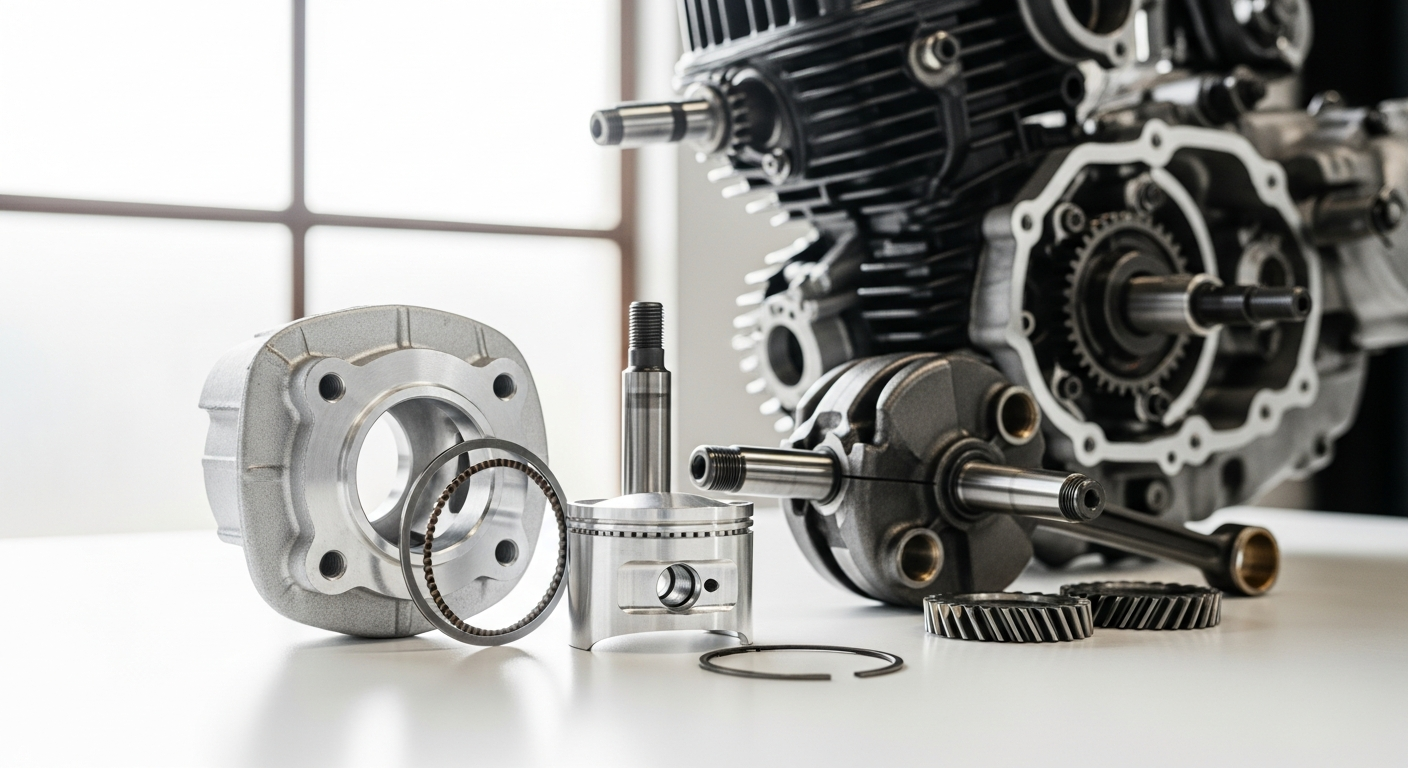
A complete cylinder kit arrives as a carefully assembled package containing everything needed for a successful engine overhaul. The cylinder barrel forms the foundation, while the piston moves within it to compress the fuel-air mixture. Piston rings seal against the cylinder wall, the wrist pin connects the piston to the connecting rod, circlips hold everything in place, and gasket sets ensure no fuel or oil escapes.
Material choice fundamentally shapes your kit's performance characteristics. Cast iron cylinders offer time-tested durability and reliability, making them ideal for stock replacements. They handle repeated combustion cycles without complaint and cost less than exotic alternatives. Aluminum cylinders present a different proposition entirely—superior heat dissipation keeps temperatures down, the lightweight construction reduces rotational mass, and performance gains become immediately noticeable. The trade-off involves longevity; aluminum wears faster under high-stress conditions.
Quality separates adequate components from ones that last. Look for precision-machined surfaces without visible flaws, proper piston ring gaps that allow thermal expansion, and specifications matching OEM standards. Complete kits matter because all components work in harmony. A premium piston paired with a substandard cylinder creates mismatches that compromise compression and invite engine damage.
Decoding Displacement Options and Bore Sizes
Your 50cc motorcycle came from the factory with specific displacement limits. Original displacement kits maintain this specification while replacing worn internals—perfect when performance isn't the goal and maintaining legal compliance matters. Many riders, however, crave more.
Performance displacement upgrades arrive in common increments: 70cc, 80cc, and 100cc kits deliver progressively aggressive power increases. Larger bores directly affect combustion efficiency and engine breathing. A bigger bore means more fuel-air mixture can enter the cylinder, more explosive force occurs during combustion, and power output climbs accordingly. The relationship isn't linear—doubling displacement rarely doubles power, but significant improvements become apparent on the road.
Legal implications deserve serious consideration. Many regions classify vehicles above 50cc thresholds differently, potentially requiring different licenses or registration. Checking local regulations before purchase prevents costly mistakes. Compatibility also demands attention; not every kit fits every frame design, and forcing incompatible components creates installation nightmares and mechanical problems.
Displacement upgrades interact with other engine systems. A bigger bore often benefits from carburetor jetting adjustments and exhaust modifications to realize full potential. Understanding these interdependencies prevents disappointment when a shiny new 80cc kit fails to deliver expected power.
Cooling Systems and Transfer Port Design
Two distinct cooling philosophies serve different riding purposes. Air-cooled cylinder kits embrace simplicity—fins on the cylinder barrel radiate heat away, no coolant system complicates maintenance, and lighter weight construction appeals to casual riders. They work reliably in moderate conditions and require minimal upkeep.
Liquid-cooled systems represent advanced engineering, circulating coolant through passages to manage heat far more effectively. High-performance and racing applications benefit tremendously from this superior thermal management. Engines stay cooler under sustained stress, maintaining consistent power output and extending component lifespan.
Transfer port count and configuration directly impact fuel-air mixture flow patterns during the combustion cycle. More ports or optimized port shapes enhance mixture movement, improving efficiency. Standard cylinders offer modest flow characteristics, semi-ported designs enhance efficiency somewhat, while fully-ported cylinders maximize flow at the cost of complex machining and higher expense.
Porting variations translate to real-world performance differences. The thermal management benefits of superior cooling extend engine life and prevent power loss from thermal degradation. Maintenance complexity increases with cooling systems—liquid-cooled setups demand periodic coolant changes and seal inspections that air-cooled alternatives avoid.
Navigating La Bécanerie's Selection and Compatibility Matrix
La Bécanerie's catalog organization reflects decades of specialization. Finding the right kit for your Beta RR 50, Sherco, Rieju, or other popular model becomes straightforward through their structured filtering. OEM parts deliver warranty assurance and guaranteed fitment but cost more than aftermarket alternatives. Aftermarket brands offer compelling value, though performance claims deserve verification and warranty coverage may be limited.
Price tiers span a wide range. Entry-level replacement kits starting around €50–€100 restore stock performance economically. Mid-range kits between €100–€200 introduce performance gains and improved materials. Premium racing kits exceeding €300 represent the pinnacle of engineering and performance potential.
Hard-to-find technical parts distinguish La Bécanerie from general retailers. Rare components become accessible through their extensive relationships with manufacturers. Real stock availability means your chosen kit ships quickly rather than languishing in backlogs. Browse La Bécanerie's real-time inventory for immediate availability. Model-specific fitment verification prevents costly installation mistakes through proper part matching before purchase.
Installation Complexity and Mechanical Skill Requirements
Installing a cylinder kit requires specific tools: a cylinder hone for surface preparation, a torque wrench for proper fastener tension, a gasket scraper for cleanup, and specialized ring compressors for piston installation. Assembling these tools adds cost but proves essential for quality work.
Pre-installation inspection reveals hidden problems. Crankcase condition, bearing wear, and seal integrity must be assessed before proceeding. A damaged crankcase might necessitate professional boring or replacement, transforming a simple upgrade into major surgery.
The step-by-step installation process flows logically: cylinder removal, crankcase cleaning, new gasket placement, fresh cylinder positioning, piston installation with ring compression, and final assembly. Critical torque specifications exist for cylinder head bolts, piston pin clips, and gasket sealing—excessive force strips threads and insufficient tension causes leaks.
Common installation errors derail projects. Over-tightening fasteners damages threads and crushes gaskets. Improper ring positioning prevents correct sealing and causes compression loss. Gasket misalignment invites fuel and oil weeping that fouls plugs and creates operational headaches.
Professional help becomes worthwhile for complex jobs exceeding personal capability. A mechanic's expertise prevents engine damage that costs far more than installation fees.
Hidden Costs Beyond the Cylinder Kit Itself
The cylinder kit price represents only the beginning. Complementary modifications frequently become necessary—carburetor jetting changes, exhaust system upgrades, and ignition timing adjustments optimize new engine potential. A €150 cylinder kit might demand €300 in supporting modifications to shine.
Additional components often need replacement during overhaul. Gaskets and seals harden with age, bearings wear, fuel lines crack, and attempting salvage invites future problems. Premium lubricants formulated for new cylinder break-in differ from standard oils.
Specialized tools and equipment rental costs accumulate. Honing equipment, precision measuring devices, and compression testers might require shop access if not owned. Labor expenses follow if professional installation becomes necessary.
Break-in procedures demand proper attention. New cylinder performance optimization requires careful initial operation, often with premium fuel and dedicated oil for the first tank or two. Tuning and dyno testing fine-tunes fuel delivery and ignition for maximum gains, adding further investment.
Performance Gains You Can Realistically Expect
Typical horsepower and torque gains from various displacement upgrades follow predictable patterns. A 70cc kit might add 2–3 horsepower, while an 80cc upgrade delivers 4–5 additional horses. 100cc kits push into 6–8 additional horsepower territory, though actual numbers vary by model and supporting modifications.
Acceleration improvements become immediately noticeable. 0–60 times compress noticeably, and responsiveness throughout the midrange transforms the riding experience. Top speed potential climbs with larger displacement, though diminishing returns eventually appear—other engine systems become bottlenecks.
Torque delivery characteristics vary by kit design. Some excel at mid-range punch while others peak higher in the RPM range. Understanding these nuances prevents purchasing a kit mismatched to your riding priorities.
Real-world street performance differs from dyno numbers. Marketing claims sometimes exaggerate gains, and actual street conditions create variables that laboratory testing eliminates. Conservative expectations prevent disappointment.
Diminishing returns become apparent at higher performance levels. Each successive modification yields smaller percentage gains as the engine approaches fundamental limits. At some point, further improvements demand comprehensive overhauls affecting ignition, fuel delivery, and exhaust systems in coordinated fashion.
Legal Considerations and Registration Changes
Displacement thresholds create distinct vehicle classifications across regions. Understanding how your country classifies vehicles above 50cc prevents legal problems. License requirements might change based on modified displacement, particularly for younger riders who face age-based restrictions.
Insurance implications deserve attention. Coverage might change, and premiums typically increase for upgraded bikes. Technical inspection requirements vary by jurisdiction—emissions testing and safety certifications might apply to modified engines. Documentation and registration updates become necessary after modifications, and processes differ across regions.
Regional variations mean checking local laws before making irreversible upgrades. A modification legal in one country might violate regulations elsewhere, potentially creating registration nightmares.
Maintenance and Longevity of Upgraded Cylinder Kits
Proper break-in procedures establish optimal ring seating and bearing conditioning. New cylinder components require careful running-in protocols respecting RPM limits and load restrictions during the initial hours of operation. Oil change intervals become more frequent for high-performance kits, typically occurring at shorter distances than stock engines demand.
Ring seating timeline extends over several hundred kilometers. During this period, optimal compression and oil control gradually stabilize through controlled operation. Bearing and seal inspection monitors wear patterns in upgraded configurations, revealing problems before failure occurs.
Seasonal storage requires protecting new cylinders during off-season periods through appropriate fuel stabilization and moisture prevention. Long-term reliability expectations for quality kits span thousands of kilometers with proper maintenance, and performance retention remains strong when initial installation receives proper attention.
Choosing Between Repair and Performance Upgrade Paths
Worn engine assessment determines whether replacement becomes more practical than repair. Cylinders with severe scoring, bearing play, or crankshaft damage sometimes justify complete replacement rather than costly repair attempts.
Repair-focused kits restore original performance and reliability at minimal cost, suitable when your 50cc runs acceptably but internals show wear. Moderate upgrade options balance performance gains with minimal additional modifications, offering noticeable improvement without extensive overhaul. Aggressive racing builds demand comprehensive overhauls requiring carburetor, exhaust, and ignition work coordinated carefully.
Budget-conscious strategies maximize performance within financial constraints. A modest 70cc upgrade with carburetor jetting adjustment delivers impressive results without premium racing component pricing. Future-proofing investment involves selecting kits that accommodate future upgrades, preventing dead-end purchasing decisions.
Making Your Move: From Selection to First Ride
Choosing the right 50cc motorcycle cylinder kit performance upgrade demands more than picking the highest horsepower number. You'll need to balance material quality, displacement specifications, cooling capabilities, and your own mechanical skill level. La Bécanerie's unbeatable catalog gives you options across every budget and performance tier—from affordable replacement kits to premium racing components—but the power to make the right choice rests with you.
The decision ultimately hinges on three critical factors: your riding goals, your budget for complementary modifications, and your willingness to navigate the legal landscape in your region. A modest displacement upgrade paired with proper tuning can deliver thrilling performance gains without breaking the bank or triggering registration headaches. Ready to unlock your 50cc's hidden potential?
Start by identifying your specific motorcycle model, assessing your mechanical comfort level, and reviewing your local regulations. Start your cylinder kit search at La Bécanerie's catalog today. Your next ride could feel completely different. The question is: which path will you choose?
Leave a Reply