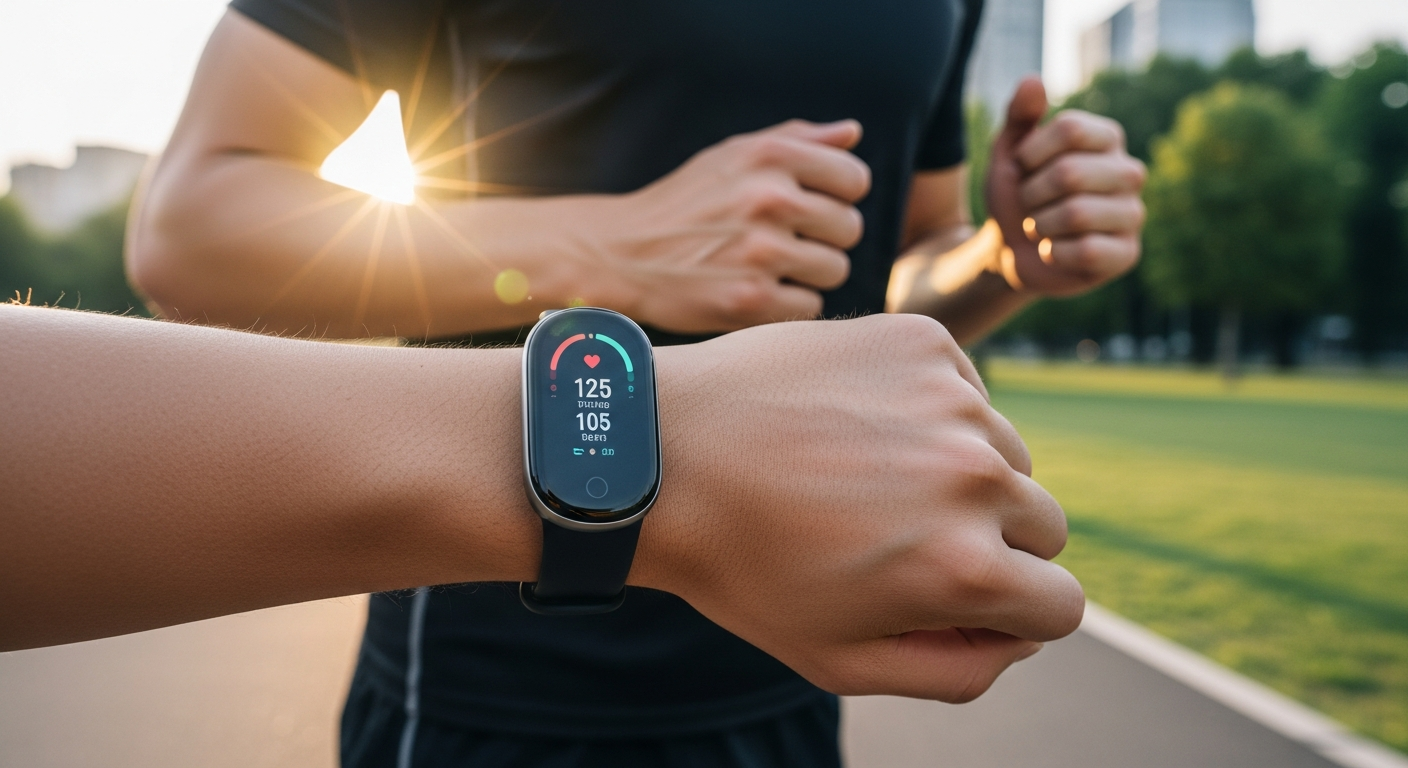
The Xiaomi Smart Band 10 Pro ships with over 150 sports modes, a number that sounds impressive until you start wondering whether you actually need that many. The reality is simpler than the spec sheet suggests. While competitors like Garmin and Apple Watch offer extensive libraries too, the Smart Band 10 Pro distinguishes itself through intelligent categorization and specialized tracking options that feel genuinely useful rather than padded.
The band organizes sports into logical groups—running, cycling, swimming, ball sports, gym workouts, outdoor activities, and water sports. Each category houses multiple variants, allowing you to track everything from traditional running to trail running with elevation metrics. This structure prevents the overwhelming sensation of scrolling through an endless list to find what you need.
Specialized Tracking for Running, Cycling, Swimming, and Trail Activities
Running mode on the Smart Band 10 Pro delivers the essentials: pace, distance, cadence, and heart rate variability. For structured training sessions, the band provides split times and lap analysis, allowing you to review performance across different segments of your run. Dedicated trail running mode adds elevation gain and loss tracking, crucial data for anyone tackling mountainous terrain.
Cycling enthusiasts benefit from distinct modes for road cycling and mountain biking. Road cycling prioritizes speed metrics and efficiency data, while mountain biking emphasizes terrain difficulty and elevation changes. The built-in GPS tracks your exact route with impressive accuracy, and post-workout analysis shows your performance against previous rides on the same terrain.
Swimming mode goes beyond simple lap counting. The band recognizes different stroke types—freestyle, backstroke, breaststroke, butterfly—and tracks stroke count, distance per stroke, and energy expenditure. At 5 ATM water resistance, it handles everything from pool workouts to open water swimming without hesitation.
How the Band Differentiates Between Casual Walking and Structured Training Sessions
One practical advantage of the Smart Band 10 Pro is its ability to distinguish between everyday movement and intentional exercise. Walking as casual daily activity doesn’t trigger the formal fitness tracking algorithm, but when you deliberately start a walking workout, the band shifts into structured tracking mode with specific metrics and heart rate zones.
This differentiation matters because it prevents your daily steps from inflating your actual training statistics. Your morning commute counts toward daily step goals, but it won’t clutter your workout history or skew your training load calculations.
Real-World Accuracy of Sport-Specific Data Collection
Field testing reveals solid accuracy across most sports modes. Running metrics align well with dedicated running watches, with pace and distance typically within 2-3% of benchmark devices. GPS route tracking shows minor deviations in dense urban environments where signal reflections occur, but performance improves significantly in open areas.
Cycling distance and speed metrics demonstrate good reliability, particularly when maintaining consistent speed. The elevation tracking during climbs shows reasonable accuracy, though it occasionally misses slight grade variations on technical terrain.
Swimming stroke recognition works reliably for standard pool swimming. Flip turns register correctly most of the time, though occasionally the band counts an extra lap if you rest briefly at the wall. Open water swimming produces slightly less consistent data due to water surface reflections affecting GPS signals, but the band recovers quickly once you finish your swim.
Explore the Xiaomi Smart Band 10 Pro on mi.com today to elevate your fitness tracking.
Built-In GPS Without Phone Dependency: Freedom for Outdoor Athletes
How GNSS Technology Enables Independent Route Tracking
The Smart Band 10 Pro’s built-in GNSS (Global Navigation Satellite System) represents a genuine upgrade for outdoor athletes. Traditional budget fitness trackers require a connected smartphone to map routes, which drains phone battery and limits your ability to truly unplug during training. GNSS integration changes this equation entirely.
GNSS technology connects to multiple satellite systems simultaneously—GPS, GLONASS, Galileo, and BeiDou. This multi-system approach improves acquisition time (how quickly the band locks onto satellites) and enhances accuracy across different geographic regions. Initial lock typically takes 15-30 seconds in open environments, and the band maintains solid signal even under tree canopy or in moderately obstructed areas.
Comparison Between Single-Band GPS and Dual-Band GPS Limitations
The Smart Band 10 Pro utilizes single-band GPS technology, which handles most real-world scenarios effectively but shows limitations in challenging RF environments. Dual-band GPS (found in premium Garmin watches and some high-end fitness trackers) processes signals on two different frequencies, providing better accuracy in dense urban areas and forests where signal reflections and interference are common.
Single-band limitations manifest primarily in urban canyons where tall buildings create signal reflections, and in heavily forested areas where foliage causes multipath errors. For trail running and mountain biking in these conditions, route accuracy may deviate by 5-10 meters occasionally. However, for most runners and cyclists training on established routes or in suburban environments, this limitation barely registers in practical use.
Practical Implications of GPS Accuracy in Urban Versus Remote Settings
Urban running performance shows acceptable accuracy on main roads and well-defined paths. City streets with GPS signal visibility provide route maps with minor deviations, typically appearing as slight jogs at street intersections. Sophisticated algorithms in the Mi Fitness app filter out obvious anomalies, resulting in clean route maps that accurately reflect your actual path.
Remote trail running delivers notably cleaner performance. With fewer signal reflections and clearer sky visibility, GNSS lock remains stable, and route tracking stays consistent. Mountain biking on established trails produces excellent accuracy, with elevation data correlating well with known elevation profiles.
Battery Drain Considerations When Using GPS During Extended Outdoor Activities
GPS operation drains battery faster than passive fitness tracking, but the Smart Band 10 Pro handles extended GPS use reasonably well. During moderate-intensity GPS usage—roughly 5-10 kilometers per session—battery impact remains minimal. The 350mAh battery still delivers 3-4 days of normal use after a 90-minute GPS workout.
For ultramarathon training or extended multi-hour cycling sessions where you’re running GPS continuously, expect to consume 8-12% of your battery per hour. This means a full charge supports approximately 8-10 hours of continuous GPS tracking. For typical workout sessions under two hours, GPS barely dents the overall week of battery life you’ll receive.
Health Monitoring That Goes Beyond Heart Rate: The Holistic Athlete Approach
SpO2 (Blood Oxygen) Monitoring and What Athletes Should Know
Blood oxygen saturation—the percentage of oxygen in your blood—directly impacts athletic performance and recovery. The Smart Band 10 Pro continuously monitors SpO2 throughout the day and during workouts, providing insights that basic heart rate monitoring misses.
For endurance athletes training at altitude or pushing intensity thresholds, SpO2 data reveals whether your aerobic system is operating efficiently. A declining SpO2 reading during a workout suggests you’re approaching anaerobic zones or that you may need acclimatization time if training at elevation. Resting SpO2 measurements between 95-100% indicate healthy oxygen saturation, while consistent readings below 94% warrant investigation into potential sleep apnea or other health concerns.
The band samples SpO2 every 30 minutes during the day and continuously during sleep, building a comprehensive picture of your oxygen dynamics. Athletes can use this data to recognize when they’re truly recovered versus when fatigue is masking poor oxygen utilization.
Stress Level Tracking During and After Intense Training Sessions
The Smart Band 10 Pro measures stress through heart rate variability analysis—the subtle fluctuations in the intervals between heartbeats. Higher variability generally indicates better parasympathetic (recovery-focused) nervous system activation, while lower variability suggests sympathetic (stress-response) activation.
During intense workouts, the band tracks your stress response to training stress. Post-workout stress measurements indicate recovery status; if stress remains elevated hours after finishing your session, it signals inadequate recovery or overtraining. Monitoring this pattern across multiple workouts helps you identify sustainable training intensities and optimal recovery intervals.
The band categorizes stress levels across a five-point scale—relaxed, normal, mild stress, moderate stress, and high stress—throughout your day. Athletes using this data can adjust afternoon training intensity based on morning stress readings, potentially preventing overtraining during already stressful periods.
Advanced Sleep Pattern Analysis With Multi-Dimensional Insights
Sleep quality directly determines athletic recovery and performance. The Smart Band 10 Pro analyzes sleep using multiple dimensions—duration, sleep stages (light, deep, REM), heart rate patterns, and respiration rate. This multi-dimensional approach identifies sleep quality issues that simple duration metrics miss.
The band distinguishes between light sleep (where you’re easily wakeable), deep sleep (critical for physical recovery), and REM sleep (essential for mental processing). Athletes with inadequate deep sleep may experience sluggish recovery despite sleeping 8+ hours, while those with frequent awakenings show fragmented sleep patterns affecting performance.
Heart rate during sleep reveals autonomic nervous system recovery. Elevated resting heart rate during sleep suggests inadequate recovery, stress accumulation, or potential illness. The band tracks these patterns and provides personalized recommendations for improving sleep quality—suggesting consistent sleep schedules, identifying optimal room temperatures, or recognizing when overtraining is compromising sleep architecture.
How Sleep Quality Impacts Athletic Performance and Training Readiness
Recovery science proves that sleep quality matters more than training volume. Athletes with poor sleep show decreased VO2 max adaptation, slower muscle glycogen replenishment, and reduced power output despite identical training loads. The Smart Band 10 Pro’s sleep analysis creates accountability around recovery practices often neglected in training plans.
Using sleep data, you can correlate specific training sessions with subsequent sleep patterns. Hard interval workouts may elevate resting heart rate and reduce deep sleep for 1-2 nights—information that guides your decision to dial back intensity the following day or extend recovery windows between hard sessions.
The band’s sleep recommendations evolve based on your patterns. If your data shows consistent sleep debt accumulating weekly, the system may suggest recovery days or training load adjustments. This feedback loop transforms sleep monitoring from passive observation into active recovery management.
The Bottom Line: Affordable Athletic Performance Meets Practical Wearable Design
The Xiaomi Smart Band 10 Pro doesn’t pretend to be everything to everyone—and that’s precisely where it succeeds. This device delivers genuine value to athletes who prioritize training data, battery longevity, and design aesthetics over premium features like Bluetooth calling. The 150+ sports modes, built-in GPS, and comprehensive health monitoring create a legitimate training companion that punches far above its price point.
Where it stumbles—the companion app’s clunky interface, lack of dual-band GPS, and absence of Bluetooth calls—these limitations matter far less to the athletes this device actually targets. For runners tackling 5Ks, cyclists exploring new routes, swimmers tracking laps, and cross-training enthusiasts, the Smart Band 10 Pro delivers exactly what they need without unnecessary bloat or premium pricing.
Your decision ultimately hinges on what matters most to your training. If you want serious athletic tracking, reliable GPS, and a device that actually lasts weeks between charges—all for under $120—the Smart Band 10 Pro deserves your consideration.
Get your Xiaomi Smart Band 10 Pro now and start tracking like a pro.
Leave a Reply