Introduction
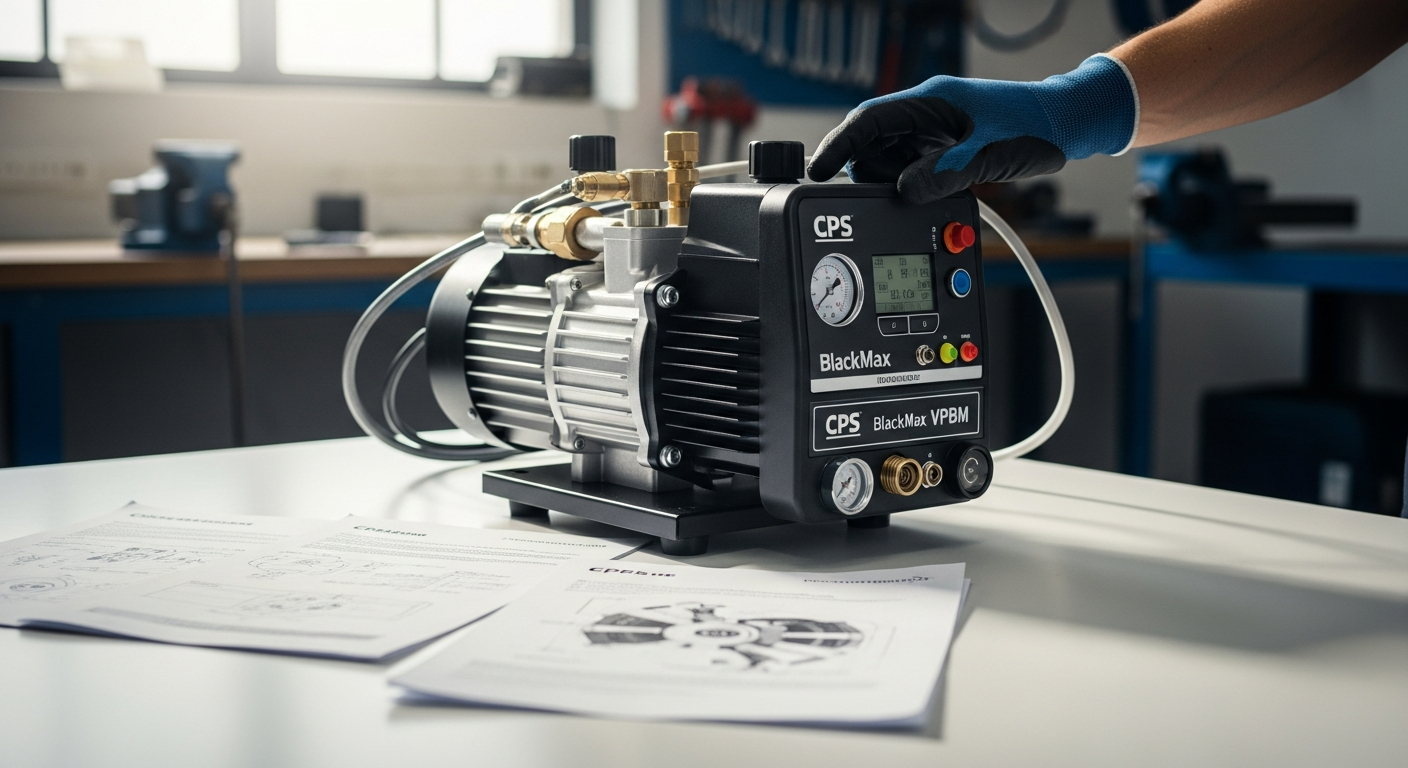
When an undersized or oversized vacuum pump lands on your service truck, you're essentially carrying dead weight on every evacuation job. Those extra hours spent waiting for a system to pull down translate directly into lost billable time, frustrated customers, and reduced profitability. The CPS BlackMax VPBM Series has become the industry standard precisely because it eliminates this guesswork—delivering the power and speed that HVAC/R professionals demand without unnecessary bulk or complexity.
These pumps stand out because they bridge the gap between performance and practicality. Whether you're working with traditional refrigerants or the newer, mildly flammable A2L formulations, the VPBM lineup offers multiple CFM ratings and safety features engineered specifically for field technicians. The variable speed brushless motor, lightweight construction, and universal voltage capability mean you get consistent results whether you're in a residential crawlspace or a commercial rooftop installation.
Understanding CFM Ratings: Finding Your Perfect Match
What CFM Means and How It Impacts Evacuation Speed
CFM—cubic feet per minute—directly determines how quickly your vacuum pump removes air and moisture from an HVAC system. Higher CFM ratings pull down systems faster, which means you finish the evacuation phase of your service call sooner and move on to the next job. On a typical residential system requiring 30 to 45 minutes of evacuation time, the difference between a 4 CFM and an 8 CFM pump can save 15–20 minutes per call. Multiply that across five service calls weekly, and you're looking at substantial time savings that directly impact your bottom line.
Comparing the VPBM Lineup: 4 CFM, 6 CFM, 8 CFM, and 12 CFM Models
The BlackMax VPBM Series spans four distinct CFM options to match different business models and system types. The 4 CFM and 6 CFM models suit technicians who primarily handle smaller residential systems or those operating on tighter equipment budgets. The 8 CFM VPBM8V ($689.46 on sale, MSRP $795.53) becomes the workhorse for mixed residential and light commercial portfolios, striking a balance between speed and cost-effectiveness. The 12 CFM VPBM12V ($825.83 on sale, MSRP $960.99) targets shops with high-volume service operations or those frequently tackling larger commercial units where pulling a faster vacuum prevents system contamination during the evacuation window.
Right-Sizing Your Pump Based on System Capacity and Job Volume
Selecting the correct CFM rating requires honest assessment of your typical workload. If your service territory consists mainly of single-family homes with standard split systems, an 8 CFM model handles the majority of your calls efficiently without overinvestment. Conversely, if you're pulling multiple large commercial rooftop units monthly or operating in a high-volume franchise environment, the 12 CFM option justifies its higher upfront cost through faster job completion and reduced downtime between calls. The key is matching pump capacity to your average system size and call frequency rather than buying for occasional outliers.
Speed vs. Power Trade-Offs and Downtime Reduction
Higher CFM ratings don't just evacuate faster—they also reduce the window of time your system remains vulnerable to atmospheric contamination. A faster evacuation means less exposure to humidity and oxygen ingress, directly improving system longevity and reducing the likelihood of future refrigerant acid formation and compressor failure. However, the smallest models still accomplish this for technicians whose call mix favors efficiency over raw speed. The real trade-off isn't speed versus power; it's matching available power to job requirements so you're never waiting unnecessarily but also never overspending for capacity you don't regularly use.
Real-World Evacuation Timelines with Different CFM Ratings
On a typical 3-ton residential split system, industry data shows evacuation times ranging from 45 minutes with a 4 CFM pump down to 15–20 minutes with a 12 CFM model. For light commercial 5-ton units, those timelines extend to roughly 60 minutes and 25 minutes respectively. These aren't theoretical numbers—they reflect actual field conditions where system line length, filter drier capacity, and oil charge all affect total evacuation time. Factoring in system-to-pump connection time and manual valve operations, the net time savings per call becomes meaningful when you're stacking multiple stops into a daily route.
Cost-Benefit Analysis: When Higher CFM Makes Financial Sense
The 8 CFM VPBM8V costs approximately $106 more than typical 6 CFM alternatives, yet saves 10–15 minutes per evacuation on average systems. For a technician completing four residential calls daily, that's 40–60 minutes recovered weekly, or roughly 40 billable hours annually. At standard service call rates ($150–$250), that recovery alone pays for the equipment premium within the first year. The 12 CFM model commands a higher purchase price but accelerates this payback period significantly for shops handling larger systems or running high-call-volume operations. The financial justification hinges entirely on your actual job mix, not on hypothetical best-case scenarios.
Refrigerant Compatibility and Safety Features That Matter
A1, A2, A2L, and A3 Refrigerant Classifications Explained
Refrigerant safety classifications have become central to equipment selection since EPA regulations and evolving system designs now incorporate mildly flammable formulations. A1 refrigerants (like R-410A) are non-flammable and allow standard equipment designs. A2L refrigerants (like R-32 and R-454B) introduce mild flammability, requiring specific design features and handling protocols. A3 refrigerants are highly flammable and rarely seen in field service yet. The VPBM Series' compatibility across A1, A2, A2L, and A3 classifications means your equipment investment doesn't become obsolete as the industry transitions to lower-GWP alternatives. This forward compatibility protects both your capital investment and your ability to service equipment your customers will own for the next 10–15 years.
Sparkless™ Series Technology and Non-Sparking Brushless Motor Design
CPS designates the VPBM line as part of their Sparkless™ Series, meaning the brushless DC motor design eliminates the electrical arcing that occurs in traditional brush-based motors. When working with flammable refrigerants, any spark source becomes a liability—both for safety and for regulatory compliance. The brushless architecture in the BlackMax models removes this risk entirely, allowing you to operate confidently even as refrigerant formulations shift toward A2L and beyond. Technicians who've transitioned to brushless equipment report not just improved safety margins but also peace of mind knowing they're compliant with evolving industry standards and insurance requirements.
Sealed Ignition-Proof ON/OFF Switch Protection
Beyond motor design, the sealed ignition-proof ON/OFF switch represents a critical safety feature when evacuating systems charged with mildly flammable refrigerants. This switch design prevents electrical contact arcing during operation, eliminating another potential ignition source. For technicians regularly handling A2L systems or operating in regions where stricter refrigerant regulations apply, this protection isn't optional—it's foundational to responsible service practices and liability management.
Why Compatibility Matters: Avoiding Equipment Damage and Regulatory Compliance
Using the wrong pump with certain refrigerants can void warranty coverage, create liability exposure, and damage your professional reputation if a system fails prematurely. Regulatory bodies and equipment manufacturers increasingly specify which pumps are acceptable for specific refrigerant types. The VPBM Series eliminates this uncertainty by meeting compatibility standards across the full spectrum of current and near-future refrigerant classifications. This universality means you're not locked into legacy equipment as the industry evolves—you maintain compliance automatically.
Future-Proofing Your Investment as Refrigerant Regulations Evolve
The EPA's ongoing phase-down of high-GWP refrigerants and industry shifts toward A2L formulations aren't temporary trends—they represent the regulatory direction for the next decade. Equipment purchased today must handle these transitions seamlessly. The VPBM Series' multi-refrigerant compatibility ensures your pump works with today's installed base while remaining relevant for tomorrow's service calls. This foresight extends equipment lifespan and maximizes return on your initial investment.
Safety Certifications and Industry Standards
The BlackMax VPBM Series meets rigorous industry standards for HVAC/R equipment, with certifications confirming compliance with safety requirements specific to each refrigerant classification. These certifications protect both you and your customers by ensuring your equipment has undergone third-party validation for safe operation. When you're working with flammable refrigerants or operating in highly regulated jurisdictions, these certifications become non-negotiable documentation of your professional standards.
Motor Technology and Durability: What Sets BlackMax Apart
Maintenance-Free, Variable Speed Brushless DC Motor Advantages
Traditional vacuum pumps rely on carbon brushes that wear gradually, requiring periodic maintenance and eventual replacement. The brushless DC motor in the VPBM Series eliminates this wear mechanism entirely, resulting in maintenance-free operation across the pump's service life. Without brushes to replace or commutator points to clean, you're not scheduling downtime for routine servicing or budgeting for replacement parts. Variable speed operation layered onto this architecture means the motor adjusts its power output based on system requirements, reducing energy consumption during lighter evacuation tasks while maintaining full power when needed. Technicians report that variable speed operation also reduces noise during residential calls, improving customer experience and workplace comfort.
1/2 HP Performance Specifications and Motor Efficiency
The 1/2 HP motor specification in the VPBM lineup delivers sufficient power to achieve the CFM ratings across the full model range while maintaining electrical efficiency. This power level strikes a practical balance—strong enough to pull deep vacuums and handle system line lengths typical in residential and light commercial installations, yet efficient enough that you're not drawing excessive electrical current on job sites with limited power availability. The efficiency translates directly to longer equipment lifespan since the motor operates within its designed thermal envelope, avoiding the accelerated wear that occurs in underpowered or oversized equipment running continuously outside its optimal range.
Universal Voltage Capability (100–240VAC, 50/60Hz)
The VPBM Series accommodates input voltages from 100V to 240V at both 50Hz and 60Hz frequencies, making these pumps genuinely portable across international borders and diverse job site power conditions. Whether you're working at a customer's residential outlet (typically 110–120V) or plugging into a commercial panel (240V), the universal voltage design eliminates the need for step-down transformers or regional equipment variants. For technicians serving multiple states or occasionally working on international projects, this universal capability represents genuine operational flexibility.
Improved Piston Seal Design Reducing Internal Leakage
Piston seals determine how effectively a vacuum pump maintains its vacuum and pulls truly deep final pressures. CPS engineering focuses on seal durability and precision fit to minimize internal leakage that degrades evacuation performance over time. Improved seals mean your pump maintains consistent CFM ratings throughout its service life rather than gradually losing effectiveness as tolerances widen. This consistent performance directly supports your ability to deliver reliable evacuations on every service call, reducing the risk of future callbacks due to inadequate system preparation.
Extreme Temperature Operation: Storage and Performance in Harsh Conditions
HVAC/R technicians store equipment in service vans, outdoor storage sheds, and job site conditions that span the full temperature spectrum. The VPBM Series is engineered for stable performance across extreme storage temperatures, meaning your pump starts reliably regardless of whether it's been sitting in a freezing winter garage or a scorching summer vehicle. This rugged design philosophy extends to field operation as well—the pump maintains reliable performance whether you're evacuating systems in arctic climates or desert heat, reducing the operational variability that plagues equipment designed for more limited environmental ranges.
Brushless Technology Benefits: Reduced Wear, Longer Lifespan, and Consistent Power Delivery
The cumulative effect of brushless motor technology is a vacuum pump that delivers consistent power delivery year after year without the performance degradation associated with brush wear. Technicians who've tracked equipment longevity across equipment generations consistently report that brushless models outlast their brush-equipped predecessors by substantial margins. More importantly, that longevity doesn't come at the expense of performance—the power curves remain stable throughout the equipment's service life, ensuring evacuation times remain predictable and efficient.
Portability and Practicality for Field Technicians
Lightweight Construction Reducing Technician Fatigue
Vacuum pumps aren't light equipment by any measure, but the VPBM Series' lightweight design means less physical strain when loading and unloading your service vehicle, carrying the pump into tight spaces, or repositioning it on job sites. Technician fatigue compounds across multiple service calls—by mid-afternoon, a heavier pump becomes noticeably more burdensome. The BlackMax design philosophy prioritizes portability without sacrificing durability, reducing the cumulative physical toll that accumulates over months and years of field service. This fatigue reduction translates to fewer strain injuries, improved technician retention, and better performance on later service calls when technicians aren't physically exhausted.
Compact Design for Easy Transport in Service Vans
Service vehicles are premium real estate—you're fitting diagnostic equipment, recovery units, manifolds, hoses, and countless other tools into finite space. The VPBM Series' compact footprint means your vacuum pump doesn't monopolize van storage, leaving more room for other essential equipment. Technicians appreciate equipment that doesn't require dedicated permanent mounting or consume disproportionate space relative to its importance. The compact design also facilitates quick retrieval when you need the pump at a job site, reducing the time spent rummaging through a crowded vehicle.
Variable Speed Operation: Adjusting Power Consumption and Noise Levels
Variable speed technology allows you to dial in the exact CFM performance your system requires rather than running at maximum output for every evacuation. On smaller systems or final-stage evacuation where you're pulling from 10 microns to 5 microns, running at reduced speed accomplishes the objective while consuming less power and generating less noise. This operational flexibility becomes particularly valuable during residential service calls in occupied homes or in noise-sensitive environments like hospitals and office buildings. Customers notice quieter operation and appreciate the consideration of running professional equipment without unnecessary disruption.
Reduced Fatigue Factor: How Lighter Equipment Improves Productivity
The relationship between equipment weight and technician productivity extends beyond pure physical strain. Lighter pumps move more freely to different work positions, integrate more easily into tight spaces, and reduce the mental burden of managing cumbersome equipment during already-complex service procedures. When technicians aren't constantly aware of equipment weight and positioning, they focus more attention on evacuation quality, system diagnostics, and customer interactions. This cognitive freedom improves overall job execution and reduces the likelihood of oversights that lead to future problems.
Practical Ergonomics for Challenging Locations
Crawlspaces, attics, mechanical closets, and rooftop equipment areas present constant ergonomic challenges. The lighter VPBM Series accommodates these challenging environments more readily than heavier alternatives, allowing technicians to position equipment efficiently even in confined quarters. Practical ergonomics mean fewer awkward reaches, safer positioning, and reduced risk of dropping equipment or losing balance while managing heavy tools in precarious locations. These seemingly small advantages accumulate significantly across a career spanning decades of field service.
Noise Considerations When Operating in Residential Settings
Vacuum pump noise can disrupt customer environments, particularly during early morning or evening service calls. The variable speed brushless motor in the VPBM Series operates more quietly than traditional brush-based alternatives, especially when running at reduced speeds. This noise reduction demonstrates professional consideration for customer experience and shows clients that you're using modern, purpose-built equipment rather than generic machinery modified for HVAC service.
Connection Ports and System Compatibility
In-Line Hose Connection Options: 1/2″, 3/8″, and 1/4″ Ports
The VPBM Series accommodates three standard hose connection sizes—1/2″, 3/8″, and 1/4″—covering the vast majority of HVAC system evacuation configurations. This multi-port capability means you can connect directly to most systems without adapter chains that introduce connection points and air leakage. Having all three port sizes available on the same pump eliminates confusion about equipment compatibility and reduces time spent searching for the correct adapter on job sites.
Adapter Flexibility Ensuring Seamless Integration
When direct connection isn't possible, the VPBM's standard ports work with widely available adapters that integrate smoothly into your existing hose and equipment infrastructure. This adapter ecosystem means you're not locked into proprietary connection hardware—you maintain flexibility to work with various system configurations and incorporate new equipment or hoses as your operation evolves.
Quick-Connect Capabilities for Faster Connections
Modern quick-disconnect couplings on evacuation hoses reduce connection time and virtually eliminate air leakage during the critical moments when you're connecting your pump to the system. The VPBM Series' port design accommodates these quick-connects seamlessly, allowing you to establish airtight connections in seconds rather than minutes spent with threaded fittings. This speed advantage reduces system exposure to atmospheric contamination during the connection phase, directly supporting evacuation quality.
Compatibility Across Residential, Light Commercial, and Specialized Applications
Whether you're servicing a residential window unit, a commercial rooftop unit, or specialized applications like supermarket refrigeration systems, the VPBM Series' port flexibility accommodates the full spectrum of HVAC/R equipment. This universal compatibility means you purchase one pump that works across your entire service portfolio rather than maintaining multiple pumps for different application types. The simplification reduces equipment costs and inventory complexity.
Preventing Connection Issues That Lead to Evacuation Failures
Poor connections represent a primary cause of evacuation failures—air leakage during the evacuation process reintroduces atmospheric moisture and oxygen, compromising system longevity. The VPBM's straightforward port design and compatibility with modern quick-disconnects minimize connection-related problems. When connections are reliable and quick, your evacuation process becomes more efficient and your quality outcomes improve.
Future System Upgrades: Keeping Your Pump Relevant
As you upgrade hoses, add new equipment, or incorporate advanced diagnostics into your service operation, your vacuum pump needs to integrate seamlessly into evolving configurations. The VPBM Series' standard port sizes and flexible connection capabilities ensure compatibility with future equipment additions, protecting your investment's long-term relevance and utility.
Portability and Practicality for Field Technicians
Lightweight Construction Reducing Technician Fatigue
Vacuum pumps aren't light equipment by any measure, but the VPBM Series' lightweight design means less physical strain when loading and unloading your service vehicle, carrying the pump into tight spaces, or repositioning it on job sites. Technician fatigue compounds across multiple service calls—by mid-afternoon, a heavier pump becomes noticeably more burdensome. The BlackMax design philosophy prioritizes portability without sacrificing durability, reducing the cumulative physical toll that accumulates over months and years of field service. This fatigue reduction translates to fewer strain injuries, improved technician retention, and better performance on later service calls when technicians aren't physically exhausted.
Compact Design for Easy Transport in Service Vans
Service vehicles are premium real estate—you're fitting diagnostic equipment, recovery units, manifolds, hoses, and countless other tools into finite space. The VPBM Series' compact footprint means your vacuum pump doesn't monopolize van storage, leaving more room for other essential equipment. Technicians appreciate equipment that doesn't require dedicated permanent mounting or consume disproportionate space relative to its importance. The compact design also facilitates quick retrieval when you need the pump at a job site, reducing the time spent rummaging through a crowded vehicle.
VPBM Model Specifications and Pricing Breakdown
VPBM8V Specifications: 8 CFM Performance and Pricing
The VPBM8V represents the most popular model in the lineup, delivering 8 CFM of evacuation power in a lightweight package. This model carries an MSRP of approximately $795.53, with competitive sale pricing typically around $689.46. For technicians serving mixed residential and light commercial portfolios, the 8 CFM performance level balances evacuation speed against equipment cost, completing most systems in 20–30 minutes while remaining accessible to independent operators and small shops. The price-to-performance ratio on this model consistently places it at the top of purchasing recommendation lists.
VPBM12V Specifications: 12 CFM Performance and Pricing
The VPBM12V steps up to 12 CFM capacity for shops handling higher call volumes or larger commercial systems. This premium model carries an MSRP of approximately $960.99, with sale pricing typically near $825.83. The 12 CFM output reduces evacuation times to 15–20 minutes on most residential systems and handles larger commercial units that would push smaller pumps beyond their practical limits. For high-volume operations where time savings compound across multiple daily calls, this model's price premium justifies itself within the first year of operation.
Smaller CFM Models (4 CFM and 6 CFM) for Specific Applications
The 4 CFM and 6 CFM models in the BlackMax lineup serve technicians whose service focus remains strictly residential or those operating on tighter equipment budgets. These models complete residential evacuations in 35–50 minutes—acceptable timeframes for many technicians—while requiring smaller capital investment. Budget-conscious shops or technicians just starting independent service operations often begin with these models and upgrade to higher CFM capacity as call volume and profitability increase.
Value Proposition: Cost Per CFM and Long-Term ROI
Analyzing the value proposition requires comparing the cost-per-CFM ratio against your anticipated time savings and billable hours recovered. The VPBM8V costs roughly $86 per CFM, while the VPBM12V works out to approximately $69 per CFM—demonstrating that larger capacity models often deliver better value on a per-CFM basis. However, value extends beyond raw specifications into your actual service mix. If your typical workload favors smaller systems where 6 CFM proves adequate, paying for 8 CFM capacity wastes capital that could be invested elsewhere.
Warranty and Support Considerations
CPS backs the VPBM Series with manufacturer warranty coverage that protects your investment against defects. Understanding warranty terms—coverage duration, what's included, what requires paid service—ensures you're informed about post-purchase support. Additionally, availability of CPS-authorized service centers in your region influences long-term support accessibility. Purchasing from established dealers with local service relationships provides an extra layer of protection and convenience.
Where to Find Competitive Pricing and Timing Your Purchase
Competitive pricing on the VPBM Series fluctuates seasonally, with promotional pricing typically occurring during slower HVAC seasons (late fall, early spring) when distributors incentivize purchases. Purchasing during these promotional windows can yield savings of $75–$150 compared to peak-season pricing. Comparing prices across multiple authorized dealers and checking for volume discounts if you're purchasing multiple units ensures you secure the best available terms.
Real-World Performance: What Technicians Actually Experience
Evacuation Speed Improvements Compared to Older Technology
Technicians who've upgraded from older brush-based or smaller-capacity pumps report dramatic speed improvements with the VPBM Series. What previously required 45–60 minutes of evacuation time now completes in 20–30 minutes, reducing customer wait times and allowing technicians to fit additional calls into their daily schedule. These real-world speed improvements directly translate to increased productivity and faster invoice turnaround.
Consistency Across Job Types
The VPBM lineup maintains consistent performance whether you're servicing a 2-ton residential window unit, a 5-ton split system, or a commercial package unit. This consistency reduces surprises and allows you to confidently estimate evacuation times rather than guessing about how long a particular system will take. Predictable evacuation timelines support better scheduling and more accurate service call duration estimates for customers.
Reliability in Demanding Conditions
The rugged construction and brushless motor design ensure the VPBM pumps maintain reliability through daily service rotations spanning multiple stops across diverse job sites. Technicians consistently report that these pumps operate reliably year-round without performance degradation or unexpected failures that create emergency service situations. Reliability extends equipment lifespan and reduces the frustration and downtime associated with equipment breakdowns during busy service periods.
User Feedback Patterns: Best-Seller Status
The VPBM Series consistently appears on best-seller lists and top-recommendation rankings because technicians who've used these pumps recognize their practical superiority. This pattern of consistent popularity across multiple retailers and independent reviews reflects genuine user satisfaction rather than marketing hype. When equipment repeatedly earns customer loyalty and recommendation status, that consensus signals real performance value.
Reduced Callbacks: How Faster, More Thorough Evacuation Prevents Future Problems
Systems that receive thorough, properly-executed evacuations operate more reliably and fail less frequently for refrigerant-related causes. The VPBM Series' ability to pull deep vacuums and achieve final pressures below 500 microns removes virtually all atmospheric moisture from system components. This thorough evacuation prevents acid formation, compressor failure, and the premature system failures that generate costly callbacks. From a business perspective, reducing callback frequency directly improves profitability by eliminating unpaid rework and improving customer retention.
Technician Satisfaction Metrics: Durability, Ease of Use, and Maintenance
User satisfaction surveys and field feedback consistently highlight the VPBM Series' durability, straightforward operation, and minimal maintenance requirements. Technicians appreciate equipment that simply works without requiring technical troubleshooting or specialized knowledge. The maintenance-free operation means no oil changes, no brush replacements, and no uncertainty about whether the pump is functioning within design specifications. This simplicity reduces cognitive load and allows technicians to focus on diagnostic and service execution aspects of their work.
Maintenance Requirements and Long-Term Value
Maintenance-Free Operation: What This Means for Total Cost of Ownership
Maintenance-free operation means you're not budgeting for periodic oil changes, brush replacements, or routine service intervals. Over a five-year equipment lifespan, these eliminated maintenance costs accumulate to several hundred dollars in labor and materials. More significantly, maintenance-free design means your pump never sits unavailable while awaiting service or repairs. This operational availability directly supports your ability to maintain consistent service delivery without equipment-related delays.
Oil Changes and Fluid Management (or Lack Thereof)
Traditional vacuum pumps require regular oil changes to maintain seal lubrication and prevent internal corrosion. The VPBM Series eliminates this requirement entirely through its brushless motor design and sealed component engineering. Technicians no longer need to maintain oil supplies, schedule routine maintenance, or track service intervals. This simplification particularly benefits technicians who travel extensively or work from multiple job sites where maintaining consistent service schedules becomes logistically challenging.
Storage Best Practices for Extending Equipment Lifespan
While the VPBM Series tolerates extreme temperature storage, protecting your pump from moisture and corrosion during off-season storage extends its longevity further. Dry storage conditions, disconnected hoses (to prevent internal moisture accumulation), and basic cleanliness safeguard internal components. These simple practices cost nothing but extend equipment life beyond even conservative manufacturer estimates.
Troubleshooting Common Issues and When to Seek Professional Service
The VPBM Series' straightforward design means troubleshooting rarely extends beyond checking electrical connections or verifying proper hose connections. When problems arise—which is infrequently—CPS technical support and authorized service centers provide diagnostics and repairs. Understanding whether an issue represents normal operation or requires professional intervention prevents unnecessary service calls while ensuring legitimate problems receive timely attention.
Warranty Coverage: What's Included and How to Protect Your Investment
CPS warranty coverage protects against manufacturing defects and component failures for a specified period. Understanding exactly what's covered, what's excluded, and warranty duration ensures you're aware of your protection scope. Registering your pump with the manufacturer activates warranty coverage and creates documentation should issues arise. Preserving warranty documentation and maintaining purchase receipts protects your ability to claim coverage if needed.
Replacement Parts Availability and Ongoing Support
CPS maintains robust supply chains for VPBM replacement parts, ensuring that when wear items eventually require replacement (typically after several years of heavy use), parts are readily available through authorized dealers. This parts availability directly supports long-term equipment value by ensuring your pump remains serviceable rather than becoming obsolete when minor components wear.
Making the Investment: When to Upgrade to BlackMax VPBM
Assessing Your Current Equipment: Cost of Inadequate Performance
Evaluate whether your existing vacuum pump completes evacuations within your target timeframe or if you're regularly exceeding estimated service call durations. If evacuation consistently consumes 40+ minutes on systems that should pull down faster, your pump is costing you billable time and customer dissatisfaction. If your equipment is older than seven years, performance degradation is likely reducing its CFM output below original specifications. Honest assessment of whether your current pump meets your operational needs justifies investment in newer equipment.
Business Growth Indicators: How Increasing Service Volume Justifies Upgrade
As your service business grows and call volume increases, equipment that worked adequately at lower volume becomes a limiting factor. Higher-capacity pumps allow you to fit more calls into your daily schedule, directly supporting revenue growth. If you're turning away work or experiencing scheduling conflicts because evacuation times stretch your service window, equipment upgrade becomes strategically necessary rather than optional.
Competitive Advantages: Premium Equipment Wins More Jobs
Customers increasingly recognize that professional HVAC service requires modern equipment. When you're competing against established service companies with current tools and newer technicians with updated equipment, your equipment becomes a differentiating factor. Upgrading to the VPBM Series signals to customers that you're investing in professional capability and committed to service quality. This perception influences purchasing decisions and supports premium pricing for your services.
Financing Options and Flexible Payment Plans
Equipment financing through manufacturers, dealers, or commercial lending sources allows you to spread equipment costs across multiple months, improving cash flow management. Monthly payment plans often cost less than the billable hours you recover through faster evacuation, making financed equipment essentially self-funding. Exploring financing options removes capital constraints that might otherwise delay equipment upgrades.
Tax Deductions and Business Write-Offs for Tool and Equipment Investments
HVAC/R equipment purchased for business use qualifies for tax deductions under Section 179 or depreciation schedules, reducing your effective equipment cost through tax savings. Consulting with your accountant about optimal deduction strategies ensures you're capturing all available tax benefits. These tax advantages effectively reduce the out-of-pocket cost of equipment investment.
Calculating Your Payback Period: How Faster Evacuations Translate to Profitability
Establish a concrete payback period by calculating time savings against your service rates. If the VPBM8V saves 10 minutes per evacuation compared to your current pump, and you complete four calls daily, that's 40 minutes recovered daily or roughly 160 hours annually. At $150 per service call (the evacuation portion), 160 hours represents $2,400 in recovered billable time. The $106 price premium over smaller alternatives pays back within weeks of operation. Quantifying this payback removes uncertainty and provides concrete justification for upgrade investment.
The Bottom Line: Investing in the Right Evacuation Tool
The CPS BlackMax VPBM Series transcends the category of "just another tool" in your equipment lineup. It represents a deliberate investment in efficiency, safety, and professional credibility that compounds with every service call you complete. When you've matched the appropriate CFM rating to your service portfolio, you're simultaneously reducing evacuation time, improving system reliability through thorough evacuation, and minimizing the technician fatigue that accumulates across multi-stop service days. The convergence of brushless motor technology, comprehensive refrigerant compatibility, and lightweight portability creates equipment that functions effectively today while remaining relevant through tomorrow's regulatory and technology shifts.
The combination of advanced safety features and practical design means you're not just purchasing a vacuum pump—you're acquiring a professional tool that your customers will recognize and respect. Equipment quality directly influences how customers perceive your service, and modern, well-maintained tools signal commitment to professional standards. The maintenance-free operation and rugged construction ensure long equipment life, maximizing return on your capital investment.
Your current evacuation process either supports your business goals or constrains them. Undersized or aging equipment limits how many service calls you can complete, how thoroughly you can evacuate systems, and how confidently you can handle emerging refrigerant types. Upgrading to the VPBM Series removes these constraints and positions your business for growth. Evaluate your evacuation times honestly, assess whether faster completion would meaningfully impact your profitability, and consider the safety advantages for your technicians and customers. The investment in quality evacuation equipment pays dividends through improved customer outcomes, reduced callbacks, increased technician satisfaction, and measurable business profitability improvements.
Leave a Reply