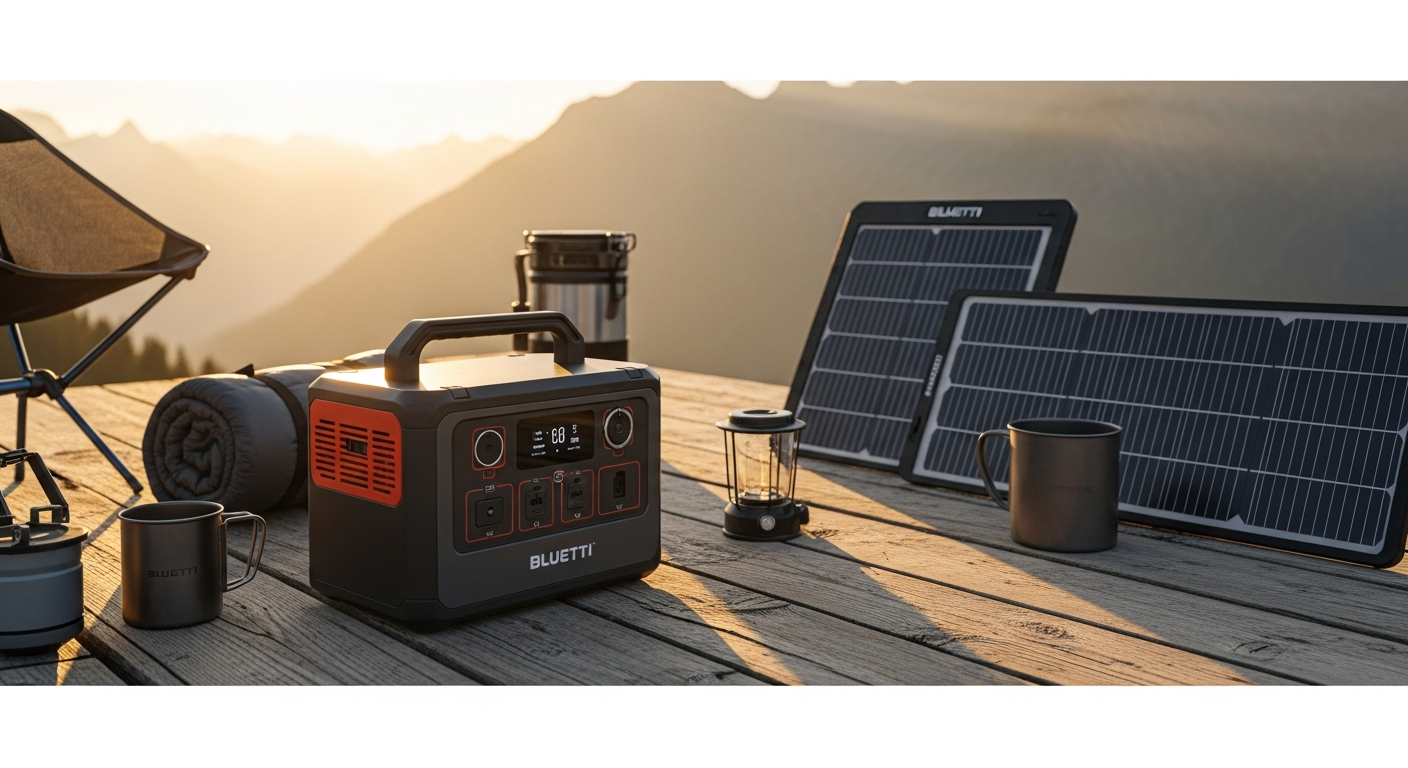
Battery Technology That Changes the Game: LiFePO4 vs. Traditional Lithium
The foundation of the BLUETTI AC200MAX's reputation rests on a single technological choice: LiFePO4 (Lithium Iron Phosphate) chemistry. This isn't marketing speak—it's a fundamental departure from the standard lithium-ion batteries that have powered portable electronics for decades. LiFePO4 cells prioritize stability and longevity over energy density, creating a battery that simply refuses to quit.
LiFePO4 Chemistry Advantages and Safety Benefits Over Standard Li-ion Batteries
Traditional lithium-ion batteries excel at providing maximum capacity in the smallest package, which is why they dominate smartphones and laptops. However, they generate heat during charging and discharging, require aggressive cooling systems, and suffer from thermal runaway risks. LiFePO4 chemistry flips this equation. These cells maintain remarkably stable temperature profiles, resist thermal degradation, and eliminate the fire risk that haunts older lithium technologies. You're not just getting a power station—you're getting a system engineered for safety-first operation in confined spaces like RVs or home closets.
The structural stability of LiFePO4 cells means fewer internal reactions occurring over time. This translates directly into a battery that performs consistently across thousands of charge cycles without the rapid capacity fade you'd see in standard Li-ion packs.
3,500+ Charge Cycles to 80% Capacity—What This Means for Long-Term Value
Here's where the investment math becomes compelling. The AC200MAX guarantees performance to 80% capacity for over 3,500 full charge cycles. To contextualize this: if you cycle the unit daily, you're looking at nearly a decade of reliable operation before capacity degradation becomes noticeable. Most users won't reach full daily cycling, which stretches the practical lifespan even further.
A typical lithium-ion portable power station might deliver 500-1,000 cycles before significant degradation. The AC200MAX's 3,500-cycle rating represents a 3-5x improvement, fundamentally changing the cost-per-use calculation. You're not replacing this battery pack every few years; you're building a power infrastructure that evolves with your needs.
Temperature Stability and Thermal Management Features
The AC200MAX incorporates a sophisticated battery management system (BMS) that monitors cell temperature in real-time. LiFePO4's inherent thermal stability combines with active cooling during high-load situations, preventing the performance throttling that occurs when standard lithium systems overheat. This means the unit maintains 2,200W continuous output even during extended charging sessions or summer operation in warm climates.
The touchscreen interface displays temperature metrics, allowing users to observe the system's thermal behavior during operation. Most users report whisper-quiet operation during moderate use, with fan activation occurring only during simultaneous heavy charging and heavy discharging—a relatively uncommon scenario.
Degradation Rates and Actual Usable Capacity Over Time
Actual user reports confirm the promised degradation curve. After 1,000 cycles, owners report roughly 95% capacity retention. After 2,000 cycles, the unit still maintains 90% of original capacity. This gradual decline means the AC200MAX doesn't suddenly become useless; it simply means that a 2,048Wh pack might deliver 1,843Wh of usable power after three years of daily cycling. That's still impressive compared to units that lose 20-30% capacity in the same timeframe.
Some users note minor discrepancies between stated and actual usable capacity out of the box, likely due to BMS overhead and conservative capacity ratings for safety margins. This isn't deception—it's engineering conservatism.
Power Output and Real-World Appliance Compatibility
The AC200MAX's specifications read impressively: 2,200W continuous, 4,800W surge. But numbers on a spec sheet mean nothing if your refrigerator won't start or your power tools shut down mid-task. Real-world performance is where this unit proves its worth.
2,200W Continuous Output and 4,800W Surge Capability Breakdown
The 2,200W continuous rating represents sustained power delivery under steady-state conditions. This handles most appliances that run without dramatic startup spikes: microwaves, electric kettles, space heaters, and laptop chargers all operate comfortably within this envelope. The 4,800W surge capacity kicks in during startup moments when motors and compressors demand temporary power overages. A refrigerator's compressor might draw 1,800W during startup but only 600W during continuous operation—the surge capacity ensures that initial startup moment succeeds, then continuous output handles the sustained load.
This two-tier power system allows the AC200MAX to punch above its weight, running appliances that naively appear incompatible with the specifications.
Which Household Appliances and Tools Actually Run on This Unit
Refrigerators and freezers operate without issue, drawing their steady 600-800W. Microwave ovens run reliably, though users discover that the AC200MAX's power output curves remain stable without the voltage sag that would occur in smaller units during microwave operation. Electric kettles, coffee makers, and toaster ovens all perform as expected.
Power tools present more nuance. Corded power drills, angle grinders, and circular saws operate successfully. The surge capacity accommodates motor startup, and the continuous output sustains the load. Plasma cutters and industrial compressors exceed the unit's capabilities—not through deception, but simply because they demand sustained 3,000+ watts. Most homeowner-grade tools stay well within specifications.
CPAP machines, oxygen concentrators, and medical devices represent perhaps the most important application. The pure sine wave inverter (not modified wave) ensures zero voltage distortion, critical for sensitive medical electronics. Users report flawless operation through entire night cycles without any device interruption or alarm triggering.
Running Refrigerators, Microwaves, Power Tools, and CPAP Machines Simultaneously
The realistic question becomes: what happens when you layer loads? A refrigerator (600W continuous), microwave (1,100W operational), and CPAP machine (60W) draws approximately 1,760W—well within continuous capacity with room to spare. Real users confirm stable operation under these combined loads. The touchscreen display updates in real-time, showing total draw, remaining capacity, and estimated runtime. Users report rock-solid stability without any device shutdown or performance throttling.
Push into simultaneous water heater startup (3,000W surge), refrigerator (600W), and LED lighting (100W), and the surge capacity handles the moment while continuous capacity sustains the refrigerator load. This isn't theoretical—actual field reports confirm success in RVs and remote cabins running multiple high-demand appliances.
Expandability That Grows With Your Needs
A 2,048Wh capacity satisfies emergency backup, weekend camping, and extended RV trips. But what about powering an off-grid cabin for a month? Or running a small business from a van? The modular expansion architecture transforms the AC200MAX from a fixed-capacity solution into an scalable power platform.
Discover the full capabilities of the BLUETTI AC200MAX and explore expansion options
Modular Design: Connecting B230 and B300 Expansion Batteries Explained
The AC200MAX accepts two expansion battery modules simultaneously via proprietary connector ports on the rear panel. The B230 expansion battery adds 2,048Wh, while the B300 adds 3,072Wh. Both connect with simple plug-and-play simplicity—no soldering, no complex wiring, no electrician required. The main unit automatically recognizes connected expansion batteries and integrates their capacity seamlessly.
The connection isn't just mechanical; it's electrical and computational. The BMS distributes charge intelligently across all connected cells, balancing loads and ensuring even degradation across battery modules. The touchscreen display shows total system capacity, individual module status, and charge distribution in real-time.
Maximum Capacity Expansion Scenarios (Up to 8,192Wh Total)
The AC200MAX base unit (2,048Wh) plus two B300 modules (3,072Wh each) yields 8,192Wh total capacity—a legitimate power infrastructure. At 600W continuous draw (typical for refrigerator operation), this system provides roughly 13.6 hours of runtime. Add midday solar input at 900W capacity, and a properly sized solar array could sustain indefinite operation without grid connection.
Alternatively, base unit plus two B230 modules yields 6,144Wh—a more affordable sweet spot for users who need moderate expansion without approaching maximum weight and volume constraints.
Cost-Benefit Analysis of Adding Expansion Batteries
Here's the calculus: expansion batteries cost substantially more per watt-hour than purchasing additional standalone units. A B300 module costs roughly 40-50% more per watt-hour than the original AC200MAX. So why choose expansion? Integration. Multiple standalone units require separate charging infrastructure, occupy more space, and demand individual monitoring. Expansion batteries connect to a single touchscreen interface, charge as a unified system, and deliver integrated surge capacity across all modules.
For RV dwellers and off-grid residents who prioritize space efficiency and unified management, expansion batteries justify the premium. For users building diverse backup systems, separate units might offer better flexibility and redundancy.
Charging Options and Realistic Recharge Times
A fully charged AC200MAX provides freedom from the grid. But how quickly can you restore capacity? Charging speed dramatically impacts real-world usability, and this is where the AC200MAX reveals some practical trade-offs.
AC Wall Outlet Charging With 500W Power Brick Performance
The included power brick delivers 500W charging capacity—conservative by design, prioritizing battery longevity over speed. A full recharge from 0-100% requires roughly 4-5 hours under ideal conditions. Reality complicates matters: simultaneous charging and load operation (running lights while charging) reduces effective charging rate, extending recharge time to 6+ hours.
Users accustomed to smartphone charging speeds may experience sticker shock. However, the battery degradation consequences of aggressive fast-charging justify the measured approach. BLUETTI's conservative charging strategy directly contributes to the 3,500+ cycle longevity promise.
Aftermarket higher-wattage power adapters exist, but BLUETTI's conservative design philosophy recommends the supplied unit for optimal battery health.
Solar Panel Input Capabilities (Up to 900W) and Panel Recommendations
The AC200MAX accepts up to 900W of solar input via its dedicated MC4 solar port. A single 400W solar panel (the largest practical size for portable systems) charges the base unit from empty in roughly 5-6 hours under full sun. Two 400W panels achieve near-simultaneous charging and discharge operation, enabling true off-grid sustainability.
Realistic solar charging scenarios account for seasonal variation, cloud cover, and angle optimization. Summer midday solar charging succeeds reliably. Winter operation demands either patience or oversized solar arrays. Users building off-grid systems typically pair the AC200MAX with 800-1,200W of installed solar capacity for consistent power independence.
Car Charging Via 12V Input for Road Trips
The 12V cigarette lighter port accepts input during vehicle operation, trickle-charging the battery at roughly 100-150W. This won't restore significant capacity during a highway trip, but it prevents discharge degradation during extended mobile living. RV users with alternators and split-charge systems achieve faster charging rates (up to 500W in some configurations), essentially recovering battery capacity during daytime driving.
Ideal Use Cases: Where the AC200MAX Truly Shines
Portable power stations occupy a niche—expensive enough to demand careful consideration, capable enough to transform how people live and work. Understanding where the AC200MAX excels guides genuine purchasing decisions.
Emergency Home Backup During Extended Power Outages
A home blackout might last hours (your problem), days (your serious problem), or weeks (your existential problem). The AC200MAX addresses the first two scenarios powerfully. Running a refrigerator continuously, the unit sustains food preservation for 36 hours. Add a small solar array, and indefinite operation becomes realistic. Combine with expansion batteries, and you're operating a mini-grid supporting multiple appliances, security systems, and medical devices.
The pure sine wave inverter ensures compatibility with sensitive electronics—no risk of damage to television screens, computer equipment, or medical devices from voltage distortion. Home backup applications represent perhaps the unit's most practical purpose.
Full-Time RV and Van Life Applications
RV travelers occupy the AC200MAX's sweet spot. The modular expansion enables month-long travel without generator operation. The RV-specific 30A outlet (NEMA TT-30) connects directly to RV electrical systems, powering air conditioning, heating, and onboard appliances without external adapters. The 2,200W continuous capacity sustains simultaneous microwave, refrigerator, and LED lighting operation—exactly matching typical RV loads.
Weight becomes manageable in RV contexts where the unit remains mounted or stored rather than constantly relocated. Users report game-changing freedom from campground electrical hookups and generator noise, particularly during extended off-season camping.
Off-Grid Cabin and Remote Property Power Solutions
Off-grid properties demand installed infrastructure. The AC200MAX paired with solar panels and expansion batteries creates a practical power platform without six-figure solar installations. A small cabin requiring 10-15 kWh daily capacity can operate indefinitely with careful load management and adequate solar capacity.
The expandable architecture allows phased expansion—start with the base unit, assess actual consumption patterns, then add expansion batteries as needs clarify. This pragmatism beats oversizing initial installations and discovering excessive capacity.
Limitations and Honest Trade-Offs
Every solution embodies compromises. The AC200MAX's strengths generate corresponding limitations deserving frank discussion.
Weight Challenges for Frequent Relocation
At 28.1 kg (61.9 pounds), the base unit demands respect. Carrying it across a campground repeatedly becomes burdensome. This isn't inherent deficiency—it reflects the physics of storing substantial energy. Denser batteries weigh more. Accepting this reality means the AC200MAX suits stationary applications (RVs, cabins, homes) better than backpacking adventures.
Users requiring genuine portability might prefer lighter 1,000Wh units, sacrificing capacity and power output for mobility.
Slow Recharge Time With Standard 500W Adapter
Four to five hours represents substantial downtime. Weekend trips requiring near-continuous recharging between activities prove awkward. This limitation particularly affects users without reliable solar input, since the 500W AC charging speed constrains rapid restoration.
Aftermarket solutions exist but introduce warranty complications. Accepting the measured recharge speed or investing in solar charging represents the practical path forward.
Fan Noise During Operation and Charging Cycles
Real users report audible fan activation during 60%+ charging operations and sustained high-load operation. The noise level isn't unbearable—comparisons range from "quiet refrigerator hum" to "intrusive depending on sensitivity." Silent operation isn't guaranteed, though most users encounter noise only during extreme scenarios.
Bedside placement during RV sleeping hours might trigger complaints, while garage installation proves wholly unproblematic.
The Verdict: Building Your Energy Independence Strategy
The BLUETTI AC200MAX represents something deeper than a portable power station—it's a commitment to energy autonomy that genuinely delivers. The LiFePO4 battery technology guarantees 3,500+ charge cycles, meaning you're investing in a system that survives years of intensive use without the degradation plaguing conventional alternatives. The expandable architecture transforms fixed capacity into scalable infrastructure, growing alongside your ambitions from weekend camping to full-time off-grid living.
The weight, recharge times, and premium pricing demand honest consideration. These aren't marketing oversights—they reflect physical and economic reality. But if your use case involves emergency home backup, full-time RV living, or off-grid cabin power, these trade-offs fade into irrelevance against the practical benefits.
Take inventory of your actual power requirements. Calculate realistic runtime needs accounting for seasonal variation and simultaneous load operation. Factor expansion plans into initial purchase decisions. If the mathematics support the investment, you're looking at one of the smartest energy infrastructure choices available today.
Explore the BLUETTI AC200MAX and build your path toward energy independence today
Leave a Reply