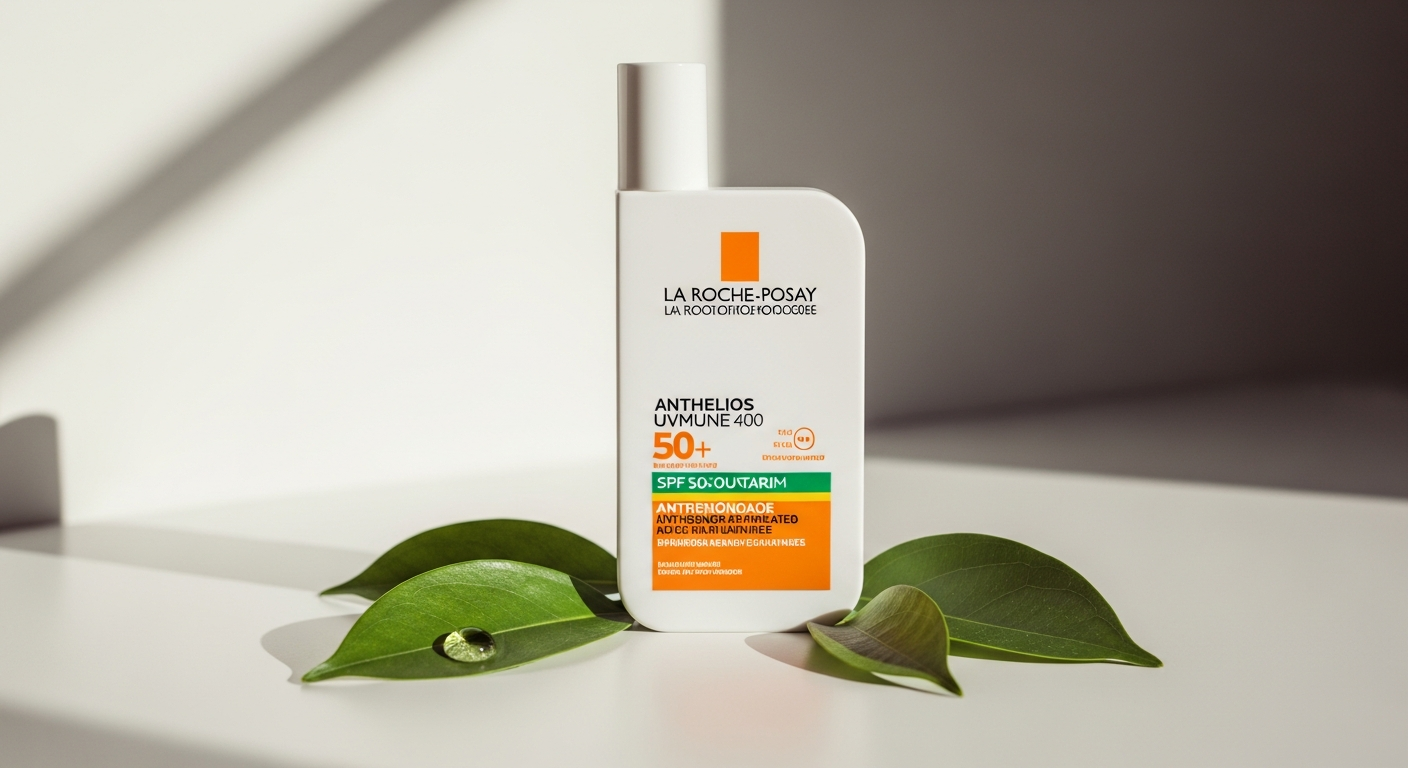
Over 90% of premature skin aging comes from UV exposure—yet most people abandon their sunscreen within weeks because it feels greasy, sticky, or triggers irritation. If you've ever wiped off a heavy sunscreen or watched it pill under makeup, you understand the frustration of choosing between protection and comfort. La Roche-Posay engineered the Anthelios UVMUNE 400 Fluid SPF50+ to eliminate that trade-off entirely, combining Mexoryl 400 filtration technology with a texture so lightweight it absorbs in seconds and vanishes on skin.
This sunscreen addresses a critical gap in sun protection science. Standard formulas shield against the UV rays dermatologists have focused on for decades, but they often miss ultra-long UVA wavelengths that penetrate deeper and cause more cellular damage. Meanwhile, the invisible, non-greasy finish makes you actually want to use it daily—a game-changer for people with sensitive skin, acne-prone complexions, or anyone who's struggled with cosmetic elegance in their sunscreen.
This guide breaks down the science behind Mexoryl 400, examines how the formula performs on different skin types, compares pricing across retailers, and explores whether this premium sunscreen justifies its cost. You'll understand why it's become a best-seller on Drogeriaolmed.pl despite premium pricing and why dermatologists recommend it for sensitive and reactive skin.
The Science Behind Mexoryl 400 and Ultra-Long UVA Protection
Mexoryl 400 Explained: Patented Filtration Beyond Standard SPF50+ Formulas
Mexoryl 400 represents a patented UV filter that extends protection beyond what conventional broad-spectrum sunscreens deliver. Most SPF50+ products focus on UVA and UVB rays within standard ranges, but Mexoryl 400 specifically targets ultra-long UVA wavelengths (UVA1)—the rays that penetrate deepest into the skin's dermal layer. This filter maintains photostability throughout the day, meaning it doesn't degrade under sun exposure the way some chemical sunscreens do. La Roche-Posay developed this technology through decades of dermatological research, making it one of the most advanced filtration systems available.
Ultra-Long UVA Rays: Why Deeper Penetration Means More Cellular Damage
Ultra-long UVA rays (320-400nm wavelength) travel deeper into skin than standard UVA/UVB radiation. While shorter wavelengths damage the epidermis and cause visible sunburn, ultra-long UVA reaches the dermis—where collagen, elastin, and fibroblasts reside. This depth of penetration triggers oxidative stress and accelerates photoaging at the cellular level, contributing to wrinkles, loss of elasticity, and uneven texture years after exposure. Standard sunscreens with conventional UVA filters don't adequately block these wavelengths, leaving skin vulnerable to cumulative damage that develops silently over time.
Broad-Spectrum Coverage: Simultaneous Protection Against UVA and UVB Radiation
The Anthelios UVMUNE 400 Fluid combines Mexoryl 400 with broad-spectrum UVA/UVB filters to address the full spectrum of harmful radiation. UVB rays cause immediate sunburn and skin cancer risk, while UVA accelerates aging and DNA damage. By stacking multiple filter technologies, this formula provides comprehensive protection rather than relying on a single mechanism. The result is layered defense that addresses both immediate sun damage (burning) and long-term photodamage (aging and cellular harm).
Infrared-A and Pollution Defense: Antioxidative Benefits Beyond UV
Beyond UV radiation, the Anthelios UVMUNE 400 Fluid includes antioxidative action against infrared-A rays and environmental pollution. Infrared-A penetrates even deeper than UVA and generates heat-induced free radicals within skin cells. Urban pollution, heavy metals, and particulate matter compound sun damage by triggering inflammation and oxidative stress. This formula addresses these additional environmental stressors, making it particularly valuable for people living in cities or spending significant time outdoors. The comprehensive approach positions sun protection as environmental defense, not just UV blocking.
Deep Skin Damage Prevention: Supporting the Skin's Natural Protective Barrier
Comprehensive UV filtration does more than prevent visible damage—it preserves the skin's ability to repair itself. The skin barrier relies on intact cell membranes and healthy collagen structure to function optimally. Deep UV penetration compromises this barrier by damaging cellular DNA and degrading structural proteins. By blocking ultra-long UVA and preventing oxidative stress, this sunscreen allows skin's natural defense mechanisms to remain strong. Over years of consistent use, this translates to better skin barrier function, fewer signs of photoaging, and reduced susceptibility to environmental irritants.
Clinical Testing: Dermatological and Ophthalmological Validation
The Anthelios UVMUNE 400 Fluid underwent both dermatological and ophthalmological testing, meaning it's been evaluated for safety on facial skin and around delicate eye areas. This dual testing is significant because many sunscreens cause irritation when applied near the eyes or trigger reactions in people with sensitive skin. The formula passed rigorous safety protocols, making it suitable even for reactive complexions and post-procedure skin. This clinical validation differentiates it from products marketed as "gentle" without formal testing to back those claims.
Texture, Finish, and Daily Wearability—Why Users Actually Stick With This Sunscreen
Invisible Fluid Formulation: Disappearing on Skin Without White Cast or Residue
The defining characteristic users consistently praise is the invisible finish. Most sunscreens leave visible white residue or a chalky layer on skin, especially on deeper complexions. The Anthelios UVMUNE 400 Fluid's lightweight formulation absorbs into skin within seconds, creating no visible cast or film. This happens because the fluid's molecular structure allows it to integrate with skin rather than sit on the surface. Users applying this under makeup report that it blends seamlessly with foundation, and those using it alone appreciate the undetectable feel. This invisibility matters more than it might sound—when sun protection doesn't announce its presence, people actually use it daily.
Non-Greasy Absorption: Quick-Drying Technology for Oily and Combination Skin
A common complaint about sunscreens involves greasiness, especially for people with oily or combination skin. The Anthelios UVMUNE 400 Fluid's non-greasy formulation absorbs rapidly without leaving a film or sticky residue. This matters because excess shine can trigger acne in oil-prone skin and feel uncomfortable in heat or humidity. The formula's lightweight nature means it won't clog pores or interfere with skin's natural moisture balance. Even on hot, humid days or during exercise, users report that the sunscreen remains comfortable and doesn't feel like an additional layer on their skin.
Makeup Compatibility: An Ideal Base Layer Without Pilling or Interference
Makeup enthusiasts recognize that sunscreen application happens before foundation, making compatibility essential. Many sunscreens pill, ball up, or create a slick surface that prevents foundation adhesion. The Anthelios UVMUNE 400 Fluid works harmoniously with primers, foundations, and other cosmetics because its texture creates a smooth base without interference. Users report that it layers seamlessly under makeup and doesn't cause pilling when blended with other products. For people who apply makeup daily, this compatibility transforms sun protection from an inconvenience into an integrated step that improves overall makeup application.
Comfort on Sensitive Areas: Fragrance-Free Formula Safe for Delicate Eye Contours
The eye area requires special consideration because the skin there is thinner and more reactive. Fragrance and certain preservatives commonly trigger irritation around eyes, forcing people to skip this vulnerable zone. The Anthelios UVMUNE 400 Fluid is fragrance-free and ophthalmologically tested, meaning it's safe to apply all the way to the eye line and even the upper eyelid. This comprehensive coverage is important because photoaging and UV damage accumulate significantly around eyes, leading to crow's feet and loss of elasticity. Being able to protect this area without irritation is a meaningful advantage for sensitive skin.
All-Day Wear Capability: Maintaining Comfort Through Heat, Humidity, and Daily Activities
True wearability means the sunscreen remains comfortable from morning application through evening. The Anthelios UVMUNE 400 Fluid maintains its lightweight feel even in heat and humidity, during exercise, or over extended outdoor time. Unlike heavier sunscreens that feel increasingly uncomfortable as the day progresses, this fluid doesn't accumulate on skin or feel heavy. This durability in comfort encourages consistent reapplication—when sun protection feels good, people are more likely to refresh it throughout the day rather than skip applications because the original layer feels unpleasant.
Sensory Experience: User Feedback on Feel, Application Ease, and Absence of Sticky Residue
Beyond functional benefits, the sensory experience shapes whether people genuinely enjoy using a product. Users consistently report that applying the Anthelios UVMUNE 400 Fluid feels pleasant—the texture glides smoothly on skin, spreads easily, and requires minimal effort to blend. There's no sticky residue, no heavy fragrance, and no sensation of something sitting on top of the skin. This positive sensory experience creates a psychological shift: instead of viewing sun protection as a chore, people anticipate applying it. That shift in perception drives better habits and more consistent sun protection over time.
Ideal Candidates—Which Skin Types Benefit Most From This Formula
Sensitive Skin: Why Dermatological Testing and Fragrance-Free Composition Matter
People with sensitive skin often find themselves excluded from effective sunscreen options because common ingredients trigger reactions. The Anthelios UVMUNE 400 Fluid's fragrance-free formulation and dermatological testing specifically address this population. The absence of fragrance eliminates one major irritant category, while clinical validation confirms safety for reactive complexions. Users with conditions like rosacea, eczema-prone skin, or general reactivity report zero irritation when using this fluid. This makes it a realistic option for people who've previously had to choose between sun protection and skin comfort.
Acne-Prone and Oily Skin: Oil-Control Variants That Reduce Sebum Without Clogging Pores
Acne-prone skin presents a paradox: sun protection is essential, but many sunscreens worsen breakouts by clogging pores or increasing sebum production. Oil-control variants of this fluid reduce shine and sebum production without creating occlusion that triggers acne. The lightweight, non-comedogenic formulation allows skin to breathe while receiving necessary protection. Users with acne report that this sunscreen doesn't contribute to breakouts and, in some cases, improves overall skin appearance by reducing the need to layer powder or blotting products over greasy sun protection.
Combination Skin: Balanced Hydration Without Excess Shine or Greasy Patches
Combination skin presents its own challenge: some areas need hydration while others become oily easily. The Anthelios UVMUNE 400 Fluid's balanced formulation provides moisture without excess sebum stimulation. It hydrates dry areas without making the T-zone feel greasy, and it controls shine without creating dryness elsewhere. This equilibrium means people with combination skin don't need separate sunscreen products for different zones—a single application covers the entire face comfortably.
Post-Procedure Skin: Gentle Enough for Use After Treatments or When Skin Barrier Is Compromised
After professional skin treatments like chemical peels, microneedling, or laser therapy, the skin barrier is temporarily compromised and highly reactive. Standard sunscreens with fragrance or strong preservatives can irritate newly treated skin. The Anthelios UVMUNE 400 Fluid's gentle, fragrance-free formulation makes it suitable for immediate post-procedure use. Dermatologists often recommend it for patients following treatments, and many aestheticians provide samples to clients after procedures specifically because this formula won't interfere with healing.
Those Prone to Sun Reactions: Hypoallergenic Profile and Ophthalmological Testing for Safe Eye Area Application
Some people experience specific reactions to sun exposure—polymorphous light eruption, photoallergic dermatitis, or other sun-sensitive conditions. These reactions typically worsen with poor-quality sun protection that doesn't adequately prevent exposure or irritates skin further. The Anthelios UVMUNE 400 Fluid's hypoallergenic profile, comprehensive UV filtration, and dermatological testing make it well-suited for people with these conditions. Complete coverage, including the eye area, reduces the likelihood of reaction-triggering exposure in vulnerable zones.
Daily Makeup Wearers: Compatibility With Primers, Foundations, and Other Cosmetic Products
People who apply makeup daily need sun protection that won't interfere with their entire routine. This formula works as an ideal primer layer, eliminating the need for a separate product between skincare and makeup. It doesn't pill under foundations, blends seamlessly with other products, and doesn't compromise makeup longevity. For makeup enthusiasts, this compatibility transforms sun protection from an extra step into an integral part of base preparation.
Water, Sweat, and Sand Resistance—Performance Beyond the Bathroom Mirror
Water Resistance Standards: Duration of Protection During Swimming and Water Exposure
Water resistance isn't absolute—sunscreen gradually washes off during water exposure. The Anthelios UVMUNE 400 Fluid provides documented water resistance, though the specific duration depends on water temperature and activity intensity. The formula's design means it maintains protection during normal water exposure, though reapplication becomes necessary after extended swimming. Users engaging in water sports should plan to reapply after approximately 40-80 minutes in water, depending on the intensity of water exposure and individual factors like skin texture and water temperature.
Sweat Durability: How the Formula Maintains Efficacy During Exercise, Outdoor Activities, and Heat Exposure
Sweat presents a different challenge than water because it contains salts and acids that can degrade sunscreen more quickly than chlorinated or saltwater. The Anthelios UVMUNE 400 Fluid maintains decent durability during exercise and heat exposure, though the lightweight formulation means some users need to reapply more frequently during intense workout sessions. Athletes using this formula for regular outdoor training should plan reapplication every 90-120 minutes during heavy sweat periods. The formula doesn't wash away instantly like some lighter sunscreens, but consistent activity justifies regular touch-ups.
Sand Resistance: Why Reapplication Matters After Beach Time and How the Fluid Handles Friction
Sand creates friction that can physically displace sunscreen from skin. Unlike thicker, more occlusive formulas that resist sand adhesion, the lightweight fluid may require more frequent reapplication at the beach. However, the fluid's quick-drying nature means it doesn't attract sand as much as some creamy sunscreens. After beach time, users should plan to cleanse thoroughly and reapply the formula rather than expecting a single application to survive hours of sand exposure. The trade-off is accepting that lightweight texture requires more frequent reapplication for maximum durability in sandy environments.
Reapplication Guidelines: Recommended Frequency Based on Activity Level and Water Exposure
Standard sun protection guidelines recommend reapplication every two hours, regardless of sunscreen type. For the Anthelios UVMUNE 400 Fluid, reapplication becomes more urgent during water activities, sweating, or sand exposure. General guidelines suggest reapplication every 90-120 minutes during outdoor activities and immediately after swimming or heavy sweating. For people spending the day mostly indoors, a single morning application often suffices, though those with outdoor exposure should incorporate at least one midday reapplication into their routine.
Sport and Outdoor Use: Real-World Performance for Athletes, Hikers, and Beach Enthusiasts
Athletes appreciate this sunscreen because it doesn't feel heavy during training and maintains reasonable durability through moderate sweating. Hikers and outdoor enthusiasts find that the lightweight texture doesn't feel burdensome during all-day exposure. Beach users should expect to reapply more frequently than during land-based activities, but the invisible finish makes frequent reapplication less annoying than with products that leave visible residue. Overall, the formula works well for active people, though those engaged in water sports or intense sweating should plan for more frequent reapplication than casual outdoor time requires.
Longevity Claims: How Long Users Can Expect Protection Before Needing to Reapply
In ideal conditions—minimal sweating, no water exposure, moderate sun intensity—the Anthelios UVMUNE 400 Fluid provides full protection for approximately two to three hours. During water exposure or heavy sweating, this duration drops to 60-90 minutes. For extended outdoor days, users should plan multiple reapplication sessions rather than expecting a single application to provide full-day coverage. This is consistent with all sunscreens and reflects the reality that comprehensive sun protection requires active reapplication during outdoor time.
Price Point Analysis—Is the Investment Justified?
Cost Comparison: How Drogeriaolmed.pl Pricing Stacks Against Other Retailers
On Drogeriaolmed.pl, the 50ml bottle retails around 39.99 zł, making it competitive compared to other retailers where prices range from approximately 65.00 zł to 93.10 zł. This price variation reflects both retailer margins and potential promotional pricing. Shopping across platforms can yield significant savings, with some retailers offering the product at nearly half the price of others. Checking multiple sources before purchasing makes sense given the price spread, though the lowest available option on Drogeriaolmed.pl represents reasonable value within the premium sunscreen category.
Cost Per Use: Breaking Down the 50ml Bottle Into Daily Application Costs
A 50ml bottle contains roughly 25-30 days of sunscreen assuming proper application (approximately 1.5-2ml per full face and neck application). At Drogeriaolmed.pl's price point of 39.99 zł, this translates to approximately 1.3-1.6 zł per day of sun protection. For people applying sunscreen consistently across their face, neck, and décolletage, cost per application falls within the 1.3-2.0 zł range depending on application size and frequency of reapplication. This positions the Anthelios UVMUNE 400 Fluid as a premium daily cost compared to budget sunscreens (which might cost 0.3-0.5 zł per day), but the advanced filtration and wearability create a different value proposition than basic options.
Premium Positioning: Why La Roche-Posay Commands Higher Prices Than Mass-Market Alternatives
La Roche-Posay's premium pricing reflects several factors: proprietary Mexoryl 400 filter technology, extensive dermatological research spanning 50+ years, clinical validation through testing, and investment in formulation elegance. Mass-market sunscreens prioritize cost reduction over texture and comfort, whereas La Roche-Posay accepts higher manufacturing costs to achieve the invisible finish and sensory experience that drives actual daily use. The brand's heritage in dermatological skincare and clinical rigor also justifies premium positioning. For consumers choosing based solely on SPF numbers, the price difference seems unjustifiable; for those valuing wearability, safety profile, and long-term skin benefit, it becomes more defensible.
Value Proposition: Comparing Efficacy, Wearability, and Skin Benefits Against Budget Sunscreens
Budget sunscreens offer adequate UVA/UVB protection at significantly lower cost, but they often sacrifice texture, comfort, and long-term usability. A person using budget sunscreen inconsistently because it feels heavy or triggers reactions receives less protection than someone using this formula daily. The comprehensive Mexoryl 400 filtration also prevents deeper cellular damage that budget formulas miss. Over decades, consistent use of advanced sun protection prevents photoaging, skin damage, and potentially skin cancer risk more effectively than intermittent use of cheaper alternatives. The value proposition becomes clearer when considering cumulative benefit over years rather than immediate cost per bottle.
Where to Find Deals: Retailer Variations and Timing for Potential Savings
Drogeriaolmed.pl currently offers competitive pricing at 39.99 zł, but checking Ceneo.pl and other price comparison platforms reveals significant variation across retailers. Seasonal sales, promotional periods (particularly around summer months), and bulk purchasing can yield additional savings. Subscribing to price alert services or checking retailer websites regularly helps catch temporary discounts. Some beauty retailers offer loyalty programs that provide percentage-based discounts or points toward future purchases, effectively reducing the long-term cost.
Long-Term Skin Investment: How Preventing Photoaging and Deep UV Damage Justifies Upfront Costs
Photoaging prevention represents a long-term investment with compounding benefits. Skin damage accumulates over time, and sun exposure in your 20s and 30s manifests as visible aging in your 40s and beyond. Investing in comprehensive UV protection now prevents costly dermatological treatments later—laser resurfacing, chemical peels, or injectables cost hundreds or thousands of times more than daily sunscreen. Additionally, skin cancer prevention carries incalculable value. When evaluated against potential dermatology spending or health costs, daily investment in advanced sun protection represents sound financial health management, not indulgent skincare spending.
Real User Experiences—What People Actually Say After Using This Sunscreen
Invisible Finish Praise: Consistent Feedback About the Absence of White Cast and Immediate Absorption
Users across different skin tones praise the invisible finish as a defining characteristic. Comments consistently emphasize that the sunscreen disappears on skin within seconds, leaves no visible residue, and creates no white cast—praise that becomes particularly meaningful for people with deeper complexions who've experienced white cast issues with many sunscreens. The immediate absorption means application takes seconds, and makeup application can follow within minutes without waiting for the product to fully set. This consistent user feedback about invisibility appears across dozens of reviews on Drogeriaolmed.pl and other platforms.
Sensitive Skin Success Stories: Users With Reactive Skin Reporting Zero Irritation or Breakouts
Users with rosacea, eczema-prone skin, or general sensitivity frequently report that this is the first sunscreen they've used without experiencing irritation, redness, or flare-ups. Several reviews specifically mention using this product after years of struggling with other sunscreens. People with acne-prone sensitive skin appreciate that it doesn't trigger breakouts or clog pores. These success stories suggest that the fragrance-free, dermatologically tested formulation genuinely delivers on its promise of suitability for reactive complexions. The consistency of positive feedback from this demographic indicates real performance rather than marketing hype.
Makeup Application Reports: How It Performs as a Primer and Under Various Foundation Types
Makeup enthusiasts frequently comment that this sunscreen works better as a primer layer than many dedicated primer products. Users report that it creates a smooth base for foundation application without pilling, slipping, or interfering with makeup longevity. Comments describe how foundations blend more smoothly over this sunscreen and maintain better wear throughout the day. The ability to skip a separate primer product makes the formula economical despite its premium price—one product serves dual duty as sun protection and primer base.
Price Sensitivity: Honest Acknowledgment That Cost Is the Primary Barrier for Some Users
Reviews don't shy away from acknowledging the premium price. Some users explicitly state that while they love the product, the cost creates a barrier to consistent use or repurchasing. This honest feedback suggests that the positive reviews aren't manufactured—real users genuinely appreciate the formula but recognize that budget constraints limit accessibility for some people. This candid price discussion adds credibility to other feedback, as reviewers aren't presenting a purely rose-tinted perspective.
Durability Feedback: Real-World Accounts of Protection During Swimming, Sweating, and Outdoor Exposure
Users engaged in outdoor activities and water sports report reasonable durability, though most acknowledge that reapplication becomes necessary during extended exposure. Swimmers and athletes appreciate that the lightweight formula doesn't feel heavy even during activity, though they plan regular reapplication sessions. These real-world accounts provide realistic expectations about water and sweat resistance rather than overstating the formula's durability in challenging conditions. Users generally report that the formula performs as advertised within realistic parameters.
Repeat Purchase Patterns: Why It's a Best-Seller on Drogeriaolmed.pl Despite Premium Pricing
The product's best-seller status on Drogeriaolmed.pl despite premium pricing reflects strong repeat purchase patterns. Users who overcome initial sticker shock consistently reorder the product, suggesting satisfaction justifies cost in their minds. Word-of-mouth recommendations drive new customers who may have discovered the product through reviews or recommendations from people with similar skin concerns. The combination of positive user experiences and repeat purchasing patterns confirms that this isn't a one-time purchase—it becomes a staple product for satisfied users.
How to Maximize Protection—Application Tips and Best Practices
Correct Application Amount: Using Enough Product to Achieve Advertised SPF Level
The SPF50+ rating only applies when using adequate sunscreen quantity—approximately 1.5-2ml for the full face and neck area (roughly a quarter teaspoon to half teaspoon). Many people apply too little sunscreen, reducing effective protection significantly. Under-application can reduce SPF50+ protection to SPF15 or lower, essentially negating the product's advanced filtration benefits. Proper application requires using enough product that it spreads smoothly across the entire face, neck, and décolletage without leaving thick, visible residue. For the Anthelios UVMUNE 400 Fluid, adequate application means using a full application of the fluid without trying to stretch it too far across the skin.
Application Timing: When to Apply Relative to Other Skincare Steps and Makeup
Sunscreen should be the last step in skincare application before makeup. Apply it after serums, moisturizers, and treatments, allowing previous products to absorb fully (typically 1-2 minutes). This prevents product pilling and allows the sunscreen to create an even protective layer. If applying to already-absorbed skin, allow the sunscreen approximately 1-2 minutes to set before applying primer or foundation. Applying sunscreen as the absolute final skincare step—after all other products but before any cosmetics—ensures comprehensive protection without compromising application of other beneficial skincare ingredients.
Layering With Other Products: How to Use This Fluid With Serums, Moisturizers, and Treatments
The lightweight, non-greasy formulation layers well with most skincare products. Apply serums and moisturizers first, allowing them to absorb, then apply the sunscreen as the final layer. The fluid's texture means it doesn't trap other products underneath or prevent their absorption. For people using active treatments like retinoids or vitamin C serums, the order remains the same: treatment, moisturizer, sunscreen. The sunscreen's non-comedogenic formulation means it won't interfere with the efficacy of other products. This straightforward layering makes incorporating it into existing routines simple and effective.
Reapplication Strategy: Timing and Technique for Touch-Ups Without Disrupting Makeup
Reapplication while wearing makeup requires technique to avoid pilling or disrupting foundation. Rather than applying additional full-strength sunscreen, use a sunscreen mist or light reapplication method that won't interfere with makeup coverage. Alternatively, use a powder or compact sunscreen formulation for touch-ups, saving the fluid for morning application. If using the fluid for reapplication, apply sparingly to areas receiving the most sun exposure (nose, cheeks, forehead) and blend gently with a damp tissue or blotting paper to avoid disrupting foundation. Some users prefer dedicated powder sunscreens for midday reapplication specifically to avoid makeup interference.
Year-Round Use: Why Consistent Daily Application Matters Even on Cloudy Days and in Winter
UV exposure occurs year-round, on cloudy days, and through windows—making consistent daily application essential for cumulative photoaging prevention. Winter sun, while less intense, still causes damage over time, especially for people at higher altitudes or in reflective snow environments. Cloudy days allow approximately 80% of UV rays to penetrate, making the distinction between sunny and cloudy days less significant than many people assume. Establishing sun protection as a non-negotiable daily habit—like brushing teeth—ensures consistent protection rather than relying on seasonal or weather-dependent application. The lightweight, pleasant texture of this formula makes year-round daily use feasible and comfortable.
Combination With Other Sun Protection: Pairing With Sunglasses, Hats, and Clothing for Comprehensive Defense
Sunscreen represents just one layer of comprehensive sun protection. Combining this fluid with physical barriers—sunglasses (UV-protective), wide-brimmed hats, and protective clothing—creates redundant protection against UV exposure. This multimodal approach is particularly important for extended outdoor time, beach days, or high-altitude activities. The sunscreen ensures protection on exposed skin, while hats and clothing shield larger surface areas and reduce reliance on topical sun protection for the covered areas. UPF-rated clothing and quality sunglasses complement sunscreen use rather than replacing it, creating comprehensive defense against both acute sun damage and cumulative photoaging.
The Anthelios UVMUNE 400 Advantage—What Sets This Apart From Standard Sunscreens
Mexoryl 400 Exclusivity: How This Proprietary Filter Differs From Common UV Absorbers
Most sunscreens use widely available UV filters like avobenzone, octocrylene, or titanium dioxide. Mexoryl 400 is a proprietary La Roche-Posay filter that specifically targets ultra-long UVA rays beyond the range of conventional filters. This exclusivity means only La Roche-Posay products offer this particular protection benefit—competitors can't replicate it without licensing the technology. The filter's specificity to ultra-long UVA (UVA1) addresses a protection gap that standard broad-spectrum formulas miss, providing a distinct advantage for people concerned about deep skin damage and photoaging prevention.
Photostability: Why Mexoryl 400 Maintains Efficacy Throughout the Day Without Degrading
Some chemical UV filters degrade under sun exposure, losing efficacy as the day progresses—a problem called photodegradation. Mexoryl 400 maintains photostability, meaning it doesn't break down in response to UV exposure. This characteristic ensures that morning application provides consistent protection through afternoon and evening sun exposure without requiring additional application solely due to filter degradation. Photostability represents a significant advantage over filters that lose efficacy over time, making the product more reliable for all-day sun protection without excessive reapplication.
Cellular Protection Focus: Addressing Deep Skin Damage Prevention Rather Than Surface-Level Sun Blocking
Most consumer sun protection discussions focus on preventing sunburn—a surface-level concern. The Anthelios UVMUNE 400 Fluid prioritizes preventing deep cellular damage and photoaging by targeting the UV wavelengths that penetrate furthest into skin. This distinction reflects a fundamental difference in philosophy: surface sun protection is important, but preventing damage that develops invisibly over years is equally crucial. This cellular-level approach appeals to people thinking long-term about skin health rather than just immediate sun safety.
Dermatological Heritage: La Roche-Posay's 50+ Years of Sunscreen Research and Development
La Roche-Posay has invested over five decades in sun protection research, creating a heritage and expertise that newer sunscreen brands simply don't possess. This research foundation informed the development of Mexoryl 400 and the entire Anthelios product line. The brand's consistency in prioritizing dermatological validation and clinical testing reflects a commitment to evidence-based sun protection rather than marketing-driven formulation. This heritage doesn't guarantee superiority on every metric, but it does indicate serious investment in understanding UV damage mechanisms and protection strategies.
Sensitivity-First Formulation: Why Fragrance-Free and Hypoallergenic Approaches Matter for Reactive Skin
While many brands add fragrance to make sunscreen more pleasant, La Roche-Posay chose the opposite approach—removing fragrance entirely to protect sensitive skin. This decision reflects prioritization of safety over sensory appeal, a trade-off that benefits people with reactive complexions. The hypoallergenic profile and dermatological testing create a formula designed first for sensitive skin, with cosmetic elegance as a secondary benefit. This sensitivity-first philosophy differentiates it from brands that add actives and ingredients for marketing purposes while compromising safety for reactive skin types.
Environmental Consideration: How the Formula Balances Efficacy With Reef-Safe and Skin-Friendly Ingredients
Modern sunscreen formulation requires balancing efficacy with environmental responsibility. The Anthelios UVMUNE 400 Fluid avoids ingredients linked to coral reef damage, reflecting awareness of sunscreen's broader environmental impact. This consideration doesn't compromise the formula's protective efficacy—it represents thoughtful ingredient selection that achieves protection without environmental or skin health trade-offs. For environmentally conscious consumers, this approach matters as much as the personal sun protection benefits.
Making Your Decision—Is This Sunscreen Right For You?
Assessing Your Sun Protection Needs: Determining If Ultra-Long UVA Protection Is Necessary for Your Lifestyle
Consider whether your lifestyle involves significant outdoor exposure. Someone spending most days indoors with occasional sun exposure might find standard broad-spectrum protection adequate. Conversely, people who work outdoors, exercise regularly in sun, live in high-altitude areas, or have a history of sun damage or skin cancer concerns benefit significantly from Mexoryl 400's comprehensive ultra-long UVA coverage. Athletes, hikers, and beach enthusiasts particularly benefit from the advanced filtration. If photoaging prevention is a primary skincare goal, the additional protection justifies the investment.
Skin Type Compatibility Checklist: Quick Assessment for Sensitive, Oily, Combination, and Acne-Prone Skin
Create a quick assessment: Does your skin react to fragrance? (
Leave a Reply