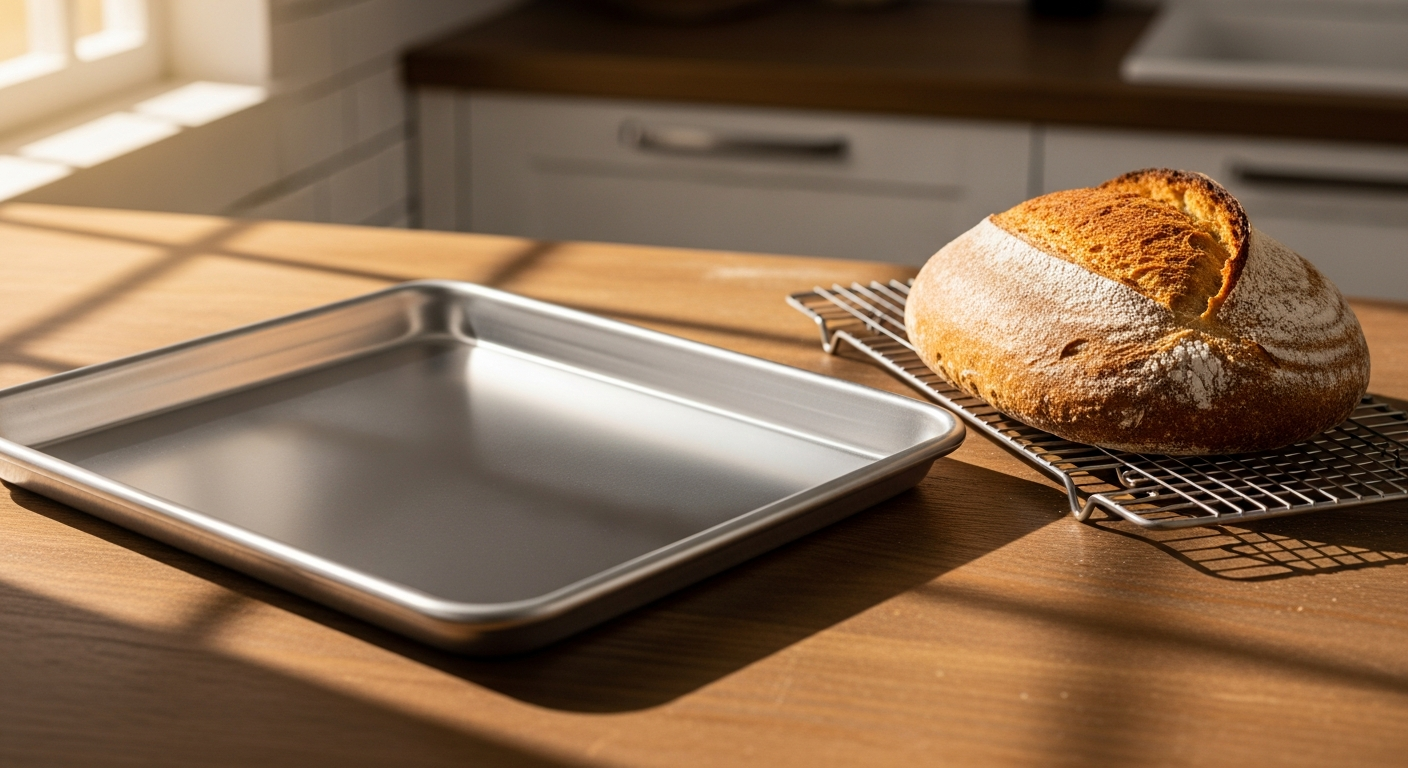
Soggy crusts, unevenly baked bread, and frustratingly inconsistent results—these problems plague countless home bakers who’ve invested in standard equipment. The gap between what you bake at home and what emerges from a professional pizzeria oven feels impossibly wide. You’ve probably watched your carefully crafted dough turn out limp in the middle while burning at the edges, or watched bread fail to develop that coveted crispy exterior. These aren’t failures of technique; they’re limitations of equipment.
The Original Baking Steel from Baking Steel Company LLC exists because this problem demanded solving. This USA-manufactured steel surface has fundamentally changed how serious home cooks approach pizza, bread, and beyond. At just 1/4-inch thick, it conducts heat 18 times faster than ceramic alternatives, reaching surface temperatures of 600-700°F in a standard home oven—temperatures that transform ordinary dough into extraordinary meals.
Your kitchen deserves better tools. Discover how the Original Baking Steel revolutionizes home cooking today.
This guide walks you through the technical advantages that separate baking steel from ceramic stones, explores surprising applications beyond pizza, examines the durability that makes this a lifetime investment, and helps you decide if this $119-129 upgrade belongs in your kitchen.
The Baking Steel Advantage: Why Heat Transfer Matters More Than You Think
How Thermal Conductivity Transforms Oven Performance and Cooking Speed
Your home oven sits at a fixed temperature—typically 500°F on its dial. The real cooking happens on the surface where your food actually sits. A ceramic pizza stone conducts heat slowly, creating a lag time that works against you. The dough continues cooking and releasing moisture while the stone gradually heats up. Steel, by contrast, transfers heat almost instantly from your oven’s heating elements to your food’s surface.
This difference isn’t subtle. It’s the difference between a 12-minute pizza and a 4-6 minute pizza. It’s the difference between bread that opens up properly during baking and bread that stays dense.
Comparison of Steel’s Heat Conduction (18x Faster) Versus Ceramic Pizza Stones and Traditional Baking Surfaces
The numbers matter here because they explain the real-world results. Steel conducts heat 18 times faster than ceramic. When you preheat a ceramic stone for 45 minutes, the heat gradually penetrates the material. By the time your pizza lands on it, the surface temperature might only be 450°F—not the 600-700°F you need.
The Original Baking Steel reaches those temperatures and maintains them throughout cooking. Its low carbon steel composition prioritizes heat transfer over thermal mass. Where ceramic dominates through sheer volume and density, steel dominates through conductivity and responsiveness.
The Science Behind Reaching 600-700°F Surface Temperatures in a Standard Home Oven
Your oven’s maximum temperature is fixed, but the surface temperature of what sits inside that oven is negotiable. Steel’s thermal conductivity means it quickly equalizes with the oven’s air temperature. More importantly, the 1/4-inch thickness provides enough mass to retain heat once achieved, without the weight penalty of thicker materials.
This creates a self-reinforcing cycle: as heat radiates from the oven’s elements, the steel captures it, concentrates it, and reflects it back toward your food. The dough hitting a 600°F+ surface undergoes rapid moisture evaporation and protein denaturation—the exact processes that create crispy, blistered crusts.
Why Heat Retention Prevents the Soggy Crust Problem That Plagues Home Pizza Makers
Moisture is your enemy when you want crispy results. A cool or slowly heating surface allows water from the dough to remain liquid longer, saturating the crust from within. A hot surface vaporizes that moisture almost instantly, creating steam that escapes rather than soaking in.
The Original Baking Steel’s heat retention ensures consistent surface temperature even as you place cold dough on it. Ceramic stones drop 50-100 degrees when you slide a pizza onto them. Steel drops far less, maintaining the aggressive heat transfer needed to set the crust structure before moisture has time to accumulate.
How Even Heat Distribution Eliminates Hot Spots and Cold Zones in Your Oven
Home ovens distribute heat unevenly. One corner runs hotter, one spot near the door stays cooler. A ceramic stone can’t compensate for these variations because it simply absorbs whatever heat reaches it.
Steel’s thermal conductivity works differently. It redistributes heat across its entire surface, evening out the microclimate where your food cooks. That means less rotating, less fiddling, and more consistent results across every pizza or loaf you bake.
The Role of 1/4-Inch Thickness in Maintaining Consistent Temperature Throughout Cooking
Thickness balances competing demands. Too thin, and the steel cools too rapidly when cold dough touches it. Too thick, and you’re carrying unnecessary weight while preheat times creep up. The 1/4-inch standard hits the sweet spot—thick enough for reliable heat retention (the Original Baking Steel weighs 15-16 pounds), thin enough for practical handling and reasonable preheat times (around 45 minutes at 500°F).
This thickness means the entire cooking surface maintains temperature consistency from first pizza to fifth pizza in a baking session. No degradation, no cold spots developing as the steel loses its heat.
Beyond Pizza: Unexpected Culinary Applications for Your Baking Steel
Artisan Bread Baking: Achieving Professional Oven Spring and Crust Development
Artisan bread demands intense, dry heat—exactly what the Original Baking Steel provides. Sourdough, ciabatta, and crusty European-style loaves all require a blast of initial heat to develop oven spring, that rapid rise that happens in the first few minutes of baking.
Professional bakeries use specialized ovens at 700-800°F. Your home oven can’t match that, but steel gets you remarkably close. The difference shows immediately: bread that opens along score lines instead of splitting randomly, crusts that shatter when you cut into them rather than compress, and interior crumbs that display proper fermentation development.
Bagel Production: Replicating New York-Style Density and Chew
Bagels need a specific surface treatment: they’re boiled first, then hit with intense heat that sets the crust before the interior dries out. The Original Baking Steel’s rapid heat transfer creates that perfect exterior crust while the interior remains tender and chewy.
A ceramic stone struggles here because bagels need speed. That 4-6 minute bake time on steel versus 10-12 minutes on ceramic means the difference between authentically chewy bagels and bread-like imposters.
Stovetop Griddle Use for Searing Steaks, Vegetables, and Proteins
The Original Baking Steel transitions seamlessly to your stovetop, where it becomes an oversized cast iron skillet. Its thickness and weight create an even cooking surface that browns proteins beautifully without hot spots.
Steel handles high temperatures better than most cookware, making it ideal for searing steaks and developing caramelization on vegetables. The pre-seasoned surface develops seasoning like cast iron, improving with use rather than degrading.
Grill Integration for Outdoor Cooking Versatility
Place the Original Baking Steel on your grill grates and you’ve transformed your outdoor setup. It becomes a cooking surface for flatbreads, vegetables, and proteins that benefit from direct, high heat. The steel’s weight keeps it stable even with slightly uneven grill grates.
This versatility extends your investment beyond the kitchen into outdoor entertaining and seasonal cooking.
Baking Cookies and Pastries with Superior Browning and Texture
Cookies bake more evenly on steel than on standard baking sheets. The heat distribution creates uniform browning without the bottom-heavy crust that plagues sheet pan baking.
Pastries—croissants, Danish, palmiers—develop better texture and color on steel’s consistent surface. The rapid heat transfer means crispier exteriors and better rise in laminated doughs.
Roasting Vegetables with Caramelized, Crispy Edges
Root vegetables, Brussels sprouts, and cauliflower all benefit from the intense, dry heat that steel provides. The higher surface temperature caramelizes sugars more effectively than standard roasting pans, creating exterior texture that standard methods struggle to achieve.
Flatbread and Focaccia Production with Authentic Texture
Focaccia needs direct, intense heat to puff the dough and create that characteristic dimpled, oily surface. The Original Baking Steel delivers both the heat and the even cooking surface that focaccia demands.
Naan, pita, and other flatbreads also excel on steel, developing proper char and structure without the cool spots that bread baked on conventional surfaces exhibits.
Using as a Heat Diffuser for Delicate Baking Projects
Steel can work as a heat diffuser for temperature-sensitive items. Placed above a loaf or cake, it moderates top-browning while the bottom cooks through. This flexibility adds another tool to your baking toolkit without requiring separate equipment.
Start exploring these culinary possibilities with your own Original Baking Steel.
The Investment Case: Durability, Longevity, and Long-Term Value
Lifetime Durability: Why Steel Won’t Crack Like Ceramic Alternatives
Ceramic pizza stones break. Not always immediately, but eventually—thermal shock from placing cold dough on a hot surface, a crack from years of expansion and contraction, an accident with a corner hitting the oven rack. You replace them every 2-5 years depending on luck and care.
Steel simply doesn’t crack. Its material properties allow for the thermal cycling that destroys ceramics. The Original Baking Steel can handle decades of use, temperature swings, and the casual abuse that comes with regular kitchen equipment. It won’t shatter, won’t develop stress fractures, won’t require replacement due to normal wear.
USA Manufacturing Standards and Quality Craftsmanship
The Original Baking Steel comes from a company committed to domestic manufacturing. That means consistent quality standards, local supply chains, and oversight that catches defects. You’re not purchasing an overseas product subject to variable quality control—you’re buying something made to specific American standards.
Pre-Seasoned Surface Eliminates Prep Work and Initial Investment Time
Your ceramic stone arrives inert—ready to use immediately. The Original Baking Steel goes further with its pre-seasoned surface, meaning the steel is already conditioned and ready for cooking the moment it arrives.
Compare this to cast iron griddles that require initial seasoning and gradual conditioning. The Original Baking Steel eliminates that burden. Open the box, preheat, and cook.
Cost Comparison Over 10+ Years Versus Replacing Ceramic Stones Multiple Times
Ceramic pizza stones cost $40-80. Over 10 years of kitchen use, you’ll likely replace them 2-3 times. That’s $80-240 spent replacing broken equipment.
The Original Baking Steel costs $119-129 and lasts a lifetime. Over 10 years, you’ve spent $119-129 versus $80-240—but after that decade, the ceramic replacements continue while the steel remains in your kitchen. Over 20 years, the math becomes even more compelling.
Maintenance Simplicity: Cast Iron-Style Cleaning Without the Fuss
The Original Baking Steel cleans like cast iron but handles detergent and water that would damage traditional cast iron seasoning. You can scrape it clean with a spatula, wash it with soap and water, and dry it thoroughly. The steel’s material properties mean you won’t accidentally damage it through normal washing.
No special oils, no elaborate maintenance routines, no mystery about whether you’re treating it correctly.
Non-Porous Construction for Easy Food Release and Sanitation
Steel’s non-porous surface means nothing soaks in. Food releases easily, bacteria can’t establish themselves in microscopic cracks, and cleaning is genuinely simple. Compare this to ceramic’s porous structure where oils absorb, flavors can transfer between uses, and deep cleaning requires special effort.
Warranty and Manufacturer Backing for Peace of Mind
Baking Steel Company LLC stands behind their product. That backing means you’re not purchasing a mystery item from an unknown overseas manufacturer. The company has skin in the game and reputation to protect, which translates to customer service that actually exists if something goes wrong.
Resale Value and Multi-Generational Kitchen Tool Potential
The Original Baking Steel has genuine resale value because demand remains consistent and the product lasts. Used baking steels regularly sell online at 60-80% of retail price because they’re known to be durable and reliable.
More importantly, this is the rare kitchen tool that can genuinely pass between generations. Your child’s kitchen could include the same baking steel you’ve used for decades—a kitchen heirloom that actually functions better as it develops seasoning.
The Kitchen Tool That Keeps Giving
The Original Baking Steel represents far more than a pizza-making device—it’s a fundamental upgrade to your entire cooking arsenal. From the moment you pull your first batch of crusty sourdough from the oven, you’ll understand why this USA-manufactured steel has earned its cult following among serious home cooks. The 18x faster heat transfer, the durability that outlasts ceramic alternatives by decades, and the pre-seasoned convenience that gets you baking immediately are promises that this $119-129 investment will transform your results.
Once you’ve mastered the learning curve and experienced the difference between soggy homemade pizza and restaurant-quality crust, you’ll realize the Original Baking Steel isn’t an expense—it’s an upgrade to your entire cooking life. The versatility extends far beyond pizza: artisan breads develop proper oven spring, bagels achieve authentic chew, and your stovetop gains a professional-grade cooking surface.
What makes this investment genuinely different is the absence of replacement cycles. You won’t be hunting for a new baking stone in three years. You won’t be troubleshooting thermal shock damage. You won’t be wondering if you should have invested differently. The Original Baking Steel simply performs, session after session, year after year.
Ready to elevate your home baking? Order your Original Baking Steel today and join the community of home cooks who’ve already discovered what happens when you give your kitchen the heat it deserves.
Leave a Reply