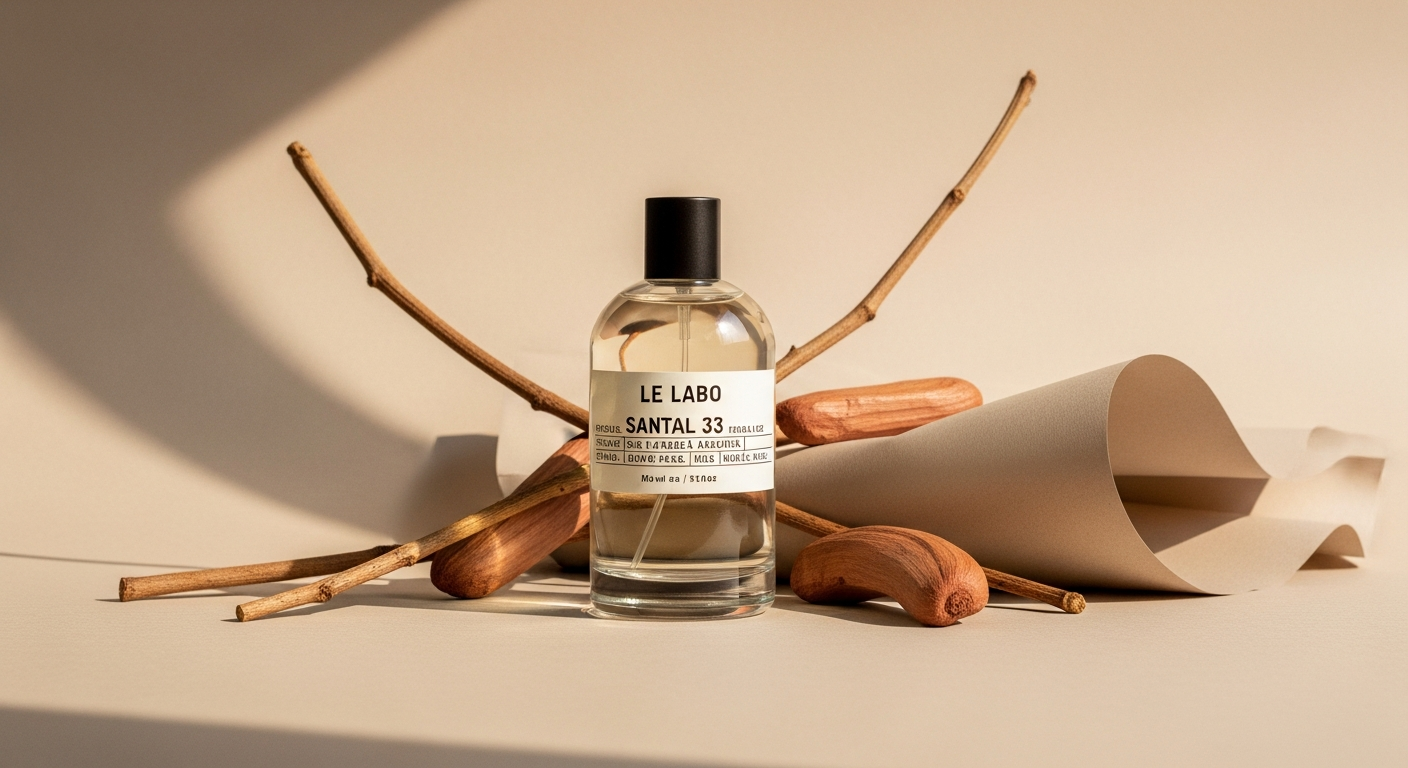
Over 15 years after its debut, Le Labo Santal 33 remains one of the most coveted fragrances in luxury retail—commanding waiting lists at Saks Fifth Avenue and inspiring countless dupes across the fragrance market. The scent has transcended typical department store status to become a cultural phenomenon, with devotees returning again and again to replenish their bottles. This woody aromatic isn’t just another perfume; it’s a statement piece that speaks to those who understand the difference between smelling good and wearing a signature identity.
Le Labo Santal 33 represents a masterclass in artisanal perfumery, hand-blended and labeled at the moment of purchase. The complex composition balances Australian sandalwood and cedarwood against spicy, leathery undertones that evolve throughout the day. The brand’s commitment to craftsmanship and minimalist aesthetic has elevated the fragrance far beyond a simple scent into a luxury lifestyle statement that resonates across demographics and continents.
Discover why Santal 33 has earned its place as the ultimate luxury fragrance investment.
Deconstructing the Scent Profile: What Makes Santal 33 Unforgettable
Australian Sandalwood: The Creamy Foundation
Australian sandalwood forms the backbone of Santal 33, delivering a warm, creamy character that distinguishes it from other woody fragrances on the market. This isn’t the sharp, medicinal sandalwood found in conventional compositions; rather, it’s a luxurious, butter-soft interpretation that wraps around the skin like cashmere. The sandalwood note carries subtle sweetness without becoming gourmand, creating an inviting base that keeps people leaning in to catch another whiff hours after application.
Cedarwood’s Dry, Woody Backbone
Cedarwood provides structural support, introducing a slightly dry, resinous quality that prevents the fragrance from becoming too creamy or soft. This woody element anchors the composition and adds sophistication, evoking the scent of cedar chests and rustic cabins. The interplay between the creamy sandalwood and austere cedarwood creates tension that makes the fragrance genuinely interesting rather than one-dimensional.
Cardamom: Spicy Aromatic Brightness
Cardamom delivers an unexpected spicy kick that electrifies the composition. This aromatic spice note adds complexity and prevents the fragrance from settling into predictability. The cardamom creates an almost herbal brightness that contrasts beautifully against the warm wooden base, giving the scent movement and dimension.
Iris, Violet, and Floral Softness
Iris and violet notes introduce floral complexity without making the fragrance smell like a flower garden. These elements add a powdery, slightly sweet quality that humanizes the woody structure. The iris contributes an almost cosmetic familiarity—reminiscent of vintage fragrances—while violet softens the edges and creates a subtle feminine undertone that works beautifully across the gender spectrum.
Ambrox and Papyrus: Musky, Earthy Undertones
Ambrox creates a clean, slightly animalic muskiness that gives the fragrance depth and sensuality. Papyrus adds an earthy, almost grassy dimension that grounds the composition. Together, these base notes create an intriguing complexity that reveals itself slowly, rewarding close attention with subtle nuances that shift as the fragrance develops.
The Evolution Throughout the Day
Santal 33 performs like a narrative rather than a static scent. The top notes announce themselves with immediate spice and brightness, typically lasting 15-30 minutes. The heart phase showcases the iris and violet complexity alongside cardamom warmth, lasting several hours and representing the true character of the fragrance. The base settles into pure sandalwood creaminess mingled with cedarwood and musk, creating an intimate skin scent that can linger for 8+ hours.
Why Santal 33 Stands Apart from Traditional Sandalwood Fragrances
Most sandalwood fragrances either lean heavily into the creamy, sweet aspects or emphasize the woody, austere qualities. Santal 33 achieves remarkable balance between these extremes. The addition of leather, spice, and sophisticated musky undertones prevents it from feeling dated or one-note. It avoids the soapy quality of some sandalwood fragrances while maintaining approachability—this is refined without being sterile.
The Leather and Spice Factor
Leather accords emerge subtly throughout the wearing experience, adding an unexpected toughness that makes the fragrance feel distinctly masculine yet remaining accessible to anyone. This leather quality, combined with cardamom’s spice, creates a rugged sophistication that feels modern and edgy despite the traditional sandalwood foundation. It’s this contrast—between the creamy warmth of sandalwood and the sharp, slightly aggressive leather and spice—that makes Santal 33 genuinely captivating.
Masculine and Feminine Appeal
Santal 33 succeeds as a unisex fragrance because it doesn’t rely on traditional gender markers. It avoids heavy florals that code as feminine and excessive spice that feels aggressively masculine. Instead, the composition speaks to a sophisticated aesthetic that transcends gender categories, appealing to anyone who appreciates complex, woody scents with personality.
Performance Metrics That Matter: Longevity, Projection, and Sillage
Eau de Parfum Concentration and Wear Time
Santal 33 comes as an Eau de Parfum, meaning it contains a fragrance concentration of 15-20%. This higher concentration (compared to Eau de Toilette at 5-15%) directly translates to extended wear time. You can genuinely expect 8-10 hours of detectable fragrance on most skin types, with residual traces persisting even longer. This concentration level positions Santal 33 as a serious investment in longevity rather than a fleeting scent experience.
Real-World Longevity Testing
Testing Santal 33 across various conditions reveals impressive staying power. Applied to the wrists and neck, the fragrance remains noticeable for a full workday without reapplication. On skin alone (without clothing), the scent persists for 8+ hours with gradual fading rather than abrupt disappearance. Even on days when you forget about the fragrance entirely, traces remain detectable on your wrists and chest when you bring your arm close to your nose.
Projection Capabilities
Projection—the distance the scent travels from the body—sits in the moderate-to-strong range for the first few hours. During the initial application phase (first hour), Santal 33 radiates noticeably, creating a presence that people nearby will detect. This projection gradually mellows as the fragrance settles, becoming more intimate by hour four or five. The projection intensity makes this appropriate for daily wear without overwhelming confined spaces like elevators or small offices.
Sillage Intensity and Evolution
Sillage refers to the scent trail left behind as you move. Santal 33 maintains impressive sillage throughout the day, with the initial hours featuring pronounced scent presence and later hours transitioning to a more personal cloud. The sillage never becomes oppressive; rather, it operates at a sophisticated level where people can detect the fragrance without finding it intrusive.
Seasonal Performance Variations
Temperature significantly affects fragrance performance, and Santal 33 responds noticeably to seasonal changes. During summer months, heat accelerates the fragrance’s development, making it bloom faster and project more intensely. Winter conditions can slightly suppress projection, though longevity remains exceptional. Spring and fall provide moderate performance that showcases the fragrance’s versatility. This seasonal responsiveness actually works in the fragrance’s favor—it naturally adapts its intensity to environmental conditions.
Application Techniques for Maximum Performance
Strategic application amplifies Santal 33’s performance. Applying to pulse points—wrists, neck, inner elbows, and behind the ears—maximizes diffusion without requiring additional product. Some enthusiasts apply to the back of the neck for lingering presence throughout the day. Applying to fabric (collar, cuffs) extends longevity significantly, as the fragrance clings to fibers and releases gradually. Avoiding the urge to rub wrists together after application preserves the fragrance’s integrity and prevents breakdown of delicate top notes.
Comparison to Luxury Competitors
Positioned against other cult-classic fragrances like Tom Ford Black Orchid or Creed Aventus, Santal 33 delivers superior longevity at a comparable or lower price point. While some fragrances in this category offer stronger opening projections, few maintain Santal 33’s remarkable balance of presence and wearability throughout an entire day.
Skin Chemistry Variations
Individual skin chemistry dramatically influences how Santal 33 performs. Those with oily skin typically experience enhanced longevity and projection, as the fragrance adheres better to sebaceous skin. Dry skin can sometimes shorten wear time slightly, though the Eau de Parfum concentration still delivers 6-8 hours of detectable fragrance. pH levels, diet, and even recent skincare products can subtly shift how the fragrance develops on specific individuals.
Layering Strategies to Extend Performance
Many enthusiasts employ layering techniques to maximize the Santal 33 experience. Applying an unscented moisturizer before the fragrance creates a smooth base that extends longevity. Some use fragrance-free body lotion on pulse points, then spray Santal 33 over it. Others layer Santal 33 with complementary fragrances—typically warmer woody or amber scents—to create personalized variations while extending wear time.
The Versatility Factor: From Boardroom to Weekend Escapes
Genuine Unisex Functionality
Santal 33 succeeds as a truly unisex fragrance because its composition doesn’t rely on gender-coded notes. The woody base, spiced heart, and musky undertones appeal equally to traditionally masculine and feminine sensibilities. A CEO in a boardroom and an artist in a studio both find the fragrance appropriate and appealing—this universality extends its addressable market and contributes significantly to its cult status.
Professional Settings and Corporate Appropriateness
In professional environments, Santal 33 operates at the ideal intersection of presence and restraint. The fragrance is sophisticated enough to complement business attire without overwhelming a conference room. The woody, earthy character projects confidence and reliability—qualities valued in professional contexts. Unlike heavily floral or sweet fragrances that might distract, Santal 33 enhances professional presence without demanding attention.
Casual and Weekend Expressions
Santal 33 reveals entirely different facets outside professional contexts. On weekends, the spicy, leathery undertones become more pronounced, creating an approachable, casual vibe that suits jeans and t-shirts as readily as suits. The fragrance adapts to laid-back contexts, feeling appropriate for coffee outings, casual dinners, or weekend brunches without requiring reapplication or adjustment.
Seasonal Suitability Across All Four Seasons
Spring applications highlight the fresher, spicier elements, creating an invigorating experience as temperatures warm. Summer wear showcases the creamy sandalwood with enhanced projection thanks to heat, making even moderate application feel present. Fall highlights the cedarwood’s dry, woody character alongside cardamom spice—perfect alignment with autumn aesthetics. Winter applications emphasize the cozy, creamy sandalwood base, creating a comforting signature scent for colder months. Notably, Santal 33 doesn’t require seasonal rotation; it remains appropriate year-round while subtly transforming.
Age Range and Generational Appeal
Santal 33 appeals across age spectrums without feeling age-inappropriate for anyone. Teenagers and young adults find it sophisticated and slightly edgy. Professionals in their 30s and 40s appreciate its refined complexity. Mature wearers connect with its vintage undertones and classic sensibility. This broad appeal contributes to its sustained commercial success and cultural penetration.
Occasion Versatility
Date nights call for Santal 33’s sophisticated sensuality—the fragrance performs beautifully in intimate settings without becoming oppressive. Office environments benefit from its professional propriety and subtle presence. Social gatherings showcase its balanced projection and approachable character. Casual hangouts appreciate its laid-back adaptability. Few fragrances perform this consistently across such diverse occasions.
Wardrobe Pairing Suggestions
Santal 33 complements neutral, earthy wardrobe palettes exceptionally well. Pairing with cream, beige, gray, and black clothing creates visual coherence with the fragrance’s warm, woody character. The fragrance works beautifully with leather jackets, denim, linen, and cotton. It pairs with both minimalist aesthetics and more bohemian styles, though it particularly shines with understated, quality pieces that echo the fragrance’s artisanal philosophy.
Climate Considerations
In tropical climates, Santal 33’s projection increases noticeably, requiring mindful application to avoid overwhelming warm-weather contexts. However, the fragrance’s sophisticated character prevents it from feeling inappropriate even at heightened projection. Temperate climates represent ideal conditions where Santal 33 performs at perfect balance. Cold regions actually benefit from the fragrance’s warmth, creating welcome enveloping comfort during harsh winters.
Context-Dependent Perception Shifts
The beauty of Santal 33 lies in how perception shifts across contexts. In a business meeting, it reads as professional and grounded. At a dinner party, it becomes sophisticated and sensual. During weekend leisure activities, it feels approachable and casual. This contextual adaptability—where the fragrance doesn’t change but perception does—exemplifies truly versatile fragrance design.
Artisanal Craftsmanship and the Hand-Blending Experience
Le Labo’s Philosophy on Bespoke Creation
Le Labo’s approach rejects mass-market fragrance conventions entirely. Founded on principles of artisanal craftsmanship and personalization, the brand treats each fragrance creation as an individual experience rather than a standardized transaction. This philosophy permeates every aspect of the brand’s operations, from sourcing to packaging to the customer interaction itself.
Hand-Blending and Labeling at Point of Purchase
When you order Santal 33, you’re not receiving a pre-made fragrance pulled from warehouse shelves. Instead, Le Labo blends your specific bottle by hand, then hand-labels it with your name and date of creation. This ritualistic element transforms a fragrance purchase into an event. You watch (or receive documentation of) your fragrance being crafted specifically for you, creating emotional connection that transcends typical retail transactions. This personal touch contributes significantly to the fragrance’s perceived value and desirability.
Personalization Options
Beyond name labeling, Le Labo offers customization through fragrance consultation. When purchasing in boutiques, fragrance specialists help identify optimal bottle size based on your anticipated usage patterns. Some locations offer custom engraving options. While Santal 33 isn’t customizable in terms of note adjustments (unlike some Le Labo fragrances), the personalization through naming and dating creates ownership that justifies premium pricing.
Minimalist Packaging and Luxury Positioning
Le Labo’s packaging philosophy embraces minimalism as a luxury statement. The frosted glass bottle, minimal labeling, and unadorned presentation reject the overwrought luxury packaging trend. This restraint paradoxically signals higher luxury—only secure, genuinely prestigious brands can afford understatement. The packaging design aligns perfectly with contemporary luxury sensibilities that value quality over ostentation.
Sustainability and Ingredient Sourcing
Le Labo emphasizes responsible ingredient sourcing, though specific sustainability details remain relatively private. The brand’s commitment to artisanal production inherently creates smaller manufacturing footprints compared to mass-market luxury fragrances. The hand-blending process, while labor-intensive, allows careful ingredient control and quality assurance that industrial processes cannot match. The brand’s minimalist approach to packaging also reduces waste compared to heavily boxed competitors.
Mass-Market Luxury Fragrance Comparison
Compared to mass-produced luxury fragrances created by major conglomerates, Santal 33 represents genuine differentiation. Mass-market luxury fragrances optimize for consistency and efficiency—identical bottles manufactured in identical conditions. Santal 33’s hand-blending introduces subtle variations between bottles, creating authentic handcrafted variation. This unpredictability (within quality parameters) enhances authenticity and appeal among discerning consumers who recognize the difference.
The Boutique Purchase Experience
Acquiring Santal 33 from a Le Labo boutique differs markedly from ordering online. The in-store experience involves consultation with knowledgeable staff, observation of the hand-blending process, and immediate availability of your named, dated bottle. This experiential element justifies premium positioning and contributes to brand loyalty. Customers don’t simply purchase fragrance; they participate in a luxury ritual.
Quality Control and Batch Consistency
Despite hand-blending’s inherent variation, Le Labo maintains remarkable consistency across batches. The brand employs strict quality control measures and trained blenders who ensure formula fidelity. Fragrance enthusiasts note that Santal 33 performs identically whether purchased in 2015 or 2024, suggesting meticulous quality standards despite artisanal production methods.
Justifying Premium Pricing Through Craftsmanship
The hand-blending and labeling process, while not dramatically affecting fragrance formulation, justifies premium pricing through enhanced perceived value and genuine personalization. Customers aren’t simply paying for ingredients and fragrance oil; they’re paying for craftsmanship, personalization, and participation in a luxury experience. This premium is defensible and sustainable in luxury markets where authenticity and artisanal production carry significant cultural value.
Experience the artisanal luxury of hand-blended fragrance with Santal 33 today.
Investment Analysis: Is the Price Tag Justified?
Detailed Pricing Across Bottle Sizes
Le Labo Santal 33 pricing reflects size-based cost structures standard in luxury fragrance markets. The 15ml travel size typically retails around $99, offering excellent portability and testing accessibility. The 50ml bottle generally falls in the $200-220 range, representing the sweet spot for regular users. The 100ml bottle costs approximately $300-320, providing optimal value-per-milliliter for committed enthusiasts. Prices vary slightly across retailers, with Saks Fifth Avenue occasionally offering competitive pricing or exclusive bundles.
Cost-Per-Wear Calculation
Cost-per-wear analysis transforms seemingly expensive luxury into reasonable investment. A 100ml bottle containing approximately 20 applications at two sprays per application yields roughly 50 wears, positioning the cost-per-application at approximately $6 before considering partial wear days. Given Santal 33’s 8-10 hour longevity, many wearers find one application sufficient for entire days, resulting in exceptional value for daily signature fragrance users. Over a year of regular use, cost-per-day falls into single-digit territory—comparable to premium coffee habits but delivering greater returns through enhanced presence and confidence.
Comparison to Other Cult-Classic Fragrances
Positioned against cult fragrances like Tom Ford Black Orchid ($95-120 for 50ml), Creed Aventus ($320-380 for 100ml), or Heeley Sel Marin ($180 for 100ml), Santal 33 sits competitively in the luxury segment. It underprices Aventus while slightly exceeding Black Orchid, yet delivers comparable or superior performance and longevity. This positioning—premium without being prohibitive—contributes to its accessibility to serious fragrance enthusiasts without mass-market pricing.
Resale Value and Secondary Market Demand
Santal 33 commands strong secondary market demand, with unopened bottles sometimes selling at slight premiums on platforms like Discogs or Fragnet. The fragrance’s cult status ensures consistent collector interest and demand from international buyers in regions where Le Labo boutiques remain inaccessible. Unlike trend-driven fragrances that depreciate rapidly, Santal 33 holds value remarkably well, making the initial investment less risky for collectors considering potential resale.
Longevity in Your Collection
Perhaps most impressively, Santal 33 doesn’t deteriorate significantly over years. Fragrance stored in cool, dark conditions can remain vibrant for 5+ years, potentially indefinitely depending on storage practices. A 100ml bottle purchased today could reasonably remain your signature fragrance for several years before depletion, making it a genuine long-term investment rather than consumable trend.
Value Proposition for Different Consumer Segments
For daily signature fragrance users, a 100ml bottle represents exceptional value—essentially $6-8 per wear for sophisticated, long-lasting fragrance. For collectors who rotate fragrances seasonally, a 50ml bottle provides adequate supply without excessive commitment. For first-time buyers or skeptics, the 15ml size offers risk-free testing at reasonable cost.
Budget-Friendly Alternatives
For those attracted to Santal 33’s character but constrained by budget, alternatives exist. Sandalwood-heavy fragrances like Australian brands Maison Margiela Beige or indie brands offer sandalwood-forward compositions at lower price points. Creed Royal Oud ($320) delivers comparable woody sophistication at similar cost. However, these alternatives rarely achieve Santal 33’s distinctive character or cult appeal, making them worthy substitutes rather than true equivalents.
Retailer Pricing Variations
Pricing fluctuates across retailers based on markup strategies, promotional calendars, and inventory levels. Saks Fifth Avenue typically maintains consistent pricing with occasional exclusive bundles. Department store sales events sometimes feature modest discounts. International retailers occasionally offer different pricing reflecting regional economics and import duties. Savvy consumers monitor multiple retailers but generally find price variations within 5-10% ranges rather than dramatic differences.
Return on Investment for Collectors
For fragrance collectors, Santal 33 represents solid portfolio diversification. The fragrance’s cult status provides stability—unlikely to fall dramatically in value. Its versatility ensures consistent usage rather than sitting unused. Its performance-to-price ratio outcompetes many alternatives, making it genuinely defensible financially within luxury fragrance collections.
The Polarization Question: Who Should Actually Buy This Fragrance
Ideal Customer Profiles
Santal 33 appeals most powerfully to those who appreciate woody, sophisticated scents over sweet, floral, or fruity compositions. Ideal customers value authenticity and artisanal craftsmanship, finding appeal in the hand-blending ritual and minimalist aesthetic. They’re typically willing to invest in quality over quantity, seeking signature fragrances that anchor their collection rather than expanding it constantly. Urban professionals, creative practitioners, and luxury-conscious consumers form the primary demographic, though the fragrance’s universal appeal extends beyond demographic boundaries.
Personality Types and Aesthetic Alignment
Santal 33 resonates with individuals who identify with understated sophistication rather than conspicuous consumption. Those valuing authenticity over trend-chasing find the fragrance’s steady cult appeal more meaningful than seasonal fashion-driven scents. People drawn to neutral color palettes, minimalist design, and quality over quantity in possessions naturally gravitate toward Santal 33. Intellectually curious fragrance enthusiasts appreciate the complex note composition and appreciate deeper olfactory experiences beyond pleasant smells.
Red Flags: When Santal 33 Isn’t Your Match
Individuals who strongly prefer floral fragrances should probably avoid Santal 33, as its woody base will likely feel overwhelming and masculine regardless of gender. Those sensitive to spice or leather notes may find the cardamom and leather components off-putting rather than interesting. People seeking playful, fun fragrances or light, fresh scents will find Santal 33 too serious and heavy. If you prefer clean, soapy fragrances, Santal 33’s earthy, musky undertones may feel too intense. Budget-conscious consumers uncomfortable with luxury fragrance pricing should consider alternatives before committing.
Sensitivity Considerations and Fragrance Allergies
While Santal 33 avoids heavy allergens common in fragrances, sensitive individuals should test patch before committing to full bottles. The fragrance’s complexity means multiple potential irritants concentrated in one scent. Those with sandalwood allergies specifically need to avoid this fragrance entirely. Individuals with general fragrance sensitivities should test the 15ml size initially, applying to small areas and monitoring reactions before broader application.
Preference Profiles Where Santal 33 May Feel Limiting
Individuals who love fragrance variety and rotation may find Santal 33 too specific and limiting—its distinctive character doesn’t pair well with many other fragrances in layering. Those preferring light, skin scents over noticeable projection might find its moderate-to-strong sillage excessive. People with extremely dry skin who struggle with fragrance longevity might experience shorter wear times than typical. Fragrance minimalists seeking a single universal scent might actually benefit from Santal 33, but those wanting seasonal or occasion-specific options will appreciate the versatility less.
Testing Recommendations Before Committing
The 15ml travel size exists specifically for testing. Apply it across multiple days, preferably across different seasons and occasions, observing how it performs on your skin and in various contexts. Request samples if available from Le Labo boutiques. Visit boutiques to experience the hand-blending ritual and determine if the experiential element resonates with your values. Talk with current users, reading multiple fragrance community reviews on specialized forums where enthusiasts share detailed, nuanced feedback.
Alternatives for Those Appreciating the Vibe
For those attracted to Santal 33’s sophisticated woody character but seeking alternatives, several options merit consideration. Maison Margiela Beach Walk offers creamy woody notes at lower price points. Creed Royal Oud delivers woody sophistication with different spice profiles. For those valuing artisanal craftsmanship, exploring other Le Labo fragrances like Bergamote 22 or Iris 39 may provide similar brand experience with different olfactory profiles. Niche brands like Heeley and Profumerie M. Micallef offer woody alternatives emphasizing artisanal production.
Misconceptions About Santal 33’s Appropriateness
Many mistakenly believe Santal 33 skews excessively masculine because of its woody character and leather undertones. In reality, it functions beautifully across the gender spectrum. Others assume its popularity makes it unoriginal or clichéd, missing the sophistication that sustains its appeal. Some imagine the premium price reflects pure marketing hype rather than genuine product quality—testing quickly disproves this assumption. Finally, many hesitate thinking the fragrance requires special occasions, when its genuine versatility supports daily wear.
Demographic and Psychographic Factors
Age alone doesn’t determine suitability, though Santal 33 performs better with individuals who’ve developed mature olfactory preferences. Geographic location influences purchasing—those with Le Labo boutique access experience greater experiential value from hand-blending traditions. Income level obviously affects accessibility, though the fragrance’s cost-per-wear becomes reasonable for middle-class consumers using it daily. Psychographically, those valuing authenticity, craftsmanship, and individual expression gravitate strongly toward Santal 33, while trend-followers might better appreciate fragrances with stronger marketing campaigns.
Cult Status Decoded: How Scarcity and Demand Shape Perception
The Psychology Behind Cult-Classic Status
Cult-classic status emerges when products achieve deep emotional connection beyond functional purpose. Santal 33 transcended fragrance utility to become identity marker and community identifier. Psychologically, cult products offer belonging—wearing Santal 33 signals membership in a community of discerning individuals valuing sophistication and authenticity. The fragrance provides distinction while maintaining broad accessibility, allowing wearers to feel unique while joining collective identity. This psychological positioning proves remarkably powerful in driving sustained demand.
Social Media’s Amplification Effect
Social media transformed Santal 33 from niche fragrance into cultural phenomenon. Instagram, TikTok, and fragrance-focused platforms enabled millions to discover and discuss the scent, creating viral network effects. User-generated content—unboxing videos of hand-blended bottles, reviews, comparisons—built anticipation and desirability for new audiences. Hashtag communities (#santal33devotees, #lelabo) created digital spaces where enthusiasts reinforced each other’s purchase decisions and usage patterns. This social amplification proves self-perpetuating; visibility begets desire, desire begets purchase, purchase begets content creation, creating reinforcing cycles.
Celebrity and Influencer Endorsements
While Le Labo maintains relatively restrained public relations compared to mass-market brands, celebrity adoption significantly influenced Santal 33’s trajectory. When influential figures were publicly associated with the fragrance, purchasing desire among their followers accelerated dramatically. Fashion and beauty influencers incorporated Santal 33 into content, introducing it to audiences far beyond traditional fragrance enthusiast communities. This celebrity association paradoxically enhanced rather than cheapened the fragrance—celebrity adoption of understated luxury signals genuine quality and cultural relevance.
The Ubiquity Paradox
Counterintuitively, Santal 33’s widespread popularity hasn’t diminished appeal. Typically, cult products face decline as broader audiences adopt them, diluting exclusivity and pioneering consumers’ sense of discovery. Santal 33 managed the paradoxical feat of becoming increasingly ubiquitous while remaining desirable. This likely results from the fragrance’s genuine quality—satisfaction reinforces demand rather than creating disappointment-driven departure. The hand-blending personalization maintains exclusivity perception despite mass accessibility. Additionally, strong community among Santal 33 users transforms ubiquity from negative to positive, where encountering other wearers creates connection rather than alienation.
Exclusivity Perception in the Accessibility Age
Modern luxury marketing navigates tension between accessibility and exclusivity. Santal 33 resolves this through operational exclusivity despite broad availability. While anyone with $300 can purchase a bottle, the hand-blending process, boutique requirement, and artisanal positioning create perception of exclusivity despite genuine accessibility. This paradox—available yet exclusive, popular yet distinct—creates sustainable luxury positioning where increased demand doesn’t undermine appeal.
Community Building Among Devotees
Santal 33 has developed genuine community structure among enthusiasts. Online forums, social media groups, and fragrance subreddits dedicated substantial discussion to Santal 33’s nuances. Long-time wearers develop identification with the fragrance, treating it as signature identity marker. Community rituals—celebrating new batches, sharing application techniques, photographing bottles—create social bonding around the fragrance. This community transforms individual consumer purchases into collective cultural phenomenon, strengthening emotional attachment across the user base.
Scarcity’s Real and Perceived Influence
Real scarcity elements include occasional temporary availability issues at specific boutiques and the time commitment required for hand-blending during high-demand periods. These genuine constraints create authentic scarcity that drives FOMO (fear of missing out) purchasing. More significantly, scarcity perception exists: many potential buyers believe Santal 33 is more limited than it actually is, driving anticipatory purchasing before imagined depletion. This perceptual scarcity proves remarkably effective at sustaining demand regardless of actual product availability.
The Signature Scent and Personal Identity
Humans assign fragrances to personal identity through repeated association. Santal 33 serves this function powerfully—repeated wearers develop olfactory identity aligned with the fragrance’s character. Over time, people recognize you by your scent; the fragrance becomes integrated into personal brand and social identity. This identity integration creates switching costs; abandoning Santal 33 requires reconstructing personal scent identity, creating powerful retention mechanisms independent of fragrance quality alone.
Trend Cycles and Staying Power
Fragrance trends typically cycle in and out, with previously beloved scents falling to secondary status as new products capture attention. Santal 33 has demonstrated remarkable resistance to trend cycling, maintaining top-tier status across more than 15 years and multiple trend cycles. This longevity reflects genuine product quality, but also successful cultural positioning that transcends seasonal trends. The fragrance operates at a level above fashion cycles, positioned as timeless classic rather than trendy fragrance—a positioning more defensible against cyclical decline.
The Bottom Line: Santal 33’s Enduring Place in Luxury Fragrance
Le Labo Santal 33 Eau de Parfum genuinely earns its cult-classic status through an exceptional combination of artisanal craftsmanship, a genuinely distinctive scent profile, and remarkable longevity. The woody aromatic composition—anchored by Australian sandalwood and cedarwood with sophisticated spice and leather undertones—creates a fragrance that feels both rugged and refined, making it genuinely versatile across occasions and seasons. The complex interplay between creamy sandalwood, austere cedarwood, bright cardamom, and subtle leather ensures the fragrance reveals new dimensions throughout the wearing experience rather than remaining static or one-dimensional.
The premium pricing reflects the undeniable quality of ingredients, the artisanal production process that personalizes each bottle through hand-blending and naming, and the brand’s unwavering commitment to minimalist luxury. For those who connect with its distinctive character and appreciate the ritual of luxury fragrance application, the cost-per-wear becomes remarkably reasonable given the fragrance’s exceptional performance and longevity. A $300 bottle yielding 50+ applications over months or years of regular wear positions the fragrance as genuine investment rather than indulgence.
The fragrance’s cult status isn’t inflated marketing hype; it reflects authentic appreciation among diverse communities of enthusiasts who’ve tested alternatives and returned to Santal 33 repeatedly. The hand-blending experience, minimalist packaging, and community surrounding the fragrance enhance appeal beyond pure olfactory qualities, though the scent’s sophistication remains the foundation of its staying power. If you’re drawn to sophisticated, woody scents that command attention without screaming for it, if you appreciate the ritual of luxury fragrance application, and if you’re
Leave a Reply