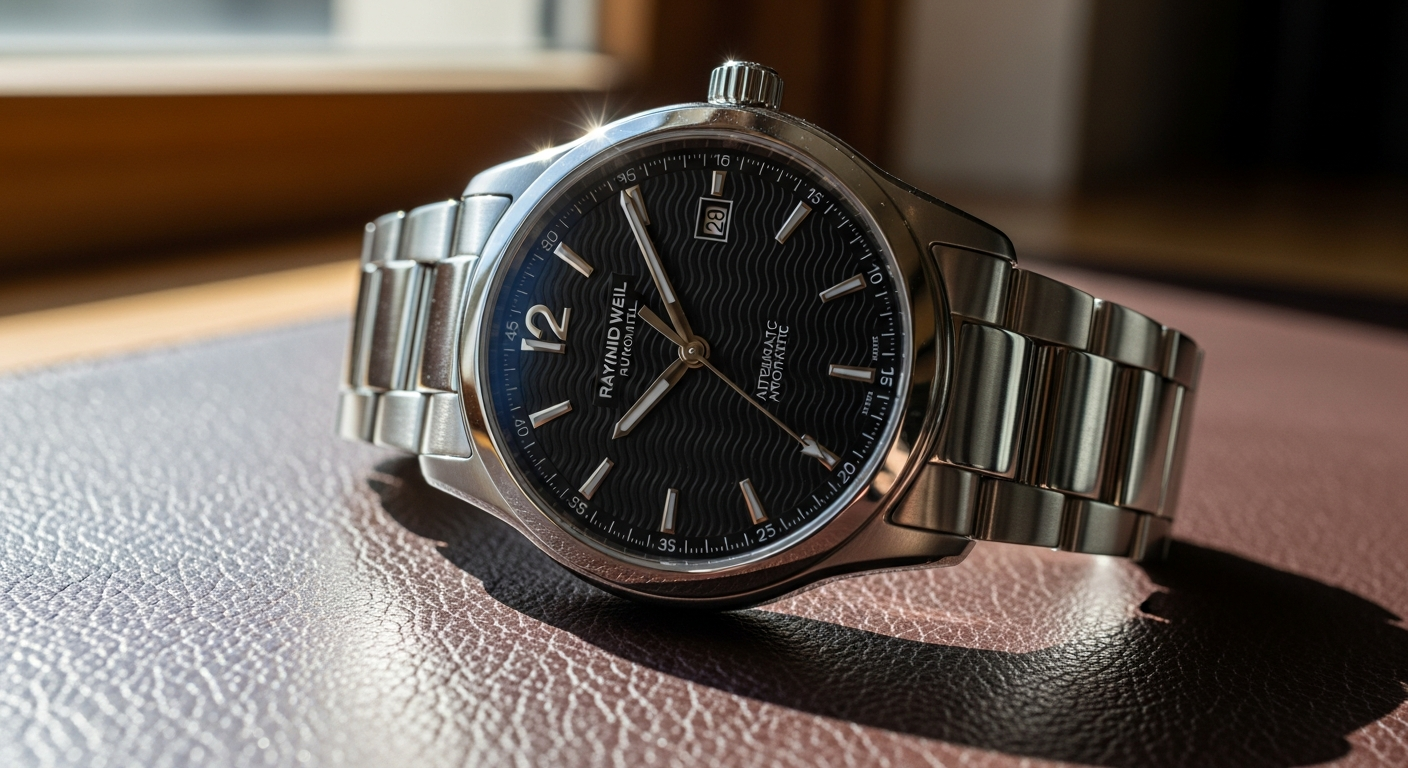
Swiss automatic watches typically command five-figure price tags, yet the Raymond Weil Freelancer shatters that expectation. Since its 2007 launch, this collection has become one of the brand's most celebrated offerings—and for good reason. Collectors and everyday wearers alike gravitate toward it because it delivers legitimate Swiss watchmaking credentials without the luxury conglomerate markup.
The Freelancer collection represents something rare in the watch world: a genuinely versatile timepiece that performs equally well in a business meeting or casual weekend setting. Raymond Weil's independence as a family-owned brand means they've maintained control over their design philosophy while keeping prices accessible. This approach has resonated across the market, from entry-level watch enthusiasts to seasoned collectors seeking reliable alternatives to mainstream Swiss brands.
Explore the Raymond Weil Freelancer Automatic Watch collection today to find your perfect timepiece.
The Freelancer's Journey: From 2007 Launch to Best-Seller Status
Launch timeline and market positioning
Raymond Weil introduced the Freelancer in 2007 with a clear objective: create a modern automatic watch that bridged the gap between aspirational Swiss quality and realistic pricing. The timing proved strategic. The mid-2000s saw growing interest in accessible luxury watches, and the Freelancer arrived positioned to satisfy that demand without compromising on heritage or craftsmanship. The brand's family-owned status allowed for faster decision-making and more flexible pricing compared to larger conglomerates, giving the Freelancer an immediate competitive edge.
Growth trajectory
What began as a promising addition to Raymond Weil's catalog quickly evolved into their largest and most diverse collection. Year after year, the Freelancer expanded—new dial colors appeared, complications were added, and variant designs multiplied. This growth wasn't driven by marketing hype alone; genuine customer satisfaction fueled demand. The collection now encompasses everything from straightforward three-hand designs to sophisticated chronographs and professional diving watches. This expansion proved that a single product line could serve vastly different customer needs without diluting its core identity.
Market reception among collectors
Watch enthusiasts recognized something valuable in the Freelancer: accessibility without compromise. While purists debated the use of modified Sellita movements rather than entirely in-house calibers, the broader market appreciated the practical benefits. Collectors noted that Raymond Weil offered a respected name, proven reliability, and design diversity at price points that didn't require years of saving. Casual buyers discovered that they could own a genuine Swiss automatic without understanding the minutiae of movement specifications—the watch simply worked, looked sharp, and suited almost any occasion.
Design philosophy
The Freelancer's aesthetic success stems from its refusal to choose between old and new. Designers incorporated contemporary elements—modern case proportions, clean dial layouts, sporty bezels—while respecting Swiss watchmaking traditions. This balance extended to technical choices: sapphire crystals with anti-reflective coatings offered durability alongside transparency, while luminescent hands ensured readability in low light without sacrificing elegance. The result was a collection that felt neither retro nor aggressively trendy, but timeless.
Brand independence advantage
Raymond Weil's family ownership created operational freedom that larger competitors couldn't match. Marketing decisions could prioritize long-term brand building over quarterly earnings targets. Design iterations could incorporate collector feedback without navigating bureaucratic approval chains. Pricing strategies could emphasize value rather than margin maximization. This independence translated directly into the Freelancer's appeal—customers sensed they were buying from a brand that genuinely cared about its products, not corporate investors prioritizing shareholder returns.
Movement Options: Understanding the Automatic Calibers Inside
Sellita SW200 and RW5200 movements
Many Freelancer models rely on modified Sellita calibers, particularly the SW200 and RW5200. These movements represent an interesting choice in modern watchmaking. Rather than developing entirely proprietary movements, Raymond Weil has selected reliable, well-established platforms and refined them for the Freelancer collection. The SW200 operates at 28,800 vibrations per hour and typically offers a power reserve of 38 to 42 hours, providing practical daily reliability. This approach offers several advantages: lower cost passed to customers, proven track records with hundreds of thousands in circulation, and straightforward servicing at competent watchmakers worldwide.
In-house RW1212 calibre
For those seeking something distinctly Raymond Weil, the in-house RW1212 movement elevates the collection. This caliber features a visible balance wheel—a design choice that transforms the dial into a window onto mechanical complexity. The oscillating balance wheel's rhythmic motion creates visual interest that manual movements cannot replicate. The RW1212 demonstrates Raymond Weil's capability for proprietary movement development, even if they haven't committed to in-house calibers across the entire Freelancer range. Models featuring this movement often command higher prices, reflecting both the added manufacturing sophistication and collector appreciation for visible mechanical complications.
Movement visibility through sapphire caseback
Nearly all Freelancer models include exhibition casebacks, showcasing the automatic rotor and movement architecture. This transparency serves both aesthetic and practical purposes. Visually, it transforms the watch from a closed object into a mechanical theater—the perpetually rotating rotor becomes a kinetic sculpture as you move your wrist. Practically, the caseback allows wearers to inspect movement condition, verify the caliber, and monitor wear patterns over years of ownership. The sapphire material resists scratching far better than acrylic, and anti-reflective coatings enhance visibility regardless of lighting conditions.
Accuracy and longevity expectations
Freelancer movements typically achieve accuracy within +/- 10 to 15 seconds per day under normal wearing conditions—perfectly adequate for daily timekeeping without obsessive adjustment. The robust construction of both Sellita and in-house calibers means 20+ year service intervals aren't unrealistic with proper care. Raymond Weil recommends service every 4-5 years for regular maintenance, though many owners report their movements functioning flawlessly far beyond that. The sapphire caseback facilitates early detection of issues like oil degradation or rotor bearing wear, enabling preventive service before problems escalate.
Comparison with purist alternatives
Watchmaking purists sometimes criticize the Freelancer for not featuring entirely in-house movements across the collection. They argue that true Swiss watchmaking heritage demands proprietary calibers. However, this perspective overlooks practical reality: modified Sellita movements carry proven reliability records that entirely new designs cannot match. Raymond Weil's choice reflects engineering pragmatism over romantic idealism. The brand reserves in-house movement development for special editions and higher-tier models, allocating resources strategically rather than developing redundant calibers.
Design Versatility Across the Freelancer Range
Chronograph variants
The Freelancer chronograph models demonstrate sophisticated dial organization despite their technical complexity. Three subdials handle traditional chronograph functions—elapsed seconds, minutes, and hours—while the main dial remains readable for standard timekeeping. Push-button placement follows established ergonomic standards, positioned where your fingers naturally fall while gripping the case. These complications appeal to professionals and enthusiasts who actually use timing functions, from medical professionals tracking intervals to aviation enthusiasts noting flight times. The chronograph versions prove that complications needn't compromise wearability.
Diving watch editions
Certain Freelancer models incorporate rotating bezels and enhanced water resistance specifications, transforming them into capable dive watches. Water resistance reaches 100 meters on standard models—sufficient for snorkeling and casual water sports—while specialized diving variants push deeper. The rotating bezel employs familiar mechanisms that underwater explorers have relied upon for decades. Luminescent markers ensure readability in murky conditions, and unidirectional bezel rotation prevents accidental readjustment. These diving-oriented Freelancers appeal to adventure seekers who need equipment that functions reliably beyond the office.
Three-hand dress models
The collection's simplest designs prove its most elegant. Three-hand models with minimal dial clutter embody classical watchmaking aesthetic. Clean indices, streamlined hands, and carefully considered proportions create timepieces that transition seamlessly from formal dinners to business casual environments. These versions demonstrate that sophistication doesn't require complications or aggressive styling. A well-executed three-hand dial, viewed through a sapphire caseback revealing mechanical precision beneath, possesses an understated appeal that chronographs cannot replicate.
Skeletonized and semi-skeletonized dials
Some Freelancer editions feature partially or fully skeletonized dials, where the movement architecture becomes the visual foundation. These designs appeal to collectors fascinated by mechanical engineering. The exposed wheels, springs, and jewels create intricate patterns that change as the movement operates. Semi-skeletonized variants—where portions of the dial remain solid—provide a gentler introduction to this aesthetic, balancing mechanical theater with legibility. Fully skeletonized models sacrifice some readability for maximum visual impact.
Case size spectrum
Freelancer cases span from 40mm to 42mm, occupying the sweet spot in contemporary watch sizing. These proportions sit comfortably on varied wrist sizes without appearing undersized on larger wearers or dominating smaller frames. The 42mm variants lean sporty without veering into unwieldy territory. Case thickness remains controlled, typically under 13mm, ensuring comfort under dress shirts while maintaining presence. Stainless steel construction resists daily scratches better than softer metals, while PVD coatings on select models provide darker aesthetics and enhanced scratch resistance. The lug-to-lug distance—crucial for bracelet fit—rarely exceeds 50mm, maintaining comfort for most wrist circumferences.
Dial color variations
Raymond Weil offers Freelancer dials in black, blue, green, and occasionally silver finishes. Black dials project professional formality and pair with virtually any strap color. Blue dials introduce personality while maintaining business compatibility. Green variants—a relatively uncommon choice in mainstream watch collections—appeal to collectors seeking distinction without eccentricity. Luminescent hand and index treatments vary by model, with some featuring generous lume applications for low-light readability and others employing minimal markers for austere elegance. Dial finishing techniques, from sunburst effects to matte treatments, add textural depth that photographs poorly but impresses in person.
The Freelancer's Enduring Appeal: Why This Swiss Automatic Remains a Smart Choice
The Raymond Weil Freelancer Automatic Watch succeeds where many timepieces fail—it refuses to be pigeonholed. Whether you're seeking your first Swiss automatic, a reliable daily wearer, or a versatile companion that handles both boardroom presentations and weekend adventures, this collection delivers on multiple fronts.
The combination of robust automatic movements, thoughtful design across multiple variants, and pricing that respects your wallet makes the Freelancer genuinely compelling. You're not compromising on movement quality to achieve affordability, nor are you paying luxury conglomerate premiums for brand prestige. Instead, you're acquiring a watch from an independent Swiss manufacturer with decades of credibility and a product line specifically engineered for real-world versatility.
The Freelancer proves that luxury watchmaking doesn't require astronomical price tags or conglomerate backing—sometimes, it just requires a family-owned brand committed to getting the fundamentals right. The movements keep accurate time. The cases resist scratches and water damage. The designs transcend fleeting trends. The bracelets fit comfortably. These unglamorous virtues matter far more than marketing narratives about heritage or exclusivity.
If you've been hesitant about entering the Swiss automatic watch market, the Freelancer removes that barrier. Start by identifying which variant aligns with your lifestyle—chronograph for timing enthusiasts, diving watch for adventure seekers, or dress model for versatile elegance. Consider whether you prefer the reliability of proven Sellita movements or appreciate the mechanical theater of the in-house RW1212 calibre. Think about case size in proportion to your wrist and whether you prefer steel bracelets, leather straps, or the versatility of interchangeable options.
Your wrist—and your bank account—will thank you.
Leave a Reply