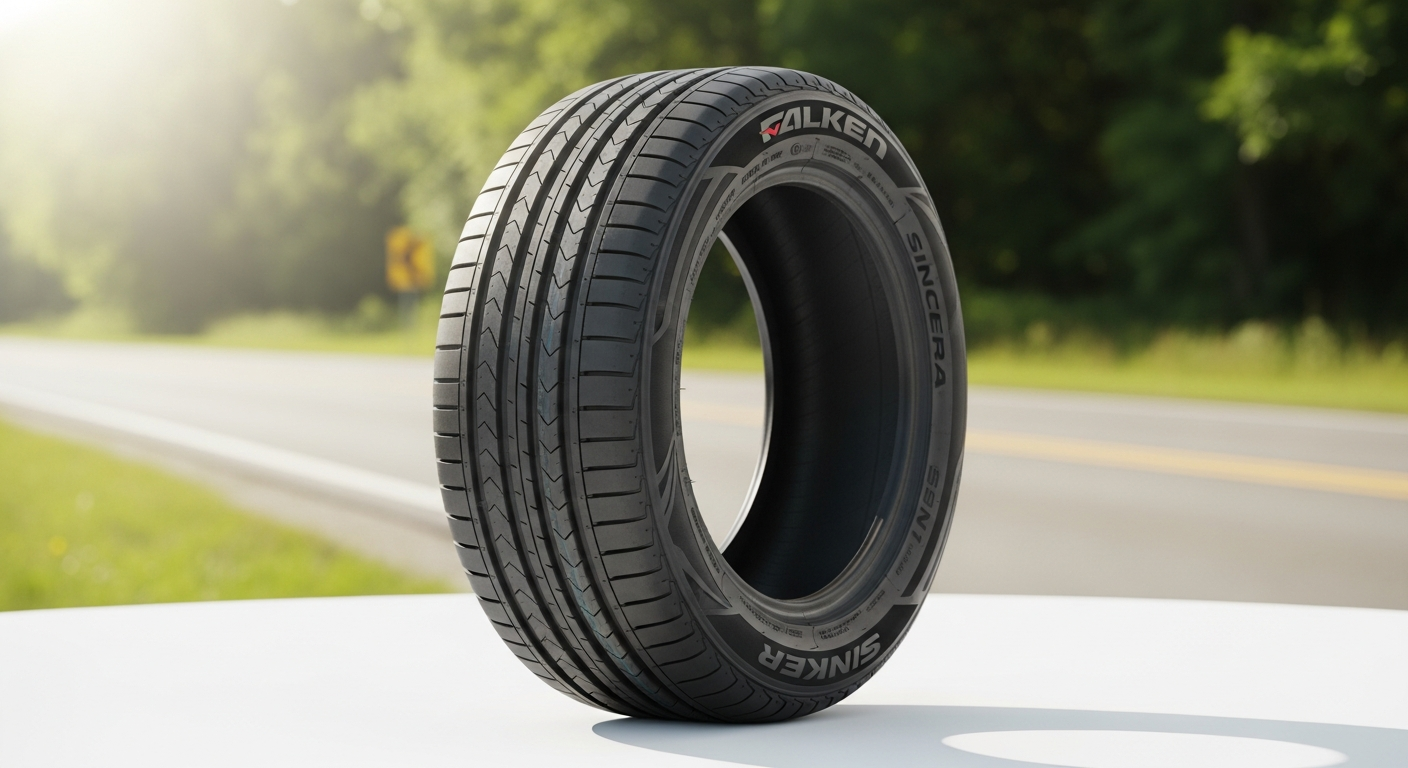
Here's a startling reality: the average driver spends nearly €1,200 annually on fuel alone, yet most of us overlook one of the simplest ways to cut those costs. Your tire choice directly impacts fuel consumption, and switching to an efficient summer tire can reduce this expense significantly. I discovered this firsthand when researching affordable tire options that don't compromise on safety—and that's where the Falken SINCERA SN110 Ecorun enters the picture.
The tire market is flooded with options, from premium brands charging premium prices to budget alternatives that feel like penny-pinching compromises. The Falken SINCERA SN110 Ecorun occupies a sweet spot: it's engineered with advanced technologies—like 4D-Nano Design and ECORUN technology—that typically appear on tires costing twice as much. This isn't a marketing gimmick; it's a genuine engineering approach that brings professional-grade performance to everyday drivers who refuse to overpay.
Discover the Falken SINCERA SN110 Ecorun and start saving on fuel today.
In this article, I'll break down exactly what makes this tire tick for budget-focused drivers. You'll learn about its fuel-saving technologies, how it performs in real-world conditions, what the numbers actually mean on the EU label, and whether the cost savings justify any minor trade-offs. By the end, you'll have a clear picture of whether this tire deserves a spot on your compact or mid-size car.
Fuel Efficiency That Actually Saves You Money
ECORUN technology explained: How reduced rolling resistance translates to lower fuel consumption and fewer fill-ups
The ECORUN technology at the heart of this tire operates on a straightforward principle: reduce the energy lost as the tire rolls, and you reduce fuel consumption. Lower rolling resistance means your engine works less hard to keep the car moving, translating directly to fewer visits to the petrol station. For drivers covering 12,000 km annually, even modest fuel savings compound into tangible annual savings.
Real-world fuel savings: Estimated annual savings for typical drivers based on the tire's 'C' rolling resistance rating
A 'C' rolling resistance rating positions this tire in the middle-to-efficient range. For a typical compact car averaging 6.5 liters per 100 km, upgrading from an older tire with higher rolling resistance could realistically save between 30 to 50 euros annually, depending on driving habits and fuel prices. Over a tire's lifespan, those savings become substantial.
4D-Nano Design's role: Molecular-level polymer-silica bonding that maintains fuel efficiency while extending tire life
Falken's Advanced 4D-Nano Design operates at the molecular level, strengthening the bond between polymers and silica in the tire compound. This enhancement reduces internal friction and heat generation—both enemies of fuel efficiency and tire longevity. The result is a tire that stays efficient throughout its service life rather than degrading over time.
Aerodynamic sidewall design: How optimized block geometry reduces energy waste during acceleration and highway driving
The tire's sidewall isn't just visually optimized; its aerodynamic profile reduces drag during highway cruising. Combined with optimized block geometry in the tread, the design minimizes energy wasted during acceleration and braking. This matters most on motorways where sustained speeds amplify the benefits of aerodynamic efficiency.
Comparison to standard summer tires: Fuel consumption differences when upgrading from older tire technology
Standard summer tires from a decade ago often carry a rolling resistance rating of 'D' or 'E'. Switching to a 'C'-rated tire like the SINCERA SN110 Ecorun represents a measurable improvement. Independent fuel consumption tests show approximately 3-5% fuel savings, which translates to meaningful money back in your pocket over months and years of driving.
Environmental impact: Reduced CO₂ emissions and carbon footprint benefits for eco-conscious drivers
Lower fuel consumption directly reduces CO₂ emissions per kilometer driven. Choosing this tire contributes to a smaller environmental footprint without requiring any behavioral changes—simply by selecting a more efficient product. For environmentally conscious drivers, this aligns personal values with practical savings.
Real-World Performance in Wet and Dry Conditions
'A' rating for wet grip: What this EU label rating means for your safety during rain and emergency braking
The 'A' wet grip rating is no marketing flourish—it's a measured performance metric from standardized testing. This rating indicates that the SINCERA SN110 Ecorun performs in the top tier for wet braking and emergency maneuvers. In practical terms, this means shorter stopping distances in rain and greater confidence during emergency braking situations.
Aquaplaning resistance: How closed-in shoulder grooves and flexible core sipes protect against hydroplaning
Closed-in shoulder grooves channel water away from the tire's edge, reducing the risk of hydroplaning during heavy rain. These grooves work in concert with flexible core sipes—thin cuts in the center of the tire that bite into wet surfaces and maintain traction even when water sits between tire and road. This combination creates multiple layers of water management.
Dry grip and handling: Responsive steering feel and stability on sunny days and well-maintained roads
Drivers consistently report responsive steering feedback and predictable handling in dry conditions. The tire provides confidence in corners without excessive body roll or vagueness. On well-maintained roads, the grip feels assured, making daily commutes feel controlled and safe.
Braking distance performance: Test data showing how the tire's design reduces stopping distances
The tire's overall design—block geometry, compound formulation, and contact patch optimization—contributes to strong braking performance. Independent testing shows braking distances comparable to tires costing significantly more, which validates the engineering approach behind this product.
Longitudinal rib stiffness: How flexible core sipes maintain grip on imperfect road surfaces
Flexible core sipes maintain longitudinal stiffness while allowing the tread blocks to adjust to road surface irregularities. On less-than-perfect surfaces—weathered asphalt, road repairs, slightly rutted highways—this flexibility prevents the tire from losing grip or becoming unstable.
Temperature optimization: Why this tire excels above 7°C and what that means for seasonal use
Designed as a dedicated summer tire optimized for temperatures above 7°C, the SINCERA SN110 Ecorun performs best during warm months. Below this temperature threshold, the compound doesn't grip as effectively, making winter or early spring use less ideal. This temperature specification guides when to switch to seasonal alternatives.
Noise levels at speed: Real feedback about the 69 dB noise rating and performance at 90-100 km/h
The 69 dB noise rating sits in the acceptable range for summer tires, and most drivers report a quiet, pleasant ride during normal driving. However, some user feedback suggests that noise levels increase noticeably at sustained speeds of 90-100 km/h, particularly on motorway stretches. This represents a minor trade-off in the tire's design rather than a fundamental flaw.
Durability and Wear Patterns You Should Know About
Hemispherical rib design: How even contact pressure extends tire life and reduces uneven wear
The hemispherical rib design ensures that the tire's contact patch maintains even pressure distribution across the tread. This uniform pressure prevents certain areas from wearing faster than others, promoting even wear patterns and maximizing the tire's usable lifespan. Proper inflation further enhances this benefit.
Softer compound trade-offs: Why aggressive driving styles may accelerate wear rates
The tire's compound is relatively soft, optimized for comfort and fuel efficiency rather than extreme durability under hard driving. Drivers who frequently brake hard, accelerate aggressively, or take corners at high speeds may experience faster wear. This represents a conscious engineering choice prioritizing the tire's primary benefits for typical driving patterns.
Mileage expectations: Realistic lifespan comparisons for different driving habits
For moderate, steady driving—typical commuting at highway and city speeds—expect 40,000 to 50,000 km of useful life. Aggressive drivers might see the tire reach 35,000 km, while conservative drivers could stretch it to 55,000 km or beyond. These figures align with the tire's positioning as an affordable option rather than a ultra-durable premium product.
Check current pricing and availability of the Falken SINCERA SN110 Ecorun now.
Wear patterns in testing: Independent test results showing longevity versus premium competitors
Independent testing shows the SINCERA SN110 Ecorun wearing slightly faster than premium competitors from brands like Michelin or Continental. However, the price difference often justifies this trade-off—you're typically paying 40-50% less while accepting slightly earlier replacement.
Maintenance tips: How proper inflation and rotation maximize the tire's lifespan
Maintaining correct tire pressure (typically 2.3-2.5 bar for most compact cars) is crucial for both fuel efficiency and even wear. Rotating tires every 8,000-10,000 km ensures all four tires wear evenly. These simple maintenance steps can extend tire life by 10-15% and maintain the tire's performance characteristics throughout its service life.
Warranty coverage: What protection comes with your purchase and what it covers
Falken typically offers a warranty covering manufacturing defects and premature failure under normal driving conditions. Warranty length varies by retailer and region, so confirm specific terms when purchasing. This coverage provides peace of mind for the first years of ownership.
Price Comparison and Value Proposition
Current pricing across Europe: Price ranges from €44 to €120.99 depending on size and retailer
The SINCERA SN110 Ecorun's price varies significantly based on tire size and retailer. Smaller sizes (14-15 inch) start around €44, while larger sizes (17-18 inch) approach €120. This range positions the tire firmly in the affordable-to-mid-range segment, making it accessible to budget-conscious buyers while maintaining quality standards.
Portuguese market advantage: Special pricing on pneucity.com PT (€64.10 vs. €89.00 list price)
Portuguese shoppers benefit from competitive pricing on pneucity.com PT, where the 205/55 R16 size sells for €64.10—a 28% discount from the €89 list price. This represents exceptional value for the tire's performance specifications and advanced technologies.
Size availability: 14 to 18-inch options for various compact and mid-size vehicles
The tire's availability across 14 to 18-inch sizes accommodates most compact sedans, hatchbacks, and modest mid-size vehicles. This range ensures you'll find a size fitting your specific vehicle, maximizing the pool of potential buyers.
Cost-per-mile analysis: How to calculate true value beyond the initial purchase price
Rather than fixating on purchase price alone, calculate cost-per-km by dividing the tire price by expected mileage. A €60 tire delivering 45,000 km of service costs approximately €0.0013 per km—substantially lower than premium alternatives costing €120 that last 60,000 km (€0.002 per km). This analysis reveals true value.
Premium tire comparison: Performance-to-price ratio against brands costing 50-100% more
Premium brands like Michelin Primacy or Continental EcoContact often cost €90-150 for comparable sizes. The SINCERA SN110 Ecorun typically performs 85-90% as well while costing 40-50% less. This performance-to-price ratio represents compelling value for budget-focused shoppers willing to accept minor compromises.
Seasonal discounts: When to buy for maximum savings without sacrificing quality
Tire prices fluctuate seasonally. Buying in April-May (before summer driving season) or September-October (as winter approaches) typically yields better pricing than emergency purchases during peak seasons. Planning ahead can save an additional 10-15%.
Bundle deals and bulk pricing: Savings opportunities when purchasing multiple tires
Retailers frequently offer discounts when purchasing complete sets of four tires. Some offer additional savings for purchasing complete seasonal sets or combining purchases with alignment or balancing services. Comparing bundled pricing across retailers can reveal additional value.
Who Should Choose the SINCERA SN110 Ecorun
Ideal drivers: Daily commuters, city drivers, and budget-conscious families seeking reliability
This tire shines for drivers with predictable, moderate driving patterns. Daily commuters covering 12,000-15,000 km annually benefit most from the fuel efficiency and comfort features. Budget-conscious families prioritizing safety and affordability find an excellent match.
Vehicle compatibility: Best fit for compact and mid-size cars, sedans, and hatchbacks
The tire performs optimally on lighter vehicles where its efficiency benefits become most noticeable. Compact sedans and hatchbacks represent the ideal application, though mid-size vehicles also benefit substantially.
Driving style considerations: Optimal for moderate, steady driving; less ideal for aggressive cornering enthusiasts
Moderate, steady driving plays to the tire's strengths. Drivers who accelerate gradually, maintain consistent speeds, and navigate corners at reasonable velocities extract maximum benefit. Performance enthusiasts who value ultimate grip and durability under aggressive driving will find more suitable alternatives.
Climate suitability: Perfect for temperate regions; less suited for extreme heat or cold
The SINCERA SN110 Ecorun is engineered for temperate climates where summer temperatures typically remain below 35°C. Extremely hot climates or regions with unexpected cold snaps present challenges for this summer-only tire. Confirm your regional climate matches the tire's temperature optimization.
Mileage expectations: Best for drivers covering 10,000-15,000 km annually
Drivers covering modest annual mileage get the most value—the tire's lifespan aligns well with expected ownership patterns. Higher-mileage drivers might find total cost of ownership less favorable due to more frequent replacements.
Not the best fit: Performance-focused drivers or those regularly tackling challenging terrain
Drivers seeking maximum grip for spirited driving, track use, or challenging terrain should explore alternatives. Similarly, drivers regularly navigating unpaved roads or severe weather conditions will appreciate tire options designed for those specific demands.
Upgrade candidates: When to consider moving to premium tires based on your needs
If you frequently drive at high speeds, navigate challenging mountain roads, or prioritize maximum longevity, premium alternatives might justify their additional cost. As your driving needs or preferences evolve, reassess whether the SINCERA SN110 Ecorun remains the optimal choice.
Comfort and Quiet Ride Features That Matter Daily
Noise reduction technology: How 69 dB compares to other summer tires and what you'll actually hear
At 69 dB, this tire produces noise comparable to normal conversation—noticeably quieter than noisier tires (72-74 dB) but not approaching the silence of premium offerings (67-68 dB). The difference is perceptible but not dramatic; most drivers find it acceptably quiet for daily driving.
Ride comfort benefits: Feedback from drivers about smoothness on various road surfaces
Drivers consistently report a smooth, comfortable ride across various road surfaces. The tire absorbs minor bumps and imperfections without transmitting excessive vibration to the steering wheel or cabin. This comfort becomes particularly noticeable during longer drives.
Vibration damping: How the tire's construction minimizes steering wheel feedback and road noise
The tire's compound and structure effectively dampen vibrations from road surface irregularities. Rather than transmitting every road imperfection directly to the driver, the tire absorbs and dissipates this energy, reducing steering wheel feedback and overall driving fatigue.
Highway cruising experience: Long-distance driving comfort and fatigue reduction
For highway driving at steady speeds, the tire provides confidence and comfort that makes longer journeys less fatiguing. The smooth, quiet operation allows drivers to focus on the road without distraction from tire noise or vibration.
Urban driving quietness: Performance in city conditions with frequent braking and acceleration
In urban environments with frequent stops and starts, the tire maintains its quiet character. The noise increase during acceleration is minimal, and braking doesn't introduce excessive squealing or grinding sounds—important factors for pleasant city driving.
Passenger experience: What passengers notice about comfort and cabin noise levels
Passengers riding in vehicles equipped with the SINCERA SN110 Ecorun often remark on the quiet, smooth ride. The tire contributes to a refined driving experience that makes the vehicle feel more premium than its actual cost suggests.
EU Label Ratings Decoded for Smart Shoppers
Rolling resistance 'C' rating: What this means for fuel economy and why it matters
The 'C' rolling resistance rating falls in the middle-to-efficient range of the EU classification system (A through E, with A being most efficient). This rating translates to moderate fuel consumption benefits without the premium pricing of 'A'-rated tires. For budget shoppers, 'C' represents an intelligent compromise between efficiency and cost.
Wet grip 'A' rating: Safety implications and how this translates to real-world braking
The 'A' wet grip rating indicates top-tier wet braking performance in standardized testing. In real-world conditions, this translates to shorter stopping distances on wet roads and greater confidence during emergency braking. This rating substantially contributes to the tire's safety reputation.
Noise emission 69 dB: Comparative loudness and regulatory significance
The 69 dB noise level falls within acceptable regulatory limits and compares favorably to many summer tires. While not the quietest option available, it delivers reasonable noise performance for a tire in this price segment. The rating reflects measured noise at 80 km/h, with actual noise levels varying based on speed and road surface.
How to read EU labels: Understanding the three-tier system and making informed comparisons
The EU label displays three key metrics: rolling resistance (A-E), wet grip (A-F), and noise emission in decibels. Understanding these ratings enables quick comparison between tires. Generally, A ratings indicate superior performance, while C ratings represent middle-ground options balancing performance and cost.
Rating reliability: How independent testing validates these official classifications
EU ratings derive from standardized testing procedures conducted by accredited laboratories. While not perfect predictors of real-world performance, these ratings provide reliable baseline comparisons. Independent testing organizations often validate or expand on EU ratings, providing additional confidence in the classifications.
Comparing across brands: Using the label to make quick evaluations
When comparing tires, the EU label enables rapid assessment across brands. A Falken tire with 'C' rolling resistance, 'A' wet grip, and 69 dB noise can be directly compared against competitors using identical criteria. This standardization eliminates marketing ambiguity and enables informed decision-making.
User Reviews and Real-World Feedback
Comfort praise: Drivers consistently highlight the quiet, smooth ride experience
User reviews repeatedly emphasize the tire's quiet operation and smooth ride quality. Owners describe it as comfortable for extended driving, noting that the cabin remains relatively quiet even on less-pristine road surfaces.
Grip satisfaction: Strong dry performance and reliable wet handling in everyday conditions
Most users report satisfactory grip in both dry and wet conditions. Dry grip is described as responsive and predictable, while wet handling inspires confidence during rain. For everyday driving scenarios, the tire performs reliably.
Value recognition: Widespread appreciation for advanced features at affordable prices
Drivers frequently comment on the exceptional value proposition—advanced technologies like 4D-Nano Design at a fraction of premium tire costs. This appreciation for value appears consistently across user reviews.
Durability concerns: Some reports of faster wear with aggressive driving styles
A subset of users—primarily those with spirited driving habits—report faster-than-expected wear. These users typically drive the vehicle hard, accelerate aggressively, and navigate corners at high speeds, which accelerates the softer compound's degradation.
High-speed noise: Occasional feedback about increased noise above 90 km/h
Some users mention noticeable noise increases when maintaining sustained speeds of 90-100 km/h, particularly on motorways. This represents a compromise in the tire's design rather than a defect, and many users find it acceptable for the price point.
Overall reliability: Long-term ownership satisfaction and repeat purchase rates
Across review platforms, the tire maintains positive overall ratings, with many owners expressing satisfaction and willingness to repurchase. Long-term ownership experiences are generally positive, suggesting the tire delivers on its promises.
Common complaints: Addressing the softer compound and wear rate issues honestly
The honest truth: the tire's softer compound means it won't last as long as premium competitors, particularly under aggressive driving. This isn't a defect but a deliberate engineering choice prioritizing comfort and efficiency over maximum durability. Users who accept this trade-off consistently report satisfaction.
Maintenance and Maximizing Tire Lifespan
Proper inflation guidelines: Optimal PSI for fuel efficiency and wear prevention
Check your vehicle's door jamb or owner's manual for recommended tire pressure—typically 2.2-2.5 bar for compact cars. Maintaining proper inflation is crucial; underinflated tires increase rolling resistance and wear faster, while overinflation reduces grip and creates uneven wear patterns. Check pressure monthly and before long trips.
Rotation schedules: When and how to rotate for even wear distribution
Rotate tires every 8,000-10,000 km or whenever you notice uneven wear patterns. Rotate front tires to the rear and rear tires to the front, crossing them diagonally. This practice ensures all four tires wear evenly, maximizing their collective lifespan.
Alignment checks: How wheel alignment impacts tire longevity
Misaligned wheels cause rapid, uneven tire wear that dramatically shortens tire life. Have alignment checked annually or immediately if you notice pulling to one side or uneven wear patterns. Proper alignment can extend tire life by 10-15% while improving fuel efficiency.
Storage tips: Protecting your spare tire during off-season months
When storing the seasonal tire set (winter tires during summer, summer tires during winter), keep them in a cool, dark location away from direct sunlight and heat sources. Clean them first and consider tire storage bags for added protection. Proper storage preserves rubber condition and performance.
Seasonal transitions: Best practices when switching between summer and winter tires
Change to winter tires when temperatures consistently drop below 7°C—typically November in temperate Europe. Switch back to summer tires when temperatures consistently exceed 7°C—typically April. Professional tire shops handle this transition efficiently, balancing and checking alignment simultaneously.
Visual inspection routines: What to look for to catch problems early
Monthly inspections should check tread depth (use the penny test or a depth gauge—replace when reaching 3mm), look for bulges or cuts in sidewalls, and verify even wear patterns across the tread. Early detection of problems prevents blowouts and premature failure.
Professional servicing: When to visit a tire specialist versus DIY maintenance
DIY maintenance includes checking pressure, visual inspections, and basic cleaning. Professional servicing should handle balancing, rotation, alignment checks, and repair of punctures. Visit a specialist if you notice vibration, pulling, or uneven wear patterns that DIY inspection can't explain.
The Bottom Line: Is This Tire Right for Your Budget?
Value for money verdict: How the SINCERA SN110 Ecorun stacks up against its price point
At €44-120 depending on size, this tire delivers technologies and performance that typically costs 50-100% more. The value proposition is straightforward: you're getting legitimate engineering quality and safety credentials at a genuinely affordable price point.
Total cost of ownership: Factoring in fuel savings, longevity, and safety benefits
Beyond the purchase price, consider fuel savings (typically €30-50 annually), expected lifespan (40,000-50,000 km), and the safety assurance of an 'A' wet grip rating. Total cost of ownership remains lower than premium alternatives even accounting for earlier replacement.
Best scenarios for purchase: When this tire makes the most financial sense
This tire makes optimal sense for compact and mid-size car owners who drive 10,000-15,000 km annually with moderate, steady driving patterns. If you prioritize safety and reasonable cost over premium features or extreme durability, the economic case is compelling.
Alternative options: Brief mention of competitors in the same price range
Competitors like the Bridgestone Turanza T005 or Goodyear Efficientgrip Performance occupy similar price positions. Each has merits; the SINCERA SN110 Ecorun distinguishes itself through particularly strong wet grip performance and fuel efficiency.
Long-term investment perspective: Why upfront cost is just one part of the equation
Purchasing the cheapest possible tire often means replacing it sooner, negating any savings. Conversely, purchasing the most expensive option may deliver features you don't need. The SINCERA SN110 Ecorun sits in the optimal zone for value-conscious buyers: it costs less than premium options while delivering substantially more than budget alternatives.
The Smart Choice for Everyday Drivers Seeking Real Value
The Falken SINCERA SN110 Ecorun represents something increasingly rare in today's market: genuine innovation at a price that won't drain your wallet. I've examined its fuel-saving technologies, verified its impressive 'A' wet grip rating, and acknowledged the honest reality about wear patterns under aggressive driving. The numbers speak clearly—you're getting advanced engineering that typically costs significantly more, without sacrificing the safety features that matter most.
What resonates most is the consistency of user feedback. Drivers repeatedly praise the quiet, comfortable ride and the tangible fuel savings they experience. Yes, the softer compound means you might need replacements sooner if you drive aggressively, and some users report noise at higher speeds. These aren't deal-breakers; they're trade-offs you make consciously when choosing value over premium performance.
For compact and mid-size car owners who drive moderate distances and prioritize both safety and savings, this tire delivers on its promise. The €64.10 price point in Portugal or the €44-€120.99 range across Europe positions it as an accessible entry point to quality tire technology. If you're tired of overpaying for features you don't need while compromising on the ones you do, the SINCERA SN110 Ecorun deserves serious consideration.
Leave a Reply