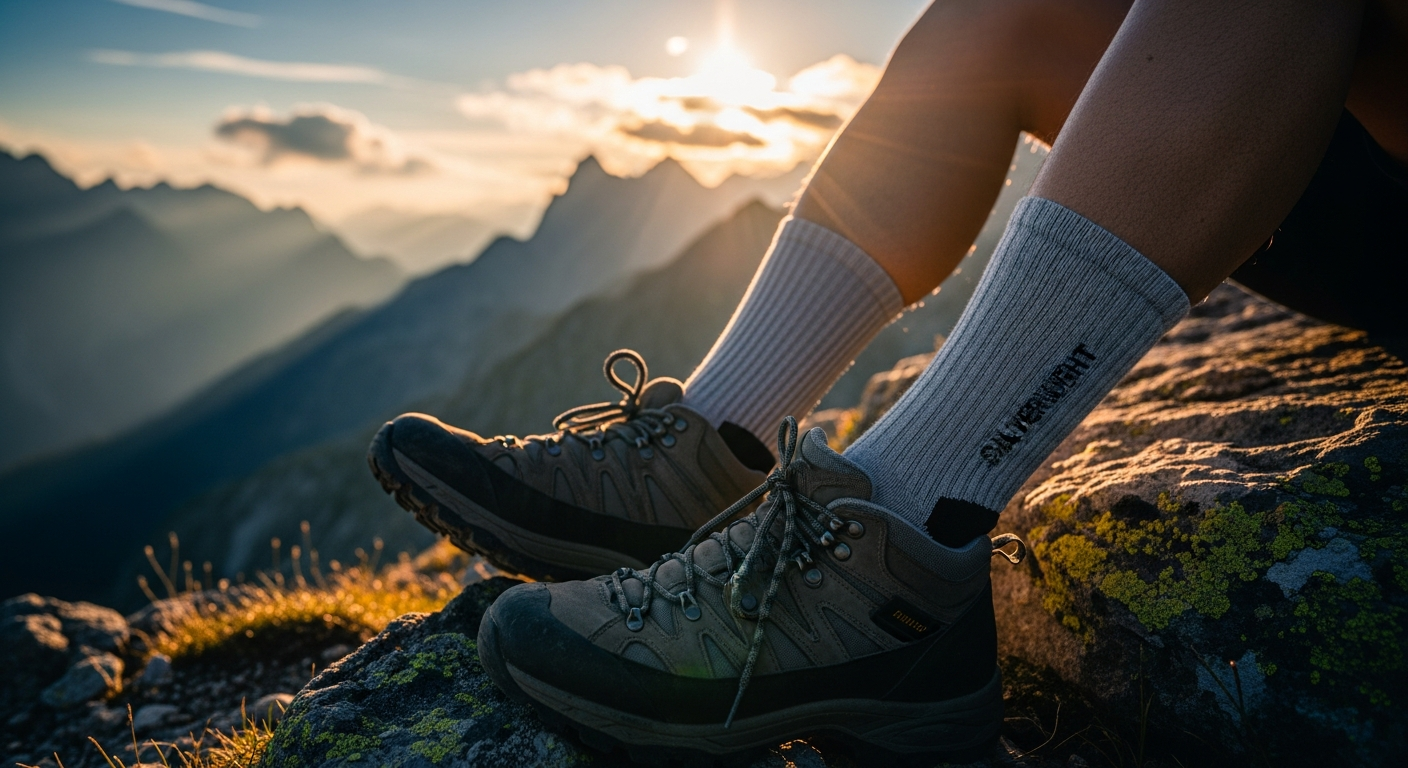
Foot problems end more backcountry trips than weather, injuries, or fatigue combined. Blisters, odor, and moisture-logged feet transform dream wilderness adventures into painful slogs that test your mental resolve as much as your physical endurance. The reality is brutal: a single blister on day two of a five-day expedition can escalate from minor irritation to expedition-ending injury, forcing early evacuation or days of compromised hiking where each step becomes a negotiation between ambition and pain.
Silverlight Hiking Socks emerged from personal frustration to engineer a solution targeting the exact pain points that plague extended backcountry adventures. The brand’s founder, a trail runner and hiking enthusiast, recognized that existing socks failed where it mattered most—during consecutive days of wear when friction and moisture converge to create the conditions that destroy feet. Their best-selling design combines 53% Merino wool, 40% nylon, 5% silver fiber, and 2% spandex in a dual-layer construction specifically engineered to prevent blisters and eliminate odor across multi-day expeditions.
This article reveals why backcountry adventurers trust them as essential equipment, examining the specific materials that prevent blisters during consecutive days of hiking, how silver fiber technology keeps feet fresh without daily washing, and whether the $34 price tag justifies the investment for expeditions lasting three or more days.
The Blister Crisis: Why Extended Hiking Demands Superior Sock Engineering
Friction and moisture combine to create blisters within 6-12 hours of continuous hiking, transforming your feet from reliable workhorses into sources of debilitating pain. Traditional socks lack the seamless construction needed for multi-day wear without irritation—the seams that don’t bother you on a day hike become pressure points that trigger blister formation when multiplied across dozens of miles.
Silverlight’s form-fitting, seamless design eliminates these pressure points entirely. The construction prevents the micro-movements that cause friction against your skin, while the anatomical left-and-right shaping prevents sock bunching that creates hot spots during long days on trail. This isn’t a minor refinement—it’s the difference between reaching camp on day four with healthy feet and limping through the final two days of your expedition.
The moisture-wicking Merino wool inner layer keeps feet dry by actively pulling sweat away from your skin and pushing it outward where it can evaporate. This constant moisture management reduces the friction between foot and fabric, which directly correlates with blister prevention. Simultaneously, the light compression support improves circulation and reduces foot swelling during long days—swelling is often overlooked but critically important because inflated feet create pressure inside your boots that magnifies blister risk.
Real hikers report zero blister incidents across 5+ day expeditions wearing Silverlight socks, a consistency that separates them from competitors. These aren’t testimonials from casual day hikers—they come from backcountry adventurers pushing their bodies across challenging terrain for consecutive days. That track record matters because your feet don’t have the luxury of a day off during a multi-day expedition; they need to perform identically on day five as they did on day one.
The Odor Problem Nobody Talks About: How Silver Fiber Changes Backcountry Hygiene
Multi-day hiking without shower access creates bacterial growth that standard socks simply can’t contain. After three days in the wilderness, foot odor becomes a communal problem—it affects your tent mates, impacts shared camping experiences, and compounds the psychological strain of expedition life when your feet smell like they’re undergoing biological transformation.
Silver fiber technology provides antimicrobial properties that actively prevent odor-causing bacteria from establishing themselves in the fabric. This isn’t masking the smell; it’s preventing the conditions that create it in the first place. Hikers can wear the same pair for 4-5 consecutive days without washing and maintain freshness that would typically require daily sock rotation or in-stream cleaning.
Traditional Merino wool socks alone offer solid odor resistance—wool naturally resists bacterial growth—but adding silver fiber elevates performance dramatically. The silver fibers create a continuous antimicrobial barrier that works throughout your expedition. Backcountry hikers report wearing Silverlight socks for entire treks without washing, eliminating weight and pack space concerns that matter when every ounce counts.
Shared tent camping becomes uncomfortable when foot odor becomes noticeable, but Silverlight socks solve this problem by maintaining freshness across multiple consecutive days. Silver’s natural antimicrobial properties work continuously, not just temporarily masking smell like sprays or treatments. This performance translates directly to better group dynamics and more enjoyable expedition experiences.
Material Science Behind the Performance: Dual-Layer Construction Explained
The inner Merino wool layer (53%) wicks moisture away from skin while regulating temperature—wool actively responds to your body’s thermal needs, providing insulation when cold and breathability when warm. This dynamic temperature regulation prevents the overheating that triggers excessive sweating and the foot cooling that occurs during high-altitude or winter expeditions.
The outer nylon layer (40%) provides durability and structural integrity for rugged terrain. Nylon protects the delicate wool from sharp rocks and rough boot interiors while maintaining the sock’s shape through dozens of washing cycles and hundreds of hiking miles. This outer layer is critical because it preserves the form-fitting design that delivers blister prevention—a sock that loses its shape loses its ability to prevent pressure points.
Silver fiber (5%) creates an antimicrobial barrier without synthetic chemicals. Unlike chemical-based odor treatments that wash out or lose effectiveness, silver provides continuous protection that outlasts your entire expedition. Spandex (2%) adds stretch and recovery, maintaining fit even after multiple days of wear when feet swell from elevation and exertion.
The dual-layer design creates an insulating effect that protects feet during temperature fluctuations common in backcountry environments. The wool layer traps air and regulates moisture while the nylon layer shields against external cold. This combination prevents the heavy, wet sock feeling that leads to blisters and discomfort—a sensation that intensifies across consecutive hiking days and compounds foot problems exponentially.
The material blend allows quick drying when socks get wet from stream crossings or morning dew. Unlike heavy synthetic blends that stay damp and clammy, this composition sheds moisture efficiently, reducing the window of time when your feet are exposed to the friction that creates blisters.
Real Backcountry Scenarios: Where Silverlight Socks Prove Their Worth
Five-plus day mountain expeditions reveal the true capability of these socks. Hikers report zero blister issues and minimal odor across the entire trip, a consistency that separates performance gear from marginal alternatives. High-altitude trekking creates unique foot challenges—swelling at elevation where oxygen is scarce compounds pressure-related discomfort—and the compression support helps combat this variable while maintaining the blister prevention that lower-altitude hiking requires.
Stream crossings and rain don’t compromise blister prevention because moisture management remains superior even when socks are actively wet. This matters for expeditions passing through wet environments where drying gear becomes impossible and your feet remain damp for extended periods. Consecutive summit attempts require reliable socks for back-to-back hiking days, and Silverlight delivers consistency when your body is exhausted and your feet are the only variables you can control.
Group expeditions benefit from odor resistance that keeps communal spaces pleasant and prevents social friction that builds when confined groups are exposed to unpleasant conditions. Desert and arid hiking prevents the moisture buildup that causes blisters in dry climates—counterintuitively, blisters form readily in arid environments because sweat dries on the sock rather than wicking away, creating a crusty friction surface. Winter backcountry trips benefit from Merino wool’s insulation while silver fiber prevents moisture-related foot issues in cold conditions where damp feet become a serious risk factor for frostbite.
The Investment Question: Is $34 Per Pair Worth It for Expedition Hiking?
The single pair retail price of $34 positions Silverlight at the premium end of the hiking sock market. This sticker shock catches many hikers initially, but context transforms the equation. Multi-pair discounts bring per-pair cost closer to competitors like Darn Tough when purchased in bulk, and the lifetime guarantee means you’re not replacing socks every season like budget alternatives that degrade after 50-100 wearing days.
Cost-per-wear calculation demonstrates the actual economics: one pair lasting 200+ hiking days equals $0.17 per day of use. Compare that to a $15 budget sock lasting 50 days ($0.30 per day) and the premium sock wins despite higher upfront cost. Preventing a single blister-ruined expedition—where early evacuation, replacement gear, or medical costs accumulate—saves money compared to the Silverlight investment.
Backcountry hikers typically own 2-3 pairs for rotation, making bulk purchasing economically sensible. A three-pair purchase reduces per-pair cost significantly while providing the rotation necessary for proper care and sock recovery between expeditions. Premium materials like Merino wool and silver fiber cost more to source, but they deliver performance that justifies the price for serious expeditioners.
Compared to emergency evacuation costs from blister complications, the investment is negligible. Mountain rescue operations commonly run $5,000-$15,000, making $34 socks an extraordinarily cost-effective insurance policy against expedition failure.
Making the Expedition-Ready Choice: Final Gear Recommendation
Silverlight Hiking Socks transcend the category of nice-to-have gear and enter essential equipment territory for anyone planning backcountry expeditions lasting three or more days. The blister prevention alone justifies the investment—foot pain compounds exponentially across consecutive hiking days, and Silverlight’s seamless, anatomical design eliminates this variable from your expedition equation.
Add the silver fiber odor resistance, and you’ve got socks that perform their primary function flawlessly while solving the secondary problem that ruins shared camping experiences. Yes, they cost more upfront and the dense fabric feels substantial compared to ultralight alternatives. But when you’re on day four of a five-day expedition with zero blisters, fresh-feeling feet, and confidence that your socks will perform identically on day five, the premium price becomes irrelevant.
For serious backcountry adventurers, these socks aren’t an expense—they’re an investment in expedition success. Your feet determine whether you summit, whether you enjoy your final days in the wilderness, and whether you return home ready for the next adventure or hobbling with regret.
Leave a Reply