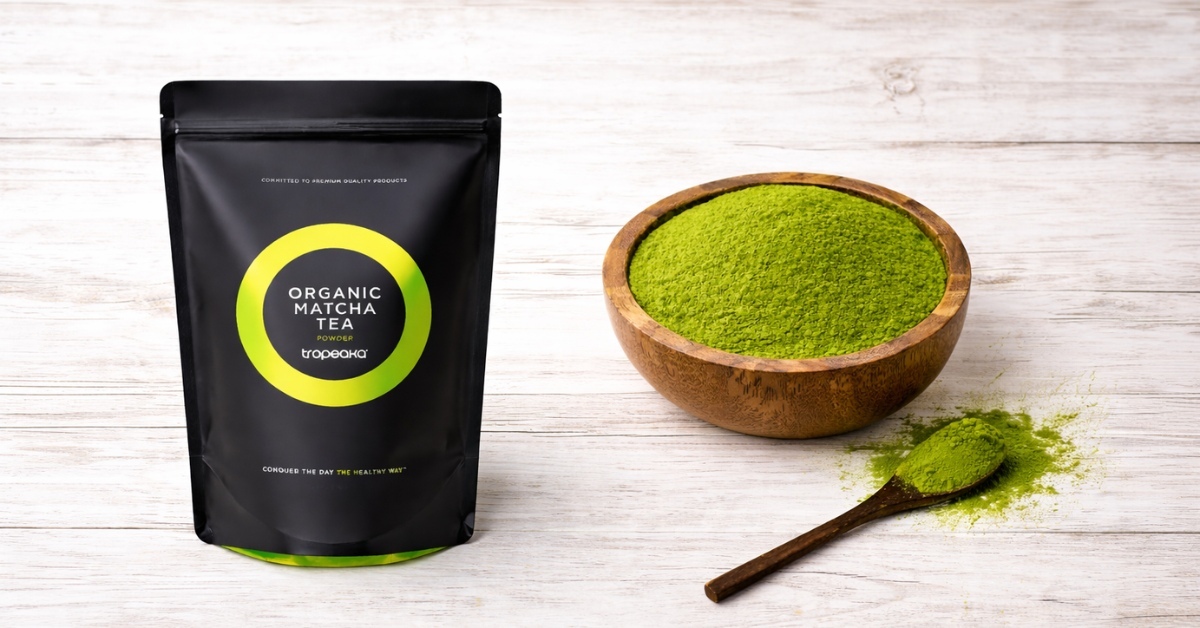
That bright green color in your cup says a lot before the first sip. TROPEAKA Organic Matcha Tea turns plain hot water into a smooth, earthy drink that feels focused and calm at the same time.
This ceremonial-grade Japanese matcha has become a go-to option for people who want steady energy without coffee crashes. You get the whole tea leaf, finely stone-ground, which explains the richer taste and stronger nutritional profile.
During hands-on testing over several weeks, this matcha showed consistent flavor, easy mixing, and no harsh bitterness.
The price stays practical too, coming in at under one dollar per serving when purchased directly from the U.S. site. TROPEAKA Organic Matcha Tea fits daily routines without feeling like a luxury item.
What Sets TROPEAKA Organic Matcha Tea Apart From Other Matcha Powders
TROPEAKA Organic Matcha Tea comes from shade-grown tea leaves cultivated in Japan using traditional methods. Shade growing increases chlorophyll levels, which explains the vibrant green color and smoother taste.
Lower-grade matcha often looks dull or yellow and tastes sharp. This one stays mellow and clean. The ingredient list stays simple. You get 100% certified organic matcha with no fillers, sweeteners, or additives.
The powder is vegan, non-GMO, gluten-free, dairy-free, and soy-free. That makes it suitable for most diets without adjustments. From a value standpoint, the pricing stands out.
A 200g pouch costs $29 USD on the official U.S. website. With a standard 4g serving, that works out to about $0.58 per cup. Cafés commonly charge around $5 for a similar drink. Direct-to-consumer pricing keeps quality high while avoiding retail markups.
Nutritional Profile of TROPEAKA Organic Matcha Tea (Per 4g Serving)
| Nutrient | Amount |
|---|---|
| Calories | 12 |
| Protein | 1.2 g |
| Carbohydrates | 1.5 g |
| Fiber | 0.6 g |
| Caffeine | ~30–35 mg |
| Key Compounds | EGCG, L-theanine, chlorophyll |
Unlike brewed green tea, matcha delivers the entire leaf. That means higher antioxidant intake and more amino acids per serving. According to the USDA and NIH, matcha contains significantly higher catechin levels than steeped green tea because nothing is discarded during preparation.
How Matcha Green Tea Benefits Show Up in Daily Use
Matcha green tea benefits come from a mix of caffeine and L-theanine. Caffeine supports alertness, while L-theanine promotes calm focus. Research published in the Journal of Nutritional Biochemistry shows this combination supports attention and reaction time without overstimulation.
During real-world use, energy stayed steady for about four to six hours. No sharp spike. No sudden drop. Many people replace morning coffee with matcha to reduce jittery feelings and afternoon fatigue.
Antioxidants play another role. Matcha contains high levels of EGCG, a compound studied for cellular protection and metabolic support. Harvard Health notes that green tea catechins support heart and metabolic health when consumed regularly.
How TROPEAKA Organic Matcha Tea Supports Focus and Mental Clarity
Cognitive performance improves when the brain stays alert and relaxed at the same time. L-theanine increases alpha brain wave activity, which is associated with calm concentration.
This effect is often compared to a meditative state without drowsiness. During desk work and long writing sessions, focus remained stable with fewer distractions.
Tasks that require creativity felt easier to sustain. This aligns with clinical findings published by Frontiers in Nutrition, which link L-theanine to improved attention switching and mental accuracy.
Organic Matcha Powder and Metabolism Support
Organic matcha powder contains catechins that influence thermogenesis. Studies cited by the American Journal of Clinical Nutrition associate green tea catechins with increased calorie burning during moderate activity.
This does not replace balanced nutrition or movement. It works as a support tool. Some people notice slightly improved workout endurance when matcha is used before training instead of pre-workout stimulants.
Pricing Breakdown Using Official U.S. Website Rates
| Option | Price | Cost Per Serving |
|---|---|---|
| 1 × 200g pouch | $29 | ~$0.58 |
| 2-pack bundle | $49.30 | ~$0.49 |
| 4-pack bundle | $92.80 | ~$0.46 |
Buying directly avoids third-party markups that often reach $36–$42 per pouch. Storage stays simple. Keep the pouch sealed, away from light and heat, and freshness holds for up to 12 months.
Ways You Can Use Japanese Ceremonial Matcha Daily
- Traditional hot matcha with water at 70–80°C
- Matcha latte with oat or almond milk
- Smoothies with banana, spinach, and protein powder
- Energy bites with dates and nuts
- Yogurt or oatmeal topping
Savory uses work too. Small amounts blend well into salad dressings or marinades for subtle umami flavor.
Sustainability and Sourcing Standards
TROPEAKA sources matcha from Japanese farms that follow organic certification standards. Shade-grown farming supports soil health and biodiversity while reducing chemical use.
Ethical sourcing supports traditional farming communities and long-term agricultural stability. Packaging uses a resealable pouch to limit waste and preserve freshness. Bulk options reduce shipping frequency and environmental impact.
Final Thoughts
TROPEAKA Organic Matcha Tea fits daily routines that value calm energy, clean ingredients, and real nutritional impact. You get ceremonial-grade Japanese matcha at a price that supports regular use. Flavor stays smooth. Energy stays steady. Preparation stays simple.
If your routine needs focus without overstimulation, this matcha offers a practical shift away from coffee while keeping clarity high. Try one cup daily, adjust the amount, and see how your energy responds.
Leave a Reply