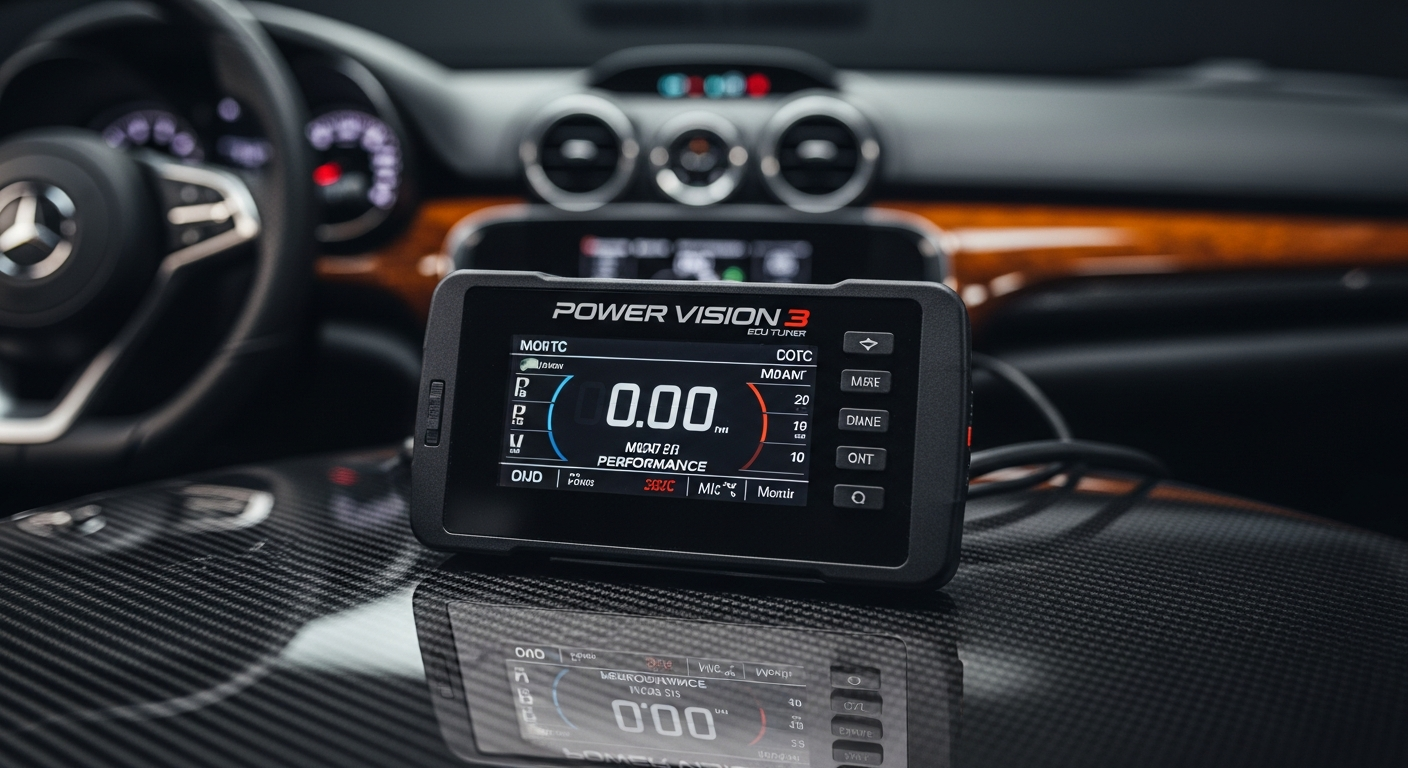
If you're serious about extracting genuine performance from your UTV, ATV, or motorcycle without spending thousands on external bolt-on systems, the conversation starts with direct ECU tuning. Most factory engine tunes are deliberately conservative, constrained by emissions regulations that prioritize compliance over actual performance capability. That's where the Dynojet Power Vision 3 changes everything.
Unlike traditional piggyback fuel controllers that sit between your sensors and engine computer, the Power Vision 3 communicates directly with your vehicle's ECU. This fundamental difference means you're not manipulating signals—you're rewriting the engine code itself. The result is comprehensive control over ignition timing, air/fuel ratios, RPM limits, and cooling parameters, all integrated seamlessly with factory systems.
The Power Vision 3 has earned its reputation as one of the powersports industry's most trusted tuning solutions. Whether you're running a stock naturally aspirated engine or a heavily modified machine, the tuning flexibility is genuinely infinite. You'll understand the installation process, real-world horsepower numbers, diagnostic capabilities, and whether this tool aligns with your specific riding style.
Explore the Dynojet Power Vision 3 and unlock your engine's true potential today.
Direct ECU Flashing vs. Traditional Fuel Controllers: Why the Power Vision 3 Stands Apart
How ECU flash tuning rewrites engine code for comprehensive parameter control
ECU flash tuning operates at the source. Rather than intercepting sensor signals downstream, this approach modifies the actual instructions your engine's computer executes thousands of times per second. The Power Vision 3 directly accesses your vehicle's diagnostic port and rewrite engine code, giving you control over parameters that bolt-on controllers simply cannot reach.
When you flash the ECU, you're not just adjusting fuel delivery—you're modifying the entire decision tree. Ignition timing, fuel injection duration, cooling fan thresholds, speed limiters, and RPM caps all become adjustable variables. This integrated approach means changes in one parameter don't conflict with factory logic designed around original tuning assumptions.
Comparison between piggyback fuel controllers and direct ECU modification approaches
Piggyback systems work by fooling your ECU's sensors. They intercept air/fuel ratio feedback and modify those signals before sending them to the engine computer. The ECU then responds to what it thinks it's sensing, believing everything is normal even though it's receiving altered data.
This approach creates an inherent limitation: the factory ECU still operates under its original logic. If the factory tune includes a hard RPM limiter at 6,000 RPM, a piggyback controller cannot change that. If the radiator fan activates at 210°F due to emissions concerns, a piggyback system cannot lower that threshold. The factory parameters remain fixed boundaries.
Direct ECU flashing eliminates these constraints. You're not working around factory logic—you're replacing it with your own. The Power Vision 3 removes the need for external signal manipulation entirely.
Why traditional fuel controllers leave tuning potential untapped
Factory tuning in stock vehicles carries built-in handicaps. Manufacturers deliberately lean out fuel maps to meet EPA emissions standards. They impose conservative ignition timing to reduce NOx production. They set RPM limiters below the engine's actual capability. These aren't performance decisions—they're regulatory compromises.
A piggyback controller can only adjust fuel delivery ratios. It cannot rewrite ignition timing tables or lift RPM limiters because those parameters live in the ECU's protected firmware. This fundamental architectural difference means traditional controllers address one symptom while leaving the underlying factory limitations intact.
The Power Vision 3's direct ECU access means correcting factory restrictions simultaneously across all parameters. Your engine doesn't run in isolation—it responds as an integrated system. Adjusting fuel without adjusting ignition timing creates inefficiency. Raising RPM limits without modifying fuel delivery causes lean conditions. Comprehensive tuning requires comprehensive access.
The advantage of modifying ignition timing, air/fuel ratios, and RPM limits simultaneously
Stock naturally aspirated engines typically show 10+ additional wheel horsepower after Power Vision 3 tuning. This gain doesn't come from fuel alone—it comes from systematic optimization across multiple parameters working together.
Ignition timing controls when the spark plug fires relative to piston position. Advancing timing increases combustion efficiency but risks detonation (knock). Factory settings are conservative to prevent knock across all fuel grades and ambient conditions. With the Power Vision 3, you adjust timing based on your specific fuel type and riding conditions.
Air/fuel ratio optimization feeds your engine precisely what it needs—not the excessively lean mixture imposed by emissions regulations. This richer mixture burns more completely and produces more power while running cooler.
RPM limits expand the engine's operating range. Stock vehicles often hit limiters well below peak horsepower territory. Removing or raising these limits gives you access to additional power the engine can safely produce.
These adjustments working together create synergistic performance gains that exceed what any single parameter change could deliver alone.
How direct ECU access eliminates the need for external signal manipulation
Your vehicle's sensors continuously send data to the ECU: air intake temperature, manifold pressure, oxygen content in exhaust, coolant temperature, throttle position. The ECU processes this data through fuel injection and ignition timing algorithms thousands of times per second.
Piggyback systems physically intercept the oxygen sensor signal before it reaches the ECU, modifying it en route. This requires additional wiring, creates potential connection reliability issues, and leaves the ECU responding to false information about what's actually happening in the combustion chamber.
The Power Vision 3 works inside the ECU. Your actual sensors still report true conditions. The ECU receives accurate information but executes different instructions based on the flashed firmware. No signal manipulation. No intermediate components. No additional failure points.
This direct approach means your vehicle's factory diagnostics continue working properly. The Power Vision 3 can even enhance diagnostic capability by logging detailed data that stock systems never capture.
Real-world reliability differences between integrated and bolt-on tuning solutions
Bolt-on tuners depend on consistent electrical connections between intercepted wires and controller modules. Corrosion, vibration, loose connectors, or failed relays can cause running issues. If a piggyback unit loses power or develops a connection fault, your vehicle's behavior becomes unpredictable.
The Power Vision 3 flashes directly into permanent firmware. Once installed, there's nothing external to fail. Your ECU contains the tuning code. The device merely initiates the flashing process, then disconnects. The tuning remains even if you never reconnect the Power Vision 3 again.
This architecture also means you avoid the common issue of piggyback systems interfering with other vehicle electronics. OBD2 diagnostic tools, custom dash systems, and aftermarket gauges all work flawlessly because they're communicating with an ECU running standard diagnostic protocols—just with different fuel injection and ignition tables.
Integration with factory sensors and systems for seamless operation
Your vehicle's factory sensors—oxygen sensors, intake air temperature sensors, throttle position sensors, coolant temperature sensors—continue operating exactly as designed. The Power Vision 3 doesn't change how sensors report data. It changes how the ECU interprets and responds to that data.
This integration approach means your vehicle's check engine light behaves logically. If an actual sensor fails, the ECU recognizes the fault. Piggyback systems can cause false fault codes or mask real problems because the ECU is receiving doctored sensor signals.
The Power Vision 3 maintains this diagnostic integrity. Your vehicle still knows when something is genuinely wrong, and the ECU still triggers appropriate warnings.
Measurable Horsepower Gains Across Different Vehicle Platforms
Stock naturally aspirated vehicles: 10+ additional wheel horsepower documented
Real-world dyno testing consistently shows stock naturally aspirated vehicles gaining 10+ wheel horsepower after Power Vision 3 tuning. These aren't imaginary numbers from marketing materials—they're repeatable results from community members posting actual dyno sheets.
A bone-stock UTV running factory emissions-compliant tuning represents a perfect candidate for this level of gain. The factory tune is deliberately lean, the ignition timing is deliberately conservative, and the RPM limiter deliberately sits below peak power territory. Correcting these artificial restrictions produces immediately noticeable results.
The gains come from multiple sources: corrected air/fuel ratios reduce emissions-imposed leanness, advanced ignition timing improves combustion efficiency, and lifted RPM limits provide access to additional power the engine was always capable of producing.
Can-Am Maverick Sport performance increases: 4 HP gains with factory tune
The Can-Am Maverick Sport provides an interesting case study. This model already benefits from relatively liberal factory tuning for its class. Consequently, Power Vision 3 tuning on a completely stock Maverick Sport typically shows around 4 additional horsepower.
This lower gain figure reflects the reality that some OEMs tune less conservatively than others. The Maverick Sport's factory tune is already closer to optimal than many competitors' approaches. However, 4 horsepower is still a noticeable improvement in throttle response and acceleration, particularly in technical terrain where midrange power matters.
More substantially modified Maverick Sport units—post-turbo installations or aggressive intake modifications—show larger power gains because the Power Vision 3 can optimize tuning around those specific modifications rather than generic factory assumptions.
Torque improvements and throttle response enhancements
Horsepower numbers get attention, but torque and throttle response often matter more to real-world driving experience. The Power Vision 3 delivers measurable improvements in both.
Torque increases directly from improved combustion efficiency. Richer fuel mixtures burn more completely. Advanced ignition timing concentrates the combustion event's force more efficiently into downward piston movement. The result is more usable power across the RPM range, not just at peak power numbers.
Throttle response improvements come from removing factory delays and hesitations. Stock vehicles often include software-imposed throttle lag to prevent detonation spikes or exhaust temperature surges. The Power Vision 3 allows you to adjust these safety margins to match your specific fuel quality and riding conditions. The result feels immediately different—sharper, more immediate, more connected to your input.
How horsepower gains vary based on engine displacement and factory restrictions
Smaller displacement engines typically show proportionally larger horsepower gains from tuning. A 500cc engine showing 10 additional horsepower represents a 10-15% improvement. A 1000cc engine showing 10 additional horsepower represents a 5-7% improvement.
This disparity occurs because smaller engines operate with proportionally tighter factory restrictions. Manufacturers impose the same RPM limiter, same emissions-compliance leanness, same conservative ignition timing regardless of displacement. These absolute restrictions hurt smaller engines proportionally more.
Additionally, factory tuning approaches often assume the worst-case environmental conditions: hot ambient temperatures, high altitude, low-quality fuel. If you're actually riding in cooler conditions with premium fuel, your engine can safely run significantly more aggressive tuning than the factory baseline.
Heavily modified engines show even larger potential gains because factory tuning maps become completely irrelevant. A turbocharged or supercharged engine cannot run the stock ECU tuning—it would detonate catastrophically. The Power Vision 3 allows you to create appropriate tuning for your specific forced-induction system.
Performance scaling with different modification levels (stock vs. modified engines)
A completely stock engine running Power Vision 3 tuning gains power primarily from optimizing factory parameters. The engine's hardware remains unchanged, so gains are limited by physical capability.
An engine with bolt-on modifications—exhaust, intake, fuel pump upgrades—benefits from tuning that optimizes around those specific modifications. An aftermarket intake flows more air, so you can enrich fuel delivery to match. An upgraded exhaust reduces backpressure, allowing more aggressive ignition timing. Tuning that ignores these modifications leaves potential on the table.
Forced-induction conversions (turbocharger or supercharger installations) require completely custom tuning. Factory tunes assume naturally aspirated operation. Running stock tuning on a turbo engine is impossible—boost pressure would exceed fuel delivery, creating lean detonation conditions. The Power Vision 3 enables safe, optimized tuning for whatever induction system you've installed.
Real-world dyno testing results from powersports community
The powersports community shares dyno results across numerous online forums and social media platforms. These aren't sponsored testimonials—they're enthusiasts posting actual dyno sheets documenting before-and-after performance.
Consistent patterns emerge from analyzing these results: naturally aspirated stock vehicles show 8-15 horsepower gains depending on platform. Vehicles with intake and exhaust modifications show 15-25 horsepower gains. Turbocharged conversions show 40+ horsepower gains when properly tuned with the Power Vision 3.
These numbers vary based on dyno type (hub dyno vs. wheel dyno), test conditions, and how aggressively the tuner pushed parameters. But the pattern is unmistakable: the Power Vision 3 delivers measurable, repeatable performance improvements across all platforms.
Efficiency improvements and cooler running temperatures as secondary benefits
Corrected air/fuel ratios improve combustion efficiency, which reduces fuel consumption per horsepower output. Vehicles often show modest fuel economy improvements after tuning, though this depends heavily on riding style. Aggressive throttle use still burns fuel quickly, but smooth throttle application produces better efficiency than stock tuning could achieve.
Temperature reductions matter more practically. Stock lean tuning creates hot combustion, hot exhaust, and stressed cooling systems. Richer air/fuel ratios burn cooler. Advanced ignition timing concentrates combustion energy more efficiently, reducing wasted heat. Adjusted radiator fan thresholds prevent unnecessary fan cycling.
The cumulative effect is noticeably cooler engine operation. Coolant temperatures run 10-20°F lower after tuning. Exhaust temperatures drop substantially. This cooler running improves overall engine longevity, reduces thermal stress, and eliminates fan noise from constant activation.
Horsepower retention and consistency across different riding conditions
Factory tuning assumes worst-case conditions: hot ambient temperatures, high altitude, low-octane fuel, maximum engine load. Real riding often involves different conditions, yet the factory ECU doesn't adapt.
The Power Vision 3 allows tuning adjustment based on actual conditions. You can create separate maps for different fuel octane ratings, different altitudes, or different ambient temperatures. Switch between these maps as conditions change—even while riding.
Horsepower retention across temperature ranges improves because you're not tuning for the worst case. A map optimized for cool mountain riding at 8,000 feet elevation on premium fuel delivers better performance than the factory one-size-fits-all approach that assumes hot-weather operation on regular unleaded.
Installation, Setup, and User Interface: Accessibility for Every Skill Level
Plug-and-play diagnostic port connection (no ECU removal required)
The Power Vision 3 installation process eliminates the traditional tuning headache: removing the ECU, sending it to a tuning facility, waiting days or weeks for return. Instead, you locate your vehicle's OBD2 diagnostic port—typically under the dash, easily accessible without any disassembly—and plug in the Power Vision 3.
The device connects via a standard diagnostic connector that comes integrated with the Power Vision 3 harness. No splicing wires. No removing plastic panels or fuel tanks. No dealer visits. You physically connect one cable and the device is live.
From a purely practical standpoint, this accessibility means you can install the Power Vision 3 yourself in your garage. No special training required. No risk of damage during ECU removal and reinstallation. No worries about static discharge damaging sensitive electronics during handling.
Step-by-step installation process for UTVs, ATVs, and motorcycles
The installation sequence is remarkably straightforward regardless of platform. First, locate your vehicle's diagnostic port. Consult your owner's manual if location isn't obvious, but most UTVs and ATVs have easily accessible ports mounted below the steering column or dash area.
Second, connect the Power Vision 3 harness to the diagnostic port. It's a secure connection—you'll hear a click confirming proper seating. The device powers on automatically when you turn the ignition to the "on" position.
Third, navigate the menu to locate pre-loaded maps compatible with your vehicle, or select the option to create a custom tune if you're using a wideband sensor. The process is intuitive enough that owners with minimal technical experience successfully complete it.
Fourth, initiate the flash process. The Power Vision 3 uploads the selected map to your ECU. This process takes several minutes. Do not turn off the ignition or disconnect the device during this time—an interrupted flash could corrupt your ECU.
Once the flash completes successfully, you disconnect the Power Vision 3. Your vehicle now runs the updated tune. You can leave the device installed for ongoing data logging and adjustments, or disconnect it and reconnect as needed for future modifications.
High-contrast display visibility in daylight conditions
The Power Vision 3 features a high-contrast LCD screen designed for visibility in direct sunlight. Unlike some tuning devices that become unreadable in bright conditions, the Power Vision 3 display remains clear regardless of ambient light.
This visibility matters practically. You can mount the device on your dash and actually read real-time data while driving, rather than squinting at an illegible screen or removing the device for inspection. The screen size is adequate for seeing essential information without requiring you to take your eyes off the road for extended periods.
Intuitive menu navigation for tuning adjustments and map selection
The Power Vision 3 menu system uses straightforward hierarchical navigation. Simple button controls move between main screens and submenus. Parameter adjustments use scrollable values rather than requiring manual entry of specific numbers.
Even owners unfamiliar with tuning software navigate the menus without documentation. The device guides you through logical sequences: select vehicle type, select or create map, review adjustments, initiate flash.
For more advanced users, the menu system also provides detailed parameter editing options. You're not locked into the basic adjustment interface—if you want to modify specific fuel injection tables or ignition timing curves, that capability exists. But the basic workflow remains accessible to beginners.
Real-time data monitoring capabilities and customizable gauge displays
Connected via the diagnostic port, the Power Vision 3 continuously reads engine data from your ECU. This includes air/fuel ratio (when connected to a wideband sensor), ignition timing, engine temperature, intake air temperature, throttle position, RPM, and speed.
The device displays this data in customizable gauge screens. You choose which parameters to monitor and in what layout. Create a screen showing RPM and boost pressure for performance driving, or create a different screen showing coolant temperature and fuel consumption for diagnostics.
Real-time monitoring reveals how your engine responds to tuning adjustments. You can watch air/fuel ratio changes during acceleration, observe ignition timing advance and retard in response to conditions, and see how your modifications affect actual engine behavior.
Dash-mounting options for permanent installation and ongoing diagnostics
Some owners disconnect the Power Vision 3 after flashing the tune into the ECU. Others mount it permanently on the dash for continuous data logging and monitoring.
The Power Vision 3 can remain connected indefinitely without issues. If mounted on your dash, you have constant access to real-time engine data, historical logs, and map switching capability. This permanent installation approach appeals to owners who frequently adjust their tuning or enjoy monitoring engine parameters during rides.
Permanent mounting requires managing the diagnostic port harness routing. The cable runs from the diagnostic port up toward the dash—typically along existing wiring harnesses to keep it tidy and protected.
Mini USB connectivity for laptop-based map management
The Power Vision 3 connects to a laptop or computer via mini USB port. This connectivity enables management of your custom maps, data logging export, and software updates.
Dynojet's Power Core software runs on Windows or Mac computers, allowing you to create or modify maps, analyze logged data, and back up your custom tunes. This computer connectivity transforms the Power Vision 3 from a standalone device into part of a comprehensive tuning ecosystem.
Data logs captured during test drives can be exported and analyzed in detail. If you're working with a tuning professional, sharing these logs enables remote analysis and recommendations for optimization.
Future Bluetooth capability roadmap and wireless functionality expectations
Dynojet has indicated future firmware updates will enable Bluetooth connectivity on the Power Vision 3. This wireless capability will eliminate the need for USB cable connections to computers and allow smartphone app control of certain functions.
Current owners with base units will receive Bluetooth capability through software updates, though hardware limitations may restrict some advanced functions. Future production units will include Bluetooth hardware standard.
This evolution aligns with broader industry trends toward wireless diagnostics and smartphone integration. Once implemented, it will enhance the Power Vision 3's convenience factor further, allowing map switching and basic parameter adjustments directly from a phone app while the device remains mounted on your dash.
Get started with the Dynojet Power Vision 3 and experience professional-grade tuning accessibility.
Multiple Custom Maps: Tailoring Your Tune to Every Modification and Condition
Ability to store unlimited custom maps on a single device
The Power Vision 3 can store numerous custom tuning maps simultaneously. You're not limited to a single static tune that you've flashed into your ECU. Instead, create as many different maps as your riding situation demands, then switch between them as conditions change.
This flexibility fundamentally changes how you approach tuning. Instead of settling on one compromise tune that works adequately across all conditions, optimize specifically for each distinct use case.
Creating separate tunes for different fuel octane ratings
Fuel quality varies significantly geographically and seasonally. Premium 91-octane fuel behaves differently than regular 87-octane. E10 ethanol-blend fuel requires different tuning than pure gasoline.
With the Power Vision 3, create one map optimized for premium fuel that advances ignition timing and enriches the tune for maximum performance. Create a separate map for regular fuel that pulls back ignition timing to prevent detonation. Switch between maps depending on what fuel you're using.
This approach is impossible with a piggyback controller. You're stuck with one compromise tune that works acceptably with any fuel type but optimally with none. The Power Vision 3 eliminates this compromise.
Seasonal adjustments (summer vs. winter performance optimization)
Ambient temperature dramatically affects engine behavior. Cold air is denser, requiring richer fuel delivery. Hot air is thinner, requiring leaner delivery. Winter operation benefits from different timing advance than summer operation.
Store a winter tune optimized for cooler conditions and a summer tune adjusted for heat. Switch when the season changes. This seasonal flexibility prevents the lean, rough-running conditions many riders experience when seasonal temperatures shift significantly.
Modification-specific maps (pre-turbo, post-turbo, exhaust changes)
Plan engine modifications ahead and pre-create appropriate maps on your Power Vision 3. Before installing a turbocharger, create a boost-compatible tune. When you bolt on the turbo, you immediately have optimized tuning ready.
As you add intake or exhaust modifications, adjust your maps to optimize around those specific changes. Your tuning evolves with your vehicle, rather than remaining static while your hardware changes.
Riding condition profiles (trail riding, high-altitude, extreme temperatures)
Different riding situations benefit from different tuning approaches. Create a trail-riding map optimized for midrange power and throttle control. Create a high-altitude map that adjusts fuel mixture for thinner air. Create an extreme-cold map for winter mountain riding.
Switch between these maps before heading out on a ride, or adjust them real-time if conditions change mid-trip.
How to switch between maps while the vehicle is running
The Power Vision 3 displays your available maps on the menu screen. You can select a different map and initiate a switch even while the engine is running. The device handles the transition smoothly, flashing the new tune into the ECU without causing stumbling, hesitation, or warning lights.
This real-time switching capability means you can adapt your tune instantly to changing conditions. Encounter unexpected altitude changes, fuel type availability, or driving conditions—simply select the appropriate map from the Power Vision 3 display.
Map backup and recovery procedures for protecting custom tunes
Custom tuning represents accumulated knowledge and testing effort. Protect this investment by backing up your maps to a computer via USB connection.
Dynojet's Power Core software maintains backup libraries of your custom tunes. If your Power Vision 3 device ever fails or you upgrade to a newer model, you restore your custom maps from backup. Your tuning investment transfers to the replacement device.
Compatibility with future engine modifications and upgrades
The unlimited custom map capacity means your Power Vision 3 adapts as your vehicle evolves. Add a turbocharger, exhaust modifications, fuel system upgrades, or any other performance enhancements—create a new map for that specific configuration.
Years into ownership, when you've modified your vehicle substantially from stock, the Power Vision 3 remains relevant and useful. You're not outgrowing the device because its capability scales with your modifications.
Real-Time Data Logging and Diagnostics: Monitoring Engine Health
Live air/fuel ratio monitoring and visualization
Connected to a wideband oxygen sensor, the Power Vision 3 displays actual air/fuel ratio in real-time. You watch the ratio change as you accelerate, see how it stabilizes under steady throttle, and observe how it responds to different load conditions.
Air/fuel ratio displays show exact mixture as a number—14.7:1 represents stoichiometric (theoretically perfect) burning, numbers below indicate richer mixture, numbers above indicate leaner mixture. Seeing these values in real-time reveals how your tuning performs under actual riding conditions.
Ignition timing tracking during acceleration and load conditions
The Power Vision 3 logs ignition timing degrees—how many degrees before top-dead-center the spark plug fires. You observe timing advance and retard in response to RPM, load, and other parameters.
During acceleration, watch timing advance as RPM increases, then observe how it pulls back under sustained high load. This real-time visibility into ignition behavior reveals whether your tune is responding logically to conditions.
Engine temperature, coolant, and radiator fan activation data
Real-time monitoring displays actual coolant temperature, intake air temperature, and radiator fan status. You see exactly when the fan activates and how effectively it controls temperature under various conditions.
This data reveals whether your factory-adjusted fan thresholds are appropriate or whether you should modify them. A fan activating constantly at moderate temperatures suggests the threshold is too aggressive. A fan never activating while your engine runs hot suggests the opposite.
RPM and speed limit adjustments with real-time feedback
The Power Vision 3 shows your current RPM limit and allows real-time adjustment. Want to raise the limiter temporarily to test how the engine responds? Make the change, observe the results, then adjust further if needed.
Speed limiters function similarly. Watch how your vehicle responds to speed limit changes and adjust as your driving preferences or safety considerations demand.
Knock detection and sensor diagnostic capabilities
Modern engines include knock sensors that detect the acoustic signature of pre-detonation and signal the ECU to retard timing. The Power Vision 3 logs knock events, showing when detonation occurs and how aggressively the ECU responded.
If you're tuning aggressively and occasionally experience knock, the log reveals exactly when it happens—under what load, temperature, and RPM conditions. This information guides tuning refinement to prevent future knock.
If knock never appears, you can confidently push tuning slightly more aggressive without risking engine damage.
Integration with Dynojet's Power Core software for advanced analysis
Connect your Power Vision 3 to a computer running Dynojet's Power Core software and export detailed logs. The software provides sophisticated analysis tools: graphing engine parameters against time or RPM, comparing multiple test runs, identifying correlations between parameters and performance.
Professional tuners use Power Core for detailed analysis and custom map creation. Even non-professionals can benefit from its visualization tools, which reveal patterns that raw data wouldn't show.
Data logging during test drives for performance validation
Perform test drives with the Power Vision 3 logging continuously. Afterward, review the data to understand exactly how your engine responded during your ride.
Did you experience any detonation? Was your air/fuel ratio consistent or erratic? Did radiator fan activation occur at unexpected times? Did your ignition timing behave logically across different load conditions?
This post-ride analysis reveals whether your tune is performing as intended or requires adjustment.
Identifying factory tuning issues and emissions-related restrictions
Comparing factory stock data logs against Power Vision 3 tuned data logs reveals how dramatically factory compromises affected your engine's operation.
Stock logs often show unstable air/fuel ratios, overly conservative ignition timing, and rapid fan cycling. Tuned logs show consistent ratios, optimized timing, and logical fan behavior.
This comparison starkly illustrates the factory tuning cost imposed by emissions regulations and liability concerns.
The Wideband O2 Sensor Question: Complete Tuning vs. Pre-Loaded Maps
Accuracy differences between factory O2 sensors and wideband sensors
Factory oxygen sensors provide binary feedback: the mixture is either lean or rich of stoichiometric. They work well for maintaining the specific narrow band the factory tunes for, but they cannot provide the precise air/fuel ratio data needed for detailed custom tuning.
Wideband sensors continuously measure actual air/fuel ratio across the entire operating range. A wideband sensor tells you whether your mixture is 12:1, 14:1, 16:1, or anywhere in between. This precision enables significantly finer tuning calibration.
Pre-loaded map availability for popular vehicle models
Dynojet has developed pre-loaded maps for many common UTV, ATV, and motorcycle platforms. These maps are professionally developed using dyno testing and field validation, then optimized for the typical stock vehicle configuration.
For popular models like the Can-Am Maverick, Polaris RZR, and various Yamaha UTVs, pre-loaded maps provide excellent starting points. You flash the appropriate map and benefit from optimized performance without requiring custom tuning.
These maps assume your vehicle is stock or nearly stock. If you've made significant modifications, the pre-loaded maps become less ideal, but still represent substantial improvements over factory tuning.
When custom tuning becomes necessary for optimal results
Pre-loaded maps work well for stock vehicles and mild modifications. However, substantial changes—turbocharging, significant displacement increases, significant fuel system upgrades—require custom tuning.
A pre-loaded map cannot account for a custom turbo installation that flows differently than Dynojet anticipated. It cannot optimize fuel delivery for an off-brand fuel injector set with different flow characteristics. It cannot adjust timing for a non-standard engine combination.
Custom tuning bridges this gap. Working with a professional tuner who has access to a dyno and detailed engine data, you create a map specifically optimized for your unique vehicle.
Wideband sensor kit pricing and installation requirements
Wideband sensor kits sold separately from the Power Vision 3. The Yamaha Wideband Kit for Power Vision 3 costs $349.99 and includes the sensor, harness, and installation hardware.
Installation requires removing the factory oxygen sensor and installing the wideband sensor in its place. This typically means removing an exhaust heat shield or panel, unbolting the factory sensor, installing the wideband, and routing the sensor harness to the Power Vision 3.
The process is moderately technical but well within reach of handy owners. The wideband sensor is a robust component designed to handle exhaust temperatures and vibration indefinitely.
Example: Yamaha Wideband Kit for Power Vision 3 ($349.99)
This kit provides everything needed to integrate wideband oxygen sensing with a Power Vision 3 on Yamaha UTV and ATV platforms. The sensor itself is a quality component designed for reliability and accuracy across the engine's operating range.
Once installed, the Power Vision 3 continuously reads the actual air/fuel ratio from this sensor, enabling precise fuel mixture monitoring and custom map development.
DIY tuning capabilities with wideband data versus professional tuning services
With a wideband sensor installed, an owner can perform basic tuning adjustments using the Power Vision 3's real-time data. You observe air/fuel ratio during acceleration, adjust fuel enrichment accordingly, and test again.
This DIY approach works adequately for simple adjustments and is free beyond the initial equipment cost. However, comprehensive custom tuning involves adjusting fuel delivery across dozens of cells in a fuel injection map—complex work requiring systematic methodology.
Professional tuning services have access to dynamometer equipment that measures actual horsepower output, allowing correlation between map changes and real performance improvements. They have extensive experience recognizing optimal tuning across various engine configurations. They can perform custom tuning and validation in a single day, whereas DIY tuning often takes many test drives and iterations.
Many owners choose a hybrid approach: purchase a pre-loaded map and a wideband sensor, then take the vehicle to a professional tuner once for a custom tune optimization session. This balances cost against performance.
Air/fuel ratio precision improvements with aftermarket sensor integration
Installing a wideband sensor elevates tuning precision substantially. Instead of guessing whether your mixture is optimal based on feel and performance, you see exact numbers.
The Power Vision 3 displays these numbers in real-time, and logs them for later analysis. Over multiple test drives, you gather data showing exactly how your air/fuel ratio changes across the RPM and load range. Use this data to refine your map systematically.
Cost-benefit analysis of wideband sensor investment
The wideband sensor kit ($349.99) represents a significant additional investment beyond the base Power Vision 3 unit. Whether this investment makes sense depends on your goals.
For a stock vehicle using pre-loaded maps, a wideband sensor is unnecessary. The pre-loaded map already provides excellent optimization. The data monitoring capability provides interesting feedback but doesn't substantially improve performance beyond what the stock map already delivers.
For a modified vehicle that requires custom tuning, a wideband sensor becomes more valuable. It provides the data needed for systematic tuning refinement. You're not guessing at air/fuel ratio—you're reading actual values and adjusting accordingly.
For an enthusiast planning regular modifications, the wideband sensor investment justifies itself through numerous tuning sessions as your vehicle evolves.
Cost Analysis: Investment vs. Performance Return
Base unit pricing ($400-$513.32 depending on retailer)
The Dynojet Power Vision 3 base unit typically retails for $513.32, though some retailers offer pricing closer to $400 depending on promotions and competition.
This pricing positions it competitively within the tuning market. More sophisticated piggyback controllers cost similar amounts, while having significantly
Leave a Reply