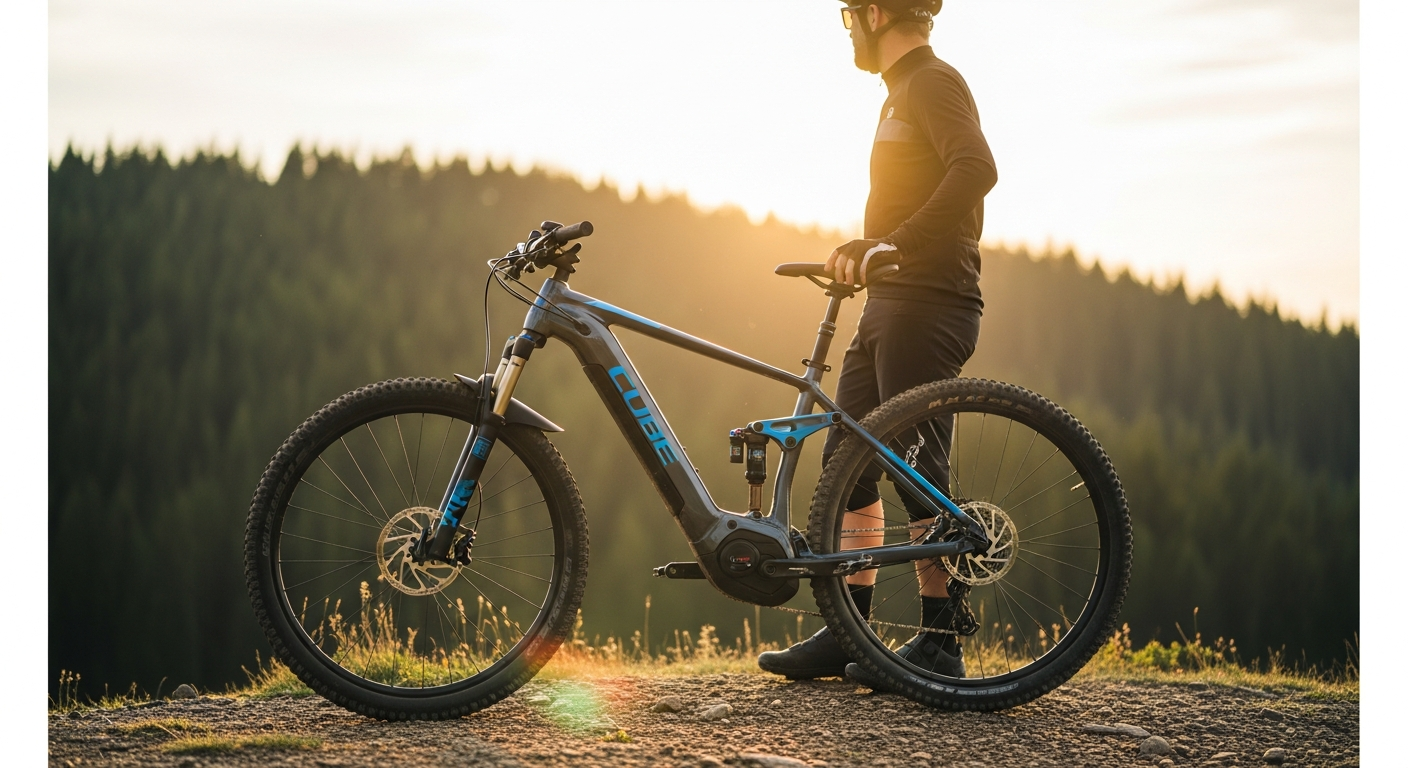
Over 60% of e-bike buyers today prioritize versatility over specialization. They want one machine that handles Monday's gridlocked commute and Saturday's technical trail work. The Cube Reaction Hybrid E-Mountain Bike delivers exactly that promise—and it's become one of the most sought-after models in the hardtail e-MTB category for good reason.
Cube has engineered the Reaction Hybrid series to blur the lines between urban mobility and off-road capability. Paired with Bosch's legendary Performance Line CX motor and integrated PowerTube battery systems, these hardtail e-bikes represent a smart investment for riders who refuse to compromise. Whether you're navigating city streets or exploring weekend singletracks, the engineering speaks for itself.
Discover the full Cube Reaction Hybrid lineup and find your perfect fit today.
Bosch Motor Performance & Battery Systems That Power Your Ride
The Bosch Performance Line CX motor sits at the heart of what makes the Reaction Hybrid special. This workhorse delivers serious torque—up to 75 Nm—which translates to effortless climbing and confident acceleration when you need it. The motor's sensor technology reads your pedaling cadence and adjusts power delivery in real time, creating a natural riding feel whether you're grinding uphill or cruising on flat terrain.
PowerTube Battery Integration & Capacity Options
Three battery configurations power the Reaction Hybrid lineup: 600Wh, 750Wh, and 800Wh. The 600Wh option suits shorter urban commutes and lighter riders, offering adequate range for 30–50 miles of mixed riding. Step up to 750Wh and you're looking at 40–65 miles of real-world range, making it the sweet spot for most commuters who occasionally venture onto trails. The 800Wh option is purpose-built for all-day adventures and heavier riders, delivering 50–75 miles or more depending on terrain and assistance level.
The PowerTube design integrates the battery low into the frame, lowering the bike's center of gravity for better handling and creating that sleek, minimalist aesthetic. Many models are PowerMore-ready, meaning you can attach an additional external battery for extended range on particularly ambitious days—a practical solution that doesn't require a frame redesign.
Real-World Range & Terrain Considerations
Range varies considerably based on three factors: terrain, rider weight, and assistance level. Urban commuting on flat ground with moderate assist stretches battery life considerably. Technical climbing in high assist mode depletes the battery faster. A 180-pound rider on steep terrain will see different range than a 150-pound rider on gentle trails. Generally, expect 30–50% longer range at lower assistance levels, so the eco mode extends your journey considerably if you're willing to pedal harder.
Motor Efficiency Across Riding Scenarios
The Bosch motor excels in stop-and-go city riding. Rather than wasting energy accelerating from standstills repeatedly, the motor engages smoothly and predictably, making commuting less taxing. On sustained climbs, the motor's consistent torque delivery prevents wheel spin and maintains momentum even as your legs fatigue—a massive advantage on technical ascents where maintaining traction is critical.
Battery charging typically takes 3.5–6 hours depending on charger type and battery capacity. This means you can charge overnight for a fresh start each morning, or top up during lunch for evening trail sessions. Bosch batteries demonstrate excellent longevity, maintaining 70–80% capacity after 1,000 charge cycles—roughly 3–4 years of commuting use.
Frame Geometry & Aluminum Construction That Defines Handling
The Aluminium Superlite frame design keeps the Reaction Hybrid light without sacrificing durability. Cube's Gravity Casting Technology creates reinforced zones at stress points, distributing forces efficiently throughout the structure. This approach delivers a frame that's rigid enough for powerful climbing while remaining responsive to steering input.
Agile Ride Geometry & Component Integration
Cube's Agile Ride Geometry strikes a measured balance between control and comfort. The head tube angle sits around 68–70 degrees depending on model, offering precision steering without feeling twitchy. Reach values are moderate—neither slammed forward nor overly upright—creating a natural, neutral riding position that works across multiple terrain types. The stack height provides ample clearance for standing room when sprinting, yet maintains a composed, forward-focused posture.
Integrated cable routing hides brake and shifter cables inside the frame, protecting them from mud and abrasion while maintaining the bike's clean visual lines. This design choice extends component lifespan on commuters who ride year-round through wet conditions.
Frame Variants & Wheel Size Selection
High-step frames offer traditional stand-over geometry, ideal for aggressive off-road riders and those who value performance positioning. Mid-step (trapeze) frames lower the top tube for easier mounting and dismounting—a genuine convenience on urban commutes when you're repeatedly getting on and off. Smaller frame sizes pair with 27.5-inch wheels for agility and quick acceleration, while larger frames use 29-inch wheels that roll over obstacles more efficiently and maintain momentum on flats.
Mounting points throughout the frame allow you to add kickstands, fenders, and cargo carriers without drilling custom holes. This factory-integrated approach is invaluable for commuters who value weather protection and cargo capacity.
Explore component options and specifications for your ideal configuration.
Drivetrain, Braking & Suspension Components
The Reaction Hybrid pairs Bosch motors with proven drivetrain systems from either Shimano or SRAM. Entry-level models feature Shimano Deore or SRAM NX—reliable, durable options with 10 or 11-speed setups. Higher-tier configurations step up to Shimano Deore XT or SRAM GX with 12-speed chains, delivering smoother transitions and wider gear ranges for technical climbing.
Gear Range for Mixed Terrain
Twelve-speed configurations on premium models provide finer gear increments, making it easier to find your optimal cadence across varied terrain. Low-end sprockets climb to 50 teeth, paired with compact 32-tooth chainrings for substantial climbing assistance. At the high end, 11-tooth sprockets let you spin quickly on descents and flats without becoming a pedaling machine on slight downhills.
Braking Systems & All-Weather Stopping Power
Hydraulic disc brakes across the lineup ensure powerful, modulated stopping regardless of weather. The larger rotors (typically 180–203mm) provide substantial mechanical advantage, critical when carrying the e-bike's extra weight downhill or stopping rapidly in urban environments. Modern hydraulic systems require minimal maintenance and deliver consistent performance through wet conditions and mud that would trouble rim brakes.
Suspension Fork Characteristics
SR Suntour forks on entry-level models provide competent comfort and control with basic damping. Mid-tier models feature RockShox Judy or equivalent, offering adjustable compression damping to fine-tune feel. Premium variants use RockShox Recon or Fox 32 forks with more sophisticated damping curves, lockout features, and rebound adjustment. Typical travel ranges from 80–120mm, enough to smooth rough gravel and moderate rocky trails without feeling bouncy on smooth terrain.
Tire Specification & Pressure Tuning
Schwalbe Smart Sam tires come standard on most configurations. These tires strike an intentional compromise: relatively slick tread for low rolling resistance on roads, with enough side knobs for modest off-road grip. Commuters typically run 1.8–2.1 bar pressure for speed and efficiency, while weekend riders drop to 1.5–1.8 bar for increased trail traction and comfort. The tire's geometry and compound work well across diverse conditions without requiring seasonal swaps.
Versatility Across Commuting & Adventure Riding Scenarios
The Reaction Hybrid's defining characteristic is its genuine adaptability. Unlike specialists that excel in one domain while struggling in others, this hardtail performs competently across multiple riding contexts.
Urban Commuting Advantages
The integrated PowerTube battery sits low in the frame, creating an aesthetic that doesn't scream "electric bike." You'll blend seamlessly into urban environments without drawing unnecessary attention. The bike's weight distribution, thanks to the centered battery, improves stability when accelerating from traffic lights and enhances handling in crowded conditions.
Mounting points for fenders and carriers mean you can outfit the Reaction Hybrid for practical transportation duties. Rain protection becomes viable, and you can carry groceries, work gear, or change of clothes without attaching clunky backpacks. The hardtail stiffness prevents flex during hard acceleration, making every pedal stroke feel responsive when navigating congested streets.
Trail-Ready Engineering
On singletrack, the hardtail's rigid frame excels at power transfer during climbing. Every watt from your legs and the motor propels you forward without energy loss to suspension compression. The geometry keeps weight centered, improving traction on steep ascents where front wheel lift becomes a concern.
The Bosch motor's real-time adjustment to your pedaling input shines on technical climbs where maintaining momentum is critical. Rather than applying steady power that might cause wheel slip, the motor responds to grip conditions and rider input, climbing with composure even when traction is marginal.
All-Road Capability & Equipment Compatibility
Cube's all-road equipment option transforms the Reaction Hybrid into a true gravel monster. Fender clearance for wider tires, integrated racks, and protective components turn the bike into a capable adventure tool. This flexibility means one bike can handle Monday's office commute, Wednesday's gravel exploration, and Saturday's trail riding without compromise.
Long-Ride Comfort & Maintenance Accessibility
The balanced geometry creates a neutral riding position suitable for hour-long efforts without excessive fatigue or discomfort. The motor's assist reduces leg strain during sustained efforts, making longer commutes and trail sessions viable without arriving exhausted.
All major components sit in accessible locations. Drivetrain maintenance, brake servicing, and tire changes follow standard procedures without requiring specialized tools or knowledge. Bosch motor service relies on dealer networks in most urban areas, but routine maintenance remains straightforward.
Model Lineup & Pricing Strategy for Different Budgets
The Cube Reaction Hybrid series spans a considerable price range, with entry-level models starting around $2,000 and premium configurations exceeding $4,000. This broad spectrum ensures accessibility across different budgets while maintaining quality standards throughout the lineup.
Entry-Level Value Positioning
Base models feature SR Suntour suspension, Shimano Deore drivetrains with 10 speeds, and 600Wh batteries. Component selection reflects cost optimization without sacrificing essential functionality. These bikes serve commuters who ride primarily on established paths and light trails. The value proposition is strong: you're getting proven Bosch motor technology and solid frame engineering at an accessible price point.
Mid-Range Sweet Spot
Models in the $2,500–$3,200 range represent the optimal balance point for most riders. Larger batteries (750Wh standard), upgraded suspension forks, and 11–12 speed drivetrains create noticeable performance improvements. These configurations offer the best value, delivering meaningful capability upgrades without entering premium pricing territory.
Premium Configurations
The Reaction Hybrid Pro exemplifies premium positioning, often priced $3,500 and above. Advanced suspension technology from RockShox or Fox, higher-tier drivetrain components, and 800Wh batteries define these models. They represent Cube's best engineering, suitable for riders who demand maximum capability and are willing to invest accordingly.
What Drives Price Differences
Battery capacity directly impacts cost—each 150Wh increment adds $300–$400. Suspension upgrades contribute significantly: a RockShox Recon fork costs substantially more than a Suntour equivalent. Drivetrain tier jumps, particularly the move from 11 to 12-speed SRAM or Shimano systems, add $200–$400. Component bundles—fenders, racks, lights—also influence final pricing.
Long-Term Value Considerations
Higher-end models typically retain resale value better due to superior component longevity and sustained appeal. A premium Reaction Hybrid might resell for 55–65% of original price after 2–3 years, compared to 45–55% for entry-level models. Over time, this difference can offset the initial price premium, particularly if you plan eventual resale.
Hardtail vs. Full-Suspension: When the Reaction Hybrid Excels
The hardtail versus full-suspension debate deserves honest examination. Both designs offer legitimate advantages depending on your riding priorities.
Hardtail Advantages
Hardtails are lighter—typically 2–4 pounds lighter than comparable full-suspension bikes—improving acceleration, climbing efficiency, and portability. Simpler mechanical systems mean fewer components requiring maintenance and adjustment. The rigid frame transmits power directly from pedals to wheels, eliminating suspension compression losses during hard climbing. Initial purchase cost runs 15–25% lower than full-suspension alternatives with equivalent components.
For riders prioritizing commuting and moderate trail work, hardtails eliminate unnecessary complexity. Maintenance intervals stretch longer, dealer visits become less frequent, and you avoid rear shock maintenance entirely.
Hardtail Limitations
Rigid rear ends transmit every rock, root, and rut directly to your body. Technical terrain with significant obstacles challenges hardtail riders more than full-suspension counterparts. Impact forces accumulate during multi-hour trail sessions, creating fatigue and discomfort. The hardtail's limitations increase proportionally with terrain difficulty and rock density.
Very technical singletrack, boulder fields, and heavily rooted descents are domains where full-suspension bikes shine and hardtails struggle. A full-suspension e-MTB absorbs impacts that a hardtail rider must actively manage through body positioning and technique.
Ideal Terrain for the Reaction Hybrid
Smooth to moderate terrain suits the Reaction Hybrid perfectly. Established trails, gravel roads, light rocky sections, and gentle singletrack all play to the hardtail's strengths. Urban riding, fire roads, and XC-focused paths are hardtail natural habitats. Terrain that's technical but not severe—think loose climb with manageable rocks—becomes extremely manageable with the hardtail's efficiency advantage.
Skill Level & Terrain Difficulty Thresholds
Beginner and intermediate riders benefit from hardtails on beginner-to-intermediate terrain. The mechanical simplicity and immediate power feedback build foundational skills efficiently. Advanced riders can absolutely shred on hardtails—many choose them deliberately for fitness benefits and technical challenge. Where hardtails struggle is heavy-duty technical terrain in the hands of any skill level. A novice on rowdy terrain needs full-suspension; an expert on the same terrain could manage, but full-suspension becomes preferable.
Competitive Positioning Against Full-Suspension
At identical price points, hardtails offer superior components because those dollars aren't spent on rear shock systems. A $3,000 hardtail features markedly better drivetrain, brakes, and suspension fork than a $3,000 full-suspension bike. This component advantage compensates partially for the hardtail's mechanically inferior terrain handling.
Sizing, Geometry & Finding Your Perfect Fit
Correct sizing determines whether the Reaction Hybrid feels natural or requires constant positioning adjustment. The process begins with frame size selection based on height and inseam, then proceeds to geometry details.
Frame Size Selection Process
Cube publishes detailed sizing charts correlating height ranges to frame sizes. For Reaction Hybrid models, XS frames suit riders under 5'4", S frames work for 5'4"–5'8", M frames handle 5'8"–6'0", L frames support 6'0"–6'4", and XL frames accommodate riders above 6'4". These ranges represent starting points; inseam measurement provides more precision. A detailed inseam-to-frame-size calculation ensures optimal seat tube length and standover clearance.
Geometry Details & Riding Style Impact
Reach measurements indicate horizontal distance from bottom bracket to handlebar attachment points. Longer reach creates more aggressive, forward-focused positions suitable for trail riding; shorter reach improves comfort for upright commuting. Stack heights measure vertical distance, affecting how high the handlebars sit relative to the saddle. Higher stack creates upright positions for visibility and comfort; lower stack encourages a more aggressive stance.
Head tube angle influences steering responsiveness. Steeper angles (70+ degrees) create quicker, more direct steering; slacker angles (67–68 degrees) promote stability at high speeds and on technical descents. The Reaction Hybrid's balanced geometry works across purposes, so don't obsess over minute angle differences.
High-Step Versus Mid-Step Frame Trade-offs
High-step frames place the top tube at traditional heights, creating low standover clearance relative to seat tube length. This geometry offers maximum frame stiffness and aggressive positioning. Mid-step designs lower the top tube for easier mounting and dismounting—a genuine comfort advantage when repeatedly getting on and off during commutes or when wearing skirts and dresses.
Commuters and casual riders benefit from mid-step geometry; aggressive trail riders typically prefer high-step designs for maximum frame stiffness and traditional positioning.
Wheel Size Implications
27.5-inch wheels offer superior agility, quicker acceleration, and easier maneuverability in tight spaces—advantages appreciated on technical trails and in urban environments. 29-inch wheels roll over obstacles more smoothly, maintain momentum more effectively, and offer slightly higher top speed. Taller riders typically find 29-inch wheels proportionally correct; shorter riders often prefer 27.5-inch proportions.
Finding Your Ideal Fit
Test rides eliminate guesswork. Spend 15–20 minutes riding a frame at your height and inseam, focusing on how naturally your arms and legs reach controls. Your back should feel neutral—neither stretched nor cramped. Standing on pedals during acceleration should feel balanced, not twisted or twisted. Seated climbing should position you slightly forward of center without excessive weight on the handlebars.
Avoid common mistakes like selecting a frame size for standover clearance alone. A frame that clears your inseam by 2 inches is likely too small for your height and will feel cramped overall. Conversely, too-large frames leave you reaching excessively for controls and struggling with reach.
Real-World Ownership: Maintenance, Durability & Long-Term Reliability
Beyond purchase, the Reaction Hybrid demonstrates excellent longevity and reasonable ownership costs.
Bosch Motor Reliability & Warranty
Bosch motors have accumulated millions of kilometers across various applications with demonstrated reliability. The Performance Line CX system carries comprehensive warranty coverage—typically 2 years manufacturer's warranty, with optional extended coverage available. In real-world use, Bosch motors rarely require service until 50,000+ kilometers have accumulated, and many exceed 100,000 kilometers with minimal intervention.
Battery Longevity & Degradation Patterns
Bosch PowerTube batteries maintain approximately 90% capacity after 500 charge cycles and 70–80% capacity after 1,000 cycles. For a commuter using the battery 250 days annually, this translates to 4–5 years before noticeable range reduction. Batteries naturally degrade over time; this degradation is gradual and manageable. After 3 years of regular commuting, expecting to see 10–15% range reduction is reasonable.
Battery replacement costs $600–$900 depending on capacity. This represents a significant expense but occurs infrequently during typical ownership periods. Proper storage—charging to 60% and storing in cool conditions during off-season—extends battery lifespan considerably.
Routine Maintenance Intervals
Drivetrain cleaning and lubrication every 300–500 miles maintains smooth shifting. Brake pad inspection every 500 miles ensures adequate stopping power. Suspension fork servicing follows manufacturer recommendations—typically annually for heavily used forks. Bearing inspection and occasional frame cleaning comprise the remainder of routine maintenance.
These intervals reflect standard bicycle maintenance practices. No e-bike-specific complexity exists; your local bike shop can handle all routine work without specialized training.
Component Durability Across Different Riding Conditions
Bosch drivetrains demonstrate excellent durability, even on commuters riding wet conditions year-round. Shimano and SRAM drivetrains show similar resilience. Hydraulic brakes require periodic fluid checks but otherwise require minimal attention. Suspension forks benefit from occasional sealing inspection but survive thousands of kilometers reliably.
Weather resistance is genuinely good. Integrated cable routing protects vulnerable wiring from road spray and mud. The PowerTube's weatherproof design protects electronics. Riders in rainy climates report consistent performance across wet seasons.
Common Wear Items & Replacement Costs
Brake pads ($30–$60 per set) typically require replacement every 1,000–1,500 miles. Chainrings and cassettes last 2,000+ miles before degradation. Tires average 2,000–3,000 miles depending on riding style and conditions. These replacements are routine maintenance, not surprises.
The hardtail design eliminates rear shock rebuilds, a major cost component on full-suspension bikes. This represents genuine long-term savings for owners planning extended ownership.
Competitive Positioning & Value Proposition in 2026
The Cube Reaction Hybrid faces legitimate competition, yet maintains strong differentiation.
Bosch Motor Advantage
Bosch Performance Line CX motors remain the most proven, widely-serviced drive systems in the market. Shimano EP8 and Yamaha PW series motors compete technically, but Bosch's longevity track record, dealer support network, and real-world performance data create tangible advantages. Brose motors are excellent but less established. The Bosch choice provides confidence and resale value.
Price-to-Performance Ratio
Compared to full-suspension e-MTBs in the $3,000–$3,500 range, the Reaction Hybrid delivers superior components because those dollars fund drivetrain and suspension forks rather than shock systems. You're getting better shifters, brakes, and suspension quality at the same price point. This component superiority meaningfully impacts long-term durability and riding experience.
Brand Reputation & Community Feedback
Cube's reputation for quality engineering and value pricing resonates strongly with buyers. The Reaction Hybrid's consistent appearance on best-seller lists and positive community reviews signal genuine user satisfaction. Resale values remain stronger for Cube models compared to less-established brands.
Market Alternatives
Trek Powerfly hardtails, Specialized Turbo Levo Hardtail, and Rocky Mountain Instinct Powerplay represent direct competitors. Each brings legitimate qualities to the table. Trek emphasizes refined geometry; Specialized offers integrated connectivity; Rocky Mountain provides rugged durability. Compared directly, the Reaction Hybrid balances these qualities while maintaining exceptional value—you're not overpaying for brand premium or redundant features.
Decision Framework: Is the Cube Reaction Hybrid Right for You?
Evaluating whether this bike matches your needs requires honest self-assessment across multiple dimensions.
Ideal Rider Profile
The Reaction Hybrid suits commuters who occasionally explore trails, weekend adventurers who value efficiency, and mixed-terrain enthusiasts seeking versatility. If 80% of your riding occurs on pavement with 20% gravel and smooth trail time, this bike is ideally matched. If you ride primarily technical singletrack or exclusively commute on urban pavement, specialized alternatives might serve you better.
Riding Frequency & Terrain Assessment
Riders who use their e-bikes 200+ days annually benefit significantly from the durability and low-maintenance approach that hardtails provide. Casual riders using the bike 30–50 days yearly might find the investment excessive. Terrain matters considerably: smooth to moderate terrain strongly favors the Reaction Hybrid; heavy technical terrain requires full-suspension alternatives.
Budget Considerations & Financing
Allocate $2,500–$3,500 for a solid configuration; premium models exceed this range. Consider total cost of ownership: maintenance, occasional repairs, eventual battery replacement, and periodic component refreshes. If the initial investment strains your budget, entry-level models deliver surprisingly capable performance. Many retailers offer financing options, making purchases more manageable.
Lifestyle Integration Questions
Will you store the bike securely? Does your living space accommodate an e-bike's physical size? Can you charge the battery overnight? Are your primary routes suitable for cycling, or does traffic and infrastructure force you back to cars? Honest answers to these questions predict whether the Reaction Hybrid becomes a treasured daily tool or expensive garage decoration.
Long-Term Skill Growth & Ambition
Will this bike grow with your developing skills, or will you outgrow its capabilities within a year? The Reaction Hybrid serves intermediate riders excellently but might feel limiting if you're developing into an advanced trail rider. Conversely, it suits beginners perfectly as they develop competence and confidence. Assess whether your riding ambitions align with the bike's inherent capabilities.
Test Ride Recommendations
Visit a dealer offering test rides. Spend 30+ minutes riding different models at your intended size. Focus on how naturally the bike feels and whether geometry resonates with your body. Confidence after a solid test ride indicates good fit; uncertainty suggests continued searching.
The Verdict: A Hardtail That Actually Delivers on Its Promise
The Cube Reaction Hybrid E-Mountain Bike has earned its best-seller status through genuine engineering excellence and honest versatility. It doesn't pretend to be a downhill destroyer or a featherweight road rocket—it's something far more practical: a dependable partner for riders who demand performance across multiple terrains without sacrificing reliability or value.
The combination of Bosch's proven motor technology, Cube's thoughtful frame geometry, and the hardtail's inherent efficiency creates a compelling package. You're getting a machine that climbs like a dream, rolls smoothly on pavement, and handles trail sections with surprising composure. Yes, the hardtail design means you'll feel more bumps than a full-suspension bike, and technical terrain demands respect—but that's the honest trade-off you make for lighter weight, simpler maintenance, and better power transfer.
What truly sets the Reaction Hybrid apart is its flexibility. Whether you're commuting 15 miles daily, exploring gravel roads on weekends, or tackling moderate singletrack, this bike adapts to your ambitions. The range of models, frame sizes, and battery options means there's a configuration for nearly every rider and budget. If you're tired of choosing between a comfortable commuter and a capable trail machine, stop compromising.
Start by identifying your primary riding scenarios, then test-ride the model that matches your frame size and budget. You'll understand immediately why thousands of riders have made this their go-to e-bike.
Shop the complete Cube Reaction Hybrid range and ride with confidence.
Leave a Reply