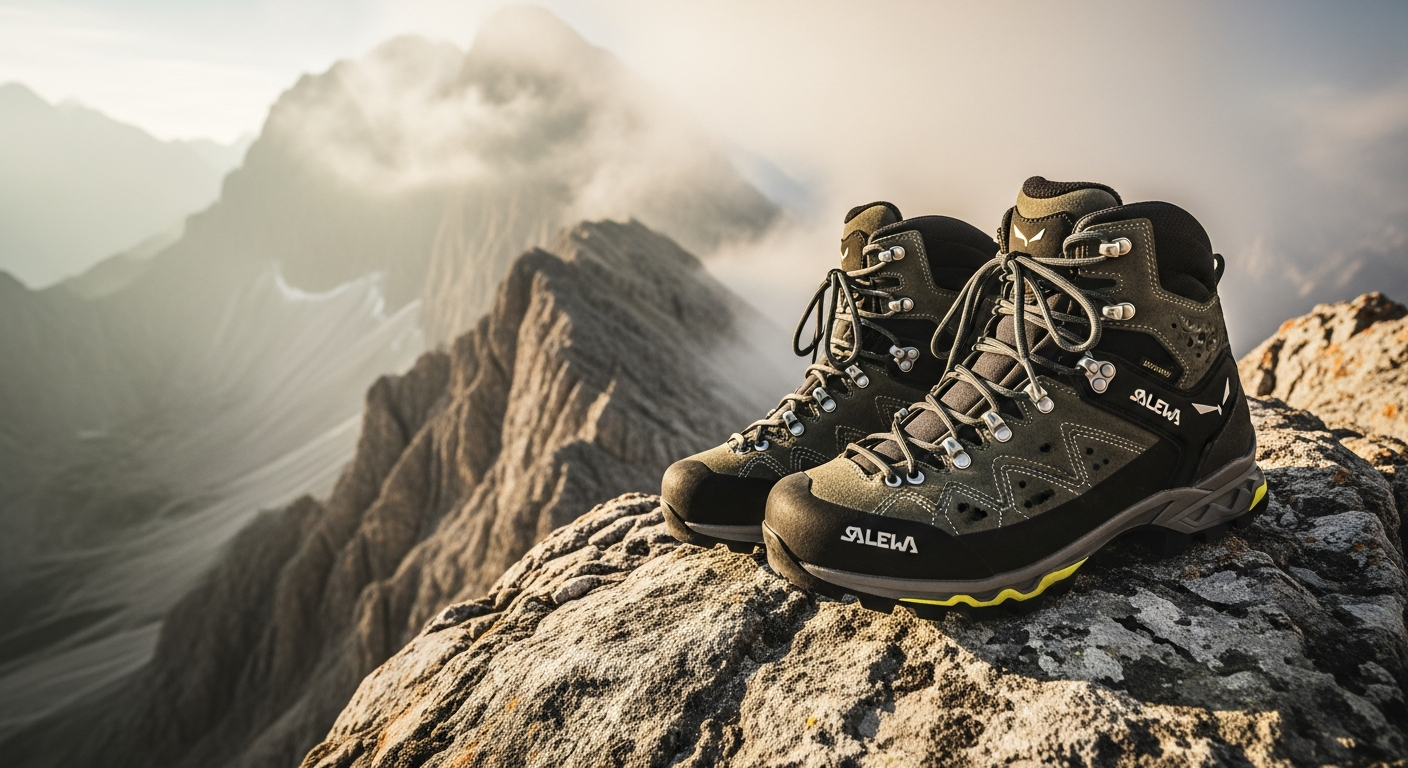
When you're scrambling across rocky ridges at 11,000 feet, a single misstep can mean the difference between reaching the summit and serious injury. Ninety percent of hiking injuries occur on technical, uneven terrain—yet most hikers choose footwear designed for flat trails. Your boots become your most critical piece of safety equipment the moment the ground turns vertical and unpredictable.
The Salewa Mountain Trainer 2 Mid GTX represents a breed apart from casual hiking footwear, built specifically for mountaineers and serious trekkers who venture into challenging alpine environments. This mid-cut boot combines military-grade durability with precision engineering, featuring Vibram grip technology, Gore-Tex waterproofing, and the proprietary 3F System that serious climbers trust. When you're navigating via ferratas, ascending steep alpine passes, or crossing exposed ridges, these boots are engineered to deliver the stability and protection that lighter alternatives cannot provide.
Why Scrambling and Via Ferrata Demand Specialized Footwear
The difference between hiking boots and technical alpine boots
Standard hiking boots prioritize comfort and versatility across moderate terrain. They're designed with moderate flex, cushioning optimized for distance, and protection suited to maintained trails. Technical alpine boots operate under entirely different constraints. They sacrifice comfort on flat ground to deliver performance on vertical, exposed, and unpredictable surfaces where a loose rock or slick surface can have serious consequences.
How uneven, rocky terrain stresses standard hiking shoe designs
When you're edging on a narrow ridge or traversing scree fields, your foot needs precise contact with the ground. Standard hiking shoes flex too freely—the sole bends and twists with each step, forcing your foot to work harder and increasing the risk of ankle rolls. The outsole pattern on casual hiking boots prioritizes tread for wet grass and dirt, not the aggressive bite needed on wet stone or mixed terrain. Rocky scrambles demand a stiffer platform and more aggressive lugs that bite into unstable surfaces rather than sliding across them.
Why ankle support and foot protection matter on exposed ridges
Exposure changes everything. On a gentle forest trail, rolling your ankle might mean a painful hike out. On a rocky ridge with thousand-foot drop-offs, it means disaster. Technical alpine boots feature reinforced uppers, protective rands that encircle the shoe, and advanced ankle support systems specifically engineered to prevent inversion injuries on uneven ground. The mid-cut design locks the ankle in place without restricting the mobility you need when carrying a heavy pack up steep terrain.
The role of boot stiffness in edging and precise foot placement
Edging—placing the side of your boot on a narrow hold—requires a sole that doesn't flex or twist. A flexible sole distributes your weight across a wider surface, reducing pressure on the edge and increasing the likelihood of slipping. A stiff sole concentrates your weight precisely where you place it, creating the stability needed for technical scrambles and via ferratas. The Mountain Trainer 2's dual-density midsole provides this stiffness in the heel and midfoot while allowing flex in the forefoot, balancing precision with the natural movement needed during steep ascents.
Common injuries that occur with inadequate technical footwear
Hikers wearing casual boots on technical terrain frequently experience ankle sprains, twisted knees from unstable footing, and plantar fasciitis from constant micro-adjustments to unstable surfaces. Foot slippage on wet rock leads to twisted ankles and falls. The lack of heel hold on steep descents causes toes to jam against the boot toe box, resulting in blackened toenails and stress fractures. Inadequate midsole support on rough terrain creates impact shock that travels up the kinetic chain, causing knee and hip problems that develop gradually over multiple seasons.
How the Mountain Trainer 2 addresses these specific challenges
The Mountain Trainer 2 was engineered specifically to prevent these injury patterns. The 3F System locks your heel in place, preventing the foot slippage that causes ankle injuries. The aggressive Vibram outsole bites into wet surfaces, eliminating the slip-and-catch motion that stresses the ankle ligaments. The protective rand shields your foot from abrasion and impacts from sharp rocks. The stiff sole platform distributes load evenly across technical terrain, reducing the micro-movements that lead to chronic pain. Every design choice targets a specific failure point on exposed, technical routes.
Vibram WTC 2 Outsole—The Grip System That Changes Everything
Overview of the Vibram WTC 2 sole technology and its heritage
Vibram has engineered soles for Alpine guides and military mountaineers for over 80 years. The WTC 2 (Winter Traction Control 2) represents their most advanced platform for technical alpine environments. Unlike softer rubber compounds designed for hiking trails, the WTC 2 uses a proprietary compound formulation that maintains grip across temperature ranges from wet rock at sea level to frozen terrain at altitude. The sole is engineered at the molecular level to conform slightly to the surface beneath it, creating contact pressure that translates to traction rather than slippage.
How 5.6mm aggressive lugs perform on wet rock and slick surfaces
The Mountain Trainer 2 features lugs 5.6mm deep—significantly deeper than standard hiking boots. These aggressive projections penetrate wet surfaces, creating mechanical grip that doesn't rely solely on friction. On wet rock, the lugs bite into microscopic surface texture and actually displace water, creating a dry contact point between rubber and stone. On slick alpine meadows and moss-covered boulders, the deep lugs conform to surface irregularities, maximizing contact area and traction. The lug pattern is specifically optimized for the angular surfaces found on rock scrambles, not the smooth surfaces of maintained trails.
Edging capability on narrow ridges and technical scrambles
The WTC 2 outsole features a reinforced perimeter edge and increased stiffness compared to hiking shoe soles. This edge design concentrates pressure on the boot's narrow edge, creating stability when sidling across exposed ridges or placing your foot on knife-edge terrain. The sole doesn't roll or twist underfoot—it maintains precise contact with the surface, giving you the confidence to commit your weight to a narrow hold. Climbers using the Mountain Trainer 2 consistently report that edging feels secure and predictable, essential for technical scrambles where your feet must work with absolute precision.
Traction on loose scree and unstable terrain
Scree fields—slopes covered in loose rock fragments—defeat standard hiking boot soles. The lugs on casual boots slide through loose material without creating traction. The WTC 2 lugs penetrate deeper into scree, actually engaging with the larger rock fragments beneath the surface layer. The compound remains flexible enough to conform to irregular scree surfaces while maintaining enough stiffness to transmit force directly to the ground. Hikers frequently report that the Mountain Trainer 2 feels stable and secure on scree descents where lighter boots feel unpredictable and anxiety-inducing.
Comparison of Vibram performance versus standard hiking shoe soles
Standard hiking shoe soles typically feature 3-4mm lugs with softer rubber compounds optimized for comfort and flexibility. These soles perform adequately on maintained trails but offer noticeably reduced grip on technical terrain. When you step from a standard hiking boot onto wet rock, you immediately feel the difference—the foot slides microscopically, requiring your ankle and calf to make constant micro-adjustments. With the Mountain Trainer 2, that micro-sliding sensation is eliminated. Your foot locks onto the surface, and you feel the confidence that comes from secure, predictable traction.
Real-world grip performance in mud, snow, and mixed conditions
The WTC 2 sole delivers consistent performance across dramatically different surface types. On muddy approaches, the aggressive lugs shed mud while maintaining grip. On snow and ice, the compound maintains flexibility, allowing the lugs to conform to frozen surfaces without becoming brittle. In mixed conditions—rock, scree, snow, and mud on the same trail—the sole transitions seamlessly between surface types without requiring boot changes or anxiety about grip loss. This versatility is crucial for alpine routes where weather changes rapidly and surface conditions shift from rock to snow within minutes.
Why sole stiffness matters for technical alpine routes
A flexible sole allows your foot to roll and twist with the terrain, demanding constant muscular effort from your ankle and foot stabilizers. Over a long technical day, this constant instability creates fatigue, increasing injury risk as muscles tire. A stiff sole—like the Mountain Trainer 2's dual-density midsole—acts as a platform that maintains consistent alignment regardless of the terrain beneath it. This reduces muscular demand, decreases fatigue, and allows you to climb longer and more safely. On technical routes where fatigue equals increased risk, this stiffness becomes a critical safety feature.
Gore-Tex Waterproofing vs. Breathability—What You're Trading Off
How Gore-Tex membrane keeps feet dry in alpine weather
Gore-Tex is a microporous membrane with pores approximately 20,000 times smaller than water droplets but 700 times larger than water vapor molecules. This creates a one-way barrier—liquid water cannot enter, but moisture vapor can escape. In alpine weather where you're exposed to rain, wet snow, and water crossings, Gore-Tex keeps feet dry while allowing some moisture escape. On technical routes where wet feet mean cold feet and cold feet mean reduced circulation and increased injury risk, this waterproofing is essential protection.
The waterproofing advantage during river crossings and wet snow
Alpine routes often require water crossings where hiking through streams is unavoidable. With standard boots, water enters immediately, and your feet remain wet for hours. With Gore-Tex, water crossings are merely damp moments—your feet stay essentially dry. When climbing into wet snow at altitude, Gore-Tex prevents water penetration that would otherwise soak your socks and create the precise conditions for frostbite and hypothermia. This waterproofing becomes literally life-saving on alpine routes where weather turns severe and descent takes hours.
Breathability limitations of robust waterproof construction
The same robust construction that keeps water out also limits breathability. Gore-Tex allows moisture vapor to escape, but the thick, multi-layered construction of a technical alpine boot necessarily restricts airflow. On warm-weather day hikes on well-maintained trails, your feet may feel warmer in the Mountain Trainer 2 than in lighter, more breathable hiking shoes. The rigid, protective construction generates a pocket of warmer, more humid air around your foot. This tradeoff is intentional—Gore-Tex prioritizes protection over maximum ventilation.
When moisture management becomes a tradeoff with protection
On a high-altitude technical climb where weather is unpredictable and exposure is constant, protection against external moisture outweighs the discomfort of some internal moisture accumulation. Your feet might feel slightly damper than in a more breathable boot, but they remain dry and warm when you're exposed to wind, rain, and snow. On summer day hikes on dry, moderate terrain, this protection becomes unnecessary—you're trading breathability for protection you don't need. The Mountain Trainer 2 excels when conditions are challenging; it's overbuilt for comfortable, dry-weather trail hiking.
Durability of Gore-Tex in extended alpine expeditions
Gore-Tex durability depends on proper care. With regular cleaning and appropriate storage, Gore-Tex maintains its waterproofing for years of hard use. The membrane itself doesn't degrade significantly; what typically fails is the outer protective layer that shields the Gore-Tex from abrasion. The Mountain Trainer 2's durable suede leather upper and protective rand shield the Gore-Tex layer, extending its functional life across multiple seasons of technical climbing. Many users report that their Mountain Trainer 2 boots maintain waterproofing for 5+ years of regular alpine use.
Managing foot moisture during high-exertion technical climbing
Even with Gore-Tex, some internal moisture accumulation occurs during high-exertion climbing—sweat doesn't escape as freely as it would from a breathable shoe. Managing this moisture requires attention to foot care. Wearing merino wool socks, which wick moisture and maintain warmth even when damp, helps significantly. Taking breaks to air out your feet and allow sweat to evaporate further enhances comfort. The key is recognizing that the Mountain Trainer 2 prioritizes protection; managing internal moisture is a minor consideration compared to the critical benefit of staying dry when exposed to alpine weather.
Seasonal considerations for waterproofing in alpine environments
During spring and fall when weather is unpredictable and moisture is constant, Gore-Tex waterproofing is essential. Summer alpine climbing may involve occasional rain but generally offers drier conditions; the waterproofing remains protective insurance. Winter climbing and mountaineering in snow demands robust waterproofing—moisture exposure is constant. Year-round technical alpine hiking benefits from Gore-Tex protection because alpine weather can change dramatically within minutes, and staying dry is fundamental to staying safe.
The 3F System and MFF+ Footbed—Custom Fit Engineering
What the proprietary 3F System does for heel hold and ankle stability
Salewa's 3F System (3D Flex Framework) is a three-component design that addresses the primary failure point in technical alpine boots—heel slippage. The system features a reinforced heel counter that locks your foot in place, preventing the micro-movements that lead to blister formation and ankle instability. The heel cup is specifically molded to provide firm support without pressure points, and the system extends partially up the ankle, creating a secure platform that prevents your foot from rolling inward or outward. On exposed terrain where ankle stability determines whether you stay upright or fall, the 3F System transforms the boot from merely protective to actively stabilizing.
How the Multi-Fit Footbed Plus (MFF+) adapts to individual foot shapes
The MFF+ footbed is engineered to accommodate the natural variation in human foot shapes. Rather than a one-size-fits-most design, the MFF+ features removable components that allow adjustment for different arch heights and forefoot widths. The footbed foam is designed to compress gradually under load, conforming to your foot's specific pressure distribution pattern. Over the first several wears, the footbed molds itself to your individual foot shape, creating a customized fit that improves comfort and reduces blister risk. This individualized approach explains why users with different foot shapes consistently report the Mountain Trainer 2 fits them excellently—the boot adapts to them rather than forcing them to adapt to the boot.
Toe-to-heel lacing system for precision fit customization
The lacing system on the Mountain Trainer 2 extends all the way to the toes, providing precision control over fit across the entire foot. This isn't merely a comfort feature—it's a performance tool. You can loosen the midfoot lacing to reduce pressure if you're experiencing hotspots, then tighten the ankle lacing to maintain heel stability. You can adjust toe-box tension independently from heel tension, accommodating swelling that occurs during long climbs. This granular control means you can dial in the perfect fit for different climbing scenarios, sock thicknesses, and foot conditions throughout the day.
Benefits of personalized fit on technical, uneven terrain
When your boot fits precisely, your foot remains stable and centered within the boot, requiring minimal muscular effort to prevent rolling or shifting. On technical terrain where micro-movements create instability and fatigue, this precise fit becomes a critical performance advantage. Your foot doesn't slide forward during descents, compressing your toes against the toe box and causing blisters and blackened toenails. Your foot doesn't slip sideways, creating the ankle instability that leads to sprains. The precise fit means every part of your foot is supported exactly as needed, creating stability that translates directly to confidence on exposed terrain.
Reducing blister risk through advanced footbed technology
Blisters form when the foot slides within the boot, creating friction that overheats and damages skin. The MFF+ footbed and 3F System work together to eliminate this sliding. The heel counter prevents heel lift during descent. The midfoot support prevents excessive foot roll. The forefoot construction prevents toe-box pressure that creates rubbing. By eliminating the sliding motions that cause blisters, these features reduce blister risk dramatically. Users frequently report completing multi-day technical climbs in the Mountain Trainer 2 without any blisters, despite feet swelling and changing shape throughout the day.
Adjustability for different sock thicknesses and foot volumes
Your feet swell during climbing, potentially expanding a full half-size by day's end. The toe-to-heel lacing system allows you to accommodate this swelling without loosening the entire boot. If you're climbing in cool weather and wearing thick expedition socks, the lacing can be adjusted to accommodate the increased volume. If you transition from heavy winter socks to lightweight summer socks, the lacing adjusts to maintain consistent fit. This adjustability extends across multiple seasons and climbing scenarios, making the Mountain Trainer 2 effective whether you're climbing in spring with heavy socks or high-altitude summer climbing with lighter footwear.
How fit precision enhances confidence on exposed scrambles
Confidence on exposed terrain comes partly from knowing your feet are secure and won't slip. The precise fit engineered by the 3F System and MFF+ creates this tangible security. When you know your foot is locked in place, your ankle is supported, and your sole is gripping securely, you can commit your full weight to technical moves. You're not holding back, protecting against the possibility of slipping. You move decisively and efficiently, reducing exposure time and energy expenditure. This enhanced confidence, grounded in the physical reality of secure footwear, makes the difference between comfortable technical climbing and anxious, exhausting scrambling.
Investment Value—Is $319.95 Worth the Cost?
Price positioning within the technical alpine boot market
At $319.95, the Mountain Trainer 2 occupies the upper-middle segment of the technical alpine boot market. Premium alpine climbing boots designed for mountaineering expeditions cost $400-$600. High-end technical hiking boots from brands like Scarpa and La Sportiva range from $300-$450. Budget technical boots cost $150-$200, typically with less durable construction and less advanced fit systems. The Mountain Trainer 2 sits at the sweet spot where advanced performance features and exceptional durability converge with relative accessibility—expensive enough to be built correctly, affordable enough for serious hikers rather than exclusively professional mountaineers.
Longevity and cost-per-use calculations over multiple seasons
A pair of quality hiking boots worn moderately lasts 500-1000 miles before the midsole begins breaking down and the upper deteriorates. The Mountain Trainer 2, with its durable suede leather and Vibram sole, consistently reaches 1000+ miles of hard use. If you climb 100 miles of technical terrain per year, one pair of Mountain Trainer 2 boots will serve you for 10+ years. The cost-per-use over that decade is approximately $32 per year, or less than $0.32 per mile. Compare that to replacing budget boots every 2-3 years at $150-$200 per pair—the cost-per-use becomes comparable or higher, while the budget boots offer inferior performance and comfort.
Comparing value to lighter, less specialized alternatives
Lighter hiking boots and approach shoes cost less upfront—$150-$250—and feel more comfortable on casual trails. But they lack the ankle support, grip, and protection necessary for technical terrain. When you need specialized footwear and compromise with a lighter alternative, you're trading performance and safety for lower cost. On technical terrain, the lighter boot becomes a liability. You move slower because you're anxious about footing. You're more prone to injury because support is inadequate. The time spent on a technical climb increases, increasing exposure. The lightweight boot's upfront savings disappear when you factor in reduced performance, increased risk, and potentially added cost from injuries or replacing the boot sooner.
Performance insurance for serious mountaineers
The Mountain Trainer 2 is performance insurance. On moderate terrain, the insurance feels unnecessary—lighter boots would have worked fine. On difficult terrain in bad weather, the insurance becomes literally life-saving. The extra weight becomes negligible when it's the difference between confident, secure climbing and terrifying, slippery scrambling. The stiff sole and advanced fit systems prevent injuries that would otherwise sideline you for weeks or months. The Gore-Tex keeps you warm and dry when conditions deteriorate. For serious mountaineers who regularly venture onto technical terrain, the $319.95 investment is insurance against the consequences of inadequate footwear.
Resale value and durability-based ROI
Quality technical boots retain resale value far better than budget alternatives. A well-maintained pair of used Mountain Trainer 2 boots typically sells for $180-$250, retaining 60-70% of original value. Budget technical boots, when their midsoles have degraded, are often unsellable. The Mountain Trainer 2's durability means users often upgrade to new models only when technology improves significantly, not because their current boots have failed. This durability-based ROI—paying premium price for a boot that lasts twice as long as the alternative—translates to lower true cost of ownership over multiple seasons.
When budget boots fail versus when premium boots deliver
Budget boots perform adequately on moderate terrain in good weather. They fail catastrophically on technical terrain, in adverse conditions, and during multi-day expeditions. The sole wears smooth and loses grip. The midsole breaks down and stops providing support. The upper cracks and lets water in. The fit systems prove inadequate, leading to blisters and instability. The Mountain Trainer 2 delivers consistently. The sole maintains grip throughout its lifespan. The midsole provides support for thousands of miles. The upper remains waterproof and supportive. The fit systems continue preventing blisters and providing ankle stability year after year. The premium cost is the difference between a tool that eventually fails and a tool that endures.
Long-term foot health benefits of proper technical footwear
Wearing inadequate footwear on technical terrain creates cumulative injury patterns. Repeated ankle instability leads to chronic ankle problems. Constant foot rolling in unsupportive boots creates plantar fasciitis and arch problems. Pressure points and blisters create lasting foot issues. Using proper technical footwear like the Mountain Trainer 2 prevents these chronic patterns. Your feet remain healthy, strong, and pain-free, enabling you to climb for decades. The $319.95 investment in proper footwear becomes an investment in decades of pain-free climbing—something impossible to quantify in dollar terms but undeniably valuable when you're 60 years old and still climbing technical terrain comfortably while friends your age have given up due to chronic foot pain.
Gear Selection That Sticks
The Salewa Mountain Trainer 2 Mid GTX isn't a boot for everyone—and that's precisely why it excels for those who need it. If your alpine adventures demand scrambling, via ferratas, or technical ridge traverses, these boots deliver the stability, grip, and protection that lighter alternatives simply cannot match. The Vibram outsole bites into wet rock. The 3F System locks your heel. The Gore-Tex keeps moisture out when weather turns violent.
Yes, they're heavier and stiffer on flat terrain. But on technical, exposed, unforgiving alpine routes, they transform confidence from a feeling into a physical reality. You step onto a narrow ridge knowing your foot won't slip. You commit your weight to a technical move without hesitation. You descend steep scree without anxiety about losing control. That tangible confidence—grounded in engineering excellence and proven performance—is what justifies the investment.
The $319.95 price is insurance against twisted ankles, slipped feet, and compromised stability when consequences matter most. It's investment in footwear that lasts for years rather than seasons. It's the difference between climbing well and climbing anxiously. These boots are engineered to be exceptional for the hikes where precision, protection, and performance determine whether you summit safely or struggle unnecessarily.
Get the technical alpine performance you deserve—invest in the Mountain Trainer 2 today.
Leave a Reply