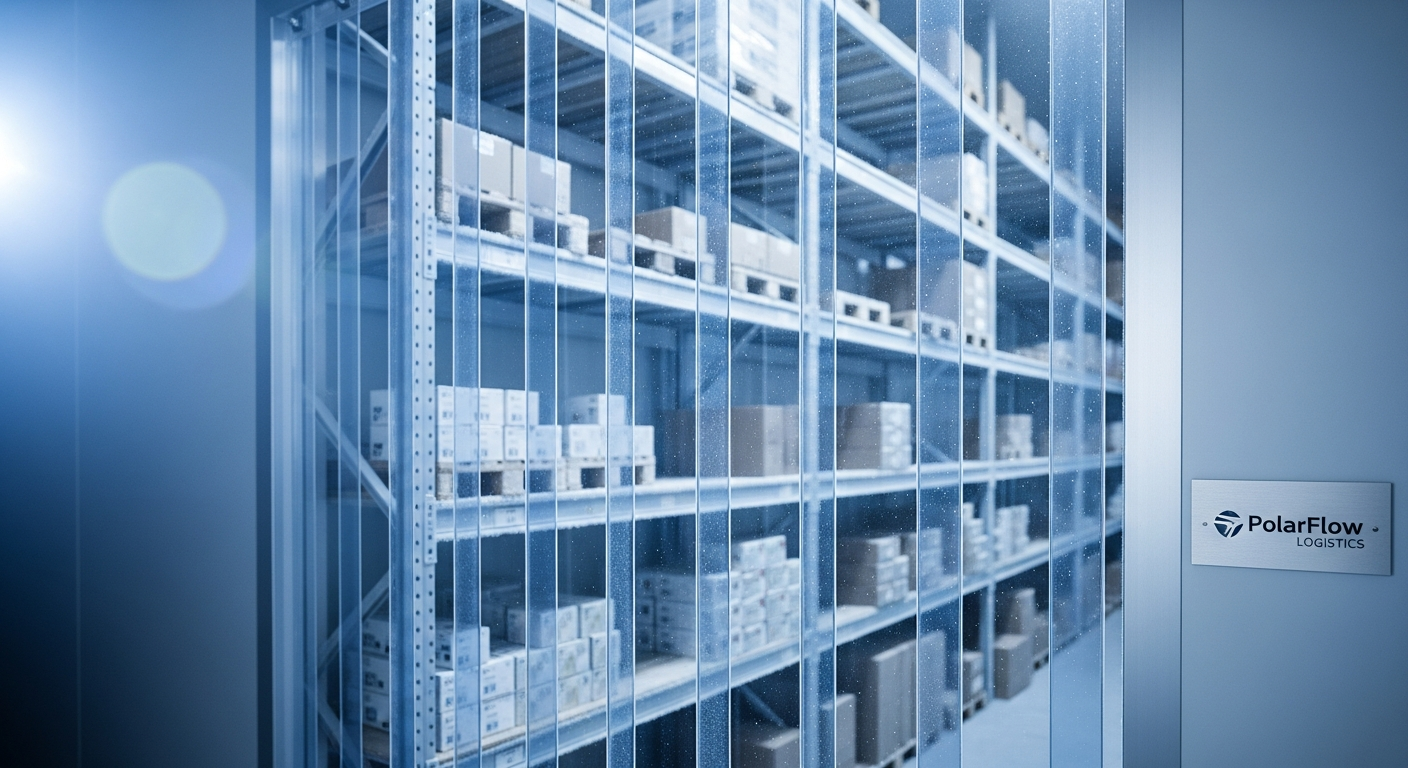
Why Cold Storage Facilities Need Transparent PVC Strip Curtains
Cold storage facilities hemorrhage energy through standard doorways and openings at an alarming rate. Up to 30% of heating and cooling energy escapes through uninsulated access points, translating directly into bloated refrigeration costs and operational inefficiency. Every time a forklift passes through a dock door or personnel enter a climate-controlled zone, precious temperature control dissipates into the environment.
Transparent custom PVC strip curtains address this fundamental problem by creating flexible thermal barriers that maintain climate integrity while permitting unrestricted passage. Unlike rigid mechanical doors that require opening cycles and energy-intensive operations, PVC strip curtains allow continuous movement of goods, equipment, and staff with minimal temperature loss.
The strategic advantages of implementing transparent PVC strip solutions in cold storage operations extend beyond simple temperature maintenance. These curtains preserve visibility, enhance workplace safety, and deliver measurable financial returns through reduced compressor workload and lower utility bills.
Temperature Loss Through Standard Doorways
Traditional facility entrances represent thermal weak points in any temperature-controlled environment. Standard metal or insulated doors create stop-start energy losses—each opening cycle exposes the interior to ambient conditions, forcing refrigeration systems into overdrive to restore setpoint temperatures. In high-traffic warehouses and food storage facilities, this cycling effect compounds throughout operating hours.
PVC strip curtains eliminate this cyclical energy drain by creating a graduated thermal barrier. Strips separate as needed for passage, then immediately reseal behind traffic, maintaining consistent interior temperatures without mechanical intervention.
Visibility and Safety in Climate-Controlled Zones
The transparent nature of PVC strip curtains addresses a critical safety concern often overlooked in cold storage design. Opaque barriers force operators to guess what conditions exist on the opposite side—creating collision risks for forklifts, pedestrians, and equipment. Transparent strips provide unobstructed sightlines while maintaining thermal control, allowing personnel to assess dock conditions, approaching traffic, and inventory status before passage.
This dual functionality—thermal protection and visibility—distinguishes PVC strip solutions from alternative barrier systems that sacrifice one benefit for another.
Rigid Doors Versus Flexible PVC Strip Solutions
Traditional mechanical door systems demand significant operational overhead. Motorized doors require regular maintenance, consume substantial electrical energy during opening and closing cycles, and introduce mechanical failure points that interrupt workflow. Downtime for repairs translates into temperature excursions and productivity losses.
Flexible PVC strip curtains operate passively. They require no electrical input, no moving mechanical components, and virtually no maintenance beyond occasional cleaning. The flexibility of the material accommodates high-traffic patterns—thousands of daily passages—without operational degradation.
Real-World Energy Savings in Refrigerated Facilities
Food storage warehouses implementing transparent PVC strip curtains consistently report heating and cooling cost reductions of 15-25%, depending on facility size and traffic volume. A mid-sized refrigerated warehouse with dock areas protected by properly sized PVC barriers experiences compressor runtime reductions that accumulate into substantial annual savings.
The payback period for PVC strip curtain installation typically ranges from 6-18 months, after which the system delivers pure operational cost reduction. Facilities managing multiple dock doors or partition walls amplify these savings proportionally.
Polar Quality & Extreme Cold Resistance: Specialized Specifications
Not all PVC strip curtains perform equally in extreme cold environments. Standard transparent options may become brittle or lose flexibility in sub-zero conditions, creating installation challenges and reliability concerns. Polar-quality PVC strip curtains address these limitations through specialized material formulations designed explicitly for harsh refrigerated environments.
Polar-Quality Differentiation
Polar-quality strips incorporate advanced polymer compounds and plasticizer systems that maintain flexibility and impact resistance even at temperatures approaching -30°C. Standard transparent PVC becomes rigid and prone to cracking in these conditions; Polar variants remain supple and functional, ensuring consistent performance regardless of seasonal conditions or facility temperature setpoints.
The distinction matters operationally. Brittle strips require frequent replacement, increase maintenance overhead, and create safety hazards through unexpected failure. Polar-quality materials sustain thousands of passage cycles in extreme cold without material degradation.
Temperature Range Capabilities
Polar-quality PVC strip curtains maintain full functionality across temperature ranges spanning from -20°C to +40°C, accommodating ultra-low freezer facilities as well as seasonal temperature fluctuations. The material composition prevents the thermal stress cracking that compromises standard options in deep-freeze applications.
Facilities operating blast freezers, frozen food storage, or other sub-zero environments depend on Polar-quality specifications to maintain consistent barrier performance throughout operational life.
Material Composition and UV Stabilization
Polar-quality strips incorporate UV-stabilization agents that prevent material degradation when exposed to warehouse lighting or seasonal sunlight. The aging-resistant formulation ensures that curtains maintain transparency and mechanical properties over extended service periods, even in facilities with significant natural light exposure.
The durable composition protects facility investments by extending curtain lifespan beyond standard options, reducing replacement frequency and total cost of ownership.
Customization Options That Match Your Cold Storage Dimensions
Standard off-the-shelf barrier solutions rarely align precisely with actual facility opening dimensions. Gaps around edges, undersized widths, and length mismatches create thermal losses that undermine the energy-saving benefits of barrier installation. Custom PVC strip curtains eliminate these inefficiencies through made-to-measure design matching exact facility specifications.
Order custom-made PVC strip curtains tailored to your exact cold storage opening dimensions.
Made-to-Measure Design Process
The customization process begins with precise measurement of target openings—doorways, dock areas, partition walls, or any opening requiring thermal protection. Facility specifications flow into design configurations that eliminate installation gaps and thermal bridging.
Custom manufacturing ensures strips hang to precise lengths with width proportions matched to actual traffic patterns. A high-volume dock receiving area might specify 400mm-wide strips to accelerate passage velocity, while a personnel entrance to a walk-in freezer might utilize 300mm strips balancing ease of movement with thermal control.
Width Configurations for Traffic Patterns
PVC strip width directly influences passage ease and thermal barrier effectiveness. Standard configurations include:
- 200mm strips for low-traffic areas, personnel-only passages, and tight doorways
- 300mm strips for moderate-traffic zones balancing accessibility with thermal control
- 400mm strips for high-volume dock areas moving pallets, forklifts, and continuous equipment traffic
Facility operators select width specifications based on actual usage patterns, traffic volume, and opening dimensions. A single facility might employ multiple width configurations across different access points.
Custom Length Specifications
Cold storage openings vary dramatically in size—walk-in cooler doorways, loading dock height dimensions, and partition wall spans all demand different curtain lengths. Custom manufacturing accommodates these variations precisely, eliminating the undersized or oversized installations that characterize off-the-shelf solutions.
Installation & Hanging Systems for Maximum Efficiency
Quick installation minimizes facility downtime during PVC strip curtain deployment. Hanging systems engineered for cold storage environments accommodate the material properties and operational stresses inherent in temperature-controlled spaces.
Quick-Install Hanging Systems
Modern PVC strip curtain installations utilize suspended track systems that allow rapid deployment without extensive structural modifications. Stainless steel or galvanized steel hanging frameworks mount to existing doorframe structures or overhead mounting points, enabling installation completion within hours rather than days.
The hanging system design accommodates thermal contraction and expansion cycles common in cold storage, preventing binding or misalignment as temperature fluctuations stress supporting structures.
Stainless Steel Track Options for Moisture-Heavy Environments
Cold storage facilities generate substantial moisture through temperature differentials and condensation. Standard steel tracks corrode rapidly in these high-humidity conditions, requiring frequent replacement and maintenance. Stainless steel hanging systems resist corrosion indefinitely, maintaining structural integrity and proper strip alignment through extended service life.
The slight premium cost of stainless steel infrastructure pays dividends through eliminated maintenance interventions and sustained barrier performance.
Installation Process and Timeframes
Typical PVC strip curtain installation unfolds as follows:
- Structural assessment and hanging system mounting (2-3 hours)
- Track installation and alignment verification (1-2 hours)
- Strip attachment and tension adjustment (1-2 hours)
- Functional testing and adjustment (30 minutes)
Complete installations frequently finish within a single working day, minimizing facility disruption and allowing immediate operational benefits.
Energy Savings & Climate Control Performance
The financial justification for PVC strip curtain implementation centers on quantified energy reduction in refrigerated spaces. Measurable thermal performance translates into reduced compressor runtime, lower utility consumption, and substantial cost savings accumulating over operational life.
Quantified Heat Loss Reduction
Climate-controlled spaces without barriers experience heat infiltration proportional to opening frequency and differential temperature between interior and exterior environments. A typical 3-meter-wide dock door in a 10°C environment loses approximately 5-8 kW of cooling capacity per opening cycle.
Transparent PVC strip installations reduce this infiltration by 70-85%, depending on strip width, overlap configuration, and traffic velocity. The reduction translates directly into reduced compressor demand and lower refrigeration system operational costs.
Winter Heating Cost Reductions
Cold storage facilities maintaining ambient temperatures above freezing benefit substantially from PVC strip barriers during winter months. Heating systems no longer compensate for continuous cold air infiltration through unsealed openings. Facilities heating interior spaces to 5-10°C report heating cost reductions of 20-30% when deploying properly configured PVC strip systems.
Summer Cooling Efficiency Gains
Warm-season outdoor temperatures intensify the cooling load on refrigeration systems managing temperature-controlled spaces. PVC strip barriers reduce outside air infiltration by maintaining interior barrier zones at lower temperatures than full ambient conditions. Compressor load reduction during peak cooling periods directly decreases electrical consumption and extends equipment lifespan through reduced operational stress.
Durability & Maintenance in High-Traffic Cold Environments
PVC strip curtains demonstrate exceptional durability in high-traffic cold storage settings, where repeated passage cycles, temperature cycling stress, and moisture exposure challenge material integrity. The material composition and design account for these operational realities.
Material Resilience Against Repeated Flexing
PVC strip materials withstand thousands of passage cycles—forklifts, pallets, personnel, equipment—without material failure or performance degradation. The flexible composition absorbs mechanical stress from repeated flexing, contrasting sharply with rigid barriers prone to stress-concentration cracking.
Facilities experiencing 50-100 daily forklift passages through barrier openings maintain strip functionality for 3-5 years of continuous operation, after which replacement costs remain minimal compared to mechanical door maintenance requirements.
Resistance to Moisture, Ice, and Temperature Cycling
Cold storage environments subject materials to simultaneous moisture exposure, freeze-thaw cycling, and extreme temperature differentials. PVC strip formulations resist moisture penetration, preventing water absorption and associated material swelling or softening. UV-stabilized compositions prevent brittleness development from repeated thermal stress.
Ice accumulation on strips during thermal cycling proves manageable—operators simply brush or scrape accumulated ice, returning curtains to full functionality. The process requires minimal labor compared to maintaining mechanical door systems in similar conditions.
Minimal Maintenance Requirements
PVC strip curtain maintenance consists primarily of occasional cleaning to maintain transparency and remove accumulated dust or debris. No lubrication, adjustment, or mechanical servicing interrupts operation. Worn individual strips can be replaced without removing the entire system—a 15-minute replacement cycle compared to hours of mechanical door maintenance.
Maximizing Cold Storage Efficiency: Making the Smart Choice
Transparent custom PVC strip curtains represent strategic investments in cold storage operational performance and financial sustainability. The combination of specialized Polar-quality materials engineered for extreme temperatures, precise customization eliminating installation gaps, and proven energy-saving performance positions these systems as essential infrastructure for facilities demanding thermal integrity without sacrificing workflow efficiency.
Whether managing sprawling refrigerated warehouses processing tons of frozen goods daily or optimizing compact food storage areas, transparent PVC strip solutions deliver quantifiable returns through reduced energy consumption, improved workplace safety through unobstructed visibility, and negligible maintenance overhead compared to mechanical alternatives.
The financial barriers to implementation are remarkably low—system pricing starts at just €25.90 per unit, making deployment accessible to facilities of any scale. The operational impact proves substantial: 15-25% heating and cooling cost reductions, typical payback periods of 6-18 months, and extended returns accumulating throughout multi-year operational lifespans.
Temperature-controlled operations cannot afford uninsulated doorways hemorrhaging energy into ambient environments. Custom PVC strip barriers address this fundamental efficiency challenge while preserving the operational fluidity that high-traffic facilities require.
Leave a Reply