Why Your Family Needs Better Water Filtration Than Standard Municipal Treatment
The average American household receives water contaminated with over 300 different pollutants. It's a sobering reality that many of us don't think about until we start noticing the taste, smell, or visible particles in our tap water. The truth is, municipal water treatment plants can't catch everything—and what reaches your home might be affecting your family's health in ways you haven't considered.
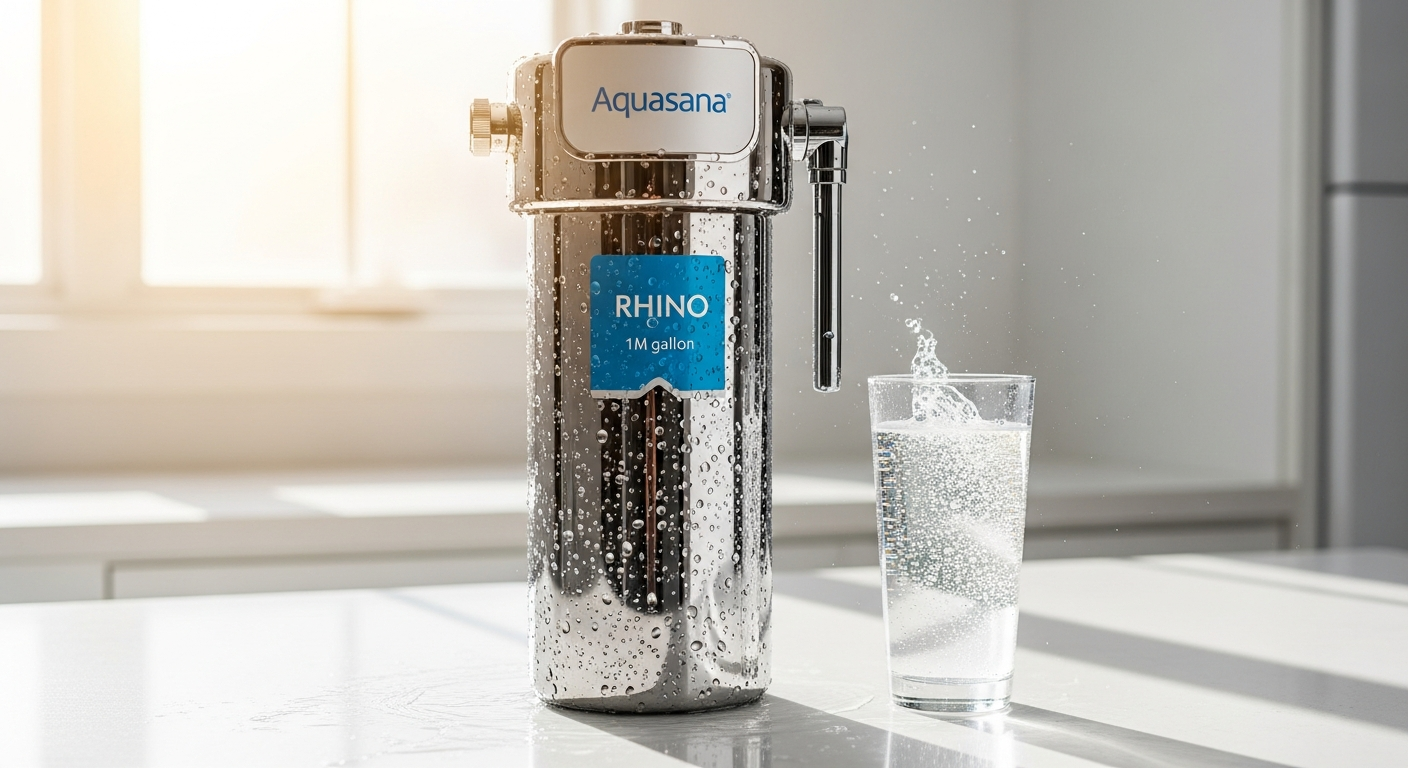
The Aquasana Rhino 1,000,000 gallon whole house water filter has become a go-to solution for families serious about water quality. I've researched this system extensively because it represents a fundamental shift in how homeowners approach water safety—moving from reactive (buying bottled water) to proactive (filtering at the source). With municipal water quality concerns making headlines regularly, having a reliable filtration system installed where water enters your home offers genuine peace of mind.
Discover how the Aquasana Rhino can transform your home's water quality today.
Why Your Family Needs Better Water Filtration Than Standard Municipal Treatment
How Municipal Water Systems Miss Contaminants That Reach Your Home
Municipal water treatment plants operate under strict regulations, but those regulations have limits. The EPA sets standards for roughly 90 contaminants, yet thousands of potential pollutants exist in water supplies. Treatment facilities focus on bacteria and major chemical concerns, but emerging contaminants like PFOA and PFOS—"forever chemicals" used in manufacturing—often slip through because they weren't historically regulated.
Even when facilities do treat water properly, the journey through aging pipes and infrastructure introduces new problems. Lead from corroded pipes, biofilm growth in stagnant sections, and cross-contamination from neighboring industrial areas can all degrade water quality between the treatment plant and your home.
Common Water Quality Issues Affecting Families Across North America
Chlorine remains the most pervasive issue—it's added intentionally to kill bacteria, but it creates byproducts that some research links to health concerns. Sediment and rust particles are common complaints, especially in older homes. Lead contamination particularly affects families in communities with aging water infrastructure.
Pesticides and herbicides appear in water supplies near agricultural areas. PFOA and PFOS contamination has been detected in water supplies serving millions of people across North America. Cryptosporidium and other cysts occasionally cause outbreaks that pitcher filters simply cannot address.
Health Risks Associated with Chlorine, Lead, PFOA/PFOS, and Pesticides in Tap Water
Chlorine exposure at high levels has been studied for potential links to various health conditions, though regulatory levels are considered safe for short-term consumption. However, some people experience skin irritation, respiratory irritation, or allergic responses to chlorine in shower water.
Lead is far more serious. Even low-level exposure accumulates in the body over time and particularly affects children's development and cognitive function. PFOA and PFOS accumulate in the bloodstream and have been linked to multiple health concerns including immune system effects and thyroid issues. Pesticide residues can affect neurological function, especially in developing children.
Why Whole-House Filtration Addresses Problems That Pitcher Filters Cannot
Pitcher filters work for drinking water only—you're still bathing in chlorinated water, which many dermatologists note can strip natural oils from skin. Pitcher filters have minimal capacity and cannot remove certain contaminants effectively. They're a partial solution, not comprehensive protection.
Whole-house filtration filters all water entering your home before it branches to every faucet and shower. This means you're getting filtered water for washing, cleaning, and bathing—not just drinking. The Rhino's 1,000,000 gallon capacity means you're not constantly replacing filters like with pitcher systems.
The Difference Between Treating Symptoms and Solving the Problem
Buying bottled water treats the symptom—you know your tap water isn't safe, so you buy an alternative. This approach costs significantly more over time and creates plastic waste. Installing filtration at your home's water entry point solves the underlying problem, meaning every tap delivers filtered water automatically.
Once installed, you forget about it. No more buying cases of water, no more hauling bottles, no more plastic accumulation. You've solved the problem rather than managing it.
How Water Quality Varies by Location and Why Testing Matters
Water quality differs dramatically across regions. Areas near industrial zones have different contamination profiles than rural agricultural regions. Older urban infrastructure creates different problems than newer suburban systems. Testing your specific water tells you exactly what you're dealing with rather than guessing.
The Rhino removes up to 97% of chlorine, plus lead, pesticides, herbicides, PFOA/PFOS, cysts, and sediment. Testing confirms whether these specific contaminants are present in your water and helps you determine if this system addresses your particular concerns.
The Multi-Stage Filtration Technology Behind the Aquasana Rhino System
Pre-filter Stage: Sediment Removal and Particle Reduction
The pre-filter catches the largest particles first—rust, sediment, sand, and visible debris. This initial stage protects the more sophisticated stages from clogging and extends their lifespan. While pre-filters need more frequent replacement than main filters, changing them is straightforward and relatively inexpensive.
Think of it as the first gatekeeper. By removing large particles upfront, the system can focus its powerful filtration capacity on dissolved contaminants that cause real health concerns.
Dual-Tank Activated Carbon and KDF Media Explained
The dual-tank design houses both activated carbon and KDF media working in tandem. Activated carbon adsorbs contaminants—chlorine sticks to its porous surface through chemical attraction rather than being blocked like physical particles. KDF media works through reduction and oxidation reactions, transforming certain contaminants into harmless substances.
This combination addresses different types of contaminants through different mechanisms. Chlorine, volatile organic compounds, and many synthetic chemicals bind to activated carbon. Heavy metals and oxidizing chemicals respond better to KDF media. Together, they achieve what neither could accomplish alone.
How These Materials Work Together to Reduce Contaminants by Up to 97%
The synergistic effect matters. Activated carbon might capture 85% of a particular contaminant, but KDF media catches some of what passes through. This layering approach means the system removes significantly more of multiple contaminant types than a single-stage system could manage.
The 97% chlorine reduction figure reflects this comprehensive approach. It's not claiming perfection—some molecules slip through—but the result is dramatically cleaner water than what municipal treatment alone provides.
Post-Filter Protection for Final Polishing
After the dual-tank stage, water passes through a post-filter for final polishing. This catches any particles or residual contaminants, ensuring the water exiting your system meets the highest standards. It's the quality assurance stage that gives you confidence in what's flowing from every tap.
Optional UV Purification for Bacteria and Virus Elimination
For households wanting additional protection against bacteria and viruses, UV purification can be added to the system. UV light damages the DNA of microorganisms, rendering them harmless. This option is particularly valuable for households with immunocompromised members or those concerned about waterborne pathogens.
Why Multi-Stage Systems Outperform Single-Filter Alternatives
A single carbon filter might reduce chlorine, but it won't effectively address lead. A single sediment filter catches particles but does nothing for dissolved chemicals. The Rhino's multi-stage approach means every major category of contaminant gets addressed by the mechanism most effective against it.
Single-stage systems require more frequent replacement because they're attempting everything with one filter. Multi-stage systems distribute the workload, which is why the Rhino achieves 1,000,000 gallon capacity—each stage is handling what it's designed to handle.
Flow Rate Maintenance Without Sacrificing Filtration Effectiveness
Many advanced filtration systems create noticeable water pressure drops. You want better water, but you don't want weak showers and slow-filling sinks. The Rhino maintains water flow while still delivering comprehensive filtration. This balance is crucial for household satisfaction and actual daily usage.
Learn more about how the Rhino maintains excellent water pressure while filtering effectively.
Real Health Benefits You'll Notice (and Some You Won't)
Cleaner Skin and Healthier Hair From Reduced Chlorine Exposure
Chlorine strips natural oils from skin and hair. People who install whole-house filters frequently report that their skin feels less dry and itchy, especially during winter months. Hair becomes softer and more manageable. These aren't subtle changes—they're noticeable improvements that happen gradually over weeks as your body adapts to less harsh water.
People with eczema or sensitive skin often experience significant improvement. Dermatologists frequently recommend whole-house filtration for patients with chronic skin irritation, particularly when chlorine sensitivity is suspected.
Better-Tasting Water for Drinking and Cooking Throughout Your Home
Chlorine has a distinctive chemical taste that many people become so accustomed to they stop noticing it until they taste filtered water. Suddenly, tap water tastes clean and refreshing rather than like the chemical it actually contains. This improvement alone makes many people drink more water throughout the day because it's actually pleasant.
Cooking with filtered water noticeably improves food flavor. Tea and coffee taste cleaner. Soups and broths develop better flavor profiles when made with un-chlorinated water. These culinary benefits extend across your entire kitchen simply because all your cooking water is filtered.
Improved Water for Pet Hydration and Plant Care
Pets frequently have more sensitive systems than humans. Dogs and cats often prefer filtered water, and many owners report their pets drink more water and have healthier coats when switched to filtered water. Plants thrive with filtered water because chlorine and other chemicals don't interfere with nutrient absorption and root health.
Reduced Chlorine Odor and Chemical Smell
Walk into many bathrooms and you smell chlorine immediately—especially hot showers where chlorine volatilizes into the air. Whole-house filtration eliminates this smell entirely. Your bathroom loses that public pool odor and smells fresher. This might seem minor until you experience how dramatically it changes your shower experience.
Long-Term Health Protection From Consistent Contaminant Removal
Daily exposure to lead, pesticides, and PFOA/PFOS creates cumulative health risks that unfold over years and decades. The Rhino's 1,000,000 gallon capacity means consistent protection throughout its 10-year lifespan. You're not just improving how you feel today—you're investing in health protection for the next decade.
Benefits for People With Sensitive Skin or Respiratory Sensitivities
Individuals with asthma or other respiratory conditions sometimes find their symptoms worsen after hot showers when chlorine volatilizes into the air. Whole-house filtration can noticeably reduce this trigger. People with chemical sensitivities report that filtered water environments feel significantly healthier.
Peace of Mind Knowing Every Tap in Your Home Delivers Filtered Water
This might be the most underrated benefit. You can fill a glass from any faucet knowing it's filtered. Your kids can drink from the bathroom sink. You can use tap water for your morning coffee without concern. This constant access to clean water throughout your home creates a psychological security that extends beyond just water quality.
The 1,000,000 Gallon Capacity: What It Really Means for Your Budget
Breaking Down the 10-Year Filter Lifespan and What Triggers Replacement
The 1,000,000 gallon capacity translates to roughly 10 years for average households using approximately 2,700 gallons daily. When the system reaches 1,000,000 gallons, the main filters need replacement. However, pre-filters require more frequent changes—typically every 6-12 months depending on your water quality and usage.
Main filter replacement costs significantly more than pre-filter replacement, but because you're only doing it once per decade rather than annually or bi-annually, the total cost of ownership remains low.
Cost Per Gallon Compared to Bottled Water Purchases
Bottled water costs roughly $1.50 to $3.00 per gallon when you account for typical household purchases. The Rhino system, spread across its 1,000,000 gallon lifespan, costs only a few cents per gallon for filtered water. Even with pre-filter replacement costs included, the per-gallon cost remains a fraction of bottled water.
For a family of four, the annual savings compared to bottled water purchases can exceed $1,000, making the system pay for itself in 3-5 years depending on your current water purchasing habits.
Frequency of Pre-Filter Changes Versus Main Filter Replacements
Pre-filters might need replacement once or twice yearly—a simple, inexpensive task requiring minimal technical knowledge. Main filters last the full 10 years without replacement. This means the system requires minimal maintenance compared to pitcher filters requiring replacement monthly or bi-monthly.
Long-Term Savings Calculation for Average Households
A typical household spending $1,500 annually on bottled water will save approximately $15,000 over a decade by switching to the Rhino system. Even accounting for pre-filter replacement costs and optional maintenance, the savings are substantial. The system typically pays for itself within the first 3-5 years, then operates at minimal cost for the remaining lifespan.
How the Extended Capacity Reduces Maintenance Headaches
Because you're only replacing main filters once per decade rather than every 1-2 years like competing systems, you forget about maintenance. You change pre-filters occasionally—a 10-minute task—and otherwise let the system operate. This convenience shouldn't be underestimated; it means people actually maintain their systems rather than neglecting them.
Comparison of Replacement Costs to Other Whole-House Systems
Competing systems with lower capacity require filter replacement every 2-3 years. While individual replacement costs might be similar to the Rhino's main filter cost, the frequency means you're replacing filters 3-4 times during the Rhino's 10-year lifespan. The Rhino's extended capacity dramatically reduces long-term replacement expenses.
Current Promotions and Payment Plan Options Available
Aquasana frequently offers 50% off whole house systems, making the initial investment significantly more manageable. Payment plans are also available, spreading the cost across months rather than requiring a lump sum. These options make the system financially accessible to households that might otherwise find the upfront cost prohibitive.
Moving Forward With Your Home's Water Quality
The Aquasana Rhino 1,000,000 gallon whole house water filter represents more than just another appliance—it's a commitment to your family's health that pays dividends for a full decade. The combination of removing up to 97% of chlorine, eliminating lead and PFOA/PFOS, and maintaining excellent water pressure means you're getting comprehensive protection without sacrifice.
Your next step depends on your current situation. If you're concerned about water quality but unsure whether the Rhino fits your needs, start by testing your water and comparing the results to the contaminants this system removes. If you're ready to move forward, take advantage of current promotions and explore payment plans to make the investment manageable. Either way, you're taking control of something that affects your family's daily health—and that's worth the effort.
Start your journey toward better water quality with the Aquasana Rhino system today.
Leave a Reply