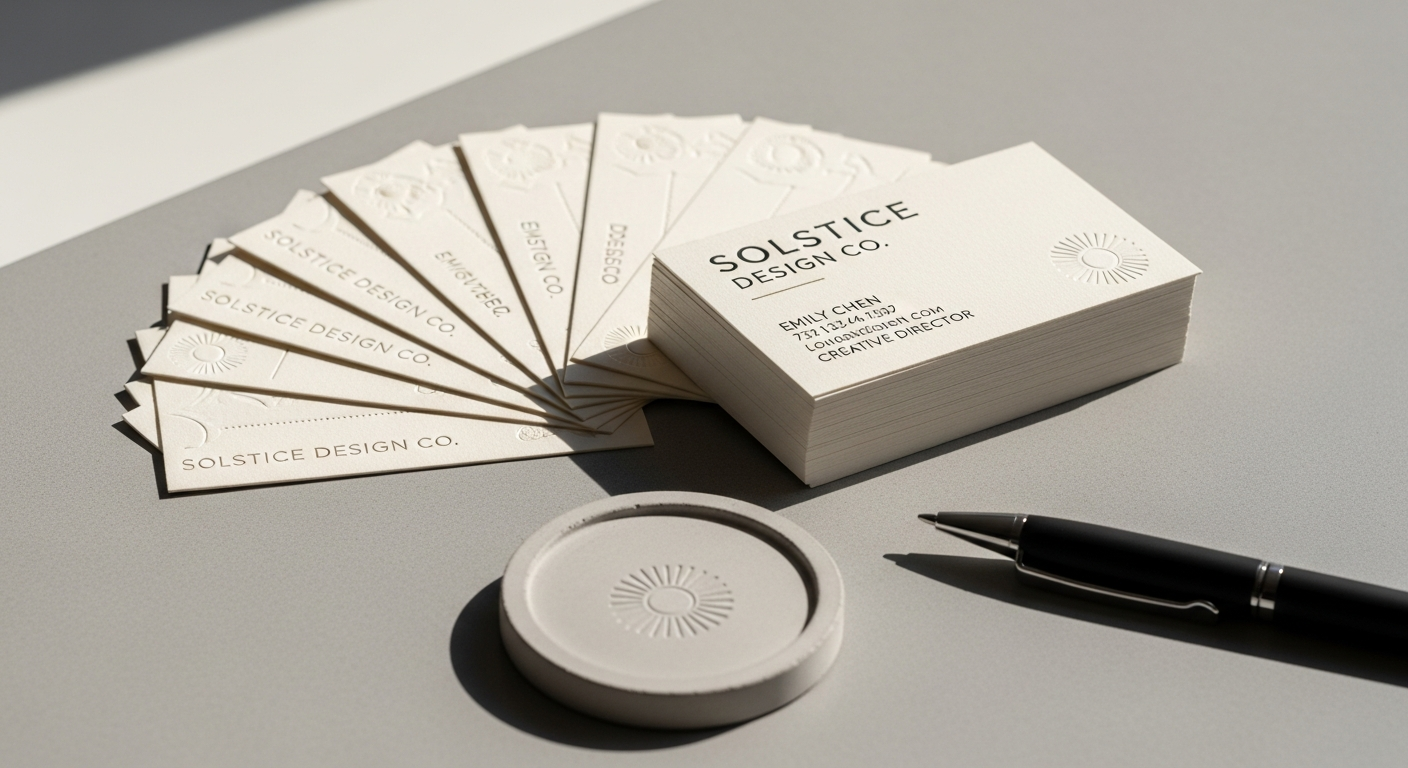
Instantprint Premium Business Cards: The Professional First Impression That Actually Sticks
Did you know that 88% of business cards handed out are thrown away within a week? Yet when they're crafted with intention—when they feel substantial in someone's hand, when the design catches the light just right—they become memorable. Instantprint has built its reputation on one simple principle: professional printing shouldn't require a premium budget or a PhD in design.
Their Premium Business Cards have become the go-to choice for businesses ranging from solo freelancers to established enterprises. With 450gsm silk card stock, specialized finishes like Spot UV, and next-day dispatch capabilities, they've created a product that bridges the gap between luxury and accessibility. The quality is tangible, the options are extensive, and the process is surprisingly straightforward.
Discover how Instantprint's Premium Business Cards can elevate your brand presence today.
What Sets Instantprint Premium Business Cards Apart from Standard Options
The immediate difference you'll notice is weight. At 450gsm, Instantprint's silk card stock is substantially heavier than standard 250gsm alternatives—the kind of difference that's impossible to ignore when you hand someone a card. That thickness conveys quality instantly, creating an immediate impression of durability and professionalism.
The luxury tactile experience goes beyond mere numbers. The smooth silk finish feels premium in hand and signals to recipients that you take your business seriously. It's the kind of detail that separates memorable cards from forgettable ones.
Behind the scenes, Instantprint uses a combination of digital and lithographic printing technology. This dual approach ensures crisp text, vibrant color reproduction, and design accuracy that matches your original vision. Whether you're printing gradients or detailed logos, the technology captures every element with precision.
Compared to economy and mid-tier options, Instantprint's Premium range occupies a distinct position. It's not the cheapest option available, but it delivers noticeably superior results without the enterprise-level pricing. This positioning makes it accessible to most businesses while maintaining genuinely premium quality.
The cards maintain their appearance and integrity through storage and handling. The robust construction means they won't bend, crease, or fade under normal use. Your brand representation remains consistent, whether someone receives your card today or six months from now.
Instantprint also considers environmental sourcing and sustainability of premium card materials, ensuring your professional presentation aligns with contemporary values around responsible business practices.
Customization Finishes That Transform Your Brand Identity
Standard printing is just the starting point. The real magic happens when you layer on specialized finishes that make your cards genuinely distinctive.
Spot UV coating is a game-changer. This raised, glossy finish gets applied to specific design elements—your logo, a graphic accent, or strategic text. The result? Visual elements that literally pop off the card, creating a tactile experience that recipients won't forget. It's the difference between a card someone notices and one they actually feel.
Metallic coating options introduce shimmer and sophistication. Gold, silver, and copper finishes add depth and elegance, particularly effective for luxury brands, jewelry businesses, or high-end services. These finishes catch light at different angles, creating dynamic visual interest.
Matt lamination offers a contemporary, understated professional look. The non-reflective finish works beautifully with minimalist designs and sophisticated color palettes. It's perfect for creative industries and modern brands seeking understated elegance.
You can layer combination finishes for truly unique, branded aesthetics. Imagine Spot UV on your logo with matt lamination across the rest of the card—the contrast creates visual hierarchy and draws attention exactly where you want it.
Different finishes work with various color schemes differently. Metallic finishes shine brightest against darker backgrounds, while matt lamination suits bold, saturated colors and subtle earth tones equally well. Spot UV performs best when highlighting elements that contrast with their background.
Choosing the right finish depends on your industry, target audience, and brand personality. A tech startup might opt for Spot UV on a sleek logo. A luxury brand might choose metallic gold on cream stock. A creative agency could showcase design expertise through sophisticated combination finishes.
The cost-benefit analysis matters too. Premium finishes increase per-unit costs, but they also increase perceived value and memorability. For many businesses, the return on investment is immediate—cards that actually generate conversations and lead to business opportunities justify their enhanced cost.
Card Format Variations: Beyond the Standard Rectangle
Standard business card dimensions—85mm x 55mm—remain the industry default for good reason. They fit wallets, business card holders, and standard filing systems. The traditional sizing means recipients expect nothing unusual, which makes non-traditional formats that much more impactful when you choose them intentionally.
Mini cards represent a smaller format option, perfect for networking events where you're meeting dozens of people and want them to remember you standing out. Their compact size makes them easy to pocket and more likely to be retained.
Square cards are the contemporary alternative that genuinely stands out in wallet stacks. When someone pulls out their business cards, a square format immediately catches attention. It creates memorable brand moments and works beautifully for creative professionals, designers, and innovative brands that want to signal unconventional thinking.
Custom sizing options exist for niche industries or creative brands willing to break conventions. These non-traditional dimensions cost more but make unmistakable statements about your brand's willingness to differentiate.
Format selection strategy should match your business type and distribution method. Sales professionals might stick with standard dimensions for maximum compatibility. Creative agencies could use squares to showcase design thinking. Event organizers might choose minis for high-volume distribution.
Different formats affect design layout, text readability, and visual hierarchy significantly. Square cards require rethinking traditional horizontal layouts. Mini cards demand ruthless editing of essential information. Standard rectangles offer familiar design territory but less visual surprise.
Practical considerations matter too—storage space, handling during distribution, and recipient perception all shift based on format. A square card signals modern thinking. A mini card suggests approachable friendliness. Standard dimensions communicate professional reliability.
The Design-to-Print Process: From Concept to Your Hands
Creating your cards starts with a choice: begin from scratch or build from existing options. Instantprint's Design Your Own templates accelerate the creation process significantly, particularly for non-designers. These pre-built designs combine attractive layouts with flexibility, letting you customize colors, text, and imagery without requiring design expertise.
If you've already got artwork ready, you can upload custom designs directly. Instantprint requires proper file formats and adequate resolution (minimum 300 DPI) to ensure print quality matches your expectations. Knowing these technical specifications upfront prevents costly production mistakes.
Color accuracy presents a common challenge. Your screen displays colors differently than printed cards will. What appears vibrant on your monitor might print slightly muted, or vice versa. Instantprint's proofing options let you review your design before final production, catching these variations before they become permanent.
The free artwork check service is genuinely valuable. Instantprint's team reviews your design and catches potential errors—file format issues, low resolution areas, text too close to trim lines—before production begins. This quality assurance process prevents discovering problems after printing.
Color mode matters too. Most designers work in RGB (ideal for screens) but print requires CMYK. Instantprint's design support resources guide you through these technical specifications, ensuring your file converts properly and colors stay as close as possible to your original vision.
Speed and Delivery: Meeting Urgent Printing Deadlines
Speed matters when networking events appear on your calendar with short notice. Next-day dispatch is available on core products including business cards, which is a significant advantage for businesses needing quick turnaround. This isn't theoretical—it's a genuinely viable option for urgent printing needs.
Standard turnaround times vary depending on customization choices and current production volume. Most basic orders process within a few business days, but it's worth checking specific timeframes when you order. Peak periods (holiday seasons, back-to-school periods) can extend these timelines.
Balancing rush production with cost implications requires realistic planning. Next-day dispatch costs more than standard delivery. If your timeline permits standard delivery, you'll save considerably without sacrificing quality.
Peak period considerations matter for planning purposes. Seasonal demand does affect delivery timelines, so building buffer time into your business card ordering schedule is sensible. If you're facing an important networking season, don't wait until the last minute to order.
Tracking and notifications keep you informed throughout production and dispatch. You'll know when your order ships and can plan distribution accordingly. This visibility prevents surprises and lets you coordinate card arrival with events or campaigns.
International shipping options exist for businesses operating across multiple countries. This expands Instantprint's utility for companies with global operations or international clientele.
Contingency planning is crucial. Build extra buffer time into your schedule to account for potential delays, revision rounds with the artwork check process, or unexpected complications.
Pricing Strategy and Budget Optimization
Cost per card drops significantly as you increase order volume. Quantity-based pricing tiers reward bigger orders substantially. A run of 500 cards costs much more per unit than a run of 5,000—understanding these tier breaks helps with budget planning.
Finish-related pricing creates clear cost differences. Standard printing is baseline. Spot UV typically adds 20-40% depending on coverage. Metallic and laminated options fall in similar ranges. Knowing these costs upfront lets you decide which finishes justify the investment.
Delivery speed premiums are real. Expedited and next-day dispatch services cost significantly more than standard delivery. These premiums make sense for urgent situations but become expensive if used routinely.
Bulk ordering advantages extend beyond per-unit cost savings. If you're comfortable maintaining inventory, ordering larger quantities at once reduces overall spending. Many businesses find ordering 2,000 cards instead of 500 quarterly offers better value.
Promotional pricing windows appear seasonally. Instantprint periodically offers discounts on core products. Monitoring these windows and timing orders strategically stretches your budget further.
ROI calculation requires measuring business impact against investment. Are premium cards generating conversations? Leading to actual business opportunities? Contributing to perceived brand value? If yes, the investment clearly pays dividends. If unclear, track which interactions originated from card exchanges.
Budget allocation within your overall marketing spend matters. Business cards are typically a small percentage of total marketing expenditure, making them relatively low-risk investments in brand professionalism. Even premium options rarely strain budgets.
Real-World Applications: Industries and Use Cases
Startups and freelancers leverage premium cards to establish credibility on limited budgets. When every interaction counts and you're building reputation from scratch, a substantial, well-designed card signals you're serious and professional. The impression matters more because you're unknown.
Corporate environments use premium cards as part of professional brand presentation. Executives and business development professionals hand out cards constantly—having them feel expensive and look impressive subtly reinforces the company's brand positioning.
Creative industries showcase design expertise and artistic sensibility through specialized finishes. A graphic designer with boring cards undermines their message. Metallic coatings, Spot UV, or square formats communicate design thinking through the card itself.
Networking events are where cards get distributed in volume. The moment someone asks for your contact information is your chance to leave a lasting physical impression. Premium cards make that moment count more.
Client meetings determine working relationships. Handing over a high-quality card during initial conversations signals professionalism and attention to detail. It becomes part of the overall first impression.
Sales and business development professionals leverage cards as conversation starters and follow-up tools. "Here's my card" opens networking opportunities, and a memorable card keeps you top-of-mind after the conversation ends.
Personal branding entrepreneurs use premium cards to differentiate themselves in competitive markets. Consultants, coaches, and independent professionals benefit enormously from cards that feel expensive and reflect personal brand positioning.
Potential Drawbacks and Realistic Expectations
Screen-to-print color variations happen with every print job. Your digital design displays in RGB color space; printing uses CMYK. The color shift is typically subtle, but it happens. Instantprint's free proofing helps minimize surprises, but perfect color matching between screen and print remains technically impossible.
Peak period delays extend standard delivery times during busy seasons. If you order during November or March, expect longer waits than ordering in quieter months. Planning ahead prevents panic when cards don't arrive on your preferred timeline.
Design approval timelines require factoring in artwork check and revision time. The free artwork check is valuable, but if issues emerge requiring design changes, you're adding days to your total timeline.
Minimum order quantities exist for certain finishes or formats. You can't order 50 cards with premium finishes—volume minimums typically start at 250 or 500. Understanding these thresholds prevents ordering disappointments.
Proper storage and handling maintain card quality between printing and distribution. Cards exposed to excessive moisture, heat, or physical damage degrade. Storing them in cool, dry conditions preserves their quality for distribution.
Realistic ROI expectations matter. Business cards aren't direct sales tools—they're impression-builders and conversation-starters. Measure their value through increased follow-up conversations, referrals, and professional credibility perceptions, not direct conversions.
Assessing whether premium cards align with your business goals is essential. For client-facing businesses where first impressions matter heavily, the investment makes sense. For back-office operations or online-only businesses, standard cards might suffice.
Making Your Business Cards Work Harder for Your Brand
Strategic distribution methods determine card impact. Don't just hand them out passively—place them intentionally. Leave them at complementary businesses, include them in packages, distribute them at speaking events. Purposeful placement generates better results.
QR code integration combines traditional cards with digital touchpoints. A QR code linking to your portfolio, booking calendar, or video introduction transforms static cards into interactive engagement tools. Recipients who scan the code engage more deeply with your brand.
Follow-up systems capitalize on card exchanges. When someone takes your card, that's the moment to request theirs. Create processes to follow up within 48 hours—a message referencing something specific from your conversation, not generic promotional content.
Consistency with branding ensures cards align with your website, social media, and marketing materials. A premium card that clashes with your digital presence creates confusion instead of reinforcing brand identity.
Call-to-action clarity optimizes card copy. "Visit my website" is weak. "Book your strategy session at [website]" drives specific action. Clear CTAs direct recipients toward your preferred next step.
Memorable messaging sticks with people. A tagline or value proposition that captures your unique positioning makes you memorable. Generic descriptors fade immediately from memory.
Measuring effectiveness requires tracking which cards generate leads, referrals, or business opportunities. Ask new clients how they found you. Include reference codes or custom URLs on cards. Over time, you'll see which distribution methods and card variations perform strongest.
Why Instantprint Remains a Customer Favorite
Reputation for reliability matters enormously in printing services. Instantprint consistently delivers on quality promises and timelines. Customers trust that their order will arrive meeting expectations. This consistency builds long-term loyalty.
The user-friendly platform doesn't require design expertise. The online ordering experience is intuitive, with templates guiding non-designers through the process. Uploading custom designs is straightforward. Every step emphasizes clarity and accessibility.
Customer service excellence throughout the ordering and production process sets Instantprint apart. Responsive support, helpful guidance, and proactive communication reduce friction and build confidence in the process.
Accessibility makes premium printing options available to businesses of all sizes. You don't need enterprise-level budgets to access premium finishes and quality. This democratization of professional printing appeals to the broadest possible market.
Innovation in finishes continuously expands customization options. Instantprint doesn't rest on standard offerings—they innovate and introduce new finishing techniques responding to market demands.
Community trust develops through positive reviews and word-of-mouth recommendations. Satisfied customers actively recommend Instantprint to their networks, creating a virtuous cycle of reputation building.
Repeat customers who rely on Instantprint for ongoing printing needs demonstrate genuine loyalty. First-time quality experiences lead to long-term partnerships where businesses return consistently.
Your Next Competitive Advantage
Your business cards are working 24/7, even when you're not. They're sitting in someone's desk drawer, stuck to a bulletin board, or being passed along to a colleague—each moment an opportunity to reinforce your professional image. Instantprint's Premium Business Cards remove the guesswork from creating something that actually represents your brand's caliber.
The 450gsm silk stock, the Spot UV finishes, the next-day dispatch—these aren't just features. They're the difference between a card that gets tossed and one that gets remembered. Whether you're a solopreneur making your first impression or an established business refreshing your brand presence, the investment in premium printing pays dividends in how people perceive you.
The customization options let your brand personality shine through. You're not limited to generic designs—you're creating a physical representation of your professional identity. That tangible quality communicates respect for your relationships and commitment to excellence before you even speak.
The process is straightforward enough that you won't get stuck in technical complications. Between the Design Your Own templates, the free artwork check service, and the intuitive upload process, getting premium cards into circulation is genuinely accessible. Next-day dispatch means you can respond to urgent opportunities with professional materials ready within hours.
Ready to upgrade your networking game and make every handshake count?
Leave a Reply