Over 90% of duty holster failures occur because officers choose retention systems that don't match their real-world operational demands. When a weapon is lost to an attacker or removed without authorization, the consequences extend far beyond individual liability—they compromise team safety and undermine the trust communities place in law enforcement. The stakes demand equipment engineered for maximum security, not convenience.
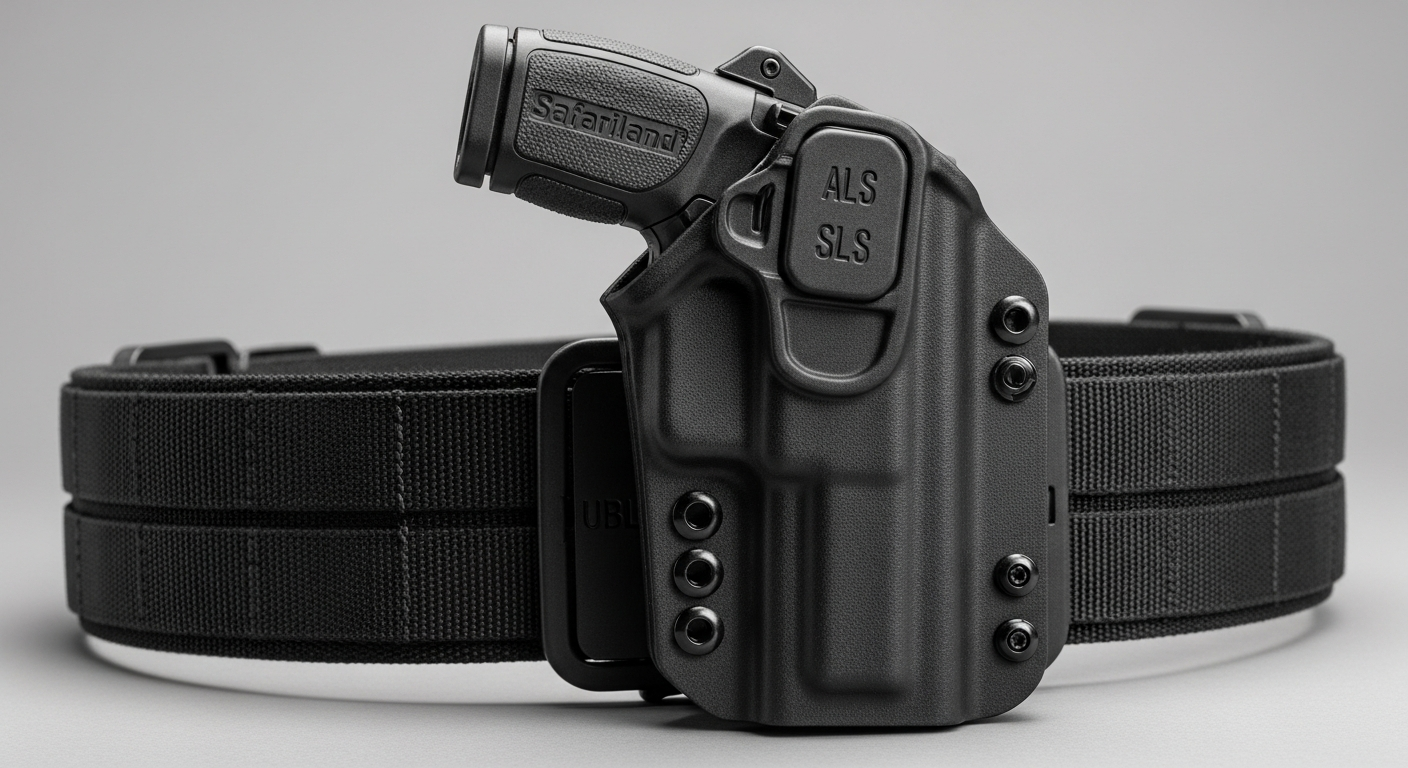
The Safariland 6360 has become the gold standard across federal, state, and local law enforcement agencies for three consecutive decades. This mid-ride duty holster combines the Automatic Locking System (ALS) and Self Locking System (SLS) rotating hood to deliver Level III Retention™, making it a choice backed by measurable performance data and real-world deployment across thousands of officers.
This review breaks down the 6360's retention mechanisms, examines its construction quality, evaluates its compatibility across different firearm platforms, and helps determine whether the $140-$240 investment makes sense for tactical needs. Discover why the Safariland 6360 remains the choice of professional operators worldwide.
How the Dual-Locking Retention System Actually Works
ALS (Automatic Locking System) Mechanism
The Automatic Locking System engages the moment the weapon holsters. No manual lever activation, no conscious engagement step—the weapon locks automatically through the holster's internal geometry. When the trigger guard contacts the ALS cam, the system rotates into the locked position, securing the firearm without requiring the officer to remember an additional action. This design eliminates a critical failure point in retention systems that depend on manual activation.
SLS (Self Locking System) Rotating Hood
Above the trigger guard sits the SLS rotating hood, a secondary barrier that rotates down over the rear of the slide. This hood serves as a physical obstruction to weapon removal, adding a distinct security layer beyond the ALS mechanism. An attacker or someone attempting unauthorized removal must physically rotate this hood upward before drawing the weapon—a motion that requires knowing the system exists and applying force in the correct direction.
Level III vs. Level IV Distinction
Level III Retention represents the standard 6360 configuration, incorporating both the ALS and SLS systems. This combination successfully defeats most common takeaway techniques used in force-on-force training. Level IV retention, achieved through the optional Sentry attachment, adds a mechanical detent that further restricts hood rotation. The Sentry upgrade appeals primarily to agencies in highest-threat environments or those conducting specialized tactical operations where maximum security justifies the additional draw complexity.
Draw Sequence and Muscle Memory
The draw sequence follows a specific pattern: depress the trigger guard button with the firing-side thumb while rotating the hood upward with the index finger, then draw straight up. This differs markedly from simple retention holsters, and initial draws feel clumsy. After 100-200 repetitions during range training, officers report the sequence becoming automatic—fingers execute the movements without conscious thought. The muscle memory develops faster than many expect, particularly for officers accustomed to mechanical complexity in other duty gear.
Retention Testing Standards
Safariland validates Level III security through standardized testing protocols that simulate realistic threat scenarios. Independent agencies conduct these tests, measuring the force required to remove a weapon through various attack angles and physical maneuvers. The 6360 consistently exceeds minimum standards, maintaining retention under force levels that far exceed what untrained attackers typically apply. These test results provide objective confirmation that the security claims translate to real-world protection.
Weapon Retention Against Takeaway Attempts
The dual-system design defeats the most common takeaway techniques taught in force-on-force training. Standard striking attacks that successfully separate officers from lower-retention holsters fail against the 6360. The combination of automatic locking and the physical hood barrier forces an attacker to understand the specific mechanical sequence required for removal—knowledge that untrained individuals simply do not possess. Officers report genuine confidence that their weapon remains secure during physical confrontations.
Material Quality and Construction Durability
SafariLaminate™ Composite Material
SafariLaminate represents a proprietary construction combining reinforced polymer layers with specialized adhesives. This composite material provides rigidity comparable to leather while offering superior weather resistance and dimensional stability. Unlike leather that warps, stretches, and hardens over time, SafariLaminate maintains its shape and structural integrity through years of active duty. The material resists UV degradation, humidity-induced swelling, and temperature extremes that traditional holsters struggle against.
Soft Suede Lining Protection
The interior suede lining serves a protective function beyond comfort. Firearm finishes—particularly expensive coatings on tactical pistols—experience wear when constantly contacting rough holster interiors. The suede lining minimizes this contact wear, preserving finish integrity over the holster's lifespan. For officers carrying optics worth $500-$1500, this lining protection alone justifies the holster choice, preventing scratches and damage that would compromise sight functionality.
Weather and Corrosion Resistance
SafariLaminate performs reliably in environments where leather fails. Salt spray testing demonstrates exceptional corrosion resistance—critical for officers in coastal jurisdictions. Rain, snow, and extreme temperature swings do not degrade the material structure or compromise retention functionality. Agencies operating in harsh climates consistently report that 6360 holsters maintain reliability where leather alternatives require replacement after 2-3 years.
Longevity Compared to Leather Alternatives
Leather holsters typically require replacement every 4-6 years with regular duty use. The suede lining hardens, the leather stretches and warps, and retention mechanisms become unreliable. A SafariLaminate 6360 routinely provides 8-10 years of service with minimal degradation. This extended lifespan translates to fewer replacement cycles and lower total cost of ownership despite the higher initial investment.
Maintenance Requirements
The 6360 demands minimal upkeep. Occasional wiping with a damp cloth removes dirt and debris. Unlike leather that requires conditioning and specialized cleaning, SafariLaminate needs only basic maintenance. The suede lining resists staining and does not require protective treatments. This low-maintenance profile appeals to departments operating on limited budgets for equipment care.
Finish Options
The Basket Weave finish provides texture that aids grip during reholstering and creates a professional tactical appearance. The Plain finish offers a sleek, minimalist aesthetic suitable for formal duty uniforms. The Tactical finish delivers maximum grip through aggressive surface treatment. Choice among these finishes represents personal preference and uniform compatibility rather than functional difference—all three perform identically in retention and durability.
Firearm Compatibility and Optics Accommodation
Glock Platform Compatibility
The 6360 accommodates virtually every Glock model, from compact G26 frames through full-size G17/G22 platforms. This universal Glock compatibility reflects the platform's dominance in law enforcement arsenals. Whether an agency standardizes on Generation 4 or newer Generation 5 models, Glock-chambered departments can confidently select a 6360 knowing fitment and retention will perform reliably.
Sig Sauer, Smith & Wesson, and FN Support
Beyond Glock, the 6360 supports primary duty weapons adopted by countless agencies. Sig Sauer P226 and P320 platforms receive dedicated models. Smith & Wesson M&P compact and full-size configurations fit their respective 6360 versions. FN FNS and FNX models integrate seamlessly. This breadth of compatibility means that agencies choosing any mainstream duty pistol will find a 6360 configuration engineered specifically for their platform.
STI International Staccato Integration
Modern competition-style pistols like the STI Staccato represent an emerging duty carry category among tactical teams and specialized units. Safariland recognized this trend and developed specific 6360 configurations for Staccato platforms. Agencies transitioning toward these higher-capacity, faster-cycling platforms maintain full retention and security benefits.
Red Dot Sight (RDS) Specific Models
Dedicated RDS 6360 models accommodate popular optic mounts without requiring aftermarket modifications. Configurations exist for Trijicon RMR, Leupold DeltaPoint Pro, and Holosun HS507K sight patterns. These purpose-built versions ensure that the hood clears optics properly, retention functions as engineered, and the draw sequence proceeds smoothly with electronics mounted atop the slide.
Universal Versus Model-Specific Versions
While some retention systems offer universal configurations, Safariland emphasizes model-specific precision. A 6360 engineered for a specific pistol model provides tighter fitment, more reliable retention, and better corrosion resistance than a universal version attempting to accommodate multiple platforms. Officers should always select their specific firearm model rather than settling for universal alternatives.
Future Optics Compatibility
Emerging optic platforms continue to diversify the duty gear market. Safariland's design approach allows for new configurations to accommodate future sight technologies without requiring complete holster redesign. This forward-thinking engineering means the 6360 platform will remain viable as optics evolution continues.
Comfort, Carry Position, and Duty Belt Integration
Mid-Ride Positioning Benefits
The mid-ride position sits between appendix carry and traditional strong-side positioning, offering a compromise that optimizes accessibility while maintaining a manageable body profile. The weapon sits closer to the body than traditional mid-ride holsters but projects less dramatically than appendix setups. This positioning allows for natural arm movement during active duty without the weapon creating pressure points or restricting movement.
Universal Belt Loop (UBL) Specifications
The Universal Belt Loop accommodates duty belts up to 2.25 inches, securing through a rotating attachment that distributes wear evenly across the belt surface. This design prevents the holster from shifting or rotating on the belt during movement or physical activity. Agencies using duty rigs with dual-belt systems or padded support belts find the UBL provides secure attachment without modification or compromise.
Body Profile and Concealment
The 6360 sits close enough to the body that uniform shirts comfortably conceal the entire holster without bunching or creating obvious bulges. The mid-ride positioning combined with the relatively narrow profile means the weapon and holster present a streamlined appearance suitable for community policing and visibility-sensitive assignments. Officers consistently report that the holster generates fewer visibility issues than traditional mid-ride or hip holsters.
All-Day Wear Comfort for Shift Work
Eight to twelve-hour shifts impose cumulative physical stress on duty gear. The 6360's weight distribution prevents the hip fatigue that develops with heavier leather holsters. Officers moving between patrol cars, executing foot pursuits, and standing for extended periods report that the holster remains comfortable throughout the shift. The suede lining and ergonomic hood design mean no hotspots develop against the body.
Left-Hand and Right-Hand Options
Safariland manufactures the 6360 for both left-hand and right-hand draw, ensuring that left-dominant shooters receive equipment engineered specifically for their needs rather than accepting mirror-image compromises. Both configurations employ identical retention mechanisms and construction quality—the distinction addresses draw mechanics and natural body positioning.
Weight Distribution and Balance
The holster's design distributes the pistol's weight vertically along the strong-side hip rather than creating concentrated pressure points. This vertical weight distribution prevents the hip fatigue that develops from swinging weight throughout an eight-hour shift. Officers transitioning from lighter duty carry to the secure 6360 often report less fatigue despite carrying a slightly heavier overall system.
Real-World Performance: Strengths and Practical Limitations
Speed of Draw with Retention Engaged
Independent testing and officer training records demonstrate that 6360 draw speeds, while slightly slower than lower-retention alternatives, remain within acceptable operational parameters—typically 0.8-1.2 seconds from ready position to first round capability. The difference between a Level III holster and a Level I retention system measures tenths of a second under controlled conditions but becomes negligible during actual force-on-force scenarios where reaction time, target acquisition, and sight picture establishment consume vastly more time than holster mechanics.
Learning Curve for New Users
Officers transitioning from simpler retention systems initially experience clumsy draws and occasional fumbles during the first few training sessions. This learning curve typically extends 2-3 training sessions—approximately 100-200 repetitions—before the muscle memory solidifies. Experienced officers often minimize this period through deliberate practice, while some individuals require extended familiarization. Agencies integrating the 6360 into their arsenals should budget training time accordingly.
Performance in High-Stress Scenarios
Officers deployed with the 6360 report genuine confidence during high-stress encounters. The automatic locking feature eliminates concerns about whether the weapon remained properly secured during dynamic movement or physical exertion. This psychological confidence translates to improved tactical decision-making and reduced distraction during active incidents.
Retention Under Physical Struggle
Documented cases of the 6360 successfully preventing weapon loss during physical altercations validate the retention engineering. Officers engaged in hand-to-hand combat with assailants attempting disarmament have consistently reported that the dual-system retention prevented weapon loss despite violent struggle. These real-world cases provide the most compelling evidence of the system's effectiveness.
Suede Lining and Hood Guard Effectiveness
Officers carrying expensive optics consistently report that the suede lining protection preserves sight finish and functionality across years of duty use. The hood guard protects optic lenses from brush contact and impact during tactical entries or high-movement scenarios. This protection justifies the holster choice for any officer carrying optics exceeding $300 in value.
Industry Adoption Across Agencies
Thousands of law enforcement agencies operate the 6360 across federal, state, and local levels. This widespread adoption provides objective validation of performance reliability. Agencies do not standardize equipment across their entire operations unless that equipment performs reliably under continuous duty use. The 6360's market penetration among professional operators represents genuine field-tested confirmation of the design's superiority.
Pricing, Value Proposition, and Long-Term ROI
$140-$240 Price Range Breakdown
Retail pricing for the standard 6360 typically ranges from $140 to $170, while RDS-specific configurations and specialized finishes push toward $180-$240. Pricing variation reflects differences in retailer markup, volume purchasing discounts, and whether the configuration includes dedicated optic accommodation. End-users purchasing single holsters typically pay higher per-unit costs than departments ordering dozens of units at volume pricing.
Cost Comparison Against Competing Level III Holsters
The 6360 positions within the mid-range of Level III retention holsters. Premium alternatives from boutique manufacturers exceed $300, while budget Level III options drop toward $100 but sacrifice durability and proven track record. Comparing 6360 pricing against competing systems that offer equivalent retention and construction quality reveals that the 6360 typically delivers superior value.
RDS Configuration Pricing Premium
Dedicated red dot sight versions command a $30-$50 premium over standard configurations. This premium reflects the engineering required to accommodate optics properly and ensure retention functions smoothly with electronics mounted on the slide. For officers carrying optics, this premium investment proves worthwhile compared to retrofitting universal holsters with adapters.
Durability-to-Cost Ratio
A $160 holster providing 8-10 years of service calculates to approximately $16-$20 per year operational cost. Competing leather alternatives at $100-$120 lasting 4-6 years deliver $17-$30 per year costs. When viewed through durability ratios, the 6360 delivers cost-effective performance over the equipment's lifespan despite higher initial investment.
Resale Value and Market Demand
The secondary market for used 6360 holsters remains strong. Officers upgrading to new configurations or weapons systems regularly resell their 6360 units at 50-70% of retail pricing. This secondary market strength reflects genuine demand and confidence in the product quality. Equipment with strong resale value represents a better long-term investment than throwaway alternatives that hold no secondary market value.
Warranty and Manufacturer Support
Safariland backs the 6360 with a comprehensive warranty covering manufacturing defects and retention system failures. The company's customer service responsiveness and willingness to honor warranty claims has earned consistent positive feedback from law enforcement agencies. This warranty support provides genuine risk mitigation for departments committing to the 6360 as a standard-issue platform.
Who Should Choose the Safariland 6360 (And Who Shouldn't)
Law Enforcement Duty Carry
This represents the primary use case driving 6360 demand. Patrol officers, detectives, and tactical specialists operating in environments where weapon retention represents a genuine concern should absolutely consider the 6360. The proven track record across thousands of agencies provides confidence that the system will perform reliably throughout a career.
Tactical Professionals and Military Personnel
Special operations units, tactical response teams, and military personnel engaged in direct-action missions benefit from Level III retention capabilities. The 6360 provides the security demanded by high-risk assignments without imposing draw penalties that compromise operational effectiveness.
Officers Carrying Modern Optics
Any officer running a red dot sight on a duty pistol should seriously consider a 6360 configured specifically for their optic platform. The dedicated engineering ensures that optics remain protected while retention functions reliably.
High-Risk Duty Assignments
Assignments with elevated threat levels—courtroom security, prisoner transport, specialized enforcement operations—justify the investment in maximum retention. The 6360 provides measurable security benefits for these specialized roles.
Civilian Tactical Carry Considerations
Armed civilians engaged in professional security work or tactical training may reasonably consider the 6360, though civilian carry applications rarely justify Level III retention requirements. Standard Level II systems typically provide adequate security for civilian applications at lower cost and greater accessibility.
Alternative Scenarios Where Simpler Holsters Suffice
Training environments, recreational shooting, and administrative duties often do not justify the complexity and cost of Level III retention. Simpler Level I or Level II systems serve these purposes adequately at lower price points. The 6360 represents an investment in maximum security appropriate for primary duty carry, not general-purpose shooting.
Final Verdict
The Safariland 6360 ALS/SLS duty holster represents the convergence of three decades of retention engineering, proven field performance across thousands of agencies, and genuine innovation in dual-locking mechanisms. It's not the fastest holster available, and it's not the cheapest—but it occupies a rare space where security, durability, and usability genuinely coexist without forcing compromise.
The SafariLaminate construction outlasts leather competitors by years, the SLS rotating hood provides tangible protection against weapon takeaways, and the ALS system locks automatically, removing human error from the equation. For law enforcement professionals, tactical specialists, and anyone whose duty assignment justifies Level III retention, the 6360 delivers measurable value that extends well beyond its $140-$240 price tag.
The learning curve exists but proves manageable through structured training. The draw sequence becomes intuitive after deliberate practice. The weight and profile remain comfortable throughout extended duty shifts. Most importantly, the retention system performs exactly as engineered—preventing unauthorized access while permitting authorized draws through the proper sequence. Agencies that have standardized on the 6360 continue operating it across decades because alternatives simply do not offer equivalent combinations of security, reliability, and durability.
Secure your professional-grade retention system with the Safariland 6360 today.
Leave a Reply