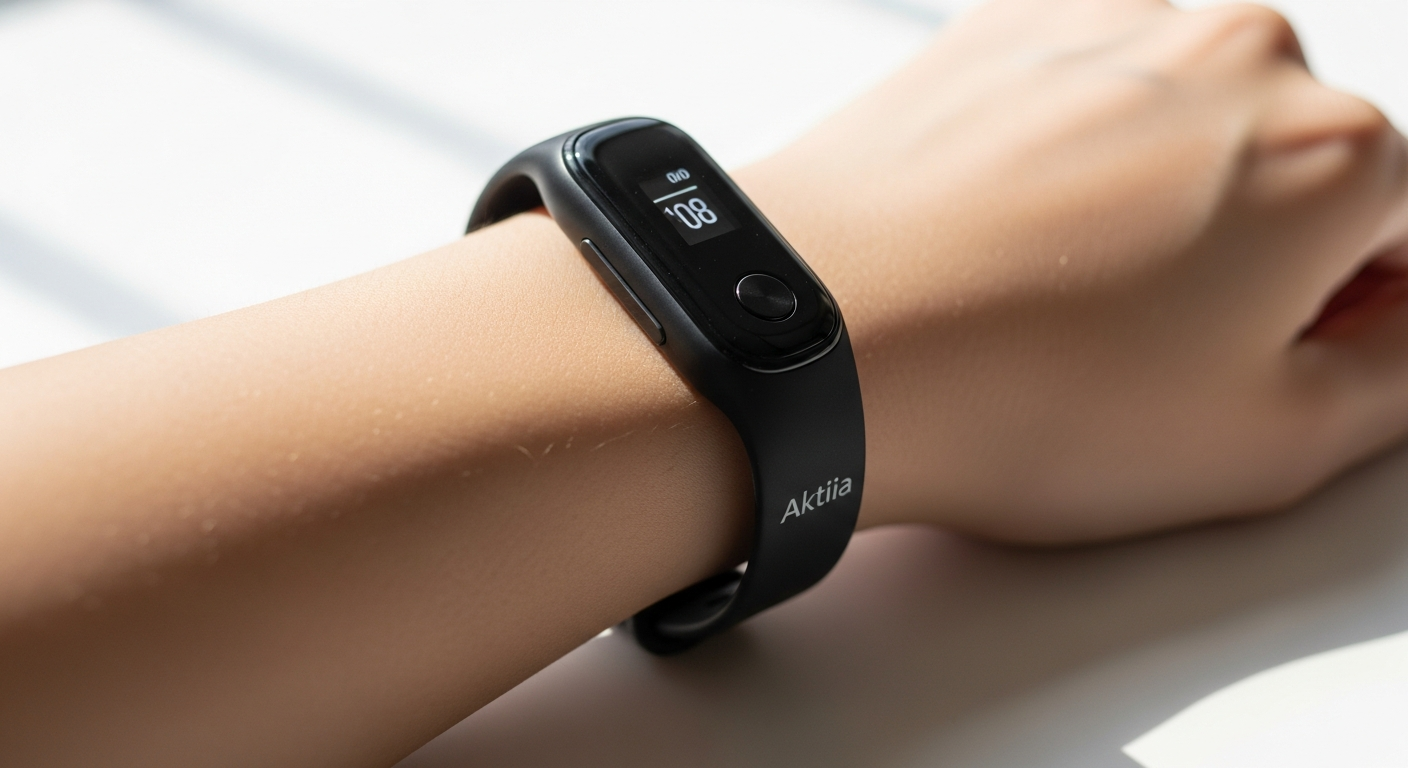
The Aktiia Bracelet employs photoplethysmography (PPG) technology, using advanced optical sensors to analyze how blood moves through your radial artery. These sensors detect subtle changes in light absorption as your heart pumps blood through your wrist, creating a detailed pulse wave pattern. This arterial pulse wave carries critical information about your systolic and diastolic readings—information the device’s algorithms translate into blood pressure estimates with clinical-grade accuracy.
Traditional oscillometric cuffs work differently. They inflate around your arm, gradually releasing pressure while measuring vibrations—a process that takes seconds and requires deliberate action. The Aktiia Bracelet performs the same calculation passively, continuously, without any sensation of pressure or constriction. You wear it like a standard bracelet and forget about monitoring altogether.
The Role of Calibration
The initial calibration process anchors the optical measurements to your individual physiology. You’ll use a traditional upper arm blood pressure cuff to establish a baseline, then repeat this monthly recalibration to ensure ongoing accuracy. This hybrid approach—optical measurement paired with periodic cuff verification—creates a system that’s both convenient and clinically reliable. The recalibration takes just minutes and keeps the bracelet’s algorithms finely tuned to your specific cardiovascular characteristics.
Real-time Bluetooth connectivity transfers all measurements to your mobile app instantaneously. You watch your data populate in real time, eliminating the uncertainty and anxiety that often accompanies manual cuff measurements. There’s no guessing whether you took the reading correctly or whether your white coat syndrome influenced the result—the device handles everything automatically, collecting data even while you sleep.
Daily Data Collection: What 27 Readings Per Day Actually Means
Most people measure blood pressure once or twice monthly at best. The Aktiia Bracelet generates 27 readings daily, translating to over 800 measurements per month. This radical shift in data volume fundamentally changes what you can understand about your cardiovascular patterns.
Traditional monitoring shows you snapshots—isolated moments frozen in time. Those readings miss the story. Blood pressure fluctuates throughout the day based on stress, sleep quality, caffeine intake, physical activity, and medication timing. Spread 27 readings across a 24-hour period, and these patterns become visible. You see which times of day your pressure rises or falls, which activities trigger spikes, and how your body responds to medication adjustments.
Identifying Patterns and Anomalies
The companion app visualizes these patterns through graphs and trend lines. You might discover that your morning readings spike significantly between 6 and 8 AM—a common pattern related to cortisol release and the transition from sleep. Or you might notice that your evening readings remain elevated despite medication, suggesting your current regimen needs adjustment. Monthly data reveals seasonal variations, stress-related increases, or gradual improvements from lifestyle changes.
White Coat Syndrome and Masked Hypertension
White coat syndrome occurs when patients show elevated readings in clinical settings but maintain normal pressures at home. Conversely, masked hypertension means normal readings during doctor visits but consistently high pressures in daily life. Traditional monitoring—primarily conducted in medical offices or during occasional home checks—cannot detect either condition reliably. The Aktiia Bracelet captures readings across all contexts, revealing these patterns with certainty. Your doctor sees your authentic cardiovascular profile, not a performance distorted by appointment anxiety.
Nocturnal Monitoring Changes Everything
Sleep represents roughly one-third of your day, yet most blood pressure monitoring systems ignore these hours entirely. The Aktiia Bracelet never sleeps. It collects readings throughout the night, revealing nocturnal hypertension—elevated pressure during sleep—which carries independent cardiovascular risk. Some patients maintain normal daytime readings but experience dangerous nighttime elevations. Without 24/7 monitoring, this risk remains completely hidden.
Medication Response and Lifestyle Impact
When your doctor adjusts your blood pressure medication, you usually wait weeks before returning for a follow-up appointment. The Aktiia Bracelet provides immediate feedback. Within days, you see how your cardiovascular system responds to the new dosage. Similarly, if you modify your lifestyle—increasing exercise, reducing sodium, managing stress—the data documents these changes numerically. This personalized feedback loop accelerates your ability to optimize your health strategy.
Accuracy, Clinical Validation, and Regulatory Status
The Aktiia Bracelet holds CE Mark certification as a Class IIa medical device in Europe, affirming its safety and efficacy through rigorous clinical assessment. More significantly, the newer Hilo Band has received FDA 510(k) clearance for over-the-counter use in the United States, with availability expected in 2026. This regulatory pathway requires substantial clinical evidence demonstrating that the device performs equivalently to predicate devices—essentially proving its reliability against established standards.
Clinical studies supporting optical measurement technology have evolved substantially over the past decade. Photoplethysmography-based blood pressure estimation was once considered experimental. Contemporary research demonstrates that properly calibrated optical systems can achieve accuracy comparable to oscillometric cuffs when applied to appropriate patient populations. The Aktiia system’s requirement for initial and monthly recalibration reflects this reality—optical sensors need periodic anchoring to oscillometric reference points to maintain clinical-grade precision.
When Accuracy Becomes Limited
Accuracy limitations exist, however. Patients with irregular heart rhythms—atrial fibrillation, premature ventricular contractions, or other arrhythmias—present challenges for PPG-based systems. Arterial pulse waves become less predictable, and the algorithms struggle to generate reliable estimates. Similarly, certain conditions affecting vascular function or perfusion may compromise measurement reliability. The Aktiia system is transparent about these constraints and explicitly recommends traditional monitoring for initial hypertension diagnosis, where absolute accuracy is essential for clinical decision-making.
The device represents a paradigm shift toward supplementary monitoring rather than diagnostic replacement. Once your doctor confirms hypertension through traditional methods, the Aktiia Bracelet becomes invaluable for ongoing management and trend tracking. It excels in this secondary role, providing detail that traditional cuffs cannot match.
The Complete Cost Breakdown: Device, Subscription, and Long-Term Investment
The Aktiia Bracelet itself costs approximately $199, which includes the physical device and initial setup materials. However, this upfront price tells only half the story. The system requires a mandatory subscription—$9.99 monthly or $119.88 annually—to access the monitoring algorithms and data analysis platform. Your first year totals roughly $319; subsequent years cost approximately $120 in subscription fees alone.
This subscription model differs fundamentally from purchasing a traditional home blood pressure cuff, which requires no ongoing fees. Conversely, traditional options like pharmacy blood pressure kiosks are free but provide only isolated readings. Ambulatory blood pressure monitoring (ABPM)—the gold standard for comprehensive assessment—typically costs $150 to $300 per study through a healthcare provider, and most insurance covers this only for specific diagnostic purposes rather than ongoing management.
Cost Per Reading
When you calculate the Aktiia Bracelet’s cost per measurement, the perspective shifts. At 27 daily readings, you generate 810 measurements monthly. Spreading the $120 annual subscription across 9,720 annual readings yields approximately $0.01 per reading. For someone managing hypertension, this cost structure becomes competitive compared to alternatives when viewed through a longitudinal lens.
Insurance and Coverage Questions
Insurance coverage remains variable and institution-dependent. Some employers and insurance plans now cover wearable blood pressure monitors as part of preventive health initiatives, while others classify them as consumer wellness devices outside covered benefits. Contact your insurance provider directly before purchasing—unexpected coverage may offset your costs significantly. Healthcare systems using remote patient monitoring programs sometimes subsidize device purchases or subscriptions for patients with diagnosed hypertension.
Real-World Usability: Comfort, Battery Life, and Water Resistance
The Aktiia Bracelet weighs just 22 grams, making it imperceptibly light during extended wear. Users report forgetting they’re wearing it within days—a crucial advantage for 24/7 compliance. The bracelet design accommodates various wrist sizes through adjustable bands, and the streamlined appearance means you’re not self-conscious wearing it to work, social events, or formal occasions.
Battery life stretches approximately 10 days between charges, which translates to roughly weekly charging rituals. This interval avoids the daily charging requirements of smartwatches while maintaining reliable continuous monitoring. A micro-USB charging cable restores the battery in hours, and most users integrate charging into their regular routines—overnight twice weekly, for instance.
Water Resistance Evolution
The original Aktiia Bracelet lacked water resistance, requiring removal during showers, swimming, or rain. This limitation frustrated users seeking genuine 24/7 monitoring and created compliance gaps during water-based activities. The newer Hilo Band addresses this directly through full waterproofing, enabling uninterrupted wear regardless of water exposure. If water resistance matters to your lifestyle—and for most people it does—confirm you’re purchasing the newer model.
Activity Limitations
One important constraint: the Aktiia Bracelet deliberately pauses measurements during physical activity. The algorithms recognize when your wrist movement patterns indicate exercise and temporarily suspend readings until normal activity resumes. This design choice reflects engineering pragmatism—intense movement creates noise in the optical sensor data, potentially compromising accuracy. The device prioritizes reliable readings over continuous coverage, a reasonable tradeoff if you understand this boundary. Notably, the Aktiia Bracelet is not designed as a fitness tracker—it lacks step counting, heart rate variability analysis, or activity classification features typical of consumer wearables.
Who Benefits Most: Ideal Use Cases and Patient Profiles
The Aktiia Bracelet shines brightest for specific patient populations. If you’ve received a hypertension diagnosis but your blood pressure remains difficult to control despite medication—you have resistant hypertension—this device becomes a powerful optimization tool. Your doctor can observe exactly how your body responds to different regimens and dosages, enabling precision adjustments rather than incremental trial-and-error.
Patients transitioning between blood pressure medications particularly benefit. The first weeks of a medication change represent critical data collection periods. The Aktiia Bracelet documents this transition comprehensively, showing whether your new medication achieves the desired effect or triggers problematic side effects like excessive nighttime pressure drops.
White Coat Syndrome and Diagnostic Clarity
People suspecting white coat syndrome—those showing elevated readings at appointments but sensing normal pressures at home—gain definitive evidence through continuous monitoring. Similarly, those with anxiety-related blood pressure spikes benefit from seeing their authentic baseline patterns, which often reassure them more than doctor’s office measurements ever could.
Healthcare Provider Perspective
Remote patient monitoring programs enable healthcare providers to manage hypertensive patients between appointments with unprecedented detail. Instead of waiting months to assess whether interventions worked, your doctor reviews actual data showing daily patterns, medication responses, and cardiovascular stability. This capability transforms chronic disease management from episodic to continuous.
Preventive Health Interests
Even without diagnosed hypertension, cardiovascular-conscious individuals—those with family histories of heart disease, aging adults interested in proactive health monitoring, or anyone prioritizing preventive care—find value in understanding their pressure patterns before problems develop. Catching elevated trends early enables lifestyle interventions before pharmaceutical treatment becomes necessary.
Strengths That Set This Device Apart
The Aktiia Bracelet eliminates measurement anxiety entirely. Many patients experience genuine physiological responses to cuff inflation—tensing muscles, holding breath, elevated cortisol—that artificially raise readings. Cuff-free, passive monitoring removes these confounding factors. You receive authentic cardiovascular data unburdened by the measurement process itself.
Nocturnal monitoring represents perhaps the most transformative advantage. Your cardiologist can now evaluate your nighttime blood pressure patterns—something impossible through office visits or home measurements. Nocturnal hypertension and excessive nighttime dipping patterns carry distinct cardiovascular implications. Access to this data shifts clinical understanding from incomplete snapshots to comprehensive 24-hour profiles.
Seamless data sharing with healthcare providers accelerates clinical decision-making. Rather than your doctor relying on your memory of readings (“I think my pressure was usually around 140”) or outdated home logs, they receive timestamped objective data documented across weeks or months. This transparency enables evidence-based optimization rather than guesswork-driven adjustments.
The sheer volume of data—800+ monthly readings—creates statistical power impossible with traditional methods. Individual readings show noise and variation; patterns across hundreds of measurements reveal genuine trends. Your doctor gains confidence in medication effectiveness or lifestyle impact assessments through this data density.
Important Limitations and Considerations
The mandatory subscription model demands financial commitment beyond the initial device purchase. For some individuals, the recurring cost creates barriers to adoption despite appreciating the technology. Unlike traditional blood pressure cuffs, you cannot simply purchase the hardware and discontinue spending.
The Aktiia Bracelet explicitly cannot serve as your primary diagnostic tool. If you’re evaluated for hypertension initially, you require a traditional cuff-based diagnosis before transitioning to continuous monitoring. This limitation reflects appropriate clinical conservatism—optical measurement is accurate for tracking known conditions, but initial diagnosis demands the gold-standard oscillometric approach.
Water resistance gaps affect older bracelet versions significantly. If you swim regularly, enjoy frequent showers, or live in humid climates, the original model’s vulnerability becomes frustrating. The Hilo Band resolves this, but only if you can access the newer version.
Monthly recalibration requires discipline. You must remember to perform your recalibration ritual, use proper technique with the traditional cuff, and maintain consistency across recalibrations. This requirement introduces human factors that automated systems ideally eliminate. Users who neglect recalibration gradually accumulate measurement drift.
Patients with arrhythmias face limited utility. Irregular heartbeats challenge the PPG algorithms, and the device may struggle generating reliable estimates. Those with complex medical histories involving vascular conditions or unusual physiology should verify compatibility with their healthcare provider before investing.
The device doesn’t function as a comprehensive health tracker. If you want activity monitoring, sleep analysis, or heart rate variability data alongside blood pressure tracking, you’ll need a separate wearable. The Aktiia Bracelet maintains narrow focus on its specialty—blood pressure—with no feature creep into adjacent health domains.
The Bottom Line: Continuous Monitoring Transforms Cardiovascular Care
The Aktiia Bracelet—transitioning to the Hilo Band for US consumers in 2026—represents genuine innovation in cardiovascular management. Your opportunity to collect 27 readings daily transforms your understanding of blood pressure from static snapshots to dynamic patterns. The clinical validation is solid, regulatory approvals are materializing, and the underlying optical measurement technology genuinely works for appropriate populations.
This device demands realistic expectations. The mandatory subscription creates ongoing costs. Monthly recalibration means you’re not purchasing a set-it-and-forget-it solution. Initial diagnosis requires traditional methods. Not everyone with cardiac concerns benefits equally—those with arrhythmias, particularly, face limitations.
But for your specific scenario—diagnosed hypertension requiring precision management, suspected white coat syndrome, medication optimization needing objective feedback—the continuous data stream becomes invaluable. Your cardiovascular profile emerges across weeks and months in ways isolated readings cannot capture. This intelligence enables you and your doctor to make informed decisions about medication adjustments, lifestyle modifications, and long-term cardiovascular strategy.
Three factors determine whether the Aktiia Bracelet merits your investment. First, does your health situation genuinely benefit from detailed monitoring—are you managing diagnosed hypertension or exploring cardiovascular concerns? Second, does the subscription cost fit realistically within your healthcare budget without creating financial strain? Third, are you willing to engage actively with your health data, reviewing trends and applying insights to behavioral changes?
If these three factors align favorably, the Aktiia Bracelet delivers insights that traditional monitoring simply cannot match. Speak with your healthcare provider about whether continuous cuffless monitoring should anchor your cardiovascular management strategy—the data you gain could reshape how you and your doctor approach your heart health.
Leave a Reply