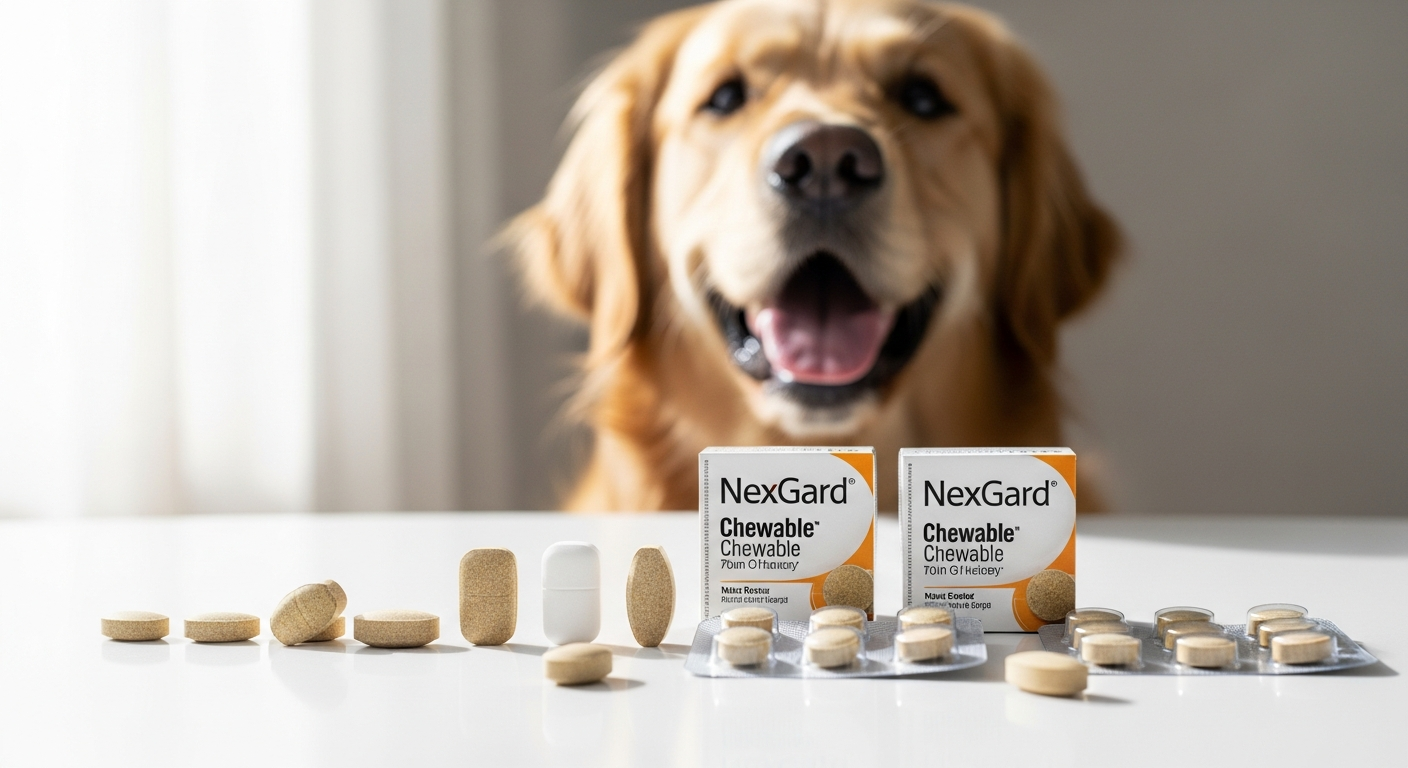
When your dog swallows a NexGard chew, afoxolaner enters the bloodstream and distributes throughout the body, targeting the nervous systems of parasites. This systemic approach means the medication reaches fleas and ticks wherever they hide—under the skin, in the coat, or embedded in the bite site. Unlike topical treatments that work only on the surface, afoxolaner penetrates deeply to provide comprehensive protection.
The mechanism of action: blocking sodium channels in parasite neurons to cause paralysis and death
Afoxolaner operates by blocking sodium channels in the nervous systems of fleas and ticks. This blockage prevents normal neural transmission, leading to hyperexcitation, paralysis, and ultimately death of the parasite. The mechanism is highly selective—it affects parasites far more significantly than mammals, making it safe for your dog when used as directed.
Why oral medication reaches parasites more effectively than topical treatments
Topical treatments remain confined to the skin and coat surface, which can limit their effectiveness, especially for parasites that burrow deep or embed themselves. Oral medication like NexGard travels through the entire circulatory system, ensuring parasites encounter the active ingredient regardless of location. This systemic distribution accelerates parasite elimination and provides more uniform protection across your dog’s body.
Speed of action: flea elimination within 4-8 hours, tick elimination within 8 hours
NexGard begins working remarkably fast. Fleas start dying within 4-8 hours of administration, while ticks typically perish within 8 hours. This rapid action breaks the parasite life cycle before infections can develop, reducing the risk of disease transmission significantly.
Which Tick Species Does NexGard Actually Kill?
Complete list of tick species covered: American dog ticks, black-legged ticks, Lone Star ticks, brown dog ticks, Gulf Coast ticks, and longhorned ticks
NexGard’s coverage extends across six major tick species commonly encountered in North America. American dog ticks and brown dog ticks are widespread and frequently attach to pets. Black-legged ticks (also called deer ticks) pose particular concern due to Lyme disease transmission. Lone Star ticks, Gulf Coast ticks, and longhorned ticks round out the protection, ensuring comprehensive defense across diverse geographic regions.
Lyme disease prevention through black-legged tick elimination
Black-legged ticks are the primary vector for Lyme disease in dogs. By killing these ticks within 8 hours, NexGard prevents the bacteria transmission that causes this debilitating condition. Early parasite elimination is crucial since infection typically requires 24-48 hours of tick attachment, making NexGard’s speed a significant advantage.
Other tick-borne diseases prevented: babesiosis, anaplasmosis, and Ehrlichiosis
Beyond Lyme disease, ticks transmit multiple pathogens. Babesiosis causes hemolytic anemia, anaplasmosis leads to joint pain and fever, and Ehrlichiosis triggers inflammation and immune system damage. NexGard’s efficacy against the tick species carrying these diseases provides protection against all of them simultaneously.
Geographic variations in tick species and how NexGard addresses regional concerns
Different regions harbor different tick populations. Coastal areas see more Gulf Coast ticks, while northern forests overflow with black-legged ticks. Western regions encounter longhorned ticks. NexGard’s broad-spectrum coverage means your dog gains protection regardless of location, making it suitable for travel or relocation without switching medications.
Dosing, Sizing, and Administration for Every Dog
Four weight-based formulations: 4-10 lbs, 10.1-24 lbs, 24.1-60 lbs, and 60.1-121 lbs
NexGard comes in four strength options calibrated to your dog’s weight. Selecting the correct size ensures proper dosing—too little provides inadequate protection, while too much creates unnecessary risk. Your veterinarian will determine which formulation matches your dog’s weight category.
Age requirements: safe for puppies 8 weeks and older with minimum 4 pounds weight
NexGard suits young dogs, making it ideal for protecting puppies early in life. The minimum requirement is 8 weeks of age and at least 4 pounds of body weight. Younger or lighter puppies need alternative parasite prevention until they meet these thresholds.
Monthly dosing schedule and how to establish a routine for consistent protection
Administration occurs once monthly, making it simple to maintain a consistent schedule. Many pet owners tie the dose to a calendar date—the 1st of each month, for example—or set phone reminders. This regularity ensures your dog never experiences a gap in protection.
Can be given with or without food, offering flexibility for picky eaters
The beef flavor makes NexGard palatable to most dogs, but the added flexibility of administering it with or without food accommodates picky eaters and dogs with sensitive stomachs. Some owners give it as a treat, while others hide it in food. Either approach works equally well.
Discover NexGard Chewables pricing and availability at your preferred retailer today.
The Convenience Factor: Why Oral Beats Topical for Many Dog Owners
No messy residue on your hands, furniture, or your dog’s coat
Topical treatments leave greasy residue that stains hands, clothes, and furniture. NexGard eliminates this mess entirely. Once swallowed, the chew delivers its benefits internally without surface contamination. Your hands stay clean, your furniture stays pristine, and your dog’s coat remains unaffected.
Water-resistant formula means bathing and swimming don’t reduce effectiveness
Bathing or swimming compromises topical treatments, potentially washing away protection mid-month. NexGard works systemically through the bloodstream, making water exposure irrelevant. Your dog can enjoy water activities without concern for reduced efficacy.
Elimination of application stress for dogs sensitive to handling and touch
Some dogs resist the handling required for topical application. They may fear the applicator, dislike the sensation of liquid on their skin, or develop anxiety around grooming time. Offering a chew eliminates these stressors, transforming parasite prevention into a positive interaction.
Simplified monthly reminder system compared to multiple topical applications
A single monthly chew beats remembering topical applications that sometimes require weekly or biweekly dosing. One date per month is far easier to track than complex schedules, reducing the chance of missed doses.
Cost Breakdown and Value Comparison for Budget-Conscious Pet Owners
Single-month supply pricing varies by weight category and retailer
Single-dose pricing fluctuates based on your dog’s weight category and where you purchase. Smaller dogs typically cost less per dose than larger dogs, though exact figures depend on current market rates and retailer promotions.
3-month supply pricing at approximately $37-$39 per month at major retailers
A 3-month supply at major retailers like Petco averages $37-$39 per month, providing modest savings compared to purchasing single doses. This option balances convenience with cost efficiency for most budgets.
6-month supply options around $169.59 for larger bulk quantities
Buying in bulk significantly reduces per-dose cost. A 6-month supply available for approximately $169.59 works out to roughly $28 per month—a substantial savings for committed dog owners. Bulk purchasing requires upfront investment but pays dividends over time.
Cost per dose analysis across different package sizes and purchasing strategies
Calculating cost per dose reveals that larger quantities offer better value. However, consider your budget constraints and storage capacity. A 3-month supply often represents the sweet spot between savings and practical purchasing limits for most households.
Safety Profile, Side Effects, and When to Avoid NexGard
Generally well-tolerated status in most dogs with high safety profile
NexGard has an excellent safety record when administered as directed. The vast majority of dogs tolerate it without adverse reactions, and it’s FDA-approved for use in canines. Veterinary clinical trials support its safety across diverse dog populations.
Common mild side effects: vomiting, diarrhea, lethargy, loss of appetite, dry skin
While most dogs experience no problems, some develop mild gastrointestinal upset or temporary appetite changes. Dry or flaky skin occasionally occurs. These effects are typically transient and resolve without intervention. However, contact your veterinarian if symptoms persist beyond a few days.
Rare but serious neurological side effects: seizures and tremors in susceptible dogs
Neurological complications like seizures have been reported, though rarely. Dogs with pre-existing seizure disorders face elevated risk. Tremors and other neurological signs require immediate veterinary attention. Your veterinarian’s evaluation becomes crucial if your dog has any history of seizures or neurological conditions.
Risk factors: dogs with pre-existing seizure disorders or neurological conditions
Dogs with epilepsy or other neurological conditions warrant special consideration. Discuss your dog’s complete medical history with your veterinarian before starting NexGard. Some dogs may benefit from alternative parasite prevention strategies.
NexGard vs. NexGard Plus: Understanding the Difference
Original NexGard: fleas and ticks only for focused parasite protection
The standard NexGard formulation targets fleas and ticks exclusively. This focused approach suits dogs with no heartworm or intestinal worm risk, or those receiving separate prevention for these parasites.
NexGard Plus: fleas, ticks, heartworm, and intestinal worms in one monthly dose
NexGard Plus extends protection to heartworm and intestinal parasites, consolidating four types of parasite prevention into a single monthly chew. This comprehensive approach simplifies medication management for dogs requiring multi-parasite protection.
Cost differential between the two formulations and extended protection benefits
NexGard Plus costs more than standard NexGard, but may provide better overall value if your dog needs all four types of protection. Consolidating medications reduces pills, chews, and doses required monthly—a practical advantage beyond pure cost analysis.
Which dogs benefit from the extended protection of NexGard Plus coverage
Dogs in areas with heartworm prevalence benefit significantly from NexGard Plus. Those with outdoor access, frequent travel, or exposure to wildlife gain added intestinal parasite protection. Discuss your dog’s specific risk factors with your veterinarian to determine whether standard NexGard or NexGard Plus makes sense.
Why Veterinarians Recommend NexGard Chewables
Vet-recommended status backed by clinical trial data supporting efficacy
NexGard’s veterinary endorsement stems from rigorous clinical trials demonstrating its effectiveness. Vets prescribe it confidently based on proven parasite elimination rates and disease prevention outcomes.
Ease of monitoring compliance compared to topical treatments and applications
A single monthly chew makes it obvious whether your dog has received prevention—either the chew was given or it wasn’t. Topical applications create ambiguity; owners sometimes misapply them or miss spots. Oral medication removes this uncertainty.
Consistency in dosing and reduced risk of application errors with oral medication
Each chew delivers a precise, predetermined dose. Topical treatments allow for spilling, improper application, or uneven distribution. Oral administration guarantees consistent, accurate dosing every time.
Rapid parasite elimination and disease prevention benefits for canine health
The speed at which NexGard eliminates parasites translates to immediate health benefits. Quick tick removal prevents disease transmission, while rapid flea elimination stops itching, allergic reactions, and secondary infections. These tangible health improvements make the medication invaluable in veterinary practice.
Making the Right Choice for Your Dog’s Parasite Protection
NexGard Chewables deliver powerful, convenient, and fast-acting protection against fleas, ticks, and tick-borne diseases like Lyme disease. The beef-flavored chew eliminates the guesswork and mess of topical treatments, while afoxolaner works systemically to kill parasites within hours. For most dogs, the combination of efficacy, ease of use, and veterinary endorsement makes it a compelling choice. However, NexGard isn’t one-size-fits-all—dogs with seizure histories, pregnant or nursing females, and those requiring heartworm protection may need alternative approaches.
Your dog’s individual health profile, geographic location, and lifestyle all factor into whether NexGard represents the optimal solution. A dog living in a tick-heavy region benefits differently than one in a low-risk area. Similarly, a dog with a clean health history can tolerate NexGard differently than one with neurological concerns.
The investment in proper parasite prevention pays dividends through disease prevention, reduced itching, fewer infections, and overall improved quality of life. Taking time to evaluate options ensures you select protection that works for your specific circumstances rather than defaulting to generic recommendations.
Leave a Reply