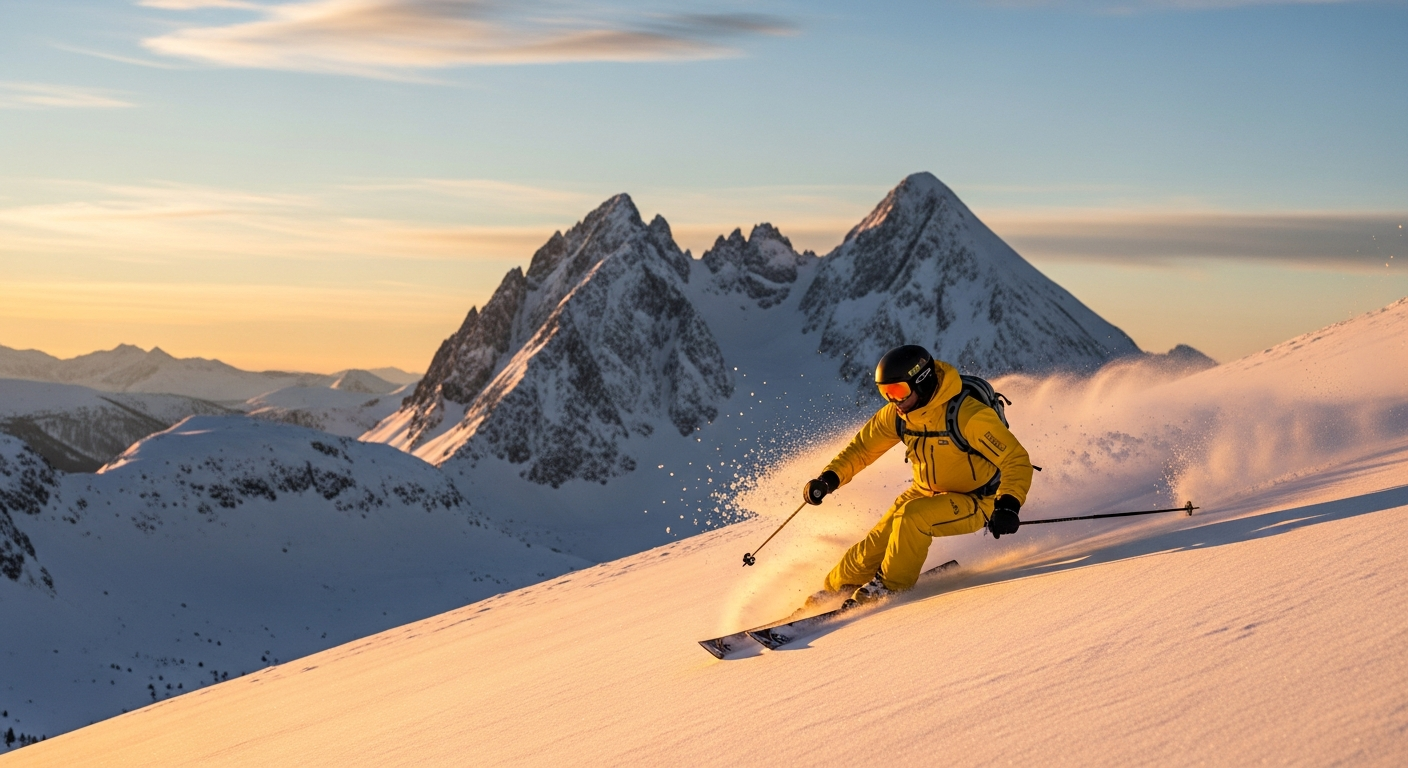
Backcountry skiers face a brutal reality: one wrong gear choice can transform an exhilarating day into a dangerous situation. When temperatures plummet and whiteout conditions strike without warning, your jacket becomes your lifeline. The margin between comfort and catastrophe often comes down to whether your outer layer can handle the mountain's worst moods while still allowing you to move freely and breathe easily.
Norrona, a Norwegian brand with decades of alpine expertise, engineered the Lofoten GORE-TEX Insulated Jacket specifically for these unforgiving moments. This jacket emerged from a philosophy rooted in Scandinavian mountain culture—where winter conditions demand respect and gear must deliver on performance without compromise. Serious backcountry skiers have voted with their wallets, making it a consistent best-seller across premium retailers like Ellis Brigham.
Throughout this breakdown, I'll examine the technical features that distinguish this jacket, assess how it performs in real-world backcountry scenarios, weigh its value against competing options, and help you determine if it belongs in your gear collection.
GORE-TEX Technology Explained: The Waterproof Foundation
How GORE-TEX Membranes Work at the Molecular Level
GORE-TEX operates on a deceptively simple principle that produces exceptional results. The membrane contains roughly 9 billion microscopic pores per square inch—each pore is approximately 700 times smaller than a water droplet but 20,000 times larger than a water vapor molecule. This dimensional mathematics means water spray and rain cannot penetrate inward, yet perspiration vapor escapes outward continuously.
The membrane itself is bonded to outer and inner fabric layers, creating a laminate that resists moisture intrusion from the outside while actively wicking vapor away from your skin. In backcountry conditions where you're climbing, descending, and experiencing constant thermal shifts, this vapor transmission becomes the difference between comfort and hypothermia.
Why GORE-TEX Remains the Industry Standard
Cheaper waterproof alternatives exist—polyurethane coatings, PVC membranes, and various proprietary blends all claim waterproofing. The critical distinction with GORE-TEX involves durability and consistent performance under stress. Budget coatings degrade when exposed to UV radiation, mechanical abrasion, and the flex cycles inherent to ski jackets. After two or three seasons, they lose their water-repellent properties and trap moisture against your core.
GORE-TEX maintains its membrane integrity through years of intensive use. The material doesn't degrade from sunlight exposure or repeated flexing. When you're committed to backcountry skiing—spending months per year in harsh alpine environments—this longevity translates into reliable protection across multiple seasons.
Specific GORE-TEX Advantages for Backcountry Skiing
Off-piste skiing demands more from your jacket than resort use. You're climbing steep terrain in direct sunlight, then descending rapidly into shaded gullies where temperature drops dramatically. You're ducking under low branches and potentially falling through deep snow. You're exposed to wind that intensifies with elevation gain.
GORE-TEX's three-layer construction in the Lofoten creates a robust barrier against these stressors. The outer face fabric resists snagging and abrasion from rock and vegetation contact. The membrane blocks water penetration. The inner fleece lining protects the membrane from damage and provides tactile comfort. This tripartite approach ensures the jacket maintains waterproof integrity even after contact with sharp objects or repeated compression against your pack.
Performance in Extreme Cold and Wet Conditions
Winter in the mountains presents a paradox: conditions are often simultaneously wet and frigid. Rain mixed with snow. Rime ice accumulation. Subzero temperatures that would otherwise preserve waterproof coatings, but the freeze-thaw cycles during transitions accelerate degradation in lesser jackets.
GORE-TEX's synthetic composition means cold doesn't stiffen the membrane or reduce its flexibility. The material remains supple at -20°C, allowing full articulation of your shoulders and arms even when ice is coating the exterior. This technical advantage proves invaluable when you need to move precisely on technical terrain where restricted mobility invites accidents.
Insulation Strategy for Extended Alpine Adventures
Synthetic Insulation Benefits for Backcountry Skiing
The Lofoten incorporates synthetic insulation rather than down, a choice that reveals thoughtful engineering for backcountry realities. Down excels in dry conditions—its loft-to-weight ratio is superior, and it compresses into minimal volume. But down fails catastrophically when wet. Once saturated, down clumps irreversibly, losing virtually all insulative value even after drying.
Synthetic insulation maintains its thermal properties when damp. This single advantage justifies the slight weight penalty and reduced packability. In backcountry skiing, where moisture intrusion can occur through pit zips during intense activity or through minor membrane compromises from wear, synthetic insulation provides a safety margin. You remain protected even if conditions overwhelm your jacket's waterproofing temporarily.
Balancing Insulation Thickness with Mobility and Layering Flexibility
The Lofoten's insulation thickness strikes a deliberate compromise. It's sufficient for static activities and extended exposure to cold, yet not so bulky that it restricts the articulation necessary for technical skiing. This balance becomes apparent when you're transitioning from a climbing phase (where you generate substantial internal heat) to a descent (where you're stationary relative to airflow and cooling rapidly).
The jacket's design acknowledges that backcountry skiers layer strategically. Rather than trying to serve as an all-encompassing thermal solution, the Lofoten works harmoniously with mid-layer systems—merino wool, synthetic fleece, or synthetic grid materials. This modularity allows you to adjust your thermal profile without changing jackets, extending the temperature range where the Lofoten remains your primary shell.
Temperature Rating Ranges and Optimal Conditions
While specific temperature ratings aren't universally published, the Lofoten's construction suggests effective performance from approximately -5°C to -20°C with appropriate layering. Below -20°C, additional insulation layers become necessary. Above 0°C, particularly during high-exertion phases, the jacket's insulation transitions from essential to potentially excessive.
The jacket excels in the temperature bands where most serious backcountry skiing occurs—the shoulder seasons and high-altitude winter conditions where weather fluctuates rapidly. Early morning climbs in deep cold followed by afternoon descents in slightly milder conditions represent the Lofoten's sweet spot.
Why Insulation Type Matters More Than Fill Power for Off-Piste Applications
Fill power—a metric measuring how much volume a given weight of insulation occupies—becomes less relevant in backcountry applications compared to alpine mountaineering or expedition use. Backcountry skiers prioritize performance under active conditions, not minimal weight for fixed loads carried on extended approaches.
Synthetic insulation's water resistance and robust performance when damp outweigh the slight weight disadvantage. The Lofoten's engineering recognizes this priority hierarchy, emphasizing reliability under the specific stresses of off-piste skiing over theoretical metrics that sound impressive in marketing copy but matter less in practice.
Design Features Built for Technical Terrain
Pit Zips and Ventilation Systems for Temperature Regulation
Pit zips—underarm zippers that open the jacket at the torso—represent one of the most underrated features in backcountry skiing gear. During steep climbing phases, your core temperature rises rapidly despite cold ambient conditions. Closing your jacket would create overheating and trapped moisture that soaks your base layers.
The Lofoten's pit zip system allows rapid heat dissipation while maintaining weather protection on your shoulders and back, where wind exposure is greatest. This simple mechanical feature prevents the boom-and-bust thermal cycles that compromise comfort across an entire day. You regulate temperature actively rather than suffering through periods of overheating followed by rapid chilling.
Articulated Sleeve Construction Enabling Full Range of Motion
Backcountry skiing demands unrestricted arm mobility in ways resort skiing doesn't. You're poling across flats. You're using your poles for balance while sideslipping down technical terrain. You're reaching for branches to control your descent in tight trees. You're reaching overhead to navigate over-steepened sections.
The Lofoten's sleeve construction incorporates articulation—curved seams and structured paneling—that accommodates full shoulder rotation without bunching or restricting. The sleeves extend slightly longer than typical, providing coverage when you're climbing or reaching upward. Combined with the insulation that doesn't add restrictive bulk, the design lets you move naturally rather than constantly fighting against your gear.
Helmet-Compatible Hood Design for Safety and Visibility
Whiteout conditions—sudden snow squalls, fog banks rolling in unexpectedly, rapidly deteriorating visibility—represent genuine hazards in backcountry terrain. Your hood needs to provide shelter from snow and wind while accommodating your helmet and not restricting peripheral vision.
The Lofoten's hood design incorporates a structured brim that shields your goggles from snow accumulation, a volume compatible with helmets, and a cut that doesn't impair visibility when you're scanning terrain ahead. The hood stays positioned properly during active movement—you're not constantly readjusting it as you ski. This stability might seem minor until you're descending a steep couloir in poor visibility and need unobstructed sight lines.
Pocket Placement and Accessibility for Backcountry Essentials
Backcountry skiing requires carrying specific items that need immediate accessibility—an avalanche beacon, a headlamp, emergency snacks, a communication device. Resort skiers typically stash gear in backpacks. Backcountry skiers need pockets they can access without removing their pack.
The Lofoten features hand pockets positioned for gloved access, chest pockets where you can stash a beacon in an emergency, and lower torso pockets that remain accessible while wearing a pack. The pocket design prioritizes function over aesthetics—openings are generous enough for gloved hands, and linings prevent small items from falling through. This practical attention to detail reflects understanding of actual backcountry use rather than theoretical scenarios.
Real-World Performance Across Skiing Conditions
Off-Piste Reliability in Steep Terrain, Trees, and Exposed Ridges
The Lofoten's reputation as a best-seller isn't accidental—it reflects performance across seasons and conditions. Skiers using the jacket on technical terrain report consistent weather protection even during extended exposure. The GORE-TEX membrane maintains its waterproofing through the contact, compression, and abrasion inherent to challenging skiing.
In tree skiing, where branches whip against your jacket and sharp points threaten tears, the outer fabric resists punctures and snagging better than lighter, cheaper alternatives. On exposed ridges where wind intensifies weather exposure, the insulation maintains thermal protection despite the chill factor that makes air temperature misleading.
Breathability Testing During Sustained Climbs and High-Intensity Descents
GORE-TEX's breathability advantage becomes most apparent during climbing phases when you're generating substantial internal heat. The membrane allows vapor to escape continuously, preventing the soggy feeling that develops in less-breathable jackets. Your layers stay dry despite exertion, which matters enormously because damp insulation loses effectiveness.
During descents, particularly high-speed runs where air passes across the jacket surface, breathability remains adequate. You don't experience overheating in the way you might with jackets featuring overly rigid insulation or poor ventilation options. The pit zip system provides additional thermal control when you need it.
Durability Observations After Multiple Seasons of Backcountry Use
Extended field reports from skiers using the Lofoten across multiple seasons reveal consistent durability. The GORE-TEX membrane remains effective season after season—waterproofing doesn't degrade as it does in cheaper jackets. The outer fabric resists pilling and abrasion that develops from heavy use.
The insulation doesn't compress into permanent clumps that reduce effectiveness. Zippers function smoothly despite repeated cycles of opening, closing, and exposure to dirt and ice. Seams maintain integrity rather than beginning to tear or separate. This durability translates into cost-per-use becoming increasingly favorable as you accumulate seasons wearing the jacket.
Performance in Mixed Conditions
Backcountry weather rarely stays consistent. You might encounter wind-packed snow in the morning, wet snow by afternoon, rain at lower elevations, and temperature fluctuations of 20°C across a single outing. The Lofoten's performance across these mixed conditions remains reliable.
The GORE-TEX membrane doesn't degrade as conditions transition. The insulation performs equally well whether you're experiencing dry cold or damp conditions. The synthetic materials don't absorb water and become heavier as they would with natural alternatives. The jacket's versatility across varied conditions reduces the need for backup shells or backup insulated jackets—the Lofoten covers the spectrum effectively.
Price Analysis and Value Proposition for Serious Skiers
Original Retail Pricing Versus Regular Sale Prices
The Lofoten carries an original retail price of £549, positioning it firmly in the premium segment of backcountry jackets. This price point reflects the cost of genuine GORE-TEX membrane, quality synthetic insulation, and thoughtful design execution. However, Ellis Brigham regularly discounts the Lofoten, with observed sale prices ranging from £219.60 to £439.20 depending on color and promotional timing.
The discount variability matters strategically. Certain color options—particularly vibrant choices like Orange Alert or Exuberance—often appear in deeper discounts than classic colors like Skydiver Blue or Classic Green. Patient buyers monitoring sales can acquire the jacket at approximately 40-50% discount from retail, fundamentally improving value without compromising product quality.
Cost-Per-Use Calculation for Backcountry-Focused Skiers
Premium outdoor gear evaluation benefits from cost-per-use analysis rather than sticker shock. A backcountry skier using the Lofoten 50 days annually across three seasons invests 150 days of use into the jacket. At a discounted purchase price of £330, that calculates to £2.20 per day of use—remarkably economical for a technical layer that directly impacts safety and comfort.
Compare this to resort skiers who might wear jackets 30 days annually. The Lofoten remains reasonable at £3.67 per day, but less compelling than for dedicated backcountry users. If you're skiing 80+ days annually in mixed conditions, the Lofoten's cost-per-use becomes trivial relative to value delivered.
Comparison to Competitor Jackets at Similar Price Points
The premium insulated shell jacket market includes competitors from Arc'teryx, Patagonia, Black Crows, and other established brands. Arc'teryx jackets at similar price points often sacrifice insulation thickness for lighter weight—optimized for alpine climbing rather than skiing. Patagonia's offerings typically come with premium pricing without clearly superior backcountry ski-specific features.
The Lofoten's value proposition centers on comprehensive backcountry skiing optimization at a competitive price. It doesn't chase weight minimization like mountaineering jackets. It doesn't compromise on practical features for aesthetic trends. The design represents genuine problem-solving for ski touring and off-piste use, not retrofit engineering from other applications.
Longevity and Durability Factors That Justify Premium Pricing
Premium pricing becomes justified when durability extends product lifespan significantly. A jacket costing £550 that lasts five seasons represents £110 annual investment. A budget jacket costing £200 that requires replacement after two seasons represents £100 annual investment—economically similar despite vastly different sticker prices.
The Lofoten's reputation for multi-season durability—GORE-TEX membranes outlasting cheaper alternatives by years, synthetic insulation resisting compression, zippers and seams maintaining function through intensive use—suggests a five-to-seven-year lifespan for serious skiers. This extended serviceable life fundamentally improves value proposition beyond apparent sticker price disparities.
The Backcountry Skier's Verdict: Is the Lofoten Your Next Essential Layer?
The Norrona Lofoten GORE-TEX Insulated Jacket represents a genuine convergence of technical innovation and practical mountain wisdom. It's engineered by people who understand what happens when weather turns ugly at 3,000 meters—and it shows in every seam, every ventilation option, and every material choice. The GORE-TEX membrane delivers the waterproof protection your life might depend on, while the synthetic insulation keeps you warm without the bulk that restricts movement on technical terrain.
What truly sets this jacket apart isn't flashy marketing or trendy colors. It's the thoughtful design that anticipates what backcountry skiers actually need: breathability during lung-burning climbs, weather protection during sudden storms, and the freedom to move when precision matters. The pit zips prevent overheating during sustained effort. The articulated sleeves allow unrestricted arm motion. The helmet-compatible hood maintains visibility in whiteouts. The pockets position essential gear exactly where you need it.
Yes, the £549 price tag stings initially. But when you factor in the durability, the multi-season reliability, and the genuine safety margin it provides in extreme conditions, the cost-per-use becomes remarkably reasonable. A serious backcountry skier spreading that investment across 150+ annual skiing days quickly recognizes the Lofoten's exceptional value.
If your skiing regularly takes you beyond groomed runs, if you demand gear that performs when conditions deteriorate, or if you're building a backcountry setup from scratch, the Lofoten deserves serious consideration. This is the jacket that earns its place in your quiver season after season.
Leave a Reply