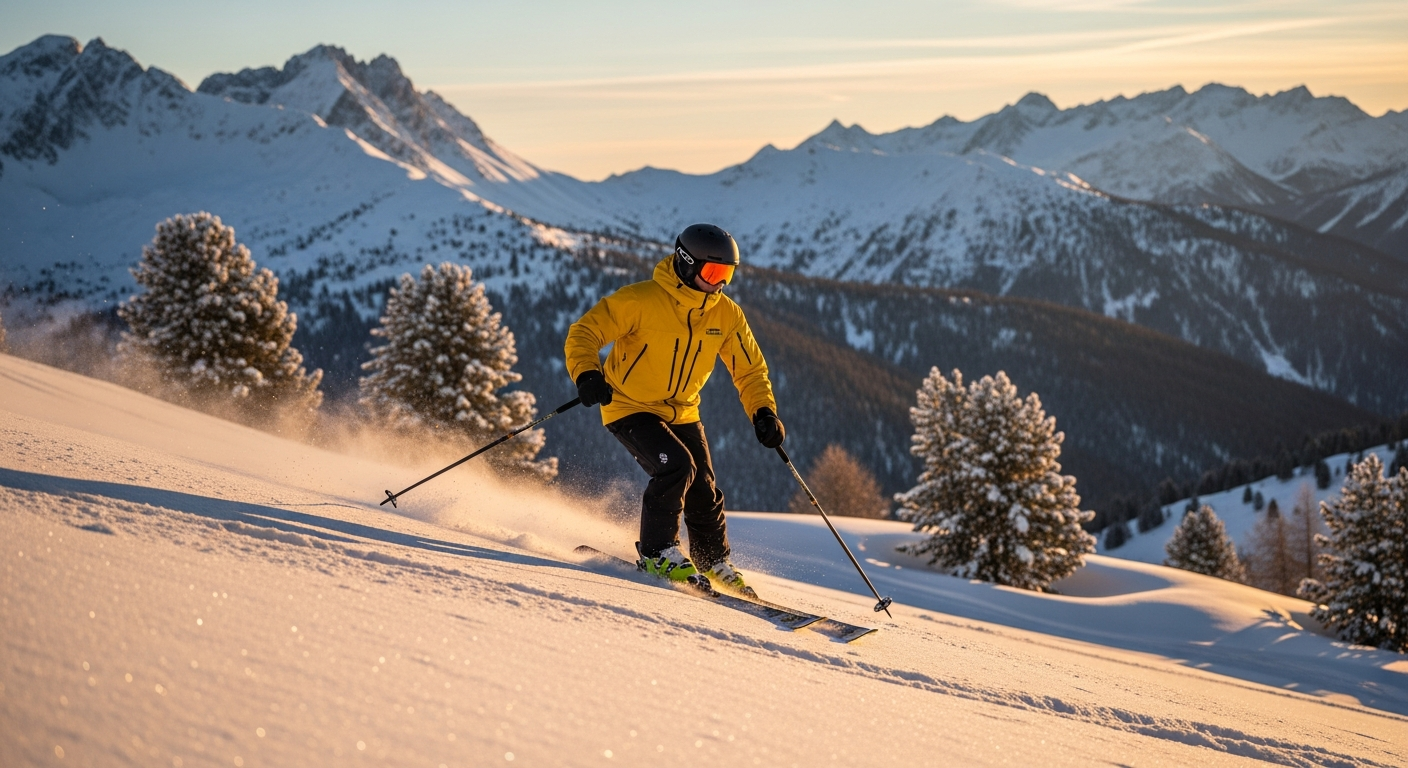
Resort skiers spend an average of 8-10 hours per day on the mountain, yet most jackets fail to deliver consistent warmth and comfort across that entire timeframe. The body needs intelligent temperature management when you're moving continuously through changing conditions, from rapid descents to chairlift waits and occasional uphill pushes. Standard jackets either trap too much heat or leave you shivering, forcing constant adjustments that disrupt your rhythm on the snow.
The Norrona Lofoten GORE-TEX Insulated Ski Jacket was engineered specifically for intermediate skiers and snowboarders who frequent resort terrain and lift-accessed off-piste runs. Built with GORE-TEX technology and strategically placed Primaloft Silver insulation, this jacket handles variable conditions without excessive bulk or weight. The design philosophy prioritizes the real demands of a full day on skis—sustained comfort, reliable weather protection, and features that actually work when you're moving.
Discover the Norrona Lofoten jacket and experience precision-engineered ski performance.
This guide breaks down exactly what makes the Lofoten stand apart from other insulated options, covering its innovative insulation strategy, technical fabrics, practical features, and whether this premium investment aligns with your skiing style and budget.
Strategic Insulation Mapping: Where Warmth Meets Mobility
Primaloft Silver technology with 100% recycled polyester construction
Primaloft Silver represents a significant step beyond traditional down or standard synthetic insulation. This proprietary technology uses ultra-fine fibers that trap air with remarkable efficiency while resisting moisture absorption—a critical advantage when you're working hard on skis. The Lofoten's insulation uses 100% recycled polyester, meaning Norrona sources reclaimed materials rather than virgin petroleum-based synthetics. This choice reduces environmental impact without sacrificing thermal performance.
Body-mapped warmth: 60g/m² front and arms vs. 40g/m² back and collar
The Lofoten doesn't treat all body areas equally—it distributes insulation based on actual heat loss patterns during skiing. Your front side and arms receive 60g/m² of Primaloft Silver, addressing the zones most exposed to wind and requiring active mobility. The back and collar area get 40g/m², accounting for the fact that your back faces less direct wind exposure and generates steady heat from continuous movement. This targeted approach maintains warmth where needed without creating unnecessary bulk.
Why targeted insulation outperforms uniform padding across the jacket
A jacket with uniform insulation throughout either over-insulates passive zones (wasting weight and creating overheating issues) or under-insulates active areas (leaving you cold where it matters). The Lofoten's body-mapping avoids this compromise. You get thermal protection exactly where your body needs it most, allowing the jacket to remain relatively lightweight while delivering genuine warmth. This efficiency compounds across an 8-10 hour day—less weight means less fatigue, and better thermal targeting means fewer temperature swings.
How the insulation strategy prevents overheating during uphill climbs
Intermediate skiers frequently encounter climbs—traversing to untracked terrain, hiking to a cat-skiing zone, or pushing uphill to access specific runs. These efforts generate significant body heat. The lighter insulation on the back, combined with strategic underarm ventilation (discussed later), allows excess heat to escape without requiring you to remove the jacket entirely. The front-focused warmth keeps your core protected while your back remains breathable, creating a balanced thermal environment even during exertion.
Comparison of Primaloft Silver versus down and synthetic alternatives
Down insulation offers exceptional warmth-to-weight ratios but becomes nearly useless when wet—a real concern on the mountain. Standard synthetic insulation like polyester remains warm when damp but typically weighs more and compresses less efficiently. Primaloft Silver sits at an advantageous middle ground: it maintains thermal properties when moisture-exposed, compresses well for packability, and weighs less than equivalent synthetic alternatives. For resort skiing where snow contact and occasional dampness are inevitable, Primaloft Silver makes more practical sense than down.
Weight efficiency: maintaining warmth without sacrificing agility on varied terrain
The Lofoten weighs approximately 808g-920g for a men's size L—substantial enough to provide genuine insulation but light enough that it doesn't create the fatigue associated with heavier expedition jackets. This weight efficiency matters directly to your skiing performance. A lighter jacket means less inertia during turns, easier recovery from falls, and reduced shoulder and neck strain across a full day. You maintain the agility necessary for intermediate terrain without sacrificing warmth protection.
Thermal performance in different resort conditions (spring, deep winter, variable weather)
The Lofoten's insulation strategy performs predictably across seasonal variations. In deep winter, the full 60g insulation on the front provides essential warmth for extended exposure. Spring skiing, with its temperature swings and intense sun, benefits from the lighter back insulation and active ventilation options that prevent overheating. Variable weather days—where morning cold gives way to afternoon warmth—are precisely where the Lofoten excels. You can manage temperature through ventilation rather than switching jackets multiple times.
GORE-TEX Waterproofing and Breathability: The Technical Foundation
28,000mm waterproof rating explained and what it means for real-world use
Waterproofing ratings measure pressure required to force water through fabric. At 28,000mm, the Lofoten resists heavy, sustained precipitation that you'd encounter during a full day of wet snow or spring skiing. To contextualize: 10,000mm handles typical rain, 20,000mm manages heavy snow, and 28,000mm stands above the demands of nearly every resort scenario short of extreme storm conditions. In practical terms, you'll stay dry through wet powder days, sloppy spring conditions, and heavy snowfall without the jacket feeling like an impermeable membrane.
RET (Resistance to Evaporative Transmission) rating under 20 for superior breathability
RET measures how efficiently moisture vapor can escape through fabric. Lower RET values mean better breathability. The Lofoten's rating below 20 places it in the premium category—approaching the breathability of uninsulated shells while maintaining waterproof protection. During sustained skiing, your body continuously generates moisture vapor. A breathable jacket allows this to escape rather than accumulating as a clammy layer against your skin. You'll notice this advantage particularly during intense runs or uphill efforts where moisture production peaks.
How GORE-TEX prevents moisture buildup during high-intensity skiing
GORE-TEX's microscopic membrane contains billions of pores—large enough for vapor molecules to pass through but too small for liquid water droplets. As you generate body heat and moisture during skiing, the membrane actively wicks vapor outward. Simultaneously, the external waterproof barrier blocks incoming precipitation. This dual function prevents the common problem where cheaper jackets keep rain out but trap your sweat inside. The Lofoten maintains a relatively dry microclimate inside despite intensive activity.
Durability of GORE-TEX membranes across multiple seasons
GORE-TEX's proven track record spans decades. The membrane itself shows minimal degradation with proper care across multiple seasons of heavy use. Potential durability concerns typically arise from external damage to the face fabric or delamination of the membrane from the base fabric—issues addressed through careful handling and appropriate washing. The Lofoten's 75-denier face fabric provides reasonable protection for the underlying GORE-TEX, though aggressive encounters with rocks or metal lift components can eventually compromise any jacket.
Comparison with other waterproof technologies (eVent, Pertex, standard coatings)
eVent membranes offer slightly higher breathability than GORE-TEX but remain less proven in extreme conditions and sometimes show durability concerns. Pertex is a woven fabric technology that provides reasonable weather protection but typically sacrifices some breathability compared to GORE-TEX. Standard polyurethane coatings remain affordable but degrade progressively with UV exposure and heat, especially on the high-altitude, sun-exposed environment of ski mountains. GORE-TEX represents the established standard for a reason—its balance of proven durability, genuine breathability, and reliable weather protection remains difficult to match at any price point.
Why waterproofing and breathability balance is critical for all-day comfort
Excessive waterproofing without breathability creates an internal sweat layer that undermines insulation effectiveness and creates discomfort. Excessive breathability without waterproofing leaves you wet and cold from incoming precipitation. The Lofoten's combination creates the equilibrium necessary for all-day comfort. You remain protected from external moisture while internal vapor escapes at rates matching your activity level. This balance is what separates a jacket you'll wear versus one collecting dust in your closet.
Testing the jacket in wet, heavy snow versus powder conditions
In wet, heavy snow—common during spring skiing or warm fronts—the Lofoten's waterproofing proves its value. Water beads on the face fabric and the GORE-TEX barrier repels heavy precipitation without creating a sealed sensation. Pit zips open easily when conditions generate excess heat. In powder conditions, the jacket's lighter feel becomes apparent. You move more freely without the sluggish sensation of over-engineered waterproofing. The breathability ensures that occasional powder encounters don't create condensation issues inside. The jacket adapts to both extremes without requiring compromise.
Fabric Construction: Durability for Aggressive Intermediate Skiers
75-denier recycled polyester face fabric specifications
Denier measures fiber thickness—higher numbers indicate thicker, more durable fibers. At 75-denier, the Lofoten's face fabric provides reasonable abrasion resistance against routine contact with skis, poles, and your own equipment while remaining light enough for all-day wear. This weight class represents a pragmatic middle ground. Ultra-lightweight fabrics (20-40 denier) offer minimal protection against catching branches or rough surfaces. Heavy-duty options (150+ denier) approach shell jacket weights with limited performance gain for resort skiing. The 75-denier spec suits intermediate terrain interactions where occasional contact occurs but extreme abuse isn't routine.
70D recycled nylon reinforcement in high-wear areas (shoulders, elbows, cuffs)
High-contact zones receive additional protection through 70-denier recycled nylon reinforcement. Shoulders, elbows, and cuffs encounter lifts, backpacks, falls, and direct abrasion. Rather than accepting inevitable damage to these areas, Norrona strategically adds reinforcement where needed. This targeted approach maintains the jacket's overall lightweight profile while protecting vulnerability points. You'll notice this smart engineering when you're resting against a chairlift or brushing through trees—the reinforced areas show minimal wear while unreinforced sections age more noticeably.
Environmental benefits of recycled materials without compromising performance
Using 100% recycled polyester and nylon eliminates virgin petroleum extraction while delivering equivalent performance to new materials. The recycling process actually occurs at scale now, with established supply chains and quality control. By choosing recycled materials, Norrona reduces environmental impact without passing those savings along (the jacket costs the same as competitors using virgin synthetics). This choice reflects genuine commitment rather than marketing. If environmental impact influences your purchasing decisions, the Lofoten delivers legitimate credentials.
How denier weight affects durability versus weight trade-offs
Higher denier fabrics resist abrasion better but weigh more and often feel stiffer or less breathable. Lower denier fabrics remain lightweight and flexible but require more careful handling. The Lofoten's 75-denier specification with reinforced high-stress zones represents smart engineering—accepting that a lightweight jacket can't withstand extreme abuse while ensuring reasonable protection where damage actually occurs. You're not buying a jacket designed for backcountry scrambling or extreme alpinism where every contact surface needs heavy protection. For resort skiing, this approach proves practical and cost-effective.
Abrasion resistance during falls, tree encounters, and lift interactions
Falls on skis involve contact with snow (relatively forgiving) and occasional impact with poles or board edges (minimal risk to jacket fabric). Tree encounters—common when venturing into glades from resort terrain—expose jackets to branches and bark. Lift interactions involve metal frames, cables, and other sharp surfaces. The Lofoten's fabric and reinforced zones resist these encounters reasonably well. Heavy falls or significant tree contact will eventually show wear on any jacket. The Lofoten doesn't claim invincibility—it simply won't shred after normal resort use.
Longevity expectations and maintenance tips for sustained performance
Treated reasonably, the Lofoten should remain functional and weather-protective for 5-7 seasons of regular use, with the GORE-TEX membrane likely outlasting the face fabric. Maintenance matters: rinse the jacket with fresh water after salt exposure, use gentle detergent specifically designed for GORE-TEX when washing, and avoid fabric softeners that clog the membrane's pores. Never use standard laundry detergent or dry-clean solvents that damage the waterproof coating. Store in a cool, dry space rather than tightly compressed. With basic care, you'll extend the jacket's useful lifespan significantly.
Comparison with higher-denier options for extreme terrain seekers
Mountain guides and backcountry professionals often choose 200+ denier fabrics that prioritize durability over weight. These jackets excel in environments with constant abrasion—scrambling, bushwhacking, or continuous rock contact. For intermediate resort terrain, this durability comes at costs: increased weight, decreased breathability, and reduced mobility. The Lofoten's 75-denier specification acknowledges that resort skiing doesn't require expedition-grade durability. It's a realistic calibration rather than cost-cutting—choosing appropriate protection for your actual activity rather than over-engineering for hypothetical scenarios.
Ventilation Systems: Temperature Regulation on Demand
Underarm ventilation (pit zips) design and ease of use
Pit zips on the Lofoten feature YKK zippers positioned on the underarm seams—accessible without removing the jacket. When you need rapid temperature reduction during sustained climbs or intense activity, opening both zips creates immediate relief. The positioning works with your arm geometry, allowing natural finger reach even while wearing gloves. The zips themselves track smoothly, resisting the jamming that plagues cheaper ventilation systems. Simple functionality becomes essential when you're trying to manage temperature during continuous movement rather than standing still.
One-handed operation while wearing gloves
Accessing ventilation while actively skiing requires one-handed operation—removing a glove to fiddle with zippers defeats the purpose. The Lofoten's pit zips include enough zipper pull size that you can manipulate them with a gloved hand, though this requires brief practice to develop muscle memory. Once familiar with the zipper position, you'll adjust ventilation instinctively during the run. This seemingly minor detail separates jackets designed for people actually skiing from those designed for catalog photography.
How pit zips prevent overheating during sustained climbing
Climbing generates significant body heat while the insulation is working hard to keep you warm. Without ventilation, this combination creates uncomfortable overheating. Pit zips allow you to dump excess heat directly from your core while maintaining insulation protection on your front and back. You climb comfortably rather than overheating and then cooling down rapidly once you stop. For intermediate skiers who encounter sustained uphill efforts, this feature prevents the temperature yo-yoing that undermines overall comfort.
Helmet-compatible storm hood with single-hand adjustment mechanism
The Lofoten's hood sits high and generous to accommodate helmets without creating gaps. A single-hand adjustment drawstring allows you to cinch the hood one-handed, ensuring wind stays out while maintaining visibility. The hood design prevents the claustrophobic sensation of oversized hoods that restrict peripheral vision. When you're not wearing a helmet (perhaps during warm spring days or off-mountain time), the hood still fits naturally without excessive material.
Powder skirt functionality: zip-off design with snap-seal solution
A powder skirt—a protective barrier around your waist—prevents snow from entering where your jacket meets your pants. The Lofoten's zip-off design allows you to detach the skirt entirely when snow isn't falling or during spring conditions. When snow is active, the skirt seals with snaps rather than zippers, creating a seal without mechanical failure points. This hybrid approach offers flexibility—you get powder protection when needed without carrying unnecessary material in spring skiing.
Layering flexibility: how ventilation features enable mid-run adjustments
Rather than a jacket forcing you into a fixed thermal state, the Lofoten's ventilation options let you adjust mid-run. Opening pit zips moderates warmth during intense efforts. Closing them quickly restores full insulation for chairlift waits. The powder skirt detaches if conditions change. The hood adjusts to accommodation helmet or bare-head preference. These options create a flexible system where you layer yourself rather than being locked into one thermal state.
Real-world scenarios where active temperature control matters most
Picture an intermediate skier starting a cool morning and finding conditions warming by afternoon, or alternating between shaded north-facing runs and sunny south-facing trails. Different body compositions mean some skiers naturally run warm while others prefer additional insulation. Variable exertion—sometimes riding a chairlift for rest, sometimes climbing steeply—creates constantly shifting thermal demands. These real scenarios repeat daily for resort skiers. The Lofoten's ventilation features address these constant adjustments rather than assuming static conditions.
Storage and Pocket Architecture: Practical Mountain Functionality
Hand-warming pocket placement and insulation lining
Standard jacket pockets are often overlooked until you need them during a chairlift with numb fingers. The Lofoten's hand-warming pockets sit at waist level where your hands naturally rest and include insulation lining that retains warmth even when wind accelerates cooling. You can shove bare hands into these pockets during windy chairlift waits without removing gloves entirely. This simple feature prevents the frustration of cold hands disrupting your afternoon skiing.
Napoleon chest pockets with YKK water-resistant zippers
Napoleon pockets—small, angled pockets positioned on the chest—appear frequently on functional ski wear because they genuinely work. You can reach them without removing packs, access them with gloved hands, and keep essentials close to your body where warmth is available. The Lofoten includes multiple Napoleon pockets with YKK zippers rated for water resistance. YKK zippers represent the premium standard for durability and smooth operation. You'll use these pockets constantly—sunscreen, lip balm, trail maps—and appreciate reliable closure that doesn't jam.
Internal chest pocket for valuables and lift tickets
An internal pocket protects sensitive items from weather and loss. Your lift ticket, credit card, or phone sits inside your jacket rather than exposed in external pockets. Internal zippers resist accidental opening, reducing risk of losing critical items mid-run. This seems like a minor detail until you've dropped your lift ticket on a slope or watched your phone escape from a shallow external pocket.
Key-card pocket for quick access without removing gloves
Most skiers access their lift ticket repeatedly throughout the day. A dedicated key-card pocket designed for quick gloved access eliminates the fumbling that comes from digging through standard pockets. You can scan your ticket at lift gates smoothly without pausing or removing gloves. This attention to actual usage patterns separates well-designed jacket from generic options.
Goggle wipe pocket integration
A dedicated small pocket designed specifically for goggles or sunglasses sits where you can access it quickly. When fog accumulates or snow coats your lenses, you need rapid cleaning without hunting for a pocket big enough for a goggle pouch. This specialized pocket suggests the designers actually used the jacket while skiing rather than simply referencing competitor designs.
Comparison of pocket placement across competing jackets
Budget jackets often place pockets for visibility in photos rather than usability while skiing. Some competitors position pockets too low (requiring pack removal to access), make zippers too small for gloved hands, or use cheap zippers that jam mid-season. The Lofoten's pocket placement reflects practical thinking about actual skiing: what do you need access to while moving? Where can you reach with gloves? The answers appear throughout the pocket architecture.
How storage design impacts accessibility during skiing versus standing still
When actively skiing, you can't stop to hunt for items. Pockets need positioning for quick gloved access without requiring your full attention. When standing still—at a lodge or waiting for friends—accessibility is less critical. The Lofoten optimizes for active skiing, understanding that you'll stand still infrequently throughout the day. This priority calibration distinguishes jackets designed for actual use from those optimized for casual wear.
Fit, Mobility, and Layering Compatibility
True-to-size fit expectations for different body types
Norrona designs the Lofoten for men and women separately, avoiding the one-size-fits-all approach that forces compromises. The men's cut follows a fairly standard athletic fit—not oversized like casual wear and not tapered like climbing jackets. Most skiers find their normal size works well. If you prefer significant layering space underneath (bulky base layers, fleece mid-layers), consider sizing up. If you run lean or prefer a tighter silhouette, your normal size likely works perfectly. Trying on before purchase eliminates guesswork—the true-to-size fit means minimal return adjustments needed.
Articulated arm construction for natural skiing posture
Arms aren't straight tubes—they bend at elbows and move through arcs during skiing. A well-designed ski jacket accommodates this motion through articulated construction that increases fabric in the upper arm and elbow zones. The Lofoten includes this design thoughtfulness. You'll notice the difference when raising your arms to plant poles—fabric moves with you rather than pulling across the shoulders or restricting motion. This accommodation is subtle but cumulative across hours of skiing.
Asymmetric cuffs with Velcro adjustments for glove compatibility
Jacket cuffs need to fit over gloves securely without cutting off circulation or creating bulky bunching. The Lofoten's asymmetric cuffs—slightly different on each arm to accommodate dominant-hand differences—adjust with Velcro rather than elastic. This allows precise fit customization per arm and per skiing session (sometimes you wear thin gloves, sometimes thicker mittens). Velcro adjustments prove more durable than elastic that gradually loses tension with repeated stretching.
Extended back length for powder skirt protection and coverage
The Lofoten's back length extends further than typical casual jackets, providing extra coverage where your jacket meets your pants. This extended cut prevents snow from infiltrating at your lower back during falls or active skiing. The design particularly benefits taller skiers or those with longer torsos who often find standard jackets riding up too high.
Helmet compatibility testing and hood design
Not all helmets fit under all hoods. A hood too small creates uncomfortable pressure, while one too large creates gaps that admit wind and snow. The Lofoten's hood accommodates most modern ski helmets comfortably. The hood sits high enough to clear helmet tops while the drawstring seals around the helmet without excessive puckering. Testing this fit before purchase—bringing your actual helmet to a demo—eliminates surprise incompatibilities.
Layering recommendations for different temperature ranges
Cold resort days (-10°C and below): base layer + warm mid-layer + Lofoten = adequate thermal comfort. Cool days (0 to -10°C): base layer + light mid-layer + Lofoten = good balance. Mild days (-5 to 5°C with sun): base layer alone under Lofoten = manageable, with pit zips open providing additional flexibility. Warm spring days (+5°C): thin base layer + Lofoten with ventilation fully open = possible but pushing limits. The Lofoten's insulation covers the core skiing temperature range effectively. Below or significantly above that range, different jackets prove more appropriate.
Range of motion testing across turning, pole planting, and recovery movements
Skiing demands arm motion across multiple planes simultaneously: rotating for turns, reaching forward for pole plants, twisting for upper-body separation, and recovering balance after falls. A restrictive jacket impairs all these movements. The Lofoten's articulated construction and appropriate fit allow full range of motion. If possible, try on the jacket and move through these specific motions in the store. Swing your arms, crouch slightly, twist your upper body. You should feel unrestricted in actual skiing positions rather than standing still.
Weight and Packability: Practical Considerations for Resort Days
Men's size L weight range: 808g-920g specifications
At approximately 850g on average (mid-range of the 808-920g spec), the Lofoten weighs roughly equivalent to a large water bottle in your pack. For a fully-featured insulated jacket with GORE-TEX and strategic Primaloft, this represents efficient engineering. The weight sits noticeably lighter than expedition jackets (which approach 1500g+) while remaining heavier than minimal shells (which start at 400g).
How weight compares to uninsulated shells and lighter alternatives
Uninsulated GORE-TEX shells weigh 400-500g but require layering underneath to provide warmth. The Lofoten's extra 300-400g of insulation eliminates the need for separate insulated mid-layers. From a total system perspective, you might wear fewer layers overall with the Lofoten than you would with an uninsulated shell plus fleece jacket. The comparison becomes less about absolute jacket weight and more about total warmth-generating weight.
Packability for après-ski or car storage
The Lofoten compresses reasonably well into a medium-sized stuff sack, fitting easily into ski boots or the back seat of a car. It's not ultralight backpacking gear that crams into a fist-sized package, but ski jackets aren't expected to. You'll carry it when transitioning between mountain and lodge comfortably. Most resort skiers leave their jacket in a locker during lunch rather than packing it anyway, making theoretical packability less critical than practical use weight.
Weight distribution and how it affects fatigue across full skiing days
Lighter jackets feel noticeably less fatiguing across 8-10 hours of continuous wear. The Lofoten's sub-kilogram weight distribution across your shoulders and torso doesn't create the neck tension or shoulder fatigue that heavier expedition jackets can induce. By afternoon, this weight difference becomes apparent—you feel fresher in a lighter jacket. For occasional skiers, this might matter less. For people skiing 20+ days per season, cumulative fatigue reduction becomes significant.
When the Lofoten's weight becomes a limitation (backcountry touring, skimo racing)
Backcountry touring requires climbing under your own power over vertical terrain, where every gram affects effort and endurance. The Lofoten's 850g insulation becomes increasingly burdensome in this context. Skimo racing (skiing while racing, with minimal rest) demands maximum efficiency. Even ultralight shells at this point become preferable to insulated jackets. The Lofoten doesn't claim to be optimized for these activities—it addresses resort skiing and lift-accessed terrain where you descend far more than you ascend under your own power.
Seasonal weight variations and model-specific differences
The Lofoten's weight range (808-920g) reflects variations between men's and women's sizing, and potentially between model years. Women's versions typically weigh less due to smaller sizing. Recent model variations might incorporate updated materials with slightly different weights. These variations remain minor—all versions fall within the efficient range.
Carrying comfort if you need to walk or hike with the jacket
Occasionally you'll remove your jacket and carry it. The Lofoten's moderate weight doesn't create significant carrying burden. The fabric itself doesn't stretch or sag from weight, maintaining reasonable shape even when packed. Compare this to ultra-heavy expedition jackets that develop shoulder-indentation divots from carrying, or ultra-light shells that bunch awkwardly when compressed. The Lofoten splits the difference—comfortable to carry when necessary without becoming a primary concern.
Investment Value: Premium Pricing and Long-Term Performance
Price range: $500-$700 USD / £400-£600 GBP context
The Lofoten's premium pricing reflects several factors: GORE-TEX membrane licensing, Primaloft insulation, quality zippers and hardware, multiple prototypes through design iteration, and manufacturing standards that maintain tolerances. Budget jackets at $150-250 use cheaper membranes, lower-performance insulation, and accept quality variability. Mid-range options at $300-400 approach competitive performance but typically sacrifice one feature category. The Lofoten's price sits at the premium tier, comparable to other recognized brands pursuing similar performance targets.
Cost-per-wear analysis for frequent resort skiers
If you ski 30 days per season across 6 seasons (180 total days), the Lofoten's $600 cost breaks down to approximately $3.33 per skiing day. Compare this to: going through $250 budget jackets every 2-3 seasons ($40-50 per day when factoring replacement), or purchasing higher-end expedition jackets designed for diverse conditions ($700-1000 for annual use when not skiing). From a financial perspective, investing in a specialized jacket matching your actual activity (resort skiing) provides better per-wear value than cheaper alternatives requiring more frequent replacement or expensive all-purpose gear.
Durability lifespan and warranty considerations
GORE-TEX jackets typically remain weather-functional 5-7 years with normal care. The Lofoten should perform similarly. Norrona typically offers limited warranties (1-2 years) covering manufacturing defects rather than use-related wear. The jacket's durability lifespan is somewhat up to you—proper care extends functionality significantly. A jacket properly washed, carefully stored, and repaired when small damage occurs might function perfectly for 10 years. One left wet in a car indefinitely will deteriorate faster.
Resale value and market demand for used Lofoten jackets
Norrona's reputation and the Lofoten's popularity mean used versions maintain decent resale value. A 2-3 year old Lofoten typically resells for 50-60% of original purchase price, compared to 30-40% for budget options. If you're uncertain about committing to premium gear, buying used represents a lower-risk entry point. The established secondhand market reflects strong demand, suggesting resale remains straightforward if you eventually outgrow the jacket or switch to different gear.
Comparison with competitor pricing at similar feature levels
Arc'teryx, Patagonia, and other premium brands offer insulated GORE-TEX jackets at similar price points with comparable feature sets. Each brand makes slightly different engineering choices—Arc'teryx emphasizes weight optimization, Patagonia emphasizes sustainability, Norrona emphasizes body-mapped insulation efficiency. Shopping across brands reveals that $600 represents a market standard for genuinely premium ski jackets rather than Norrona over-charging. If price were your only consideration, you'd be purchasing a fundamentally different product category (budget shells or minimalist insulated jackets).
Seasonal sales timing and discount opportunities
Peak ski season (December-February) sees minimal discounts as demand outpaces supply. Late winter/early spring (March-April) begins discounting as retailers clear previous-season inventory. Off-season (May-September) shows steepest discounts as retailers make room for new models. End-of-season sales sometimes offer 20-30% off MSRP. Buying timing can reduce effective cost significantly if you can plan ahead. A jacket purchased in September for next season costs noticeably less than same jacket purchased in November.
Whether premium pricing reflects genuine performance advantages
The Lofoten's premium pricing reflects real differences: GORE-TEX genuinely outperforms cheaper waterproof coatings in durability and breathability; Primaloft Silver genuinely maintains warmth in damp conditions where budget insulation fails; quality hardware and zippers last seasons longer than cheap alternatives. These aren't marketing exaggerations—they're measurable performance differences. Whether those advantages justify premium pricing depends on your usage intensity and budget constraints. If you ski occasionally and replace your jacket infrequently anyway, budget options provide acceptable functionality. If you ski regularly and value consistent performance, the differences compound meaningfully.
Real-World Performance: Who This Jacket Suits Best
Ideal user profile: intermediate resort and lift-accessed skiers
The Lofoten was engineered for skiers who spend significant time at ski resorts and occasionally venture into lift-accessed off-piste terrain. You ski varied conditions—moguls, groomers, tree runs—and need consistent comfort throughout the day. You're neither a complete beginner (where simpler jackets suffice) nor an extreme athlete pursuing backcountry powder (where different priorities apply). This intermediate-to-advanced resort skier represents the Lofoten's core market, and the jacket delivers precisely what they need.
Performance in variable spring conditions and wet snow
Spring skiing challenges jackets through temperature swings and frequent wet-snow conditions. The Lofoten's waterproofing handles heavy, sticky spring snow without accumulation. The breathability prevents internal condensation during warm afternoon efforts. Pit zips manage temperature as days warm. The combination positions the Lofoten as a premier spring skiing jacket—it excels precisely when conditions become challenging. Spring skiers who've struggled with jackets that either over-insulate (creating sweat that turns to ice when air-drying) or under-protect (failing against heavy wet snow) will appreciate how thoughtfully the Lofoten addresses these specific challenges.
Suitability for all-day skiing without frequent jacket changes
The Lofoten's design assumes continuous wearing throughout your full day on the mountain. Temperature adjustments come through ventilation rather than requiring jacket removal and replacement. The feature set supports extended use—secure pockets maintaining accessibility, pit zips opening when needed, appropriate insulation for active skiing. This contrasts with jackets designed for short outings where you'll return to a lodge frequently and remove/replace layers. The Lofoten rewards the user who skis from opening to close, managing their thermal comfort within the jacket's design framework.
Effectiveness in backcountry-adjacent terrain (guided tours, cat skiing)
The Lofoten performs well in guided backcountry tours and cat-skiing scenarios where you're accessing terrain beyond resort boundaries but benefiting from mechanical advantage (guides providing route-finding, cats providing ascent). These activities differ from full backcountry touring where every gram affects your endurance. In these guided contexts, the Lofoten's warmth and weather protection matter more than minimal weight. You're descending steeper terrain in fresher snow, where the jacket's robust design proves advantageous. However, this represents the Lofoten's upper boundary—beyond this, specialized backcountry jackets designed for ascent efficiency become more appropriate.
Leave a Reply