The Symbolism Behind Three-Stone Diamond Ring Designs
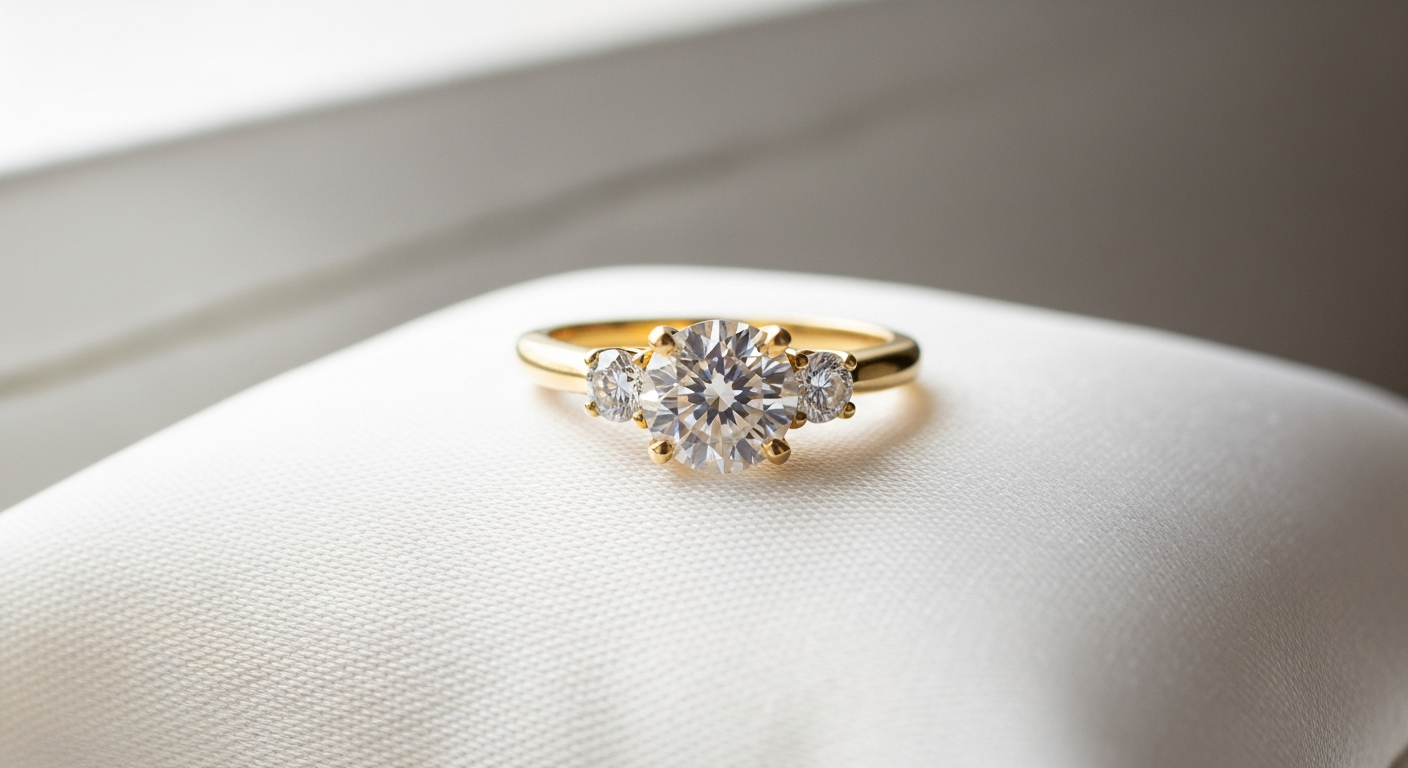
There's something magical about a three-stone diamond ring. For decades, couples have chosen this design because the meaning embedded within it speaks to the heart. Each stone represents a chapter in your love story: one for the past you've shared, one for the present moment you're living, and one for the future you're building together. When you wear a three-stone ring, you're wearing a tangible symbol of continuity and growth.
Past, Present, and Future Representation: Understanding the Emotional Narrative Each Stone Carries
The three-stone setting tells a complete narrative. The side stones don't just frame the center diamond—they anchor your story in time. The past stone honors where you came from, the foundation of trust and experiences that brought you here. The present stone celebrates now, the moment of commitment and celebration. The future stone promises what's ahead: adventures, growth, and deepening love. This narrative structure makes the three-stone ring more than jewelry; it becomes a statement about your relationship's arc.
Relationship Milestones: Why Couples Choose This Design for Engagements, Anniversaries, and Significant Life Moments
Engagement rings set the tone for a lifelong commitment, and the three-stone design feels especially fitting. It acknowledges that your relationship didn't start with a proposal—it started much earlier, with glances, conversations, and quiet moments of connection. The design also works beautifully for anniversary gifts, allowing you to mark milestone moments with something equally meaningful. Whether celebrating five years or fifty, adding a three-stone ring (or upgrading to one) creates a physical marker of your enduring bond.
Cultural and Historical Significance: How the Three-Stone Design Became a Modern Classic
The three-stone diamond ring gained prominence in the mid-20th century, though its symbolic roots run deeper. Different cultures have long revered the number three—in Christianity it represents the Holy Trinity, in other traditions it symbolizes balance and harmony. Modern jewelry design elevated this symbolism, and by the 1980s, three-stone rings had become an iconic choice for significant jewelry moments. What began as a niche design has evolved into a modern classic, beloved by couples seeking something more meaningful than conventional solitaires.
Personal Storytelling: Using the Ring as a Tangible Representation of Your Unique Relationship Journey
Your relationship is unlike anyone else's. The three-stone design allows you to personalize that story through the characteristics you choose. Some couples prefer a larger center stone flanked by smaller side stones, emphasizing the present moment while honoring the past and future. Others choose more balanced proportions, suggesting equal weight across all three chapters. The way you wear this ring—how you describe its meaning, what it represents to you—transforms it from a piece of jewelry into a deeply personal artifact of your connection.
Understanding the 1 Carat Total Weight Distribution
When jewelry retailers advertise a "1 carat" three-stone ring, understanding how that weight distributes across the three stones matters significantly. This distribution affects everything from visual impact to sparkle and overall aesthetics.
How 1 Carat Distributes Across Three Stones: Typical Configurations and Proportions
A 1 carat total weight (TW) three-stone ring typically features a center stone weighing between 0.5 and 0.7 carats, with two side stones splitting the remaining weight. For example, a common configuration might be 0.6 carats for the center stone and 0.2 carats each for the side stones. This distribution creates visual prominence in the center while the side stones add complementary sparkle. Some rings feature more balanced proportions—perhaps 0.4 carats in the center with 0.3 carats on each side—creating a more symmetrical appearance.
Center Stone Versus Side Stone Sizing: What Creates Visual Impact and Balance
The relationship between your center and side stones determines the ring's overall presence. A larger center stone immediately draws the eye, creating a focal point that feels substantial and commanding. Side stones enhance this effect by reflecting additional light and creating geometric balance. However, the size difference matters for proportion. If your center stone is much larger than the side stones, the ring feels hierarchical. If the sizes are closer, the effect becomes more egalitarian, suggesting equal importance across all three chapters of your relationship.
Carat Weight and Perceived Size: Why 1 Carat Total Weight Appears Larger Than Expected
Here's a counterintuitive truth: a 1 carat three-stone ring often appears larger than a 1 carat solitaire. Why? Three stones create more surface area and light reflection points. Your eye processes the cumulative visual impact rather than focusing on a single stone. The spacing between the stones adds to this effect, making the overall ring footprint feel more substantial. This optical advantage means your 1 carat investment delivers more visual presence than you might initially expect.
Sparkle Factor: How Multiple Stones Amplify Light Reflection Compared to Single-Stone Settings
Light behaves differently when it encounters three diamond surfaces instead of one. Each facet of each stone catches light independently, creating multiple points of brilliance across your ring. When you move your hand in natural light or under artificial illumination, the three-stone setting produces a dynamic sparkle that's more pronounced than a single-stone ring of equivalent weight. This multiplied sparkle effect is one reason three-stone rings feel so visually compelling.
Explore the 1 Carat Diamond Three Stone Ring on Szul today to see this sparkle in action.
14K White Gold: The Ideal Metal for Diamond Settings
Your ring's metal deserves as much consideration as the diamonds it holds. The metal determines durability, maintenance requirements, and how your diamonds will appear to the world.
Durability and Everyday Wearability: Why 14K White Gold Withstands Daily Life Better Than Softer Metals
14K white gold represents the optimal balance between purity and durability. Pure gold (24K) is beautiful but soft, prone to scratching and deformation during daily wear. 14K white gold contains 58.3% pure gold mixed with harder alloy metals—typically palladium, nickel, or silver—creating a metal strong enough to protect your diamonds through years of daily life. It resists scratches better than softer metals, holds gemstones securely, and maintains its structural integrity through the inevitable bumps and stress of wearing a ring every day.
Rhodium Plating and Maintenance: Keeping Your White Gold Looking Brilliant Year After Year
White gold isn't naturally white. Jewelers apply a thin layer of rhodium—a precious metal from the platinum family—to give white gold its bright, silvery appearance. Over time, this coating wears away, revealing the slightly yellowish undertone of the gold beneath. This doesn't mean your ring is damaged; it simply means rhodium re-plating is needed. Most jewelers offer this service, and re-plating your ring every few years keeps it looking freshly polished. It's a straightforward maintenance task that preserves your ring's original brilliance.
Metal Purity Breakdown: Understanding What 14K Actually Means (58.3% Pure Gold)
14K denotes a specific gold purity: 14 parts pure gold out of 24 possible parts. That 58.3% pure gold content ensures your ring contains genuine gold while the remaining 41.7% comprises alloy metals that provide strength. This composition is widely recognized, internationally standardized, and universally valued. When you eventually want to resize, repair, or modify your ring, any jeweler can work with 14K gold. It's also easily resaleable, as the gold content is immediately verifiable and valuable.
Hypoallergenic Properties: Ideal for Sensitive Skin and Extended Wear
Some people experience skin sensitivity to certain metals, particularly nickel. White gold alloys vary in composition—some jewelers use nickel-free formulations with palladium or other hypoallergenic metals. If you have sensitive skin, confirming your ring's specific alloy composition matters. 14K white gold from reputable sources like Szul typically uses hypoallergenic alloys, making it suitable for extended daily wear without irritation. The purity and metal combination also mean you can wear your ring comfortably during showers, swimming, and other activities without concern.
Diamond Quality Expectations at This Price Point
Understanding what "H-I color" and "I1-I2 clarity" actually mean helps you appreciate the genuine quality behind Szul's pricing.
Color Grades (H-I Range): What to Expect in Terms of Visible Color and Brilliance
Diamond color grades run from D (colorless) to Z (light color). H and I grades contain trace color that's not visible to the naked eye in mounted settings. When you look at your ring, you'll see brilliant sparkle and white light, not hints of yellow or brown. The difference between an H-color diamond and a D-color diamond (colorless) is detectable under magnification and in controlled laboratory settings—not in real life on your hand. By choosing H-I colors, you're selecting stones that appear colorless while avoiding the premium pricing of the highest grades.
Clarity Grades (I1-I2 Range): Understanding Inclusions and Their Impact on Sparkle
Clarity measures the presence of inclusions—tiny internal or surface imperfections. I1 (Included 1) and I2 (Included 2) indicate inclusions visible under magnification, though most are invisible to the naked eye. A skilled gemologist examining your diamond under a loupe might spot an inclusion; you, looking at your ring, won't. These grades represent the sweet spot where pricing becomes reasonable without sacrificing the optical experience. Your diamonds will sparkle beautifully, catch light dynamically, and deliver genuine pleasure every time you look at your hand.
The Value Equation: Why Mid-Range Diamonds Offer Exceptional Performance Without Premium Pricing
Premium diamond grades (D-F color, VVS1-VVS2 clarity) command exponential price increases for improvements invisible to daily wear. A D-color, VVS1-clarity diamond costs significantly more than an H-color, I1-clarity diamond, yet both appear identical on your hand. By selecting mid-range grades, you're making an intelligent financial decision: you're purchasing genuine quality at ethical pricing. The difference between a $5,000 premium diamond and a $1,479 mid-range diamond reflects laboratory precision and certification details, not real-world visual experience.
Real-World Sparkle: How These Grades Perform in Natural and Artificial Light
Your ring will spend time under various lighting conditions: morning sunlight, office fluorescent lights, romantic candlelight, nightclub settings, natural daylight. H-I color diamonds perform beautifully across all these scenarios, their inclusions remaining imperceptible while their facets dance with light. The three-stone setting amplifies this effect, creating dynamic sparkle through multiple refraction points. In natural light, your ring will glow. Under artificial light, the stones will catch and reflect brightness. The clarity grades ensure this performance without the inflated costs of perfection that your eye won't detect.
Szul's Direct-to-Consumer Pricing Model Explained
The $1,479 price tag for a 1 carat diamond three-stone ring in 14K white gold represents exceptional value. Understanding why requires examining how traditional jewelry pricing works.
Retail Markup Reality: Why Traditional Jewelry Stores Charge Significantly More Than Szul
Traditional jewelry retailers operate within a multi-layered supply chain. A diamond begins with mining, passes through sorting facilities, moves to cutters and polishers, then to wholesalers, then to retailers, with each intermediary taking a margin. By the time that diamond reaches a traditional jewelry store's display case, its cost has been marked up substantially. A traditional retailer might price the same 1 carat three-stone ring at $2,589 or higher, reflecting accumulated markups from every link in the chain. These aren't dishonest markups—they're the industry standard. But they make genuine diamond jewelry inaccessible to many couples.
Eliminating Middlemen: How Cutting Out Distributors and Retailers Saves You Money
Szul operates differently. The company sources diamonds directly, designs rings in-house, and sells directly to customers. This vertical integration eliminates multiple layers of middleman markup. The savings are substantial—the difference between $2,589 and $1,479 isn't a discount or sale; it's what happens when you remove unnecessary intermediaries. Szul's customers benefit from every eliminated step in the supply chain. This business model doesn't mean lower quality; it means intelligent pricing that respects the customer's budget.
Quality Consistency: Proving That Lower Prices Don't Mean Compromised Craftsmanship
Szul's appearance on best-seller lists and positive customer feedback confirms that lower prices don't correlate with lower quality. The 1 carat three-stone ring is described as a best-selling item, indicating consistent customer satisfaction and repeat business. The company's reputation for quality—built over years of direct-to-consumer sales—stands behind every ring. The 14K white gold is genuine, the diamonds are real and certified, and the craftsmanship is professional. What's different is the pricing structure, not the product itself.
Transparency in Pricing: What You're Actually Paying For Versus Inflated Markups
When you buy from Szul at $1,479 instead of $2,589 elsewhere, you're paying for genuine materials and craftsmanship—not marketing campaigns, luxury storefronts, or decades of accumulated markup tradition. Szul's pricing reflects the actual cost of diamonds, gold, and labor, plus a reasonable profit margin that allows the business to thrive. You're not subsidizing unnecessary overhead. This transparency means your money goes directly toward the ring you're buying, making your investment work harder for your relationship.
Who Should Choose This Ring
The 1 carat diamond three-stone ring in 14K white gold appeals to different people for different reasons.
First-Time Engagement Ring Buyers: Finding Quality Without Overwhelming Complexity
Buying your first engagement ring can feel intimidating. The terminology—carat, clarity, color, cut—creates confusion. The price points seem arbitrary. The three-stone design from Szul simplifies this process. You know exactly what you're getting: 1 carat total weight across three stones, H-I color, I1-I2 clarity, 14K white gold. The specifications are clear, the price is transparent, and the result is a ring that feels substantial and beautiful. First-time buyers appreciate this straightforward approach, combined with the meaning the three-stone design carries.
Budget-Conscious Couples: Maximizing Diamond Presence Without Excessive Spending
Not everyone has $5,000 or $10,000 to spend on an engagement ring. Many couples allocate $1,500 to $2,000 because that reflects their financial priorities and values. Within that budget, this ring delivers impressive presence—1 carat across three stones feels larger and sparkles more than a single 1 carat solitaire. You're maximizing your investment within realistic financial constraints, making choices that honor both romance and responsibility.
Anniversary Gift Shoppers: Celebrating Milestones With Meaningful, Wearable Luxury
Anniversary gifts should mark significant moments meaningfully. A three-stone ring—whether given for a fifth, tenth, or twenty-fifth anniversary—carries symbolic weight. It's not costume jewelry or a temporary gesture. It's a piece your partner can wear daily, a tangible reminder of your enduring commitment. Anniversary shoppers appreciate rings that feel valuable without straining finances, and this ring delivers exactly that balance.
Practical Romantics: Balancing Symbolism With Everyday Durability
Some people resist jewelry because they worry about damage, maintenance, or it feeling impractical for active lifestyles. Practical romantics want to wear meaningful jewelry without constant anxiety. The 14K white gold's durability, the three-stone design's balanced aesthetic, and the H-I clarity's invisibility of inclusions all support everyday wear. You can wear this ring to the gym, at work, while gardening, and during special events. The durability means it will look beautiful for decades despite daily life's inevitable impacts.
Practical Considerations Before You Buy
Before committing to this ring, several practical factors deserve attention.
Sizing and Fit: Ensuring Comfort for Daily Wear
Ring sizing seems straightforward but matters significantly. A ring that's too tight creates discomfort and circulation issues; too loose risks losing it. Professional sizing at a jeweler ensures accuracy. If ordering online, many jewelers—including Szul—offer sizing guides and the ability to adjust your ring after purchase. Take your time determining your correct size. Consider whether your size fluctuates seasonally or with temperature changes. A proper fit transforms your ring from jewelry you occasionally wear into something you genuinely enjoy having on your hand constantly.
Maintenance Requirements: Cleaning, Polishing, and Professional Care Intervals
Your ring requires periodic maintenance to maintain its sparkle. Regular cleaning with mild soap, warm water, and a soft brush keeps diamonds brilliant and white gold bright. Professional cleaning by a jeweler, recommended annually, removes accumulated oils and buildup that home cleaning can't address. Rhodium re-plating (typically every 2-3 years depending on wear) maintains the white gold's bright appearance. These aren't burdensome tasks, but they're worth understanding before purchase. They're the difference between a ring that looks gorgeous after twenty years and one that looks tired.
Insurance and Documentation: Protecting Your Investment Long-Term
Jewelry insurance protects against loss, theft, or damage. Before obtaining insurance, you'll need documentation: receipt, photographs, and ideally a professional appraisal. Szul provides receipts with clear pricing and specifications. Professional appraisals, conducted by certified gemologists, establish replacement value for insurance purposes. This documentation also matters if you ever want to sell the ring or modify it significantly. The small investment in insurance and appraisal protects what is, for most people, a significant purchase.
Return Policies and Guarantees: Understanding Szul's Customer Protection Measures
Reputable jewelers stand behind their products with clear return policies and guarantees. Understanding Szul's specific policies—return windows, restocking conditions, warranties on craftsmanship—helps you buy with confidence. Most established jewelers offer reasonable return windows (typically 30 days) and lifetime warranty coverage on manufacturing defects. Knowing these protections exist means you can purchase without excessive anxiety about making a costly mistake.
Maximizing Brilliance and Longevity
Once your ring arrives, specific care practices ensure it remains brilliant and beautiful.
Proper Cleaning Techniques: DIY Methods Versus Professional Cleaning
For regular maintenance, warm water, mild dish soap, and a soft-bristled toothbrush work effectively. Soak your ring for 15-20 minutes, gently scrub with the brush, rinse thoroughly, and dry with a lint-free cloth. This removes daily accumulation of oils, lotions, and debris. Avoid harsh chemicals, ultrasonic cleaners (which can stress diamonds with inclusions), and steam cleaning without professional guidance. Professional cleaning annually, conducted by jewelers using specialized equipment, reaches areas home cleaning cannot, restoring your ring to showroom brilliance.
Protective Storage: Keeping Your Ring Safe When Not Wearing It
When you remove your ring—during sleep, exercise, or activities with high impact risk—store it safely. A dedicated jewelry box with soft lining, separate compartments for different pieces, and secure closure protects against damage and loss. Avoid storing your ring with other jewelry that might scratch it. Some people use small velvet pouches for portable protection. Protective storage might seem excessive, but it prevents accidental scratches, dings, or loss that could require expensive repairs.
Regular Inspections: Catching Potential Issues Before They Become Problems
Every six months or annually, examine your ring carefully. Look at the prongs holding the diamonds—ensure they still grip stones securely without gaps. Check the band for any cracks, bends, or damage. Notice whether rhodium plating appears dull or worn. Professional jewelers can inspect your ring during these intervals, using magnification to identify issues invisible to the naked eye. Catching a loose stone or weakening prong early prevents the catastrophic loss of your diamond and the expense of major repairs.
Rhodium Re-Plating: Refreshing the White Gold Finish Periodically
As your white gold's rhodium coating wears away, your ring's appearance gradually changes. The silvery-bright white gold becomes yellowish. Re-plating restores the original appearance. Most jewelers complete this service within a few days for a modest fee (typically $50-150). Re-plating isn't urgent—it's purely aesthetic—but it maintains your ring's original beauty. Many people re-plate every 2-3 years, depending on how frequently they wear their ring.
Your Path to Timeless Romance
The 1 carat diamond three-stone ring in 14K white gold is a declaration of your unique relationship journey. This particular ring is remarkable because Szul has made that declaration accessible without compromise. You know exactly what you're getting: genuine diamond weight distributed across three meaningful stones, durable precious metal that withstands daily life, and a design that will look stunning for decades. The H-I color and I1-I2 clarity grades deliver real sparkle at a price point that respects your budget—you're not paying for laboratory perfection you'll never notice, just genuine quality you'll wear proudly.
When you slip this ring on and see how the three stones catch the light, you'll recognize the meaning it carries. That's not sentimentality; that's the weight of commitment made visible. Your past, present, and future captured in white gold and diamonds. If you've been searching for an engagement ring or anniversary gift that balances romance with practicality, this is the ring worth serious consideration. Szul's direct-to-consumer approach means you're not paying for unnecessary markup—you're investing in genuine quality at an honest price.
The choice is ultimately about what matters to you. If you value meaningful design, authentic quality, and intelligent pricing, this ring represents everything you're looking for. The three-stone setting will never feel dated; the durability means it will outlast trends; the price point means you can invest in other parts of your future together—travel, home, experiences—without financial strain from jewelry costs.
Leave a Reply