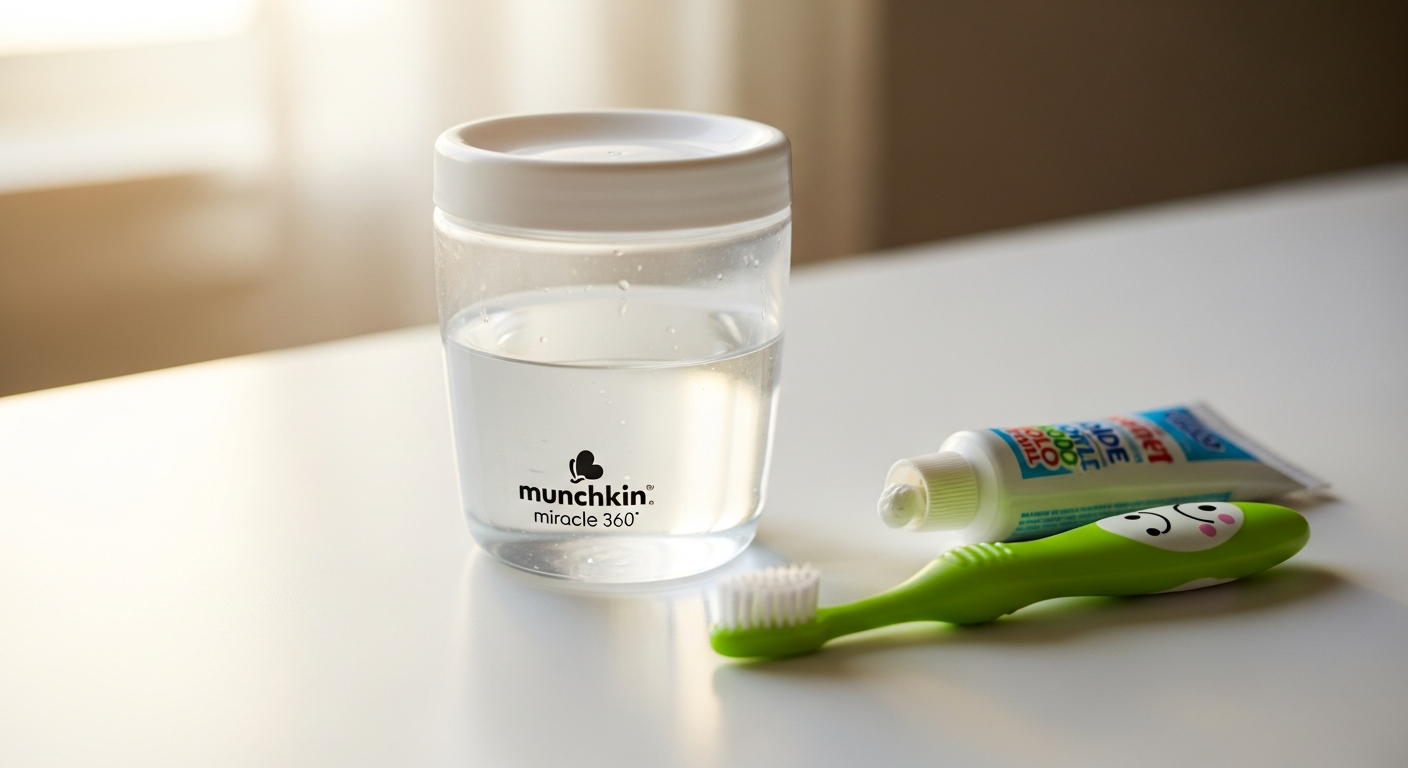
Did you know that the way your toddler drinks from a cup during their first few years can actually shape their oral development? Most parents focus on preventing spills, but they're missing a crucial piece of the puzzle. The drinking method itself—whether through a traditional spout, straw, or open cup—directly impacts how your child's mouth muscles develop.
Enter the Munchkin Miracle 360 Sippy Cup, a game-changer that's earned its spot as a best-seller across major retailers and parenting communities. This isn't just another spill-proof cup with a fancy design. It's specifically engineered to mimic the way children naturally drink from regular cups, all while preventing the messes that drive parents crazy. Dentists have taken notice too, recommending it as a tool that supports normal oral development rather than hindering it.
Discover why the Munchkin Miracle 360 is the top choice for health-conscious parents.
The Science Behind 360-Degree Drinking Design
How the 360-degree drinking edge mimics natural open-cup drinking patterns
The fundamental innovation behind the Munchkin Miracle 360 lies in its unique drinking edge. Rather than forcing your child to orient their mouth around a fixed spout, the 360-degree design allows them to sip from any angle, exactly as they would from a regular cup. This flexibility means your toddler's brain and mouth develop the motor skills needed for genuine, unrestricted drinking—not accommodation to an artificial drinking tool.
Why traditional spouts and straws can restrict normal mouth muscle development
Traditional sippy cups with rigid spouts require children to position their mouths in specific, unnatural ways. This repeated positioning can limit the activation of certain muscles around the lips, tongue, and jaw. Over time, prolonged reliance on spouted cups may contribute to improper tongue thrust patterns and reduced engagement of the muscles responsible for normal swallowing and speech development. Straws present an even more restrictive scenario, as they require sustained suction that's quite different from how we naturally drink.
The connection between drinking method and palate development in toddlers
Your child's hard palate—the roof of their mouth—develops significantly during the toddler years. The way they drink influences how their tongue interacts with this developing structure. Open-cup drinking encourages the tongue to rise naturally during swallowing, which supports proper palate formation. Conversely, spout-dependent drinking can create compensatory tongue positions that potentially interfere with this natural developmental process.
How unrestricted sipping supports proper tongue positioning and oral posture
When children use the Munchkin Miracle 360, their tongues naturally position themselves correctly for mature swallowing patterns. The cup doesn't force the tongue into any particular posture; instead, it permits the development of the coordinated movements that characterize adult drinking. This freedom allows for the gradual maturation of oral motor control, setting the stage for clearer speech and proper feeding mechanics down the line.
Research backing the benefits of open-cup drinking for young children
Pediatric literature increasingly supports early introduction to open-cup drinking. Studies have shown that children who transition to open cups earlier display better oral motor coordination and fewer speech articulation issues compared to those who remain dependent on spouted cups for extended periods. The consensus among developmental pediatricians and speech-language pathologists is clear: unrestricted drinking promotes healthier oral development trajectories.
Comparison of muscle engagement between spout-drinking versus 360-degree sipping
The muscular demands are substantially different. Spout drinking engages a limited set of facial muscles in repetitive patterns, while the 360-degree design requires dynamic adjustment and engagement of a broader network of oral muscles. This broader activation pattern more closely mirrors the neuromuscular demands of adult drinking, accelerating the development of mature drinking skills.
Why Dentists Recommend This Sippy Cup Over Alternatives
Dental professional endorsements and their reasoning
Pediatric dentists across the country actively recommend the Munchkin Miracle 360 because it aligns with their understanding of oral development. Unlike traditional sippy cups that can create long-term dependence on unnatural drinking patterns, this cup supports the transition to mature drinking from the start. The endorsement isn't based on marketing—it's grounded in developmental biology and orthodontic science.
How the cup design prevents tooth misalignment issues common with prolonged spout use
Prolonged spout use can contribute to anterior open bites and other alignment issues, particularly when children use spouted cups well into their preschool years. The constant pressure and positioning required by spouts can subtly influence tooth eruption patterns and jaw development. Open-cup drinking distributes pressure more evenly and naturally, reducing these risks significantly.
The role of natural drinking in preventing speech and swallowing delays
Speech development depends partly on oral motor competence. When children develop mature drinking patterns early, they simultaneously strengthen the precise muscle control needed for clear articulation. Similarly, natural swallowing mechanics established through open-cup drinking reduce the likelihood of compensatory patterns that can complicate speech development.
Orthodontic benefits of transitioning to open-cup drinking early
Orthodontists recognize that early adoption of mature drinking patterns can reduce the severity of future orthodontic needs. While genetics plays a major role in tooth alignment, environmental factors—including how children drink—contribute meaningfully to jaw and tooth positioning. Starting with open-cup drinking provides a developmental advantage that may translate to straighter teeth and better occlusion without intervention.
What pediatric dentists specifically look for in toddler drinking vessels
Pediatric dentists evaluate sippy cups based on several criteria: Does it encourage natural mouth positioning? Does it avoid prolonged contact between sugary liquids and teeth? Does it support the transition away from bottles? The Munchkin Miracle 360 checks every box, making it a go-to recommendation in dental offices nationwide.
Long-term oral health advantages for children using this cup design
Children who use open-cup designs develop stronger foundational oral motor skills and more natural swallowing mechanics. These advantages compound over years, contributing to better speech clarity, more efficient eating, and potentially fewer orthodontic interventions in childhood and adolescence.
Spill Prevention Technology That Actually Works
How the automatic sealing mechanism functions when your child stops drinking
The magic of the Munchkin Miracle 360 lies in its intelligent sealing technology. When your toddler finishes sipping and pulls the cup away from their mouth, the silicone lid automatically closes around the 360-degree drinking edge. This mechanism doesn't require manual activation—it responds to the simple act of stopping drinking. The result is dramatic spill prevention without your child needing to remember to "close" anything.
Real-world spill-prevention performance in different scenarios
Parents report that this cup handles real-world chaos remarkably well. During car rides when the cup tips sideways, the seal holds. During meals when it's knocked over on the highchair tray, minimal liquid escapes. During playtime when your toddler drops it repeatedly (because toddlers), the impact doesn't compromise the seal. The cup isn't completely spill-proof under every conceivable scenario—nothing truly is—but it performs dramatically better than traditional sippy cups.
Comparison of leak-proof reliability against competing sippy cup brands
When stacked against other leading brands, the Munchkin Miracle 360 consistently outperforms in independent testing and parent reviews. Competing sippy cups often rely on removable valves or complex mechanisms that gradually wear or accumulate mineral deposits, reducing effectiveness. The Munchkin's simpler design maintains its sealing integrity over extended use.
The silicone lid construction and its role in creating an effective seal
The food-grade silicone used in the lid is engineered for both flexibility and durability. It creates a seal that's tight enough to prevent leaks but flexible enough that your toddler can actually drink without excessive effort. The material resists hardening and cracking that plague less sophisticated cup designs, maintaining effectiveness month after month.
Durability of the sealing system over extended use and repeated washing
The silicone lid can withstand hundreds of washing cycles without degrading. Parents report that cups they've used for one child perform just as well when passed to a younger sibling. The sealing mechanism doesn't wear out in any predictable timeframe under normal use, making this an investment that maintains value across multiple children.
Parent testimonials on mess reduction and cleanup time savings
Countless parents share stories of being shocked at how little liquid ends up on the car seat or kitchen floor compared to traditional sippy cups. The cleanup time reduction alone—fewer washable highchair covers, fewer outfit changes, less mopping—provides genuine quality-of-life improvement during the messiest phases of toddlerhood.
See how parents are eliminating spills with the Munchkin Miracle 360.
Safety Features and Material Composition
BPA-free plastic construction and why this matters for developing children
The Munchkin Miracle 360 is crafted from BPA-free plastic, which eliminates concern about endocrine-disrupting chemicals leaching into your child's drinking liquids. BPA mimics hormone behavior in developing bodies, and avoiding it is especially important during critical developmental windows like infancy and early toddlerhood. The plastic used is food-grade and specifically selected for its safety profile.
Food-grade silicone lid specifications and safety certifications
The silicone lid meets rigorous food-contact safety standards. It's non-toxic, odorless, and doesn't off-gas harmful compounds into beverages. The material is resistant to staining and bacterial growth, and it maintains its integrity across a wide temperature range from freezer to dishwasher.
Testing standards the cup meets for toddler products
The Munchkin Miracle 360 has been tested and certified to meet or exceed standards established by CPSIA (Consumer Product Safety Improvement Act) guidelines for children's products. These tests verify that materials don't contain prohibited substances and that design elements don't pose choking or other hazards.
Chemical leaching concerns addressed through material selection
Beyond BPA, manufacturers have carefully selected plastics that don't leach other concerning chemicals like phthalates or heavy metals. The cup has been specifically tested to ensure that normal use—and even microwave heating of the cup—doesn't result in chemical migration into liquids.
Non-toxic dye and color options available
All colorants used in the Munchkin Miracle 360 are food-safe and non-toxic. The various color options available appeal to different preferences without compromising safety. Dyes are integrated into the plastic material itself rather than applied as surface coatings, reducing any potential for contamination.
Compliance with FDA and international safety regulations for children's products
The cup complies with FDA regulations for food-contact materials and meets international standards for children's products across multiple countries. This level of compliance represents rigorous safety testing and ongoing quality assurance throughout manufacturing.
Size Options and Capacity Choices for Different Ages
7-ounce trainer cup specifications for younger toddlers
The 7-ounce version is designed for children typically between 12 and 18 months. This smaller capacity is easier for tiny hands to grip and control, reducing fatigue during learning. The smaller volume means less liquid to spill during the inevitable dropped-cup phase of learning to drink independently.
10-ounce standard size dimensions and ideal age range
The 10-ounce capacity represents the sweet spot for most toddlers between 18 months and three years. At approximately 5.5 inches in height, it's proportionate to a toddler's body size without being unwieldy. This size holds enough liquid for a full meal or extended playtime without excessive weight.
14-ounce larger capacity for older toddlers and preschoolers
Children approaching preschool age or those already using the 10-ounce version effectively can transition to the 14-ounce option. This larger capacity reduces the frequency of refilling during longer outings and accommodates the increased liquid intake of growing children.
How to choose the right size based on your child's age and drinking habits
Consider your child's current hand strength and coordination. Younger toddlers benefit from the lighter 7-ounce version, while those with more developed motor skills handle larger cups comfortably. If your child drinks quickly and frequently empties cups, a larger capacity reduces refilling inconvenience. Conversely, if they sip gradually, smaller sizes prevent liquid from warming or separating.
Portability considerations for each capacity option
The 7-ounce trainer cup fits easily into diaper bags and small cup holders. The 10-ounce standard size balances capacity with portability, fitting most standard cup holders in vehicles and strollers. The 14-ounce option requires slightly larger storage space but remains manageable for typical diaper bag packing.
Transition progression: when to move up to larger sizes
Most children naturally transition from the 7-ounce to the 10-ounce around 18-24 months as their hand strength increases and they develop more independent drinking skills. The move from 10 to 14 ounces typically occurs around age three, though this varies based on individual development and drinking patterns. Watch for your child losing interest in a size—this often signals readiness for an upgrade.
Cleaning and Maintenance: Valve-Free Simplicity
Why the absence of extra valves makes cleaning significantly easier
Many sippy cups feature removable valve systems that create multiple crevices for liquid residue and mold growth. The Munchkin Miracle 360 eliminates this complexity. Without extra parts to disassemble and sanitize, cleaning becomes a straightforward process that takes minutes rather than the 10-15 minutes required for multi-part cups.
Step-by-step cleaning process for the 360-degree cup
Start by rinsing the cup immediately after use to prevent liquid from drying inside. Wash the cup body with warm soapy water, paying attention to the interior. Separate the silicone lid and wash it individually, ensuring all edges and the underside are clean. Rinse thoroughly under running water. Inspect the drinking edge for any residue, using a soft brush if necessary. Allow components to air dry completely before reassembling.
Dishwasher-safe components and recommended washing methods
Both the plastic cup body and silicone lid are dishwasher-safe, typically on the top rack. Hand washing works equally well and may extend the life of the silicone lid by avoiding the heat of the drying cycle. Some parents prefer hand washing to ensure the seal mechanism remains in optimal condition, though dishwasher cleaning is convenient and doesn't harm the cup.
Prevention of mold and mildew growth in hard-to-reach areas
Because there are no hard-to-reach valve cavities, mold rarely becomes an issue. Milk residue can occasionally accumulate along the drinking edge, but this is easily addressed with a soft brush or by soaking in warm water with a tiny bit of white vinegar. The simplicity of the design means no hidden pockets where mold thrives.
Long-term durability of silicone lids with regular washing
The silicone lid maintains its integrity through hundreds of wash cycles. Even after a year or more of daily use, parents report that lids remain flexible and functional. The material doesn't harden, crack, or lose elasticity the way lower-quality silicone does. Replacement lids are available inexpensively if, after extensive use, you eventually want a fresh seal.
Time savings compared to multi-part sippy cups with removable valves
The average Munchkin Miracle 360 cleaning takes 3-5 minutes, compared to 10-15 minutes for traditional sippy cups with multiple removable parts. Over the course of several drinks per day across months of use, this time savings accumulates substantially. Parents consistently cite this as a significant quality-of-life improvement.
Real-World Performance: What Parents Actually Experience
Transition success stories from bottle to 360-degree cup
Countless parents report smooth transitions when they skip traditional sippy cups altogether and move directly from bottles to the Munchkin Miracle 360. Children seem to recognize it as closer to "real" drinking and adopt it more readily than they would conventional sippy cups. The learning curve exists—spills happen—but acceptance happens faster than parents typically expect.
Common challenges during the adjustment period and how to overcome them
New users may initially bite the cup edge rather than sip, or they may create spillage through inexperience. These behaviors are normal and temporary. Consistent gentle encouragement, combined with the realistic understanding that some spills will occur, helps children overcome this learning phase. Within a few weeks, most toddlers develop competence with the cup.
Toddler acceptance rates and drinking enthusiasm with this cup design
Unlike traditional sippy cups that some toddlers reject after developing bottle preferences, the Munchkin Miracle 360 typically receives enthusiastic acceptance. Its design feels more like "grown-up" drinking, which appeals to toddlers' natural desire to imitate adult behavior. Parents frequently comment that their children actually seem to prefer this cup to other options.
Performance across different liquid types
The cup performs equally well with water, milk, juice, and other standard toddler beverages. The seal doesn't degrade with sugar exposure, and even juice residue cleans easily. The 360-degree design works with any liquid viscosity, from thin water to thicker milk-based drinks.
Durability through drops, throws, and typical toddler handling
The plastic construction is genuinely durable. Toddlers drop and throw cups repeatedly, and the Munchkin Miracle 360 withstands this abuse without cracking or breaking. Parents report that cups remain functional after hundreds of impacts. Even if damage does occur, replacement parts are available at reasonable cost.
Longevity and whether the cup maintains effectiveness over months of use
The seal mechanism doesn't gradually weaken over time. Cups used daily for one full year perform as effectively as they did on day one. This durability translates to genuine long-term value, especially for families with multiple children who can hand the cup down through the toddler years.
Comparing the Munchkin Miracle 360 to Other Sippy Cup Options
How it stacks up against traditional spout sippy cups
Traditional spout cups are cheaper upfront but require longer transition periods and don't support oral development as effectively. The Munchkin Miracle 360 costs more initially but delivers developmental benefits and spill prevention that traditional sippy cups simply don't match. When accounting for cleanup time and developmental advantages, the value proposition strongly favors the open-cup design.
Differences from straw cups and their developmental implications
Straw cups require sustained suction that differs significantly from natural drinking mechanics. While they do offer spill prevention, they create different oral motor demands than open-cup drinking. Children using straw cups may face more difficulty transitioning to genuine cup drinking later. The Munchkin Miracle 360 provides spill prevention without the developmental downside of straw cups.
Price point comparison with competing open-cup designs
The Munchkin Miracle 360 typically costs between $8-12 per cup depending on size and retailer. Competing open-cup brands range from $10-15, so pricing is competitive rather than premium. The durability and reliability of the Munchkin product justifies its price point compared to cheaper alternatives that may have less effective sealing mechanisms.
Feature-by-feature breakdown against other best-selling brands
Competing brands may offer various innovations, but few match the combination of 360-degree sipping, automatic sealing, valve-free simplicity, and durability that defines the Munchkin Miracle 360. When you compare specific features systematically, the Munchkin consistently delivers advantages in multiple categories simultaneously.
When this cup might be the best choice versus when alternatives work better
The Munchkin Miracle 360 is ideal for parents prioritizing developmental health alongside spill prevention. It's perfect for children transitioning from bottles and for families planning to use multiple children through the toddler years. Traditional sippy cups might be appropriate only if you're working with a very limited budget and aren't concerned about oral development implications. Straw cups serve a purpose if you need maximum portability for older toddlers who already have mature drinking skills.
Hybrid approaches: using multiple cup types during the transition phase
Some parents use a combination approach: the Munchkin Miracle 360 at home for primary drinking, occasional straw cups for convenient on-the-go hydration, and regular cups with supervision during meals. This multi-cup approach provides flexibility while prioritizing developmental benefits during primary drinking occasions.
Transitioning Your Toddler to Open-Cup Drinking
Optimal age to introduce the Munchkin Miracle 360 cup
The ideal introduction window is between six and twelve months, though children as young as six months can begin learning. Introducing the cup early means your child develops natural open-cup skills before forming strong preferences for bottles or traditional sippy cups. However, it's never too late to switch—older toddlers also adapt, just with a slightly longer learning curve.
Gradual weaning strategies from bottles and traditional sippy cups
Rather than eliminating bottles overnight, consider gradual replacement: offer the Munchkin Miracle 360 for one meal per day initially, expanding to multiple meals over several weeks. Simultaneously reduce bottle use incrementally. This gradual approach prevents frustration and allows your child to build confidence with the new cup at their own pace.
Tips for encouraging independent drinking with the 360-degree design
Let your child hold and control the cup rather than directing it toward their mouth. Celebrate early attempts regardless of spillage. Use the cup during meals when some spilling is naturally expected and less stressful. Model open-cup drinking yourself during family meals to demonstrate the behavior. Patience and consistency matter more than perfection during this learning phase.
Managing the learning curve and initial spills during transition
Accept that spills will happen during the learning phase—this is normal and temporary. Minimize frustration by using bibs, placing spill-prone drinks on high chairs rather than carpet areas, and maintaining realistic expectations. Most children progress from messy to competent within three to six weeks of regular practice.
Building confidence and reducing frustration during the adjustment period
Positive reinforcement works better than correction. Acknowledge your child's efforts rather than focusing on spills. Use enthusiastic language when they successfully drink from the cup: "You did it! You drank from your cup!" This encouragement builds confidence and accelerates skill development. Avoid negativity around spills, which can create anxiety around mealtimes.
Timeline expectations: how long before mastery typically occurs
Most children develop reasonable competence within 2-4 weeks of consistent use. True mastery—drinking with minimal spillage—typically takes 6-8 weeks. Every child progresses at their own pace, so flexibility in expectations prevents unnecessary stress during the transition.
Making the Investment: Value and Long-Term Considerations
Cost analysis: initial investment versus durability and longevity
A single Munchkin Miracle 360 cup costs $8-12, while a three-pack typically costs $20-25. Compared to the $30-50 some premium alternatives cost, pricing is reasonable. Considering that a single cup lasts through a full toddlerhood period and remains suitable for future siblings, the per-use cost becomes quite minimal.
Whether the cup justifies premium pricing compared to budget alternatives
Budget sippy cups may cost $3-5 initially, but they often require replacement within 6-12 months as seals weaken and valves wear. Purchasing multiple replacements throughout toddlerhood can exceed the cost of investing in one quality Munchkin cup that maintains functionality for years. The premium pricing reflects genuine durability advantages.
Potential savings on dental work through early oral development support
While it's difficult to quantify precisely, supporting proper oral development during toddlerhood may reduce the likelihood of needing orthodontic intervention later. Considering that orthodontic treatment can cost $3,000-$6,000 or more, investing $30-50 in cups that support optimal development represents sound financial planning.
Resale value and hand-me-down potential for future siblings
Unlike many toddler products that lose value rapidly, the Munchkin Miracle 360 maintains functional value across multiple children. Cups used by older siblings remain effective when passed to younger ones, spreading the cost across the family's toddler years. This hand-me-down potential adds significant value for families planning multiple children.
Warranty and replacement policies from the manufacturer
Munchkin stands behind their products with reasonable warranty coverage. If a cup fails prematurely due to manufacturing defects, replacement is typically available. Replacement lids and parts are also available inexpensively, extending the life of cups beyond the warranty period. This customer support reflects manufacturer confidence in product quality.
Budget-friendly bundle options and multi-pack purchasing
Retailers regularly offer three-pack bundles at discounted prices compared to single-cup purchasing. These bundles reduce per-cup cost while providing cups in different colors or allowing multiple cups for different locations (home, car, daycare). Bulk purchasing during sales events provides additional savings opportunities.
The Bottom Line: Why Parents Keep Coming Back to This Cup
The Munchkin Miracle 360 Sippy Cup represents more than just a clever spill-prevention solution—it's an investment in your toddler's oral health and developmental trajectory. By choosing a cup that allows natural, unrestricted drinking, you're supporting the kind of mouth muscle development that dentists actively recommend. The automatic sealing technology handles the spill anxiety that comes with the transition away from bottles, while the valve-free design keeps cleanup manageable and stress-free.
What really sets this cup apart is that it doesn't force you to choose between practicality and your child's health. You get both. Parents consistently report that their toddlers accept this cup more readily than traditional sippy cups, and the developmental benefits speak for themselves. Whether you're navigating the messy middle months of toddler independence or looking ahead to long-term oral health, this cup delivers on multiple fronts.
Start with the 7-ounce trainer size if your child is younger, or jump straight to the 10-ounce standard if they're already showing interest in open-cup drinking. Give it a few weeks—most children adapt faster than you'd expect. Your future self (and your child's dentist) will thank you for prioritizing both mess-free feeding and healthy development.
Start your toddler on the path to healthy oral development with the Munchkin Miracle 360.
Leave a Reply