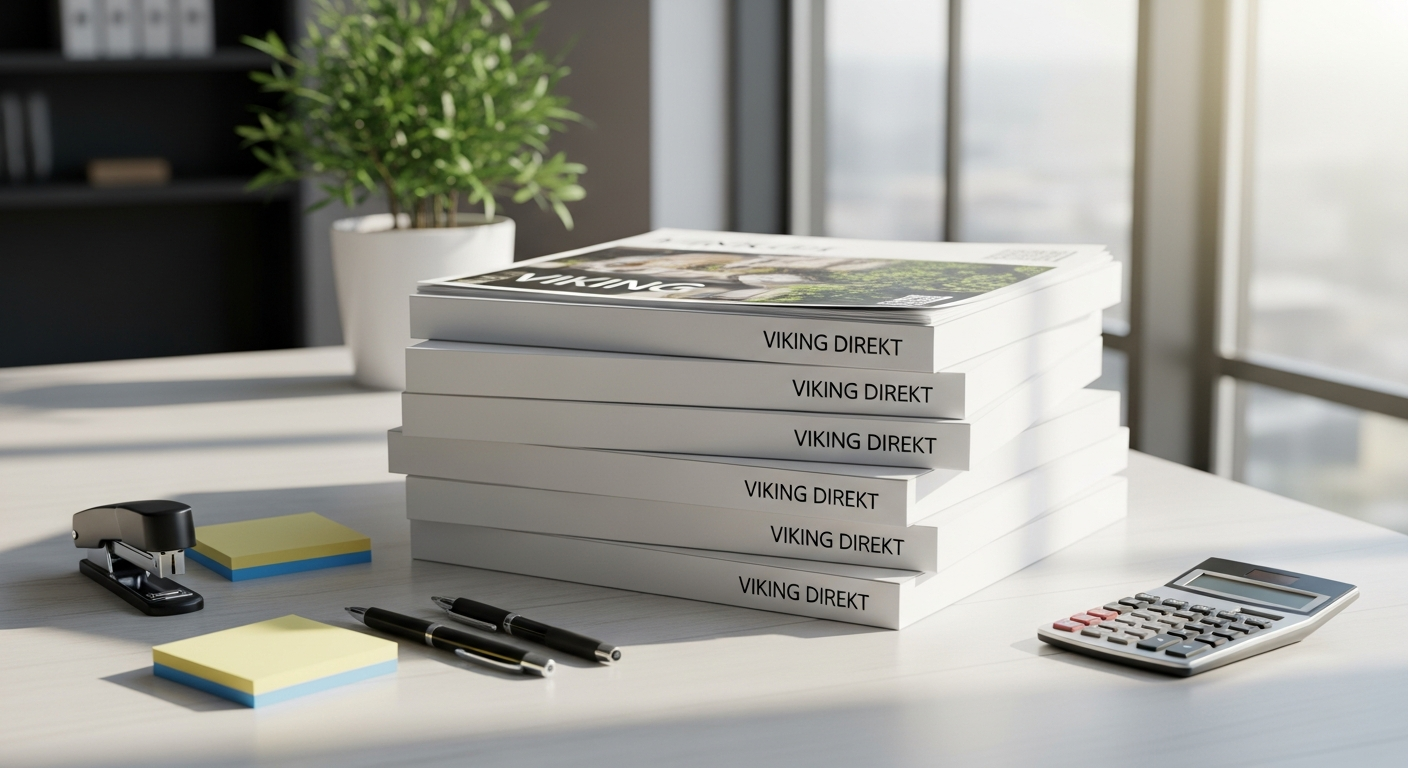
Offices waste thousands on paper supplies annually—yet most workers never stop to question whether they're actually getting value for their money. The assumption persists that "economy" means cutting corners, but that's simply not the case with Viking Economy A4 Printer Paper. This product has quietly become one of the best-selling office consumables across Europe for a reason that extends well beyond its attractive price tag.
Viking Economy A4 Printer Paper shows up in break rooms across countless organizations, gets ordered by the box by savvy procurement managers, and earns consistent 4.5+ star ratings from thousands of satisfied users. The consistency of these endorsements points to something genuine—a product that delivers on what it promises without the marketing noise or unnecessary premium features.
This guide examines exactly what makes this paper stand out, covering technical specifications that actually matter, real-world printing performance, equipment compatibility, and whether the price justifies the quality. By understanding the practical advantages and limitations of this product, you'll know precisely why so many offices make it their default choice. Discover why Viking Economy A4 Printer Paper is the smart choice for budget-conscious offices today.
The Economics of Everyday Office Paper: Understanding True Value
Comparing economy paper pricing across bulk purchase tiers
The per-ream pricing for Viking Economy A4 Printer Paper typically ranges from approximately £3.59 down to £2.99 per ream of 500 sheets when purchased individually, with significant discounts available for bulk orders. A box containing five reams might run around £12.95, which represents a noticeable reduction in per-unit cost. These tiered discounts reward organizations that plan ahead and consolidate their purchasing.
How per-sheet costs break down when buying in volume
When you purchase a single ream at £3.59, you're paying roughly 0.72 pence per sheet. Buy a full box of five reams at £12.95, and that cost drops to approximately 0.52 pence per sheet. Organizations ordering multiple boxes monthly can negotiate even better rates. For a small office printing 2,000 sheets weekly, the difference between single-ream and bulk pricing amounts to roughly £20-40 in monthly savings—amounts that compound significantly over a year.
The hidden costs of choosing the wrong paper
Cheap paper that causes jams creates hidden expenses: technician time clearing paper paths, reprinted documents due to failed batches, and lost productivity as staff wait for equipment to restart. Premium paper that exceeds your actual needs wastes money on features you never use. Viking Economy sits in the practical middle, delivering reliable performance without paying for unnecessary brightness or coating.
Why 80 gsm weight hits the sweet spot for most printing needs
The 80 gsm weight represents the standard for office paper worldwide. It's heavy enough to feel substantial and resist tearing, yet light enough to feed smoothly through nearly any machine without adjustment. This weight eliminates the feeder problems associated with lighter stock while avoiding the cost and environmental impact of heavier grades unnecessary for internal documents and routine communications.
Real-world budget impact for small teams versus large enterprises
A five-person home office printing 1,000 sheets monthly saves approximately £6-8 annually by choosing economy over premium options. A 100-person enterprise printing 50,000 sheets monthly saves £300-400 yearly. These figures exclude the additional savings from reduced paper jams, fewer reprints, and eliminated downtime. The financial advantage scales directly with volume.
Seasonal pricing patterns and bulk discount strategies
Office supply pricing follows predictable seasonal patterns. Back-to-school periods (August-September) and year-end planning cycles (November-December) typically feature the most aggressive bulk discounts. Purchasing strategically during these windows can reduce effective costs by an additional 10-15%. Organizations that maintain a three to four-month supply purchased during discount periods maximize their savings without risking storage issues.
Technical Performance That Actually Matters in Daily Use
What 80 gsm weight means for printer compatibility and feed reliability
At 80 gsm, this paper weighs approximately 5 grams per sheet—precisely the weight most modern office equipment expects. Laser printers, inkjet machines, and photocopiers all feature sensors calibrated to detect this standard weight. Using 80 gsm eliminates the "paper too light" or "paper too heavy" error messages that plague mismatched stock, resulting in consistent, hassle-free feeding through the entire supply.
CIE whiteness of 146: How brightness affects readability and color accuracy
CIE whiteness of 146 positions this paper in the bright white range—bright enough that text prints with excellent contrast and colors appear vibrant, yet not so bright that it creates glare or appears artificially bleached. This brightness level suits professional documents, customer-facing materials, and internal communications equally well. Colors printed on this whiteness level show accurate reproduction without the shifting that occurs on yellowish or overly bright stocks.
The 90% opacity advantage for double-sided printing without show-through
Opacity measures how much light passes through paper. At 90%, this stock blocks most light transmission, making it ideal for double-sided printing. Text printed on the reverse side barely shows through to the front, eliminating the washed-out appearance common with lighter or thinner papers. This single feature often justifies the choice of this specific grade, as it enables organizations to reduce paper consumption while maintaining professional presentation.
Smooth finish benefits: Preventing jams and ensuring consistent output
The smooth finish of Viking Economy paper reduces friction through paper paths, allowing sheets to feed individually without binding or overlapping. This smoothness also promotes even toner adhesion on laser printers and consistent ink absorption on inkjet machines, resulting in uniform print quality across entire print runs. Rough or textured papers catch on feed rollers and create the exact jams that drive organizations to more expensive stock.
Inkjet versus laser printer performance on this specific paper weight
Inkjet printers using 80 gsm stock produce vibrant color with minimal feathering or bleeding. The smooth surface accepts ink evenly, and the paper weight prevents the moisture-related warping that affects lighter stocks. Laser printers apply heat and pressure to fuse toner; 80 gsm melts cleanly without shrinking or warping. Both technologies perform optimally on this grade, making it genuinely universal across office equipment types.
Photocopier compatibility and toner adhesion characteristics
Photocopiers apply heat similar to laser printers, and 80 gsm stock responds identically well, with clean toner adhesion and no thermal damage. The smooth finish ensures consistent electrical charge across the paper surface, allowing copiers to reproduce images with uniform density. Organizations operating high-volume copy operations find that 80 gsm paper reduces maintenance intervals and extends component life compared to lighter alternatives.
Environmental Responsibility Without the Environmental Price Tag
ECF (Elemental Chlorine Free) virgin fiber production explained
ECF manufacturing eliminates chlorine gas (a potent environmental pollutant) from the bleaching process, substituting chlorine dioxide, oxygen, and hydrogen peroxide. These alternatives achieve the same whiteness with substantially lower environmental impact. Viking Economy paper uses virgin fiber (not recycled) processed under these ECF standards, meaning the environmental consideration extends throughout the production chain rather than being a superficial marketing claim.
Alkaline (acid-free) manufacturing and document longevity
Acid-free paper resists the yellowing and brittleness that affects acidic stock over decades. Documents printed on alkaline paper remain legible and structurally sound for 50+ years. This becomes particularly important for any documents requiring long-term retention—contracts, records, important communications. The alkaline manufacturing adds minimal cost while dramatically extending the useful life of printed materials.
Certification standards and what they mean for sustainability
The environmental certifications on Viking Economy paper indicate third-party verification of manufacturing standards. These aren't internal claims; they're audited guarantees that production processes meet specified environmental criteria. Organizations seeking to reduce their environmental footprint can confidently purchase this product knowing the claims are substantiated and verified.
Carbon footprint considerations of choosing economy versus premium options
Premium papers often incorporate additional processing, coating, or specialty pulp sources that increase carbon intensity. Economy paper manufactured under standard ECF processes typically carries a lower carbon footprint per sheet than premium alternatives. By choosing this product, organizations often reduce their environmental impact while simultaneously reducing costs—a genuine win-win rather than a compromise requiring sacrifice.
Recyclability and end-of-life disposal of this paper grade
Virgin fiber paper recycles cleanly, returning to the waste stream without the complications that sometimes affect specialty coatings or mixed-fiber stocks. The 80 gsm weight processes smoothly through standard municipal recycling equipment. End-of-life disposal of this paper creates no unusual environmental burden, and organizations can confidently include it in standard office recycling programs.
Balancing eco-consciousness with budget constraints in office purchasing
Many organizations face genuine tension between environmental goals and budget realities. Viking Economy paper resolves this conflict by delivering both sustainability and affordability. The ECF manufacturing and alkaline composition provide environmental responsibility while the economy pricing removes the financial objection. Budget-conscious procurement teams can align purchasing with environmental values without special pleading or exceptions.
Compatibility Across Your Office Equipment Ecosystem
Laser printer performance with 80 gsm A4 stock
Laser printers operate by fusing toner powder onto paper using intense heat and pressure. The 80 gsm weight of Viking Economy paper withstands this process perfectly, with toner bonding cleanly and permanently. Text emerges crisp and sharp, with no smudging, fading, or quality degradation. Organizations running high-volume laser printing find this paper produces professional results consistently, print after print.
Inkjet printing results and color vibrancy on this whiteness level
Inkjet printers spray liquid ink that absorbs into paper fibers. The smooth surface of Viking Economy paper ensures even ink distribution without pooling or feathering. The 146 CIE whiteness provides an excellent foundation for color reproduction—colors appear rich without appearing over-saturated, and the white areas maintain brightness without competing with printed content. Photo reproduction on this stock remains respectable for office purposes, though it cannot match specialty photo papers.
Photocopier behavior and toner application consistency
Photocopiers essentially function as specialized laser printers, applying toner through electrostatic processes. Viking Economy paper feeds smoothly through copier mechanisms, accepts toner uniformly, and produces copies with excellent clarity and consistency. High-volume copying operations benefit particularly from this paper's reliability and the reduced maintenance intervals it enables.
Multi-function device compatibility and potential issues to watch for
Modern multi-function devices (MFDs) integrate printing, copying, scanning, and faxing into single machines. These devices feature sophisticated sensors that adjust behavior based on paper weight and type. The standard 80 gsm weight of Viking Economy paper triggers default settings on virtually all MFDs, eliminating the need for manual adjustment or special programming. No compatibility issues or unusual behavior occur with this standard stock.
Feed tray capacity and paper sensor calibration
Standard office paper trays accommodate up to 500 sheets of 80 gsm stock—exactly one ream of Viking Economy paper. The weight triggers proper sensor detection, ensuring machines recognize the paper and deliver appropriate feed pressure. No recalibration or sensor adjustment becomes necessary when switching to this product if your organization previously used comparable standard office paper.
Real-World Printing Scenarios Where This Paper Excels
Internal reports, memos, and everyday business documents
These represent the bread and butter of office printing. Internal communications benefit from crisp text, professional appearance, and reliable production. Viking Economy paper handles this use case perfectly, delivering the polish these documents require at the lowest reasonable cost. No premium features or unnecessary expense occurs when your audience consists of colleagues rather than external stakeholders.
Customer-facing materials that still need to look professional
Proposals, quotes, letters, and client-facing reports printed on this paper project professionalism and credibility. The 146 CIE whiteness ensures bright, crisp appearance. The 90% opacity enables confident double-sided printing without show-through concerns. Customers viewing materials printed on this stock see a professional organization, not one cutting corners—because you're not cutting corners, you're eliminating unnecessary expense.
Double-sided printing for cost and environmental efficiency
The 90% opacity makes double-sided printing genuinely viable, cutting paper consumption in half for applications where it applies. Internal reports, training materials, and policy documents can print both sides without legibility concerns. Organizations that shift standard internal printing to double-sided formats using this paper often reduce annual paper consumption by 30-40%, with proportional cost and environmental benefits.
High-volume printing environments with heavy daily usage
Print rooms and departments handling thousands of sheets daily benefit tremendously from this paper's reliability. The smooth finish prevents jams that halt high-speed operations. The standard weight eliminates feeder adjustment and recalibration. The consistent quality means operators can trust the equipment to perform reliably throughout the workday without intervention or troubleshooting. High-volume operations become predictable and efficient.
Educational institutions and administrative printing needs
Schools, universities, and educational nonprofits operate under budget constraints that require economical choices. Viking Economy paper delivers the quality these institutions need for student materials, administrative documents, and official correspondence. The environmental certifications align with many institutions' sustainability commitments. The reliable performance ensures equipment in shared facilities operates dependably across multiple users and daily demands.
Customer Satisfaction and Reliability Track Record
Consistent 4.5+ star ratings across multiple platforms
Thousands of verified customer reviews on Viking Direct platforms consistently rate this paper between 4.5 and 4.6 stars out of 5. This consistency across multiple platforms and reviewer demographics indicates genuine satisfaction rather than anomalous results. The volume of reviews—easily in the thousands—provides statistical confidence that these ratings reflect real-world experience rather than outlier feedback.
Common praise points from thousands of verified reviews
Customers repeatedly highlight the excellent value, consistent quality, and reliable performance. Users emphasize that the paper feeds smoothly without jams, produces crisp output, and meets expectations for everyday office use. Many reviewers specifically note that the economy positioning doesn't imply inferior quality—this paper simply lacks unnecessary premium features, making it genuinely valuable rather than genuinely cheap.
Reliability metrics: Jam rates and performance consistency
Organizations tracking equipment performance note significantly lower jam rates when using standard-weight papers like Viking Economy compared to lighter alternatives. The smooth finish and consistent thickness eliminate the variability that causes feeding problems. Consistency remains high across entire reams and across multiple purchases, indicating quality control that doesn't vary with batch or production run.
Repeat purchase patterns indicating customer loyalty
The best-seller status reflects not one-time purchases but ongoing repeat business. Customers who try this paper typically continue ordering it, often increasing volumes as they integrate it into regular purchasing cycles. This pattern indicates genuine satisfaction that persists through actual use rather than initial impression. Organizations don't maintain multi-box orders of products they view as merely acceptable.
Trust indicators: Best-seller status and popularity trends
The consistent appearance on Viking Direct best-seller lists across multiple markets and time periods indicates sustained demand from knowledgeable purchasers. Procurement professionals familiar with the full range of available options choose this product repeatedly, which suggests it occupies a uniquely valuable position—better than cheaper alternatives, less expensive than premium options, and genuinely reliable in actual use. Join thousands of satisfied customers—order Viking Economy A4 Printer Paper now and experience the difference consistent quality makes.
Making the Switch: Practical Implementation Advice
Assessing your current paper consumption and usage patterns
Before switching, track actual consumption for one full month. Note how many reams your organization currently uses, which equipment processes it, and how frequently you need to reorder. This baseline allows you to calculate potential savings and determine appropriate bulk order sizes. Most organizations find that three to four-month supplies balance cost savings against storage constraints.
Testing a single ream before committing to bulk orders
Purchase one ream and run it through your actual equipment before ordering boxes. Test it in laser printers, inkjet devices, and photocopiers your organization actually uses. Verify that no unusual behavior occurs and that output quality meets your expectations. This minimal investment eliminates any risk of discovering incompatibility after purchasing in bulk.
Integration with existing supply chain and ordering systems
Most organizations maintain established relationships with office supply vendors and standardized ordering procedures. Viking Direkt handles most of this paperwork directly, reducing implementation friction. Coordinate with procurement to update approved vendor lists and default paper specifications to include this product. These administrative steps prevent reordering mistakes or accidental substitutions.
Storage considerations for 500-sheet reams and bulk boxes
One ream (500 sheets of 80 gsm paper) occupies approximately 2 liters of space. A full box of five reams occupies roughly 10 liters. Most offices have adequate storage in supply closets or dedicated storage areas. Store paper in climate-controlled environments when possible—extreme temperature or humidity fluctuations can affect performance. Organize inventory to rotate stock properly, using older supplies before newer deliveries.
Monitoring print quality during the transition period
When switching from a previous paper, print sample materials and compare output quality. Verify that text clarity, color reproduction, and equipment behavior match expectations. Track jam rates during the first few weeks of use. Most transitions produce no negative surprises, but monitoring ensures early detection if unusual issues emerge. Most organizations report seamless transitions with immediate satisfaction.
Negotiating volume discounts for ongoing orders
Once you've confirmed satisfaction with the product, contact Viking Direkt directly to discuss volume pricing for your organization's typical monthly or quarterly consumption. Many vendors offer tiered discounts beyond their published pricing for established accounts. Multi-year purchasing agreements sometimes unlock additional savings. The negotiation requires minimal effort and frequently reduces costs by an additional 5-10%.
The Verdict: Smart Spending Meets Reliable Performance
Here's what examination of Viking Economy A4 Printer Paper reveals: it's not a compromise product masquerading as a bargain. This represents genuinely thoughtful design that delivers on multiple fronts simultaneously. The 80 gsm weight feeds reliably through nearly every office device encountered in actual practice. The 146 CIE whiteness ensures documents look crisp and professional. The 90% opacity means double-sided printing happens without wasting paper or sacrificing legibility. The environmental certifications prove real, not marketing fluff applied superficially.
The pricing structure rewards smart buying—stock up on a few boxes, and per-sheet cost drops significantly into territory that makes economy genuinely sensible rather than merely inexpensive. For offices, nonprofits, educational institutions, and home-based businesses operating on tight budgets, this paper removes the guilt from economizing. You're not sacrificing quality; you're simply eliminating unnecessary premium features never actually needed.
If printing needs fall outside high-end photography or luxury marketing materials, Viking Economy A4 Printer Paper deserves a spot in the supply closet. Start with a single ream to test the fit. Most organizations find themselves reordering by the box within a month. Get Viking Economy A4 Printer Paper today and transform your office supply budget without compromising on quality.
Leave a Reply