Overwatering remains the number one killer of houseplants—a problem that affects even experienced gardeners. The culprit? Traditional potting soil that compacts over time, trapping moisture around delicate roots and creating the perfect conditions for rot. Over 60% of houseplant parents struggle with this exact issue, watching their favorite plants deteriorate despite their best intentions. This widespread challenge has sparked a quiet revolution in how we think about indoor gardening substrates.
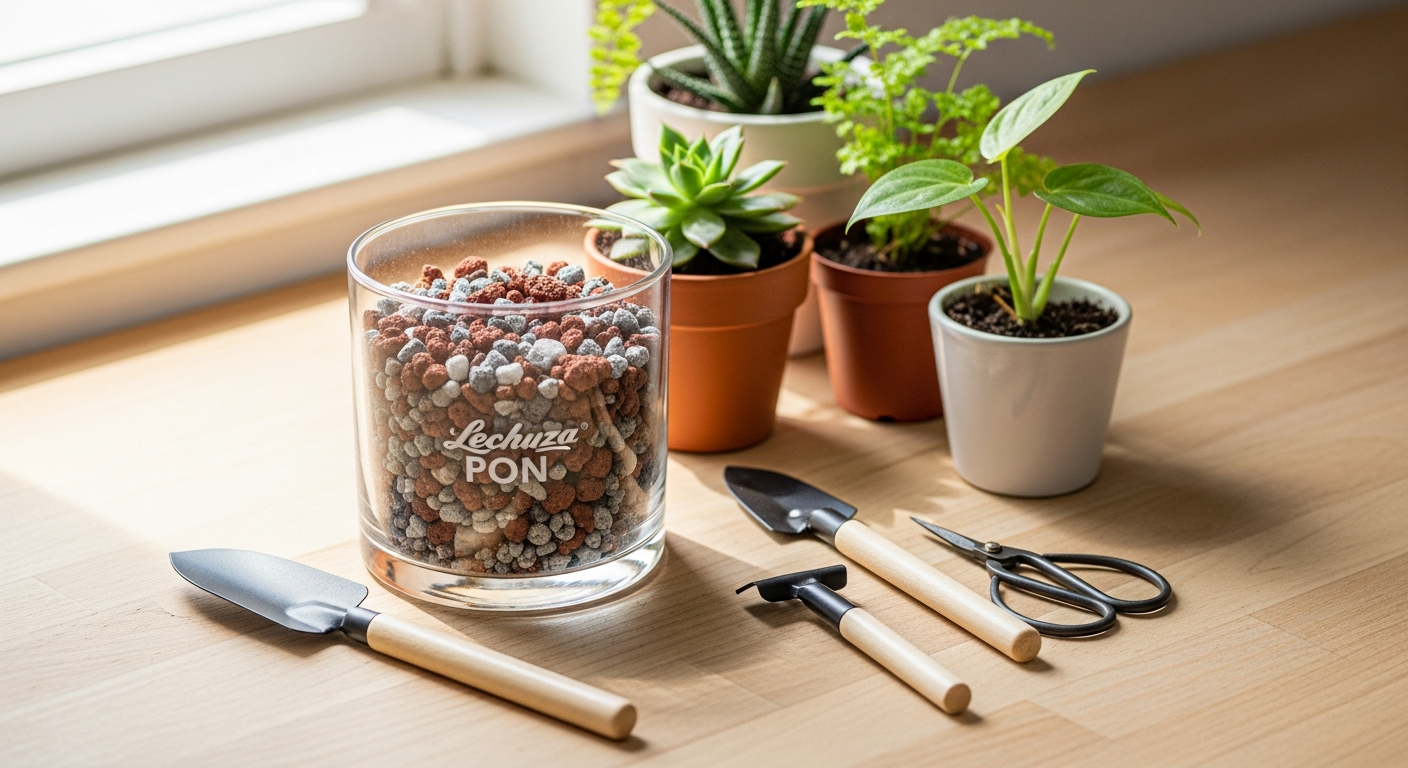
Lechuza PON mineral plant substrate sits at the center of this revolution. Unlike the organic-based potting mixes that have dominated plant care for decades, PON represents a fundamentally different approach built on natural minerals: zeolite, pumice, and lava rock. This peat-free growing medium doesn't compact, doesn't harbor the molds and pests that plague traditional soil, and comes pre-loaded with nutrients to support plant growth for 6 to 8 months. The science behind its effectiveness transforms how we manage moisture, nutrients, and plant health simultaneously.
Explore Lechuza PON mineral substrate options today to transform your plant care routine. Throughout this guide, you'll discover why allergy sufferers increasingly choose PON, how its unique mineral composition prevents common houseplant killers, and whether the investment aligns with your gardening goals and lifestyle.
What Makes Lechuza PON Different From Traditional Potting Soil
Mineral composition vs. organic soil: How zeolite, pumice, and lava rock create a fundamentally different growing environment
Traditional potting soil relies on organic matter—peat moss, coconut coir, bark—materials that break down over time and compress under their own weight. Lechuza PON takes the opposite approach. Its mineral framework consists of three distinct components, each serving a specific function. Zeolite acts as the system's intelligence, absorbing water and nutrients, then releasing them to plant roots on demand. Pumice provides structural integrity and channels for air circulation, while lava rock adds stability and contributes to the reservoir function. Together, these minerals create a self-regulating ecosystem that responds to plant needs rather than forcing a one-size-fits-all moisture environment.
Volume stability: Why PON doesn't compact or clump like conventional soil over time
One of the most frustrating aspects of traditional soil involves watching it compress gradually after months of watering and settling. This compaction reduces oxygen availability to roots, increases disease risk, and forces gardeners to repot frequently. Lechuza PON remains dimensionally stable indefinitely. The mineral particles don't decompose or break down into smaller pieces. Whether you're examining the substrate after one watering cycle or one year of consistent care, the architecture remains identical. This stability means your plants maintain the same aeration conditions throughout their growth period in the container.
Drainage architecture: The science behind superior water movement and root aeration
Water movement through mineral substrates follows different physics than traditional soil. PON's porous rock structure creates natural channels that allow water to percolate quickly toward the bottom of the container while simultaneously allowing oxygen to flow upward through air pockets. This bidirectional flow prevents the waterlogging that triggers root rot. Excess water drains rapidly, while the zeolite component holds just enough moisture to keep roots hydrated between watering intervals. Root aeration improves dramatically compared to organic soil systems, directly translating to faster growth rates and stronger plant development.
Peat-free benefits: Environmental advantages and why the industry is shifting away from peat extraction
Peat extraction devastates wetland ecosystems that took thousands of years to develop, releasing stored carbon into the atmosphere and destroying habitats for countless species. The environmental cost of conventional potting soil extends far beyond the bag sitting in your garden center. Lechuza PON eliminates this impact entirely. Its mineral components are abundant, renewable in practical terms, and extracted without the ecological destruction associated with peat harvesting. By switching to mineral-based substrates, plant parents become part of a larger movement toward sustainable horticulture—an option that requires zero compromise in plant performance.
Reusability factor: How mineral substrates can be refreshed and reused for multiple growing seasons
Traditional potting soil becomes contaminated with pathogens, depleted of nutrients, and structurally compromised after a single growing season. Most gardeners discard it and purchase fresh soil for each planting cycle. Lechuza PON inverts this economics. The mineral structure remains intact indefinitely. After removing old plant roots, you rinse the substrate to remove accumulated salts and pathogens, top it with fresh slow-release fertilizer, and reuse it for the next plant. A single purchase of PON can support multiple plants over multiple years, dramatically reducing long-term costs and waste.
Comparison to other semi-hydroponic media: PON vs. LECA, hydroton, and expanded clay pellets
Several semi-hydroponic alternatives exist in the market, with LECA (Lightweight Expanded Clay Aggregate) and hydroton representing the closest competitors. LECA consists of expanded clay pellets that require rinsing but offer superior drainage and lightweight handling. Hydroton functions similarly with a smoother surface texture. The key advantage of Lechuza PON involves its integrated slow-release fertilizer—LECA and hydroton require separate nutrient supplementation from the start. Additionally, PON's zeolite component provides the water and nutrient reservoir function that other mineral media lack. The choice between these options depends on your priorities: pure lightweight convenience favors LECA, while integrated nutrient management and reservoir functionality favor PON.
The Allergy-Friendly Advantage: Why PON Suits Sensitive Plant Parents
Mold inhibition properties: How mineral composition prevents fungal growth that triggers respiratory issues
Traditional soil creates an environment where mold thrives. Organic matter decomposition, consistent moisture retention, and minimal airflow all favor fungal colonization. For allergy sufferers and individuals with respiratory sensitivity, indoor plants become a source of distress rather than joy. Mineral substrates fundamentally change this dynamic. Mold struggles to establish in an environment lacking organic material to decompose. The porous structure of PON promotes air circulation that keeps moisture levels in check. Mineral particles don't support the fungal life cycles that plague soil-based systems. The result: allergy sufferers can finally cultivate thriving plant collections without triggering respiratory responses.
Fungus gnat resistance: Why soil-borne pests struggle in mineral-based environments
Fungus gnats represent perhaps the most persistent indoor plant pest, with life cycles that repeat every two weeks in organic soil environments. Mineral substrates break this cycle. Fungus gnats lay eggs in organic decomposition material—a resource that doesn't exist in PON. The mineral structure offers no breeding ground for larvae, and the rapid drainage prevents the sustained moisture these pests require. Gardeners switching to Lechuza PON report dramatic reductions in gnat populations, often within a single growing cycle. This pest resistance eliminates one of the most common reasons plant parents give up on indoor gardening.
Dust considerations: Pre-rinsing requirements and how to minimize airborne particles
PON arrives with fine mineral dust from the manufacturing and shipping process. This dust, while harmless once settled, can irritate sensitive individuals during the initial rinsing stage. The solution involves simple preparation: rinse PON thoroughly with water before use, using a strainer or mesh screen to capture and remove fine particles. This 5-10 minute preparation step eliminates the airborne dust concern entirely. After this initial rinsing, PON produces no additional dust during normal use. The slight inconvenience of pre-rinsing creates a genuinely allergen-free growing environment worth the effort.
Allergen-free growing: The connection between traditional soil pathogens and indoor air quality
Indoor air quality directly affects respiratory health, particularly for individuals with asthma, allergies, or immunocompromise. Traditional soil systems release mold spores, fungal particles, and decomposition byproducts into the air surrounding your plants. These microscopic particles circulate through your home's ventilation system continuously. Lechuza PON eliminates this invisible pollution source. By preventing mold growth and fungal colonization, PON-based systems contribute measurably to cleaner indoor air. Plant parents with respiratory sensitivities often report noticeable improvements in breathing comfort and reduced allergy symptoms after transitioning to mineral substrates.
Ideal for immunocompromised gardeners: Creating a cleaner growing environment for health-conscious plant parents
Immunocompromised individuals face particular vulnerability to opportunistic pathogens present in traditional soil. Fungal spores, mold fragments, and soil-dwelling bacteria all pose elevated health risks. Mineral substrates provide a safer growing environment without sacrificing plant performance. PON's composition eliminates the pathogenic vectors that make traditional plant care problematic for this population. Immunocompromised gardeners can participate fully in indoor gardening without the elevated health risks associated with organic soil systems.
Pet-safe substrate: Reduced toxin exposure compared to chemically-treated conventional soils
Many commercial potting soils contain chemical additives—fungicides, pesticides, wetting agents—applied during manufacturing to prevent pest problems and improve water retention. Curious pets that chew or dig in plants gain exposure to these chemical residues. Lechuza PON contains no such additives. Its pest and mold resistance comes from mineral composition rather than chemical treatments. The slow-release fertilizer integrated into PON is food-grade and specifically formulated for plant consumption. Pet owners can feel confident that their plants pose minimal toxicological risk.
Nutrient Management and the 6-8 Month Slow-Release Cycle
Pre-fertilized advantage: What nutrients come integrated into fresh PON
Fresh Lechuza PON arrives pre-loaded with a balanced slow-release fertilizer that provides macronutrients (nitrogen, phosphorus, potassium) and micronutrients essential for healthy plant growth. This integrated fertilization eliminates the guesswork during the critical establishment phase when newly potted plants need consistent nutrition. Most plant parents can succeed with zero additional fertilization during the first 6 to 8 months, dramatically simplifying plant care. The fertilizer releases gradually in response to watering, ensuring plants receive steady nutrient availability rather than feast-or-famine cycles common with liquid fertilizing regimens.
Timeline for nutrient depletion: When and how to recognize signs of nutrient deficiency
After approximately 6 to 8 months of regular watering, the integrated fertilizer begins depleting. Observant plant parents notice early warning signs: slower growth rates, smaller new leaves, or subtle changes in leaf color. Nitrogen deficiency appears as yellowing of older leaves, while phosphorus deficiency produces purple or reddish discoloration. Potassium deficiency creates brown leaf margins. Rather than waiting for dramatic symptoms, establishing a replacement calendar works more effectively. Mark your calendar six months from the initial potting date, then reassess plant performance around that timeline. Early supplementation prevents the nutrient deficiency symptoms that interrupt growth momentum.
Supplementation strategies: Best practices for adding nutrients after the initial fertilization period
Once the integrated fertilizer depletes, gardeners have several options. Liquid fertilizers applied during watering provide immediate nutrient availability but require consistent adherence to schedules. Slow-release granular fertilizers mixed into the top layer of PON provide sustained release similar to the original substrate composition. Water-soluble powders dissolved in watering cans offer a middle ground. The choice depends on your preference for convenience versus precision. Most successful PON users establish a monthly fertilizing routine with diluted liquid fertilizer, reducing application rates compared to soil-based plants since the mineral substrate doesn't buffer or compete for nutrients the way organic soil does.
Nutrient buildup risks: How over-fertilizing in mineral substrates differs from soil-based systems
Mineral substrates lack the organic matter that buffers excess nutrients in soil systems. Over-fertilizing in PON creates rapid nutrient accumulation that can damage roots through osmotic stress. The same "more is better" mentality that occasionally succeeds with conventional soil becomes problematic with minerals. Conservative fertilization works better—applying half-strength solutions more frequently beats occasional heavy applications. Monitoring salt accumulation on the substrate surface provides an early warning system. If white crusty deposits appear, flush the substrate with distilled water to remove accumulated salts before resuming fertilization at reduced rates.
pH stability from zeolite: How this mineral maintains optimal pH without additional amendments
Zeolite's crystalline structure naturally buffers pH within an optimal range for most houseplants (6.0-7.0). This inherent pH stability eliminates one of the most tedious aspects of plant care—pH testing and adjustment. Gardeners using conventional soil frequently need to add lime to raise pH or sulfur to lower it. PON's zeolite component handles this regulation automatically. This stabilization continues throughout the substrate's lifetime, providing consistent growing conditions year after year without additional amendments or monitoring.
Water and nutrient reservoir function: The dual-action mechanism that feeds plants on demand
Zeolite's porous structure absorbs water and nutrients, then releases them as plant roots demand moisture. This on-demand delivery system creates remarkably stable hydration without the boom-bust cycles of traditional soil. When you water PON, some water drains immediately (providing aeration), while the zeolite absorbs the remainder, holding it available for root uptake. As plants consume water over several days, the roots draw from this reservoir. When you water again, fresh nutrients accompany the new moisture. This cyclical pattern provides steady nutrient availability that mimics ideal greenhouse conditions.
Start your Lechuza PON journey with a sample size to evaluate its performance with your plants.
Weight, Handling, and Practical Logistics
Density comparison: PON weight vs. traditional potting soil for equivalent volumes
Mineral substrates carry substantially more weight than traditional potting soil due to their dense composition. A 12-liter bag of PON weighs approximately 15-18 pounds, while equivalent soil volumes typically weigh 8-10 pounds. This density difference becomes significant when managing larger containers or multiple plants. Gardeners planning to repot multiple large specimens should factor in the physical demands of moving and handling heavier substrate. For small to medium planters, the weight difference remains manageable, but furniture stability becomes a consideration for apartment dwellers or those with mobility limitations.
Large planter considerations: Managing heavier containers for mobility and shelf placement
A 20-inch diameter planter filled with Lechuza PON and a fully hydrated plant can easily exceed 40-50 pounds. This weight makes relocation problematic and raises concerns about shelf weight limits. Calculating total planter weight before purchasing becomes prudent. Standard residential shelving typically supports 25-30 pounds per linear foot distributed evenly. Placing a single large PON-filled planter on standard shelving could exceed safe load limits. Consider using heavy-duty shelving rated for 50+ pounds per linear foot, or positioning larger planters on floor-level stands instead. This practical consideration doesn't preclude using PON but simply requires planning ahead.
Rinsing requirements: Step-by-step preparation before first use to remove fine dust
PON requires rinsing before use to remove fine mineral particles accumulated during manufacturing and shipping. Fill a large container (like a 5-gallon bucket) halfway with PON, then run water through it while stirring gently. The water will turn cloudy initially as fine dust particles suspend. Continue rinsing and draining until the water runs relatively clear—typically 3-4 rinse cycles suffice. Use a strainer or mesh screen to prevent loss of substrate while draining. This 5-10 minute preparation step eliminates airborne dust concerns and ensures optimal substrate performance. Some gardeners use a colander in the sink for smaller quantities or a mesh garden strainer for larger volumes.
Storage and shelf life: How to properly store unused PON between planting sessions
Unopened bags of Lechuza PON maintain their properties indefinitely when stored in dry conditions. Moisture exposure degrades the slow-release fertilizer coating, so keep bags sealed and stored in a cool, dry location away from direct sunlight. Once opened, transfer unused PON to airtight containers if extended storage is necessary. The mineral composition itself never deteriorates, but the integrated fertilizer gradually loses potency over years of storage. Fresh substrate provides optimal nutrient availability, so purchasing smaller quantities more frequently works better than stockpiling large amounts. Most gardeners find a 12-liter bag sufficient for 2-4 medium-sized plants, making rotation feasible.
Packaging sizes available: 1.4-gallon, 6-liter, 12-liter, and 30-liter options for different needs
Lechuza PON comes in four standard sizes to accommodate different gardening scales. The 1.4-gallon (roughly 5-liter) option works for single potting projects or trial uses, though it carries the highest per-volume price premium. The 6-liter bag potts 2-3 medium plants and offers better value. The 12-liter size represents the most popular choice, providing substrate for 4-6 medium planters at reasonable cost. The 30-liter bag serves dedicated collectors or small nursery operations. Choosing the right size balances cost efficiency against storage constraints and shelf life considerations.
Bulk purchasing for collectors: Cost-benefit analysis when stocking up for multiple plants
Plant collectors maintaining 20+ specimens often purchase 30-liter bags to reduce per-liter costs. A 1.4-gallon bag costs roughly $24.99-$27.49 (approximately $5.50-$6.25 per liter), while 30-liter bags cost around $127.25 (approximately $4.25 per liter)—a 30% savings. However, bulk storage requires space and carries the risk of fertilizer degradation if bags sit unopened for extended periods. For gardeners adding new plants regularly, purchasing the next size up often strikes the best balance. Buying three 12-liter bags instead of bulk 30-liter quantities provides cost savings while maintaining fresher substrate quality throughout the year.
Cost Analysis: Is the Investment Worth It?
Price breakdown by volume: Comparing per-liter costs across different bag sizes
Lechuza PON's pricing structure creates clear per-volume tiers. The 1.4-gallon bag averages $25 ($5.50-$6.25 per liter), the 6-liter bag runs roughly $35-40 ($5.80-$6.70 per liter), the 12-liter bag averages $50-80 ($4.20-$6.70 per liter depending on retailer), and the 30-liter bag costs approximately $127 ($4.25 per liter). Larger volumes clearly offer better per-unit pricing, but smaller quantities suit one-time potting projects without wasting money on storage. Regional pricing variations exist—West Coast retailers typically charge more than Midwest alternatives. Monitoring online retailers occasionally reveals promotional pricing that reduces these baseline costs by 10-20%.
Long-term value calculation: Reusability factor that offsets higher upfront costs
The reusability advantage fundamentally changes PON's cost equation compared to traditional soil. A gardener potting 10 plants with conventional soil spends $3-5 per planting cycle, totaling $30-50 annually if they repot yearly. That same gardener using PON invests $50-80 initially but refreshes each planting with only top-up fertilizer ($5-10 per plant yearly) after the first season. Over three years, soil-based gardeners spend $90-150 total, while PON users spend roughly $100-130. By year four, PON's reusability advantage becomes compelling—continued minimal costs against perpetual fresh soil expenses. For collectors maintaining large collections long-term, the reusability advantage becomes the decisive economic factor.
Comparison to conventional soil: Total cost of ownership over 2-3 years
Calculating true cost requires accounting for all factors. Conventional potting soil costs $2-3 per bag, supporting 2-3 plants yearly. Adding nutrients, pest control, and replacement soil as plants age and need repotting, annual expenses reach $30-50 for a moderate collection. Three-year total: $90-150. Lechuza PON requires $60-100 initial investment for equivalent plant support, then $20-30 annually for nutrient supplementation. Three-year total: $100-160. The costs appear competitive, but PON users experience superior plant health outcomes, reduced pest problems, and simpler maintenance. The comparable cost, combined with better results, makes PON increasingly attractive to conscientious gardeners.
Integration with Lechuza planters: How substrate and planter systems work together economically
Lechuza manufactures self-watering planters specifically designed for PON. These planters feature built-in water reservoirs that work synergistically with PON's moisture-holding zeolite. Using PON with Lechuza planters creates a complete system where watering becomes truly infrequent—often once weekly or biweekly depending on plant type and environmental conditions. This system integration justifies the higher substrate cost through reduced watering frequency and improved plant health. Gardeners unwilling to invest in Lechuza planters can use PON in standard containers with drainage, though the full system benefits diminish. Calculating ROI over several years, the substrate-planter integration provides superior value than using either component independently.
Retail variation: Where to find competitive pricing and bulk discounts
Lechuza PON pricing varies substantially across retailers. Specialized plant shops and European suppliers typically charge premium prices ($6-7 per liter), while online plant retailers often undercut these by 15-20%. Home improvement chains sometimes offer competitive pricing on standard sizes. International retailers occasionally ship large volumes at lower per-unit costs, though shipping expenses can negate savings. Comparing prices across multiple retailers before purchasing large quantities can yield 20-30% savings. Subscribing to plant community forums and local plant swap groups occasionally reveals bulk-purchase opportunities where collectors split large orders.
Budget-conscious alternatives: When LECA or other options might make more financial sense
Expanded Clay Aggregate (LECA) costs approximately $3-4 per liter, substantially less than PON's $5-6 per liter. For gardeners without allergy concerns, LECA provides comparable drainage and aeration benefits at lower cost. The tradeoff involves manual nutrient supplementation from the start—no integrated fertilizer means consistent fertilizer application responsibility. Hydroton falls into similar cost and performance categories. For budget-focused collectors unconcerned with integrated fertilization, LECA represents the more economical choice. For allergy-prone gardeners or those prioritizing simplified care, PON's premium justifies the higher expense. Your specific circumstances should guide this decision.
Making Your Transition to Mineral-Based Growing
Lechuza PON delivers genuine improvements in plant health, simplified care routines, and allergen-free growing environments—but success requires honest assessment of your priorities and constraints. The investment makes immediate sense for allergy sufferers whose respiratory health improves measurably when traditional soil's mold and fungal spores disappear. Chronic overwatering culprits who've lost multiple plants to root rot will find PON's superior drainage transformative. Collectors managing 15+ plants simultaneously benefit enormously from the reusability factor that turns expensive annual soil replacement into minimal supplementation costs.
Your decision ultimately hinges on three practical questions: Does your plant care challenge genuinely solve through better substrate? Can your budget absorb the 15-25% premium over conventional alternatives? Are you genuinely committed to the mineral-based growing approach long enough to recoup the investment? If you answered yes to all three, PON represents excellent value. If you answered no to any question, exploring LECA or continuing with conventional soil might align better with your circumstances.
Starting small minimizes risk and provides real-world data for your growing environment. Purchase a single 6-liter bag and pot one favorite plant into PON using a standard container with drainage. Observe moisture patterns, growth rates, and any changes in plant health over 2-3 months. This modest experiment costs $35-40 while providing concrete evidence of whether mineral substrates work for your specific plants and gardening style. Most trial users become enthusiastic adopters, expanding their PON usage with subsequent purchases. Others discover that conventional soil works perfectly adequately for their situation and needs.
Begin your transformation with Lechuza PON today and experience mineral-based growing for yourself.
Leave a Reply