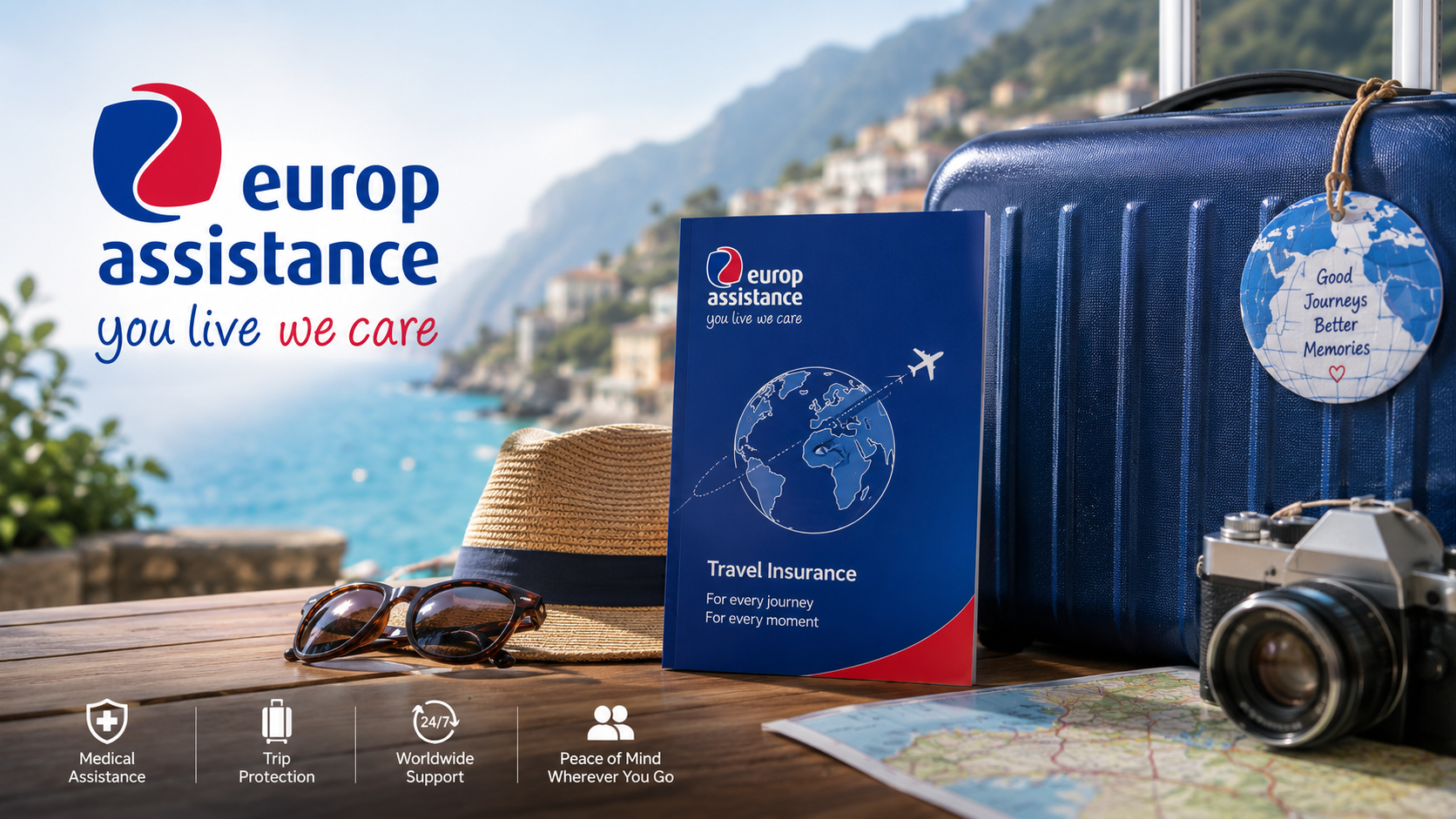
Nearly 40% of adventure travelers skip insurance altogether, betting on luck rather than protection—yet a single medical evacuation from a remote mountain region can cost upward of €100,000. This gamble haunts those who face genuine emergencies in unfamiliar terrain where rescue logistics become exponentially more expensive and complicated.
Europ Assistance has been the trusted name in global assistance services since 1963, building a reputation by understanding what active travelers actually need. Their specialized plans go beyond standard policies, addressing the unique risks that come with adventure tourism, extreme sports, and off-the-beaten-path exploration.
Discover how Europ Assistance coverage can protect your next adventure.
Specialized Plans for High-Risk Activities and Adventure Pursuits
Coverage for winter sports, mountaineering, and extreme altitude expeditions
Adventure travelers face distinct hazards that standard travel insurance ignores. Europ Assistance recognizes this reality and structures policies explicitly for climbers tackling 6,000+ meter peaks, skiers navigating backcountry terrain, and mountaineers operating at extreme altitudes. Their “Snow Traveller” plan addresses winter sports specifically, while specialized expeditions require careful plan selection from their portfolio.
Altitude coverage becomes crucial when your trek climbs beyond 4,500 meters. Medical complications at elevation—acute mountain sickness, cerebral edema, pulmonary edema—demand rapid evacuation to lower altitudes where oxygen levels stabilize the body. Europ Assistance policies explicitly state altitude limits, typically covering expeditions up to 5,500 meters in standard plans, though higher-altitude mountaineering may require specialized rider endorsements or bespoke coverage arrangements.
Medical repatriation limits and emergency evacuation protocols for remote locations
Medical repatriation forms the backbone of adventure protection. When you’re injured or critically ill in a location with inadequate medical facilities, repatriation to a facility capable of advanced trauma care becomes essential—and extraordinarily expensive. Europ Assistance covers repatriation of the injured or sick as a standard inclusion, with their network positioning emergency care across 200+ countries.
Helicopter evacuation costs from remote mountainous terrain or wilderness locations routinely exceed €50,000. Their coverage addresses this directly through emergency evacuation protocols that activate immediately upon contact with their 24/7 assistance center. However, the policy documentation specifies that evacuation occurs “when medically necessary and deemed appropriate by their medical coordinator”—language that sometimes creates friction during actual claims, as adventurers and Europ Assistance medical teams may disagree on evacuation urgency.
Comparison of annual multi-trip plans (€98–€152) versus single-trip adventure policies
Single-trip adventure policies typically begin around €12 and cover one specific journey. This approach works for occasional trekkers taking one major expedition yearly. Annual multi-trip plans start at €98 for basic coverage and escalate to €152 for premium options, unlocking broader protection across unlimited trips within a calendar year.
The economics shift dramatically if you pursue multiple adventures annually. Two or three separate expeditions purchased as single-trip policies quickly exceed annual plan costs. Beyond price, annual plans often include higher medical reimbursement caps, extended coverage windows for trip delays, and simplified claims processes since your policy documentation and provider relationships remain consistent across multiple journeys.
Exclusions commonly applied to skydiving, professional mountaineering, and extreme sports
Certain high-risk activities face blanket exclusions or require explicit activity riders. Skydiving, BASE jumping, professional mountaineering (mountaineering pursued as paid employment), and mixed martial arts training typically aren’t covered under standard Europ Assistance policies. If your adventure involves any professional-level pursuit or competition-focused extreme sport, policy language requires careful examination.
Mountaineering classification matters critically here. Recreational mountaineering—climbing mountains for personal challenge—receives coverage. Professional mountaineering—accepting payment for guiding clients up mountains—does not. The distinction creates real confusion during claims when adventurers question why coverage was denied despite their belief they were simply climbing for personal enrichment.
Emergency Medical Support and Telemedicine for Remote Travelers
24/7 multilingual assistance hotline accessibility from expedition base camps
Round-the-clock access to medical professionals forms the foundation of Europ Assistance’s reputation. Their multilingual assistance hotline operates continuously, supporting travelers in more than 40 languages. For expedition teams establishing base camps in remote regions, this resource matters immensely—direct contact with medical coordinators who understand the expedition context, location constraints, and available evacuation options.
Accessibility, however, depends on communication infrastructure at your location. Satellite phone connectivity, limited cellular coverage, or reliance on expedition radio systems may create delays in reaching their hotline. Adventurers in genuine wilderness settings sometimes report frustration connecting during critical situations, though Europ Assistance continuously expands their accessible communication channels including WhatsApp integration and satellite messaging compatibility.
Medical expense reimbursement caps up to €1,250,000 per person per event
Their annual policies extend medical expense reimbursement caps reaching €1,250,000 per person per event worldwide. This ceiling addresses catastrophic scenarios—complex surgical interventions, extended hospitalization, air ambulance transport—that would financially devastate travelers with lower coverage limits. For serious climbing accidents or diving emergencies requiring trauma surgery and extended critical care, this cap provides substantial protection.
The reimbursement structure reimburses documented medical expenses following evacuation and treatment. Keep all receipts, hospital bills, ambulance invoices, and medical reports—documentation requirements that sometimes catch adventurers unprepared, particularly those treated in developing nations where record-keeping practices differ from Western standards.
Air ambulance and helicopter evacuation coverage for climbers and wilderness explorers
Air ambulance and helicopter evacuation represent some of adventure travel’s highest costs. A helicopter rescue from a mountainside in Nepal, Peru, or the Alps typically costs €30,000 to €100,000 depending on distance, terrain difficulty, and weather conditions. Europ Assistance covers these expenses as part of their emergency evacuation protocol, activating helicopter rescue when medical coordinators deem it necessary and feasible given weather and terrain constraints.
Coverage extends to mortal remains repatriation, addressing the tragic scenarios that occasionally occur in high-altitude mountaineering or remote wilderness exploration. This grim reality deserves explicit confirmation within your policy before departure, ensuring your family isn’t facing unexpected costs during an already devastating situation.
Hospital network access across 200+ countries with quality standards in developing regions
Their 750,000-provider network spans 200+ countries, including climbing destinations in developing nations where medical infrastructure varies dramatically. In major adventure hubs—Nepal, Peru, Ecuador, Kenya, Thailand—Europ Assistance has established direct billing relationships with hospitals and clinics meeting their quality standards. This arrangement allows you to receive treatment with minimal out-of-pocket expense, as bills flow directly to Europ Assistance.
Developing-nation medical facilities raise legitimate questions about quality and expertise. Europ Assistance maintains quality standards within their network, but adventurers seeking treatment in remote locations may experience facilities with limited resources compared to Western hospitals. Evacuation to more advanced medical centers becomes necessary in complex trauma cases, which their policies cover—yet this additional transportation step introduces delays and complications when rapid treatment could prove critical.
Trip Interruption and Baggage Protection for Extended Expeditions
Coverage triggers for expedition delays caused by weather, equipment failure, or guide cancellations
Extended expeditions encounter delays from weather patterns, equipment failures, or guide availability disruptions. Trip interruption coverage compensates you for these delays if they force modification or cancellation of your adventure. Weather-related base camp confinement, avalanche risk requiring route changes, or guide illness forcing expedition postponement can trigger coverage depending on specific policy language.
Equipment failure coverage varies significantly between policies. Climbing rope damage, vehicle breakdown on safari, or boat mechanical failure may interrupt expeditions, but standard policies typically don’t cover equipment-related delays unless they cause direct injury requiring medical evacuation. Review specific policy language about what operational disruptions count as covered trip interruptions.
Trip cancellation reimbursement policies and documented denial reasons from adventure travelers
Trip cancellation claims face the highest denial rates across the travel insurance industry. Europ Assistance policies require specific documented reasons to qualify for reimbursement: illness or injury to you or a close family member, death in the immediate family, or severe disruption to travel logistics caused by external events. Pre-existing medical conditions, cold feet about the adventure, or simple schedule changes don’t qualify.
Customer feedback reveals frustration with claim denials rooted in policy interpretation disputes. An adventurer canceling due to illness might find their condition classified as “pre-existing” if it showed any symptoms within the stability window (typically 14–30 days before purchase). Another might have their claim denied because they didn’t cancel through proper channels or failed to obtain specific medical certification. Understanding these nuances before purchasing—and documenting everything meticulously if you cancel—prevents denial surprises.
Baggage delay protection for multi-leg journeys and remote camp logistics
Multi-leg expeditions introduce baggage delay risks. Connecting flights, routing through developing nations with less reliable airport operations, or transport to remote trailheads can separate you from your climbing gear, camping equipment, or diving kit for days. Europ Assistance covers baggage delays lasting beyond 24 hours, reimbursing replacement essential items you purchase during the delay period.
Remote camp logistics complicate baggage protection further. Expedition porters, yaks, or local transport companies sometimes lose or damage gear during approaches to base camps. Standard baggage coverage may not address losses occurring during expedition logistics prior to the actual climbing or diving phase. Confirm that your policy explicitly covers baggage losses during the expedition approach, not just during scheduled commercial airline flights.
Loss coverage for specialized adventure gear including climbing and diving equipment
Specialized adventure gear—climbing ropes, ice axes, diving regulators, mountain bikes—faces damage or loss risks during expeditions. Standard baggage coverage often excludes high-value specialized equipment or imposes per-item limits inadequate for quality climbing or diving gear. Europ Assistance policies vary in their coverage of specialized equipment; some plans include specific riders for high-value adventure gear while others exclude it entirely.
Calculate your gear value before purchasing. A complete climbing kit easily exceeds €5,000 when counting ropes, protection devices, harnesses, boots, and technical clothing. Standard baggage limits might cap at €1,500 per item, leaving substantial gaps. Specialized equipment riders add cost but provide peace of mind that your investment in quality gear receives appropriate protection.
Review Europ Assistance’s equipment coverage options for your specialized adventure gear.
Cost Breakdown and Value Assessment for Adventure Travelers
Entry-level pricing (€5–€12) for basic cancellation and medical coverage
Budget-conscious adventurers can access basic Europ Assistance coverage starting at €5 for minimal trip cancellation protection. Policies at this price point cover cancellation due to death or serious illness, basic medical reimbursement, and emergency evacuation—addressing absolute essentials without frills. €12 single-trip policies expand coverage slightly, adding higher medical reimbursement caps and improved baggage protection.
These entry-level policies suit occasional travelers taking one simple trek yearly in well-established destinations. They provide essential safety nets without breaking the bank. However, limitations appear immediately: medical reimbursement caps may max at €100,000 rather than €1,250,000, evacuation coverage faces more restrictions, and claims processing sometimes takes longer due to low premiums limiting insurer resources allocated per policy.
Mid-range annual plans (€98–€152) and what additional protection they unlock
Annual multi-trip plans representing true value for active adventurers range from €98 for basic annual coverage to €152 for premium annual protection. At €98, annual plans unlock unlimited trip coverage throughout the calendar year, significantly higher medical reimbursement ceilings, and expedited claims processing. Premium €152 annual plans add additional benefits: higher evacuation coverage limits, improved baggage protection, enhanced trip interruption compensation, and sometimes specialized adventure sports riders.
The progression from €12 single-trip to €152 annual plans reveals where Europ Assistance allocates resources. Higher-tier annual plans shift claims processing toward customer-centric models, provide dedicated claim handlers, and include ombudsman escalation pathways when disputes arise. If you value faster claims resolution and consistent coverage across multiple expeditions, annual plans justify their premium cost.
Cost comparison between single-trip adventure policies and annual multi-trip coverage
Financial analysis clarifies the decision. A single adventurer taking two major expeditions yearly faces these costs: €12 × 2 = €24 for two single-trip basic policies. An €98 annual plan covers both trips plus any spontaneous adventure throughout the year. Beyond year one, the single-trip model continues costing €24 annually while annual policies lock in their cost regardless of adventure frequency.
Adventurers pursuing multiple trips yearly—mountaineering expeditions, diving trips, trekking adventures—reach annual plan breakeven by mid-year. Those committing to annual plans benefit further from consistency: same policy documents, same provider relationships, same claims processes. The friction of navigating different policy terms for each separate trip disappears when annual coverage governs all adventures within a defined calendar period.
ROI analysis based on typical medical evacuation costs in adventure destinations
Return on investment analysis simplifies the protection equation. A single helicopter evacuation from a remote location costs €30,000 to €100,000. Even basic €5 policies provide coverage for this worst-case scenario, making the ROI calculation obvious: pay a tiny premium to protect against a catastrophic financial outcome.
More nuanced ROI considers the probability of actually needing evacuation. Mountaineers climbing technical peaks face higher evacuation likelihood than casual trekkers walking established trails. Divers operating at depths exceed 40 meters face decompression illness risks requiring rapid recompression chamber access. Rock climbers in remote locations encountering serious injuries face evacuation probabilities perhaps 0.5–2% annually—not certain, but realistic enough that protection becomes essential. Annual premiums of €98–€152 represent negligible insurance costs when viewed against realistic evacuation expenses and probability-weighted risk analysis.
Customer Experience and Claims Reality for Active Explorers
Reported strengths: comprehensive medical coverage and extensive global provider network
Adventure travelers consistently praise Europ Assistance’s medical coverage comprehensiveness and global provider reach. Mountaineers having serious accidents in Nepal, Peru, or the Himalayas report efficient evacuation coordination and access to quality trauma care through their provider network. Divers requiring decompression treatment following diving emergencies describe rapid facility access to recompression chambers.
The extensive provider network—750,000 facilities across 200+ countries—represents genuine competitive advantage. Competitors often struggle coordinating care in developing nations where Europ Assistance maintains established relationships. Adventurers in established climbing destinations like Kathmandu or Lima experience seamless hospital access with direct billing arrangements requiring minimal out-of-pocket expense during actual medical emergencies.
Common pain points: emergency contact difficulties and delayed response during critical situations
Despite strengths, customer feedback highlights frustrating gaps during actual emergencies. Adventurers report difficulty reaching the 24/7 hotline from remote locations—satellite phone delays, poor cellular connectivity, or language barriers create frustrating barriers when rapid medical coordination matters most. Some expedition teams report waiting hours for callback responses during time-critical situations, though Europ Assistance states they prioritize emergencies and should respond immediately.
Communication infrastructure limitations in genuine wilderness settings compound contact challenges. A mountaineer at 5,500 meters using expedition satellite communication faces inevitable delays communicating with hotline coordinators. Weather conditions preventing helicopter evacuation might extend response times as coordinators assess changing feasibility. These operational realities sometimes disappoint adventurers expecting instantaneous support, though expectations themselves may exceed what’s physically possible in remote environments.
Trip cancellation claim denials and policy interpretation disputes from adventure travelers
Trip cancellation claims generate the highest frustration and dispute frequency. Adventurers believing they qualified for reimbursement have claims denied due to policy language they didn’t fully understand during purchase. A trekker canceling due to a pre-existing knee problem might find their claim denied if the knee showed any symptoms within the stability window. Another canceling due to expedition guide illness might discover the policy only covers guide cancellation for specific documented conditions, not general illness.
These disputes often stem from policy terminology ambiguity rather than Europ Assistance attempting to deny legitimate claims. “Pre-existing condition,” “stability window,” “medically necessary,” and “expedition disruption” carry specific definitions within insurance law that differ from everyday understanding. Adventurers skimming policy documents during the purchasing rush later discover these definitions during claims, creating justified frustration. Reading policy documents thoroughly before trip cancellation—not after—prevents these disappointments.
Positive feedback from mountaineers, divers, and expedition groups
Despite challenges, organized expedition groups and professional guides consistently recommend Europ Assistance coverage. Mountain guides operating in Nepal, Ecuador, and Peru directly promote their policies to clients, having witnessed efficient emergency response during actual mountaineering accidents. Diving operators in Southeast Asia and the Philippines reference Europ Assistance positively based on rapid decompression illness coordination.
This professional endorsement reflects real-world operational experience. Guides and operators encounter insurance complications when clients face emergencies; they gravitate toward insurers delivering actual emergency support rather than claiming coverage then disappearing during claims. Europ Assistance’s reputation among professionals—those who’ve witnessed insurance outcomes during actual crises—carries weight beyond generic customer reviews.
How to Choose the Right Europ Assistance Plan for Your Adventure Style
Assessment framework: matching your activity type to appropriate coverage levels
Selecting appropriate coverage requires honest assessment of your adventure style and associated risks. Simple framework categorizes adventurers:
Casual adventurers taking established trails, popular trekking routes, and low-risk pursuits qualify for basic €5–€12 coverage. This group encounters limited evacuation risk and primarily needs medical expense reimbursement and trip cancellation protection.
Active adventurers pursuing mountaineering on non-technical peaks, established diving sites, backcountry skiing, and multi-week expeditions in developed nations require €98–€152 annual coverage, specifically selecting plans covering their chosen activities without exclusions.
Extreme adventurers tackling technical climbing, high-altitude expeditions, extreme skiing, or professional adventure sports need customized coverage beyond standard policies, often requiring specialized riders or bespoke arrangements directly negotiated with Europ Assistance.
Honest categorization prevents underinsurance (purchasing inadequate coverage) and unnecessary overinsurance (paying for coverage you don’t need).
Questions to ask before purchasing: altitude limits, activity exclusions, and evacuation protocols
Before committing to any Europ Assistance policy, work through these critical questions:
What altitude limits does your chosen plan specify? If climbing Kilimanjaro (5,895m), you need policies explicitly covering that elevation. Policies limiting coverage to 4,500 meters create dangerous gaps.
What specific activities are excluded? Download the full policy document and search for your adventure type. “Mountaineering” coverage means completely different things in different policies—confirm explicit coverage rather than assuming.
How does evacuation triggering work? Do you, expedition leaders, or only Europ Assistance medical coordinators initiate evacuation? This distinction matters when coordination delays could affect outcomes.
What documentation must accompany claims? Understand specific requirements before expeditions so you collect receipts, medical records, and supporting evidence during actual emergencies when proper documentation becomes difficult.
Policy document red flags: restrictive stability windows, vague activity definitions, and geographic limitations
Specific policy language patterns signal potential problems:
Stability windows exceeding 30 days before purchase date deserve scrutiny. These windows classify pre-existing conditions harshly, potentially denying claims for conditions you didn’t know were pre-existing according to their definition.
Vague activity definitions like “extreme sports” or “professional mountaineering” without clear examples create ambiguity during claims. Specific policies listing covered activities—”mountaineering up to 6,000m elevation on non-technical peaks”—provide clarity; vague policies invite dispute.
Geographic limitations on evacuation coverage (e.g., “evacuation available in countries within the Europ Assistance network”) leave gaps in truly remote regions. Confirm evacuation availability in specific destinations before purchase.
Policy language requiring pre-approval for evacuation raises red flags. Medical emergencies don’t wait for approval; if evacuation protocols demand pre-authorization, practical implementation becomes impossible during actual crises.
Comparison checklist: medical caps, evacuation coverage, and claims documentation requirements
Create a simple comparison checklist before purchasing:
- Medical reimbursement cap: €1,000,000+? ✓
- Evacuation coverage limit: €100,000+? ✓
- Air ambulance covered? ✓
- Altitude limit adequate for your destination? ✓
- Your planned activities explicitly covered without exclusions? ✓
- Trip cancellation covers your cancellation reasons? ✓
- Baggage coverage adequate for your equipment? ✓
- Claims documentation requirements manageable? ✓
Policies checking all boxes represent appropriate choices. Those missing multiple checkmarks suggest alternative providers might serve you better.
Global Assistance Network and On-the-Ground Support
750,000 provider network distribution across 200+ countries and remote regions
Europ Assistance’s 750,000-provider network represents their competitive moat—few insurers maintain comparable global reach. This network distribution spans developed nations where medical infrastructure is excellent, developing nations where quality providers exist but coordination is complex, and remote regions where limited facilities require evacuation protocols.
Network density varies geographically. European, North American, and East Asian networks provide robust coverage with abundant hospital choice and specialist expertise. African nations, Central Asia, and Pacific island regions show thinner coverage, though major expeditionary hubs like Nepal, Peru, Ecuador, and Kenya maintain adequate resources. Understanding network strength in your specific destination prevents evacuation surprises—confirm provider availability before committing to remote expeditions in underserved regions.
Direct billing arrangements with hospitals and clinics in major adventure destinations
Direct billing arrangements with hospitals and clinics eliminate complex reimbursement processes during medical crises. Instead of paying out-of-pocket then waiting for reimbursement, you present your Europ Assistance documentation and the facility bills them directly. This arrangement works smoothly in established adventure destinations—Kathmandu’s major trauma hospitals, Lima’s international clinics, Nairobi’s expatriate-focused facilities—where providers have regular Europ Assistance interactions.
Smaller regional hospitals outside major hubs may lack direct billing capability or familiarity with Europ Assistance protocols, creating complications. When treatment occurs in a facility outside their direct billing network, you may need to pay upfront and submit receipts for later reimbursement—a burden during medical emergencies when finances feel secondary to recovery.
Language support capabilities and interpreter services during medical emergencies
Language support during medical emergencies prevents critical communication failures. Europ Assistance provides 24/7 multilingual assistance with translators available in 40+ languages. This support extends beyond hotline communication—they coordinate interpreters at medical facilities when language barriers could complicate treatment discussions.
Interpreter availability depends on local resources. In major cities and tourist destinations, competent medical interpreters exist within Europ Assistance networks. In remote locations or less common languages, interpreter access becomes limited. Adventurers in truly remote regions should consider carrying translation tools (translation apps, phrase books, or traveling with multilingual expedition members) rather than relying entirely on insurer-provided interpretation.
Real-time provider directory access through mobile app and website during expeditions
Digital access to provider directories before and during expeditions helps locate facilities in emergencies. Europ Assistance offers mobile app access to their provider network with facility information, contact details, and user reviews. This direct access matters when your expedition location becomes unsafe requiring evacuation to specific facilities—checking the app reveals which Europ Assistance-affiliated hospitals exist within reasonable travel distance.
App functionality depends on cellular connectivity. In genuine wilderness settings, apps provide offline reference if downloaded before departure, but real-time updates become impossible without connectivity. Download relevant provider directories covering your entire expedition route before departing civilized connectivity areas.
Taking Control of Your Adventure: Making an Informed Insurance Decision
Europ Assistance Travel Insurance delivers genuine protection for adventurers who push boundaries—their global reach, specialized plans, and emergency medical infrastructure are genuinely impressive. The network of 750,000 providers across 200+ countries, coupled with 24/7 multilingual support, creates a safety net that matters when you’re far from home. Access to medical reimbursement reaching €1,250,000 and reliable evacuation coverage addresses catastrophic scenarios where adventure pursuits intersect with serious injury or illness.
Yet the reality is more nuanced. While medical coverage earns consistent praise from mountaineers, divers, and expedition groups who’ve experienced emergency situations firsthand, claims processing can be frustratingly slow. Emergency contact sometimes feels unreliable from truly remote locations where communication infrastructure fails. Policy exclusions—particularly around pre-existing conditions, specific adventure activities, and trip cancellation triggers—demand careful scrutiny before purchase rather than surprise discoveries during claims.
The key to maximizing protection lies in matching your specific adventure style to the right plan. Casual adventurers need basic coverage starting at €5–€12. Active adventurers pursuing multiple annual expeditions find genuine value in €98–€152 annual plans. Extreme adventurers tackling technical mountaineering, high-altitude peaks, or professional adventure sports require customized coverage often negotiated directly with Europ Assistance representatives.
Before your next expedition, invest time in the selection process: Compare coverage limits against realistic worst-case scenarios in your destination. Verify that your chosen activities are explicitly covered without exclusions. Test their emergency hotline accessibility from your destination to confirm communication reliability. Download provider directories covering your route. Collect all documentation—receipts, medical records, supporting evidence—during expeditions so claims processing encounters no delays when you file after returning home.
Choose your Europ Assistance adventure insurance coverage today and explore with confidence.
Leave a Reply