Most 50cc scooter owners hit a frustrating ceiling: their bike feels sluggish on hills, struggles to keep pace with traffic, and leaves them wondering what they're truly capable of. A performance cylinder kit upgrade can nearly double your horsepower, transforming a modest commuter into a genuinely thrilling ride. I've watched countless riders discover this secret on La Bécanerie—a French specialist platform where performance enthusiasts find everything from Polini 70cc kits to Minarelli AM6 upgrades.
These aren't just bolt-on parts; they're gateway modifications that unlock the potential hidden in your engine block. Whether you're riding a vintage enduro bike or a modern Honda scooter, the right cylinder kit delivers tangible results that you'll feel immediately. Explore the complete range of 50cc performance cylinder kits on La Bécanerie today.
In this guide, I'm breaking down exactly what a 50cc performance cylinder kit upgrade involves, how displacement increases work, what installation really demands, and the legal landscape you need to navigate. By the end, you'll understand whether this upgrade makes sense for your specific machine and riding goals.
What's Inside a 50cc Performance Cylinder Kit: Component Breakdown
Cylinder Block and Bore Specifications
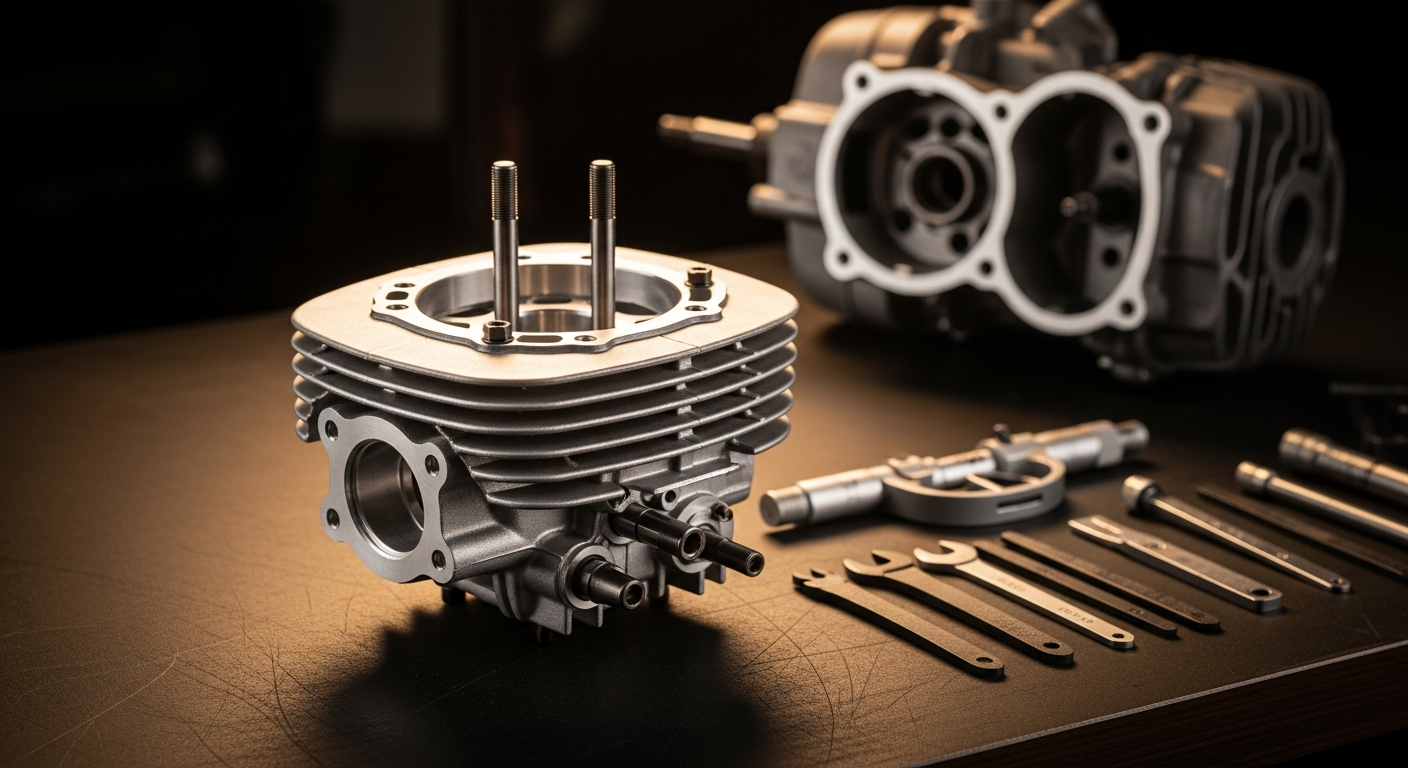
The cylinder block forms the foundation of any performance upgrade. This precision-engineered component houses the combustion chamber and determines your engine's bore size, typically ranging from 40mm to 47mm depending on the desired displacement increase. The bore diameter directly influences how much air-fuel mixture enters the engine, making it the primary driver of power gains.
Piston and Piston Rings
Your cylinder kit includes precision-engineered pistons and rings designed to withstand the higher pressures and temperatures of a performance engine. These components create the critical seal between the piston and cylinder wall, preventing combustion gases from escaping into the crankcase. Quality piston rings are essential because they experience extreme stress during high-RPM operation.
Wrist Pin and Connecting Assembly
The wrist pin connects your piston directly to the connecting rod, enabling smooth reciprocal motion thousands of times per minute. In a performance kit, this pin must handle significantly greater mechanical stress than in a stock engine, so manufacturers engineer them with tighter tolerances and superior materials.
Complete Gasket Set
A comprehensive gasket set prevents leaks at every critical junction—between the cylinder and head, around ports, and at sealing surfaces throughout the engine. Performance engines operate at higher pressures, so upgraded gaskets become essential for maintaining integrity under stress.
Installation Hardware and Materials
Your kit includes properly engineered bolts, clips, and fasteners designed specifically for secure mounting under performance conditions. Material choices vary significantly: cast iron offers proven durability and affordability, while aluminum provides superior heat dissipation and lightweight performance benefits. Many builders prefer cast iron for everyday reliability, while performance-focused riders opt for aluminum to manage the higher temperatures that come with increased power output.
Big Bore Reality: Why Your '50cc' Kit Might Actually Be 70cc or 81cc
Understanding Displacement Increases
Displacement refers to the total volume of air drawn into the engine during one complete cycle. Increasing bore size expands this volume significantly. A move from 40mm to 47mm bore enlargement can increase displacement from 50cc to 70cc or even 81cc. This isn't marketing fiction—it's how engine geometry works. Manufacturers use displacement-increasing kits because riders want substantial power gains, and there's no better way to achieve them than by feeding more fuel and air into each combustion cycle.
Popular Big Bore Options
Polini 70cc kits for Honda and Kymco scooters represent the sweet spot for many riders, delivering up to 9 horsepower gains while maintaining relative reliability. The 81cc GY6 139QMB kits cater to riders seeking maximum performance, pushing boundaries for aggressive acceleration and top-end speed. These aren't marginal improvements—they're transformational upgrades that fundamentally change how your bike behaves.
Why Marketing Calls Them '50cc'
Manufacturers often market these kits as "50cc" due to legal and regulatory naming conventions. In many jurisdictions, a bike originally certified as 50cc retains that classification for insurance and legal purposes, even after displacement increases. This naming approach allows riders to maintain road legality in certain regions while achieving genuine performance gains. However, some kits like TOP PERFORMANCES 50cc for Minarelli AM6 are specifically engineered to stay road-approved in France, provided the rest of the vehicle remains original.
Real-World Horsepower and Performance Gains
The actual power increase you'll experience varies by kit and supporting modifications, but substantial gains are normal. A typical upgrade from a stock 50cc engine to a quality 70cc kit might yield 3-5 additional horsepower, which translates to noticeably better acceleration off the line and improved ability to maintain speed on inclines. Top-speed increases of 15-25 km/h are achievable depending on your bike's aerodynamics and weight. Discover the specific performance numbers for your engine type at La Bécanerie.
Installation Reality Check: What You Really Need to Know
Basic Installation Requirements
Installing a cylinder kit demands more than just mechanical ability—it requires proper tools, a clean workspace, and honest self-assessment of your skill level. You'll need a cylinder puller, gasket scraper, torque wrench, and specialized tools specific to your engine type. Most installations take 4-8 hours for experienced builders, longer for first-timers. If you've never rebuilt an engine, hiring a professional mechanic often saves frustration and costly mistakes.
Carburetor Jetting Adjustments
This is where many riders stumble. A larger cylinder displaces more air, demanding a richer fuel mixture to prevent lean-running conditions that destroy engines. You'll typically increase the main jet size—the component controlling fuel flow at moderate to high throttle—by one or two sizes. Needle position adjustments fine-tune the midrange mixture. Get this wrong and your engine either runs dangerously lean or floods with excess fuel.
Timing and Ignition Considerations
Stock ignition systems handle increased combustion pressure surprisingly well, but some builds benefit from CDI unit upgrades that optimize spark timing for the new displacement. This isn't always necessary, but performance-oriented builders often pair cylinder upgrades with ignition modifications to extract maximum potential.
Exhaust System Upgrades
Your stock muffler becomes a serious bottleneck once you've freed up engine power. A restrictive exhaust forces your upgraded cylinder to work against back-pressure, killing the benefits you've just installed. Entry-level upgrades include performance mufflers, while committed builders invest in full header systems. The exhaust accounts for 5-10% of total performance gains, making it a worthwhile investment alongside cylinder work.
Break-in Procedures
After installation, proper break-in determines long-term reliability. New piston rings need 200-500 km of progressive riding to seat correctly. Avoid full-throttle operation during the first hundred kilometers, vary RPMs frequently, and monitor engine temperature closely. This tedious process protects your investment by ensuring component longevity.
Common Installation Pitfalls
I've seen riders forget to replace gaskets, creating leaks that develop within weeks. Others neglect to check piston-to-head clearance, discovering mid-construction that their cylinder won't fit without modification. Some install oversized jets without understanding proper tuning, resulting in fouled spark plugs and rough running. Reading installation guides specific to your engine type prevents these headaches.
Professional Installation Costs
A qualified mechanic typically charges €150-300 for cylinder kit installation, depending on your location and their experience with your specific engine. Add carburetor work and you're looking at €300-500 total. For riders without mechanical confidence, this investment pays for itself in avoided mistakes and guaranteed proper setup.
Legal and Regulatory Considerations for Your Market
Road Legality in France
France maintains specific regulations around performance modifications. TOP PERFORMANCES kits marketed as 50cc for Minarelli AM6 engines are engineered to remain road-legal provided the rest of your vehicle stays original. This means you can upgrade the cylinder while keeping your insurance classification and registration intact. However, larger displacement kits may trigger reclassification.
Displacement Regulations and Their Implications
Many jurisdictions cap 50cc vehicle speeds at 45 km/h by law. Exceed 50cc displacement and you've technically entered a different vehicle category requiring different licensing, insurance, and registration. Some regions enforce these rules strictly; others turn a blind eye. Know your local regulations before committing to an aggressive upgrade.
Insurance and Coverage Complications
This is crucial: most insurance policies exclude coverage for performance modifications unless explicitly approved. Installing a 70cc cylinder kit without notifying your insurer creates a liability nightmare. If you're involved in an accident, your insurer could deny claims entirely. Contact your provider before purchasing any kit to understand their stance on displacement upgrades.
Technical Inspection Requirements
During vehicle safety checks, inspectors look for obvious modifications that exceed original specifications. A visual inspection won't definitively prove your cylinder size, but paperwork discrepancies between your registration and actual equipment raise red flags. Some European countries conduct more thorough technical inspections than others.
Regional Variation Across European Markets
What's perfectly legal in Belgium might be restricted in Germany or illegal in Italy. If you travel internationally with your upgraded scooter, you're responsible for understanding each country's regulations. EU-wide consistency doesn't exist for 50cc modifications, making homework essential.
Documentation and Compliance
Maintain all original documentation proving your bike's stock specification. Keep purchase receipts for performance parts and installation records. Some regions require declaration of modifications for insurance purposes. Building a paper trail protects you if legal questions ever arise.
Material Science: Cast Iron vs. Aluminum Performance Kits
Cast Iron Advantages and Trade-offs
Cast iron cylinders deliver proven durability at lower cost. They withstand repeated thermal cycles reliably, require minimal special care, and cost significantly less than aluminum alternatives. The trade-off is weight and heat retention—cast iron doesn't dissipate combustion heat as efficiently, potentially limiting sustained performance in hot climates or aggressive riding scenarios.
Aluminum Benefits and Considerations
Aluminum conducts heat approximately three times more efficiently than cast iron, maintaining cooler engine temperatures that support higher performance. This thermal advantage allows for more aggressive tuning and higher sustained power output. The drawback: aluminum costs substantially more, requires careful installation to prevent damage, and can exhibit wear patterns different from cast iron.
Hybrid Approaches in Modern Kits
Some manufacturers combine both materials strategically—an aluminum cylinder with cast iron sleeves, for example. This approach captures aluminum's thermal efficiency while leveraging cast iron's durability in the wear surface where the piston rings make contact.
Heat Dissipation Impact on Engine Longevity
Operating temperature directly influences how long your engine lasts. Excessive heat accelerates ring wear, damages gasket seals, and promotes carbon buildup. A cylinder kit that runs 10-15 degrees cooler thanks to aluminum construction extends overall engine life and maintains performance consistency better than cast iron alternatives, particularly during prolonged riding sessions.
Compatibility Across Popular 50cc Platforms
Minarelli Engines
The Minarelli AM6 platform powers countless 50cc scooters worldwide and enjoys the broadest performance kit ecosystem. Kits range from basic 50cc replacements to aggressive 81cc big-bore options. Compatibility is excellent across most models, and La Bécanerie stocks extensive options for this platform.
Yamaha 50cc Models
Yamaha JOG, Aerox, and similar 50cc models have decent kit availability, though the selection isn't quite as extensive as Minarelli. Quality Polini kits exist for these engines, and they perform reliably when properly installed and tuned.
Piaggio and Vespa Scooters
Iconic Italian Piaggio and Vespa scooters attract performance enthusiasts willing to pay premium prices for quality upgrades. Kits exist but tend toward higher price points and require careful compatibility verification. Some vintage Vespa platforms have limited modern kit options.
Peugeot Mopeds
Peugeot's extensive 50cc lineup benefits from good kit availability, particularly for popular models like the Speedfight and Vivacity. Performance upgrades for Peugeot engines are well-documented with predictable results.
Honda PCX and Modern Scooters
Modern Honda scooters like the PCX present unique challenges. While Polini kits exist for specific models, compatibility is narrower than with vintage platforms. Modern engines feature more sophisticated emission controls and fuel injection, complicating traditional cylinder upgrades.
Vintage Enduro Bikes
Specialized kits exist for vintage enduro platforms, attracting riders restoring classic machines with authentic performance enhancements. These kits respect period-correct aesthetics while delivering genuine power gains.
Cross-Platform Considerations
Never assume a kit designed for one engine works on a similar-looking alternative—bolt patterns, port timing, and cooling jacket designs vary significantly. Always verify compatibility before purchasing.
Performance Metrics That Matter: Acceleration, Power, and Speed
Horsepower Gains and Realistic Expectations
A quality 70cc cylinder kit typically adds 3-5 horsepower over a stock 50cc engine. Aggressive 81cc kits might deliver 6-9 additional horses, though this depends heavily on supporting modifications. A cylinder upgrade alone without carburetor work, exhaust optimization, and ignition tuning underperforms compared to a fully integrated package.
Torque Improvements
Torque—rotational force at the crankshaft—increases noticeably with displacement upgrades. You'll feel this most dramatically at lower RPMs during acceleration from stops or when climbing inclines. The sensation of improved low-end grunt transforms the riding experience far more than peak horsepower numbers suggest.
Top-Speed Increases
Typical upgrades from 50cc to 70cc deliver 15-20 km/h top-speed gains. An 81cc kit might add 25-30 km/h depending on aerodynamics and weight. These aren't theoretical numbers—they're what riders actually experience on roads. A bike that struggled to maintain 60 km/h becomes capable of 80-90 km/h sustained speeds.
Acceleration Curves Across RPM Ranges
Performance doesn't arrive uniformly across the power band. Most cylinder kits improve low-end torque most dramatically, making off-the-line acceleration feel genuinely different. Mid-range power increases slightly less, while top-end power gain depends on exhaust and intake modifications. Understanding this curve helps you anticipate how the bike will behave in real riding.
Real-World Testing vs. Dyno Results
Dynamometer testing measures theoretical power output under controlled laboratory conditions. Street performance depends on weight distribution, aerodynamics, gearing, tire grip, and rider technique. You'll experience slightly lower real-world gains than dyno numbers suggest, but the difference is smaller than most people assume.
Pricing Strategy: What You'll Actually Spend
Budget-Friendly Options
Basic 50cc cylinder kits start around €62.99, offering straightforward displacement replacement without significant power increases. These appeal to riders needing engine replacement rather than performance enhancement, and they're popular for restoring aged bikes to full function.
Mid-Range Kits and Popular Choices
Quality Polini 70cc kits and comparable alternatives typically fall in the €100-150 range. This segment offers genuine performance gains—the real jump in power and acceleration that makes upgrading worthwhile. Most riders find this price range represents the best value proposition.
Premium Performance Packages
Advanced high-displacement kits, particularly 81cc options from established brands, push toward €200 and beyond. These cater to riders seeking maximum aggression or machines destined for track use rather than street commuting.
Hidden Costs Beyond the Kit Itself
Budget €30-60 for carburetor jets and tuning supplies. A quality performance exhaust adds another €80-150. If you're hiring professional installation, add €200-400 to the total. Spark plugs, gaskets, and miscellaneous hardware might total €40-80. Total project cost realistically runs €350-700 depending on whether you're doing installation yourself.
Value for Money Across Different Kits
Polini kits consistently deliver excellent reliability and performance relative to their price—worth the premium. Generic Chinese kits undercut prices but often require more tuning troubleshooting. TOP PERFORMANCES kits emphasize road-legal compliance, justifying their cost for riders concerned with regulations.
Brand Pricing Differences
Established brands like Polini, Malossi, and TOP PERFORMANCES command higher prices because they offer proven reliability, extensive support documentation, and predictable performance. Budget brands promise similar specs at lower cost but require more mechanical troubleshooting to dial in properly.
Seasonal Availability and Finding Deals
La Bécanerie typically offers competitive pricing year-round, but off-season periods (winter months) sometimes feature deals as riders focus less on performance projects. Signing up for platform alerts helps you catch sales on popular kits.
Choosing the Right Kit for Your Riding Style and Goals
Commuter Upgrades
If your primary goal involves improving daily commute reliability and modest acceleration, a quality 70cc cast iron kit with conservative jetting offers the ideal balance. You'll gain noticeable performance without sacrificing longevity or fuel economy. Pair it with a mid-range exhaust upgrade for realistic total cost around €300-400.
Weekend Warrior Builds
Riders focused on weekend fun and social riding benefit from more aggressive 70cc or 81cc aluminum kits. These deliver genuine thrills while remaining approachable for street riding. Budget €500-700 for quality components and professional installation.
Vintage Enduro Restoration
Period-correct performance enhancements allow you to upgrade power while maintaining authentic aesthetics. Choose kits specifically designed for your vintage platform, and prioritize reliability over maximum aggression. Restoration riders value mechanical character as much as raw performance.
Track-Oriented Setups
If you're racing or participating in organized track days, maximum aggression makes sense. Invest in 81cc big-bore kits, performance ignition systems, and fully optimized carburetors. Budget €800-1200 for a truly competitive setup.
Balancing Reliability and Aggression
Consider your mechanical comfort level and maintenance commitment. Aggressive displacement increases demand more frequent spark plug changes, oil changes, and component inspection. If basic maintenance intimidates you, choose conservative upgrades that remain forgiving during ownership.
Future-Proofing Your Choice
Select kits compatible with future upgrades you're considering. If you plan to upgrade ignition systems later, choose carburetor hardware that works with those systems. Building incrementally demands components that play well together.
Expert Consultation at La Bécanerie
La Bécanerie's specialist staff understand the nuances of different platforms and can match you with kits optimized for your specific goals. Their technical support becomes invaluable when tuning and troubleshooting.
Supporting Modifications: Building a Cohesive Performance Package
Carburetor Optimization
Carburetor tuning represents the most critical supporting modification. Main jet sizing typically increases by one or two sizes from stock, while needle position adjustment fine-tunes the midrange mixture. Air-fuel ratio optimization determines whether your engine runs lean (dangerous) or rich (sluggish). Proper tuning transforms a cylinder kit from adequate to exceptional.
Exhaust Systems
Your stock muffler restricts exhaust flow, limiting power gains. Even an inexpensive performance muffler improves flow, while full header systems maximize gains. The exhaust improvement compounds with cylinder and carburetor upgrades, multiplying overall benefits.
Ignition Upgrades
While not always necessary, CDI units designed for performance engines optimize spark timing for increased combustion pressure. Premium spark plugs rated for higher heat improve reliability during sustained high-RPM operation.
Air Intake Modifications
Upgrading intake manifolds and air filters improves air delivery to the carburetor. These relatively inexpensive modifications support bigger gains from cylinder and carburetor work.
Transmission Tuning
Variator adjustments optimize power delivery by adjusting the ratio at which engine power reaches the wheels. This tuning interacts directly with displacement increases, making transmission optimization part of a complete performance package.
Cooling System Enhancements
Enhanced cooling systems—upgraded radiators or fan modifications—maintain optimal operating temperature during sustained performance riding. This supports reliability during aggressive acceleration sessions.
Synergistic Gains from Integrated Upgrades
Individual modifications deliver additive improvements, but combined they multiply. A cylinder kit gains maybe 20% power alone, but paired with carburetor work, exhaust upgrade, and ignition optimization, total gains approach 60-80%. The components work together synergistically, making a complete package vastly superior to piecemeal upgrades.
Real Rider Experiences: What Owners Report on La Bécanerie
Acceleration Transformation Stories
Riders consistently report that the most dramatic change involves off-the-line acceleration. Commute traffic that previously required careful planning becomes negotiable, and inclines that forced downshifting become manageable in top gear. These real-world transformations drive the upgrade's popularity more than dyno numbers ever could.
Reliability Concerns and Long-Term Durability
Most owners report reliable operation when supporting modifications are performed properly. Failures typically stem from carburetor tuning errors rather than kit defects. Riders who maintain proper jetting and oil change intervals report thousands of kilometers without issues.
Installation Challenges
Common installation obstacles include port matching difficulties, piston-to-head clearance issues, and unexpected carburetor fitment problems. Riders who study platform-specific guides and take time during installation succeed; those rushing through assembly encounter preventable headaches.
Unexpected Benefits Beyond Horsepower
Riders report improved throttle response, more engaging engine character, and enhanced connection to their machines. Performance improvements create emotional engagement beyond raw numbers.
Regrets and Lessons Learned
Some riders wish they'd invested more in supporting modifications before diving in. Others regret not hiring professionals for installation. Most consistent advice: don't skimp on carburetor work or exhaust upgrades.
Community Recommendations
Polini kits consistently earn praise for reliability and performance. TOP PERFORMANCES products garner appreciation from riders prioritizing road legality. Generic alternatives generate cautionary tales about tuning difficulty.
La Bécanerie Support Value
Customers consistently highlight the platform's technical expertise and willingness to assist with compatibility questions. This support differentiation justifies choosing La Bécanerie over cheaper alternatives lacking specialist knowledge.
Troubleshooting Performance Issues Post-Installation
Rough Idle and Hesitation
These symptoms almost always point to carburetor jetting issues. Main jet too lean and your engine struggles at idle and low throttle. Adjust needle position slightly richer and test. If rough idle persists, verify fuel delivery from your fuel pump and examine spark plug color—white deposits indicate lean running.
Loss of Power
Sudden power drop suggests multiple possibilities: overly lean jetting, ignition timing issues, or fuel delivery problems. Check spark plug color first; if you're running lean, richen the main jet. If jetting checks out, verify carburetor float level and fuel pump pressure.
Overheating Symptoms
Excessive heat damage despite aluminum cylinder selection typically indicates air-fuel ratio problems. Lean running generates extreme combustion temperatures. Richen carburetor settings and verify your ignition timing isn't over-advanced. Consider upgraded cooling solutions if overheating persists after carburetor adjustment.
Excessive Vibration
Vibration at certain RPMs suggests engine imbalance or mounting issues. Check that cylinder bolts are torqued to specification. If vibration remains, have a mechanic verify piston balance and bearing condition.
Starting Difficulties
If your engine resists starting post-installation, check spark—remove the spark plug and verify you're getting spark at the plug gap. If spark is absent, verify ignition timing. If spark exists, suspect cold-start carburetor tuning issues.
Unusual Noises
Piston slap—a metallic pinging at low RPMs—sometimes appears with new kits as pistons seat into cylinders. This typically diminishes during break-in. Persistent detonation-style knocking at high RPMs suggests overly lean jetting or excessive ignition advance.
When Professional Help Becomes Necessary
If you've exhausted carburetor tuning adjustments without improvement, bring your bike to a qualified mechanic. Mysterious electrical gremlins, persistent overheating despite jetting correction, or mechanical noises warrant professional diagnosis.
Long-Term Ownership: Maintenance and Longevity
Oil Change Intervals
Performance engines generate more combustion byproducts and heat, accelerating oil degradation. Reduce standard intervals by 25-50%—if your bike normally requires oil changes every 1000 kilometers, schedule them every 750 kilometers after cylinder upgrades. Quality synthetic oil extends intervals slightly but doesn't eliminate the need for more frequent changes.
Spark Plug Life
Stock spark plugs often prove inadequate for performance engines. Upgrade to premium plugs rated for higher heat, and replace them more frequently—every 2000-3000 kilometers depending on tuning aggressiveness. Monitor plug color during each change; white deposits indicate lean running requiring carburetor adjustment.
Piston Ring Wear Patterns
Piston rings wear faster under performance conditions. Every oil change, inspect your oil for metal particles—excessive wear generates metallic debris. If your oil shows premature darkening or metallic discoloration, address carburetor tuning or have a mechanic check compression.
Gasket Integrity
Performance engines operate under higher pressures that stress gaskets more severely. Inspect regularly for weeping leaks around cylinder head and carburetor joints. Address any leaks promptly before they become serious.
Bearing Health Monitoring
Engine bearings require adequate oil pressure and cooling to survive performance operation. Listen for bearing knock—a hollow metallic sound that intensifies under acceleration. If you hear bearing knock, stop immediately and seek professional diagnosis.
Seasonal Storage Protection
Prepare your upgraded engine for winter storage by changing oil and fuel before extended shutdown. Run the engine briefly monthly to circulate oil and prevent ring sticking from deposits. Use fuel stabilizer to prevent carburetor varnish during idle periods.
Resale Value Implications
Performance upgrades typically don't increase resale value proportionally to modification investment. A €500 upgrade rarely adds €500 value to your bike. However, quality work and proper documentation help. Buyers seeking performance appreciate well-executed upgrades more than modified machines with questionable workmanship.
Your Path Forward: Making the Upgrade Decision
A 50cc performance cylinder kit upgrade isn't just a modification—it's a declaration that your scooter deserves to perform at its potential. I've covered the mechanics, the materials, the legal landscape, and the real-world experiences that shape this decision. The transformation from a sluggish 50cc commuter to a genuinely spirited machine is absolutely achievable, provided you understand what you're getting into.
Your next move depends on three factors: your mechanical confidence, your budget flexibility, and your local regulations. If you're comfortable tackling installation or have a trusted mechanic, if you can invest €100-200 in quality parts, and if your region permits displacement upgrades, you're ready. Start by identifying your exact engine type on La Bécanerie, explore compatible kits from reputable brands like Polini or TOP PERFORMANCES, and don't skip the supporting modifications—a cylinder kit without proper jetting and exhaust is like having a sports car engine in a family sedan.
The 50cc scooter community thrives on exactly this kind of personalization. Your upgraded machine will turn heads, deliver genuine thrills, and prove that entry-level transport doesn't mean entry-level performance. Browse La Bécanerie's catalog now, read owner reviews carefully, and take the first step toward unlocking the power you've been missing.
Leave a Reply