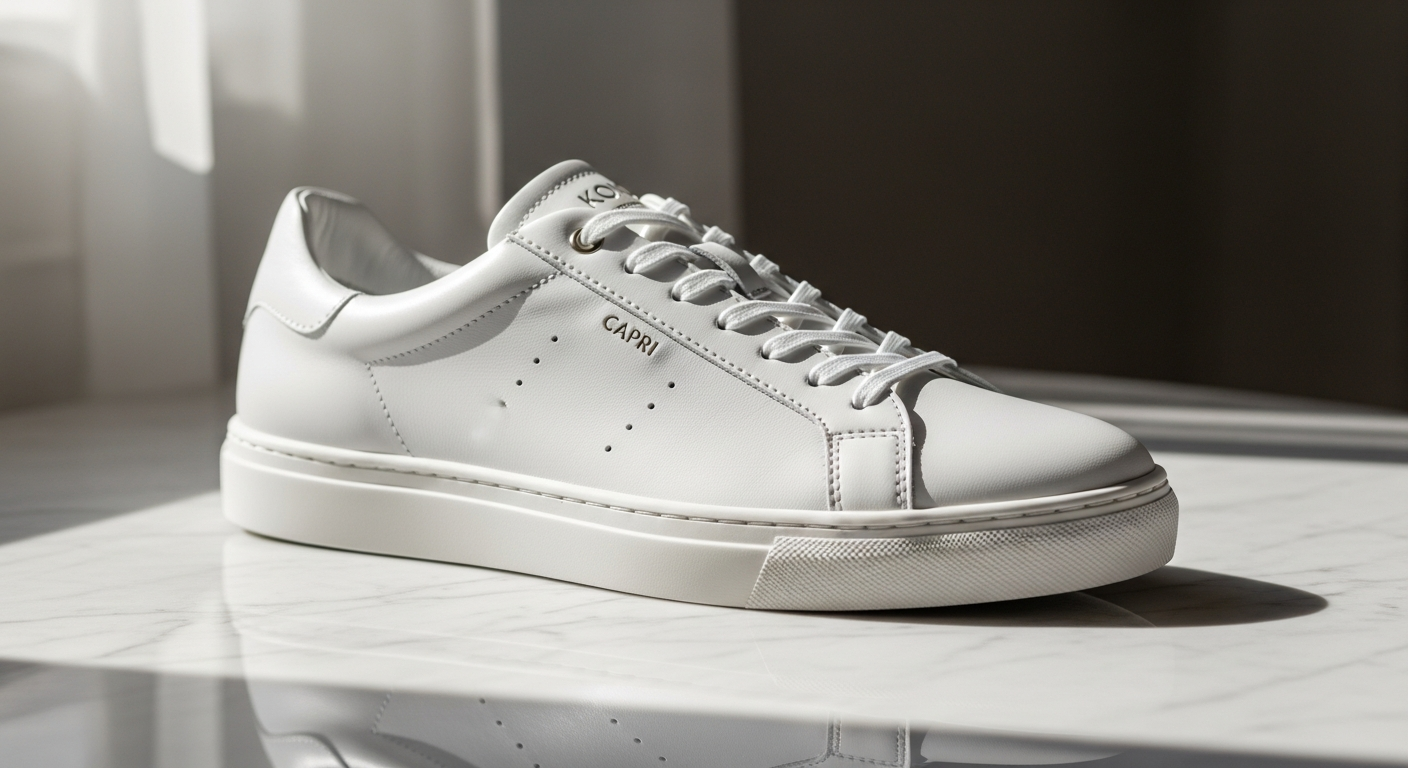
When you consider that a single pair of Koio Capri sneakers passes through 42 different hands before reaching your feet, the reality of handcrafted production becomes immediately apparent. This isn't factory mass production—it's artisanal mastery. While most sneaker brands prioritize speed and volume, Koio chose a radically different path: honoring centuries of Italian shoemaking tradition through deliberate, human-centered craftsmanship.
The Koio Capri has become a cultural touchstone among sneaker enthusiasts and minimalist fashion advocates. Handcrafted in Italian workshops by the same artisans who produce for Chanel, this flagship model bridges the gap between luxury heritage and reasonable pricing. What makes it remarkable isn't just the finished product—it's the relentless commitment to quality at every stage of production, from leather sourcing in Marche and Pisa to the final hand-painted edge details.
Your complete guide to understanding how the Koio Capri comes to life awaits you here. You'll discover the specific techniques that set it apart, explore the premium materials that justify its reputation, and uncover why this sneaker commands such fierce loyalty among those who own one. Explore the Koio Capri Leather Sneaker collection today.
The 42-Hand Journey: Inside Koio's Italian Production Process
The artisan network: How Koio partners with heritage workshops and skilled craftspeople across Italy
Koio's production model fundamentally differs from conventional sneaker manufacturing. Rather than operating a single massive factory, Koio maintains partnerships with heritage workshops and skilled craftspeople scattered across Italy. These aren't faceless production facilities—they're family-run operations that have honed their expertise over generations. This network approach allows Koio to leverage regional specialization while maintaining the personal accountability that characterizes artisanal work.
Each workshop brings specific strengths to the production process. Some specialize in leather preparation and cutting, others in sole stitching, and still others in finishing details. This distributed model ensures that every stage of production receives attention from someone who has dedicated their career to mastering that particular craft.
Hand-touching stages: Breaking down the 42-hand touchpoints from leather preparation to final quality checks
The journey from raw leather to finished sneaker involves discrete stages, each requiring human judgment and skill. The process begins with leather selection and inspection—someone must physically examine hides to identify the best material for premium sneakers. Cutting follows, where leather is precisely shaped according to specifications. Artisans then prepare components, stitch uppers together, attach linings, position heel padding, install insoles with their 20mm cushioning layer, and affix the Margom outsoles through meticulous stitching rather than gluing.
Each hand-painted edge requires individual attention. Waxed cotton laces are threaded and finished. Quality inspectors examine every pair for structural integrity, aesthetic consistency, and comfort characteristics. This multiplication of touchpoints isn't inefficiency—it's the mechanism through which superior quality enters the product.
Chanel connection: Why the same artisans who craft luxury fashion houses choose to work with Koio
The same artisans who produce sneakers for Chanel choose to collaborate with Koio. This arrangement speaks volumes about Koio's standing within Italian craftsmanship circles. These master craftspeople select projects based on alignment with their values, not just compensation. Koio's commitment to handcrafted production, premium materials, and sustainable practices attracts artisans who view their work as a legacy rather than merely a job.
This shared philosophy creates a virtuous cycle. Artisans accustomed to luxury production standards bring those expectations to Koio sneakers. Koio, in turn, respects the time and skill these professionals require, pricing its products accordingly and resisting pressure to rush production.
Quality control rituals: How each pair undergoes rigorous inspection before shipping
Every pair of Koio Capri sneakers undergoes multiple inspection phases. Initial inspections check leather quality and cutting precision. Mid-production inspections verify stitching integrity and component alignment. Final inspections examine the complete sneaker for structural soundness, aesthetic consistency, and comfort characteristics. Each inspection involves trained eyes and hands assessing the sneaker against exacting standards.
This multi-stage approach catches imperfections early, preventing substandard pairs from advancing. The ritual nature of these inspections—performed repeatedly throughout production—embeds quality consciousness into the entire workflow.
Regional expertise: The specific roles of workshops in Marche, Pisa, and other Italian shoemaking centers
Marche and Pisa occupy legendary status in Italian shoemaking, having built their reputations over centuries. Marche has specialized in leather goods production since the Renaissance, while Pisa developed distinctive expertise in sole manufacturing and finishing techniques. Koio strategically sources from these regions, understanding that geographic specialization reflects accumulated knowledge.
Workshops in these centers employ techniques refined across generations. They understand leather behavior, optimal stitching methods, and finishing approaches that maximize both durability and aesthetics. Sourcing from these regions means accessing expertise that cannot be quickly replicated elsewhere.
Apprenticeship model: How traditional knowledge transfers between master craftspeople and newer artisans
Italian shoemaking relies heavily on apprenticeship traditions. Experienced craftspeople mentor younger artisans, transferring tacit knowledge that cannot be documented in manuals. These relationships ensure that techniques perfected over decades continue forward rather than disappearing when experienced workers retire.
Koio's partnership model supports this apprenticeship structure. By maintaining steady production at heritage workshops, Koio enables masters to dedicate time to training the next generation. This investment in knowledge transfer preserves craftsmanship traditions that might otherwise vanish.
Premium Italian Leather: The Foundation of Durability
Full-grain calf leather sourcing: Where Koio sources from and why full-grain matters for longevity
The Koio Capri uses full-grain Italian calf leather exclusively. Full-grain means the leather retains its entire surface, including the natural grain pattern and characteristics that develop during an animal's life. This contrasts with processed leathers that sand away the surface, sacrificing durability for initial softness.
Koio sources from tanneries in Marche and Pisa, regions where leather working expertise runs exceptionally deep. These suppliers understand the specific qualities required for premium sneaker production—leather that provides structure, develops character through wear, and resists degradation across years of use. Full-grain leather naturally contains oils and nutrients that maintain flexibility and strength as the material ages.
Vitello leather specifications: Characteristics, durability profile, and why it's tougher than some competitor options
Koio frequently employs Vitello calf leather, a premium Italian leather prized for exceptional durability. Vitello presents as somewhat stiffer initially compared to softer leathers like those used by some competitors. This perceived toughness reflects the leather's density and structural integrity—qualities that translate directly to longevity.
The durability profile of Vitello is exceptional. The leather resists creasing, maintains structural definition, and develops attractive patina over time. Yes, it requires a brief break-in period as the material molds to individual feet, but this initial firmness guarantees years of reliable wear. The engineering choice favors durability over immediate softness, reflecting a long-term perspective on value.
Vegetable-tanned Cuoio leather: The heritage tanning method and its environmental benefits
Some Koio Capri variations incorporate Cuoio leather, which uses vegetable tanning—an ancient method where plant materials replace chemical accelerants. Vegetable tanning produces leather that develops remarkable patina characteristics, darkening and deepening in color through exposure to light and wear. This heritage method aligns with Koio's sustainability commitments while honoring centuries of Italian tradition.
The environmental benefits are substantial. Vegetable tanning avoids heavy metals and synthetic chemicals, reducing water pollution and toxic waste. The tanning process extends timeline, requiring patience and knowledge rather than chemical shortcuts. Leather produced this way biodegrades naturally at end-of-life, contrasting sharply with chrome-tanned alternatives that persist indefinitely.
LWG certification: What leather working group standards mean for responsible sourcing
Koio sources leather from LWG-certified tanneries, indicating adherence to rigorous environmental and chemical management standards. The Leather Working Group audits facilities across multiple criteria: air and water emissions, chemical management, solid waste disposal, and energy consumption. Certification requires demonstrable commitment to responsible practices.
LWG standards don't represent abstract environmental principles—they translate into concrete practices. Certified tanneries implement sophisticated wastewater treatment, minimize toxic chemical use, and manage solid waste responsibly. Choosing certified leather means supporting tanneries that prioritize environmental stewardship without sacrificing quality.
Leather aging and patina: How Koio Capri leather develops character over time
Full-grain Italian leather develops patina—a visible evolution in color and surface characteristics—through regular wear and environmental exposure. The oils in the leather react to sunlight and oxidation, deepening the color and creating unique markings that reflect the sneaker's individual history. Light-colored leathers gradually darken; some develop distinctive streaking patterns based on how the wearer moves and flexes the material.
This aging process distinguishes handcrafted leather sneakers from mass-produced alternatives. Rather than degrading, the leather improves aesthetically and functionally. The patina represents thousands of hours of wear transformed into visible character. Owners frequently treasure this evolution, viewing it as evidence of durability and authenticity that cannot be manufactured artificially.
Regional leather differences: Subtle variations between Marche and Pisa leather sources
Koio sources from multiple regions, and subtle differences characterize leather from different areas. Marche leather tends toward slightly richer color depth and distinctive grain characteristics, reflecting that region's particular tanning traditions. Pisa leather often presents with different natural variations based on the specific tanneries' approaches and water sources used in processing.
These variations aren't flaws—they represent the natural consequence of artisanal leather production. Small differences in tannery chemistry, water quality, and climate influence how leather develops. Koio leverages these regional distinctions, selecting sources for specific components based on their unique characteristics.
Leather lining quality: Full interior lining in soft calf leather and its comfort implications
The Koio Capri features a full leather lining, not synthetic mesh or foam. This construction choice reflects a commitment to premium comfort and breathability. Soft calf leather creates an interior that accommodates foot movement, maintains moisture balance, and prevents the synthetic smell and feel common in mass-produced sneakers.
Full leather lining provides multiple benefits. The material breathes, allowing moisture to escape rather than accumulating inside the shoe. Soft calf doesn't trap heat, keeping feet comfortable during extended wear. The lining molds to individual foot shapes, improving comfort over time. This attention to interior construction separates luxury sneakers from conventional alternatives.
Discover the premium craftsmanship of Koio Capri sneakers now.
Construction Details That Separate Luxury from Ordinary
Stitched vs. glued soles: Why Margom outsoles are stitched to the upper for superior longevity
The Margom outsole on the Koio Capri is stitched to the leather upper, not merely glued. This distinction proves critical for longevity. Glued soles eventually separate as adhesives degrade under foot flexion and environmental stress. Stitched soles distribute structural loads across multiple points of contact, meaning sole failure requires actual thread breakage—something that occurs far less frequently than adhesive breakdown.
The stitching process demands precision. Each stitch placement must account for the leather's flexibility, the sole's structure, and the patterns of foot movement. Artisans performing this work understand the engineering principles involved, understanding that stitching density and pattern directly influence sole longevity.
Margom outsole technology: Durability metrics and why this specific outsole material matters
Margom produces premium rubber outsoles favored by luxury footwear manufacturers. Margom rubber compounds balance durability, traction, and flexibility—properties that conflict in lesser formulations. The rubber resists abrasion from pavement contact while maintaining enough elasticity to flex with foot movement. This balance allows the outsole to wear evenly rather than developing stress cracks or chunking.
Durability metrics reflect Margom's engineering. Owners report outsoles lasting through years of regular wear without significant degradation. The rubber doesn't harden with age like cheaper formulations do. Margom outsoles gradually wear flat rather than failing catastrophically, meaning the sneaker remains wearable far longer than alternatives.
Hand-painted edge finishing: The meticulous process of edge painting and its aesthetic impact
The edges where leather components meet—visible along the sides and bottom of the sneaker—receive hand-painted finishing. This process involves carefully applying edge paint to create a clean, refined appearance while sealing the leather edge against moisture penetration. Hand-painting allows artisans to adjust paint application based on individual leather characteristics, ensuring consistent visual results across variations in leather grain and texture.
The aesthetic impact extends beyond appearance. Sealed edges prevent moisture from entering the leather layers, protecting structural integrity. The careful finishing communicates craftsmanship through visible detail—a signal that someone competent and attentive produced this sneaker.
Waxed cotton laces: Why this material choice affects both durability and aesthetics
The Koio Capri uses waxed cotton laces rather than standard nylon. Waxed cotton resists fraying and deterioration far better than untreated materials. The wax coating protects fibers from moisture and UV exposure, extending lace lifespan considerably. Aesthetically, waxed cotton presents a subtle richness—a matte, textured appearance that complements the leather and communicates premium production.
This choice seems minor until you recognize the cumulative effect. Every component—laces, stitching, leather, sole—reflects deliberate material selection aligned with premium production standards. These choices compound, creating a complete product that genuinely differs from mass-produced alternatives.
Heel padding and suede lining: Comfort engineering that prevents slippage and reduces break-in time
The heel counter incorporates substantial padding lined with suede, serving dual functions. The padding cushions the heel during walking, reducing impact stress during extended wear. The suede lining prevents slippage—a problem that plagues many minimalist sneakers where rigid heel counters allow feet to slide during movement.
This engineering reduces break-in time significantly. Many premium sneakers demand weeks of wearing before comfort reaches acceptable levels. The Koio Capri's padded heel allows comfortable wear from initial use, though the full softening of Vitello leather continues gradually over months.
Cushioned insole construction: The 20mm cushioning layer and full-grain leather middle layer explained
The insole features 20mm of cushioning that provides impact absorption without excessive bulk. This thickness balances support with the minimalist aesthetic Koio maintains—more cushioning would compromise the sleek profile, while less would sacrifice comfort. The cushioning layer sits atop a full-grain leather middle layer that provides structural support while maintaining breathability.
This construction approach differs from many competitors who use foam layers throughout. Koio's use of full-grain leather maintains moisture-wicking properties while providing a premium feel underfoot. The combination allows the insole to compress slightly with each step, absorbing energy before the foot makes contact with harder materials.
Stitching patterns: How stitch placement and density contribute to structural integrity
The stitching visible on the Koio Capri reflects engineering decisions regarding load distribution and material accommodation. Upper stitching follows patterns refined through experience—stitch placement accounts for leather grain direction, flexion points, and areas requiring maximum strength. Sole stitching typically employs tighter density and specific patterns that distribute foot impact loads evenly across multiple thread intersections.
Artisans understand stitch tension instinctively. Tension too loose and stitching fails prematurely; too tight and the needle creates micro-tears in the leather. Each stitch represents a small decision about structural integrity, made by someone whose training and experience inform proper judgment.
Minimalist Design That Transcends Trends
The timeless silhouette: Why the Capri's understated aesthetic remains relevant across decades
The Koio Capri employs a low-profile silhouette characterized by clean lines and minimal visual noise. The sneaker avoids design elements that signal specific eras—oversized proportions, bold color blocks, or statement details. Instead, it presents as fundamentally neutral, allowing the materials and construction quality to communicate its value.
This restraint produces longevity. Sneakers designed around trend-specific aesthetics feel dated within years. The Capri's timeless approach means the sneaker remains visually current across decades. Someone wearing the Capri today would be indistinguishable in style from someone wearing the Capri a decade from now.
Versatility across wardrobes: Styling the Capri with casual, business casual, and elevated looks
The minimalist aesthetic enables remarkable versatility. The Capri functions in purely casual contexts—worn with denim and t-shirts. It equally serves business casual environments, paired with chinos or dress trousers where a traditional sneaker would feel inappropriate but full formality isn't required. The sneaker even works in elevated contexts with carefully considered outfits—worn with tailored pieces where the understated design communicates sophistication rather than casualness.
This flexibility means the Capri fills multiple wardrobe roles, reducing the total number of sneakers required for stylistic completeness. An individual might own five casual sneakers serving different purposes; the Capri potentially replaces three of them through sheer versatility.
Comparison to luxury competitors: How Koio Capri stacks against Common Projects, Gucci, and Chanel aesthetically
The Koio Capri shares aesthetic territory with Common Projects—both employ minimalist silhouettes and premium materials. The primary difference involves materials and pricing. The Capri uses full-grain Italian leather sourced from Marche and Pisa, while Common Projects employs leather from different sources with different tanning approaches. Aesthetically, they appear remarkably similar; functionally and in terms of sourcing transparency, differences emerge.
Gucci and Chanel produce luxury sneakers positioned at substantially higher price points. These brands emphasize heritage and logo placement. The Koio Capri intentionally avoids logo prominence, trusting that material quality and construction excellence communicate luxury without graphic assertions. This positioning appeals to consumers who view visible branding as communicating insecurity rather than status.
Design philosophy: Koio's intentional restraint and what it communicates about brand values
Koio's design philosophy reflects confidence in fundamentals. By avoiding decorative elements, the brand signals that materials and construction—not styling tricks—justify the price point. This restraint communicates respect for the customer's intelligence and aesthetic judgment. The brand trusts that discerning consumers appreciate subtlety.
This philosophy extends beyond aesthetics into sustainability. Restrained design creates products that remain relevant across decades, reducing the psychological pressure to replace still-functional items chasing visual novelty. Environmental responsibility and aesthetic philosophy align in this approach.
Color palette options: Available finishes and how they affect styling flexibility
The Koio Capri comes in multiple finishes—typically white, black, cream, and occasional limited editions. White presents maximum versatility, working with nearly any outfit regardless of color scheme. Black provides equal versatility while suggesting slightly more formality. Cream offers versatility while introducing warmth and visual softness.
Color selection meaningfully influences everyday styling flexibility. White demands minimal consideration—it works with virtually everything. Limited edition colors require more careful outfit coordination. Recognizing these implications helps buyers select finishes that maximize practical versatility within their actual wardrobes.
Wide-fit availability: Inclusive design that doesn't sacrifice aesthetics for comfort
Koio offers wide-fit options for the Capri, recognizing that foot width varies across the population. Designing wide-fit versions without altering aesthetic proportions requires careful engineering—adding width incorrectly produces visual imbalances. Koio's wide-fit Capri maintains the minimalist proportions while accommodating broader feet.
This inclusive approach reflects design maturity. Rather than limiting premium products to standard widths, Koio recognized that quality deserves universal accessibility. Aesthetic and functional excellence need not exclude people with different physical characteristics.
Minimalism as sustainability: How timeless design reduces fashion waste
Minimalism fundamentally operates as a sustainability strategy. Fashion waste accumulates when consumers continuously replace functional items to chase visual novelty. Timeless designs that remain visually relevant across decades reduce replacement frequency. Someone wearing the same Capri for five or ten years generates substantially less waste than someone replacing trend-specific sneakers annually.
This approach aligns with broader sustainability commitments. Koio's use of LWG-certified leather, vegetable tanning, and FSC-certified rubber reflects environmental consciousness. Timeless design reinforces these material choices by extending product lifespan—the most impactful sustainability measure available to manufacturers.
The Comfort Factor: Premium Materials Meet Wearability
Break-in period expectations: Why Koio Capri requires minimal adjustment time compared to stiffer leather sneakers
The Koio Capri's break-in period remains notably brief. The padded heel counter and full leather lining accommodate feet immediately, while the cushioned insole with 20mm support provides comfort from initial wear. The Vitello leather presents as firm rather than rigid, allowing slight give without excessive laxity. Most owners report comfort sufficient for extended wear within one to two uses.
This contrasts sharply with some premium sneakers requiring weeks of uncomfortable adjustment. The Capri's engineering prioritizes wearability without sacrificing aesthetic minimalism or construction quality. Comfort without break-in represents a meaningful practical advantage for sneakers intended for regular use.
Heel padding technology: Suede-lined cushioning and its role in all-day comfort
The suede-lined heel padding provides both cushioning and texture characteristics that prevent slippage. The suede surface creates friction against skin, anchoring the foot within the heel counter. The padding beneath absorbs impact, reducing stress during walking and standing. Together, these elements enable comfortable wear throughout extended days.
The specific thickness and density of padding reflects careful engineering. Too soft and the padding compresses excessively, offering inadequate support; too firm and it provides negligible impact absorption. The padding Koio employs falls into the optimal range, balancing support and shock absorption.
Leather lining benefits: Breathability and moisture-wicking properties of full leather interiors
Full leather lining provides breathability that synthetic alternatives cannot match. Leather naturally manages moisture through capillary action—the material absorbs sweat from feet and releases it outward, preventing accumulation inside the shoe. This moisture management maintains foot comfort during extended wear, preventing the clammy sensation common in sneakers with synthetic linings.
Breathability also prevents odor accumulation. Sweat-soaked synthetic linings foster bacterial growth that creates persistent odor. Leather's natural antimicrobial properties and superior moisture management resist odor formation. Over time, properly maintained leather develops a subtle patina that enhances rather than detracts from the wearing experience.
Insole comfort engineering: How the 20mm cushioning layer balances support with minimalist aesthetics
The insole design represents a balancing act between comfort and aesthetics. A minimalist sneaker cannot accommodate excessive cushioning without compromising the sleek profile. The Koio Capri's 20mm cushioning provides meaningful impact absorption while maintaining the understated appearance consistent with the design philosophy. The full-grain leather base layer adds support without contributing visible bulk.
This engineering allows the sneaker to function well for all-day wear despite its minimalist visual profile. The cushioning distributes pressure across the foot rather than concentrating impact, reducing fatigue during extended standing or walking. The leather support layer provides structural integrity that foam-only approaches lack.
Arch support characteristics: What the Capri offers for different foot types
The Koio Capri provides moderate arch support suited to most foot types. The insole naturally follows foot anatomy without over-correcting, supporting the arch without imposing specific structural requirements. Individuals with high arches or significant pronation issues may require additional support through orthotic inserts, but for neutral to moderate arch types, the Capri's inherent support proves adequate.
Wide-fit options accommodate individuals with broader feet or specific width requirements. The comprehensive approach to fit and support reflects understanding that comfort serves multiple body types and movement patterns.
Blister prevention features: Design elements that reduce friction points
The suede-lined heel padding prevents blisters by eliminating friction points where skin contacts rigid material. The padded heel distributes pressure across a larger surface area, reducing point concentration that typically triggers blister formation. The heel counter's curvature naturally accommodates foot anatomy rather than forcing feet into compromised positions that create friction zones.
The full leather lining throughout the sneaker provides smooth interior surfaces without seams or adhesive lines that might create friction. The careful construction reduces the friction points that characterize many sneakers even at premium price points.
Long-term comfort: How the leather molds to individual feet over time
Full-grain leather naturally molds to individual foot shapes through regular wear. The material gradually stretches and flexes in response to pressure and movement, customizing the shoe to the wearer's specific foot architecture. This molding process improves comfort significantly—a pair of Capris worn regularly becomes increasingly comfortable over months and years.
This characteristic distinguishes premium leather sneakers from synthetic alternatives. Synthetic materials maintain consistent properties regardless of use, never adapting to individual feet. Leather's responsiveness means each pair develops unique characteristics based on how the owner walks and moves. The personal customization enhances both comfort and the emotional connection to the sneaker.
Value Proposition: Luxury Craftsmanship at Accessible Pricing
Price range context: Why $265-$345 represents exceptional value for Italian handcrafted sneakers
The Koio Capri retails between $265 and $345, a price point that reflects its production reality. Hand stitching, premium leather sourcing, Italian artisan labor, and quality control rigor all carry costs. Mass-produced sneakers achieve lower prices by eliminating these elements—using cheaper materials, employing glued rather than stitched construction, and operating factories where individual quality assessment occurs sporadically rather than systematically.
The price range positions the Capri significantly below luxury competitors while above mass-market alternatives. This positioning reflects Koio's business philosophy: premium quality at genuine value, not luxury brand markup. Compared to products truly comparable in materials and construction methods, the Capri's pricing represents genuine accessibility to handcrafted Italian production.
Cost comparison analysis: Koio Capri pricing versus Common Projects, Gucci, and other luxury minimalist options
Common Projects minimalist sneakers retail between $400 and $500—considerably above the Capri's range. While Common Projects employs superior leather and construction quality, the difference doesn't justify the 50-100% price premium in most objective assessments. Gucci and Chanel sneakers occupy even higher pricing tiers, often $600 and above, with substantial portions of cost attributable to brand heritage and logo placement rather than material/construction superiority.
The Capri delivers approximately 80-90% of the quality and craftsmanship of products costing twice as much. For price-conscious consumers unwilling to sacrifice quality, this value proposition proves compelling. You're not choosing between the Capri and the "best" option—you're recognizing that the best available option at any price point represents diminishing returns beyond a certain quality threshold.
Cost of Italian production: What you're actually paying for when you buy handmade in Italy
Italian artisan labor commands higher costs than manufacturing in lower-wage countries. Experienced craftspeople require compensation reflecting their skills and the training required to achieve mastery. Heritage workshop overhead—maintaining facilities, paying utilities, retaining employees year-round—exceeds the operational efficiency of massive factories producing millions of units.
Premium materials cost more than cheap alternatives. LWG-certified leather, full-grain calf, vegetable-tanned Cuoio, Margom outsoles, and waxed cotton laces all represent superior materials commanding prices reflecting their quality. The Capri's price directly reflects these material and labor costs—there's no artificial markup disconnected from actual production expenses.
Longevity ROI: How durability and timeless design justify the investment
A $300 sneaker worn regularly for five years costs $60 annually. A $100 sneaker replaced annually costs $100 yearly. The Capri's durability means it remains wearable for five to ten years with regular care, making the per-year cost remarkably low compared to cheaper alternatives replaced frequently. The timeless design means you're not psychologically pressured to replace the sneaker to maintain visual relevance.
True value assessment must account for longevity and lifespan. Short-term cost matters less than total cost across the useful product life. The Capri's combination of durability and timeless aesthetics creates exceptional value when evaluated across actual ownership duration.
Resale value: Secondary market strength and why Koio holds value
The Koio Capri maintains resale value remarkably well. Gently used pairs often sell for 60-75% of original retail price on secondary markets. This retention reflects genuine quality perception—buyers recognize that used Capris offer exceptional value compared to new alternatives at similar prices. The resale market proves strong because demand exceeds supply of quality used pairs.
This resale resilience provides practical value. If you eventually tire of the Capri or circumstances require funds, you'll recoup a meaningful portion of your investment. For expensive luxury sneakers where resale value collapses, the true cost of ownership increases significantly. The Capri's value retention effectively reduces your real cost of ownership.
Seasonal pricing variations: When to buy for optimal pricing
Koio occasionally offers seasonal sales, particularly during retail off-seasons when demand drops. Summer months (June-August) sometimes feature discounts as retailers clear inventory before fall arrivals. End-of-year sales in November and December provide opportunities for reduced pricing. Black Friday and Cyber Monday occasionally feature Koio discounts, though luxury items rarely discount heavily.
Monitoring Koio's official website and authorized retailers allows you to identify price reductions. Patience can save 10-15% on purchase price. However, the Capri's strong resale value means waiting for sales provides less advantage than with disposable fashion items. Even full-price purchases recoup value through resale if needed.
Wide-fit pricing: Whether inclusive sizing affects cost
Wide-fit options typically match standard-fit pricing. Koio didn't impose premiums for inclusive sizing, treating wider feet as standard customer accommodation rather than a specialty request. This pricing approach reflects inclusive brand philosophy while avoiding the cost-shifting that sometimes occurs when manufacturers offer expanded sizing.
Sustainability and Ethical Production Standards
LWG-certified leather sourcing: What this certification means for environmental responsibility
LWG certification represents the most rigorous environmental standard in leather manufacturing. The Leather Working Group audits tanneries across multiple categories: chemical management, water quality, air emissions, energy consumption, and waste handling. Certified facilities demonstrate measurable commitments to environmental stewardship—not abstract promises, but verified practices.
The certification matters because leather production traditionally carries substantial environmental costs. Tanning processes historically relied on heavy metals and toxic chemicals. LWG-certified tanneries have reformed these practices, implementing sophisticated wastewater treatment, reducing chemical intensity, and managing solid waste responsibly. When you buy Koio Capri sneakers, you're supporting tanneries that operate environmentally responsibly.
FSC-certified natural rubber: The Margom outsole's eco-friendly credentials
The Margom outsoles employ FSC-certified natural rubber, sourced from responsibly managed rubber plantations. FSC certification ensures that rubber comes from forests managed for sustainability—harvesting occurs at rates that maintain forest ecosystems rather than degrading them. This contrasts sharply with conventional rubber sourcing that often involves clearing ecologically valuable forests.
Natural rubber itself represents a renewable alternative to petroleum-based synthetic rubber. FSC certification ensures that renewable sourcing doesn't simply displace environmental problems from one region to another. The combination of natural rubber and responsible forestry practices creates outsoles with genuine environmental credentials.
Recycled material integration: Where Koio incorporates secondary materials without compromising quality
Koio strategically incorporates recycled materials where functionality permits without compromising quality. Packaging often uses recycled cardboard and biodegradable materials. Certain interior components may utilize recycled synthetic materials. The approach reflects pragmatic sustainability—using secondary materials where they perform adequately while maintaining premium materials where function demands superiority.
This balanced approach avoids "sustainability theater" where recycled materials are used primarily for marketing purposes despite functional inadequacy. Koio's integration of recycled materials reflects genuine environmental commitment calibrated against actual performance requirements.
Artisan fair wages: How Koio's production model supports Italian workers
Koio's commitment to Italian production means supporting skilled workers earning livable wages in wealthy nations. The brand explicitly rejects cost-cutting through labor arbitrage—manufacturing where desperate poverty enables wage suppression. Instead, Koio partners with established artisans who earn professional-level compensation reflecting their expertise.
This production model preserves artisanal manufacturing in wealthy nations, maintaining communities and knowledge traditions that might otherwise disappear. The financial sustainability of heritage workshops depends on viable compensation models. By paying appropriately for superior craftsmanship, Koio enables these workshops to remain viable and to invest in training the next generation of artisans.
Reduced waste practices: Handcrafted production versus factory mass manufacturing
Handcrafted production inherently generates less waste than mass manufacturing. Factory systems optimize for speed and volume, accepting material waste as acceptable cost of efficiency. Artisanal production optimizes for material utilization—craftspeople minimize scrap through careful cutting and planning. The economics of handcrafted work, where labor costs dominate, incentivize material efficiency.
Stitched sole construction eliminates adhesive waste. Quality control prevents defective pairs from shipping, avoiding waste of defective products. The direct relationship between makers and materials encourages stewardship that mass production systems eliminate. Handcrafted production's lower waste reflects inherent structural advantages regarding material responsibility.
Leather tanning ethics: Vegetable-tanned alternatives and their environmental impact
Vegetable tanning represents the historical leather processing method, refined across centuries. The process uses tannins from tree bark and other plant materials, replacing chemical accelerants. While vegetable tanning extends production timelines dramatically compared to chrome tanning, the environmental benefits justify the extended process.
Vegetable-tanned leather biodegrades naturally at end-of-life, returning to the environment rather than persisting indefinitely. The tanning process avoids heavy metals and synthetic chemicals, eliminating persistent pollutants. The aesthetics of vegetable-tanned leather—the rich patina development—encourage long-term ownership rather than disposal and replacement
Leave a Reply