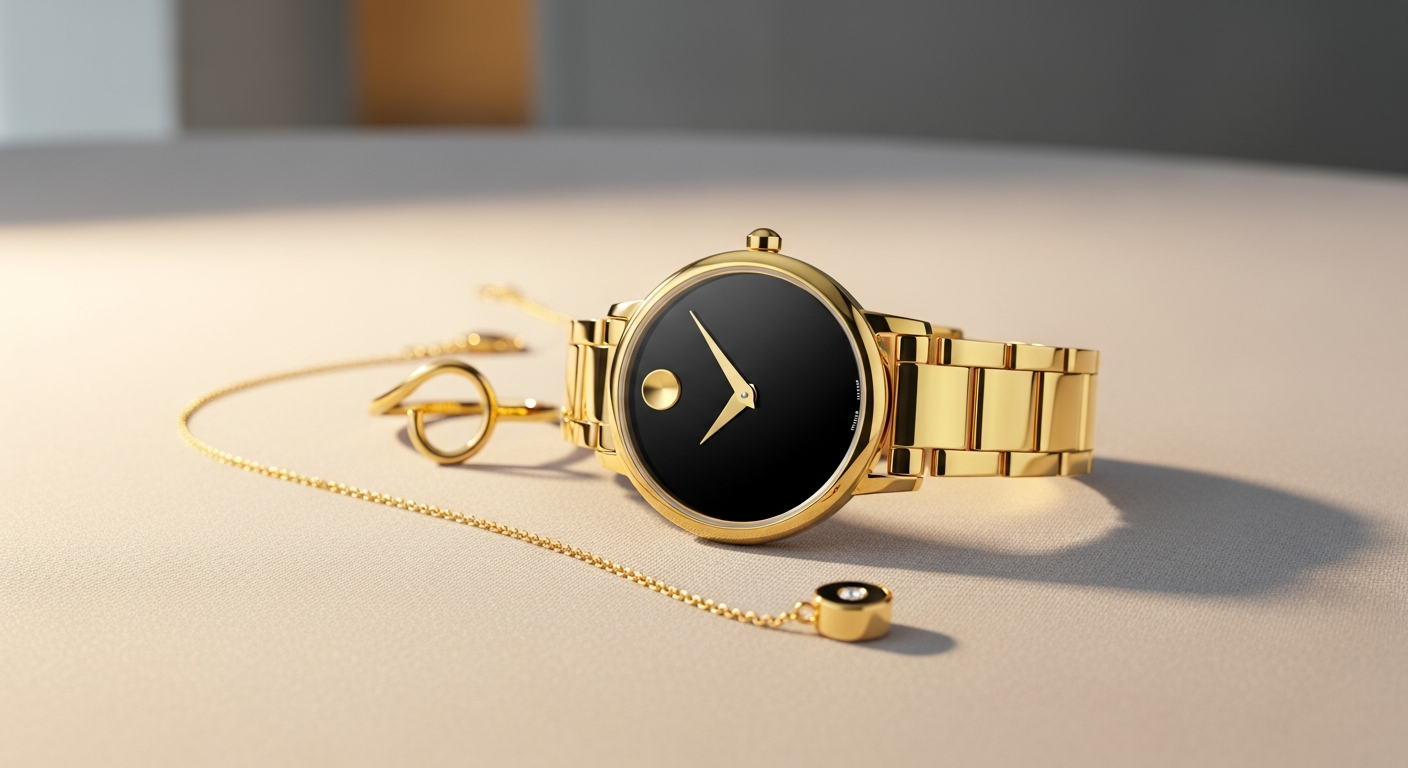
A single gold dot. That's it. Yet this one concentric circle on a black dial has captivated millions of wearers worldwide and earned a permanent spot in the Museum of Modern Art—a feat most luxury watches never achieve. The Movado Museum Classic Watch proves that sometimes, less really is more, and minimalism isn't about what you remove; it's about what you amplify.
Since Nathan George Horwitt's revolutionary design debuted in 1947, the Museum Classic has become the ultimate symbol of wearable art. For professional women seeking a timepiece that communicates sophistication without screaming for attention, this watch delivers something increasingly rare: timeless elegance that transcends trends. It's not just a watch—it's an investment in a design philosophy that refuses to age.
Discover the Museum Classic and explore why this iconic design belongs in your collection.
Throughout this guide, you'll unpack why the Museum Classic resonates so powerfully with modern professionals, how its minimalist aesthetic translates across different life scenarios, the craftsmanship behind its deceptive simplicity, and whether this iconic piece belongs on your wrist. By the end, you'll understand why this watch commands loyalty across generations.
The Art of Subtraction: Understanding Minimalist Watch Design
How the Museum Dial's single gold dot became a design icon
Nathan George Horwitt's 1947 creation fundamentally changed how the world thinks about watch design. Rather than crowding the dial with numerals, markers, and complications, Horwitt stripped everything away until only the essential remained: a single concave gold dot at 12 o'clock, representing the sun at high noon. This radical simplification wasn't a limitation—it was liberation. The dot functions simultaneously as an hour marker and a philosophical statement, suggesting that perfect design requires nothing more.
The psychology behind minimalism and why less creates more visual impact
Minimalism works through contrast and intention. When a watch face contains dozens of elements, each individual component competes for attention. The Museum Classic's austere black dial with its solitary gold accent creates immediate visual hierarchy. Your eye travels directly to the dot, then follows the two simple hands. There's nowhere else to look, nowhere to get lost. This psychological clarity extends beyond aesthetics—it signals confidence and refinement. Wearing something intentionally minimal suggests you've already made your statement and require nothing further to validate your choices.
Comparison of minimalist design philosophy versus traditional watch complications
Traditional luxury watches often showcase mechanical complexity as a marker of value. Chronographs, moon phases, GMT functions, and perpetual calendars demonstrate engineering prowess. The Museum Classic takes the opposite approach. It argues that restraint requires greater skill than addition. Creating a watch that remains compelling without complications demands absolute precision in every visible element—the curve of the case, the weight distribution, the finish of the dial. This philosophy appeals to professionals who recognize that true sophistication rarely requires explanation.
How Nathan George Horwitt's artistic vision transformed watchmaking
Horwitt brought an artist's perspective to horological design. Before the Museum Classic, most watchmakers viewed their craft as primarily functional, with design serving utility. Horwitt reversed this relationship. He asked: what if a watch could function perfectly while existing primarily as an object of contemplation? His background in sculpture informed every decision. The concave dot creates shadow and depth, preventing the dial from feeling flat. The proportions follow principles of balance and harmony learned from years of artistic practice. This fusion of fine art and precision engineering is why the Museum of Modern Art granted the Museum Classic permanent collection status—it transcends the watch category to become sculpture you wear.
The role of negative space in creating visual sophistication
Negative space—the emptiness surrounding the central elements—generates as much visual power as what's actually present. The Museum Classic's vast expanse of black dial creates breathing room. Your eye isn't assaulted with information; instead, it settles into calm contemplation. This restraint communicates luxury more effectively than ornamental excess. In visual hierarchy, negative space suggests confidence and exclusivity. Brands that fill every inch of their designs often do so because they're desperate to justify their price point. The Museum Classic's emptiness conveys the opposite message: this watch is secure enough in its identity that it needs no embellishment.
Why minimalist watches appeal to discerning professionals
Professional women increasingly recognize that understatement projects authority. A watch covered in complications, bezels, and sub-dials can distract from your message. The Museum Classic becomes invisible in the best way possible—it's present on your wrist without demanding attention. This allows your competence, your ideas, and your presence to remain the focal point of any interaction. Minimalist watches appeal to those who've moved beyond needing external validation. You don't wear the Museum Classic to impress others; you wear it because it aligns with your values.
The cultural shift toward simplicity in luxury goods
We're experiencing a profound cultural reversal. The maximalism of previous decades—logo visibility, conspicuous branding, showy complications—increasingly reads as insecure. Contemporary luxury gravitates toward restraint. Minimalist design philosophy has infiltrated every category from fashion to architecture to technology. This shift reflects deeper changes in how we define status. True wealth and sophistication no longer announce themselves loudly. Instead, they manifest as quiet confidence, intentional choices, and timeless pieces that improve with age. The Museum Classic anticipated this cultural movement decades ago, positioning it as perpetually relevant.
How minimalist design ages gracefully compared to trend-driven aesthetics
Trend-driven watches inevitably look dated. Those chunky sport bezels from the 2000s, the oversized cases that dominated the 2010s—they're instantly recognizable as products of their era. Minimalist design transcends temporal markers. The Museum Classic from 1947 looks essentially identical to one produced today, yet neither appears archaic. This timelessness compounds its value. You're not purchasing a fashion accessory with a five-year shelf life; you're acquiring an object designed to remain relevant across decades. Your daughter might wear this watch in twenty years without it feeling like a vintage piece.
From Studio to Wrist: The Museum Classic's Professional Appeal
Why women in corporate environments gravitate toward understated luxury
Professional women have learned that visibility cuts both ways. Standing out for genuine competence remains valuable; standing out because of flashy accessories often undermines credibility. The Museum Classic solves this equation perfectly. It's recognizable to those who understand design and luxury, yet it communicates restraint to those who don't. You're not advertising a price point or a brand name; you're signaling taste and intentionality. In boardrooms and client meetings, this distinction matters considerably.
How the watch's neutral aesthetic complements power dressing and business casual
The Museum Classic's black dial and minimal design integrate seamlessly with virtually any professional wardrobe. Paired with a crisp white button-down and tailored blazer, it enhances formality through understatement. Worn with business casual separates, it adds refinement without formality. The watch's neutral palette means it coordinates with gold, silver, or rose gold jewelry. Whether your office culture demands traditional suiting or allows relaxed elegance, the Museum Classic adapts. This versatility represents genuine luxury—the ability to work across contexts without requiring multiple versions of the same item.
Versatility across different professional settings (boardroom, client meetings, casual Fridays)
Consider a typical professional week. Monday morning's important presentation with senior leadership—the Museum Classic conveys confidence and stability. Tuesday's lunch with clients—it communicates that you're established enough not to require statement pieces. Wednesday's internal meetings—it fades appropriately into the background while remaining visible. Thursday's casual Friday—it's the one piece that elevates your jeans and sweater without feeling overdressed. Friday evening drinks with colleagues—it transitions from office context to social setting without adjustment. This consistency across varied professional scenarios makes the Museum Classic an invaluable tool in any professional woman's wardrobe.
The confidence factor: wearing a recognized design icon
There's genuine confidence in wearing something you know is excellent. The Museum Classic carries the weight of history, artistic recognition, and decades of refined production. When you wear this watch, you're connected to a lineage of sophisticated professionals who've made identical choices. This creates a subtle but powerful confidence boost. You're not wondering if you made the right selection; you're assured that your choice has been validated by time, culture, and the Museum of Modern Art itself. This certainty translates into how you carry yourself professionally.
Pairing the Museum Classic with different work wardrobes and accessories
The Museum Classic pairs effortlessly with diverse accessories. A leather strap version coordinates beautifully with quality leather handbags and footwear. A steel bracelet complements watches and jewelry in similar metals. The watch's neutral design means your other accessories—rings, necklaces, and earrings—can be bolder without competing. Rather than each piece vying for attention, your accessories become a curated collection where each element serves its purpose. This is how minimalist base pieces amplify personal style rather than constraining it.
How minimalist watches project competence and intentionality
There's an implicit message in minimalist watch choices: this person doesn't waste energy on unnecessary elements. They've thought carefully about what matters and eliminated what doesn't. This decision-making quality translates into professional perception. Colleagues and clients unconsciously register that you're someone who prioritizes substance over show. While this might seem like a minor communication, professional advancement often hinges on such subtle credibility markers. The watch becomes a tangible expression of the intentionality people sense in your work.
The watch as a conversation starter without being distracting
Paradoxically, the Museum Classic's minimalism makes it a better conversation piece than busier watches. The design is distinctive enough to catch eyes but restrained enough not to demand attention. When someone notices your watch, it typically leads to genuine conversations about design and craftsmanship rather than status or price. These interactions position you differently than flashy accessories might. You're discussing art and intention rather than cost and exclusivity. For professionals building relationships based on substance, this distinction matters.
Balancing personal style with professional expectations
Every professional woman navigates the tension between authentic self-expression and professional conformity. The Museum Classic resolves this beautifully. It's distinctive enough to feel like a personal choice—you've selected something specific and intentional—yet conservative enough to fit any professional context. You're not suppressing your style; you're expressing a version of it that's compatible with professional environments. This balance feels genuine rather than compromised.
Swiss Craftsmanship Meets Accessible Luxury Pricing
What Swiss-made means and why it matters for watch quality
"Swiss-made" isn't merely a marketing term; it represents rigorous standards and centuries of accumulated expertise. To earn Swiss-made designation, watches must satisfy specific requirements: the movement must be assembled in Switzerland, and critical functions must be assembled there as well. Switzerland's watchmaking tradition dates back centuries, and the craftsmanship standards are uncompromising. When you purchase a Swiss-made watch, you're acquiring something produced under conditions that prioritize quality over cost-cutting. The Museum Classic's Swiss heritage means every component meets standards established through generations of perfectionism.
The quartz movement advantage: accuracy without complexity
The Museum Classic typically features Swiss quartz movement, which offers distinct advantages. Quartz movements are extraordinarily accurate—typically accurate to within seconds per month. They require minimal maintenance compared to automatic movements. For professionals whose lives revolve around schedules and punctuality, quartz reliability is genuinely valuable. The quartz choice also allows Movado to maintain the watch's minimalist aesthetic; mechanical movements require visible complications for displaying multiple functions. By selecting quartz, the Museum Classic achieves precision without sacrificing simplicity.
Sapphire crystal technology and scratch resistance explained
The Museum Classic's dial is protected by sapphire crystal, one of the hardest naturally occurring materials. This technology is crucial for watches that will endure daily professional use. Sapphire crystal resists scratches far more effectively than standard glass or mineral crystal. It's optically clear and maintains transparency over years of wear. The investment in sapphire crystal demonstrates Movado's commitment to longevity. This isn't a watch designed to look perfect for one season and then show its age; it's engineered to remain pristine through a decade or more of regular wearing.
Water resistance ratings and real-world durability (30-meter protection)
The Museum Classic typically offers 30-meter water resistance, which protects against splashes and brief immersion but not prolonged water exposure. For professional contexts, this rating is entirely adequate. You can wash your hands while wearing the watch, endure rain without concern, and even accidentally spill coffee on your wrist. What 30-meter protection doesn't support is swimming or diving—activities most professionals don't engage in during their workday. This rating reflects a practical understanding of how watches are actually used in professional environments.
Case options: stainless steel versus gold-plated finishes
The Museum Classic comes in stainless steel and gold-plated versions, each with distinct advantages. Stainless steel offers durability and a modern aesthetic; it coordinates beautifully with silver jewelry and contemporary professional attire. Gold-plated versions provide warmth and elegance; they pair exceptionally well with gold accessories and create a more classic impression. Stainless steel is more resistant to wear and requires less maintenance. Gold plating will eventually show wear, though this actually enhances the watch's character over time. The choice between metals depends on your existing jewelry collection and aesthetic preferences.
Strap and bracelet choices for different occasions and preferences
The Museum Classic is offered with leather straps or stainless steel bracelets. Leather straps project warmth and soften the watch's minimalist aesthetic; they work beautifully with business attire and transitional professional contexts. Steel bracelets emphasize the watch's contemporary design and coordinate seamlessly with other jewelry. Both options are interchangeable on many Museum Classic models, allowing you to adjust your watch's aesthetic based on circumstances or seasons. A leather strap for autumn and winter, a steel bracelet for spring and summer—the flexibility adds genuine value.
Quality control standards in Movado's manufacturing process
Movado maintains strict quality standards throughout production. Each movement undergoes testing before installation. Assembled watches receive final inspection and testing. Cases and crystals are examined for defects. Straps and bracelets are evaluated for construction quality. These systematic quality checks ensure that every Museum Classic leaving the factory meets exacting standards. This rigor is part of what justifies the $500–$1,500 price range—you're purchasing not just a design but the assurance that every component meets Swiss precision standards.
Why the $500–$1,500 price range represents genuine value in luxury watchmaking
The Museum Classic's pricing deserves context. Ultra-luxury watch brands often command $5,000 to $50,000 or more for comparable functionality and materials. At $500–$1,500, the Museum Classic offers Swiss-made quality at a fraction of premium prices. You're paying for artistry and heritage rather than additional complications or exclusive distribution. This positioning makes genuine luxury accessible to professionals at earlier career stages. You're not stretching beyond reasonable means to acquire something aspirational; you're making a rational investment in a quality timepiece.
Explore the Museum Classic collection and compare pricing across different configurations.
Design Variations Without Losing the Iconic Identity
Core Museum Classic models and their subtle differences
Movado offers multiple Museum Classic variations, each maintaining the essential design language while introducing subtle distinctions. Some versions feature slightly different case sizes or proportions. Others vary in dial treatments—some are deep black, others incorporate subtle shading. Bracelet and strap options differ. These variations allow personalization without abandoning the design's core identity. You're not choosing between fundamentally different watches; you're selecting the specific expression of the Museum Classic that resonates most deeply with your aesthetic.
Size options for different wrist proportions
The Museum Classic comes in sizes ranging from approximately 28mm to 40mm, accommodating different wrist proportions and personal preferences. Smaller sizes (28-34mm) suit those with delicate wrists and those who prefer understated presence. Mid-size versions (36-38mm) represent the classic proportions and work beautifully on most wrists. Larger versions (40mm) appeal to those desiring greater visual presence. Size selection matters considerably for how the watch integrates with your personal aesthetic. The wrong size can feel either lost or overwhelming on your wrist.
Case material choices and their aesthetic impact
Beyond stainless steel and gold plating, the Museum Classic occasionally appears in alternative materials. Each material choice subtly shifts the watch's character. Stainless steel emphasizes modernity and precision. Gold plating adds warmth and classical elegance. These material choices influence how the watch reads in different contexts and with different wardrobes. Your material selection becomes a statement about your aesthetic preferences and how you want to present yourself professionally.
Dial color variations while maintaining minimalist principles
While the classic Museum Classic features a black dial with gold dot, variations exist. Some versions offer silver dials, fundamentally altering the watch's character while maintaining minimalist principles. A silver dial reads as more contemporary and pairs beautifully with steel bracelets. A black dial remains the classic choice, offering maximum contrast and the most striking visual presence. These color variations allow selection based on personal preference without compromising the design's essential minimalism.
Leather strap versus metal bracelet considerations
The strap choice significantly influences how the watch integrates into your daily life. Leather straps require occasional conditioning and replacement every few years; they develop character and patina with age. Metal bracelets are more durable and require minimal maintenance; they coordinate seamlessly with professional jewelry. Leather straps work beautifully for those who prefer the warmth of natural materials and appreciate visible aging. Steel bracelets suit those seeking durability and contemporary aesthetics. Most Museum Classic models allow strap and bracelet interchangeability, letting you adjust your choice seasonally or based on outfit requirements.
Limited editions and special releases
Movado periodically releases limited-edition Museum Classic variations celebrating anniversaries or featuring special materials. These editions often become collector's items, and they allow those seeking something distinctive to acquire a piece with additional significance. Limited editions can also represent better investment value over time, as scarcity supports long-term appreciation. However, the classic unlimited versions possess their own appeal—the knowledge that thousands of other discerning professionals wear the same watch creates a subtle sense of community.
How Movado balances innovation with design heritage
Movado faces the constant tension of updating without betraying its iconic design. The company resolves this through restrained iteration—introducing new materials, size options, and strap choices while maintaining the essential design vocabulary. Innovation focuses on internal improvements (movement precision, crystal technology) and material variations rather than fundamental redesign. This approach respects the design's established identity while ensuring contemporary relevance. The result is a watch that feels both timeless and current.
Finding your perfect Museum Classic configuration
The diversity of available configurations means nearly everyone can find a Museum Classic that feels authentically theirs. Consider your existing jewelry collection—do you prefer gold or silver tones? Think about your wrist size and aesthetic preferences for watch proportions. Reflect on whether you prefer the sensory experience of leather or the durability of steel. Consider the dial color that most resonates with your aesthetic. The perfect Museum Classic is the one that feels inevitable when you finally find it—like you've been searching for this specific expression of the design all along.
The Minimalist Watch Lifestyle: Beyond Timekeeping
The statement a minimalist watch makes about your values
Your watch selections communicate values to the world. A minimalist watch signals intentionality, clarity of purpose, and confidence in your identity. It suggests you've eliminated unnecessary elements from your life and surrounded yourself only with what genuinely matters. This isn't about frugality; it's about having refined taste and disciplined choices. Professionals who gravitate toward minimalist design often share common values: authenticity over performance, substance over appearance, enduring quality over fleeting trends.
Minimalism as a personal branding tool for professionals
Consciously or unconsciously, you're always building a personal brand through accumulated choices. The Museum Classic becomes part of this narrative. It signals that you've made deliberate decisions about your aesthetic, that you value design and craftsmanship, and that you're confident enough not to require constant novelty or visible status markers. This brand positioning proves advantageous across professional contexts. Clients and colleagues form impressions based partly on such tangible signals. A minimalist watch contributes to an overall impression of sophistication and intentionality.
How the Museum Classic fits into a curated, intentional lifestyle
The Museum Classic typically belongs to people who practice intentional living across multiple domains. They curate their wardrobes carefully, selecting pieces that work together rather than accumulating constantly. They choose home furnishings for enduring appeal rather than trend-driven impulses. They prefer quality over quantity in most life domains. The Museum Classic is the watch equivalent of this lifestyle philosophy—one exceptional piece that serves its purpose perfectly rather than multiple lesser alternatives. Wearing it becomes an expression of broader life values.
The psychology of owning a museum-quality object
There's something psychologically significant about owning an object worthy of museum display. The Museum of Modern Art's acquisition of the Museum Classic design elevates it beyond typical consumer goods. You're not wearing a watch; you're wearing a recognized work of design innovation. This creates a subtle psychological effect. When you glance at your wrist and remember that this exact design sits in one of the world's most prestigious museums, it affects how you carry yourself. You're connected to something larger than yourself—a legacy of artistic and technical excellence spanning decades.
Building a capsule watch collection around the Museum Classic
Some professionals build entire watch collections around the Museum Classic as the foundational piece. The Museum Classic serves as the versatile, everyday watch appropriate for virtually any context. Complementary pieces might include a sport watch for weekend activities or a more formal dress watch for evening events. This capsule approach ensures each piece serves a distinct purpose while maintaining aesthetic coherence. The Museum Classic's minimalist design ensures it won't clash with other watches in your collection; instead, it anchors the collection through its iconic presence.
The watch as a daily ritual and anchor point
Many professionals develop rituals around their watches. The morning gesture of fastening your watch becomes a grounding moment, a transition from personal time to professional presence. Throughout the day, glancing at your wrist serves multiple functions—checking time, yes, but also reconnecting with intentionality and presence. The Museum Classic's minimalist design makes this ritual feel meditative rather than utilitarian. You're not checking a complicated instrument; you're checking a work of art. This transforms a functional necessity into something with deeper meaning.
Longevity: why minimalist designs outlast trend cycles
Trends are inherently cyclical. What captivates this year becomes dated next year. Minimalism, by contrast, exists outside trend cycles because it's rooted in timeless design principles rather than passing fashions. The Museum Classic from 1947 remains relevant today not through luck but through adherence to enduring design principles. Proportion, balance, negative space, and essential simplicity never go out of style. When you invest in a minimalist watch, you're purchasing something that will remain beautiful and relevant regardless of broader fashion movements. This permanence justifies the investment.
Passing down an iconic watch as a meaningful heirloom
The Museum Classic's endurance makes it genuinely suitable as an heirloom. Unlike trend-driven watches, which become dated curiosities, the Museum Classic remains beautiful across generations. Your daughter might inherit your watch in twenty years and wear it without adjustment or apology. The watch becomes part of family narrative—the piece you wore during important moments, across different careers and life stages. This heirloom potential adds emotional weight to the purchase. You're not just acquiring a watch; you're acquiring something with potential multigenerational significance.
Honest Considerations Before You Invest
Is the minimalist aesthetic right for your personal style?
This is the essential question. The Museum Classic's appeal rests entirely on whether minimalist design resonates with you genuinely. Some people find it striking and beautiful; others perceive it as boring or oversimplified. Neither response is incorrect—it's simply a matter of aesthetic preference. Before investing, spend time with the design. Look at images repeatedly. If possible, visit a retailer and try one on. Sit with the experience. Does the watch feel right on your wrist, or does it feel like something's missing? Genuine design appreciation can't be forced. The minimalist aesthetic must feel intuitively right to you.
Understanding the polarizing nature of the Museum Dial design
The Museum Classic is polarizing by nature. Its minimalist design fascinates some people and leaves others indifferent. This polarization isn't a flaw; it's the design functioning exactly as intended. Minimalist art always appeals to specific audiences rather than universal audiences. Understanding this helps you evaluate whether you're among those who find it compelling. Read reviews from both enthusiasts and skeptics. Watch YouTube reviews featuring different perspectives. You might discover that your initial uncertainty transforms into genuine appreciation, or you might recognize that the design isn't for you. Both outcomes are valuable information.
What you're not getting: complications and traditional watch features
The Museum Classic deliberately omits features that traditional watch enthusiasts value. There's no chronograph, no date window, no GMT function, no moon phase display. For some, these omissions feel like genuine losses. If you've always wanted a chronograph, the Museum Classic won't satisfy that desire. If tracking multiple time zones is important for your work, the Museum Classic's single hand functions might feel limiting. Before committing, honestly assess whether you need or want any complications. Some professionals discover they don't miss these features; others find their absence problematic.
Maintenance and care for polished case finishes
While many Museum Classic versions feature polished cases, polished metal is prone to showing scratches. This isn't a flaw but rather a characteristic of the material. Over time, a polished case develops a patina of micro-scratches that many find beautiful and that actually protect the underlying finish. However, if you strongly prefer pristine appearance, a polished case might frustrate you. Some versions feature brushed finishes, which are more forgiving of visible wear. Understanding your comfort with visible aging is important before choosing between polished and brushed finishes.
Quartz versus automatic movement preferences
The Museum Classic primarily features quartz movement, which some watch enthusiasts view as less desirable than automatic mechanical movements. For many people, quartz offers superior value—greater accuracy, minimal maintenance, lower cost. For horological traditionalists, quartz movements lack the appeal of mechanical complications and the connection to watchmaking heritage. This preference is subjective, but it matters. If you're someone who's drawn to mechanical movements and the visible complexity of watch internals, the Museum Classic might feel disappointingly simple. Conversely, if you simply want a watch that keeps accurate time without fuss, quartz is genuinely superior.
The brand's design repetition across collections
Movado has built its identity around the Museum Dial design, meaning many models across its collections feature this same essential element. If you're concerned about uniqueness, this repetition might feel limiting. However, others see this focus as beneficial brand coherence. The Museum Dial has become Movado's visual language. Whether this represents admirable consistency or problematic repetition depends on your perspective. Before investing, examine Movado's broader collections. Does the company's design philosophy resonate across multiple models, or does the repetition feel limiting?
Resale value and investment potential
While the Museum Classic holds value well compared to many watches, it's not an investment-grade timepiece in the way luxury sports watches or mechanical complications can be. The Museum Classic's production volume is substantial, which limits scarcity value. However, its enduring design and cultural significance ensure it remains desirable. You likely won't lose money on a used Museum Classic, but don't expect dramatic appreciation either. Purchase the watch because you genuinely want to wear it, not because you're betting on investment returns. Any appreciation is a bonus rather than a primary motivation.
Alternatives if the Museum Classic doesn't align with your preferences
If the Museum Classic doesn't feel right after honest evaluation, alternatives exist. Other watchmakers offer minimalist designs—Junghans, Braun, Nomos, and others produce watches honoring similar design philosophy with slight variations in approach. Some may offer mechanical movements, different dial aesthetics, or alternative sizing. Exploring these options helps clarify whether your hesitation reflects the minimalist aesthetic generally or specifically the Museum Classic. Sometimes another minimalist watch aligns better with your preferences.
Building Your Movado Museum Classic Collection Strategy
Starting with your first Museum Classic model
If you're new to owning a Museum Classic, beginning with a versatile configuration makes sense. A stainless steel version with a leather strap offers flexibility across professional contexts. Mid-size proportions (36-38mm) work beautifully on most wrists. This foundational piece becomes your reliable everyday companion. As you wear it and understand how it integrates into your life, you'll develop clarity about complementary pieces or variations that might enhance your collection.
Layering different configurations for various occasions
Once you own one Museum Classic, additional configurations create versatility without redundancy. A steel bracelet version offers a contemporary alternative to leather. A gold-plated version provides warmth for dressier occasions. A slightly larger size might appeal for weekends. Each configuration maintains the essential design while varying its aesthetic or functional role. Building this way ensures each piece serves distinct purposes while maintaining aesthetic coherence.
Combining the Museum Classic with other watch styles
Professional women with multiple watches often pair the Museum Classic with other styles. The Museum Classic serves as the everyday, office-appropriate watch. A sport watch provides durability for weekend activities. A dress watch offers formality for evening events. This portfolio approach ensures each watch shines in appropriate contexts rather than compromising between scenarios. The Museum Classic's minimalism ensures it won't clash with other watches; instead, it anchors your collection through its iconic presence.
Investment considerations for luxury watch purchases
Approach watch purchases with the same intentionality you'd apply to other investments. Consider cost per wear—if you'll wear the Museum Classic daily for decades, the per-wear cost becomes remarkably reasonable. Evaluate whether the purchase fits your budget comfortably or stretches your means. Purchases that feel financially strained rarely bring the pleasure they should. Think about long-term ownership costs, including periodic servicing and maintenance. A watch purchased impulsively often becomes a watch worn rarely, diminishing its value.
Warranty and service options
Movado provides warranties covering defects in materials and workmanship for specified periods. Understanding warranty terms matters for protecting your investment. As your Museum Classic ages, periodic servicing keeps the movement operating precisely. Factor these service costs into your long-term ownership budget. Movado and authorized retailers offer servicing, which ensures proper care. Knowing these options in advance prevents surprises later.
Authentication and purchasing from authorized retailers
Given the Museum Classic's popularity, counterfeit versions exist. Purchasing from authorized retailers eliminates this risk entirely. Official Movado retailers, department store watch departments, and the company's direct website all guarantee authenticity. While online marketplaces offer convenience, the risk of counterfeits increases. If purchasing from secondary markets, verify authenticity carefully. Authentic Museum Classics possess precise finishing, accurate movement operation, and proper warranty documentation.
Long-term ownership costs and maintenance budgeting
The Museum Classic's quartz movement requires minimal servicing, which keeps long-term costs reasonable. Batteries require replacement every few years (typically $10–50 depending on service location). Occasional cleaning and inspection keep the watch functioning optimally (typically $50–150). Leather straps eventually require replacement ($50–150). Over decades of ownership, these costs remain modest. Budgeting realistically for maintenance ensures you can properly care for your watch throughout its lifespan.
The emotional return on investing in an iconic design
Beyond practical considerations, consider the emotional return on owning a piece of design history. The Museum Classic connects you to decades of design innovation, artistic achievement, and countless professionals who've made identical choices. Each time you glance at your wrist, you're reminded of intentional living and timeless design. This emotional connection, while difficult to quantify, represents genuine value. You're not simply acquiring a functional timepiece; you're acquiring something with aesthetic and cultural significance.
The Minimalist Advantage: Making Your Move
The Movado Museum Classic Watch isn't for everyone—and that's precisely why it works so brilliantly for those it resonates with. This watch strips away the noise, the unnecessary complications, the desperate need to impress. What remains is pure intentionality: a design so refined that it communicates volumes through silence. For professional women who understand that true luxury whispers rather than shouts, the Museum Classic becomes more than an accessory—it becomes a daily affirmation of your values.
The combination of artistic heritage, Swiss precision, and accessible pricing creates a rare convergence in the luxury watch market. You're not paying for a name or a status symbol; you're investing in a design that earned its place in the Museum of Modern Art through genuine innovation. That distinction matters, especially when you're choosing a piece you'll wear for decades.
Whether you're building your first watch collection or adding to an existing one, the Museum Classic deserves serious consideration. Start by trying on different configurations, feel the weight of the case, and observe how the single gold dot catches light at different angles. The moment you understand why millions of professionals have chosen this watch, you'll know whether it belongs on your wrist. Your future self—the one wearing this iconic timepiece at important meetings, celebrations, and quiet moments—will thank you for the decision.
Invest in timeless elegance—browse the complete Museum Classic collection today.
Leave a Reply