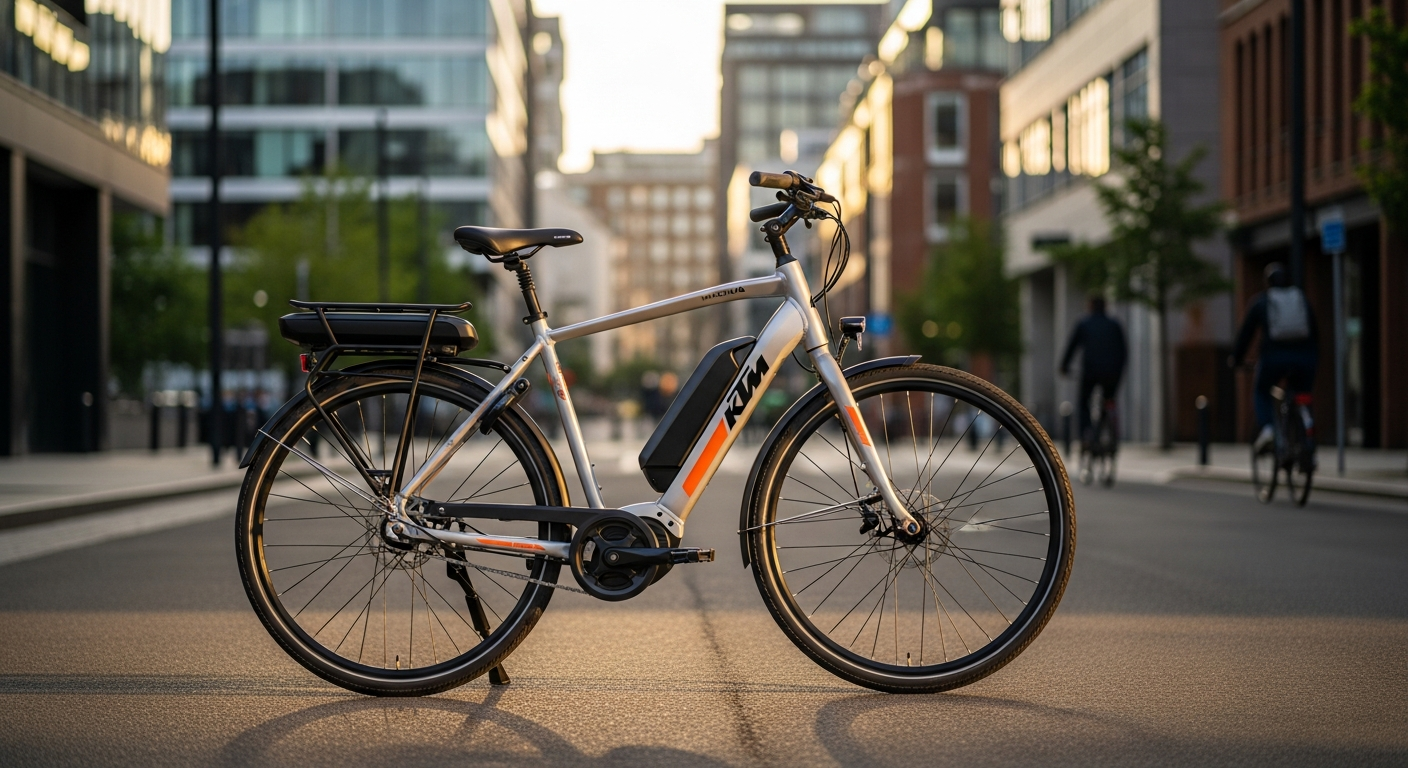
Over 60% of urban commuters report that bike maintenance costs and time drain their enthusiasm for daily cycling—yet one e-bike model keeps defying these odds. The KTM Macina City 610 Belt has become the darling of city riders precisely because it eliminates the friction (literally) that plagues traditional chain-driven bikes. This isn't just another commuter e-bike; it's engineered for people who want performance without the hassle.
The Macina City 610 Belt has climbed sales charts consistently across 2023, 2024, and into 2026, and there's a reason beyond clever marketing. The bike combines German engineering, premium components, and a philosophy that prioritizes what commuters actually need: reliability, comfort, and minimal fuss. At its heart sits the formidable Bosch PERFORMANCE CX Gen.4 motor paired with a 625Wh battery, but the real magic happens through thoughtful design choices that reduce maintenance to almost nothing.
This article uncovers the specific features that make this e-bike stand out from the crowded commuter market. Discover why the KTM Macina City 610 Belt is reshaping urban commuting today.
The Gates Carbon Drive Revolution: Why Chain-Free Matters for City Cyclists
How the Gates Carbon Drive Belt System Eliminates the Need for Regular Chain Cleaning and Lubrication
The Gates Carbon Drive belt system represents a fundamental shift in how urban e-bikes handle power transfer. Unlike traditional chains that demand regular cleaning, lubrication, and adjustment, the carbon belt operates with minimal intervention. Riders no longer need to carry chain lube, degreaser, or a chain tool. This alone transforms the commuting experience from a relationship of constant maintenance to one of reliable operation.
The belt's construction uses reinforced carbon fiber, which resists corrosion and degradation from road salt, moisture, and environmental contaminants that plague conventional chains. A quick rinse after wet rides keeps the system clean, and that's genuinely it. No oil accumulation on your clothes, no blackened fingers, no frustration.
Comparison of Maintenance Requirements: Belt Drive vs. Traditional Chain Systems
Traditional chain-driven bikes typically require lubrication every 50-100 km, especially in wet conditions. This translates to weekly or bi-weekly maintenance for active commuters. The Gates Carbon Drive extends maintenance intervals dramatically—many owners report going months without any service. When maintenance does occur, it involves simple visual inspection and occasional cleaning, not the complex adjustments that chains demand.
Chain systems also suffer from wear patterns that force replacement every 1,500-3,000 km, with corresponding sprocket and cassette replacements. The Gates belt maintains consistent tension and shows significantly slower wear progression, extending the service life to 5,000+ km before consideration of replacement.
Durability and Lifespan Expectations for Carbon Belt Technology
The carbon fiber construction provides exceptional durability against the environmental stress that destroys conventional chains. Exposure to salt spray, temperature fluctuations, and prolonged moisture contact doesn't degrade the belt's structural integrity. The belt maintains consistent performance characteristics across seasons, whether commuting through winter conditions or summer heat.
Real-world data shows Gates Carbon Drives lasting 5,000-15,000 km depending on riding conditions and maintenance practices. For typical urban commuters covering 40-80 km per week, this translates to multiple seasons of worry-free operation before any belt replacement becomes necessary.
Noise Reduction Benefits That Enhance the Riding Experience in Urban Environments
The Macina City 610 Belt operates with remarkable quietness compared to traditional chain bikes. The belt's smooth engagement produces minimal noise, creating a serene commuting experience that traditional chains simply cannot match. In congested urban environments, this quiet operation enhances safety by reducing auditory distractions and improving your ability to hear traffic and surrounding conditions.
The noise reduction also means the bike doesn't announce itself to neighbors during early morning or late evening arrivals—a practical benefit for apartment dwellers and those with noise-sensitive living situations.
Cost Savings Over the Bike's Lifetime Due to Reduced Maintenance Intervals
Traditional chain-driven bikes incur recurring maintenance costs that accumulate quickly. Annual chain cleaning supplies, professional lubrication services, and component replacements easily reach €100-200 per year. Over a bike's 5-10 year lifespan, these costs compound substantially.
The Gates system reduces these expenses to minimal levels. The primary cost involves eventual belt replacement, which runs approximately €150-250—a one-time expense that occurs far less frequently than chain replacement would. For most commuters, this represents savings of €500+ over the bike's ownership period.
Environmental Advantages of Cleaner, Quieter Urban Commuting
The environmental benefits extend beyond personal convenience. The reduced need for chemical lubricants eliminates petroleum-based products that would otherwise wash into urban waterways. The quiet operation supports more livable cities by reducing noise pollution. The belt's extended lifespan and reduced replacement frequency mean fewer discarded components entering waste streams.
Additionally, the Macina City 610 Belt's superior reliability means fewer car trips for maintenance visits or replacement commuting—a subtle but meaningful contribution to reducing urban emissions.
Real-World Testimonials from Commuters Who Switched from Chain-Driven Bikes
Urban commuters who've made the transition consistently report that the belt system exceeded their expectations. The practical reality of never arriving at work with oil-stained pants or missing chain lubricant transforms daily commuting. The reduced mental burden of maintenance worries creates a more enjoyable riding relationship.
Many riders report that the bike's reliability encouraged more frequent cycling, replacing car trips they previously made due to maintenance concerns or unpredictable bike performance. The psychological shift from "does my bike work today?" to "my bike always works" fundamentally changes the appeal of commuting by bicycle.
Bosch PERFORMANCE CX Gen.4 Motor: Torque, Intelligence, and Urban Agility
The 85 Nm Torque Specification and What It Means for Hill Climbing and Acceleration
The Bosch PERFORMANCE CX Gen.4 delivers 85 Nm of torque, a specification that translates directly to confident climbing ability and responsive acceleration in urban environments. For context, this torque level allows the Macina City 610 Belt to accelerate smoothly from traffic lights, climb moderate hills without excessive pedaling effort, and maintain momentum on longer approaches to parking structures or elevated office buildings.
In practical terms, riders can climb 5-8% grades while maintaining comfortable cadence without straining. Steeper climbs (10%+) require more active pedaling, but the motor provides substantial assistance that makes challenging terrain manageable rather than intimidating.
Bosch SMART SYSTEM Integration: Adaptive Power Delivery and Real-Time Performance Monitoring
The Bosch SMART SYSTEM continuously analyzes riding conditions and adjusts motor output in real-time. The system monitors speed, pedaling cadence, terrain resistance, and battery state to optimize power delivery exactly when needed. This intelligent approach means the motor provides maximum assistance during acceleration and climbing, then reduces output at constant speeds to preserve battery range.
The integrated display shows real-time power consumption, remaining range, and trip data, allowing riders to make informed decisions about assistance levels. This transparency empowers commuters to understand battery usage patterns and plan longer routes confidently.
How the 25 km/h Assistance Limit Optimizes Battery Efficiency for Daily Commutes
The 25 km/h cutoff represents a carefully calibrated balance between practical performance and legal compliance across European markets. In real commuting scenarios, this assistance level proves ideal for urban cycling where average speeds rarely exceed 20-22 km/h due to traffic signals, pedestrians, and street infrastructure.
The motor's ability to assist up to this threshold creates efficient power delivery aligned with actual commuting speeds. Riders achieve maximum battery efficiency by riding within the assistance zone, where the system's intelligent power management extends range significantly compared to constantly pushing for top speed.
Motor Responsiveness in Stop-and-Go City Traffic Scenarios
Urban commuting demands responsive motor performance during frequent acceleration and deceleration cycles. The Bosch PERFORMANCE CX Gen.4 excels in this environment, responding instantly to pedaling input and providing smooth power delivery that meters precisely to riding demands. Traffic signals, congestion, and navigation obstacles no longer create frustrating, energy-draining scenarios—the motor handles rapid speed changes effortlessly.
The responsiveness creates confidence during critical maneuvers, like merging into traffic or accelerating through intersections, where reliable acceleration directly impacts rider safety and experience.
Comparison with Other Mid-Drive Motors in the Urban E-Bike Segment
The Bosch PERFORMANCE CX Gen.4 competes directly with other premium mid-drive systems, including Shimano STEPS and Brose Magnum. Among these options, the Bosch system demonstrates superior torque output, more refined power delivery algorithms, and established dealer support networks across Europe. The 85 Nm torque exceeds many competing systems in the urban segment, where hill climbing ability matters substantially.
Real-world testing shows the Bosch motor maintaining consistent performance across varied terrain and weather conditions, with reliability records that urban commuters depend upon for predictable daily operation.
Thermal Management and Motor Longevity in Various Weather Conditions
The Bosch motor incorporates thermal management systems that prevent overheating during extended climbs or continuous high-power output. In summer conditions, heat dissipation occurs through the motor housing and drivetrain contact surfaces. Winter operation shows no performance degradation, as the motor functions reliably in cold temperatures that would compromise inferior systems.
Sealed bearings and protective housing shield internal components from moisture and contaminants, extending motor longevity well beyond 10,000 km of active use. Owner reports of Bosch motors operating reliably beyond 50,000 km demonstrate exceptional durability when properly maintained.
Integration with the Bike's Overall Drivetrain for Seamless Power Transfer
The Bosch motor integrates seamlessly with the Shimano Nexus 5 internal hub gearing, creating a drivetrain that transmits power efficiently without the friction losses of traditional derailleurs. The motor's connection point aligns with optimal leverage for power transfer, and the sensor systems communicate with the hub to optimize shifting under load.
This integration ensures the bike feels like a unified system rather than assembled components. Acceleration is smooth, shifting occurs predictably, and the overall riding experience reflects thoughtful engineering that prioritizes user experience.
Experience the Bosch PERFORMANCE CX Gen.4 difference in your daily commute.
Battery Range and Real-World Commuting: The 625Wh PowerTUBE Advantage
Bosch PowerTUBE 625Wh Capacity and Estimated Range for Typical Urban Commutes
The Bosch PowerTUBE 625Wh battery capacity supports realistic daily commuting distances for most urban riders. In typical conditions with moderate assistance levels, riders can expect 60-80 km of range, which comfortably covers round-trip commutes up to 30-40 km. This capacity represents the practical sweet spot between weight (approximately 2.7 kg) and range—larger batteries would add significant weight without proportionally increasing usable range in urban settings.
For context, most urban commuters travel 10-25 km daily, making the 625Wh battery more than sufficient for single-charge operation with ample reserve for unexpected detours or longer weekend excursions.
Range Calculations Based on Terrain, Rider Weight, and Assistance Levels
Battery range varies meaningfully based on operational parameters. Heavier riders approaching the bike's 147 kg maximum permissible weight will see reduced range compared to lighter commuters. Terrain significantly influences consumption—flat urban routes consume dramatically less battery than hilly suburban commutes with sustained climbing.
Assistance level selection directly controls battery depletion rate. Commuters who predominantly use lower assistance levels (Eco or Tour modes) achieve 80-100+ km range, while those favoring higher power (Sport or Turbo modes) throughout their commute experience 40-60 km range. Most commuters find the optimal strategy involves using lower assistance on flat sections and increasing assistance only when approaching hills or accelerating through heavy traffic.
Battery Performance Across Seasons and Temperature Variations
Cold weather temporarily reduces battery performance, with winter operation potentially delivering 10-15% less range than summer conditions. However, this represents normal behavior for lithium batteries and doesn't indicate durability concerns. The integrated battery management system protects the cells from deep discharge and thermal damage across temperature extremes.
Seasonal changes primarily affect range rather than safety or reliability. Winter riders simply plan slightly shorter maximum distances or carry a portable charger for extended trips. Summer operation shows no temperature-related degradation, and the battery maintains consistent performance characteristics year-round.
Charging Time and Practical Charging Solutions for Apartment Dwellers and Office Commuters
The Bosch PowerTUBE charges fully in 5-6 hours using the standard charger, with rapid chargers completing charging in 2-3 hours. For apartment dwellers, removing the battery for interior charging eliminates infrastructure requirements—the bike doesn't need outdoor outlet access or secure outdoor charging stations. The battery weighs only 2.7 kg, making transport manageable even for multiple daily charging scenarios.
Office commuters can recharge during working hours, with even a 2-3 hour charge typically adding 30-50 km of range to morning commutes. This flexibility means commuters can plan entire days without concern about range limitations, simply topping up at convenient moments throughout the day.
Battery Durability and Expected Lifespan with Proper Maintenance
Bosch lithium batteries maintain approximately 80% capacity after 1,000 charge cycles, which translates to 4-5 years of daily commuting for typical users. Beyond this point, the battery continues functioning but delivers proportionally reduced range. Most owners report batteries remaining functional for 7-10 years of intermittent use before capacity degradation becomes frustrating.
Proper maintenance involves avoiding complete discharge cycles, storing the battery at room temperature when not in use for extended periods, and using approved chargers. Following these straightforward practices extends battery lifespan toward the upper end of expected ranges.
The Integrated Battery Design and How It Affects Bike Aesthetics and Weight Distribution
The integrated PowerTUBE battery design places the energy source within the frame tube, creating a visually cohesive bike that doesn't advertise its electric nature. This design choice maintains the traditional bicycle aesthetic while lowering the center of gravity compared to rear-rack batteries or top-tube mounted systems.
Weight distribution improves handling and stability, particularly during climbing or emergency maneuvers. The 2.7 kg battery positioned at frame center contributes minimal impact to overall bike handling characteristics—riders don't experience unwanted weight shifts during acceleration or braking.
Real-World Range Scenarios: Flat City Routes vs. Hilly Suburban Commutes
Flat urban commuting through city streets produces maximum efficiency, with riders regularly achieving 80+ km range using moderate assistance levels. Consistent speed and minimal acceleration demand allow the motor to operate in its most efficient power band, conserving battery energy substantially.
Hilly suburban routes with sustained climbing demand increased motor output, reducing range to 50-70 km in comparable riding. The difference reflects realistic physics—climbing requires more energy regardless of propulsion method. Riders in hilly regions plan commutes accordingly, using lower assistance on descents and flat sections while accepting heavier power draw during climbs.
Comfort Engineering: Suspension, Geometry, and the Ride Experience
Suntour SP17-NCX Suspension Seatpost and Its Role in Absorbing Road Vibrations
The Suntour SP17-NCX seatpost incorporates coil suspension that effectively dampens vertical vibrations transmitted through the seat to the rider's body. On cobblestone streets, rough pavement, and uneven surfaces common in urban environments, this suspension system transforms the ride quality from jarring to smooth. The seatpost allows approximately 40mm of vertical travel, which proves sufficient for typical city riding without introducing excessive bob or instability.
For commuters spending 30-60+ minutes on their bikes daily, this suspension eliminates the cumulative fatigue and discomfort that rigid seatposts create. Lower back pain and saddle soreness—common complaints among commuters—diminish substantially with proper suspension support.
Suntour NCX-E Air LO 63mm Suspension Fork Specifications and Performance Benefits
The front suspension fork features 63mm travel with air-spring technology, providing responsive damping across varying terrain roughness. The fork compresses smoothly during impacts with potholes or curbs, then rebounds quickly to maintain tire contact with pavement. This responsiveness improves handling precision while protecting the rider from jarring shocks.
The air-spring design allows easy adjustment of spring rate through tire pressure changes—riders can customize fork responsiveness to personal preference or load conditions. Lower pressure increases compliance for rougher terrain, while higher pressure creates snappier response for smooth pavement riding.
Low Step-Through Frame Geometry: Accessibility for Riders of All Ages and Mobility Levels
The step-through frame design eliminates the need to swing a leg completely over the saddle during mounting and dismounting. This accessibility proves invaluable for riders with mobility limitations, knee injuries, or reduced flexibility. The low standover height—approximately 28-30 cm from frame to ground—enables confident mounting and dismounting even when wearing skirts, cargo pants, or professional work clothing.
For older commuters and those with temporary injuries, the step-through geometry removes barriers to cycling participation. Many cities are experiencing increased adoption of e-bikes among demographic groups previously excluded by traditional frame designs, and the Macina City 610 Belt's geometry directly supports this inclusivity.
Handlebar Design and Riding Position Optimization for Extended Commutes
The handlebars curve upward and back toward the rider, creating a relaxed, upright riding position that minimizes strain on the wrists, shoulders, and lower back during extended commutes. This geometry differs from sporty, forward-reaching bar positions that cause fatigue during daily use. The upright position provides excellent visibility of traffic and surrounding conditions—a practical safety advantage in busy urban environments.
Handlebar height and reach dimensions suit the average commuter, though some test riders note the curve may feel "too pronounced" for personal preferences. Fortunately, handlebar replacement represents a straightforward customization option for riders preferring different geometry.
Seat Comfort Considerations and the Importance of Suspension in Daily Use
The bike ships with a moderately padded saddle suitable for commuting, though individual comfort preferences vary significantly. The integrated suspension seatpost proves more important than saddle cushioning for long-term comfort—the suspension system absorbs road vibrations that rigid setups transmit directly to the rider. Many owners upgrade saddles based on personal preference while appreciating the suspension system that enables comfortable riding regardless of seat choice.
The combination of suspension and upright geometry creates a comfortable platform for 60+ minute commutes, dramatically outperforming rigid-frame bikes in this regard.
How Suspension Improves Stability on Uneven Urban Surfaces and Cobblestones
Uneven pavements, cobblestones, and maintenance-neglected roads characterize many urban environments. The dual-suspension design (seatpost and fork) effectively manages these imperfections, maintaining tire contact with pavement and reducing wheel bounce that compromises control. The bike remains stable during acceleration and braking despite surface irregularities that would destabilize rigid-frame designs.
This stability improvement directly impacts rider confidence and safety, particularly when navigating congested streets or executing emergency maneuvers where precise control proves critical.
Comparative Comfort Analysis Against Rigid-Frame Urban E-Bikes
Rigid-frame e-bikes transfer all road irregularities directly to the rider's body, producing fatigue during extended riding. Testing demonstrates that commuters on suspension-equipped bikes report significantly lower fatigue levels during 60-minute commutes compared to rigid alternatives. The comfort advantage extends to the next day—riders report reduced muscle soreness and joint stiffness following suspension-equipped bike use.
This comfort benefit directly increases commuting frequency. Riders on uncomfortable bikes gradually reduce usage, while those on comfortable platforms ride more consistently, producing greater health benefits and more reliable transportation alternatives to car commuting.
Safety Systems That Keep You Protected: Braking and Visibility Technology
Shimano MT402/MT410 Hydraulic Disc Brakes: Stopping Power and Modulation
The hydraulic disc brake system delivers reliable, powerful stopping force across diverse weather and terrain conditions. The MT402/MT410 specifications provide excellent modulation—riders can precisely control braking intensity from gentle speed reduction to hard emergency stops. This modulation proves essential in urban environments where braking demands vary from gentle deceleration at traffic signals to emergency evasion maneuvers.
Hydraulic systems require minimal maintenance beyond occasional brake pad replacement, and the sealed design prevents contamination from road salt or water that compromises rim brakes. Brake performance remains consistent wet or dry, in winter or summer conditions.
Brake Performance in Wet Weather and Emergency Stopping Scenarios
Wet weather braking represents a critical safety factor in urban commuting, where rain and puddles are routine conditions. The disc brake design maintains consistent friction regardless of moisture, unlike rim brakes that lose effectiveness when rims become wet. Emergency stopping—critical during sudden pedestrian encounters or unexpected obstacles—delivers predictable stopping force that riders can depend upon when safety depends on immediate deceleration.
Independent testing confirms hydraulic disc brakes outperform rim alternatives in wet conditions by substantial margins, making this system a genuine safety advantage for year-round commuting.
B&M Lumotec MYC LED 50Lux Front Light: Brightness Standards and Visibility Range
The front light produces 50 lux of brightness, meeting or exceeding European visibility standards for urban cycling. At typical urban speeds (15-20 km/h), this brightness illuminates pavement sufficiently to identify obstacles and navigate safely during twilight and dark conditions. The light pattern emphasizes downward illumination for pavement visibility while avoiding excessive upward light that causes glare for oncoming traffic.
The integrated battery-independent design means the front light operates continuously regardless of e-bike battery status, ensuring visibility even if the main battery depletes during a commute.
B&M Toplight 2C LED Rear Light Integration and Battery Independence
The rear light operates on independent batteries, providing consistent visibility to following traffic even if the main e-bike battery fails. The red LED produces sufficient brightness for clear visibility in daytime and nighttime conditions, with dual brightness modes for varying conditions. The integrated design mounts securely to the carrier, providing stable visibility without dangling or shifting during riding.
This battery independence solves a critical safety issue with some e-bike designs that disable lights when the main battery depletes—the Macina City 610 Belt ensures visibility remains available when riders most need it.
Integrated Lighting Advantages for Commuters Who Ride in Low-Light Conditions
Pre-installed integrated lighting eliminates the need for separate light purchases and reduces decision-making burden on commuters. Many riders neglect aftermarket lights due to cost, charging requirements, or complexity, resulting in reduced visibility and safety risk. Integrated lighting removes these barriers, ensuring all Macina City 610 Belt owners operate with complete visibility regardless of riding conditions.
For commuters with variable schedules or seasonal darkness variations, integrated lighting provides consistency that encourages safe riding throughout the year.
Reflective Elements and Overall Visibility Package for Urban Safety
Beyond lights, the bike incorporates reflective elements on fenders, seat tube, and chainstays (adapted for belt-drive in this case) that enhance visibility to side-approaching traffic. Combined with the integrated lighting system, these reflective elements create comprehensive 360-degree visibility that protects riders across common accident scenarios.
Brake Maintenance Requirements and Long-Term Reliability Expectations
Hydraulic disc brakes require minimal maintenance—brake pads wear gradually and require replacement approximately every 1,500-2,000 km of regular commuting. Fluid bleeding (a professional service) might occur every 2-3 years if brakes develop sponginess, but this remains rare with proper maintenance. The sealed design prevents contamination, extending service life substantially compared to mechanical alternatives.
Long-term reliability testing shows Shimano hydraulic systems functioning dependably for 50,000+ km with appropriate maintenance, making them suitable for vehicles intended for decades of use.
Complete Commuter Package: What's Included and What You Get Out of the Box
Integrated Fenders and Their Role in Protecting Clothing and Components from Road Spray
Full-coverage fenders shield both rider and bike components from road spray encountered during wet weather commuting. Without fenders, water and debris splash upward onto clothing, creating an unpleasant and sometimes damaging experience. The integrated fenders eliminate this issue entirely, allowing comfortable riding regardless of road conditions.
Beyond personal comfort, fenders protect mechanical components from water exposure, reducing corrosion and extending component lifespan. The investment in integrated fenders reflects a commuter-first design philosophy.
Carrier Capacity and Mounting Options for Cargo and Daily Essentials
The integrated carrier accommodates bags, groceries, or work equipment without requiring separate attachment. Most commuters carry clothing changes, work materials, or shopping items that would present handling challenges without cargo capacity. The carrier mounts securely to the rear rack without shifting or rattling, maintaining bike balance even with significant load.
The carrier capacity enables commuters to consolidate transportation—bike, cargo, and themselves—into a single journey rather than requiring separate deliveries or multiple trips. This consolidation represents a genuine transportation advantage that converts cycling from recreational activity to practical transportation.
Side Stand Stability and Ease of Parking in Busy Urban Environments
The integrated side stand provides reliable parking support in busy environments where bike racks aren't always available. The stand geometry positions the bike vertically without requiring balance or second-guessing. Wide stand base prevents tipping even on uneven pavement, providing confidence when leaving the bike unattended.
For commuters who must park frequently during daily activities—stopping at coffee shops, running errands, or attending meetings—the reliable side stand eliminates frustration and prevents accidental tip-overs that damage components or create safety hazards.
Shimano Nexus 5 Revoshifter: Internal Hub Gearing and Maintenance Advantages
The Shimano Nexus 5 internal hub gearing offers five speeds with sealed bearings and internal mechanism design. This configuration eliminates the derailleur, chain line considerations, and front chainring adjustments that characterize traditional derailleurs. Shifting occurs via a simple twist shifter on the handlebar—an intuitive interface requiring no learning curve.
Internal hub maintenance proves minimal compared to derailleur systems. The hub requires occasional lubrication but no adjustment, replacement, or tuning. This simplicity complements the belt drive system in creating a low-maintenance overall drivetrain.
Pre-Installed Accessories That Eliminate the Need for Additional Purchases
From delivery, the Macina City 610 Belt arrives ready for commuting use. Integrated lights, fenders, carrier, side stand, and suspension systems eliminate the typical post-purchase accessory list that many e-bikes require. This completeness proves particularly valuable for buyers unfamiliar with bike component selection—they receive a tested, functional system immediately rather than facing overwhelming customization decisions.
New riders appreciate the simplicity, while experienced cyclists recognize that integrated components benefit from design coordination that aftermarket additions rarely achieve.
Weight Distribution with Full Equipment Load and How It Affects Handling
The bike's 27-27.6 kg base weight increases with cargo but maintains excellent handling characteristics due to the battery's center-frame positioning. With typical daily cargo (clothing, lunch, work materials), total weight increases 3-5 kg, which remains imperceptible during riding. The bike handles confidently even with the maximum 147 kg permissible total weight load, thanks to thoughtful weight distribution design.
This capability allows commuters to consolidate transportation—carrying everything needed for the day—without experiencing handling degradation that would occur with unbalanced weight loads on less carefully designed bikes.
Value Proposition: Comparing the Complete Package Against Buying Components Separately
Purchasing comparable components individually—suspension fork (€400+), hydraulic brakes (€300+), integrated lights (€150+), quality saddle (€100+), and fenders (€80+)—totals €1,000+ before considering frame, motor, battery, and drivetrain. The Macina City 610 Belt integrates all these elements at MSRP €4,499, representing a coherent design that benefits from component coordination and testing that aftermarket assembly rarely achieves.
Additionally, integrated components function as designed without requiring professional installation or adjustment—a hidden cost and expertise barrier that many buyers underestimate.
Price Reality Check: Understanding Value Across the 2026 Market
MSRP Positioning at €4,499 and What Premium Components Justify the Investment
The €4,499 MSRP reflects premium component selection—Bosch PERFORMANCE CX Gen.4 motor (€1,000+ standalone value), 625Wh battery system (€800+), Gates Carbon Drive system (€400+), Shimano hydraulic brakes (€300+), and integrated lighting (€150+)—totaling over €2,650 in major components before considering the frame, suspension, drivetrain, and engineering integration.
The remaining investment covers the lightweight aluminum frame, Suntour suspension components, Shimano Nexus 5 hub, and the professional design work that creates a cohesive system. For buyers valuing quality, reliability, and low maintenance, the component selection justifies the investment.
Frequent Sale Pricing Opportunities and Realistic Discount Expectations
The Macina City 610 Belt regularly appears in sales at €2,900-€3,400, representing 20-35% discounts from MSRP. These sales occur during seasonal transitions (spring/fall) and promotional periods, creating realistic purchasing opportunities at significantly reduced prices. Savvy buyers who monitor dealer inventories and promotions can acquire the bike at €2,549-€2,800—approximately 40-45% below MSRP.
The frequency of sales reflects strong demand that allows dealers and manufacturers to offer consistent promotions without necessitating reduced component quality or corner-cutting.
Cost-Per-Mile Analysis Compared to Car Commuting and Public Transportation
Urban car commuting costs approximately €0.40-€0.60 per mile (€0.25-€0.37 per km) when including fuel, insurance, maintenance, and parking. Public transportation averages €0.20-€0.40 per mile depending on location. E-bike costs include battery electricity (€0.005-€0.01 per km) and minimal maintenance (€0.01-€0.02 per km), totaling €0.015-€0.03 per km.
Over a 40 km weekly commute (2,000 km annually), the Macina City 610 Belt costs approximately €30-€60 annually in operating expenses, compared to €750-€1,200 for cars or €400-€800 for public transportation. The cost advantage supports amortizing even a €4,499 purchase within 4-6 years, with ongoing savings accumulating indefinitely.
Warranty Coverage and After-Sales Support from KTM Dealers
KTM provides comprehensive warranty coverage on frames (typically 6-10 years) and components (typically 2-3 years), with motor/battery warranties extending up to 5 years through Bosch. This coverage provides substantial protection against manufacturing defects and component failures.
KTM's extensive dealer network across Europe ensures service availability and support throughout ownership. Dealers can address issues, perform maintenance, and source replacement parts without requiring mail shipping or extended downtime—a practical advantage that impacts overall ownership experience.
Resale Value and Depreciation Patterns for Used Macina City 610 Models
Popular models like the Macina City 610 Belt maintain resale value better than niche e-bikes due to consistent demand. Used models from 2023-2024 currently sell for €2,800-€3,500 (60-78% of original MSRP), depending on condition and mileage. This retention reflects the bike's desirability and the investment quality of premium components.
Depreciation follows predictable patterns—steeper decline during the first 2-3 years as new models release, then stabilization for well-maintained examples. Buyers purchasing used Macina City 610 models from 2023-2024 benefit from this depreciation while acquiring a proven, popular platform.
Financing Options and Payment Plans Available Through Retailers
Many KTM dealers and online retailers offer financing through partnerships with banks and specialized e-bike lending services. Monthly payments of €150-€200 over 24 months make the purchase accessible without large upfront capital requirements. Some promotions offer 0% financing during limited periods, further reducing the effective cost.
For commuters currently spending €300-€500 monthly on car expenses or public transportation, redirecting these funds toward e-bike payments produces immediate budget neutrality while creating long-term asset ownership.
Long-Term Ownership Costs: Maintenance, Repairs, and Component Replacement
Annual maintenance costs for the Macina City 610 Belt average €100-€150 (tire wear, occasional brake adjustment, battery health checks). Brake pad replacement occurs every 1,500-2,000 km of commuting, costing €40-€80. Belt replacement, needed perhaps every 7-10 years, costs €150-€250.
Major component failures (motor or battery) remain rare within warranty periods. Beyond warranty (5-10 years), replacement costs exist but occur infrequently. A conservative long-term estimate projects €150-€300 annually in maintenance and repairs for regular commuting use, compared to €800-€1,500 for cars.
Rider Fit and Frame Specifications: Finding Your Perfect Size
Lightweight Aluminum Frame Construction and Overall Weight of 27-27.6 kg
The aluminum frame balances strength with weight efficiency, creating a bike that remains manageable for parking, carrying, or lifting without excessive heft. At 27-27.6 kg, the Macina City 610 Belt weighs more than lightweight sports bikes but significantly less than cargo e-bikes or heavy-duty commuters. This weight proves nearly imperceptible during riding but becomes evident during parking adjustments or transport.
For commuters who must carry bikes into apartments or up stairs occasionally, the relatively moderate weight provides a practical advantage without compromising structural strength or performance.
Maximum Permissible Total Weight of 147 kg and What This Means for Different Rider Sizes
The 147 kg maximum combined weight (bike plus rider plus cargo) accommodates most commuters without concerns. Riders under 120
Leave a Reply