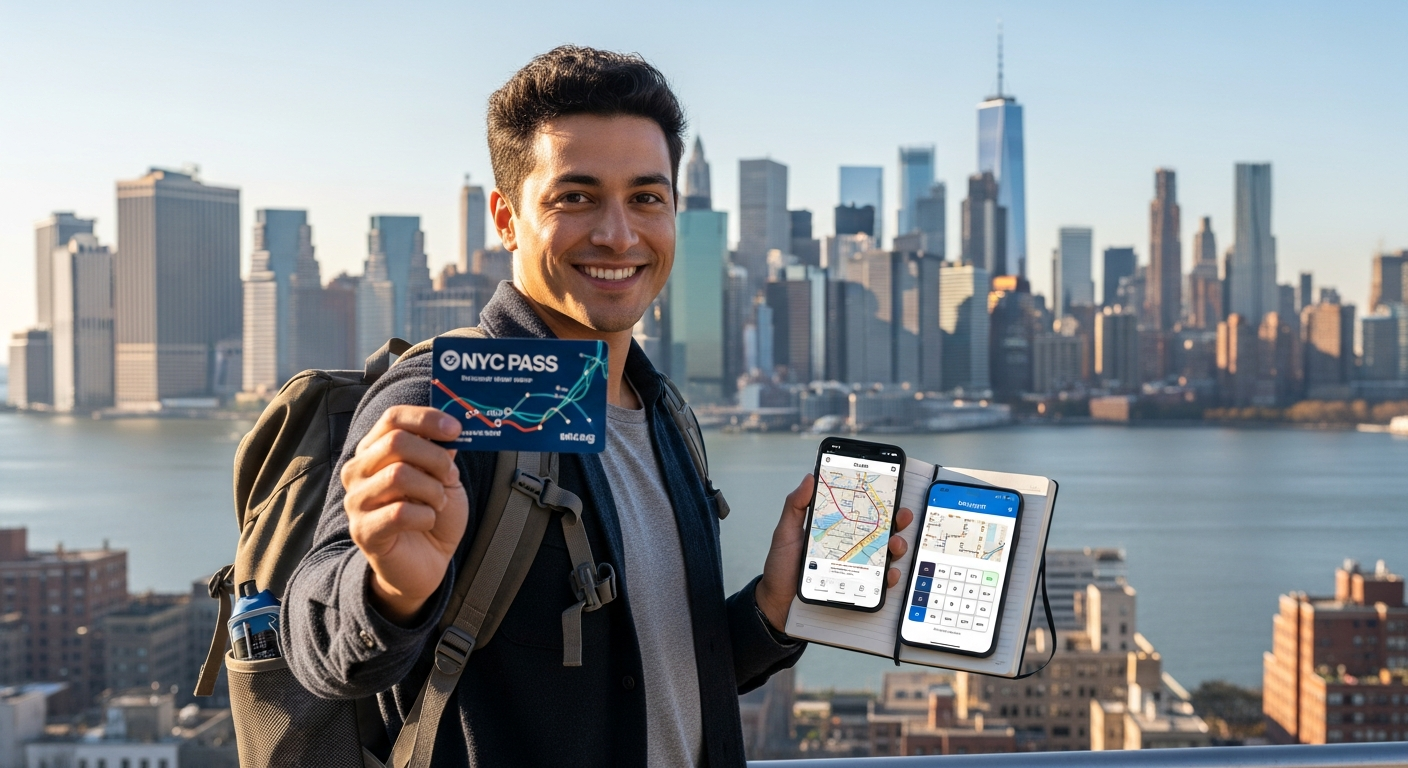
New York City's Best-Kept Budget Hack: The New York Pass for Solo Travelers
Solo travel to New York City can drain your budget faster than you'd expect—a single ticket to the Empire State Building runs $34, the Statue of Liberty ferry costs $24, and MoMA demands another $25. That's nearly $100 before you've even grabbed lunch in Midtown. The financial reality of independent sightseeing hits hard when you're footing every bill yourself.
The New York Pass All-Inclusive Sightseeing Pass has quietly become the go-to solution for budget-conscious explorers who refuse to sacrifice their itinerary. This digital pass from Go City unlocks access to over 100 attractions, tours, and experiences across the five boroughs—from observation decks to world-class museums to guided river cruises.
Discover how the New York Pass can maximize your solo sightseeing budget.
Understanding the New York Pass All-Inclusive Model
What the Pass Includes: 100+ Attractions, Tours, Museums, and Experiences Across NYC
The New York Pass bundles access to over 100 destinations into a single digital credential. You're getting entry to iconic landmarks, premier museums, specialty tours, and neighborhood experiences that would otherwise require individual bookings and separate transactions. The breadth alone—spanning everything from the American Museum of Natural History to hop-on-hop-off bus tours—means you can construct an itinerary tailored entirely to your interests.
How the Digital Pass Works: App-Based Access with No Physical Tickets Required
Gone are the days of juggling printed tickets or standing in will-call lines. The New York Pass operates through a mobile app, delivering your pass directly to your phone. When you arrive at each attraction, you simply present your app to gain entry. This streamlined approach eliminates logistical friction and lets you focus on the experiences themselves rather than administrative details.
Consecutive-Day Structure: Pass Validity and How Days Are Calculated for Travelers
The pass operates on a consecutive-day model, meaning if you purchase a 3-day pass, you have three calendar days of unrestricted access. Days begin and end at midnight, so strategic timing matters—starting your pass on the day you arrive gives you full coverage, while purchasing mid-day means losing some activation hours. Understanding this structure helps you choose the right duration for your trip length.
Supported Attractions Breakdown: Landmarks, Museums, Observation Decks, Tours, and Specialty Experiences
The New York Pass includes the heavy hitters: Empire State Building, Top of the Rock, Edge Observation Deck, Statue of Liberty and Ellis Island Ferry, and the 9/11 Memorial & Museum. Museum access covers MoMA and the American Museum of Natural History alongside numerous cultural institutions. Tours encompass river cruises, walking tours, and guided experiences throughout the boroughs. This variety ensures that whether you're chasing skyline views, cultural immersion, or historical context, you'll find relevant experiences within your pass.
Solo Traveler Pricing: Which Duration Delivers Real Savings?
1-Day Pass Economics ($164): Best for Ultra-Condensed City Visits or Neighborhood Exploration
A single-day pass works if you're maximizing a layover or focusing on one neighborhood thoroughly. At $164, you're committing to an intensive itinerary. The math makes sense only if you plan to hit at least 5-6 paid attractions that day. For most solo travelers, a 1-day pass serves niche purposes rather than representing your primary sightseeing strategy.
3-Day Pass Value ($339): The Sweet Spot for First-Time Solo Visitors with Moderate Itineraries
Three days at $339 represents the ideal entry point for independent first-time visitors. This duration allows you to tackle the major landmarks—observation decks, Statue of Liberty, 9/11 Memorial—while still visiting 2-3 museums and taking a guided tour or two. You're not racing against the clock, yet you're maintaining momentum. The per-day cost drops to roughly $113, which quickly pays for itself against individual tickets.
5-Day Pass Analysis ($444): Ideal for Extended Stays That Balance Attractions with Downtime
A 5-day pass at $444 suits travelers staying a week who want to blend intensive sightseeing with neighborhood exploration and personal recovery time. Some days you'll hit 4-5 attractions; others might focus on just 2-3 experiences plus casual neighborhood walking. This flexibility prevents burnout while maximizing your financial investment.
Comparative Cost Analysis: Pass Pricing Versus Individual Ticket Purchases for Popular Attractions
Let's calculate real numbers: Empire State Building ($34) + Statue of Liberty Ferry ($24) + Top of the Rock ($38) + MoMA ($25) + American Museum of Natural History ($28) + a river cruise tour ($60) totals $209. That's six experiences on a 3-day pass that costs $339. Add another guided walking tour ($35), a specialty experience ($30), and admission to one additional museum ($25), and you're at $299 in individual costs versus the $339 pass—but you'd have access to approximately 100 attractions instead of just those nine. The mathematics strongly favor the pass if you plan an active itinerary.
Fast-Track Entry and Time Savings for Independent Explorers
Skip-the-Line Privileges: Which Attractions Offer Priority Access for Pass Holders
Many of the New York Pass's top-tier attractions—including observation decks and major museums—grant fast-track entry to pass holders. During peak season, these lines can stretch 30-45 minutes. Bypassing them means reclaiming hours across your trip. You'll notice this advantage most acutely at Empire State Building, Top of the Rock, and popular museums during afternoon visits.
Time Value for Solo Travelers: How Minutes Saved Translate to More Experiences Completed
When you're traveling alone, time becomes your scarcest resource. Every 30-minute queue you skip represents potential time at another attraction. Saved waiting time compounds: skip four 20-minute lines across your trip, and you've reclaimed over two hours—potentially fitting in an entire museum visit or neighborhood exploration you'd otherwise miss.
Peak Season Advantages: Why Fast-Track Matters During Summer and Holiday Visits
If you're visiting during summer months or holidays, fast-track entry transforms from a nice perk into a necessity. Without it, you'll spend substantial portions of your day in queues. Fast-track access becomes the difference between seeing 8-10 major attractions during a 3-day trip versus managing only 4-5.
Strategic Timing: How to Use Fast-Track Benefits to Optimize Your Daily Itinerary
Smart solo travelers use fast-track access to tackle popular morning attractions during typical rush hours rather than timing visits for off-peak slots. Your 9 AM arrival at Empire State Building gains you both fast-track advantage and fresh energy. This approach lets you complete major experiences early and devote afternoons to less-visited museums or neighborhood exploration.
Maximize your time with the New York Pass and explore more attractions with priority access.
Iconic Attractions Included in Your Pass
Observation Deck Trio: Empire State Building, Top of the Rock, and Edge Observation Deck
New York's three primary observation decks each offer distinct vantage points. Empire State Building delivers the classic skyline perspective from the 86th floor. Top of the Rock, perched atop 30 Rockefeller Plaza, includes the Empire State Building in its own views—a perspective you won't get from Empire State itself. Edge Observation Deck, the city's newest addition, extends over the Hudson with dramatic cantilever architecture. Visiting all three across your pass duration reveals how varied skyline photography can be from different vantage points.
Statue of Liberty and Ellis Island: Ferry Access and Historical Significance for Independent Visitors
The ferry to Liberty and Ellis Islands carries profound historical weight, particularly for solo travelers seeking deeper connection to American immigration narratives. Your pass covers ferry round-trip access, allowing you to spend several hours exploring both islands without rushing. Ellis Island's immigration museum particularly resonates for independent explorers interested in personal family histories.
9/11 Memorial & Museum: Emotional Weight and Planning Considerations for Solo Exploration
The memorial and museum demand emotional preparation and unrushed time. As a solo traveler, you'll experience this space entirely on your own terms—no group dynamics, no compromising your pace. The museum's exhibits require 2-3 hours for meaningful engagement. Schedule this for a morning or early afternoon when you're mentally fresh.
Museum Access: MoMA, American Museum of Natural History, and Cultural Institutions
MoMA's contemporary art collections and the American Museum of Natural History's encyclopedic scope represent fundamentally different museum experiences. Your pass grants access to both alongside numerous other cultural institutions. Solo museum visits often feel more intimate than group experiences—you can linger with artworks or exhibits that particularly resonate without accommodating others' schedules.
The Solo Traveler Advantage: Why This Pass Works for Independent Adventurers
Eliminating Decision Fatigue: Pre-Curated Attractions Reduce Daily Planning Stress
One underrated benefit of the all-inclusive pass: the decision is partially made for you. Rather than spending hours researching which attractions merit your time and money, you're selecting from a pre-vetted list of 100+ quality experiences. This reduces the cognitive load of independent travel planning.
Psychological Benefits of All-Inclusive Access: Permission to Explore Without Constant Cost Calculations
Solo travelers often experience decision paralysis around spending. When you've already paid for admission through your pass, you gain psychological permission to explore freely. You're not constantly wondering if this museum visit justifies its cost or whether you should skip an experience to save money. The financial commitment is front-loaded, liberating your mindset.
Pace Control: Freedom to Spend as Much or as Little Time at Each Attraction
Your only obligation is visiting attractions within your consecutive-day window. Spend 45 minutes at an observation deck or three hours—entirely your choice. Solo travelers thrive with this control. You're not negotiating with travel companions about whether to rush through a museum or spend hours in a single gallery.
Spontaneity Within Structure: The Balance Between Organized Passes and Independent Exploration
The pass provides structure through a curated list while preserving spontaneity in execution. You might plan to visit a specific museum but stumble upon a neighborhood street festival en route and deviate entirely. The pass framework ensures you're hitting meaningful experiences while remaining flexible about day-to-day logistics.
Strategic Planning for Maximum Pass Value
Pre-Visit Research: Mapping Attractions to Neighborhoods and Creating Realistic Daily Routes
Efficient solo sightseeing requires mapping. Identify which attractions cluster geographically to minimize transit time between locations. Empire State Building, Herald Square shops, and nearby museums form a natural downtown route. Conversely, the American Museum of Natural History pairs with Central Park and nearby cultural institutions on the Upper West Side. Grouping geographically reduces commute time and prevents backtracking across the city.
Prioritization Frameworks: Identifying Must-See Versus Nice-to-Have Experiences
Not every pass inclusion matters equally to your interests. Create tiers: tier-one must-sees (iconic landmarks, specific museums you've always wanted to visit), tier-two strong interests (neighborhood-specific tours, specialty museums aligned with your passions), and tier-three flex experiences (attractions you'd visit if time permits). This framework ensures you'll see what truly matters rather than rushing through less-meaningful experiences.
Weather Contingency Planning: Indoor Versus Outdoor Attraction Sequencing
New York weather can shift dramatically. Plan indoor attractions (museums, indoor observation decks) as backup options when outdoor plans become unfeasible. During your first day, identify which tier-two or tier-three outdoor experiences you could replace with indoor alternatives if rain disrupts your itinerary.
Energy Management: Balancing High-Intensity Attractions with Lower-Key Experiences
Not every day should be exhausting. Balance intensive attractions—multiple museums plus an observation deck—with gentler experiences like neighborhood walking tours, park exploration, or specialty shops. Solo travelers often push themselves harder than they would in groups. Intentional pacing prevents fatigue and actually allows you to enjoy more experiences across your trip.
Comparing the New York Pass to Alternative Sightseeing Strategies
Individual Ticket Purchasing: Cost Analysis and Flexibility Trade-Offs
Buying individual tickets offers maximum flexibility—you're free to visit attractions on any schedule, skip experiences that don't interest you, and extend your stay without purchasing additional pass days. However, costs accumulate rapidly, and you lose the fast-track advantages and curated structure. Individual tickets work if you're visiting only 3-4 paid attractions or have an extremely relaxed travel pace.
Neighborhood Walking Tours: Authentic Experiences Versus Curated Tourist Attractions
Self-guided or commercial neighborhood walking tours provide authentic cultural immersion that paid attractions sometimes lack. Many walking tours are included in your pass, offering community-level insights. Consider blending pass attractions with independent neighborhood exploration—perhaps combining an Upper West Side museum pass day with a self-guided walk through Greenwich Village.
Free Attraction Strategies: Balancing Paid Experiences with NYC's Abundant Free Activities
New York offers substantial free experiences: Central Park, Brooklyn Bridge walks, neighborhood strolls, waterfront access, and many galleries in Chelsea. Your most engaged solo days might combine one or two paid pass attractions with extended free exploration. This mix prevents attraction fatigue while maximizing your pass investment.
Hybrid Approaches: Mixing Pass Attractions with Independent Exploration
The optimal strategy often involves hybrids: tackle 2-3 major pass attractions daily, dedicate afternoons to neighborhood walking and free experiences, and use evenings for dining and casual exploration. This approach feels less structured than hitting seven attractions daily while still leveraging your pass investment.
Taking Your NYC Solo Adventure to the Next Level
The New York Pass All-Inclusive Sightseeing Pass transforms how independent travelers experience New York City. It strips away the constant mental arithmetic of admission costs, grants you priority access to the world's most iconic attractions, and hands you the freedom to explore at your own pace. For solo adventurers willing to embrace an intentional, activity-rich itinerary, this pass becomes more than a discount tool; it becomes your passport to confidence and cultural immersion.
Start by mapping your must-see attractions, calculating your break-even point based on individual ticket prices, and choosing a pass duration that aligns with your energy levels and interests. Your solo adventure awaits—and with the right planning, the New York Pass will amplify every moment of it.
Start your New York City solo adventure with the New York Pass today.
Leave a Reply