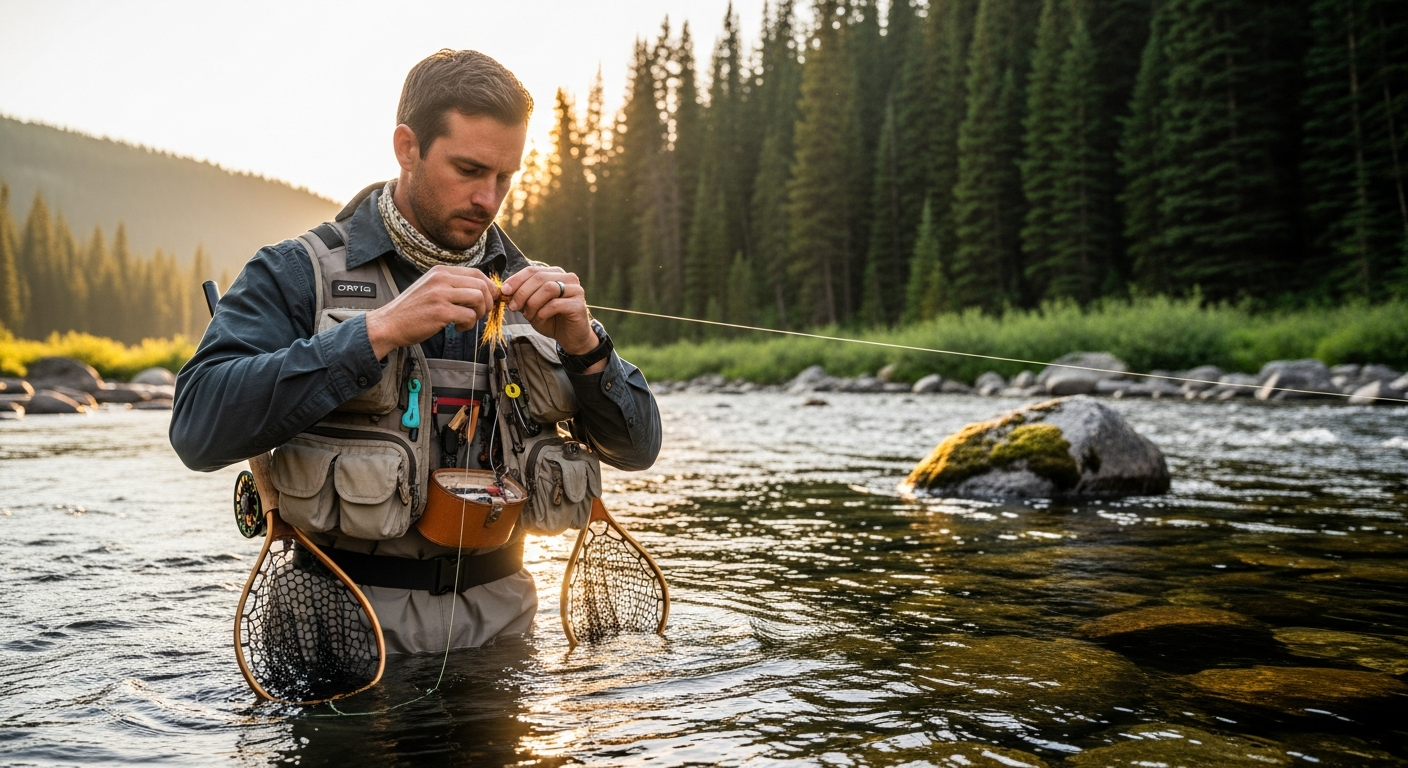
Most fly anglers spend more time searching for the right fly or tool than actually casting. According to veteran backcountry guides, anglers waste an average of 15-20 minutes per day fumbling through poorly organized gear—time that could be spent on the water. That’s roughly two hours of lost fishing per 10-day trip. When you’re planning a multi-day backcountry expedition, every ounce matters, yet so does accessibility.
The Orvis PRO strikes a rare balance between comprehensive storage and lightweight design, making it the go-to choice for anglers tackling remote rivers where resupply isn’t an option. This vest combines thoughtful engineering with premium materials to address the specific challenges that emerge when you’re hours away from the trailhead. Discover why the Orvis PRO Fly Fishing Vest has become the standard choice for serious backcountry anglers.
Throughout this guide, I’ll break down exactly why the Orvis PRO excels for extended trips, examine its 18-pocket system in detail, explore the materials that keep it performing in harsh conditions, and help you determine whether this $249 investment makes sense for your fishing style.
Engineered for Extended Backcountry Missions: Organization as a Core Strategy
How Poor Gear Organization Compounds Over Multiple Days on the Water
Poor organization creates a compounding problem in backcountry settings. On day one, fumbling through pockets costs you 15-20 minutes. By day three, fatigue amplifies this inefficiency—your movements become slower, your decision-making fuzzy. When you’re tired and frustrated, you make poor casting choices, overlook subtle water conditions, and miss opportunities that patient, organized anglers capitalize on.
The real cost isn’t just lost time. Disorganized gear gets damaged. Flies tangled together split their wings. Tools shoved into random pockets scratch against each other and degrade. Wet materials stuffed into airless compartments develop mold and odor. The Orvis PRO prevents this cascade through architectural intentionality.
The Psychology of Quick-Access Fly Selection and Its Impact on Catch Rate
Fly selection involves micro-decisions dozens of times per day. When your flies are sorted by size, weight, and pattern—and instantly accessible—you make these decisions in seconds. Your brain stays focused on water reading, casting mechanics, and presentation. When you’re digging through a tangled mess, your cognitive load spikes. You become reactive instead of proactive, reaching for whatever you can grab instead of the fly that conditions actually demand.
Guides observe this consistently: organized anglers catch more fish, not because they’re better casters, but because they can match the hatch without breaking flow state.
Why Backcountry Anglers Need Different Storage Solutions Than Day-Trip Fishermen
Day-trip fishing from your car permits a different approach. You can run back to base camp if you forget something. You can carry redundant gear. Backcountry fishing demands ruthless optimization. Every item must earn its weight. Every pocket must serve multiple purposes. A day-tripper might tolerate a vest with 8 pockets. A backcountry angler needs the 18-pocket system the Orvis PRO provides—not for excess, but for specialization.
How the Orvis PRO’s Pocket System Reduces Decision Fatigue During Long Expeditions
Decision fatigue is real. Studies show humans make weaker decisions as the day progresses and mental resources deplete. An organized vest eliminates one source of daily decision-making. You don’t decide where to store something—the vest’s design dictates it. You don’t hunt for what you need—you know exactly where it is. These small eliminations of choice preserve mental energy for the decisions that actually matter: water conditions, fly selection, casting angles.
The Relationship Between Organized Gear and Safety in Remote Fishing Locations
Safety in backcountry settings depends on quick access to essentials. A first aid kit buried under fly boxes becomes useless when you need it. A headlamp shoved in the wrong pocket costs precious minutes at dusk. The Orvis PRO’s design ensures critical items stay accessible without crowding out your fishing gear. This psychological security matters. You fish with confidence knowing help is organized and within reach.
Real-World Scenarios Where Accessible Storage Prevents Lost Fishing Time
Picture this: you’ve hiked four hours to a remote stretch. A hatch starts in 30 minutes. Your nymph box is crammed into an interior pocket along with three other boxes. You can’t access it without removing everything. You miss the hatch window completely. With the Orvis PRO, specialty nymph boxes live in dedicated exterior pockets. You respond instantly. You’re in the water casting within minutes, not hours.
Or consider this: weather deteriorates mid-afternoon. You need to deploy a rain jacket from your pack, but your fly vest is loaded with gear. With the Orvis PRO’s hideaway tool ports and compact design, you can remove the vest completely and move it to a dry location without losing access to essential flies and tools. The vest works with your system, not against it.
Pocket Architecture Breakdown: Understanding the 18-Pocket System
Complete Inventory of Exterior Pockets (10) and Their Specialized Purposes
The Orvis PRO features ten exterior pockets, each engineered for specific storage purposes. Upper exterior pockets provide quick-access storage for frequently rotated items—streamers, dry flies, nymphs sorted by current conditions. These pockets are positioned at chest height for natural reach without removing the vest. Middle exterior pockets offer additional capacity for secondary fly selections and duplicates. Two lower main pockets feature compression-molded construction, providing rigid bases that protect fly boxes from crushing and deformation during backcountry travel.
Interior Pocket Design (6 Pockets) and How They Protect Delicate Materials
Six interior pockets create a hidden storage layer for delicate and valuable items. Spare leaders, tippet spools, and fly boxes that contain irreplaceable or expensive patterns live protected from brush, rain, and accidental snags. Upper interior mesh is polyester for durability; lower interior mesh is nylon/spandex for flexibility and comfort against your body. This layered approach prevents interior items from shifting against your torso while maintaining breathability.
Rear Pocket Placement and the Tri-Ring Net Holder Integration
Two rear pockets provide backup storage and balance the vest’s weight distribution. The tri-ring net holder is centered on the rear yoke, positioning your net for quick deployment without fumbling with straps or attachment points. When a fish is on, your net is exactly where instinct tells you it should be—immediately accessible.
Compression-Molded EVA Base Pockets and Why Rigidity Matters for Fly Preservation
The two lower main pockets feature compression-molded EVA bases. This rigid foundation prevents fly boxes from crushing against your body or collapsing under the weight of adjacent gear. Flies remain undamaged, their materials intact, their barbs uncrimped. For backcountry trips where replacement flies aren’t available, this structural integrity becomes invaluable.
Hideaway Tool Ports: Design, Accessibility, and What Fits Where
Custom hideaway tool ports integrate into the vest’s upper design without creating external bulk. Forceps, nippers, knot-tying tools, and hemostats slide into these ports and sit flush against the vest body. They’re accessible enough for frequent use but hidden enough to prevent snagging on brush. The ports accommodate most standard fly fishing tools without requiring bulky sheaths or holsters.
Fly-Drying Patches and How They Function During Multi-Day Trips
Two fly-drying patches integrated into the vest’s design allow anglers to dry soft hackles, palmered flies, and other patterns between uses. During multi-day trips, this becomes essential. A wet fly deteriorates quickly in enclosed spaces. Drying patches let you expose flies to air and allow them to recover without removing them from the vest. This prevents mold, odor, and material degradation—problems that compound over extended expeditions. Learn how the Orvis PRO’s integrated features enhance your multi-day backcountry fishing experience.
Materials That Survive: Durability Features for Harsh Conditions
Abrasion-Resistant Nylon Shell and Its Performance Against Rocks, Brush, and Branches
The Orvis PRO’s shell is constructed from light, abrasion-resistant nylon. This material withstands contact with sharp rocks, rough bark, and dense brush without tearing or degrading. Backcountry travel demands this durability—you’re not fishing manicured rivers; you’re navigating tight canyons where brush grabs at every movement. The nylon endures where lighter materials would shred.
DWR (Durable Water Repellent) Coating and How It Handles River Spray and Rain
The DWR coating prevents water absorption without creating a fully waterproof barrier. This allows breathability while shedding river spray and light rain. During multi-day trips, your vest will encounter constant moisture—creek crossings, rain, river spray. The DWR coating buys you time and keeps gear inside relatively dry. It’s not a wetsuit; it’s a practical shield that maintains functionality in wet conditions.
Nylon/Spandex Collar Construction and Why It Resists Wear at Stress Points
The padded collar combines nylon with spandex for flexibility and durability. Your neck rubs against this material constantly during long fishing days. The blend resists wear while maintaining comfort. Spandex recovery prevents the collar from stretching out permanently, maintaining its fit across multiple seasons.
Compression-Molded EVA Pocket Bases and Their Resistance to Deformation
As mentioned, the compression-molded EVA bases in lower pockets create structural support. EVA (ethylene-vinyl acetate) resists deformation under pressure. Unlike soft-sided pockets that collapse under gear weight, these molded bases maintain their shape and protect contents from crushing. The material is durable enough to withstand repeated packing and unpacking across many seasons.
Washability and Maintenance Protocols for Extending Vest Lifespan
The Orvis PRO is fully washable, allowing you to remove dirt, salt spray, algae, and river sediment that accumulate during backcountry use. Regular washing extends the vest’s functional lifespan and maintains its DWR coating effectiveness. Unlike gear requiring specialized cleaning services, home washing keeps your investment performing at peak condition.
How Materials Perform Across Different Seasons and Climates
The material combination performs across three-season and year-round conditions. The nylon and spandex blend maintains flexibility in cold weather while resisting brittleness. The DWR coating functions in both dry and wet climates. In hot conditions, the breathable mesh allows airflow. In cooler weather, the padded collar and fitted design work with layering systems. The vest adapts rather than demanding specific seasonal deployments.
Comfort During Marathon Fishing Days: Ergonomic Design in Action
Fitted Body Design and How It Prevents Shifting During Active Wading
The Orvis PRO features a fitted design that conforms to your body without excess fabric. During active wading, this prevents the vest from riding up, sliding sideways, or shifting with each movement. Your gear stays stable, your movements unrestricted. A loose vest becomes an anchor during demanding wading; a properly fitted vest becomes invisible.
Lofted Spacer Mesh Technology and Its Breathability Advantages
Shoulders feature a lofted spacer mesh of nylon and spandex. This construction creates micro-air channels that allow ventilation while maintaining structure. The mesh doesn’t compress against your skin; it sits slightly above it, creating an insulating layer of air that prevents sweat buildup and heat accumulation. During eight-to-twelve-hour fishing days in warm conditions, this becomes essential for maintaining energy levels and focus.
Padded Collar Construction and Pressure Point Relief During Extended Wear
The padded collar distributes neck pressure evenly, preventing the localized discomfort that emerges during long fishing days. Without padding, the vest’s weight and gear load concentrate pressure on a narrow neck area, creating fatigue and distraction. The padding disperses this load, allowing you to forget the vest exists—the mark of truly functional gear design.
Weight Distribution at 17.5 Oz and How It Feels Over 8–12 Hour Days
At approximately 17.5 ounces (in medium size), the Orvis PRO is lightweight for its storage capacity. To contextualize: this is roughly equivalent to a water bottle’s weight. However, the distribution matters more than total weight. The fitted design, padded collar, and spacer mesh distribute this weight across your entire shoulder and torso area. The result: weight that’s noticeable but never oppressive, even during long days.
Shoulder Support and the Role of Mesh Construction in Heat Management
Shoulder construction in the Orvis PRO emphasizes support without constriction. The lofted spacer mesh on the shoulders allows heat to escape while providing structural integrity. This balance prevents the “hot spot” sensation that emerges in vests featuring solid shoulder panels. Your shoulders stay cool and supported simultaneously.
Layering Compatibility for Three-Season and Year-Round Fishing
The fitted design accommodates layering for three-season fishing without excessive bulk. You can fish in spring with a t-shirt and vest, add a long-sleeve baselayer in fall, and layer a rain jacket in winter—all while maintaining the vest’s ergonomic advantages. The vest works with your layering system rather than replacing it.
Specialized Features That Separate Premium Vests from Basic Options
Internal Webbing Hanging Loop and Its Utility in Camp and on the Water
An internal webbing hanging loop allows you to hang the vest to dry after wading, to suspend it from a branch while you swim across deeper sections, or to secure it when setting camp. This single feature prevents moisture accumulation that degrades materials and creates odor. In camp, your vest dries properly rather than getting crammed in a pack.
Tri-Ring Net Holder Positioning and Quick-Access Net Deployment
The centered tri-ring net holder on the rear yoke positions your net for instinctive deployment. When a fish is on, you reach backward naturally—the net is there without conscious thought. This positioning eliminates fumbling with side-mounted holders or integrated nets that require two-handed deployment. The simplicity is profound.
Hideaway Tool Ports Versus Exposed Tool Attachments: Pros and Cons
Hideaway tool ports integrate tools without creating external snag points. Exposed tool attachments (common on basic vests) catch brush and streamside vegetation. The Orvis PRO’s approach sacrifices minimal accessibility for significant gains in durability and streamside navigation. In dense backcountry terrain, this trade-off heavily favors hideaway design.
Fly-Drying Patches and How They Prevent Mold and Odor During Multi-Day Trips
Extended backcountry trips create conditions where wet materials deteriorate rapidly. Fly-drying patches solve this by allowing active moisture control. Soft hackles, palmered flies, and other patterns that suffer from extended dampness can be exposed to air while remaining attached to your vest. This prevents the mold and odor that emerge during multi-day pack trips.
Daisy Chain Loops for Customizable Gear Attachment
Multiple daisy chain gear loops allow you to attach supplementary items—carabiners, lanyards, or custom attachments—without modifying the vest. This flexibility lets you customize the Orvis PRO to your specific fishing style and the unique demands of particular water systems.
Elastic Loops for Tippet Bar Organization and Fly Line Management
Elastic loops accommodate tippet bars and fly line spools, keeping these essential items organized and accessible. Rather than searching through pockets for tippet spools, you grab them from dedicated loops. This organization prevents tangles and streamlines the process of building new leaders during long fishing days.
Investment Analysis: Is $249 Worth It for Your Fishing Style?
Price Positioning Within the Fly Fishing Vest Market
The Orvis PRO retails for approximately $249, positioning it in the premium segment of the fly fishing vest market. Budget vests run $50–$100; mid-range options occupy the $120–$180 bracket. The Orvis PRO commands premium pricing because it delivers premium materials, thoughtful design, and proven durability. The question isn’t whether it’s expensive—it is—but whether it’s expensive relative to the value it delivers.
Cost-Per-Use Calculation for Different Angler Types
A weekend warrior fishing 20 days annually spreads the $249 cost across limited use. Cost per trip: roughly $12.50. A serious backcountry angler fishing 50+ days annually achieves dramatically different economics. Cost per trip: roughly $5. Over a decade of fishing, this difference becomes profound. Serious backcountry anglers should calculate their annual fishing days and determine whether the vest’s cost per use justifies the investment relative to their actual usage patterns.
Durability ROI and Expected Lifespan Compared to Budget Alternatives
Budget vests typically last 2–3 seasons before materials degrade and seams fail. The Orvis PRO, with proper care, functions for 5–7+ seasons. This extended lifespan dramatically improves cost-per-use economics. A budget vest costs less initially but requires replacement more frequently. The Orvis PRO costs more upfront but maintains functionality longer. Over a ten-year backcountry fishing career, the premium vest becomes the economical choice.
Resale Value and Secondary Market Considerations
Orvis gear holds value in the secondary market. A used Orvis PRO sells for 40–60% of original retail, while budget vest resale value drops to 10–20%. If you eventually upgrade or change fishing styles, your investment is more recoverable. This secondary market factor improves net cost significantly.
Warranty and Customer Service Value from Orvis
Orvis backs the PRO with warranty coverage and responsive customer service. Repairs, replacements, and modifications are straightforward. Budget manufacturers often lack support infrastructure. When your $249 vest experiences an issue, Orvis addresses it. When your $80 vest fails, replacement is often simpler than repair.
When the Orvis PRO Makes Financial Sense
The Orvis PRO justifies its $249 price for anglers planning multiple multi-day backcountry expeditions annually. It makes financial sense for serious fly fishers who fish 40+ days yearly. It makes less financial sense for occasional weekend anglers or those planning single-trip backcountry missions. Your fishing frequency and intensity determine whether this investment aligns with your economics.
The Backcountry Angler’s Verdict: Making Your Decision
When you’re 15 miles into a remote canyon with two days of fishing ahead, you’ll understand why the Orvis PRO commands respect among serious anglers. The 18-pocket system isn’t just about storage—it’s about confidence. Knowing your flies are organized, your tools are accessible, and your gear is protected by premium materials means you can focus entirely on fishing.
The experience separates from cheaper alternatives. When poor organization costs you a hatch window on day one and compounds into lost opportunities on day two, the vest’s value becomes tangible. When your flies remain undamaged because they’re stored in compression-molded pockets, their protection justifies premium pricing. When your collar stays comfortable across twelve-hour days because it’s engineered with intention, you stop counting the cost.
Yes, $249 is a meaningful investment. But for anglers planning multi-day backcountry expeditions, it’s the kind of gear that pays dividends through every trip. The real question isn’t whether the Orvis PRO is worth the price; it’s whether you’re serious enough about backcountry fly fishing to demand the organization and durability this vest delivers. If extended trips into remote water are in your future, the Orvis PRO deserves a place in your gear closet. Invest in the Orvis PRO Fly Fishing Vest and experience the difference premium backcountry gear delivers.
Leave a Reply